
Biological Databases Learning Goals Participants will become familiar
Biological Databases
Learning Goals • • Participants will become familiar with the human microbiome project Participants will know how to access the human microbiome project and other biological databases Participants will know the utility of accession numbers Participants will know how to download sequences from databases
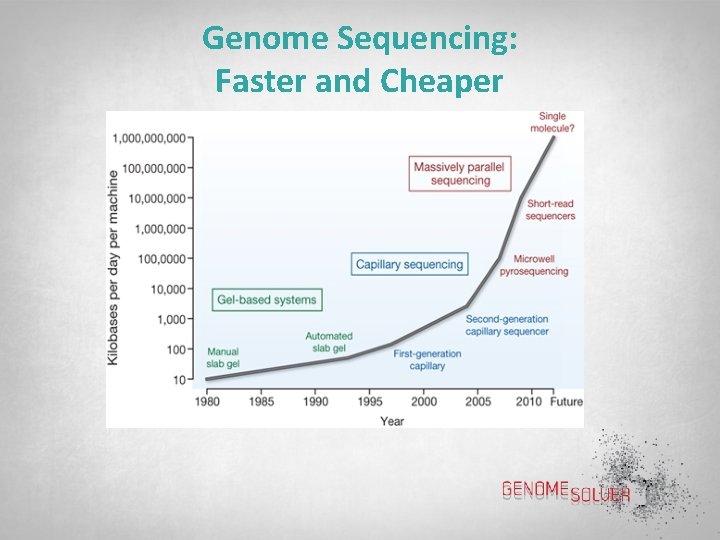
Genome Sequencing: Faster and Cheaper
The Human Microbiome • Definitions: – Microbiome: Aggregate of all microbial genomes – Microbiota: Individual bacterial species in the biome • Over 100 trillion organisms (1014) – Over 500 species identified so far (70 divisions) – 90% of the cells in our body are microbial! • Our microbial flora are an integral part of our genetic landscape and evolution
The Human Microbiome Project (HMP) • An effort through NIH to understand the diversity of microbes associated with different body sites in and on the human body • Initially funded for 5 years beginning in 2007 – Data can be accessed at HMP DACC – hmpdacc. org/hmp • Second phase to understand the role of the microbiome in health and disease – Integrative Human Microbiome Project (i. HMP) – hmpdacc. org/ihmp
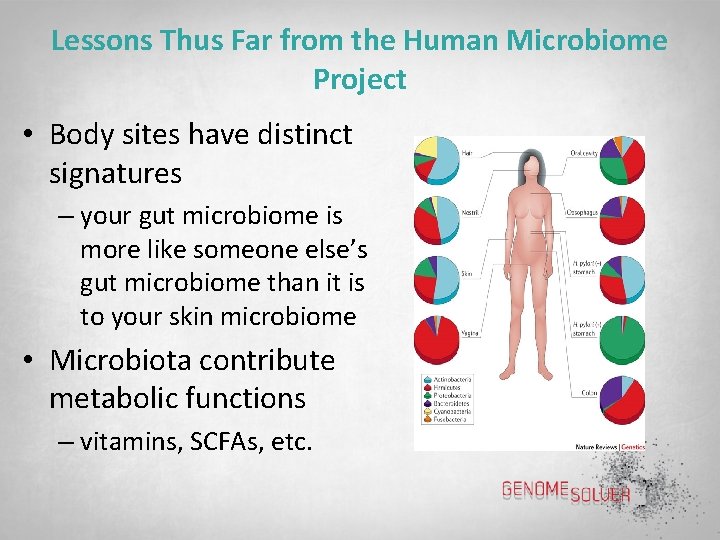
Lessons Thus Far from the Human Microbiome Project • Body sites have distinct signatures – your gut microbiome is more like someone else’s gut microbiome than it is to your skin microbiome • Microbiota contribute metabolic functions – vitamins, SCFAs, etc.
Other Microbiome Projects • The Earth Microbiome Project – earthmicrobiome. org – “a systematic attempt to characterize global microbial taxonomic and functional diversity for the benefit of the planet and humankind” • American Gut Project – americangut. org • Human Oral Microbiome Database (HOMD) – www. homd. org
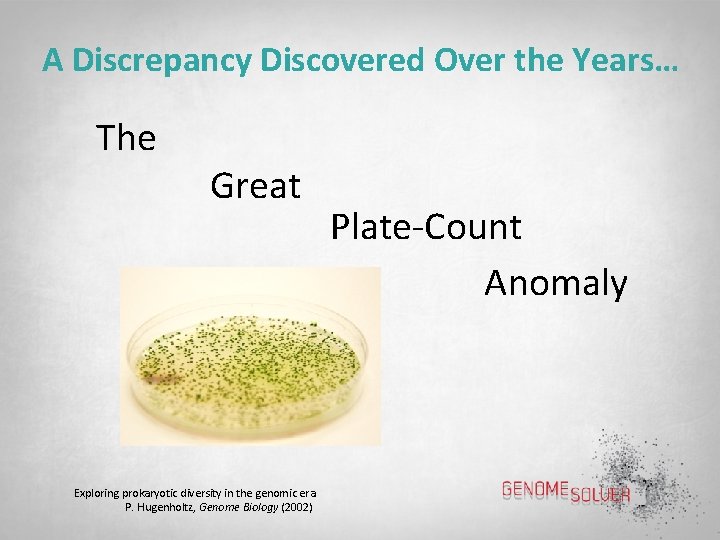
A Discrepancy Discovered Over the Years… The Great Exploring prokaryotic diversity in the genomic era P. Hugenholtz, Genome Biology (2002) Plate-Count Anomaly
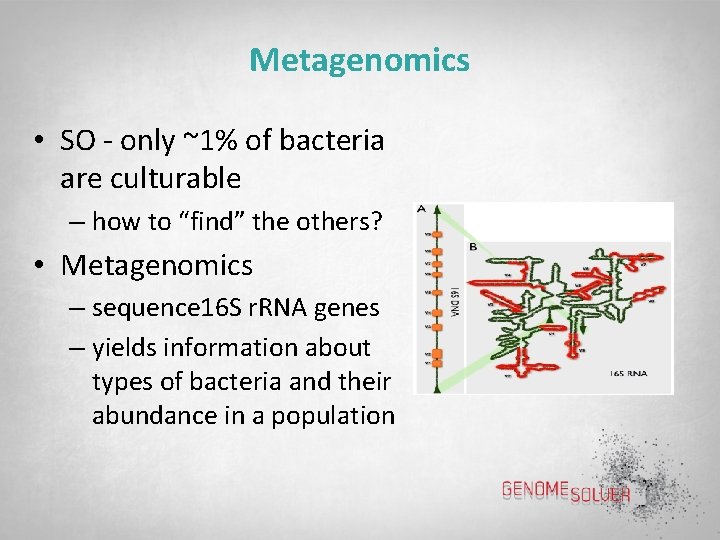
Metagenomics • SO - only ~1% of bacteria are culturable – how to “find” the others? • Metagenomics – sequence 16 S r. RNA genes – yields information about types of bacteria and their abundance in a population
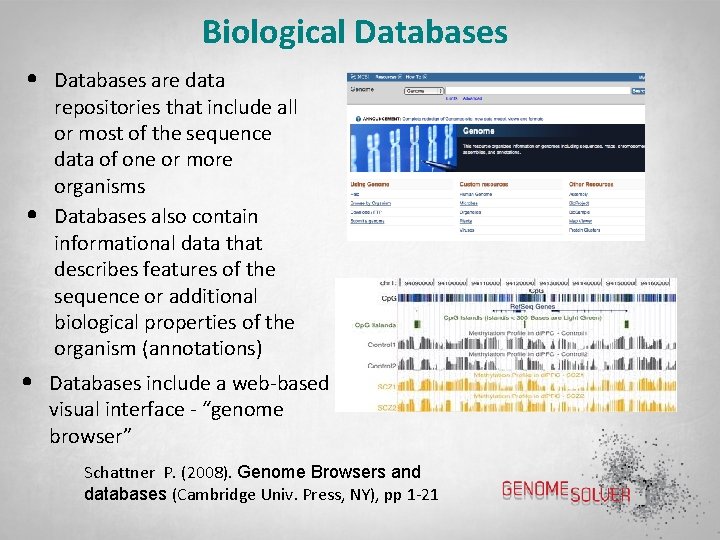
Biological Databases • • • Databases are data repositories that include all or most of the sequence data of one or more organisms Databases also contain informational data that describes features of the sequence or additional biological properties of the organism (annotations) Databases include a web-based visual interface - “genome browser” Schattner P. (2008). Genome Browsers and databases (Cambridge Univ. Press, NY), pp 1 -21
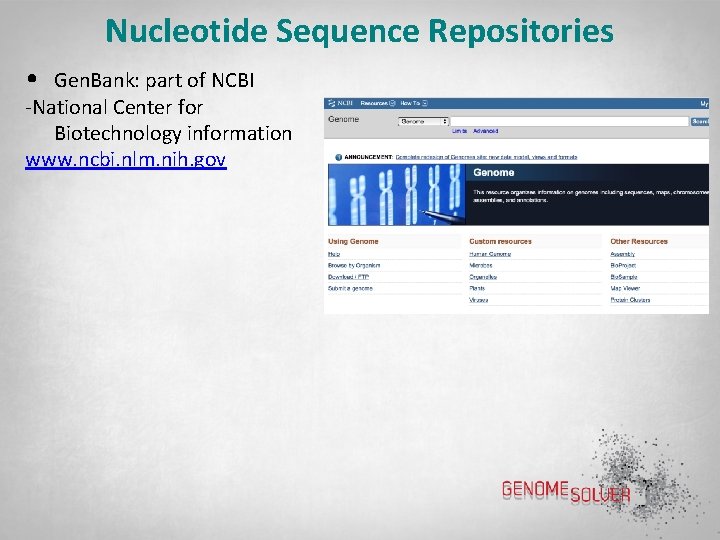
Nucleotide Sequence Repositories • Gen. Bank: part of NCBI -National Center for Biotechnology information www. ncbi. nlm. nih. gov
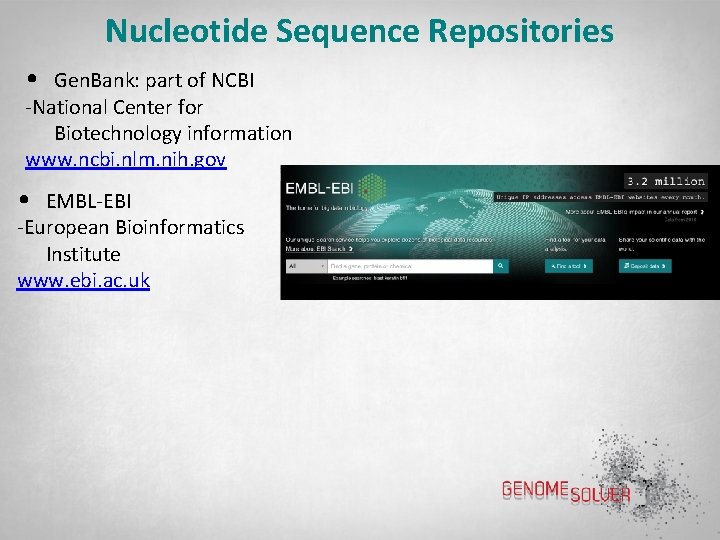
Nucleotide Sequence Repositories • Gen. Bank: part of NCBI -National Center for Biotechnology information www. ncbi. nlm. nih. gov • EMBL-EBI -European Bioinformatics Institute www. ebi. ac. uk
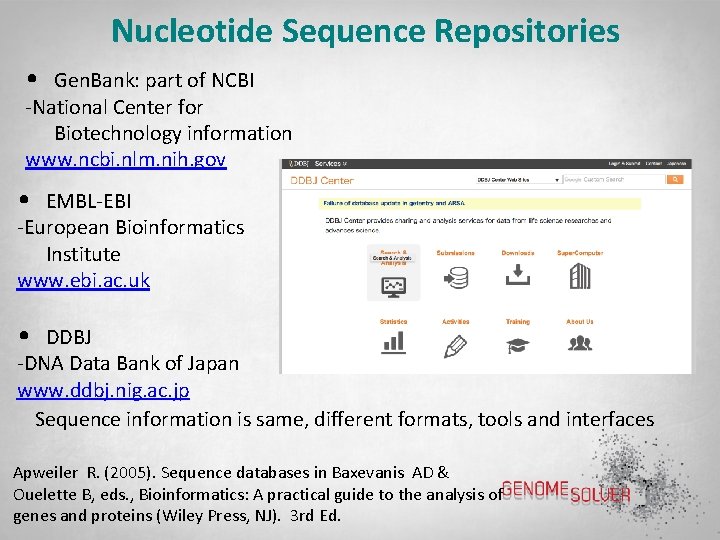
Nucleotide Sequence Repositories • Gen. Bank: part of NCBI -National Center for Biotechnology information www. ncbi. nlm. nih. gov • EMBL-EBI -European Bioinformatics Institute www. ebi. ac. uk • DDBJ -DNA Data Bank of Japan www. ddbj. nig. ac. jp Sequence information is same, different formats, tools and interfaces Apweiler R. (2005). Sequence databases in Baxevanis AD & Ouelette B, eds. , Bioinformatics: A practical guide to the analysis of genes and proteins (Wiley Press, NJ). 3 rd Ed.
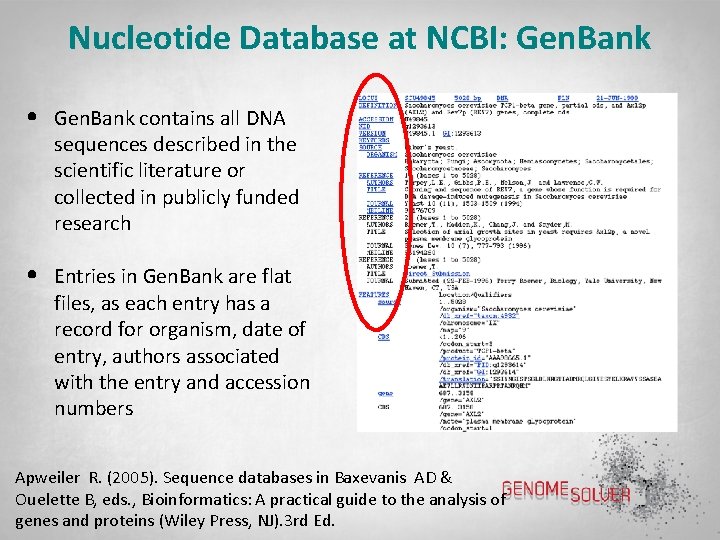
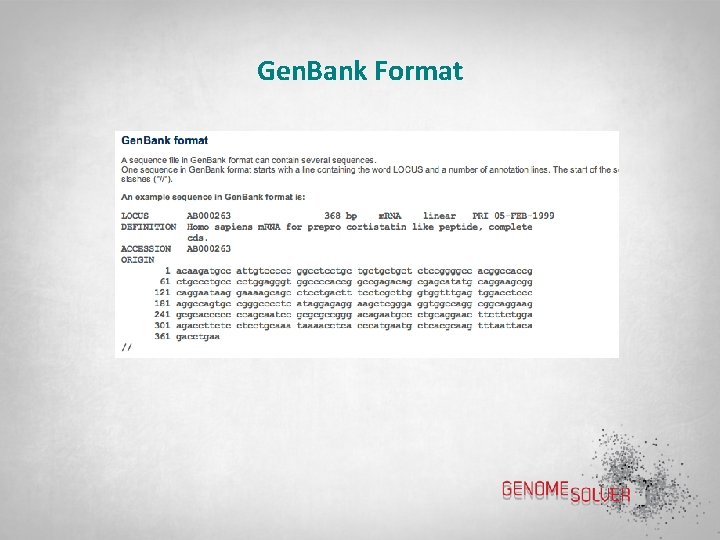
Nucleotide Database at NCBI: Gen. Bank • Gen. Bank contains all DNA sequences described in the scientific literature or collected in publicly funded research • Entries in Gen. Bank are flat files, as each entry has a record for organism, date of entry, authors associated with the entry and accession numbers Apweiler R. (2005). Sequence databases in Baxevanis AD & Ouelette B, eds. , Bioinformatics: A practical guide to the analysis of genes and proteins (Wiley Press, NJ). 3 rd Ed.
Accession Numbers • In a database an essential feature of a DNA/protein sequence is the alphanumeric identifiers they are tagged with • These accession numbers are a string of 4 -10 alphanumeric characters that are associated with a sequence record • Accession numbers are unique identifiers and can be used to search databases Pevsner J. (2009). Bioinformatics and Functional Genomics (Wiley Press, NJ). 2 nd Ed: pp 13 -47
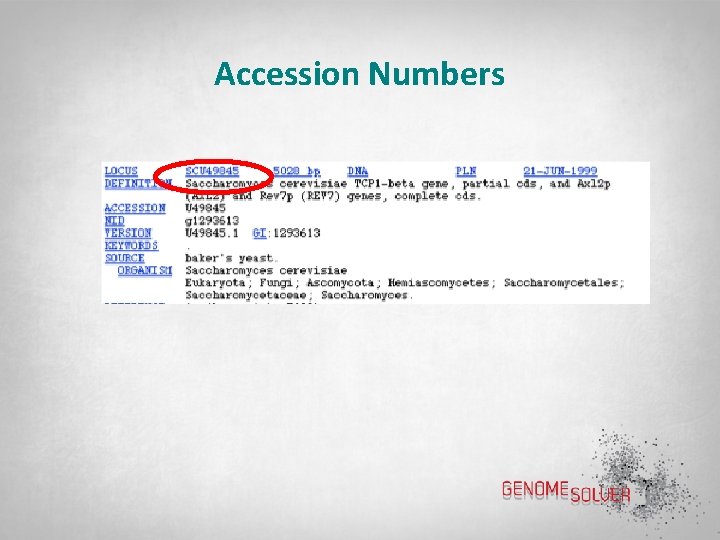
Accession Numbers
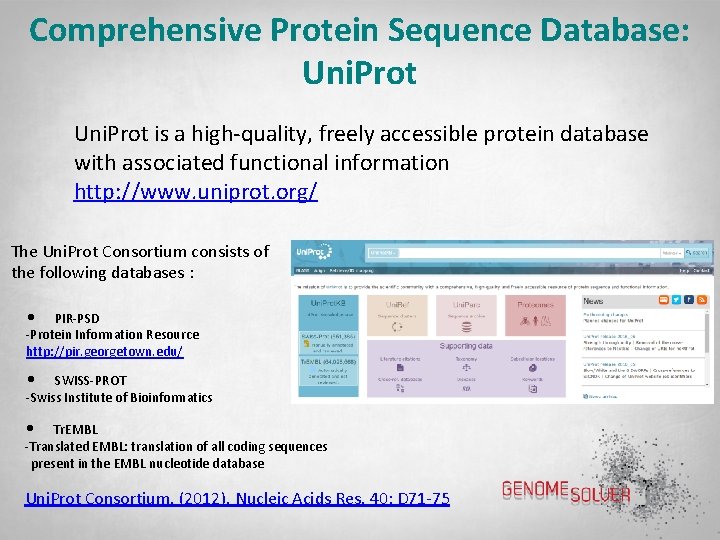
Comprehensive Protein Sequence Database: Uni. Prot is a high-quality, freely accessible protein database with associated functional information http: //www. uniprot. org/ The Uni. Prot Consortium consists of the following databases : • PIR-PSD -Protein Information Resource http: //pir. georgetown. edu/ • SWISS-PROT -Swiss Institute of Bioinformatics • Tr. EMBL -Translated EMBL: translation of all coding sequences present in the EMBL nucleotide database Uni. Prot Consortium. (2012). Nucleic Acids Res. 40: D 71 -75
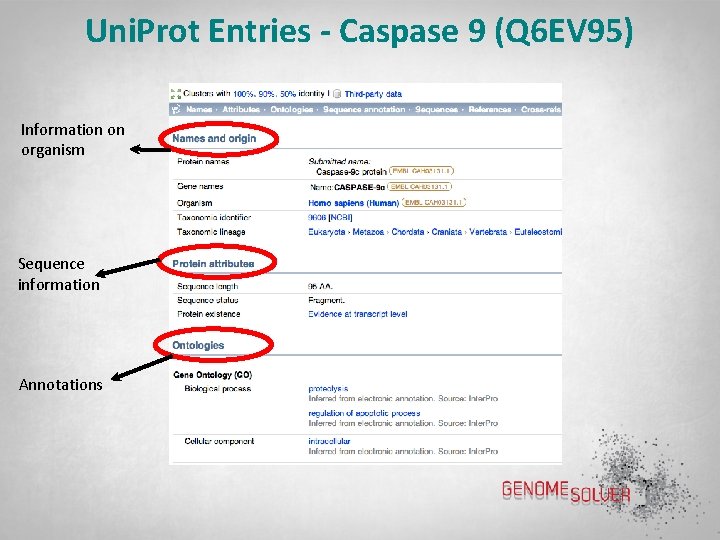
Uni. Prot Entries - Caspase 9 (Q 6 EV 95) Information on organism Sequence information Annotations
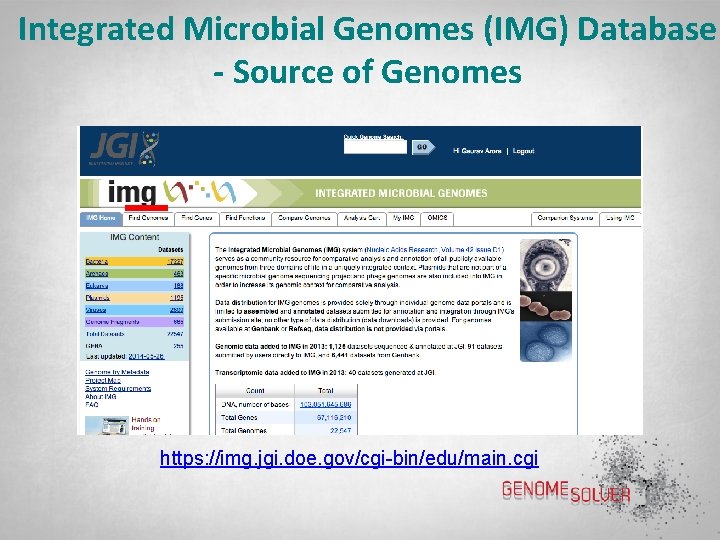
Integrated Microbial Genomes (IMG) Database - Source of Genomes https: //img. jgi. doe. gov/cgi-bin/edu/main. cgi
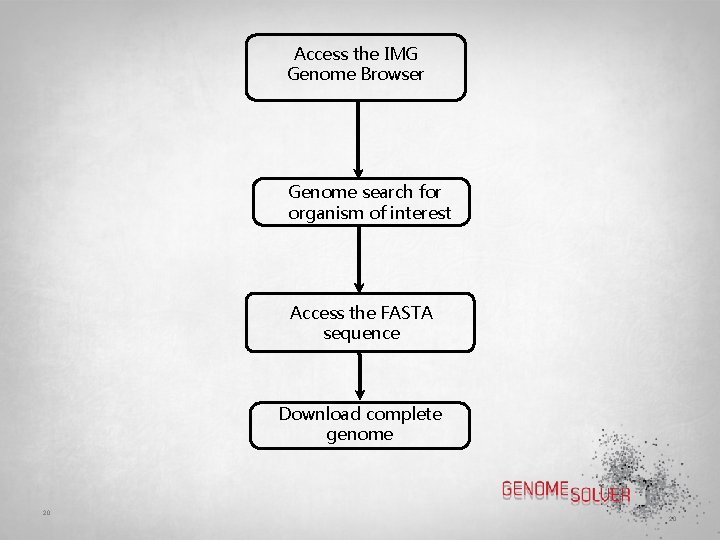
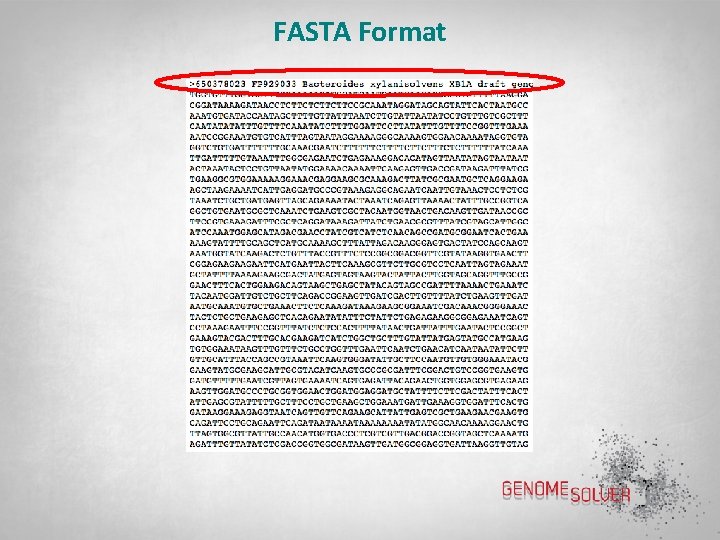
Access the IMG Genome Browser Genome search for organism of interest Access the FASTA sequence Download complete genome 20 20
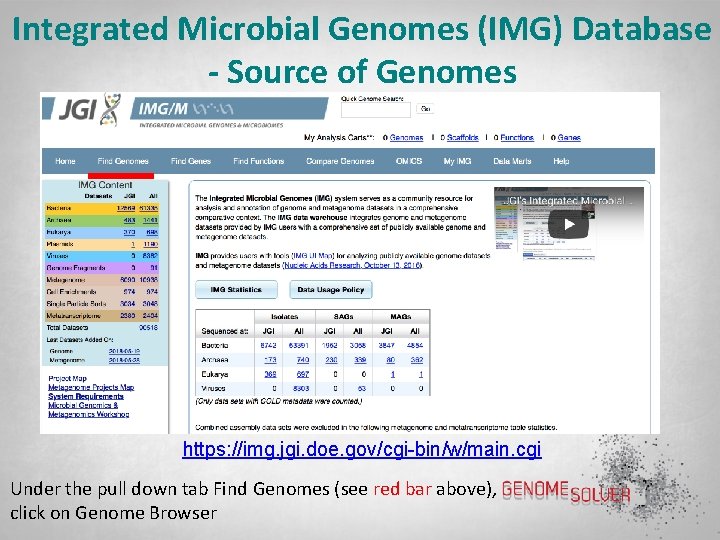
Integrated Microbial Genomes (IMG) Database - Source of Genomes https: //img. jgi. doe. gov/cgi-bin/w/main. cgi Under the pull down tab Find Genomes (see red bar above), click on Genome Browser
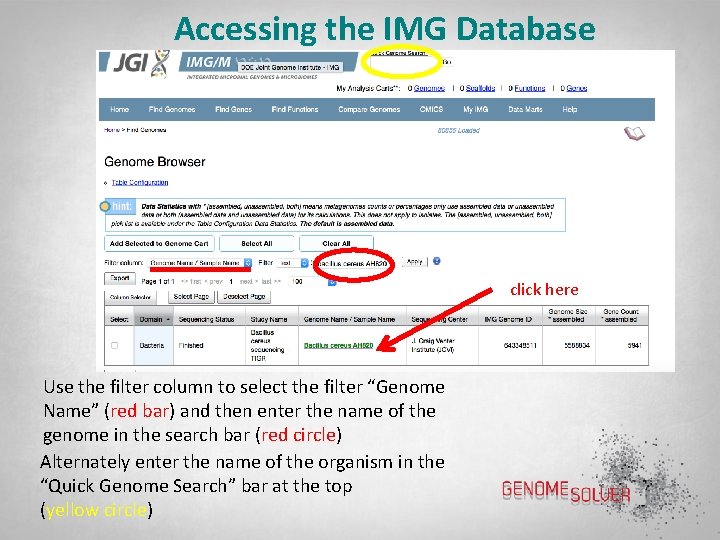
Accessing the IMG Database click here Use the filter column to select the filter “Genome Name” (red bar) and then enter the name of the genome in the search bar (red circle) Alternately enter the name of the organism in the “Quick Genome Search” bar at the top (yellow circle)
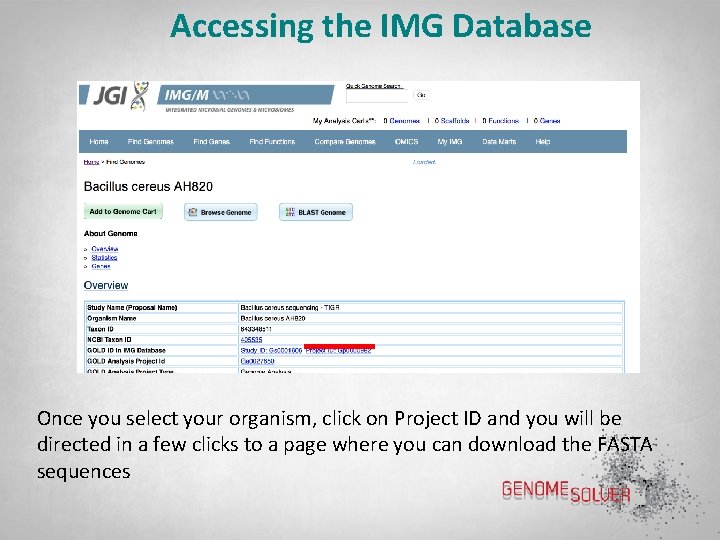
Accessing the IMG Database Once you select your organism, click on Project ID and you will be directed in a few clicks to a page where you can download the FASTA sequences
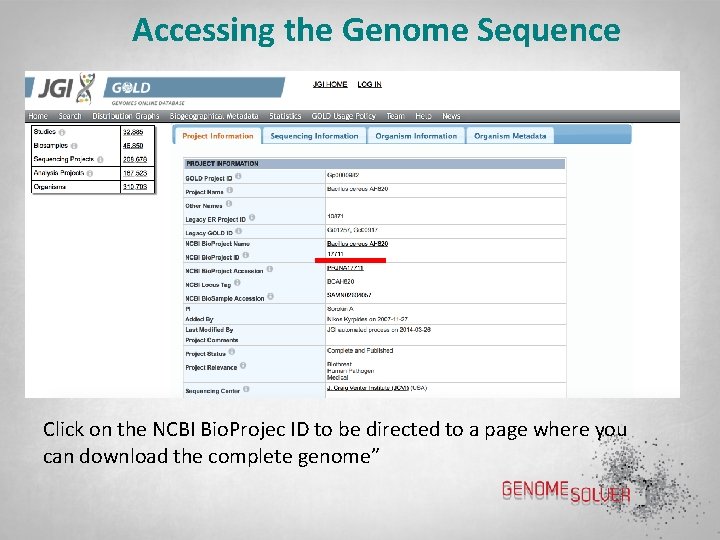
Accessing the Genome Sequence Click on the NCBI Bio. Projec ID to be directed to a page where you can download the complete genome”
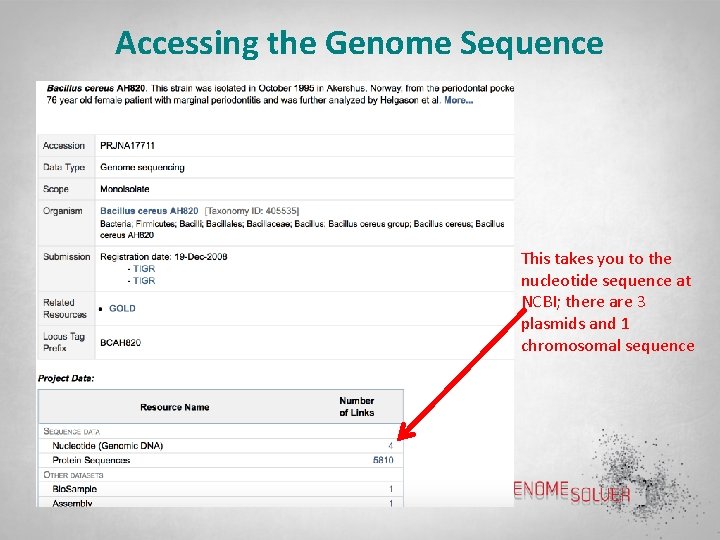
Accessing the Genome Sequence This takes you to the nucleotide sequence at NCBI; there are 3 plasmids and 1 chromosomal sequence
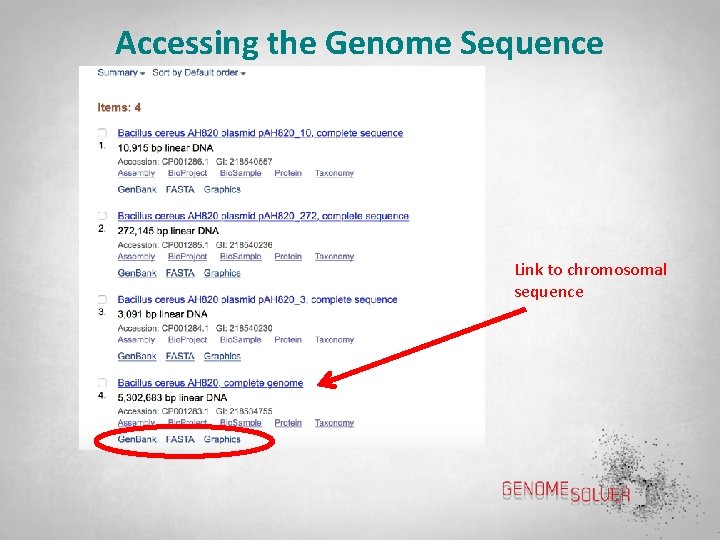
Accessing the Genome Sequence Link to chromosomal sequence
FASTA Format
Gen. Bank Format
Summary • Introduction to metagenomics • Biological databases • Accession numbers and how to use them
- Slides: 29