
Biological Control of the Mole Cricket Steinernema scapterisci
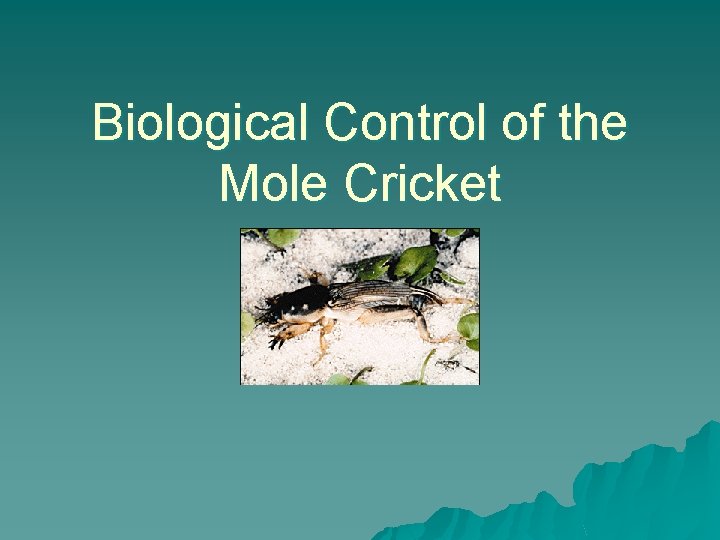
Biological Control of the Mole Cricket
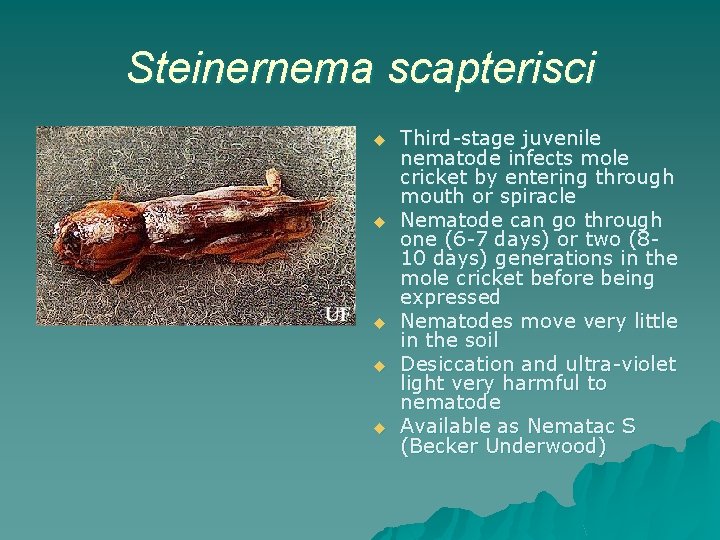
Steinernema scapterisci u u u Third-stage juvenile nematode infects mole cricket by entering through mouth or spiracle Nematode can go through one (6 -7 days) or two (810 days) generations in the mole cricket before being expressed Nematodes move very little in the soil Desiccation and ultra-violet light very harmful to nematode Available as Nematac S (Becker Underwood)
Biological Control of Mole Cricket Project funded by State Legislature u Project initiated in South Florida in 2000. North Florida project initiated in 2002. u 14 locations (7 counties) were treated between September 17 and October 4. u Each site consisted of a 4 acre test area of which ½ acre was treated with 500 million nematodes (Nematac S) u
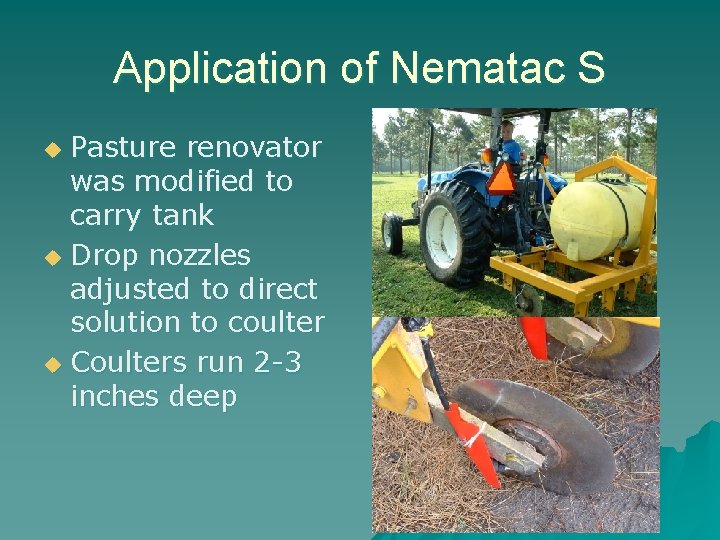
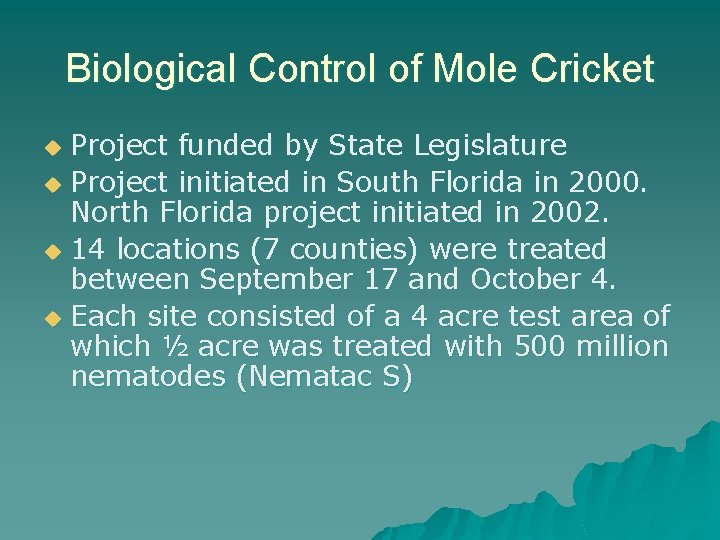
Application of Nematac S Pasture renovator was modified to carry tank u Drop nozzles adjusted to direct solution to coulter u Coulters run 2 -3 inches deep u
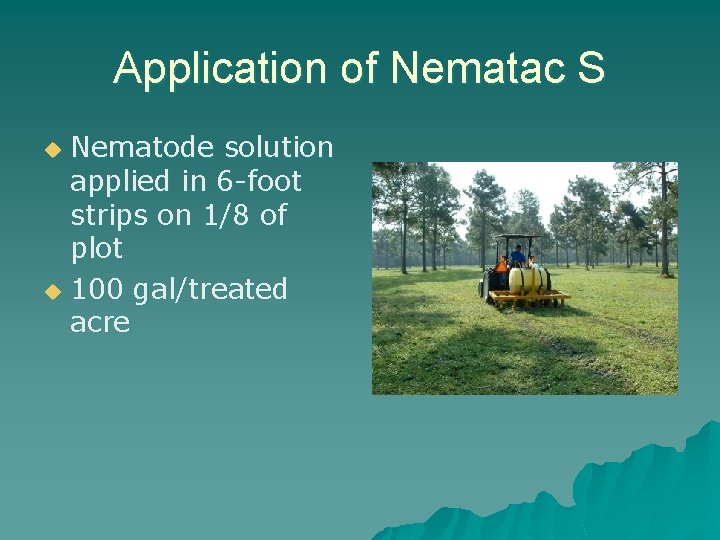
Application of Nematac S Nematode solution applied in 6 -foot strips on 1/8 of plot u 100 gal/treated acre u
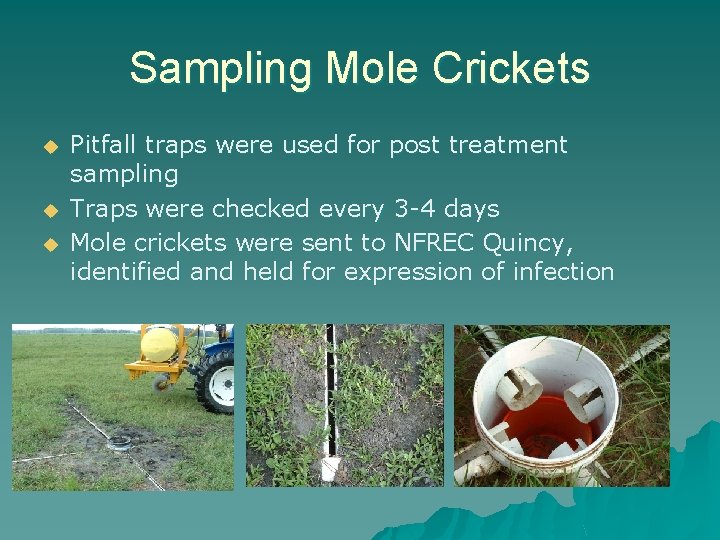
Sampling Mole Crickets u u u Pitfall traps were used for post treatment sampling Traps were checked every 3 -4 days Mole crickets were sent to NFREC Quincy, identified and held for expression of infection
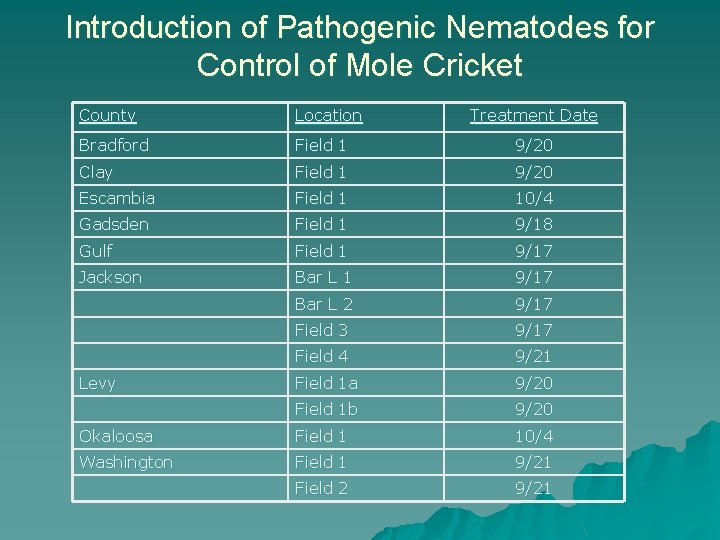
Introduction of Pathogenic Nematodes for Control of Mole Cricket County Location Bradford Field 1 9/20 Clay Field 1 9/20 Escambia Field 1 10/4 Gadsden Field 1 9/18 Gulf Field 1 9/17 Jackson Bar L 1 9/17 Bar L 2 9/17 Field 3 9/17 Field 4 9/21 Field 1 a 9/20 Field 1 b 9/20 Okaloosa Field 1 10/4 Washington Field 1 9/21 Field 2 9/21 Levy Treatment Date
Summary of Initial Sampling Post treatment pitfall trap sampling between October 18 and November 27 did not detect field infection at any of the sites. u Sampling was conducted 14 -60 days after treatment. Recommended sampling to confirm introduction of nematode is 60 -90 days following treatment. u In south Florida study, sampling was conducted 7 months following treatment. u
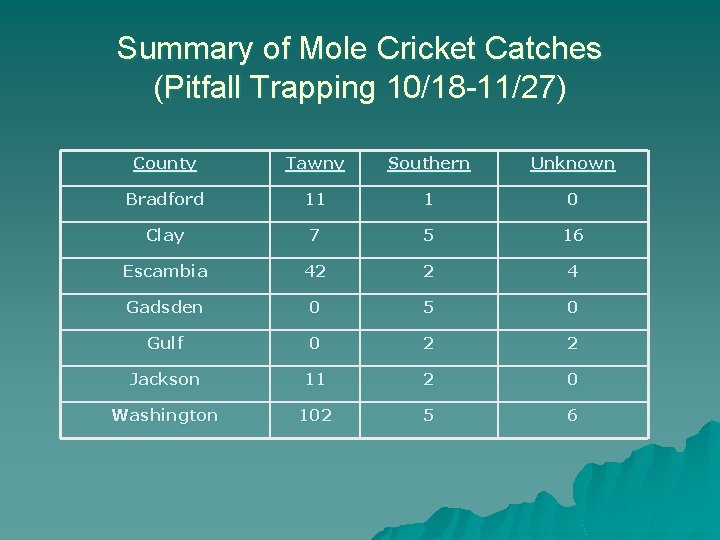
Summary of Mole Cricket Catches (Pitfall Trapping 10/18 -11/27) County Tawny Southern Unknown Bradford 11 1 0 Clay 7 5 16 Escambia 42 2 4 Gadsden 0 5 0 Gulf 0 2 2 Jackson 11 2 0 Washington 102 5 6
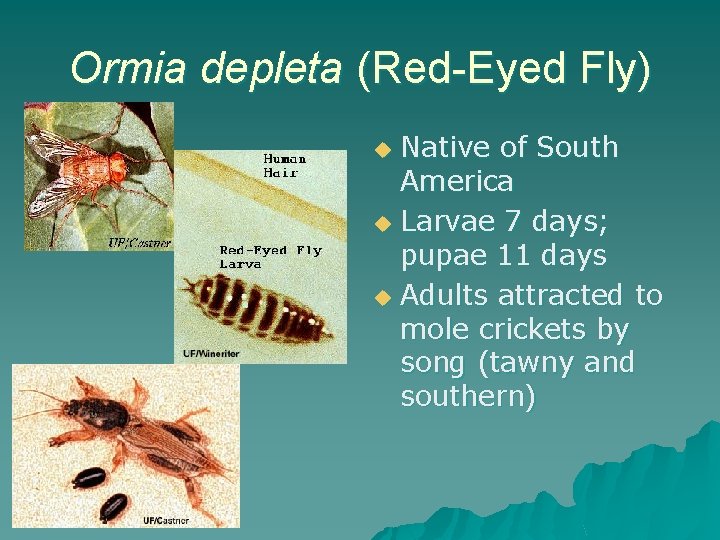
Ormia depleta (Red-Eyed Fly) Native of South America u Larvae 7 days; pupae 11 days u Adults attracted to mole crickets by song (tawny and southern) u
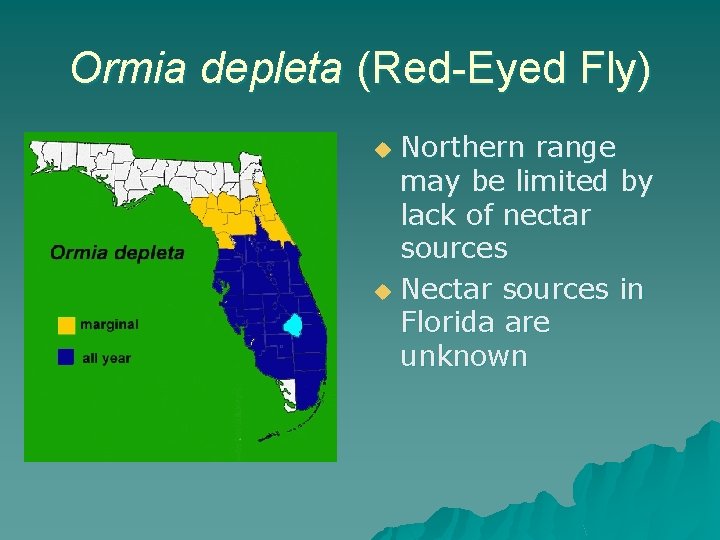
Ormia depleta (Red-Eyed Fly) Northern range may be limited by lack of nectar sources u Nectar sources in Florida are unknown u
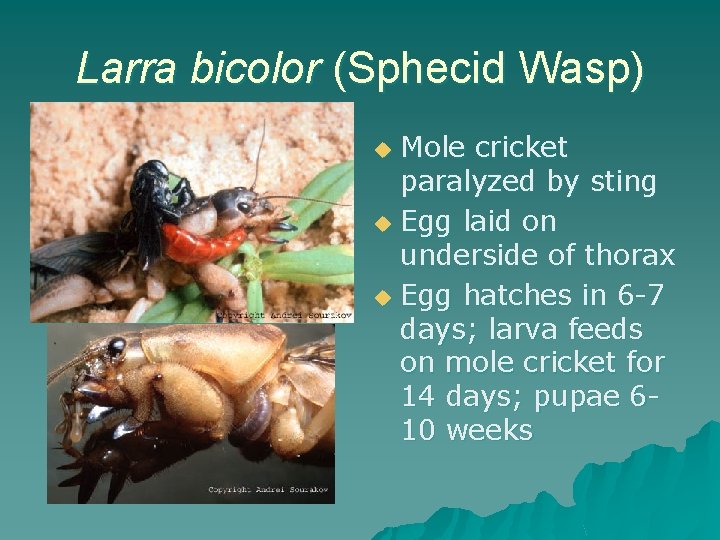
Larra bicolor (Sphecid Wasp) Mole cricket paralyzed by sting u Egg laid on underside of thorax u Egg hatches in 6 -7 days; larva feeds on mole cricket for 14 days; pupae 610 weeks u
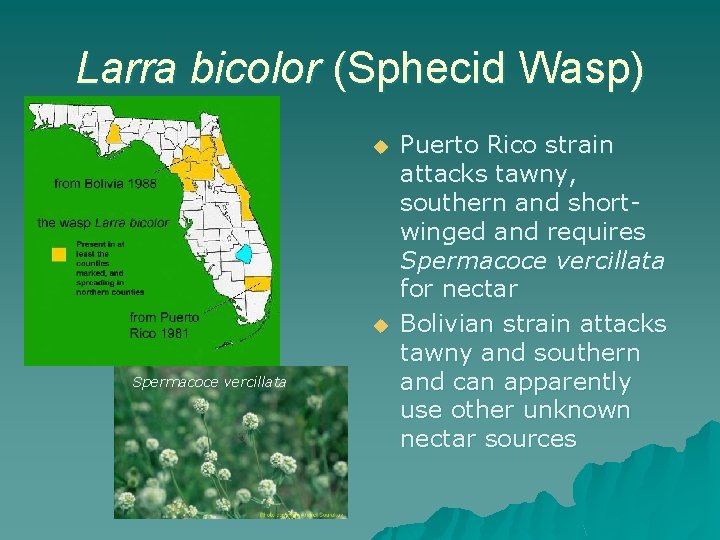
Larra bicolor (Sphecid Wasp) u u Spermacoce vercillata Puerto Rico strain attacks tawny, southern and shortwinged and requires Spermacoce vercillata for nectar Bolivian strain attacks tawny and southern and can apparently use other unknown nectar sources
Author: Richard Sprenkel University of Florida NFREC, Quincy Department of Entomology & Nematology

- Slides: 15