
Biological Compounds You are what you eat CARBOHYDRATES
Biological Compounds You are what you eat
CARBOHYDRATES • Composed of Carbon, Hydrogen, Oxygen – Formula: CH 2 O • Building Blocks: Simple Sugars • Rich energy source • Sugars & Starches
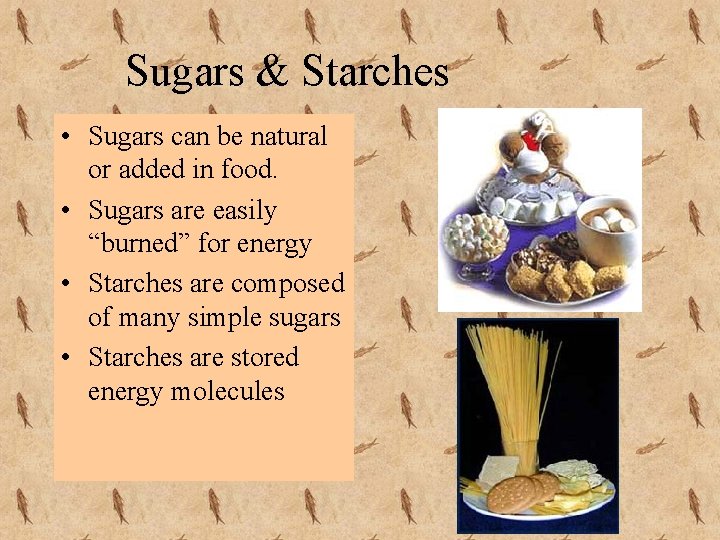
Sugars & Starches • Sugars can be natural or added in food. • Sugars are easily “burned” for energy • Starches are composed of many simple sugars • Starches are stored energy molecules
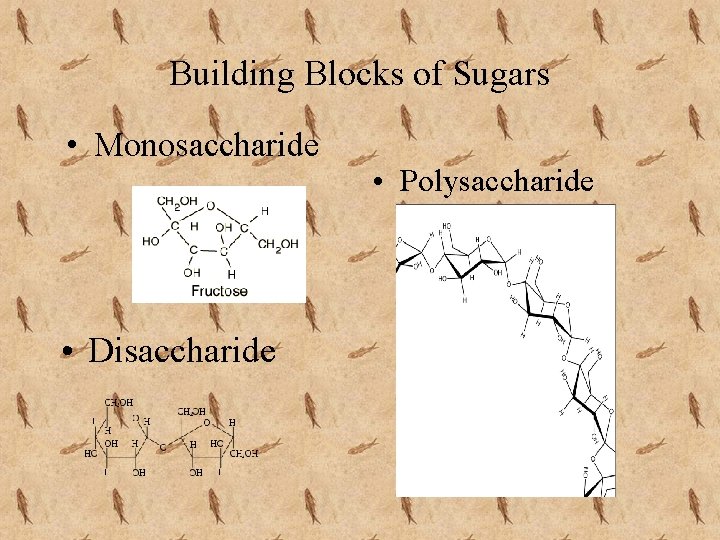
Building Blocks of Sugars • Monosaccharide • Disaccharide • Polysaccharide
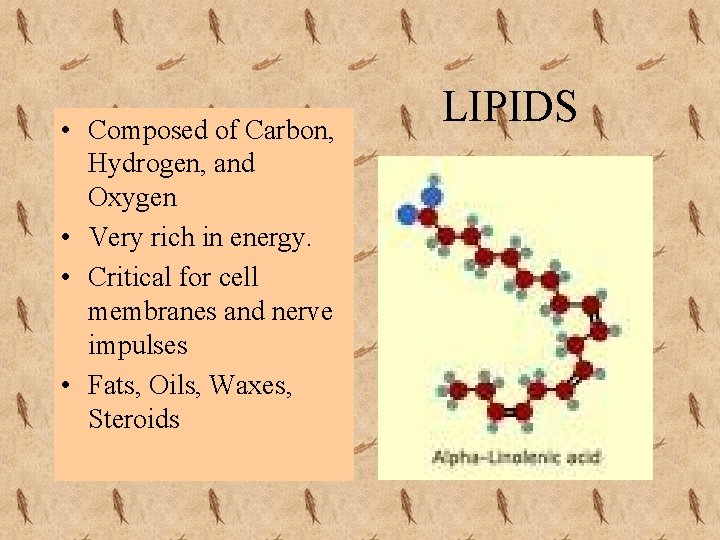
• Composed of Carbon, Hydrogen, and Oxygen • Very rich in energy. • Critical for cell membranes and nerve impulses • Fats, Oils, Waxes, Steroids LIPIDS
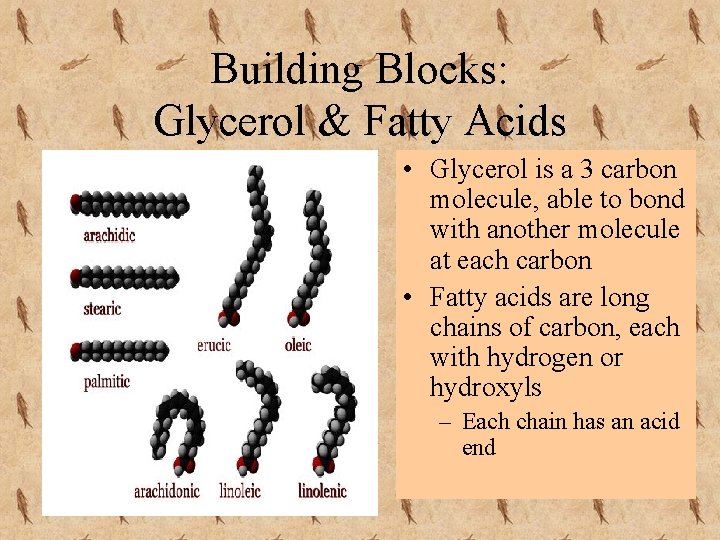
Building Blocks: Glycerol & Fatty Acids • Glycerol is a 3 carbon molecule, able to bond with another molecule at each carbon • Fatty acids are long chains of carbon, each with hydrogen or hydroxyls – Each chain has an acid end
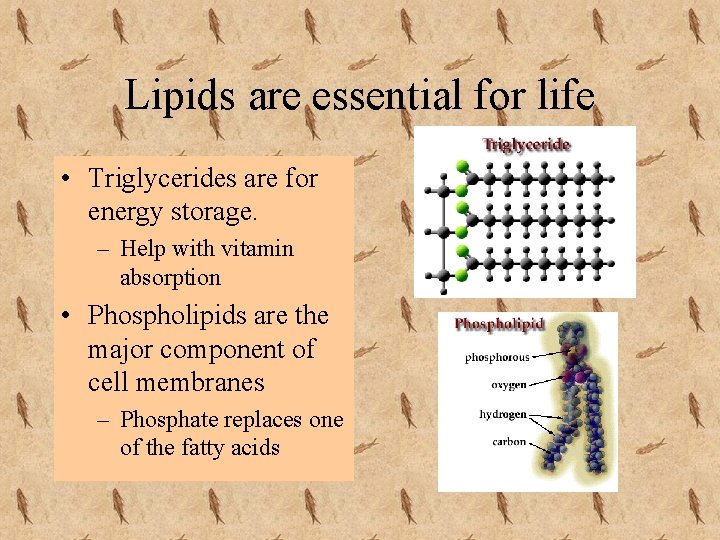
Lipids are essential for life • Triglycerides are for energy storage. – Help with vitamin absorption • Phospholipids are the major component of cell membranes – Phosphate replaces one of the fatty acids
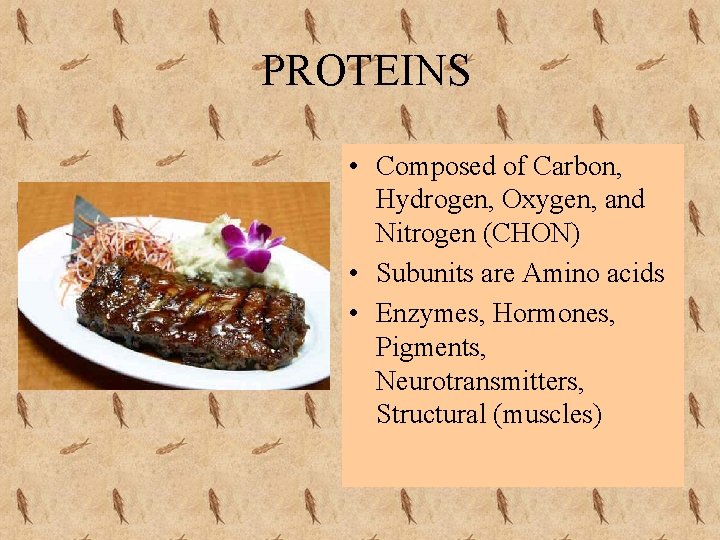
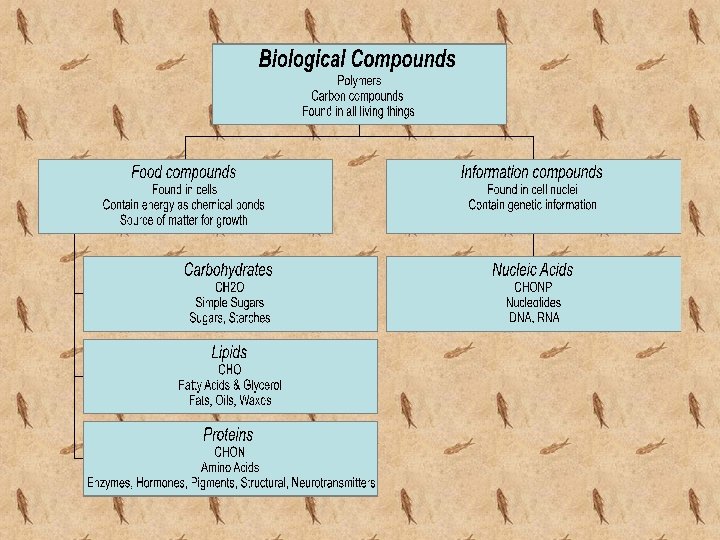
PROTEINS • Composed of Carbon, Hydrogen, Oxygen, and Nitrogen (CHON) • Subunits are Amino acids • Enzymes, Hormones, Pigments, Neurotransmitters, Structural (muscles)
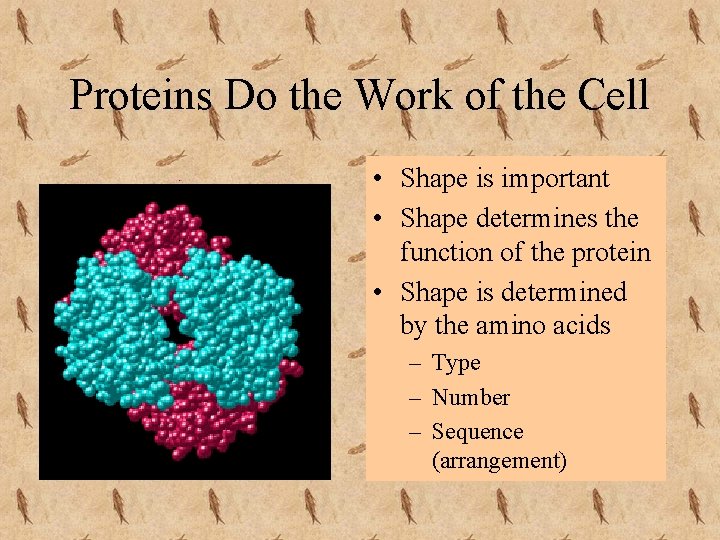
Proteins Do the Work of the Cell • Shape is important • Shape determines the function of the protein • Shape is determined by the amino acids – Type – Number – Sequence (arrangement)
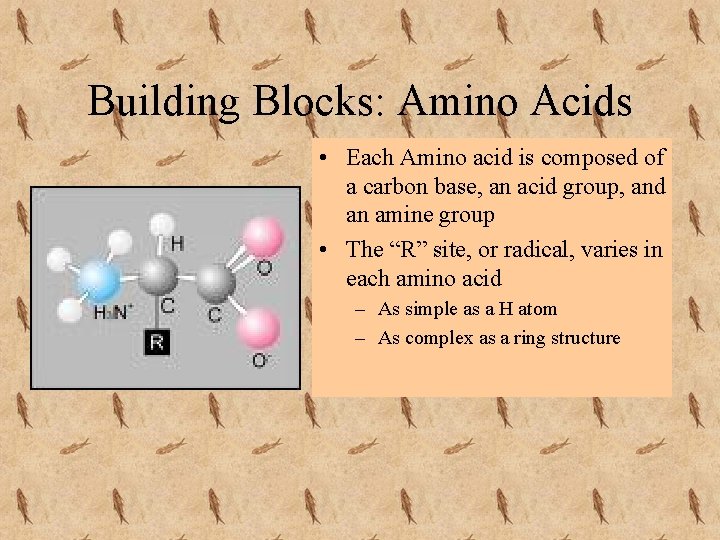
Building Blocks: Amino Acids • Each Amino acid is composed of a carbon base, an acid group, and an amine group • The “R” site, or radical, varies in each amino acid – As simple as a H atom – As complex as a ring structure
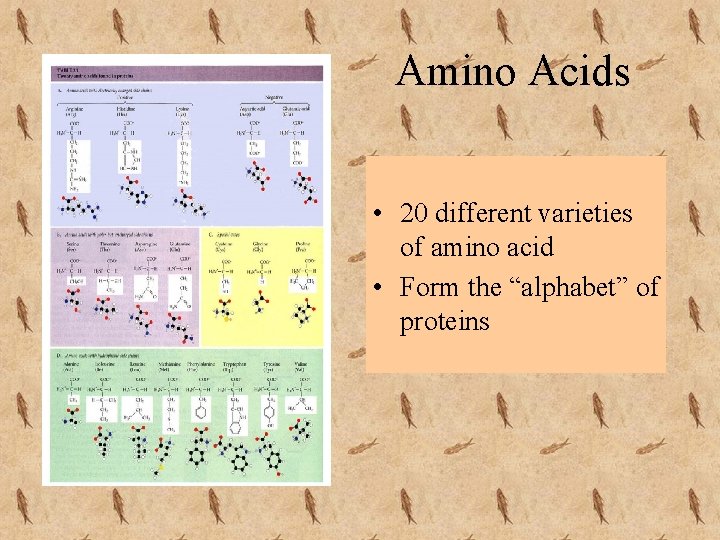
Amino Acids • 20 different varieties of amino acid • Form the “alphabet” of proteins
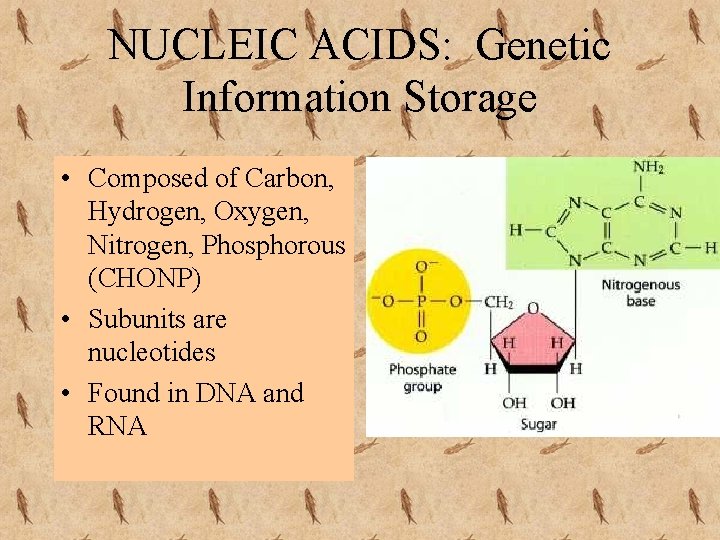
NUCLEIC ACIDS: Genetic Information Storage • Composed of Carbon, Hydrogen, Oxygen, Nitrogen, Phosphorous (CHONP) • Subunits are nucleotides • Found in DNA and RNA
Building Blocks: Nucleotides • Each nucleotide is composed of a sugar, phosphate, and nitrogen base • 4 nucleotides in DNA – Adenine, Thymine, Cytosine, Guanine • 4 nucleotides in RNA – Adenine, Uracil, Cytosine, Guanine
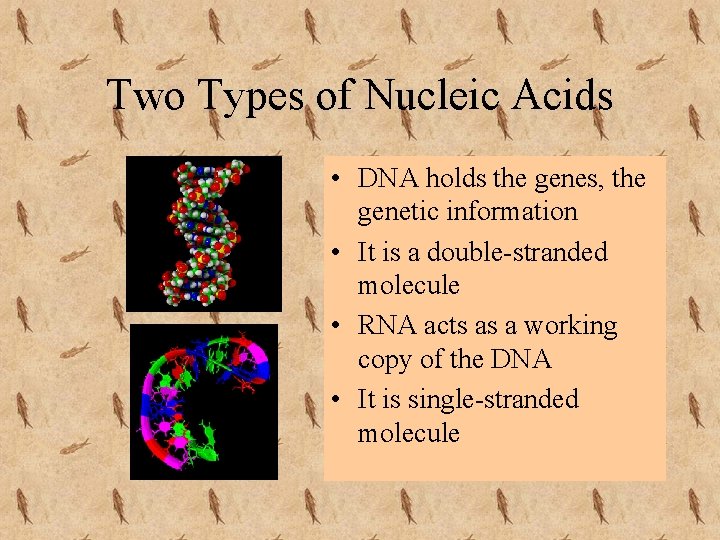
Two Types of Nucleic Acids • DNA holds the genes, the genetic information • It is a double-stranded molecule • RNA acts as a working copy of the DNA • It is single-stranded molecule
The Others • Compounds that are essential to life, but don’t fit in the other categories • Vitamins • Minerals • Water
VITAMINS • These compounds don’t fit easily into the other categories – Derived from amino acid or saccharide – Often contains a metal • Vitamins are biological compounds that assist in metabolic processes.
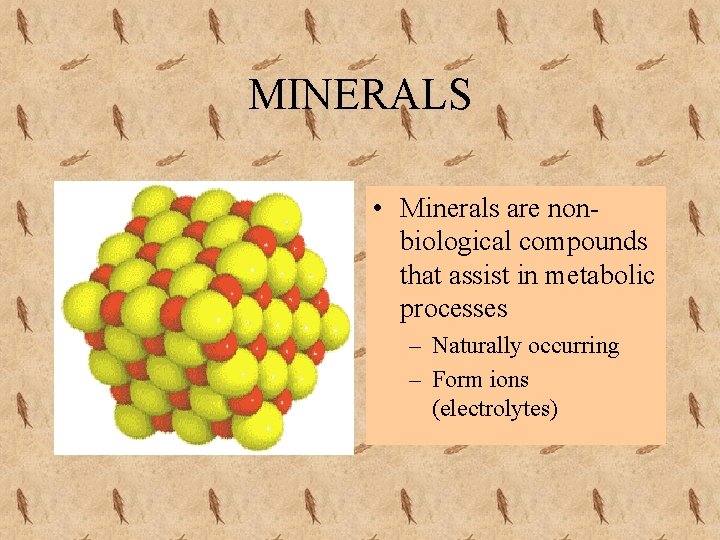
MINERALS • Minerals are nonbiological compounds that assist in metabolic processes – Naturally occurring – Form ions (electrolytes)
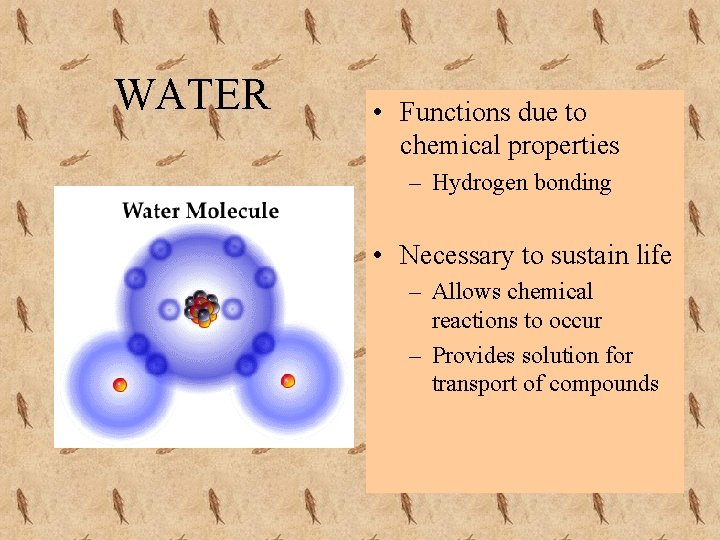
WATER • Functions due to chemical properties – Hydrogen bonding • Necessary to sustain life – Allows chemical reactions to occur – Provides solution for transport of compounds
- Slides: 19