
Biological Classification time Our species This chart shows
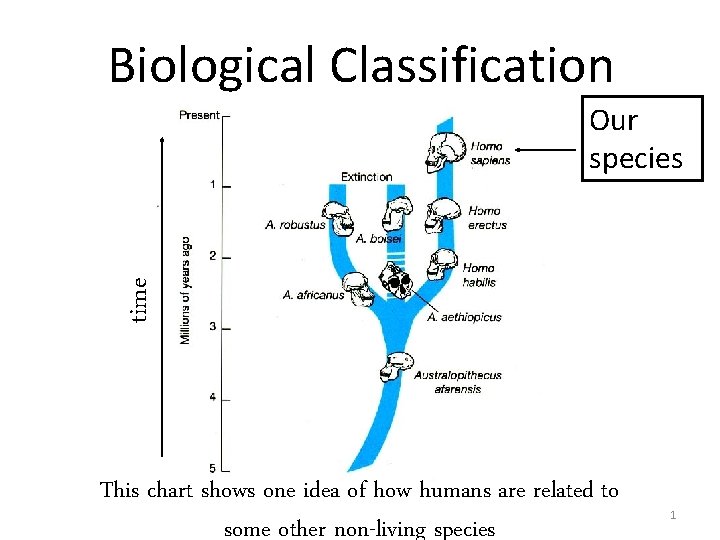
Biological Classification time Our species This chart shows one idea of how humans are related to some other non-living species 1

Biological Classification Carl Linnaeus • Organisms are classified into groups called taxa (singular: taxon) based on their shared characteristics • Carl Linnaeus (1707– 1778), a Swedish scientist, is considered the father of modern biological classification (AKA taxonomy) • His “Linnaean” system is still used today 2
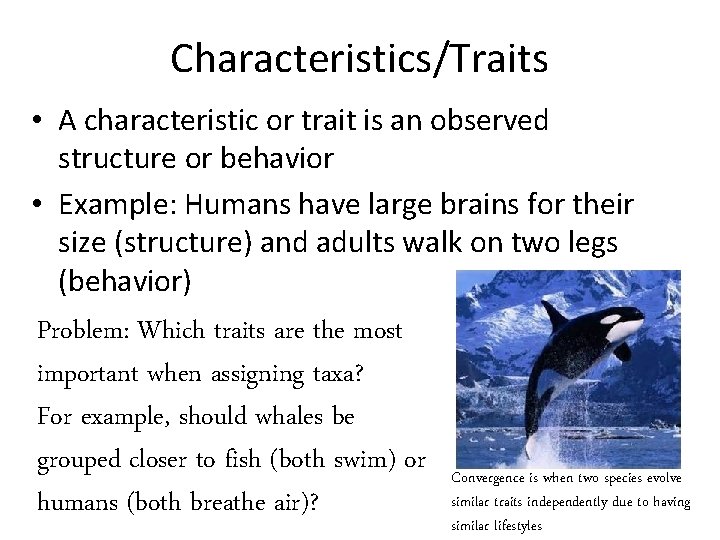
Characteristics/Traits • A characteristic or trait is an observed structure or behavior • Example: Humans have large brains for their size (structure) and adults walk on two legs (behavior) Problem: Which traits are the most important when assigning taxa? For example, should whales be grouped closer to fish (both swim) or humans (both breathe air)? Convergence is when two species evolve similar traits independently due to having similar lifestyles
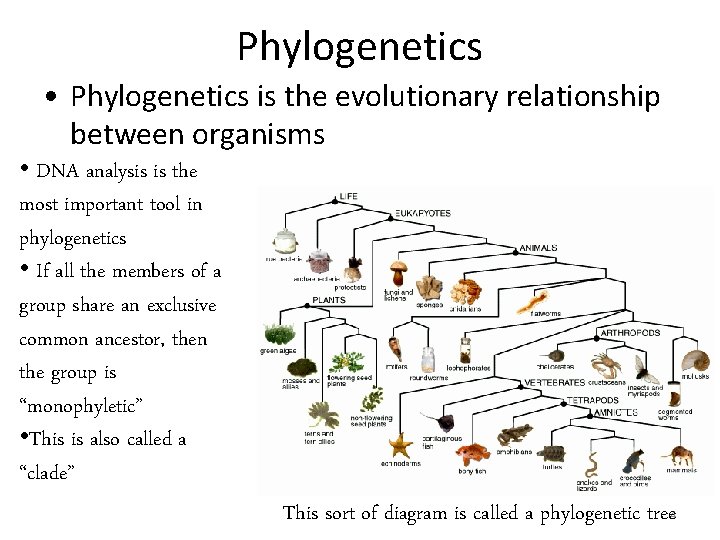
Phylogenetics • Phylogenetics is the evolutionary relationship between organisms • DNA analysis is the most important tool in phylogenetics • If all the members of a group share an exclusive common ancestor, then the group is “monophyletic” • This is also called a “clade” This sort of diagram is called a phylogenetic tree 4
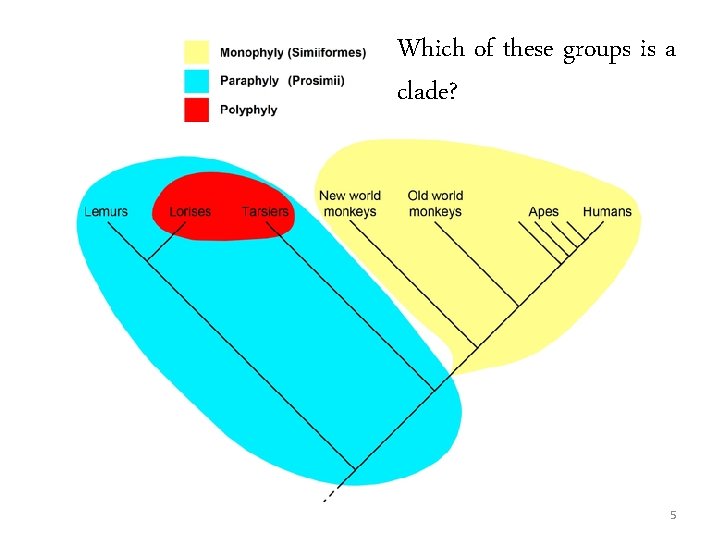
Which of these groups is a clade? 5

“Ontogeny Recapitulates Phylogeny” • Before they are born, developing organisms of different species look similar • This similarity lasts longer in species which split from each other rather recently in evolutionary history Human embryos have tails and • Before they are born, developing pharyngeal pouches (structures organisms may have traits which similar to gills in fish) shown they do not have when born, but here with red arrows. This tells which the organisms that they us that human ancestors probably had tails and gills evolved from had when they were adults 6
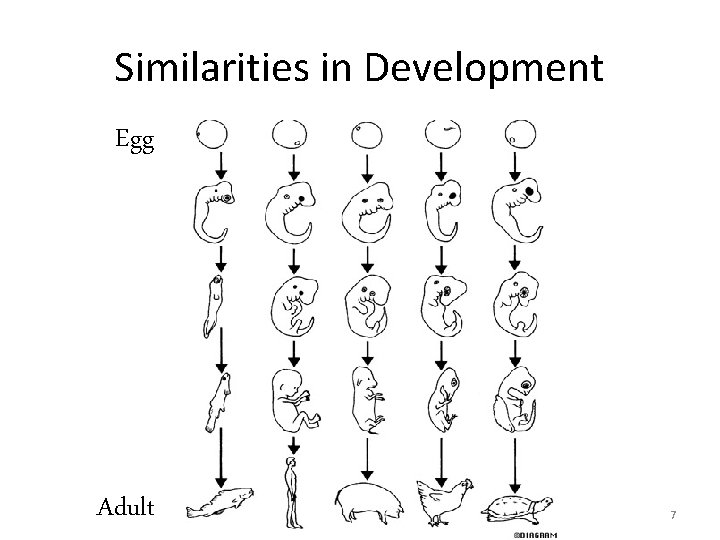
Similarities in Development Egg Adult 7
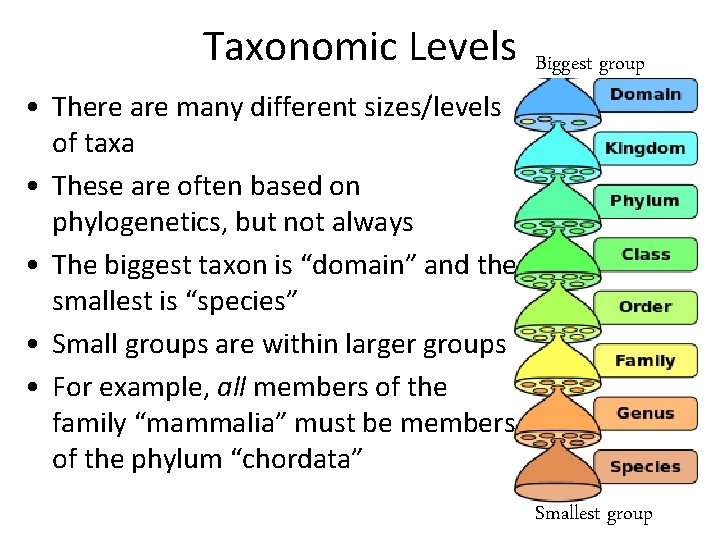
Taxonomic Levels • There are many different sizes/levels of taxa • These are often based on phylogenetics, but not always • The biggest taxon is “domain” and the smallest is “species” • Small groups are within larger groups • For example, all members of the family “mammalia” must be members of the phylum “chordata” Biggest group Smallest group
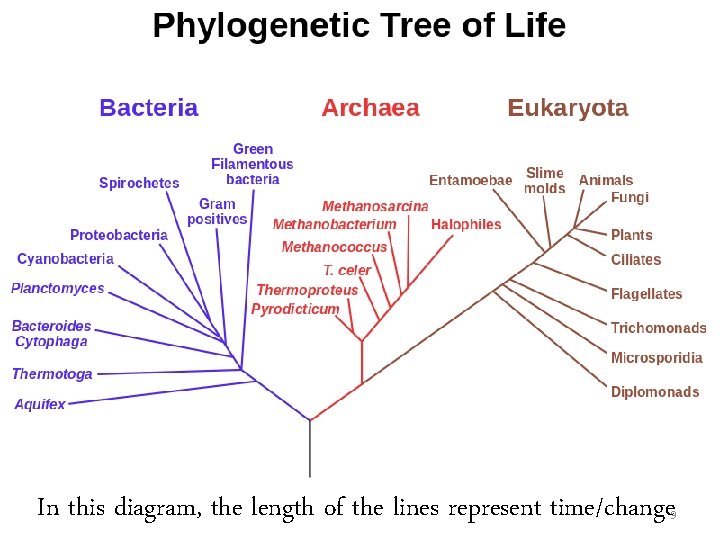
In this diagram, the length of the lines represent time/change 9
Taxonomy and Phylogeny • Taxonomy is based on traits that someone thinks are the most important traits to look at, so it’s more subjective • Phylogeny, however, is about evolutionary relationships, so it’s more objective • No organism or species currently living is “more evolved” in general than any other. Why is this?
Bacteria • Bacteria are single-celled (each organism is only one cell) • They don’t have organelles • Some bacteria cause human diseases, but others help us • Bacteria can live in many places, including inside animals, like you! This animation shows bacteria reproducing asexually
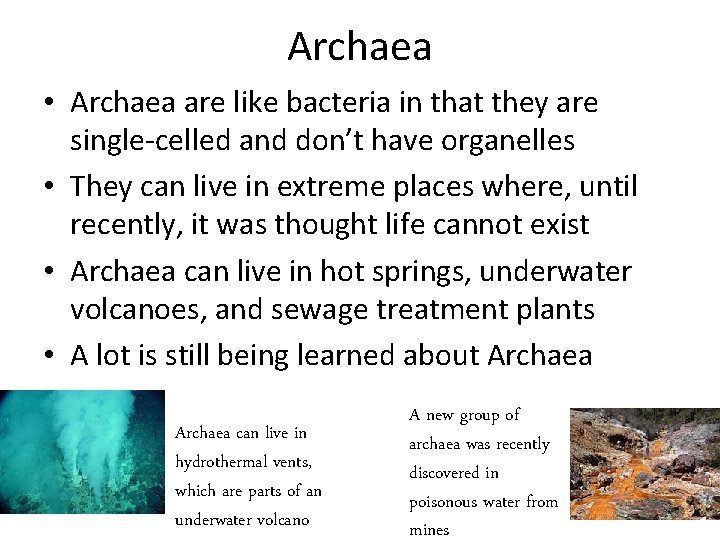
Archaea • Archaea are like bacteria in that they are single-celled and don’t have organelles • They can live in extreme places where, until recently, it was thought life cannot exist • Archaea can live in hot springs, underwater volcanoes, and sewage treatment plants • A lot is still being learned about Archaea can live in hydrothermal vents, which are parts of an underwater volcano A new group of archaea was recently discovered in poisonous water from mines
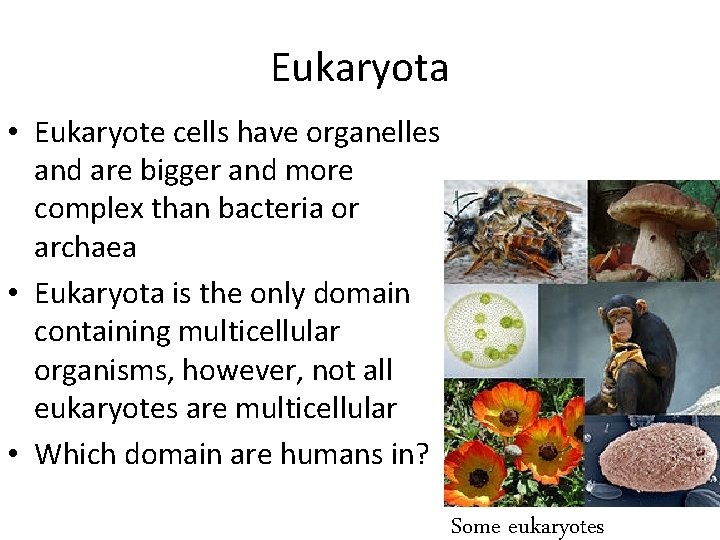
Eukaryota • Eukaryote cells have organelles and are bigger and more complex than bacteria or archaea • Eukaryota is the only domain containing multicellular organisms, however, not all eukaryotes are multicellular • Which domain are humans in? Some eukaryotes
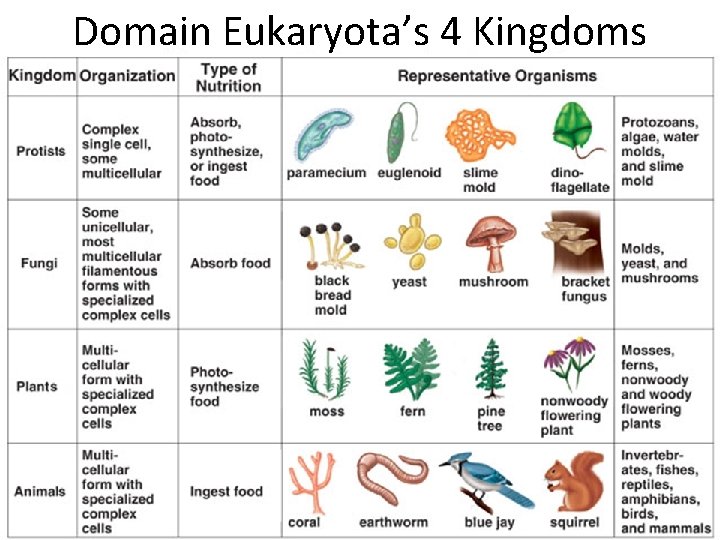
Domain Eukaryota’s 4 Kingdoms 14
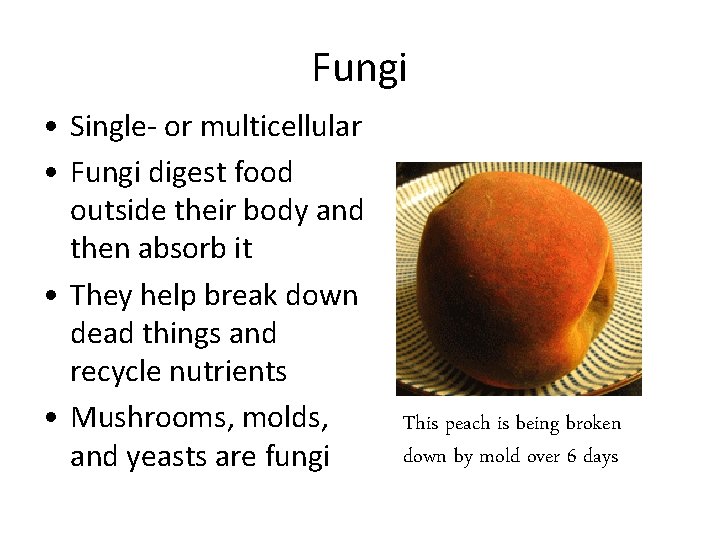
Fungi • Single- or multicellular • Fungi digest food outside their body and then absorb it • They help break down dead things and recycle nutrients • Mushrooms, molds, and yeasts are fungi This peach is being broken down by mold over 6 days
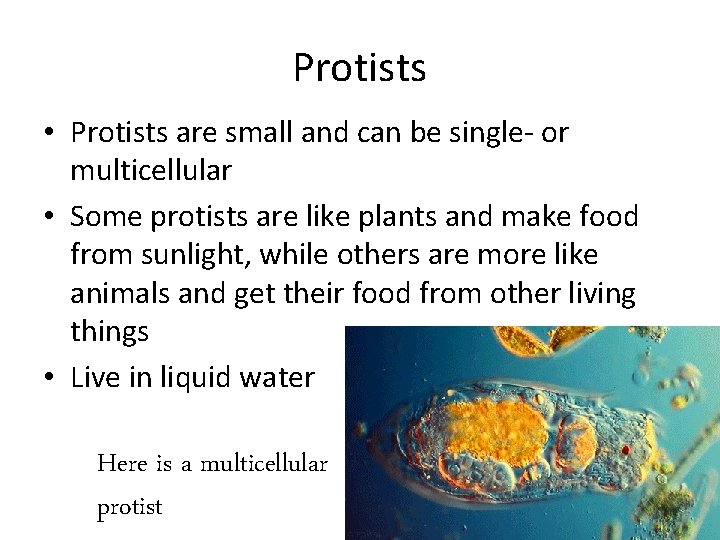
Protists • Protists are small and can be single- or multicellular • Some protists are like plants and make food from sunlight, while others are more like animals and get their food from other living things • Live in liquid water Here is a multicellular protist
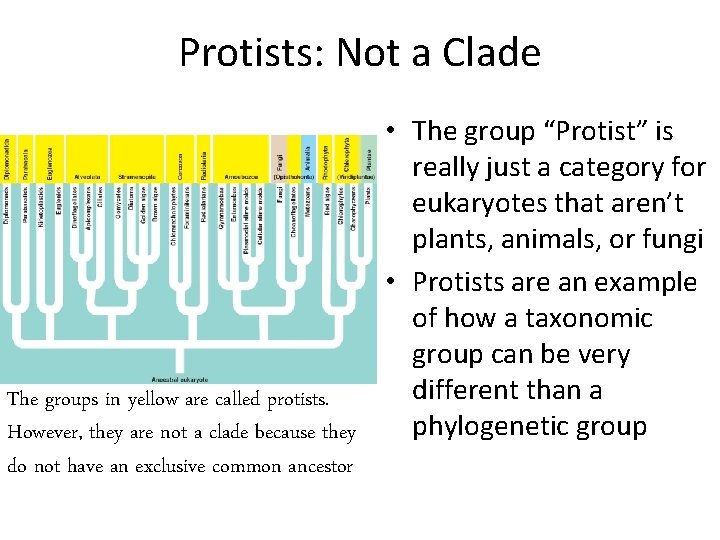
Protists: Not a Clade • The group “Protist” is really just a category for eukaryotes that aren’t plants, animals, or fungi • Protists are an example of how a taxonomic group can be very different than a The groups in yellow are called protists. phylogenetic group However, they are not a clade because they do not have an exclusive common ancestor
Human Taxonomy • Domain: Eukaryota (cells have organelles) • Kingdom: Animalia (fixed body plan and eat other organisms) • Phylum: Chordata (have a spinal cord) • Class: Mammalia (have hair, mammary glands) • Order: Primates (forward-facing eyes and nails instead of claws) • Family: Hominidae (large, no tail) • Genus: Homo (larger brain, walk on two legs) • Species: sapiens (even larger brain, small teeth) 18
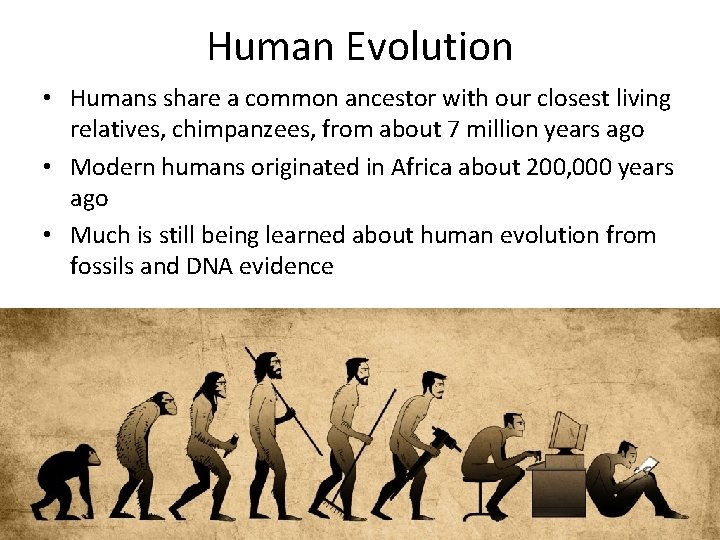
Human Evolution • Humans share a common ancestor with our closest living relatives, chimpanzees, from about 7 million years ago • Modern humans originated in Africa about 200, 000 years ago • Much is still being learned about human evolution from fossils and DNA evidence 19
- Slides: 19