
Biological Classification Taxonomy Branch of biology that names
Biological Classification
• Taxonomy: Branch of biology that names and organizes organisms according to their characteristics. • Why do scientists classify living organisms? • To answer questions, such as: • How many known species are there? • What are the defining characteristics of each species? • What are the relationships between these species?

Aristotle’s Classification • Aristotle (300 B. C. ) • Greek philosopher and teacher more than 2000 years ago • First person to group or classify organisms • Classified organisms as plants or animals
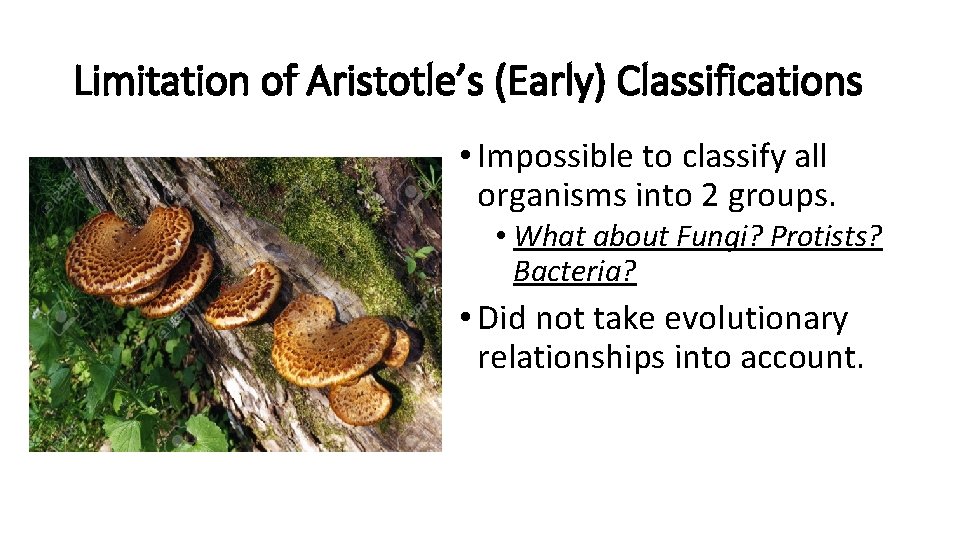
Limitation of Aristotle’s (Early) Classifications • Impossible to classify all organisms into 2 groups. • What about Fungi? Protists? Bacteria? • Did not take evolutionary relationships into account.
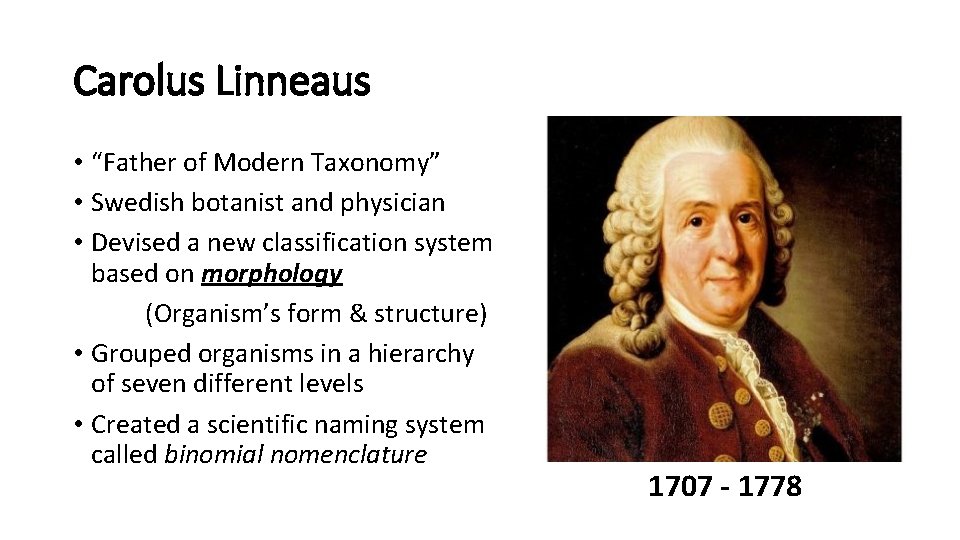
Carolus Linneaus • “Father of Modern Taxonomy” • Swedish botanist and physician • Devised a new classification system based on morphology (Organism’s form & structure) • Grouped organisms in a hierarchy of seven different levels • Created a scientific naming system called binomial nomenclature 1707 - 1778
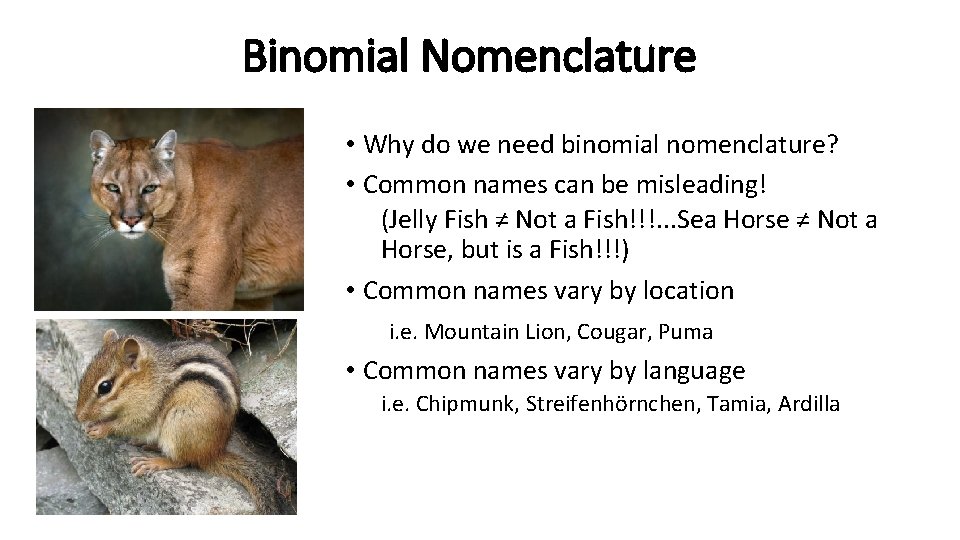
Binomial Nomenclature • Why do we need binomial nomenclature? • Common names can be misleading! (Jelly Fish ≠ Not a Fish!!!. . . Sea Horse ≠ Not a Horse, but is a Fish!!!) • Common names vary by location i. e. Mountain Lion, Cougar, Puma • Common names vary by language i. e. Chipmunk, Streifenhörnchen, Tamia, Ardilla
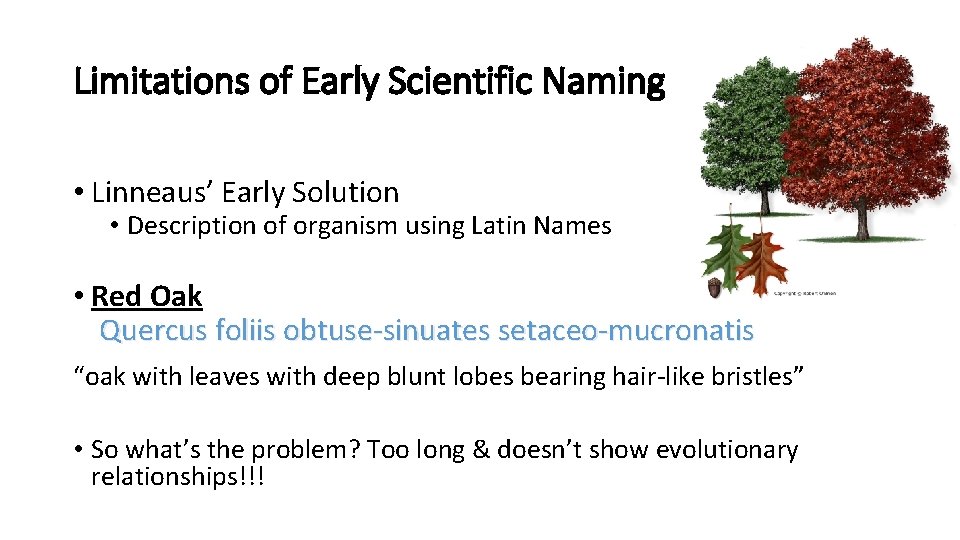
Limitations of Early Scientific Naming • Linneaus’ Early Solution • Description of organism using Latin Names • Red Oak Quercus foliis obtuse-sinuates setaceo-mucronatis “oak with leaves with deep blunt lobes bearing hair-like bristles” • So what’s the problem? Too long & doesn’t show evolutionary relationships!!!
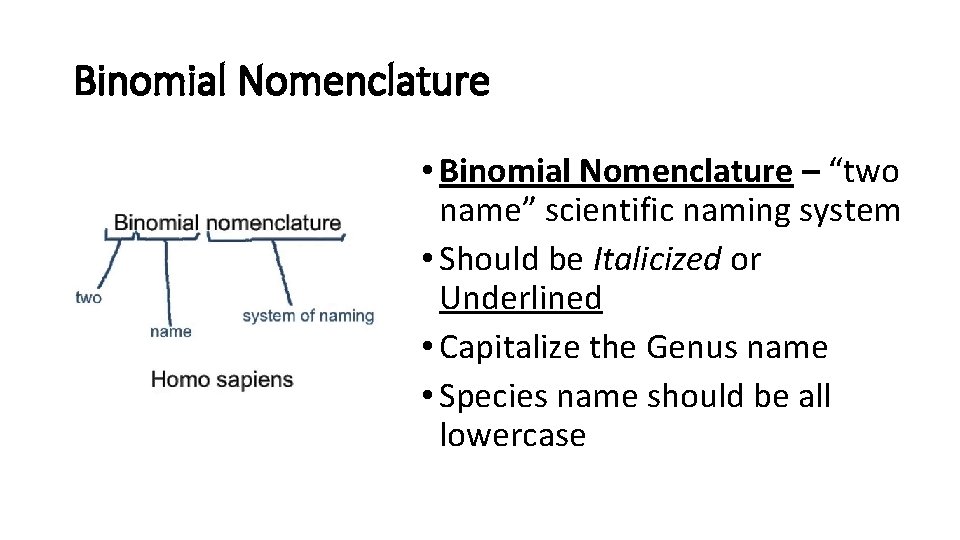
Binomial Nomenclature • Binomial Nomenclature – “two name” scientific naming system • Should be Italicized or Underlined • Capitalize the Genus name • Species name should be all lowercase
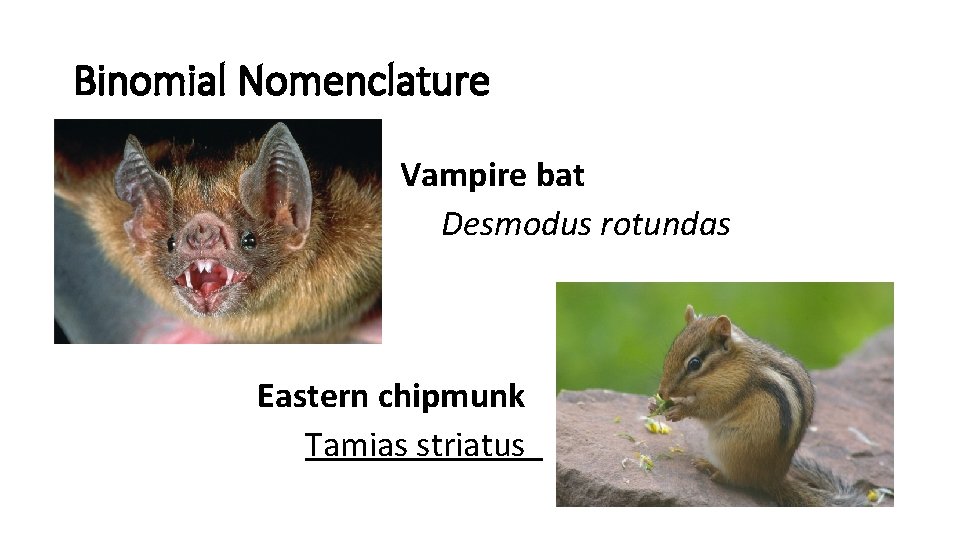
Binomial Nomenclature Vampire bat Desmodus rotundas Eastern chipmunk Tamias striatus
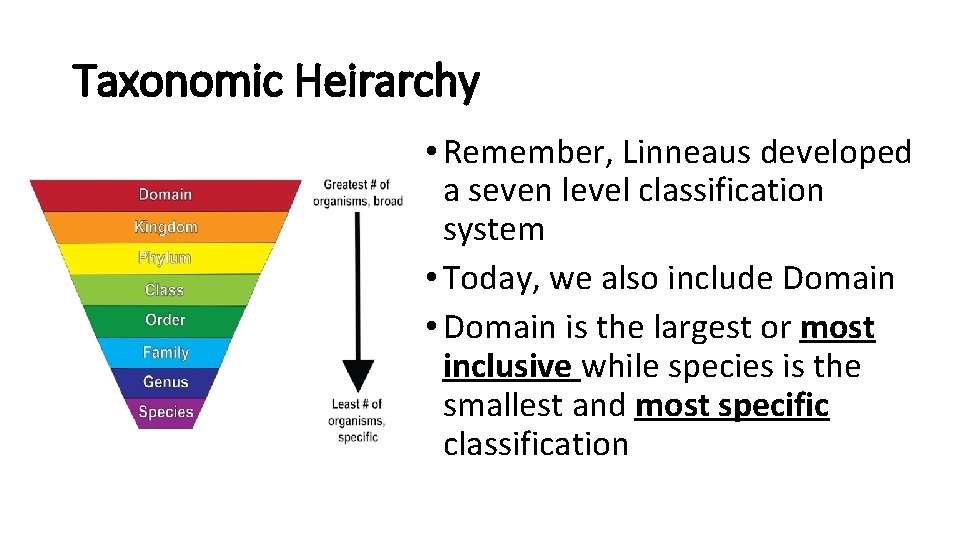
Taxonomic Heirarchy • Remember, Linneaus developed a seven level classification system • Today, we also include Domain • Domain is the largest or most inclusive while species is the smallest and most specific classification
Domain Kingdom Phylum Class Order Family Genus Species Did King Phillip Come Over For Great Spaghetti? ? ?
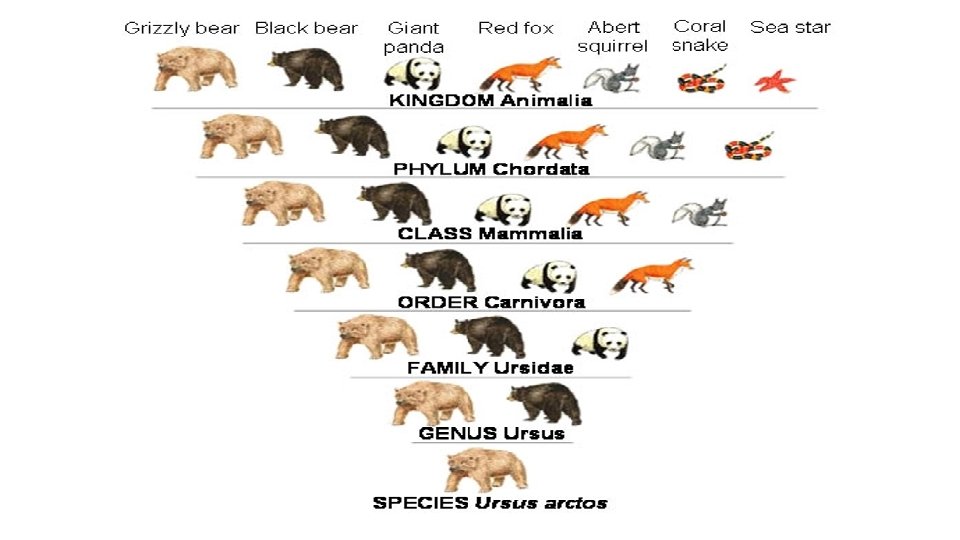
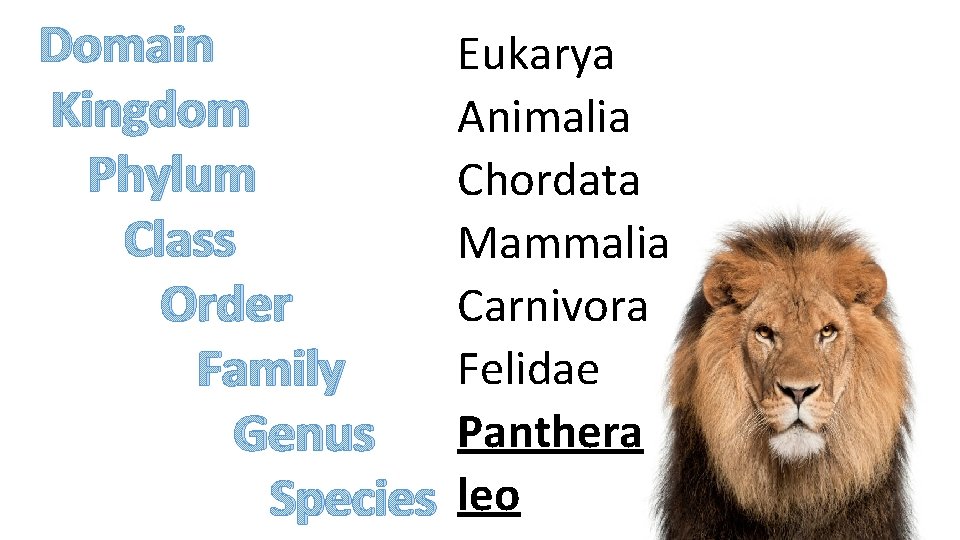
Domain Kingdom Phylum Class Order Family Genus Species Eukarya Animalia Chordata Mammalia Carnivora Felidae Panthera leo
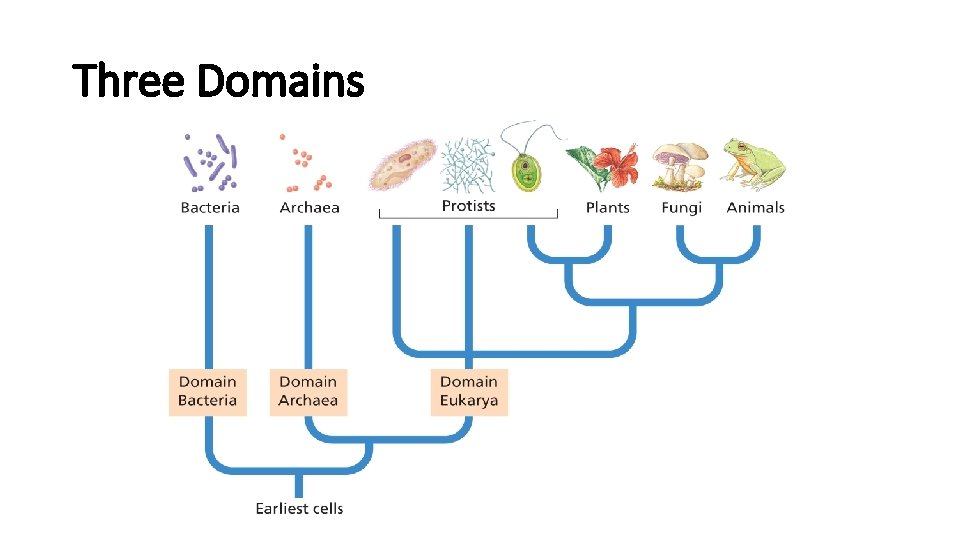
Three Domains
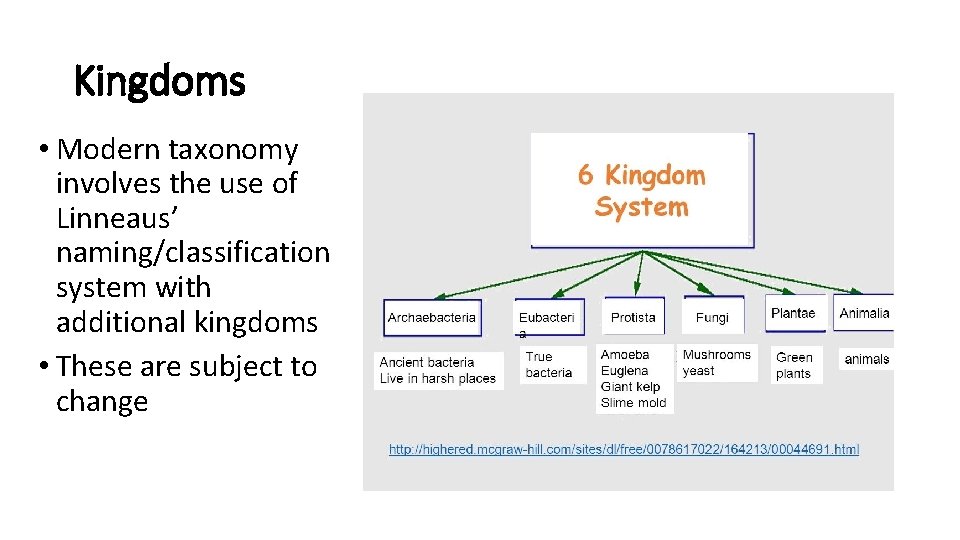
Kingdoms • Modern taxonomy involves the use of Linneaus’ naming/classification system with additional kingdoms • These are subject to change
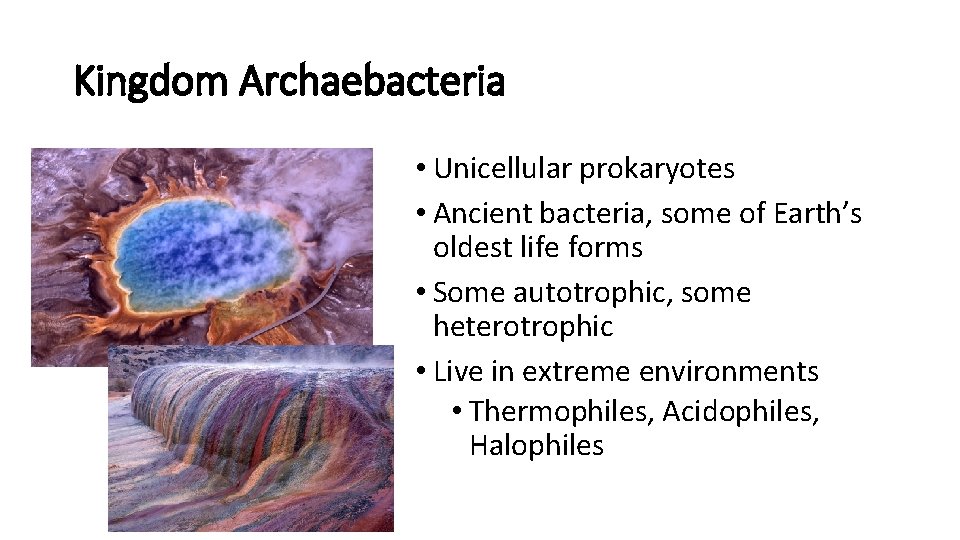
Kingdom Archaebacteria • Unicellular prokaryotes • Ancient bacteria, some of Earth’s oldest life forms • Some autotrophic, some heterotrophic • Live in extreme environments • Thermophiles, Acidophiles, Halophiles
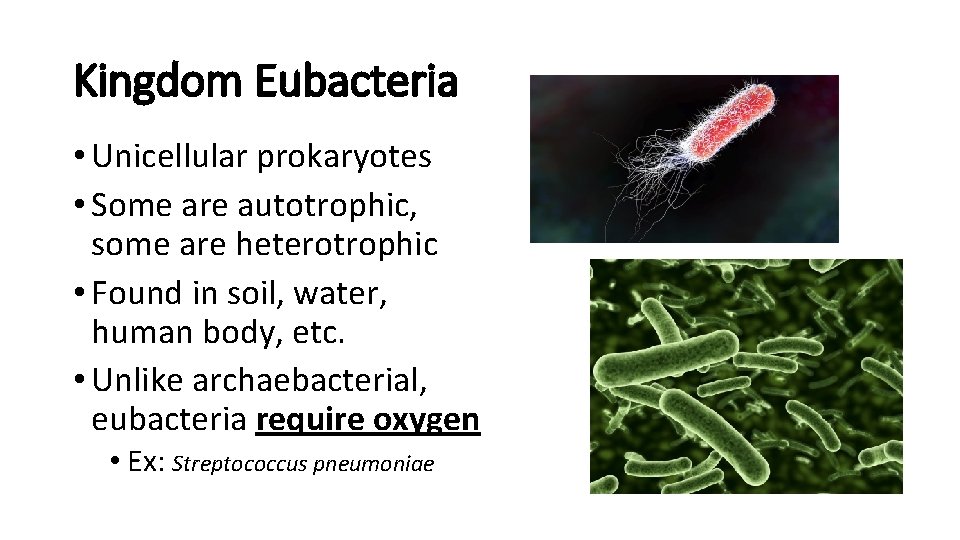
Kingdom Eubacteria • Unicellular prokaryotes • Some are autotrophic, some are heterotrophic • Found in soil, water, human body, etc. • Unlike archaebacterial, eubacteria require oxygen • Ex: Streptococcus pneumoniae
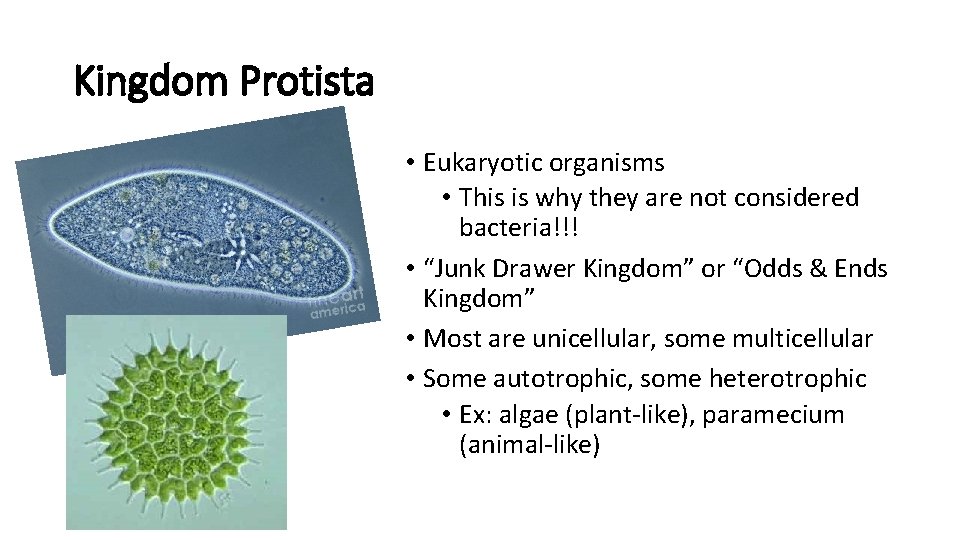
Kingdom Protista • Eukaryotic organisms • This is why they are not considered bacteria!!! • “Junk Drawer Kingdom” or “Odds & Ends Kingdom” • Most are unicellular, some multicellular • Some autotrophic, some heterotrophic • Ex: algae (plant-like), paramecium (animal-like)
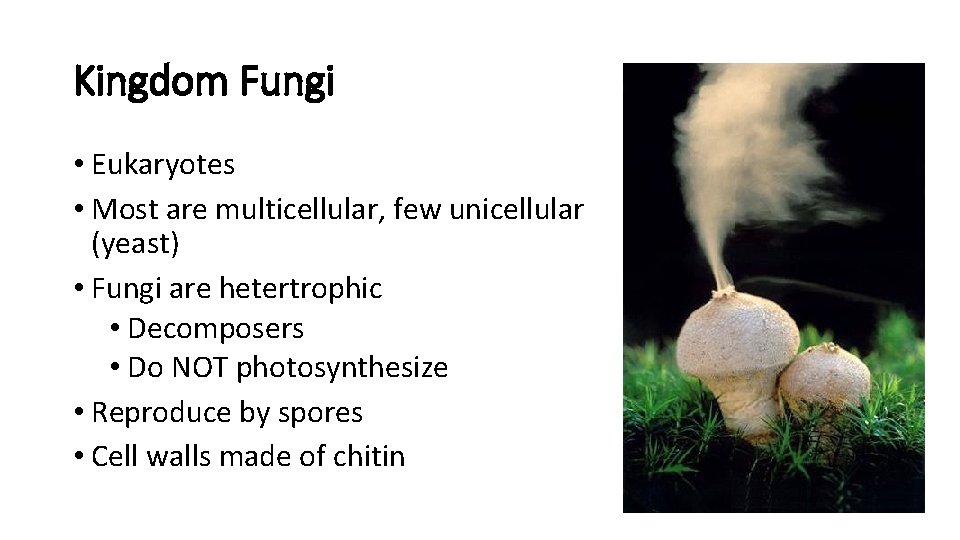
Kingdom Fungi • Eukaryotes • Most are multicellular, few unicellular (yeast) • Fungi are hetertrophic • Decomposers • Do NOT photosynthesize • Reproduce by spores • Cell walls made of chitin
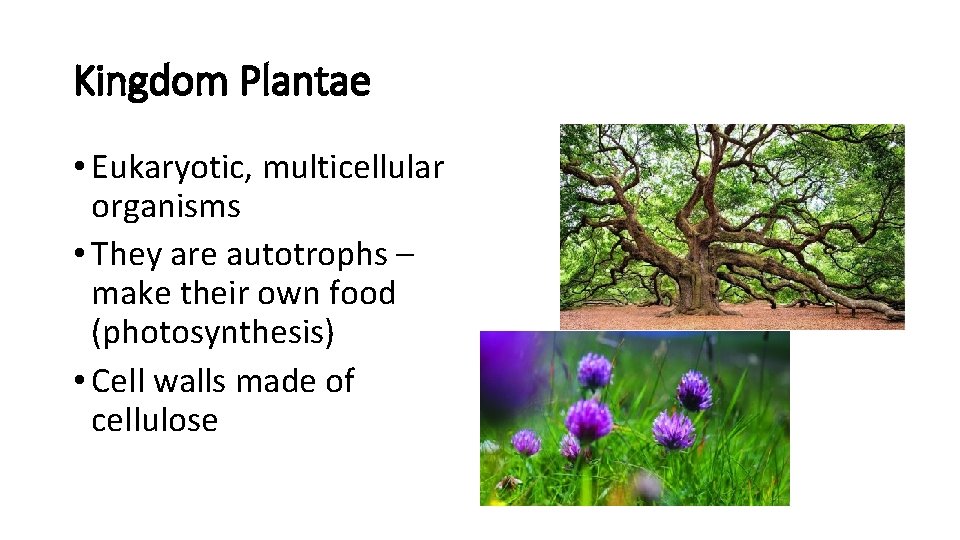
Kingdom Plantae • Eukaryotic, multicellular organisms • They are autotrophs – make their own food (photosynthesis) • Cell walls made of cellulose
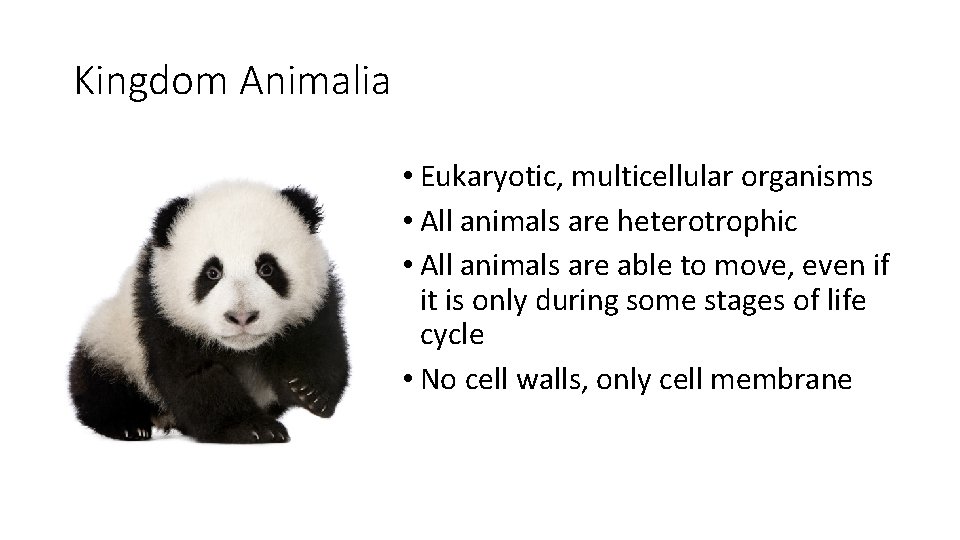
Kingdom Animalia • Eukaryotic, multicellular organisms • All animals are heterotrophic • All animals are able to move, even if it is only during some stages of life cycle • No cell walls, only cell membrane
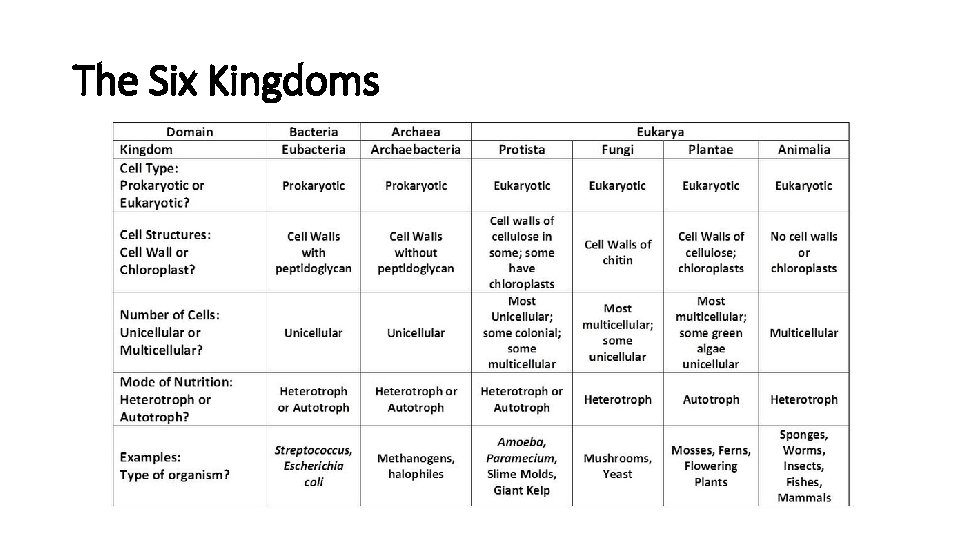
The Six Kingdoms
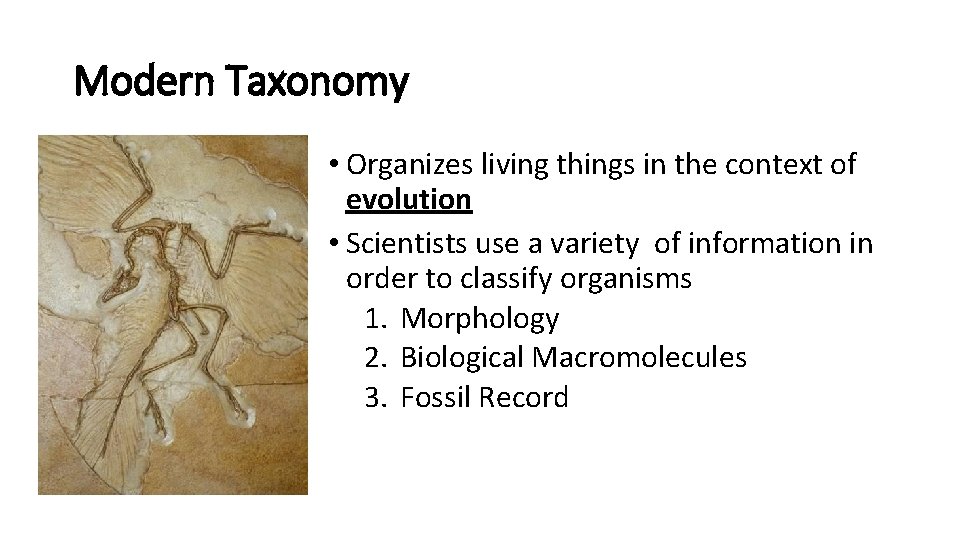
Modern Taxonomy • Organizes living things in the context of evolution • Scientists use a variety of information in order to classify organisms 1. Morphology 2. Biological Macromolecules 3. Fossil Record
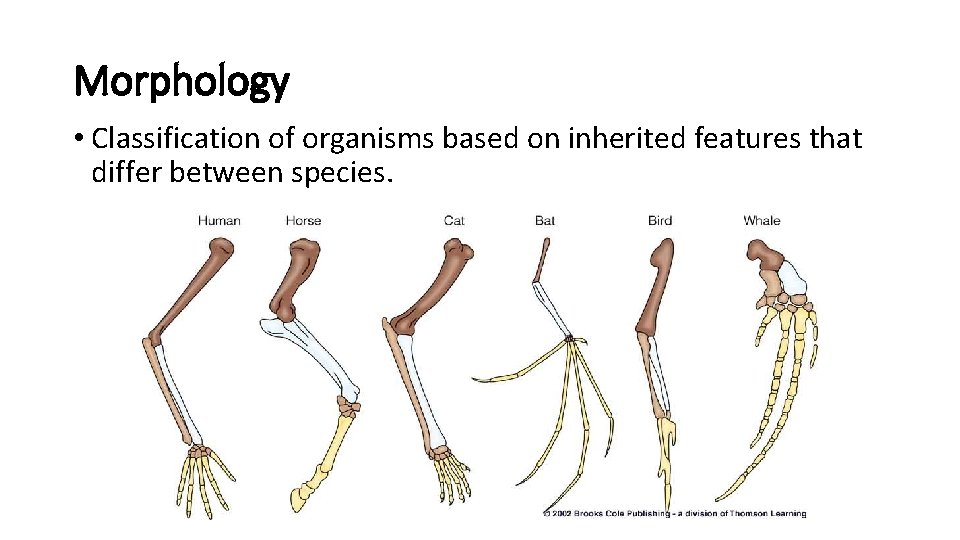
Morphology • Classification of organisms based on inherited features that differ between species.
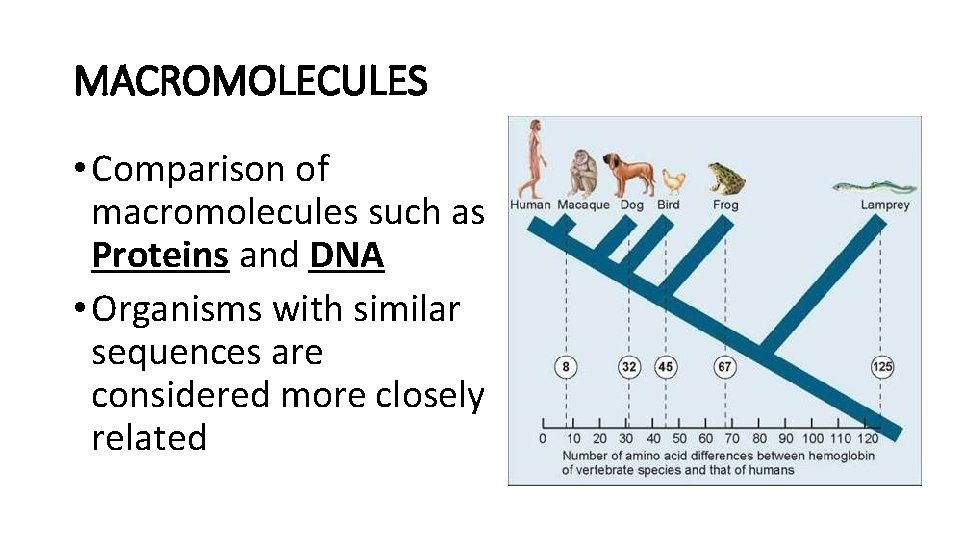
MACROMOLECULES • Comparison of macromolecules such as Proteins and DNA • Organisms with similar sequences are considered more closely related
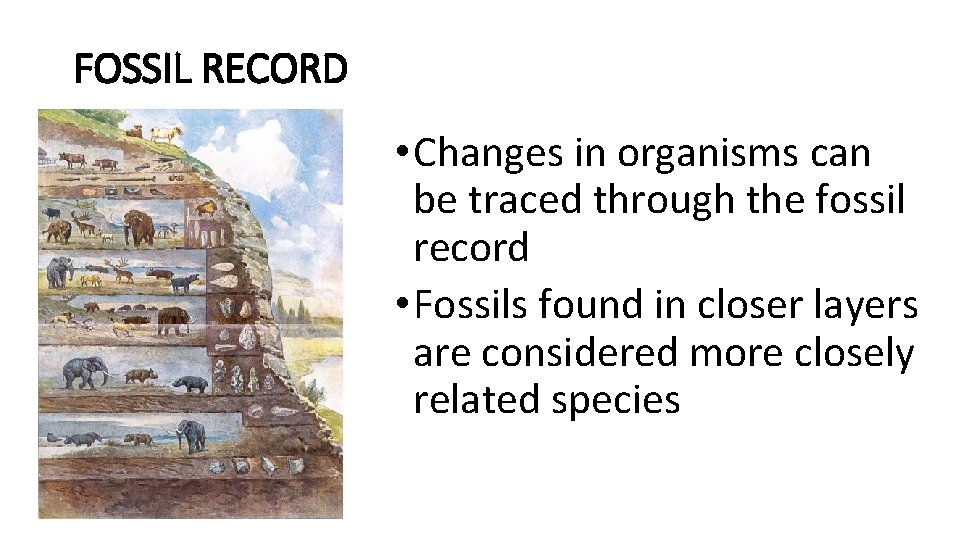
FOSSIL RECORD • Changes in organisms can be traced through the fossil record • Fossils found in closer layers are considered more closely related species
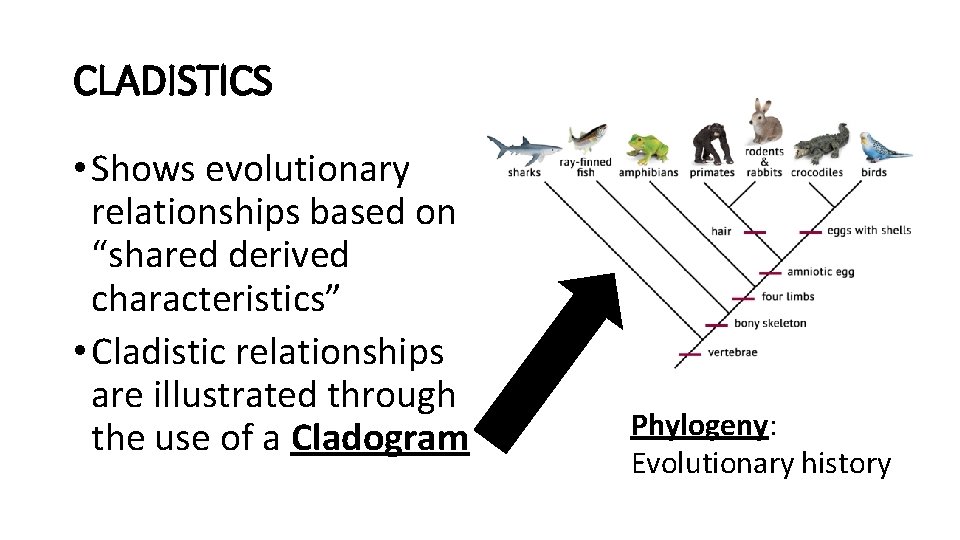
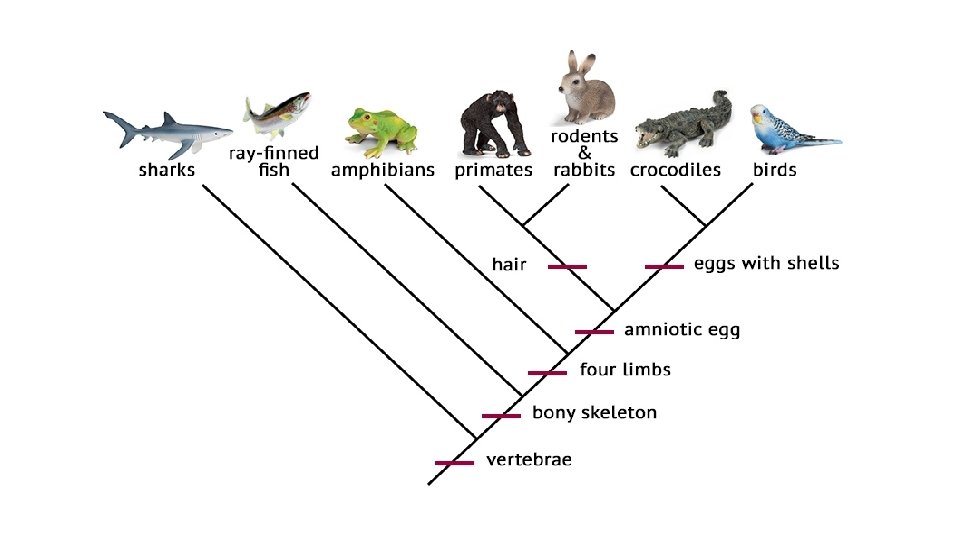
CLADISTICS • Shows evolutionary relationships based on “shared derived characteristics” • Cladistic relationships are illustrated through the use of a Cladogram Phylogeny: Evolutionary history
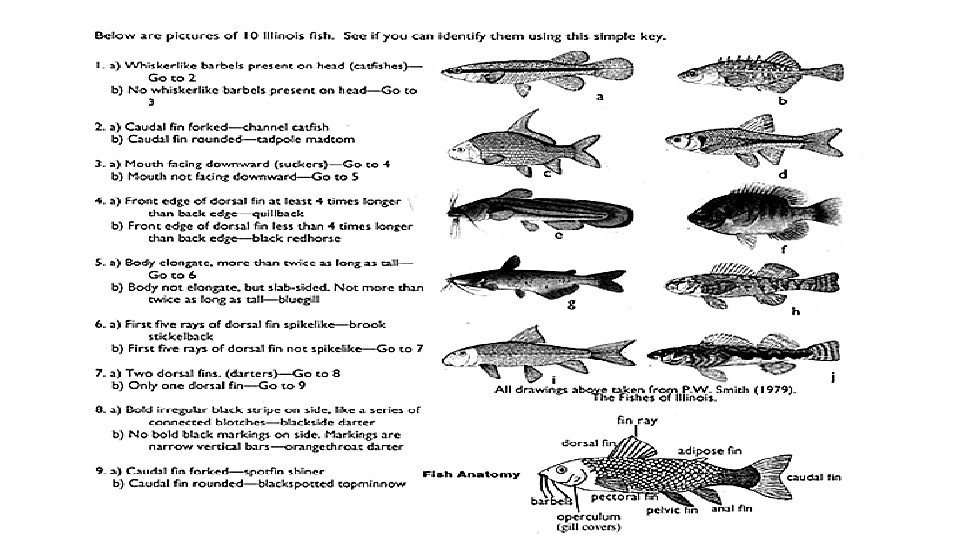
DICHOTOMOUS KEYS • Dichotomous Keys are a scientific tool that allows the user to determine the identity of an item or organism based on its characteristics • Dichotomous – “Divided in two parts” (Greek) • Dichotomous keys always give two choices at each step
DICHOTOMOUS KEY RULES • Use characteristics that remain constant • Use measurements rather than terms like “large” or “small” • Make the choice a positive one – something “is” instead of “is not” • If possible, start both choices of a pair with the same word • Finish the dichotomous key with the items’ identity • If done correctly, you should have one less step than the number of organisms
- Slides: 31