
Biological Change Over Time Learning Goal To learn
Biological Change Over Time Learning Goal: To learn that mutations cause change in species and how species can evolve through artificial selection. Success Criteria: I know I am succeeding when I can… q explain the ultimate cause of genetic variation and the evolution of a species q explain how artificial selection can produce dramatic changes in a population over time q explain that the limitations of artificial selection
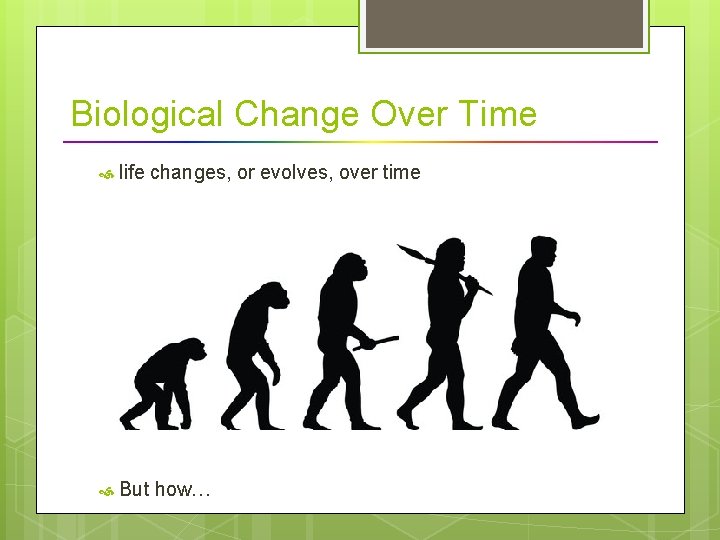
Biological Change Over Time life changes, or evolves, over time But how…
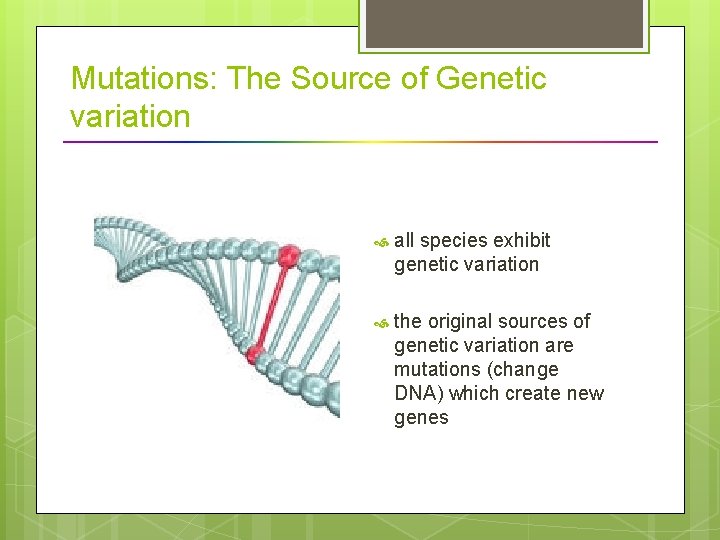
Mutations: The Source of Genetic variation all species exhibit genetic variation the original sources of genetic variation are mutations (change DNA) which create new genes

Mutations: The Source of Genetic variation Mutations may be: 1. neutral occur in noncoding DNA and provide no benefit or harm to the individual 2. harmful reduce the reproductive success of an organism (i. e. mutations that lead to serious genetic disorders such as cystic fibrosis)
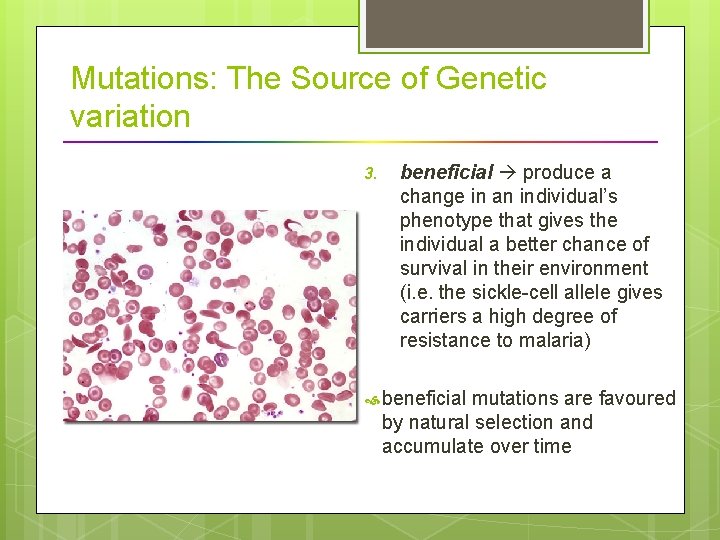
Mutations: The Source of Genetic variation 3. beneficial produce a change in an individual’s phenotype that gives the individual a better chance of survival in their environment (i. e. the sickle-cell allele gives carriers a high degree of resistance to malaria) beneficial mutations are favoured by natural selection and accumulate over time

Mutations: The Source of Genetic variation Cont’d… a mutation that is beneficial to one species may not be to another species (i. e. disease-causing bacteria and pests becoming resistance to antibiotics and insecticides)
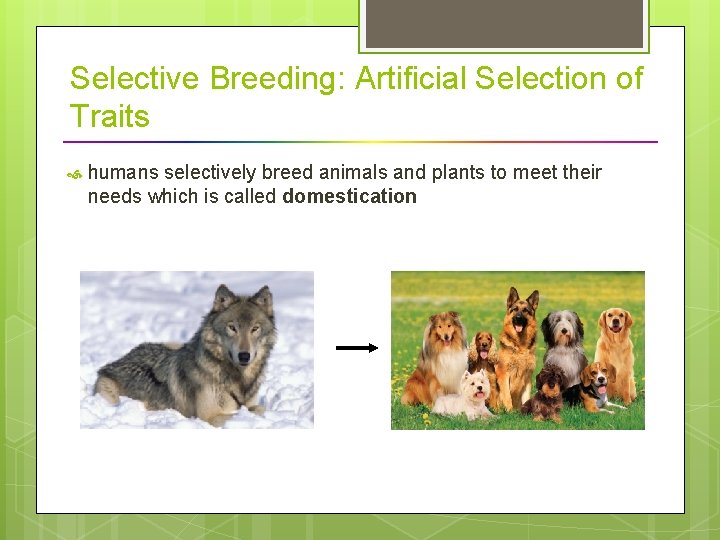
Selective Breeding: Artificial Selection of Traits humans selectively breed animals and plants to meet their needs which is called domestication
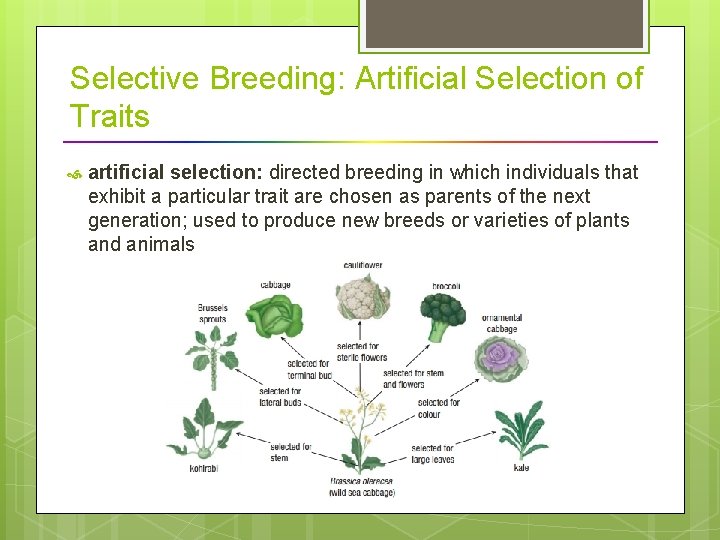
Selective Breeding: Artificial Selection of Traits artificial selection: directed breeding in which individuals that exhibit a particular trait are chosen as parents of the next generation; used to produce new breeds or varieties of plants and animals
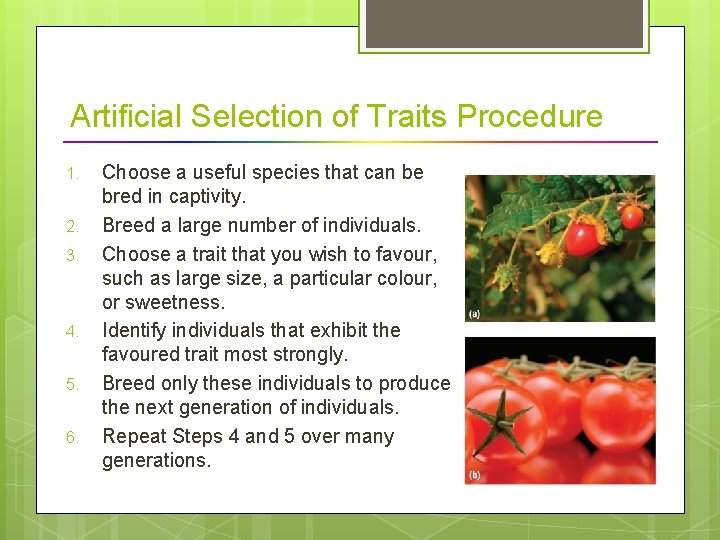
Artificial Selection of Traits Procedure 1. 2. 3. 4. 5. 6. Choose a useful species that can be bred in captivity. Breed a large number of individuals. Choose a trait that you wish to favour, such as large size, a particular colour, or sweetness. Identify individuals that exhibit the favoured trait most strongly. Breed only these individuals to produce the next generation of individuals. Repeat Steps 4 and 5 over many generations.
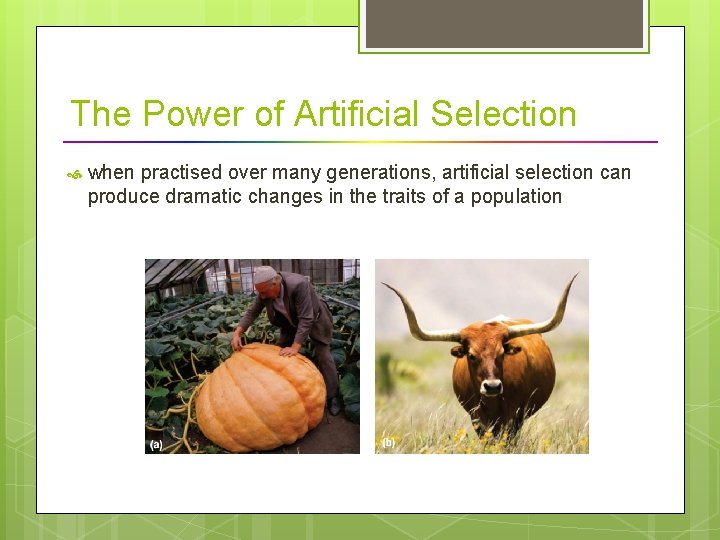
The Power of Artificial Selection when practised over many generations, artificial selection can produce dramatic changes in the traits of a population
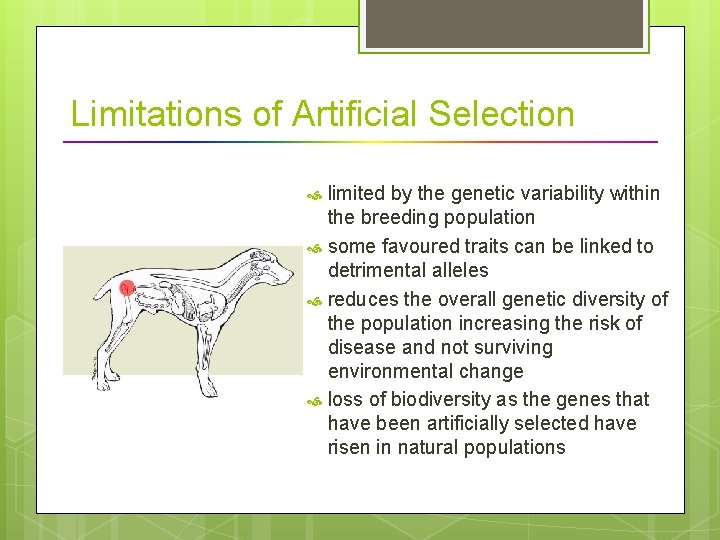
Limitations of Artificial Selection limited by the genetic variability within the breeding population some favoured traits can be linked to detrimental alleles reduces the overall genetic diversity of the population increasing the risk of disease and not surviving environmental change loss of biodiversity as the genes that have been artificially selected have risen in natural populations
Homework Answer 7. 1 questions #1 -5, 8, 9, 11
- Slides: 12