
Biological Bases of Behaviors Part 1 The Brain
Biological Bases of Behaviors Part 1: The Brain Unit 2 Biopsychology Source: David Myers Worth Publishers Psychology 40 S C. Mc. Murray 1
Watch the Story of the Brain • Story of the Brain 2
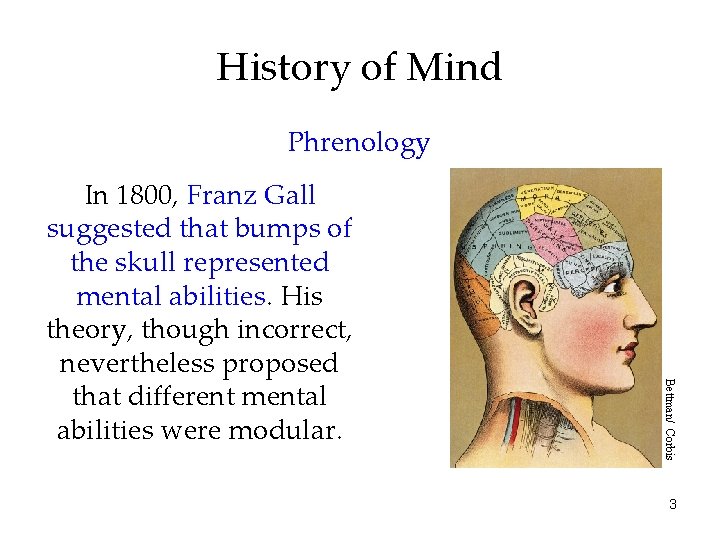
History of Mind Phrenology Bettman/ Corbis In 1800, Franz Gall suggested that bumps of the skull represented mental abilities. His theory, though incorrect, nevertheless proposed that different mental abilities were modular. 3
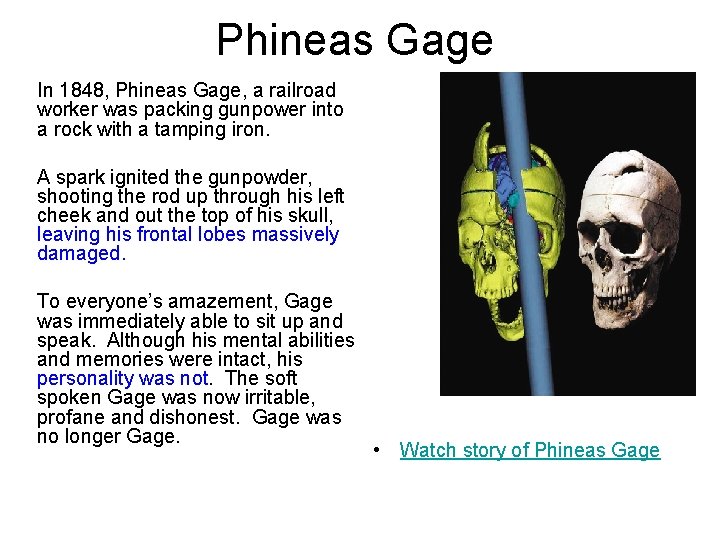
Phineas Gage In 1848, Phineas Gage, a railroad worker was packing gunpower into a rock with a tamping iron. A spark ignited the gunpowder, shooting the rod up through his left cheek and out the top of his skull, leaving his frontal lobes massively damaged. To everyone’s amazement, Gage was immediately able to sit up and speak. Although his mental abilities and memories were intact, his personality was not. The soft spoken Gage was now irritable, profane and dishonest. Gage was no longer Gage. • Watch story of Phineas Gage
"You have brains in your head. You have feet in your shoes. You can steer yourself Any direction you choose. ” 5
The Brain 6
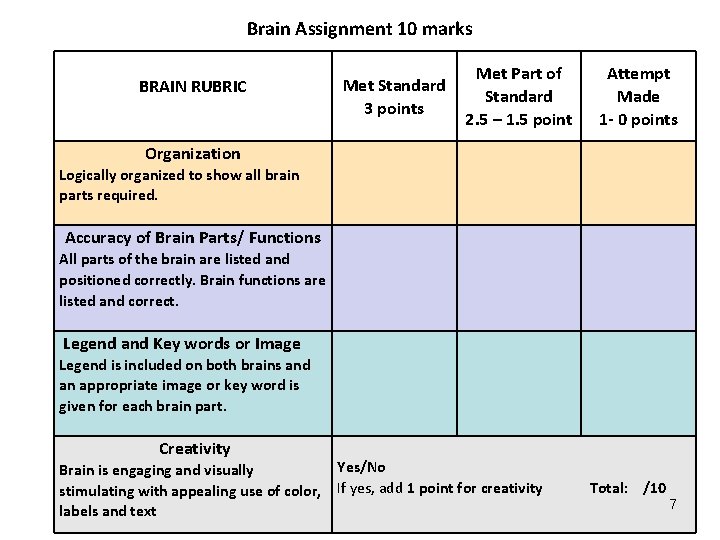
Brain Assignment 10 marks BRAIN RUBRIC Met Standard 3 points Met Part of Standard 2. 5 – 1. 5 point Attempt Made 1 - 0 points Organization Logically organized to show all brain parts required. Accuracy of Brain Parts/ Functions All parts of the brain are listed and positioned correctly. Brain functions are listed and correct. Legend and Key words or Image Legend is included on both brains and an appropriate image or key word is given for each brain part. Creativity Yes/No Brain is engaging and visually stimulating with appealing use of color, If yes, add 1 point for creativity labels and text Total: /10 7
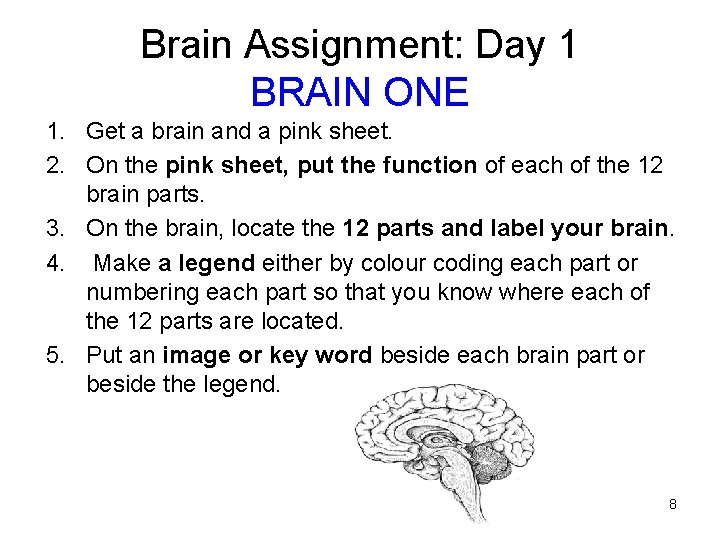
Brain Assignment: Day 1 BRAIN ONE 1. Get a brain and a pink sheet. 2. On the pink sheet, put the function of each of the 12 brain parts. 3. On the brain, locate the 12 parts and label your brain. 4. Make a legend either by colour coding each part or numbering each part so that you know where each of the 12 parts are located. 5. Put an image or key word beside each brain part or beside the legend. 8
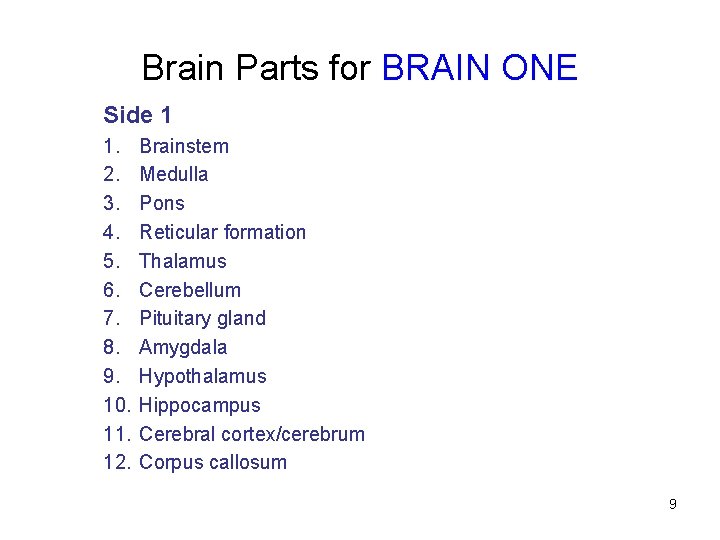
Brain Parts for BRAIN ONE Side 1 1. 2. 3. 4. 5. 6. 7. 8. 9. 10. 11. 12. Brainstem Medulla Pons Reticular formation Thalamus Cerebellum Pituitary gland Amygdala Hypothalamus Hippocampus Cerebral cortex/cerebrum Corpus callosum 9
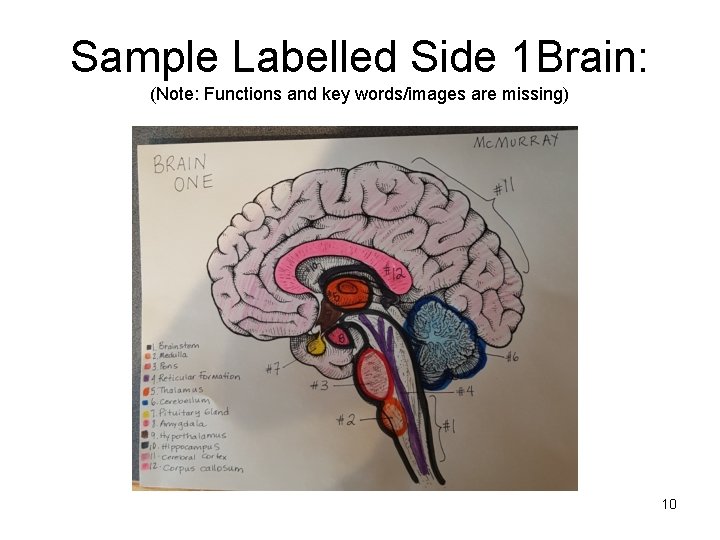
Sample Labelled Side 1 Brain: (Note: Functions and key words/images are missing) 10
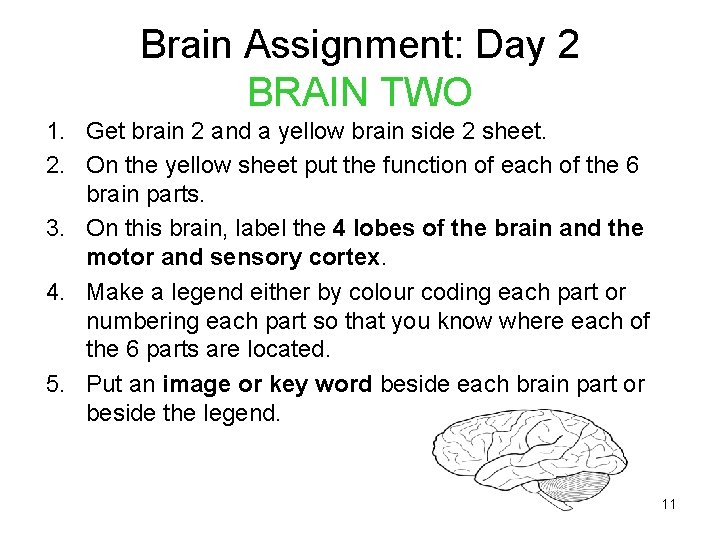
Brain Assignment: Day 2 BRAIN TWO 1. Get brain 2 and a yellow brain side 2 sheet. 2. On the yellow sheet put the function of each of the 6 brain parts. 3. On this brain, label the 4 lobes of the brain and the motor and sensory cortex. 4. Make a legend either by colour coding each part or numbering each part so that you know where each of the 6 parts are located. 5. Put an image or key word beside each brain part or beside the legend. 11
Brain Parts Side 2 1. Frontal lobe 2. Parietal lobe 3. Occipital lobe 4. Temporal lobe 5. Motor cortex 6. Sensory cortex 12
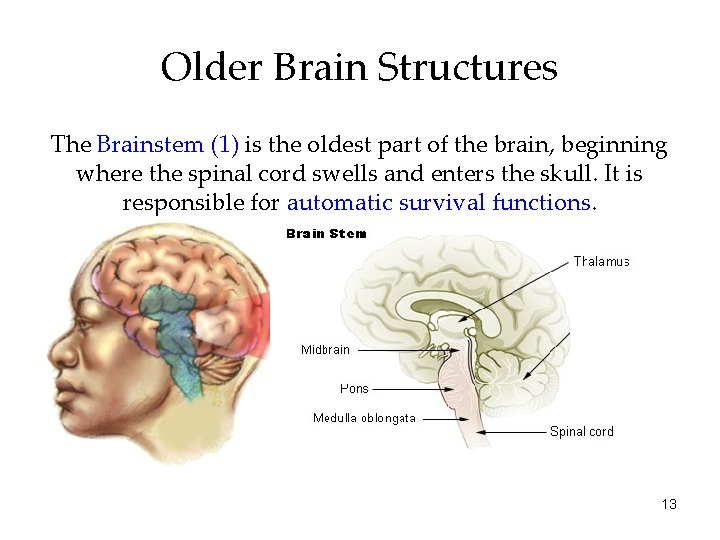
Older Brain Structures The Brainstem (1) is the oldest part of the brain, beginning where the spinal cord swells and enters the skull. It is responsible for automatic survival functions. 13
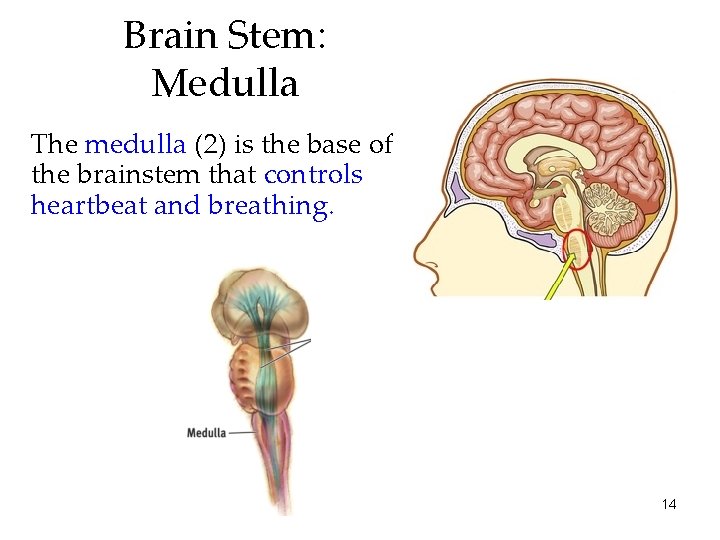
Brain Stem: Medulla The medulla (2) is the base of the brainstem that controls heartbeat and breathing. 14
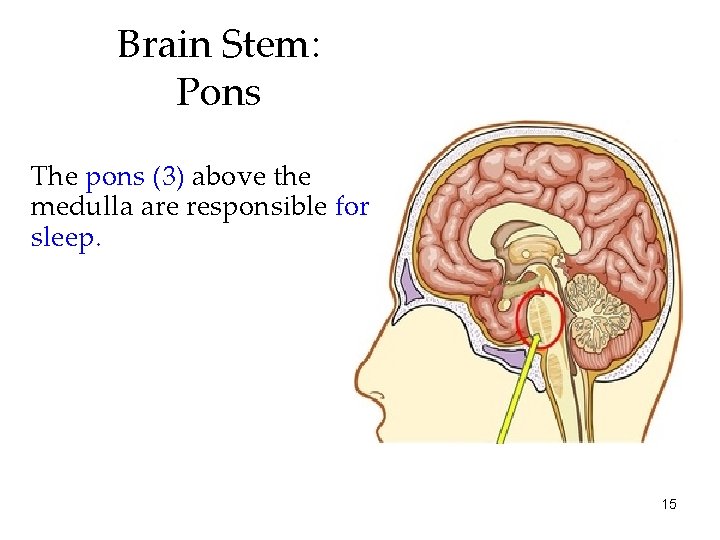
Brain Stem: Pons The pons (3) above the medulla are responsible for sleep. 15

Brain Stem: Reticular Formation (4) is a nerve network in the brainstem that plays an important role in controlling arousal. Reticular Formation 16
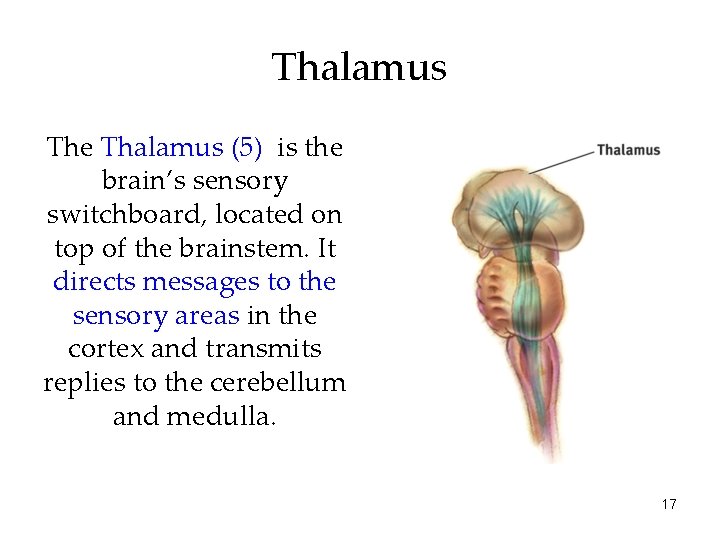
Thalamus The Thalamus (5) is the brain’s sensory switchboard, located on top of the brainstem. It directs messages to the sensory areas in the cortex and transmits replies to the cerebellum and medulla. 17
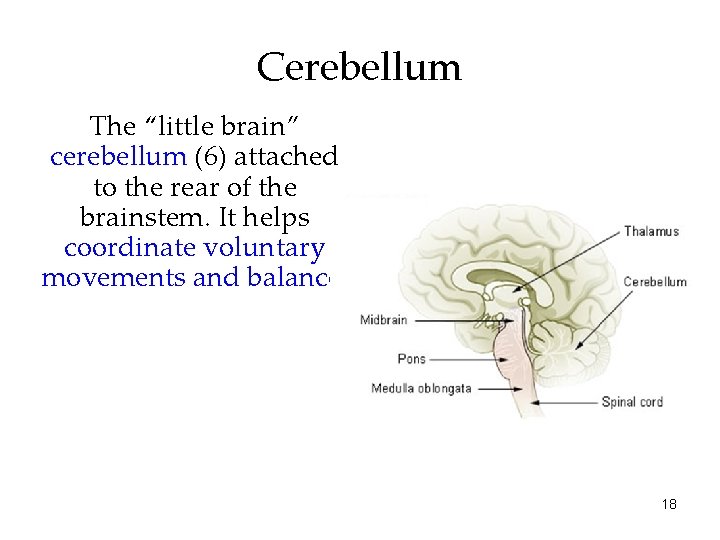
Cerebellum The “little brain” cerebellum (6) attached to the rear of the brainstem. It helps coordinate voluntary movements and balance. 18
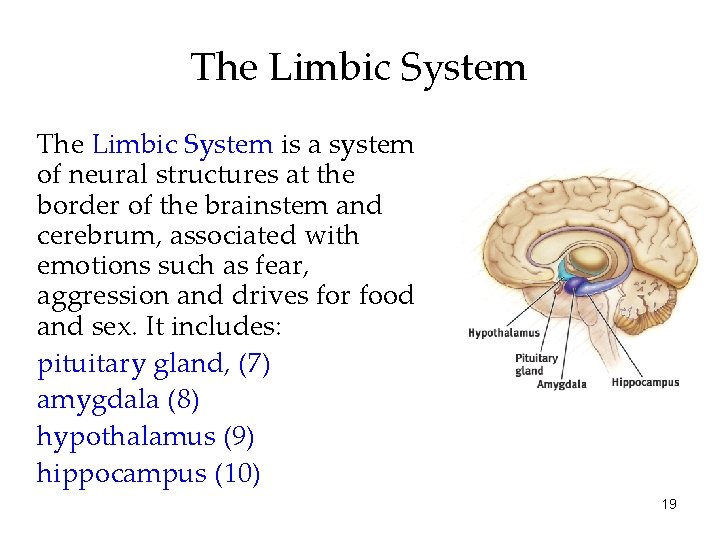
The Limbic System is a system of neural structures at the border of the brainstem and cerebrum, associated with emotions such as fear, aggression and drives for food and sex. It includes: pituitary gland, (7) amygdala (8) hypothalamus (9) hippocampus (10) 19
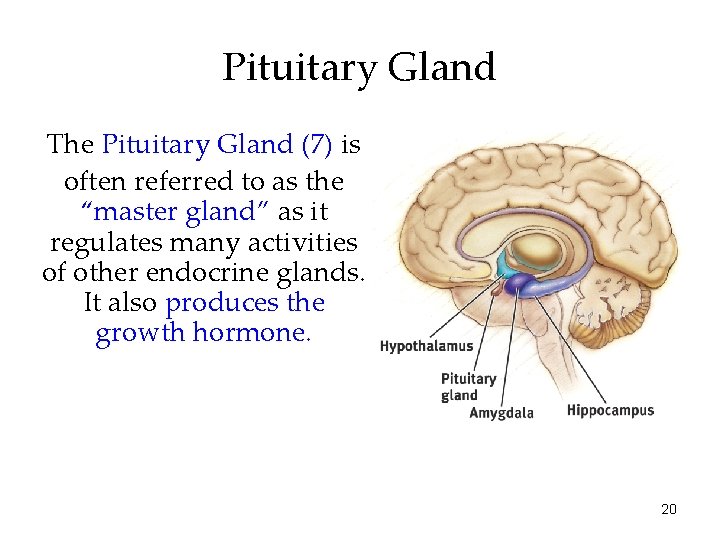
Pituitary Gland The Pituitary Gland (7) is often referred to as the “master gland” as it regulates many activities of other endocrine glands. It also produces the growth hormone. 20
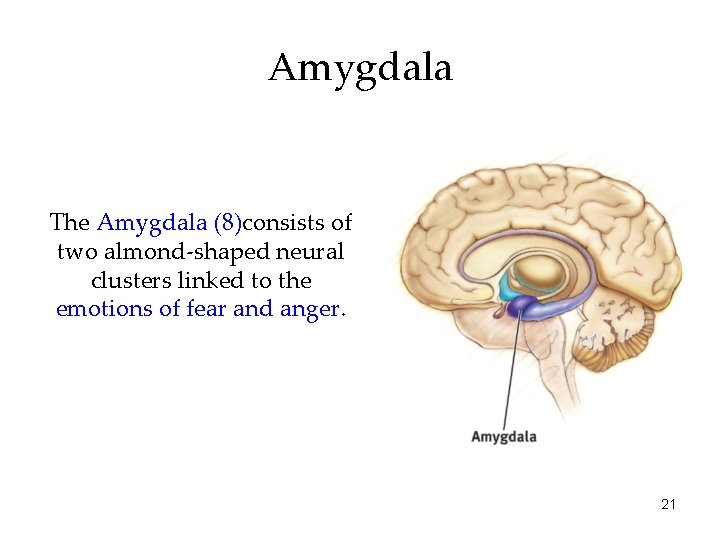
Amygdala The Amygdala (8)consists of two almond-shaped neural clusters linked to the emotions of fear and anger. 21
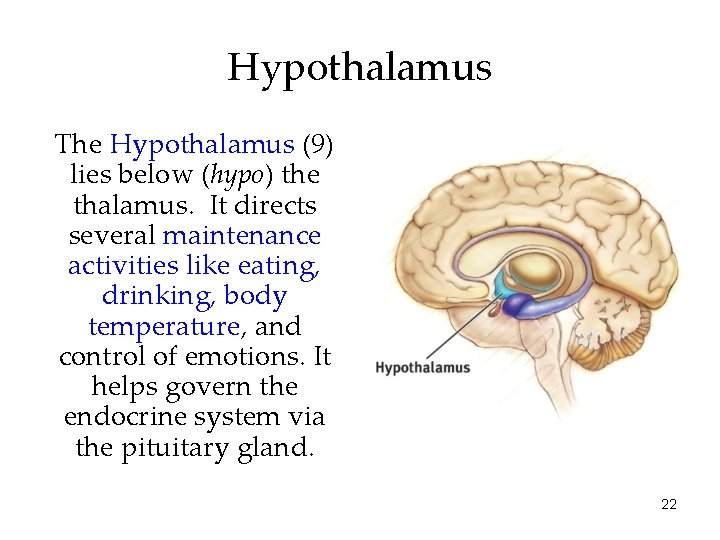
Hypothalamus The Hypothalamus (9) lies below (hypo) the thalamus. It directs several maintenance activities like eating, drinking, body temperature, and control of emotions. It helps govern the endocrine system via the pituitary gland. 22
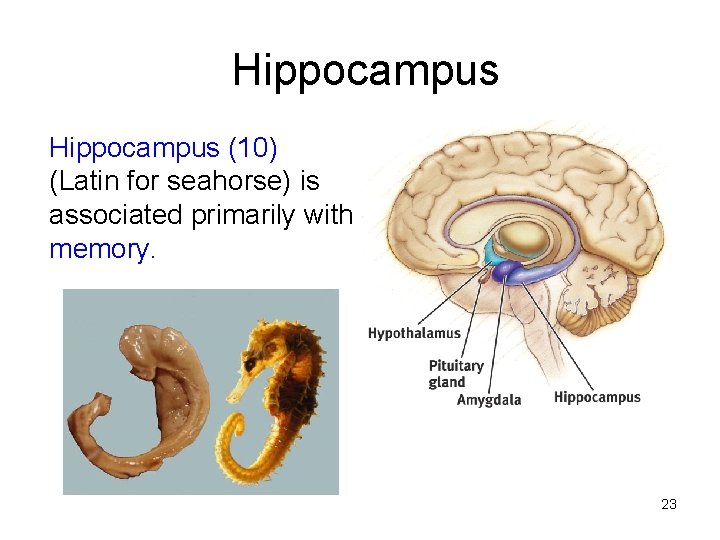
Hippocampus (10) (Latin for seahorse) is associated primarily with memory. 23
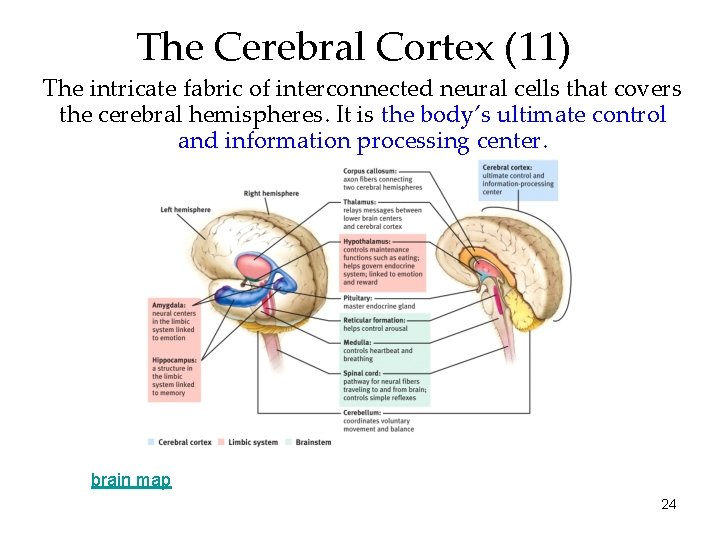
The Cerebral Cortex (11) The intricate fabric of interconnected neural cells that covers the cerebral hemispheres. It is the body’s ultimate control and information processing center. brain map 24
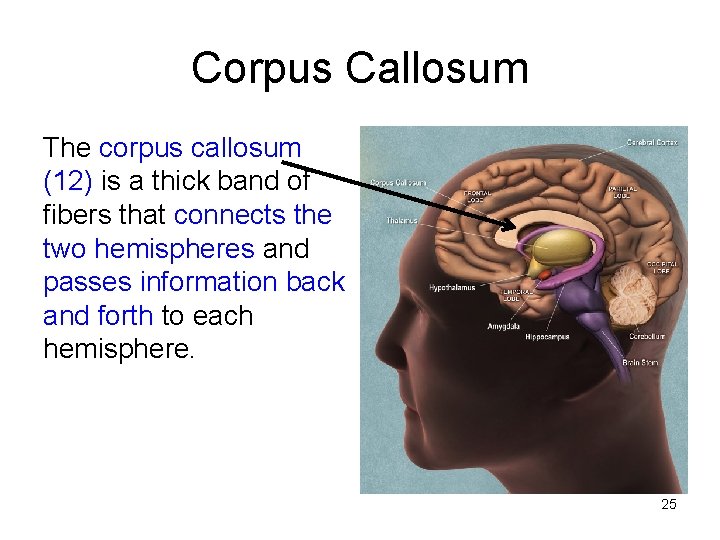
Corpus Callosum The corpus callosum (12) is a thick band of fibers that connects the two hemispheres and passes information back and forth to each hemisphere. 25
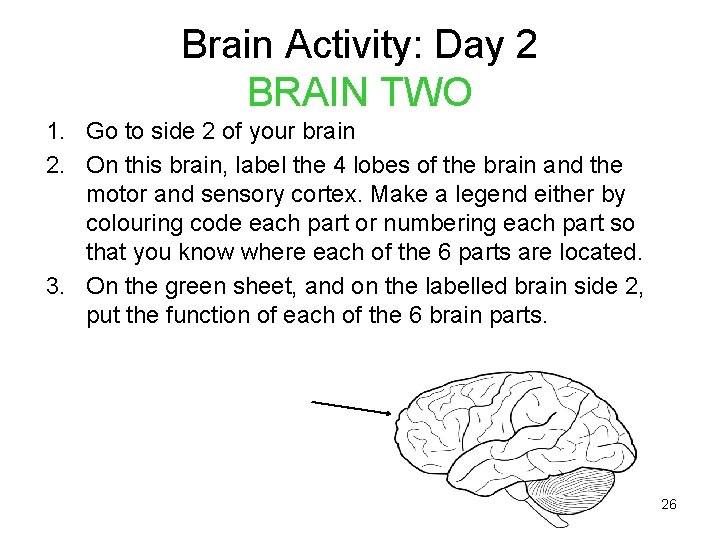
Brain Activity: Day 2 BRAIN TWO 1. Go to side 2 of your brain 2. On this brain, label the 4 lobes of the brain and the motor and sensory cortex. Make a legend either by colouring code each part or numbering each part so that you know where each of the 6 parts are located. 3. On the green sheet, and on the labelled brain side 2, put the function of each of the 6 brain parts. 26
Brain Parts Side 2 1. Frontal lobe 2. Parietal lobe 3. Occipital lobe 4. Temporal lobe 5. Motor cortex 6. Sensory cortex 27
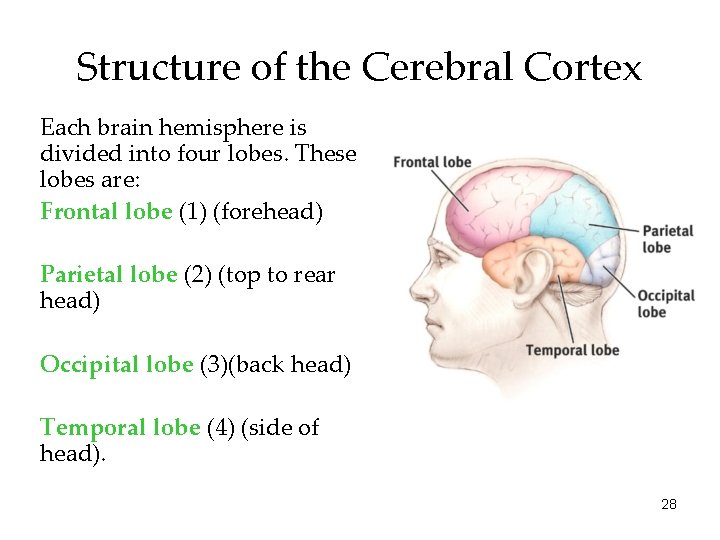
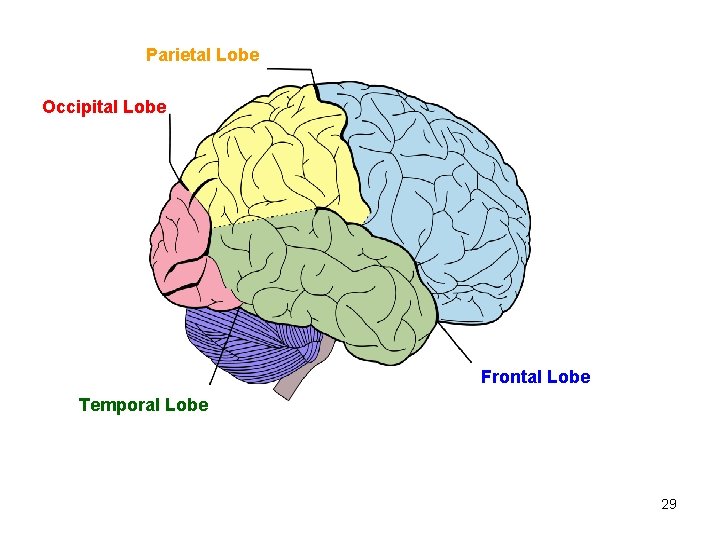
Structure of the Cerebral Cortex Each brain hemisphere is divided into four lobes. These lobes are: Frontal lobe (1) (forehead) Parietal lobe (2) (top to rear head) Occipital lobe (3)(back head) Temporal lobe (4) (side of head). 28
Parietal Lobe Occipital Lobe Frontal Lobe Temporal Lobe 29
Brain Lobes • The Frontal Lobes are involved in speaking and muscle movements and in making plans and judgments. • The Parietal Lobes receive sensory input for touch and body position. • The Occipital Lobes receive visual information from the opposite visual field. • The Temporal Lobes receive auditory information primarily from the opposite ear.
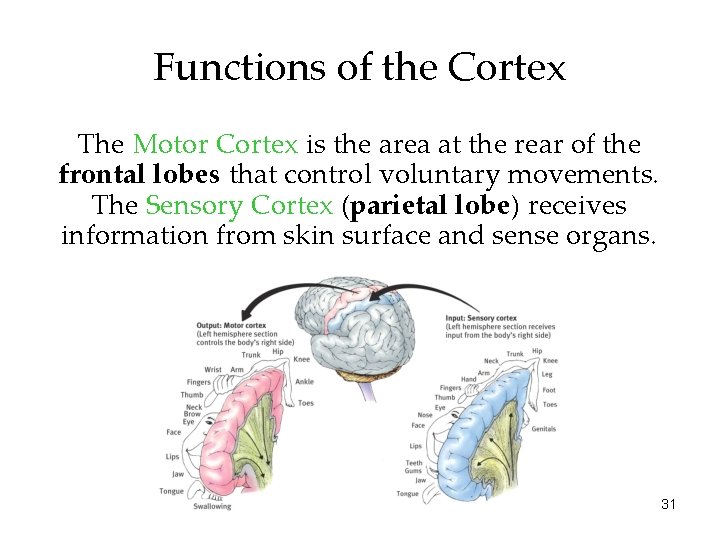
Functions of the Cortex The Motor Cortex is the area at the rear of the frontal lobes that control voluntary movements. The Sensory Cortex (parietal lobe) receives information from skin surface and sense organs. 31
The Brain’s Plasticity The brain is sculpted by our genes but also by our experiences. Plasticity refers to the brain’s ability to modify itself after some type of injury or illness. rubber hand illusion Watch the brain that changes itself Ellen Degeneres rubber hand episode 32
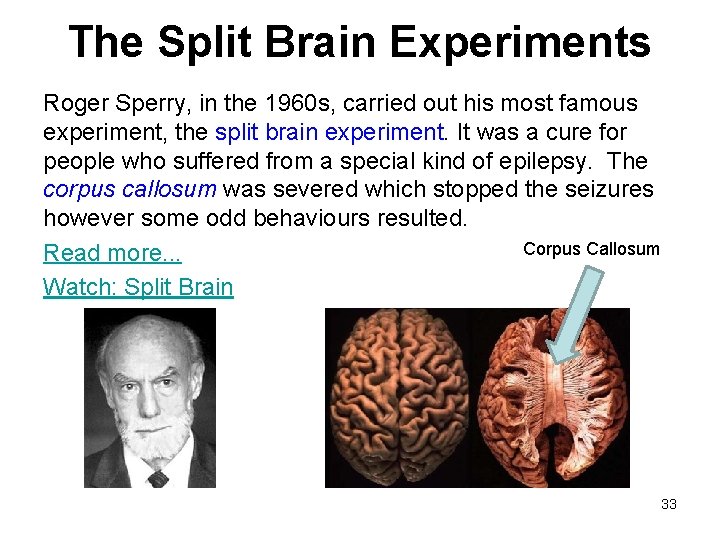
The Split Brain Experiments Roger Sperry, in the 1960 s, carried out his most famous experiment, the split brain experiment. It was a cure for people who suffered from a special kind of epilepsy. The corpus callosum was severed which stopped the seizures however some odd behaviours resulted. Corpus Callosum Read more. . . Watch: Split Brain 33
- Slides: 33