
BIOLOGICAL BASES OF BEHAVIOR Neurons Neurons are nerve
BIOLOGICAL BASES OF BEHAVIOR
Neurons Neurons are nerve cells that are constantly sending signals to your brain, muscles and glands About 100 billion neurons (nerve cells) in the human brain Neurons have many of the same features as other cells Nucleus Cytoplasm Cell membrane What makes neurons unique is their shape and function
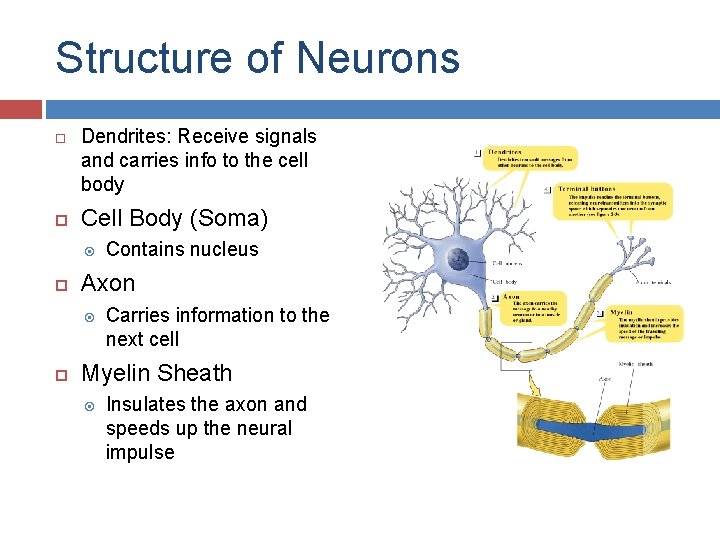
Structure of Neurons Dendrites: Receive signals and carries info to the cell body Cell Body (Soma) Axon Contains nucleus Carries information to the next cell Myelin Sheath Insulates the axon and speeds up the neural impulse
Types of Neurons Neurotransmitters are chemical signals that transfer information to various neurons Sensory neurons Motor neurons Carry information from sensory systems to the brain Carry information from the brain to muscles and glands Interneurons Carry information between other neurons
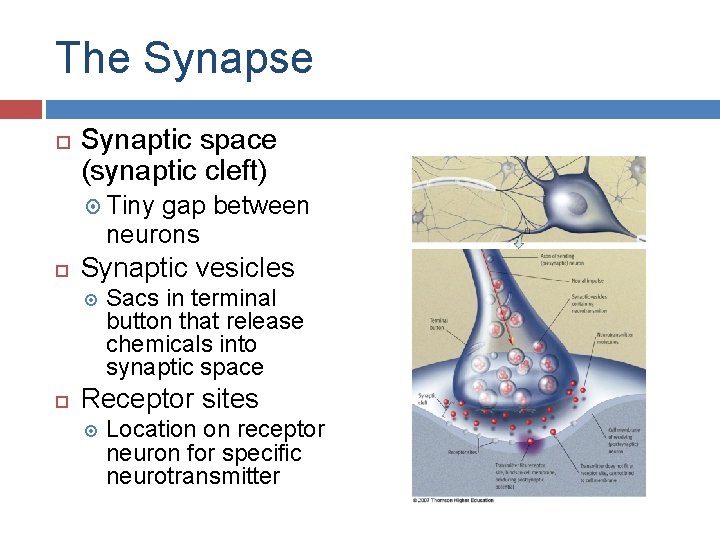
The Synapse Synaptic space (synaptic cleft) Tiny gap between neurons Synaptic vesicles Sacs in terminal button that release chemicals into synaptic space Receptor sites Location on receptor neuron for specific neurotransmitter
Neural Impulse All-or-None Law A neuron either fires or it does not When it does fire, it will always produce an impulse of the same strength Intensity of a stimulus is coded by the frequency of action potentials
Common Neurotransmitters Serotonin Endorphins Reduce pain by inhibiting or “turning down” neurons that transmit pain information Acetylcholine (ACh) Found throughout the brain Appears to sets an “emotional tone” Low serotonin levels are implicated in depression Released at the neuromuscular junction Plays an important role in arousal and attention Loss of ACh producing cells is linked to Alzheimer’s Disease Dopamine Affects neurons associated with voluntary movement Plays a role in learning, memory, and emotions Loss of dopamine-producing cells causes symptoms of Parkinson’s Disease
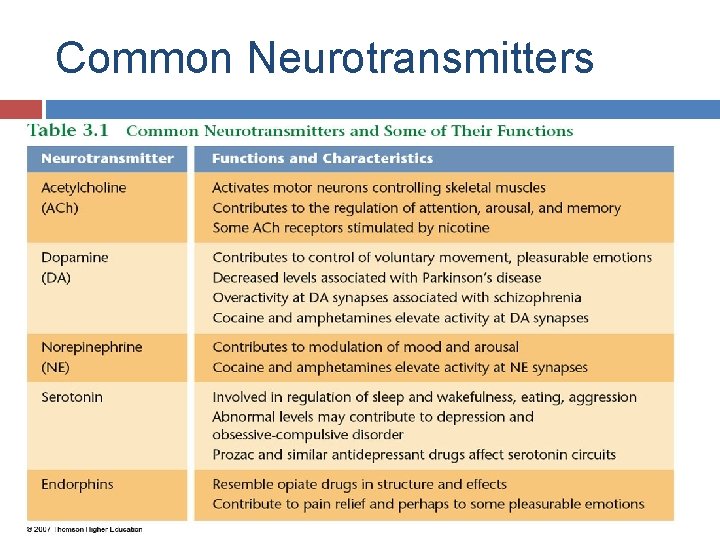
Common Neurotransmitters
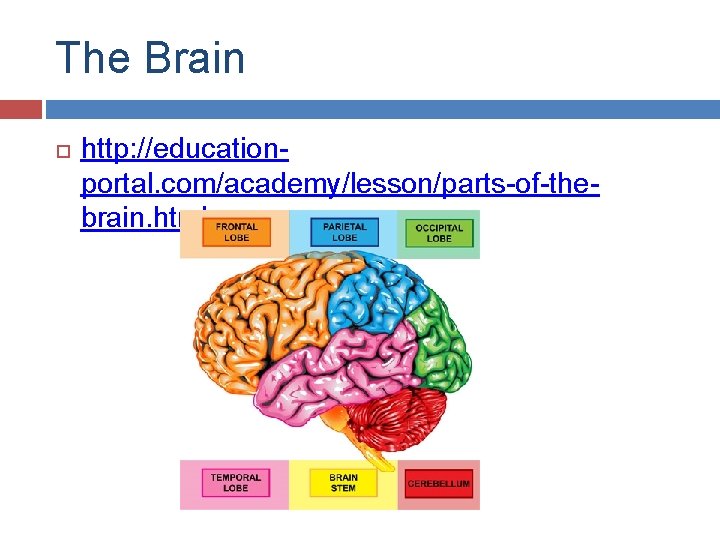
The Brain http: //educationportal. com/academy/lesson/parts-of-thebrain. html
Right Brain/Left Brain: Cerebral Specialization Cerebral Hemispheres – two specialized halves connected by the corpus collosum Left hemisphere – verbal processing: language, speech, reading, writing Right hemisphere – nonverbal processing: spatial, musical, visual recognition http: //sommer-sommer. com/braintest/
Brain Imaging MRI: Magnetic resonance imaging (MRI) is a test that uses a magnetic field and pulses of radio wave energy to make pictures of organs and structures inside the body CAT: A computed tomography (CT) scan uses Xrays to make detailed pictures of structures inside of the body PET: Positron emission tomography is a nuclear medical imaging technique that produces a three-dimensional image or picture of functional processes in the body EEG: Electroencephalography is the recording of electrical activity along the scalp. EEG measures voltage fluctuations resulting from ionic current flows
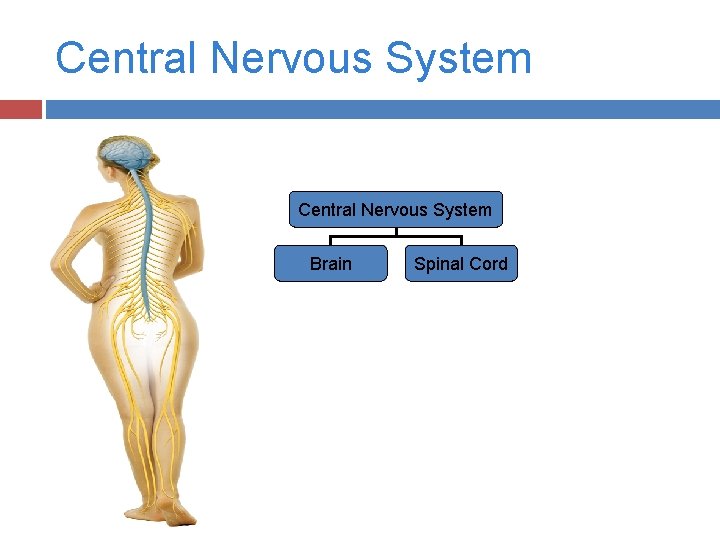
Central Nervous System Brain Spinal Cord
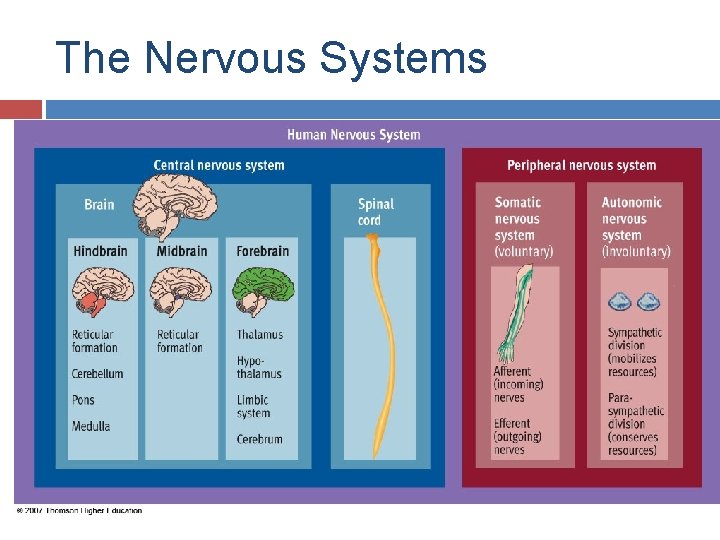
The Nervous Systems
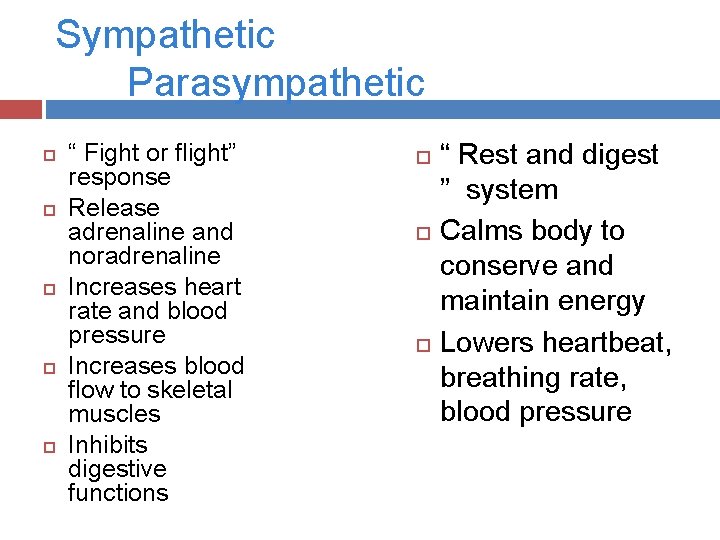
Sympathetic Parasympathetic “ Fight or flight” response Release adrenaline and noradrenaline Increases heart rate and blood pressure Increases blood flow to skeletal muscles Inhibits digestive functions Brain Spinal cord Sympathetic ganglia “ Rest and digest Salivary ” system glands Calms body to Lungs conserve and Heart maintain energy Stomach Lowers heartbeat, Pancreas breathing rate, Liver blood pressure. Adrenal gland Kidney
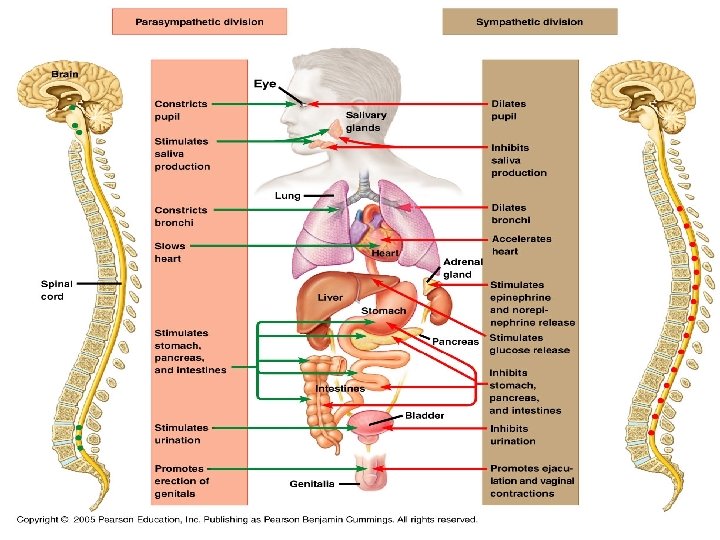
Diagram
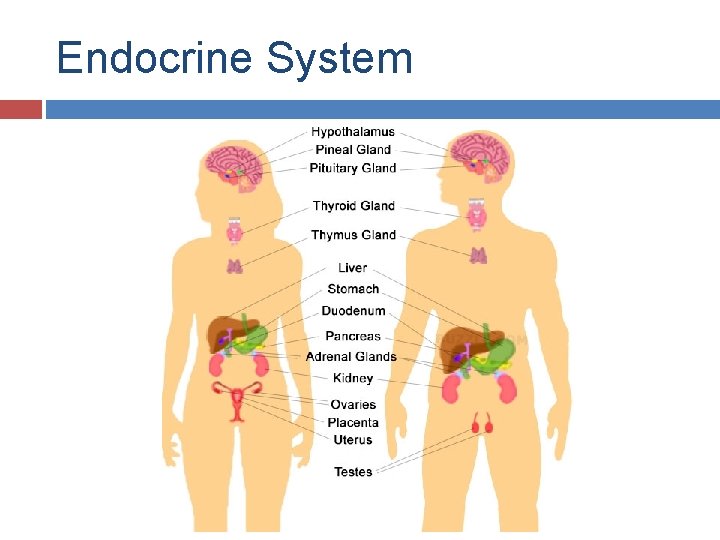
Endocrine System
Endocrine System Helps coordinate and integrate complex psychological reactions Endocrine glands secrete hormones into the bloodstream Hormones serve to organize the nervous system and body Hormones also activate behavior, such as sexual behavior
Endocrine System Thyroid gland Secretes hormones (primarily thyroxin) that control metabolism Parathyroid glands Control levels of calcium and phosphate which in turn controls levels of excitability Pineal gland Secretes melatonin which regulates the sleep-wake cycle Pancreas Regulates blood-sugar levels Secretes insulin and glucagon
Endocrine System Pituitary gland Gonads Referred to as the “master gland” because it regulates many other glands Ovaries and testes secrete estrogens androgens Adrenal glands Secretes hormones in reaction to stress
Genes and Behavioral Genetics Heredity - transmission of trait from one generation to next Chromosomes Pairs of thread like bodies that contain genes Deoxyribonucleic acid (DNA) Organic molecule arranged in a double-helix Contains the “code of life”
Genes continued… Genes: – segments of DNA on chromosomes transmit heredity traits Dominant-recessive pattern – a set of inheritance rules for genes One dominant gene or two recessive genes required for a trait to be expressed. Multifactorial inheritance – an inheritance pattern in which a trait is influenced by both genes and environmental factors. Polygenic inheritance – many genes influence a particular characteristic like skin color. Sex linked inheritance – involves genes on the X and Y chromosomes E. g. male or female body type and red-green color blindness Behavioral Genetics – a field of research that uses twin and adoption studies to investigate the relative effects of heredity and environment on behavior.
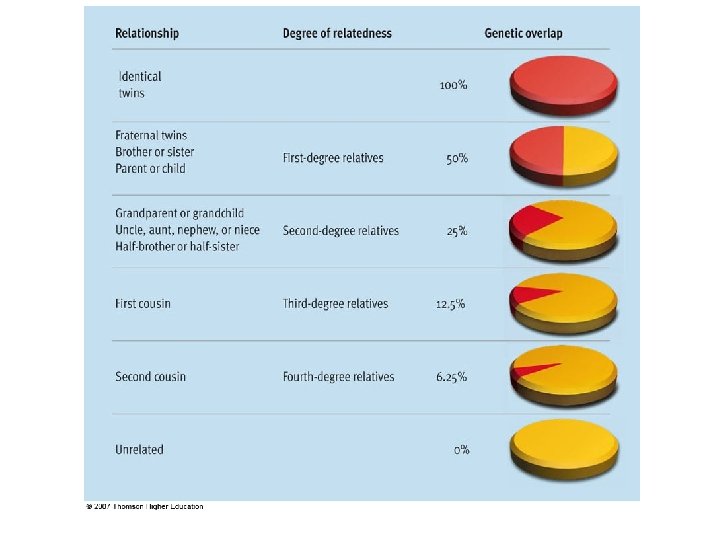
Research Methods in Behavioral Genetics Family studies – does it run in the family? Twin studies – compare resemblance of identical (monozygotic) and fraternal (dizygotic) twins on a trait Adoption studies – examine resemblance between adopted children and their biological and adoptive parents
Evolutionary Psychology Darwin’s ideas of natural selection “Survival of the fittest” Evolutionary psychology looks at the adaptive or survival value of behaviors. This is a major new field in psychology focusing on analyzing human behavior in terms of adaptive significance.
Social Implications Study of biological origins of behavior could lead to genocide and eugenics aimed at eliminating certain types of people. Examples… Could also be used to create new categories of people, such as people bred to be good soldiers or manual laborers
- Slides: 25