
BIOL 4120 Principles of Ecology Lecture 6 Plant
BIOL 4120: Principles of Ecology Lecture 6: Plant adaptations to the Environment Dafeng Hui Room: Harned Hall 320 Phone: 963 -5777 Email: dhui@tnstate. edu
Topics n n n n n 6. 1 6. 2 6. 3 6. 4 6. 5 6. 6 6. 7 6. 8 6. 9 Plant photosynthesis to fix carbon Light influences photosynthesis Photosynthesis is coupled with water exchange Water movement through plants Temperature influences photosynthesis Carbon allocation Other photosynthesis pathways Plants adaptation to different light intensity Plants adaptation to different temperature
Earth provides highly diverse environments: 1. 5 million known species now
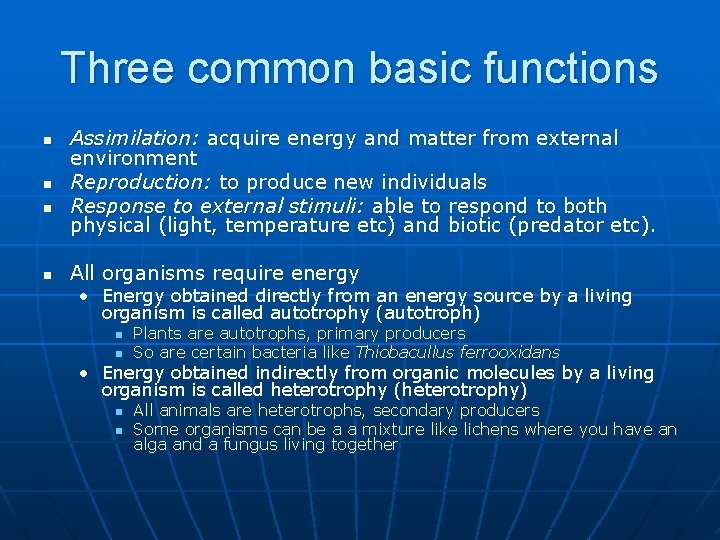
Three common basic functions n n Assimilation: acquire energy and matter from external environment Reproduction: to produce new individuals Response to external stimuli: able to respond to both physical (light, temperature etc) and biotic (predator etc). All organisms require energy • Energy obtained directly from an energy source by a living organism is called autotrophy (autotroph) n n Plants are autotrophs, primary producers So are certain bacteria like Thiobacullus ferrooxidans • Energy obtained indirectly from organic molecules by a living organism is called heterotrophy (heterotrophy) n n All animals are heterotrophs, secondary producers Some organisms can be a a mixture like lichens where you have an alga and a fungus living together
6. 1 Photosynthesis (review) n n n All life on Earth is carbon based CO 2 was the major form of free carbon available in past and still is Only photosynthesis is capable of converting CO 2 into organic molecules Only plants (some algae, bacteria) are capable of photosynthesis All other living organisms obtain their carbon via assimilation from plants
n Photsynthesis is a biochemical process that uses light to convert CO 2 into a simple sugar such as glucose • Light of the certain wavelength (PAR) is absorbed by chlorophyll in the organelle called a chloroplast and converted via the light reactions into ATP (adenosine trip) and NADPH (reduced nicotinamide adenine dinucleotide phosphate) • H 2 O is split into oxygen and hydrogen • The oxygen is released as O 2 • The hydrogen is linked to CO 2 to form a three carbon organic molecule (3 -PGA, phosphoglycolate; C 3 photosynthesis). This is carried out by the enzyme ribulose biphosphate carboxylase- oxygenase (Rubisco) • The C 3 molecules are then converted into carbonhydrates like glucose via the dark reactions • This glucose can then be used to produce energy by respiration in mitochondria or used to produce other organic compounds (proteins, fatty acids etc).
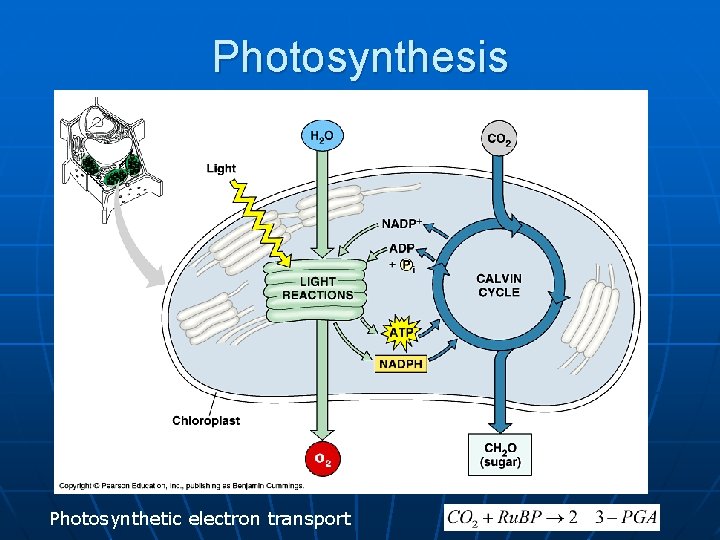
Photosynthesis Photosynthetic electron transport
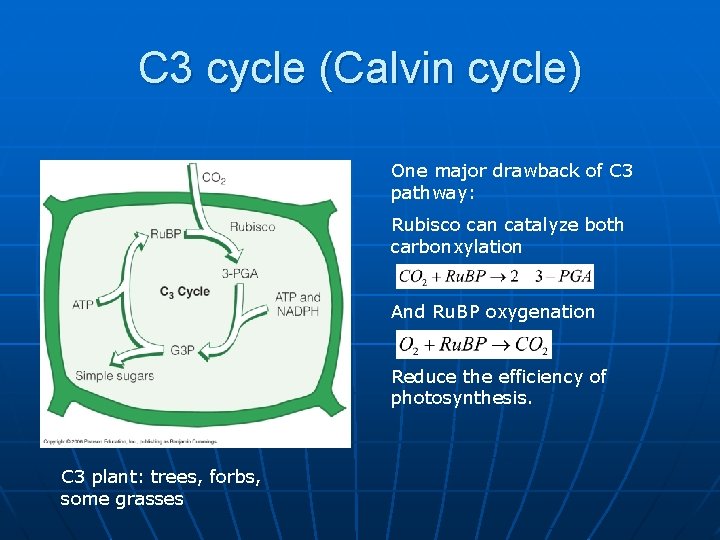
C 3 cycle (Calvin cycle) One major drawback of C 3 pathway: Rubisco can catalyze both carbonxylation And Ru. BP oxygenation Reduce the efficiency of photosynthesis. C 3 plant: trees, forbs, some grasses
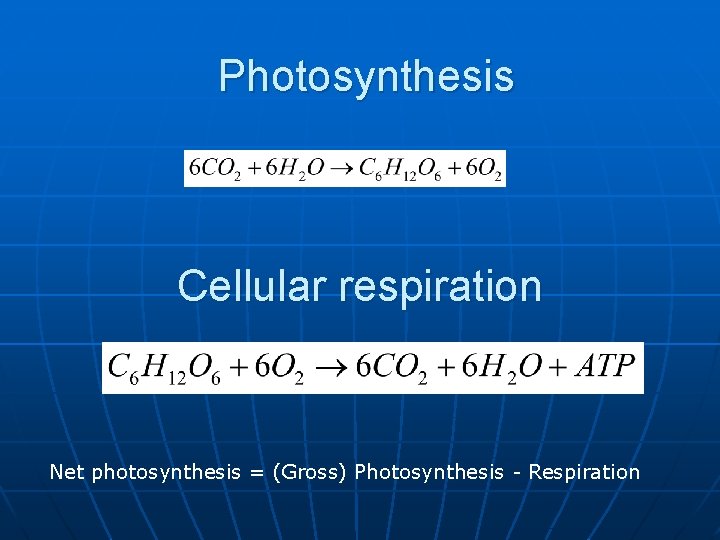
Photosynthesis Cellular respiration Net photosynthesis = (Gross) Photosynthesis - Respiration
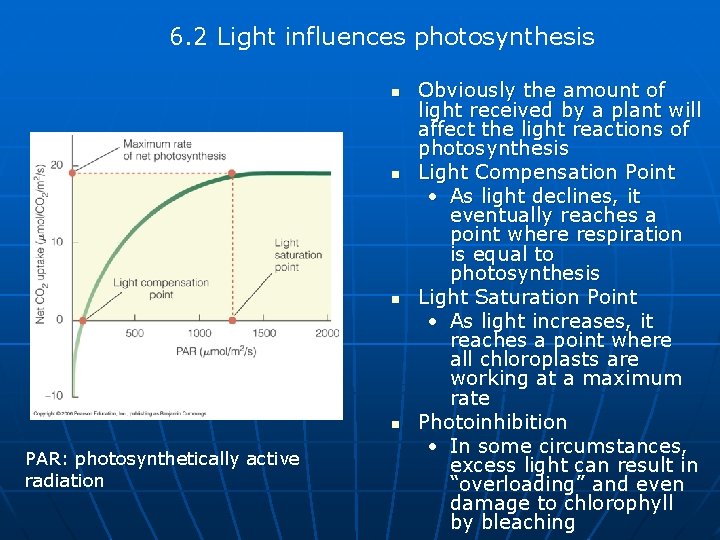
6. 2 Light influences photosynthesis n n PAR: photosynthetically active radiation Obviously the amount of light received by a plant will affect the light reactions of photosynthesis Light Compensation Point • As light declines, it eventually reaches a point where respiration is equal to photosynthesis Light Saturation Point • As light increases, it reaches a point where all chloroplasts are working at a maximum rate Photoinhibition • In some circumstances, excess light can result in “overloading” and even damage to chlorophyll by bleaching
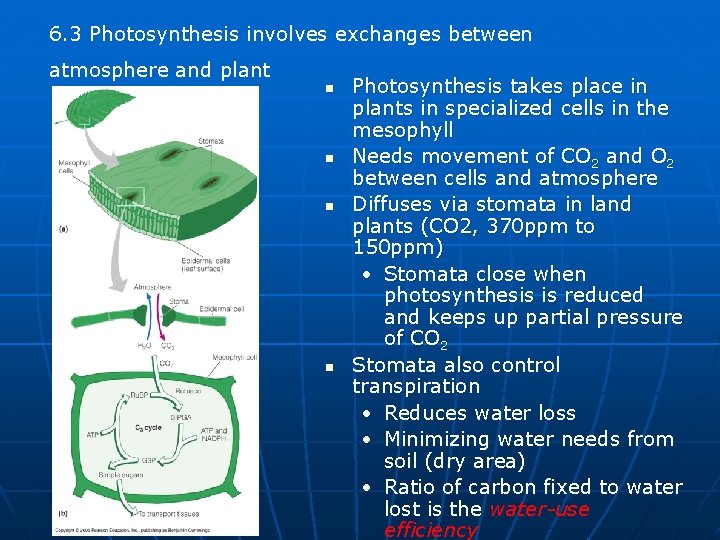
6. 3 Photosynthesis involves exchanges between atmosphere and plant n n Photosynthesis takes place in plants in specialized cells in the mesophyll Needs movement of CO 2 and O 2 between cells and atmosphere Diffuses via stomata in land plants (CO 2, 370 ppm to 150 ppm) • Stomata close when photosynthesis is reduced and keeps up partial pressure of CO 2 Stomata also control transpiration • Reduces water loss • Minimizing water needs from soil (dry area) • Ratio of carbon fixed to water lost is the water-use efficiency
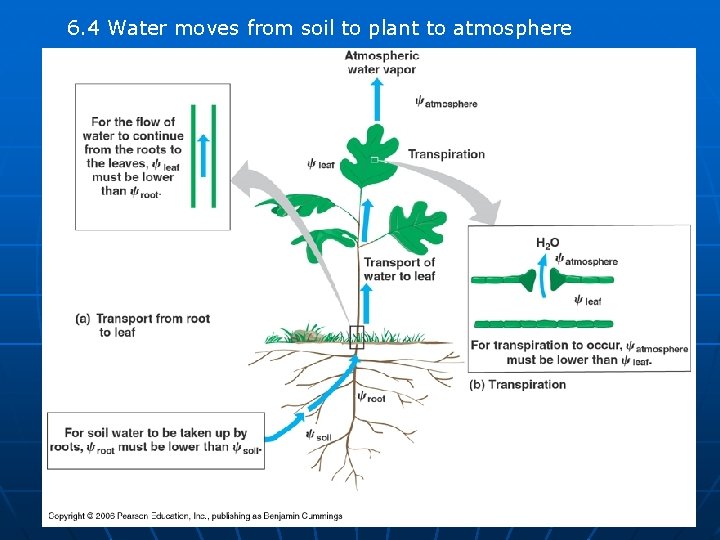
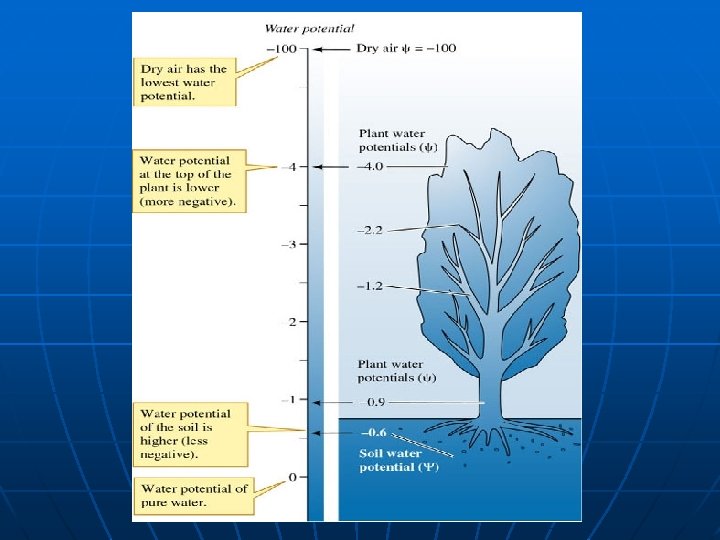
6. 4 Water moves from soil to plant to atmosphere
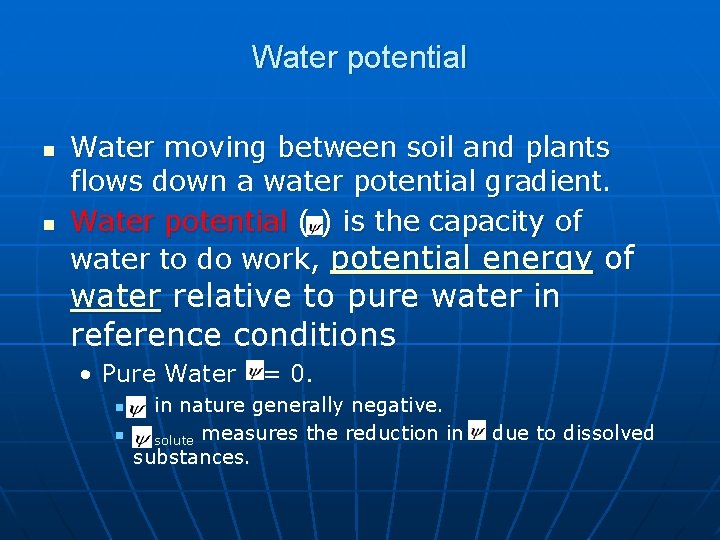
Water potential n n Water moving between soil and plants flows down a water potential gradient. Water potential ( ) is the capacity of water to do work, potential energy of water relative to pure water in reference conditions • Pure Water = 0. n n in nature generally negative. solute measures the reduction in substances. due to dissolved
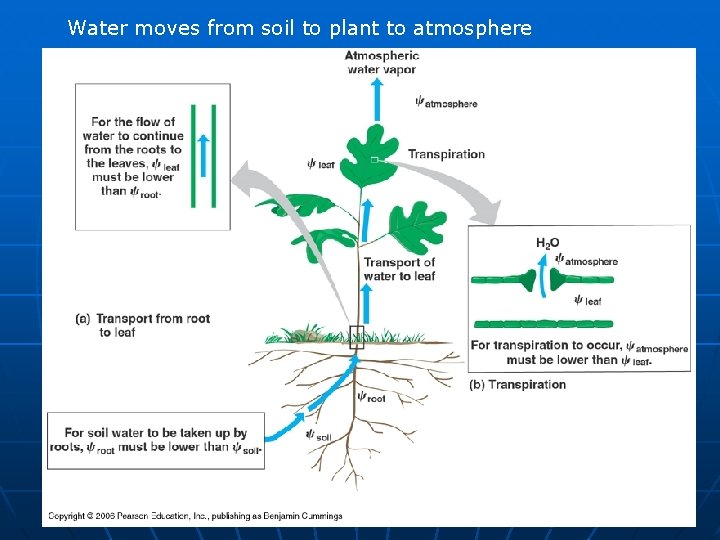
Water moves from soil to plant to atmosphere
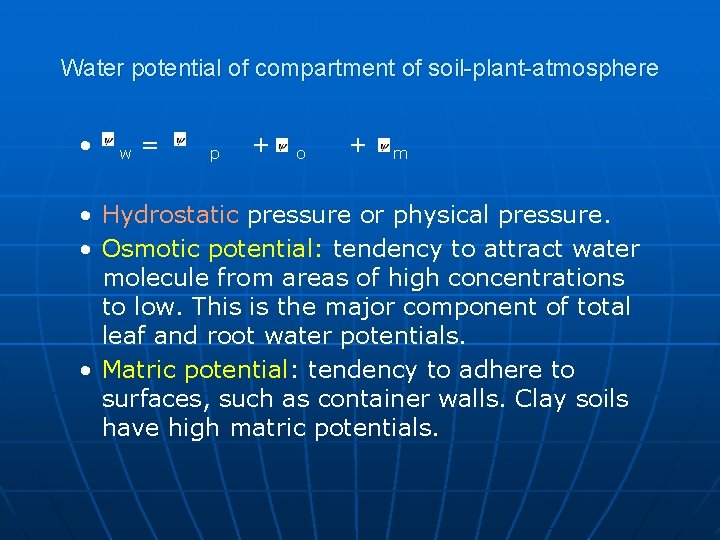
Water potential of compartment of soil-plant-atmosphere • w = p + o + m • Hydrostatic pressure or physical pressure. • Osmotic potential: tendency to attract water molecule from areas of high concentrations to low. This is the major component of total leaf and root water potentials. • Matric potential: tendency to adhere to surfaces, such as container walls. Clay soils have high matric potentials.
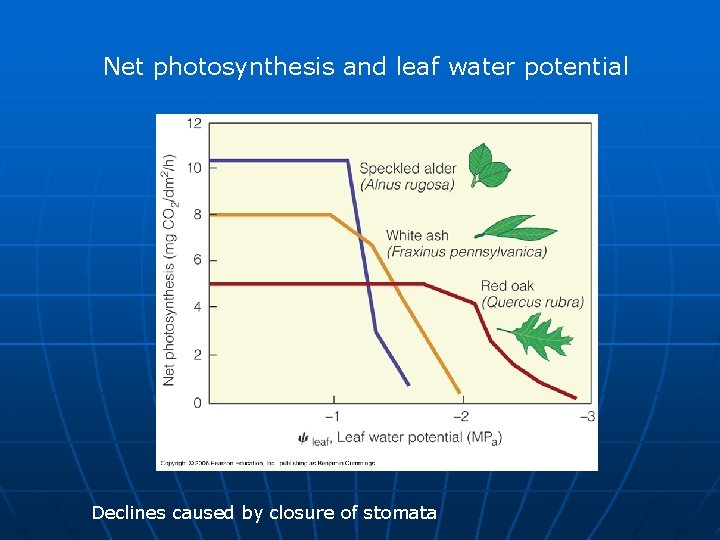
Net photosynthesis and leaf water potential Declines caused by closure of stomata
Water use efficiency n Trade-off • To carry out photosynthesis, plants must open up the stomata to get CO 2; • Transpiration loss of water to atmosphere. n WUE: ratio of carbon fixed (photosynthesis) per unit of water lost (transpiration)
Photosynthesis of aquatic plants n Unique features • Lack of stomata • CO 2 reacts with H 2 O first to produce biocarbonate. • Convert biocarbonate to CO 2 Transport HCO 3 - to leaf then convert to CO 2 n Excretion of the enzyme into adjacent waters and subsequent uptake of converted CO 2 across the membrane. n
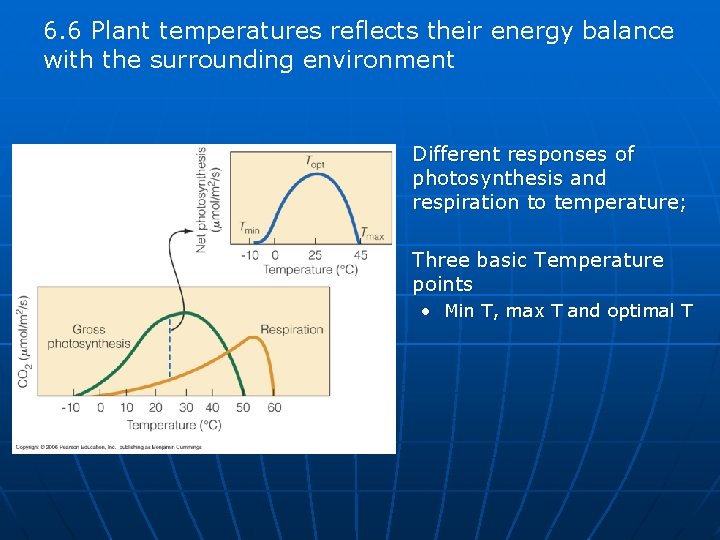
6. 6 Plant temperatures reflects their energy balance with the surrounding environment n n Different responses of photosynthesis and respiration to temperature; Three basic Temperature points • Min T, max T and optimal T
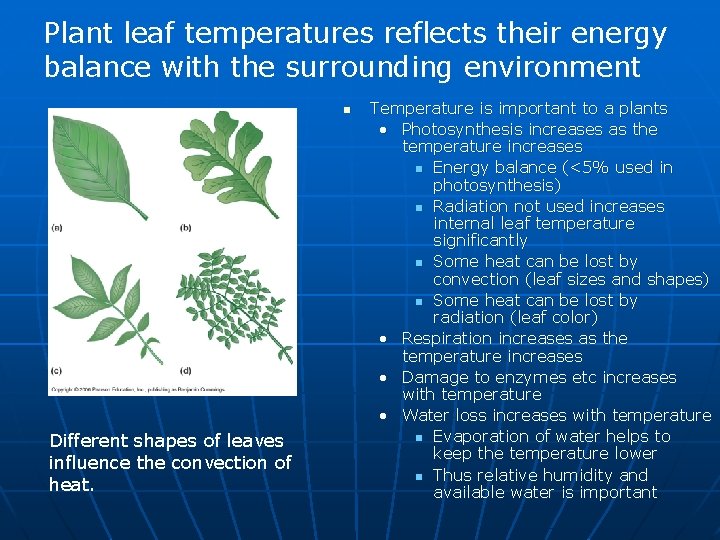
Plant leaf temperatures reflects their energy balance with the surrounding environment n Different shapes of leaves influence the convection of heat. Temperature is important to a plants • Photosynthesis increases as the temperature increases n Energy balance (<5% used in photosynthesis) n Radiation not used increases internal leaf temperature significantly n Some heat can be lost by convection (leaf sizes and shapes) n Some heat can be lost by radiation (leaf color) • Respiration increases as the temperature increases • Damage to enzymes etc increases with temperature • Water loss increases with temperature n Evaporation of water helps to keep the temperature lower n Thus relative humidity and available water is important
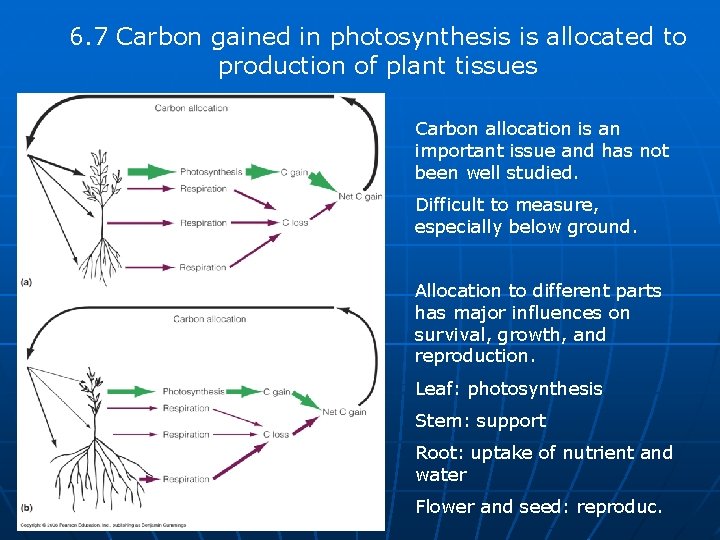
6. 7 Carbon gained in photosynthesis is allocated to production of plant tissues Carbon allocation is an important issue and has not been well studied. Difficult to measure, especially below ground. Allocation to different parts has major influences on survival, growth, and reproduction. Leaf: photosynthesis Stem: support Root: uptake of nutrient and water Flower and seed: reproduc.
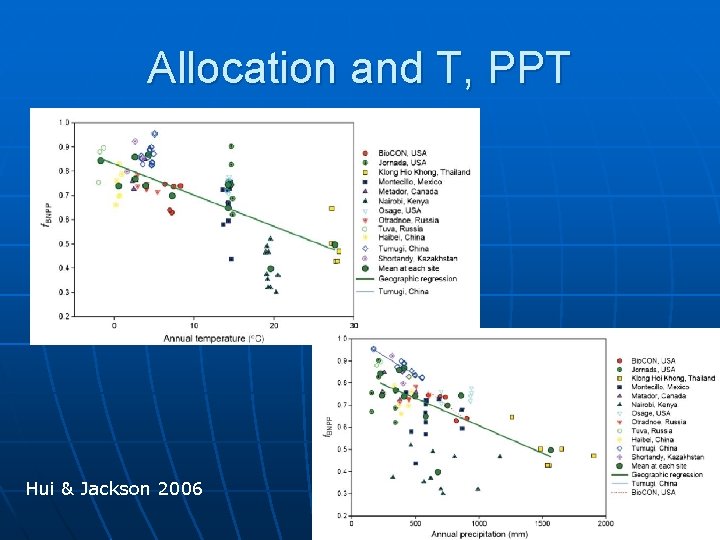
Allocation and T, PPT Hui & Jackson 2006
Plant adaptations and trade-offs n Environmental factors are interdependent: light, temperature and moisture all linked together. • In dry area: more radiation, high temperature, low relative humidity, high water demand smaller leaves, more roots • Trade-offs: more carbon allocated to below-ground.
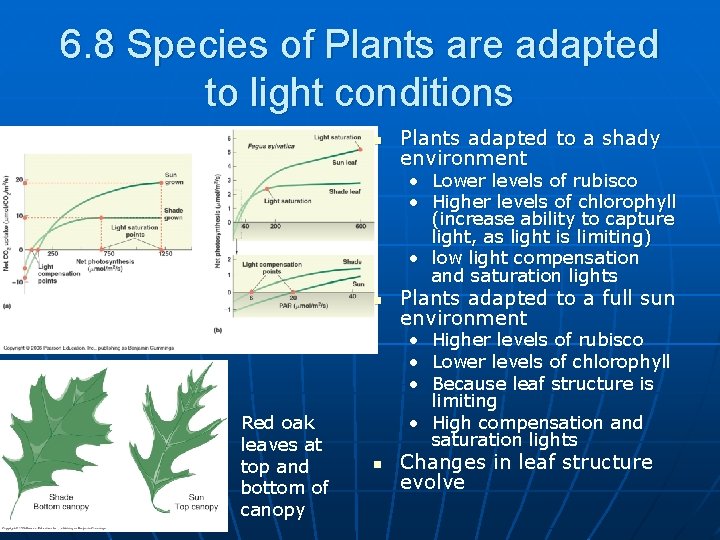
6. 8 Species of Plants are adapted to light conditions n Plants adapted to a shady environment • Lower levels of rubisco • Higher levels of chlorophyll (increase ability to capture light, as light is limiting) • low light compensation and saturation lights n Red oak leaves at top and bottom of canopy Plants adapted to a full sun environment • Higher levels of rubisco • Lower levels of chlorophyll • Because leaf structure is limiting • High compensation and saturation lights n Changes in leaf structure evolve
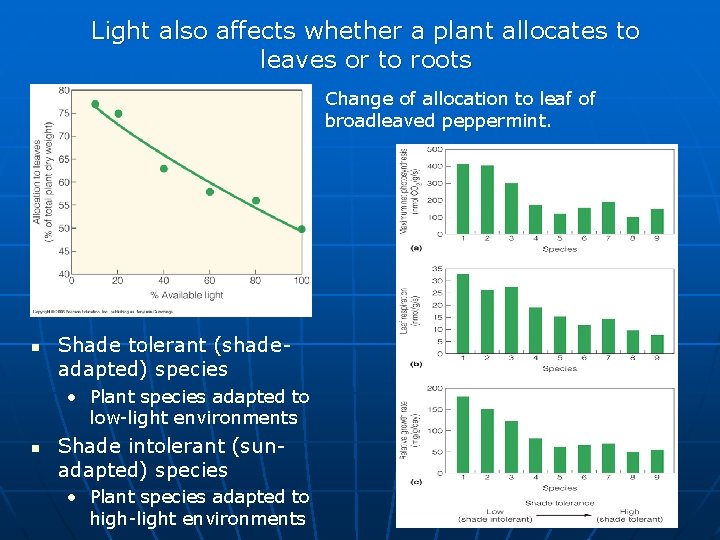
Light also affects whether a plant allocates to leaves or to roots Change of allocation to leaf of broadleaved peppermint. n Shade tolerant (shadeadapted) species • Plant species adapted to low-light environments n Shade intolerant (sunadapted) species • Plant species adapted to high-light environments
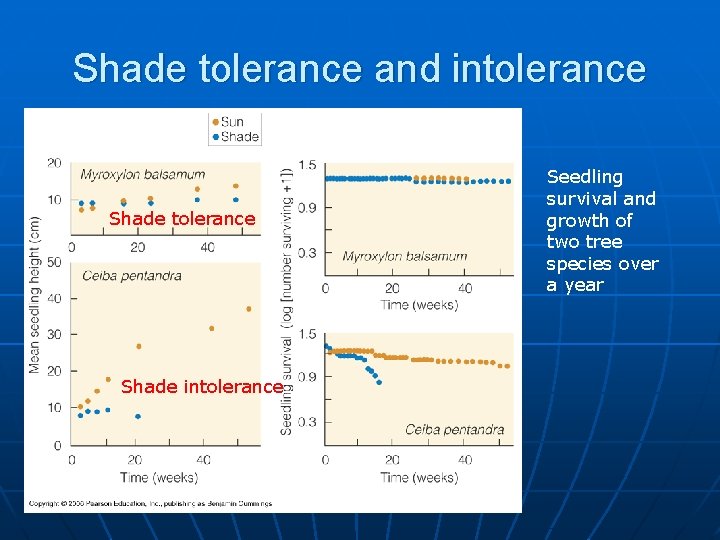
Shade tolerance and intolerance Shade intolerance Seedling survival and growth of two tree species over a year
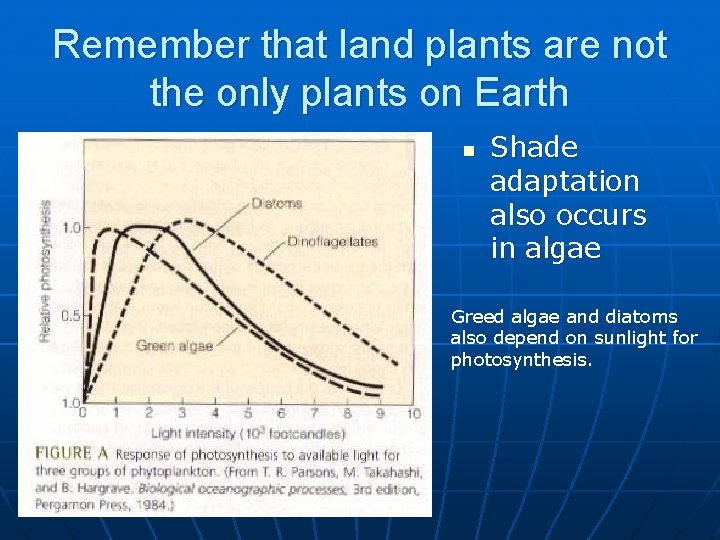
Remember that land plants are not the only plants on Earth n Shade adaptation also occurs in algae Greed algae and diatoms also depend on sunlight for photosynthesis.
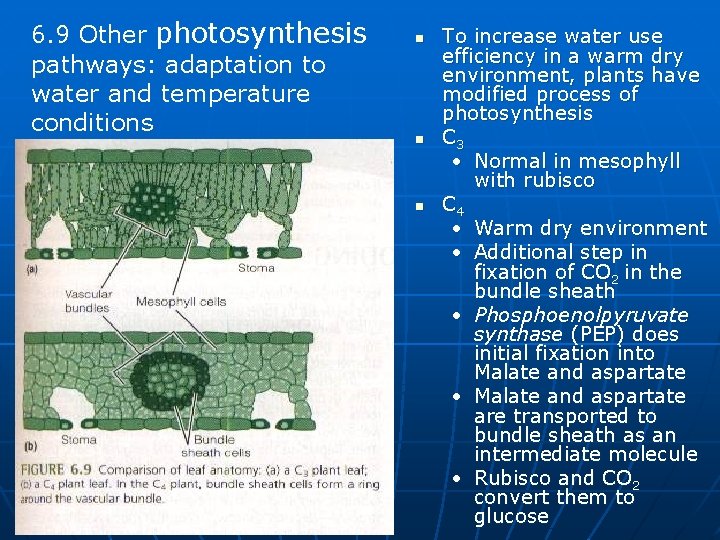
6. 9 Other photosynthesis pathways: adaptation to water and temperature conditions n n n To increase water use efficiency in a warm dry environment, plants have modified process of photosynthesis C 3 • Normal in mesophyll with rubisco C 4 • Warm dry environment • Additional step in fixation of CO 2 in the bundle sheath • Phosphoenolpyruvate synthase (PEP) does initial fixation into Malate and aspartate • Malate and aspartate are transported to bundle sheath as an intermediate molecule • Rubisco and CO 2 convert them to glucose
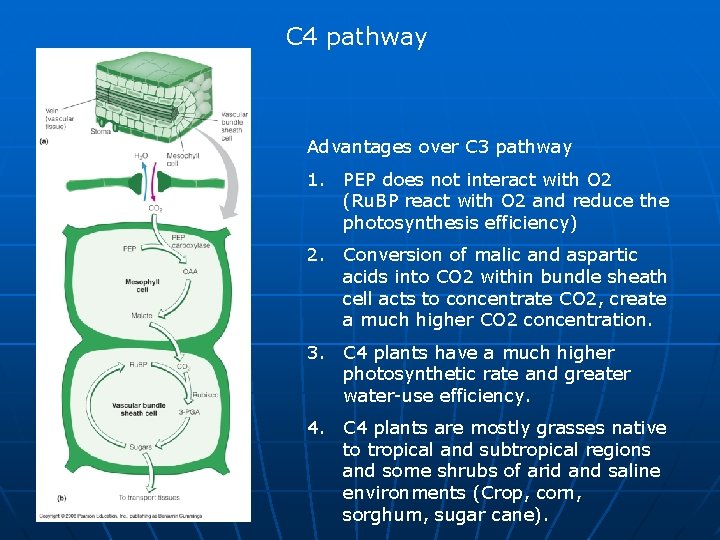
C 4 pathway Advantages over C 3 pathway 1. PEP does not interact with O 2 (Ru. BP react with O 2 and reduce the photosynthesis efficiency) 2. Conversion of malic and aspartic acids into CO 2 within bundle sheath cell acts to concentrate CO 2, create a much higher CO 2 concentration. 3. C 4 plants have a much higher photosynthetic rate and greater water-use efficiency. 4. C 4 plants are mostly grasses native to tropical and subtropical regions and some shrubs of arid and saline environments (Crop, corn, sorghum, sugar cane).
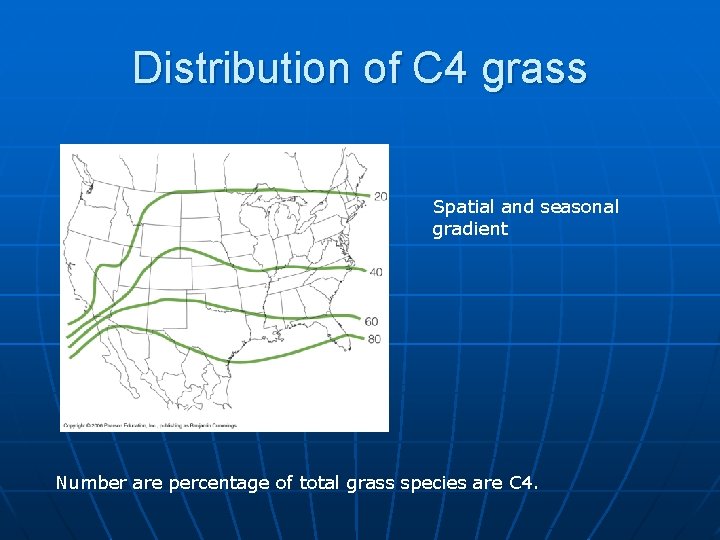
Distribution of C 4 grass Spatial and seasonal gradient Number are percentage of total grass species are C 4.
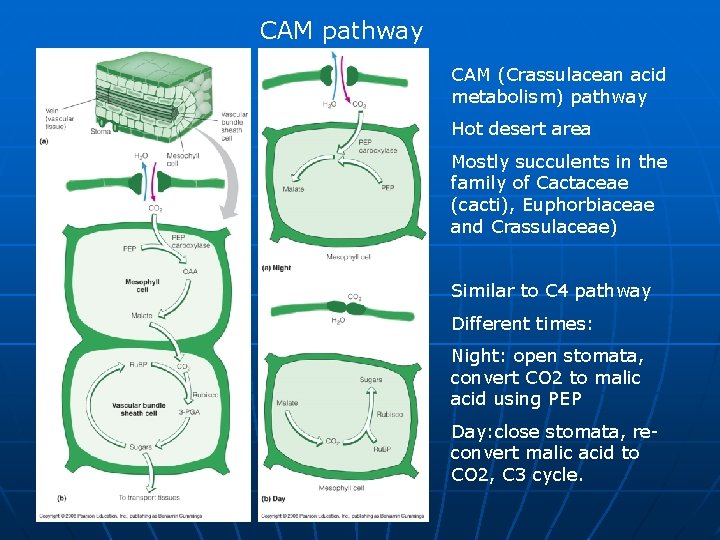
CAM pathway CAM (Crassulacean acid metabolism) pathway Hot desert area Mostly succulents in the family of Cactaceae (cacti), Euphorbiaceae and Crassulaceae) Similar to C 4 pathway Different times: Night: open stomata, convert CO 2 to malic acid using PEP Day: close stomata, reconvert malic acid to CO 2, C 3 cycle.
C 3, C 4 and CAM n n n C 4 makes more effective use of CO 2 concentration in bundle cell can be 6 X that of atmosphere and mesophyll cell As rate limiting aspect of photosynthesis is usually the availability of CO 2, then C 4 is more efficient Also can keep stomata closed longer and therefore better water use But needs large amount of extra enzyme (PEP, need more energy) and there only well adapted to high photosynthesis environments In deserts with really low water availability and high temperature • Third type – Crassulacean acid pathway – CAM • CO 2 fixed converted to malate by PEP during night and stored, while stomata are open • Malate is converted back to CO 2 during day and using photosynthesis, light and rubisco changed into sugar • High level of water conservation • Both processes in the mesophyll cells
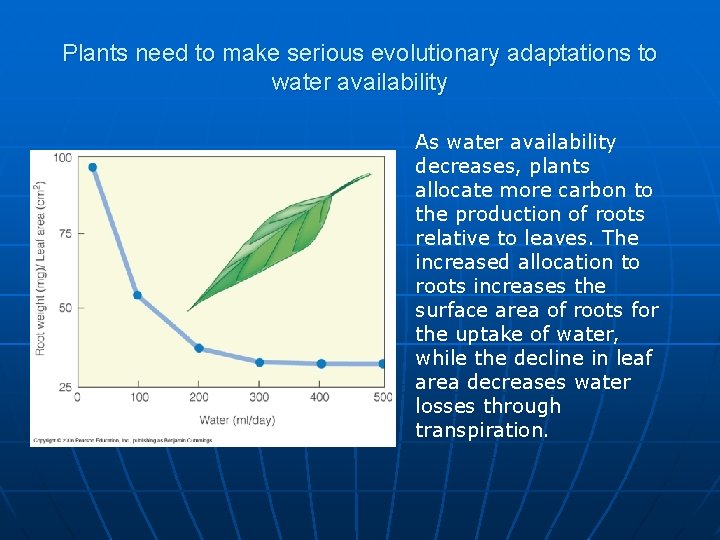
Plants need to make serious evolutionary adaptations to water availability As water availability decreases, plants allocate more carbon to the production of roots relative to leaves. The increased allocation to roots increases the surface area of roots for the uptake of water, while the decline in leaf area decreases water losses through transpiration.
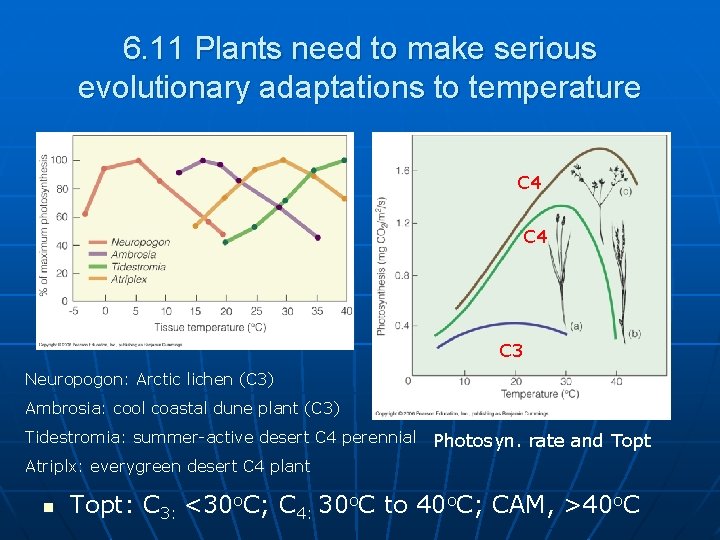
6. 11 Plants need to make serious evolutionary adaptations to temperature C 4 C 3 Neuropogon: Arctic lichen (C 3) Ambrosia: cool coastal dune plant (C 3) Tidestromia: summer-active desert C 4 perennial Photosyn. rate and Topt Atriplx: everygreen desert C 4 plant n Topt: C 3: <30 o. C; C 4: 30 o. C to 40 o. C; CAM, >40 o. C
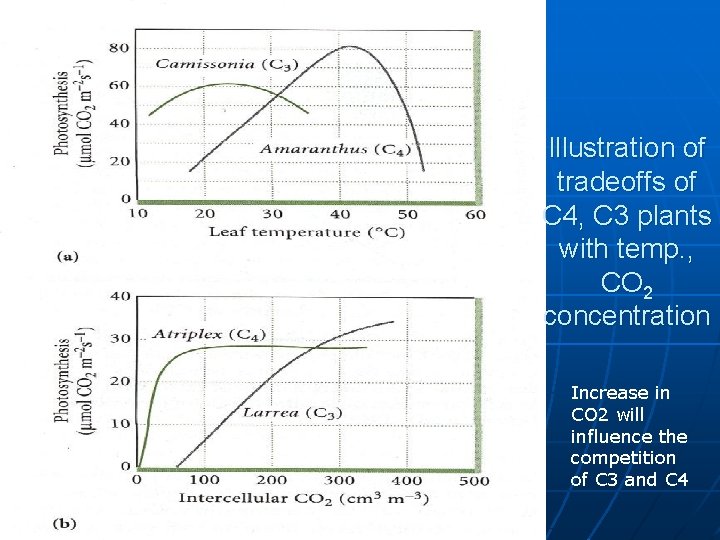
Illustration of tradeoffs of C 4, C 3 plants with temp. , CO 2 concentration Increase in CO 2 will influence the competition of C 3 and C 4
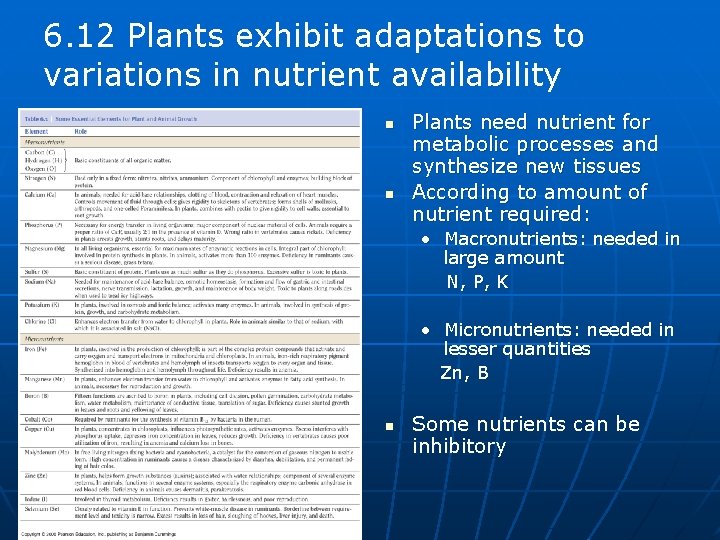
6. 12 Plants exhibit adaptations to variations in nutrient availability n n Plants need nutrient for metabolic processes and synthesize new tissues According to amount of nutrient required: • Macronutrients: needed in large amount N, P, K • Micronutrients: needed in lesser quantities Zn, B n Some nutrients can be inhibitory
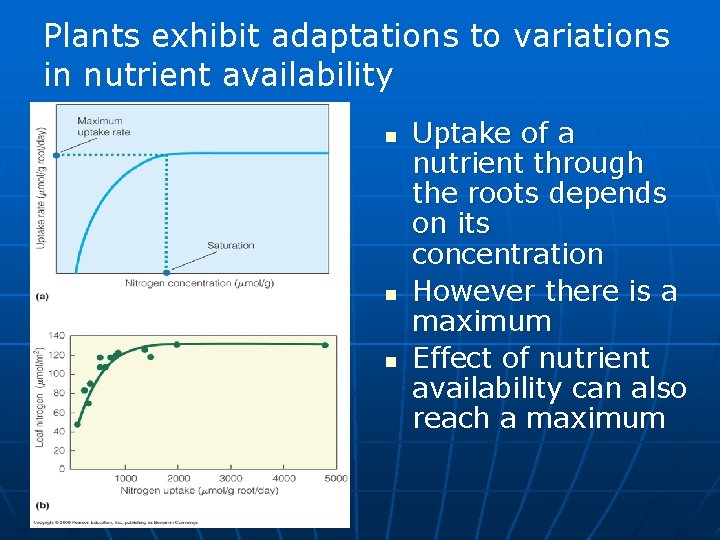
Plants exhibit adaptations to variations in nutrient availability n n n Uptake of a nutrient through the roots depends on its concentration However there is a maximum Effect of nutrient availability can also reach a maximum
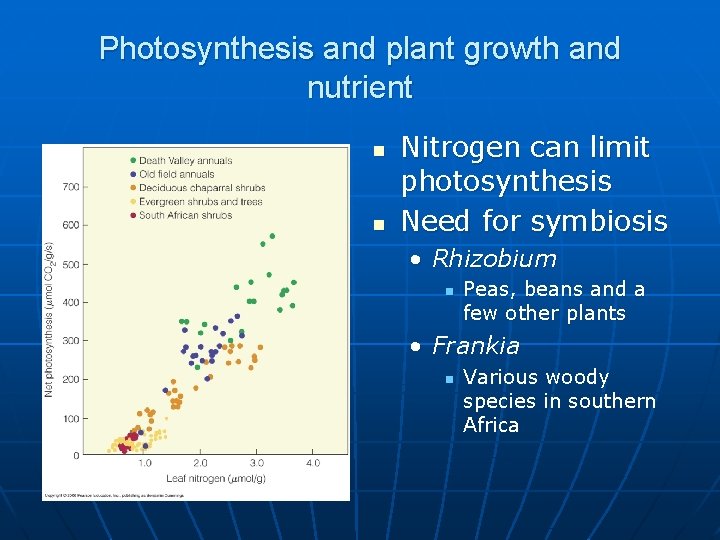
Photosynthesis and plant growth and nutrient n n Nitrogen can limit photosynthesis Need for symbiosis • Rhizobium n Peas, beans and a few other plants • Frankia n Various woody species in southern Africa
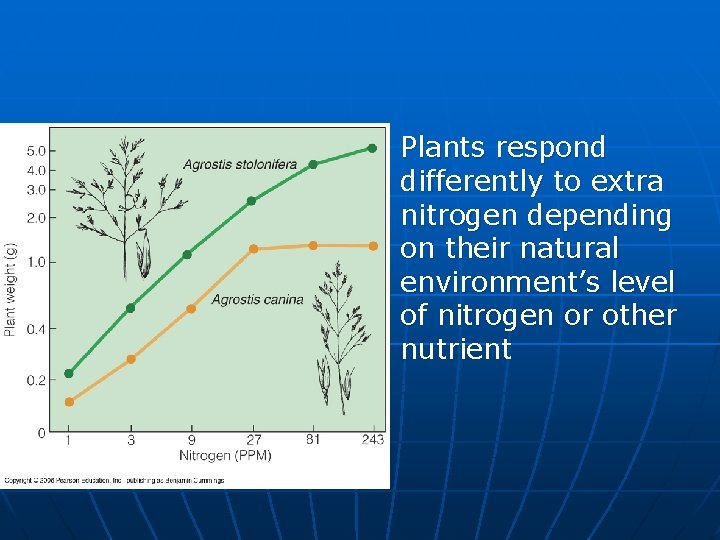
n Plants respond differently to extra nitrogen depending on their natural environment’s level of nitrogen or other nutrient

The END
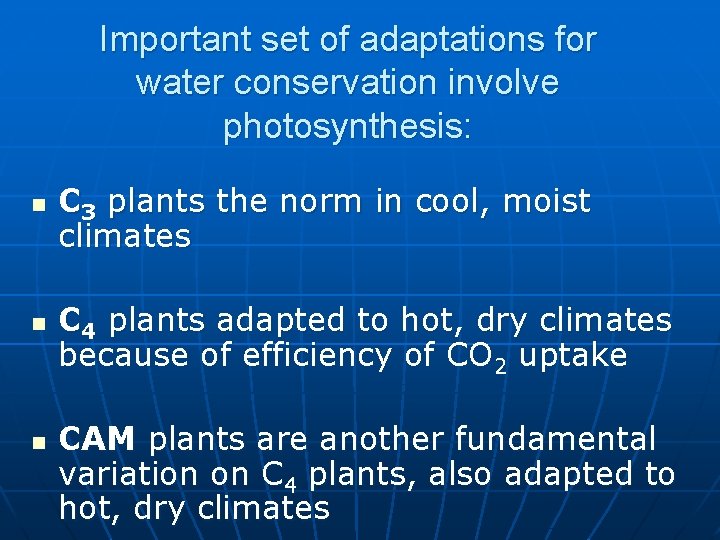
Important set of adaptations for water conservation involve photosynthesis: n n n C 3 plants the norm in cool, moist climates C 4 plants adapted to hot, dry climates because of efficiency of CO 2 uptake CAM plants are another fundamental variation on C 4 plants, also adapted to hot, dry climates
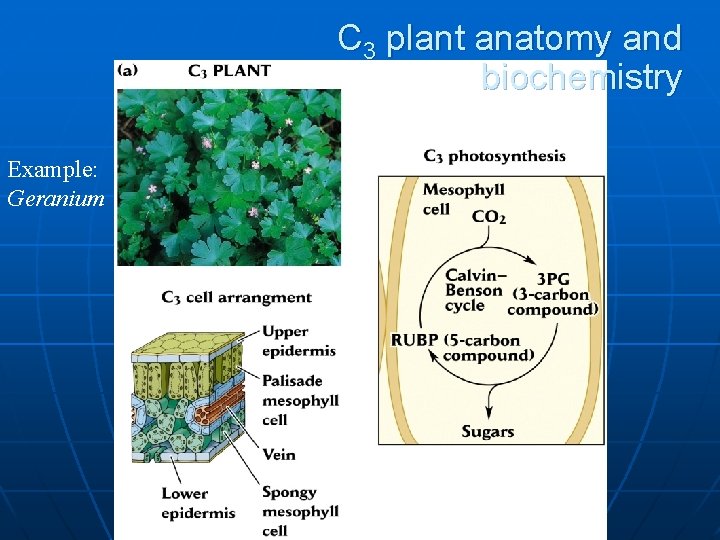
C 3 plant anatomy and biochemistry Example: Geranium
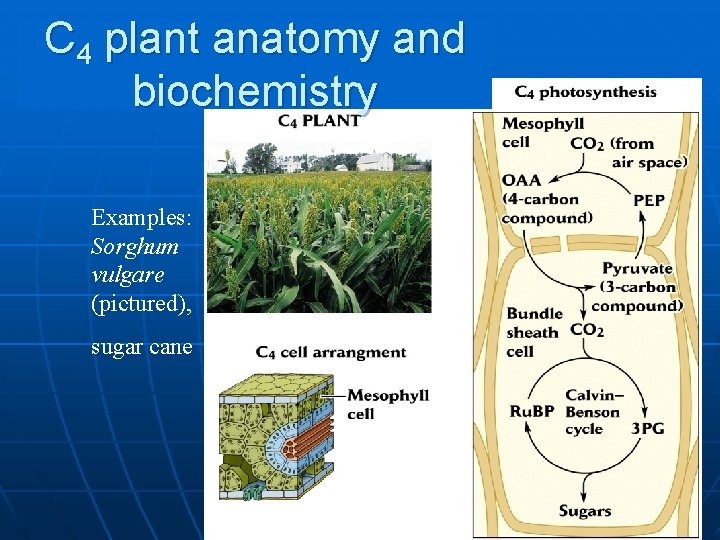
C 4 plant anatomy and biochemistry Examples: Sorghum vulgare (pictured), sugar cane
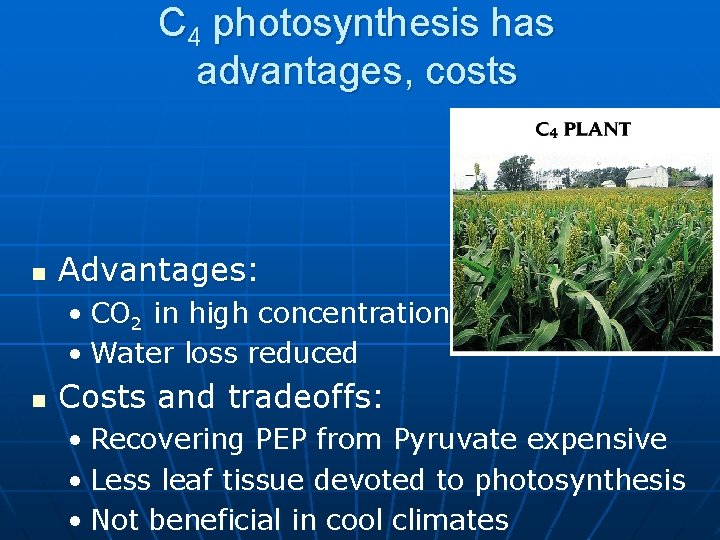
C 4 photosynthesis has advantages, costs n Advantages: • CO 2 in high concentration • Water loss reduced n Costs and tradeoffs: • Recovering PEP from Pyruvate expensive • Less leaf tissue devoted to photosynthesis • Not beneficial in cool climates
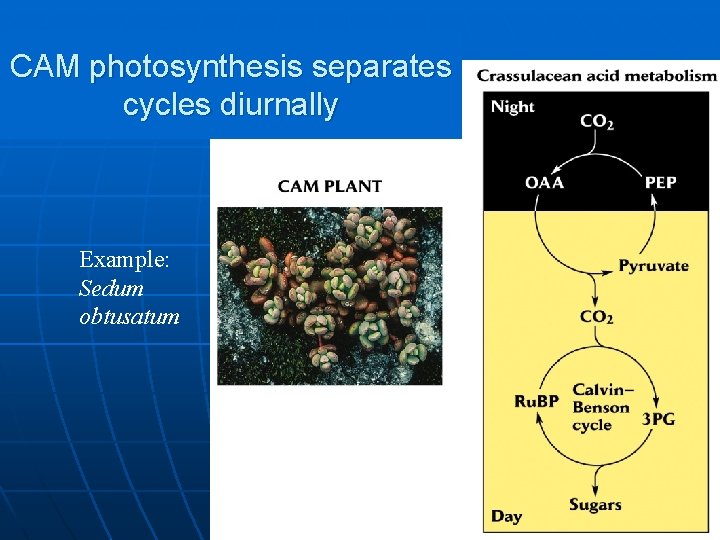
CAM photosynthesis separates cycles diurnally Example: Sedum obtusatum
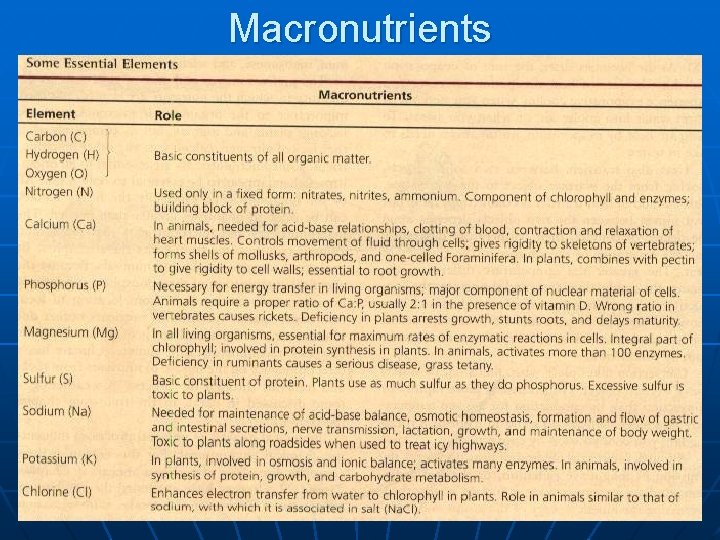
Macronutrients
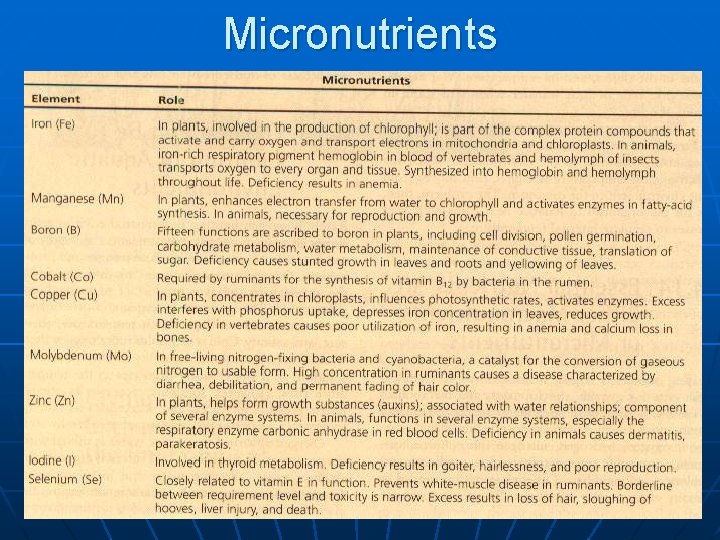
Micronutrients
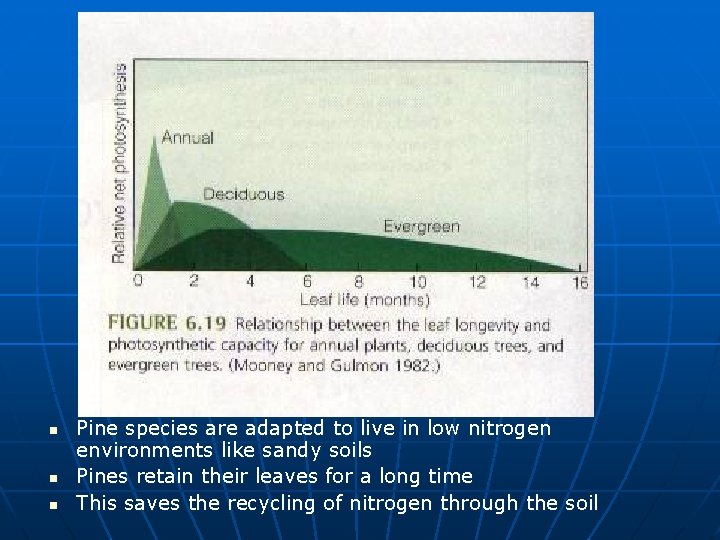
n n n Pine species are adapted to live in low nitrogen environments like sandy soils Pines retain their leaves for a long time This saves the recycling of nitrogen through the soil
- Slides: 49