
BIOL 3833 Week 3 a Ion gradients and
BIOL 3833 Week 3 a: Ion gradients and equilibrium potentials

Preview: Where are we headed?
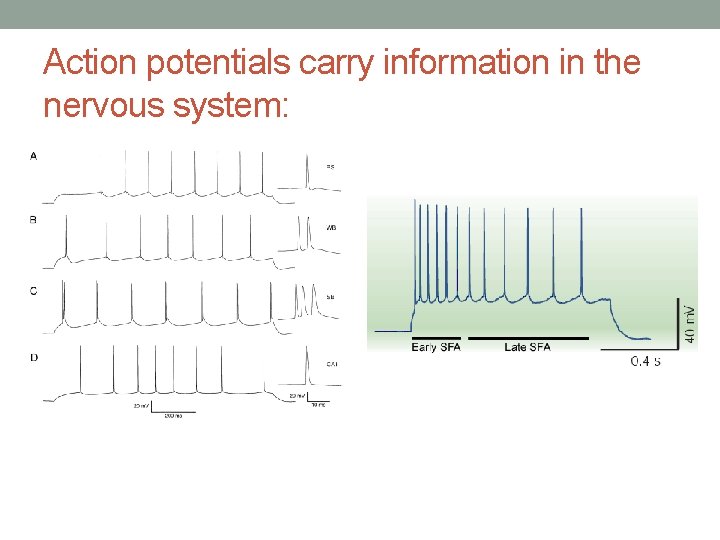
Action potentials carry information in the nervous system:
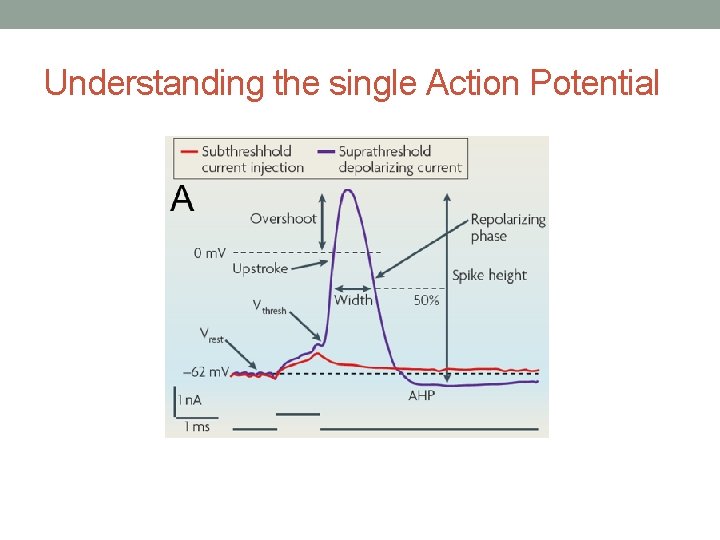
Understanding the single Action Potential

Ohm’s Law. . again
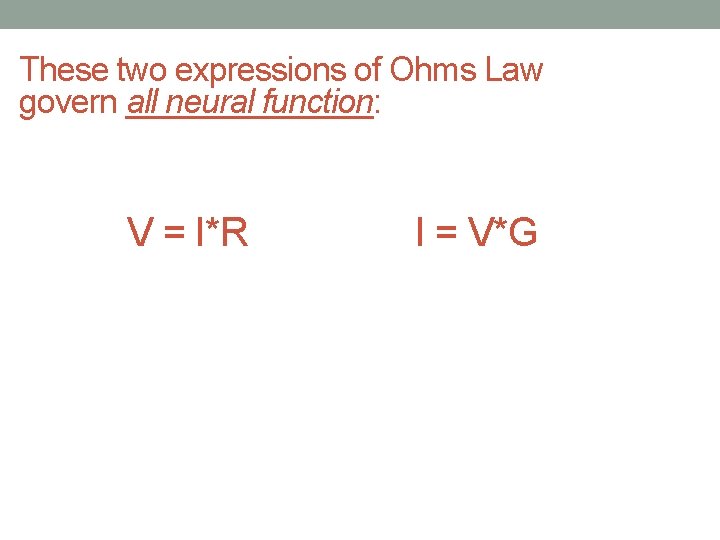
These two expressions of Ohms Law govern all neural function: V = I*R I = V*G
Driving force (Voltage): Separation of Charge Across the Membrane • Two forces at work: Diffusion and Electromotive • Particles of same identity diffuse to areas of lower concentration • Different charges attract, similar charges repel • Neural membranes maintain different concentrations of ions inside vs. outside • What are the consequences of these events?
Now the Equilibrium Game! • Reeses = +1 Kisses = -1 (This is their relative charge) • You can only move Reeses • Chem Teams: Score = 30–abs(#reeses[inside] – #reeses[outside]) • Electrical Teams: Score = 30 - abs(sum[inside] - sum[outside]) • Record your starting reeses[inside] and reeses[outside] • Record your starting sum[inside] - sum[outside] • Try to find the compromise that is best for both teams • Record the final sum[inside] - sum[outside] • This is your equilibrium potential
Exploring the consequences:
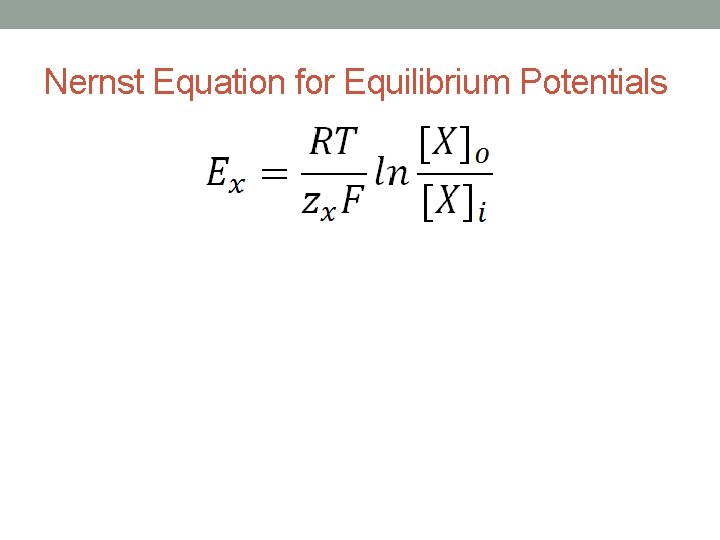
Nernst Equation for Equilibrium Potentials
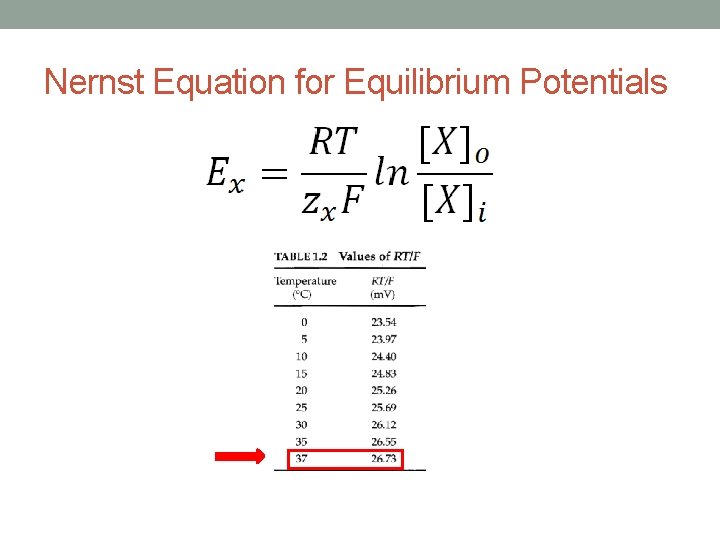
Nernst Equation for Equilibrium Potentials
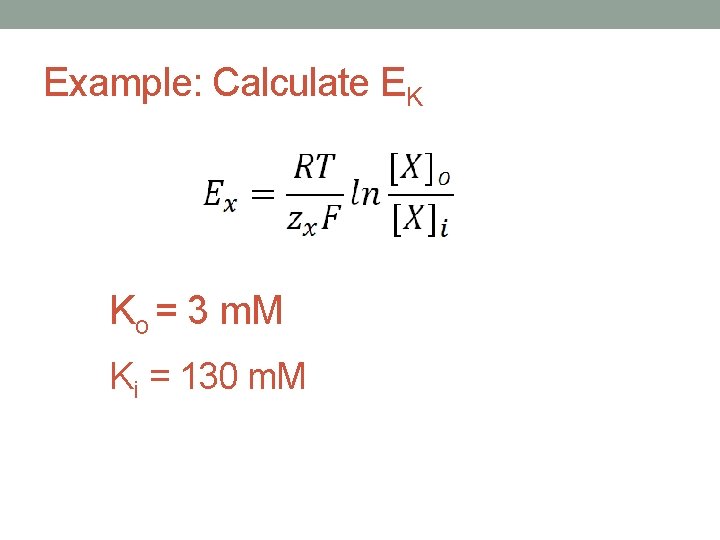
Example: Calculate EK Ko = 3 m. M Ki = 130 m. M
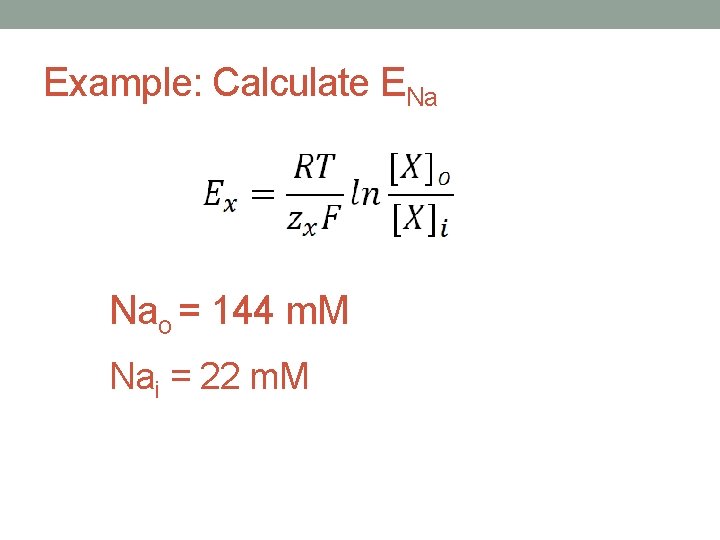
Example: Calculate ENa Nao = 144 m. M Nai = 22 m. M
Significance of equilibrium potentials If the membrane potential is at Eion there will be no net movement of that ion species across the membrane If the membrane is exclusively permeable to one type of ion, the membrane potential will move to Eion
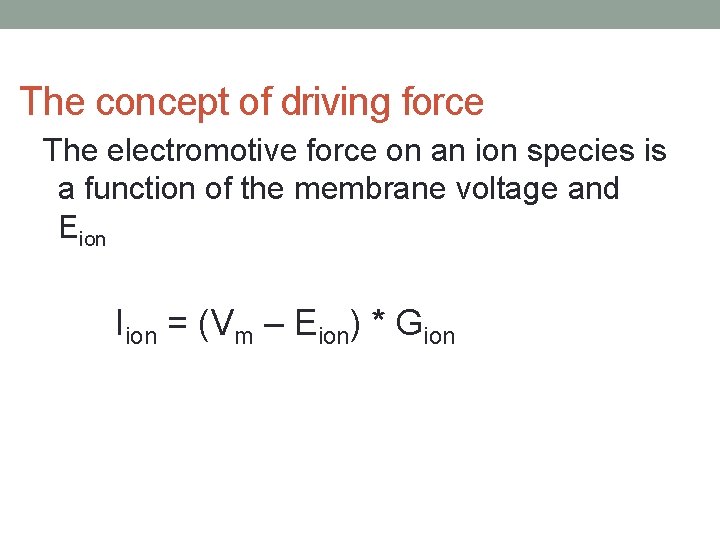
The concept of driving force The electromotive force on an ion species is a function of the membrane voltage and Eion Iion = (Vm – Eion) * Gion
What happens when the membrane is permeable to more than one ion?
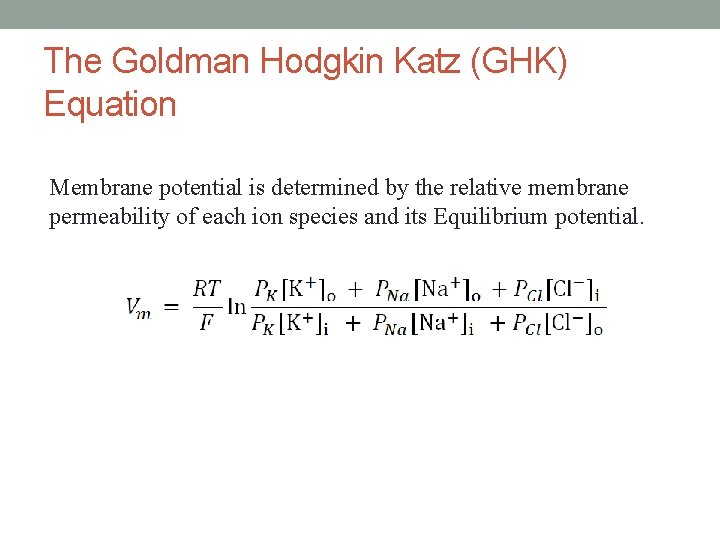
The Goldman Hodgkin Katz (GHK) Equation Membrane potential is determined by the relative membrane permeability of each ion species and its Equilibrium potential.
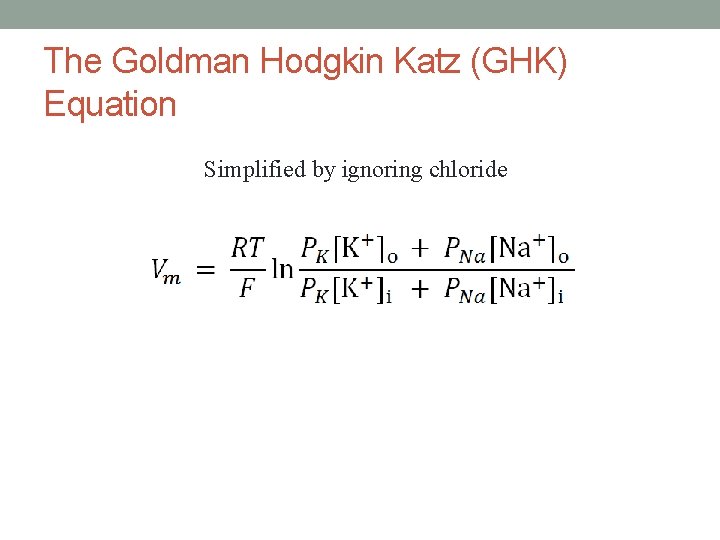
The Goldman Hodgkin Katz (GHK) Equation Simplified by ignoring chloride

- Slides: 20