
BIOL 370 Developmental Biology Slide with Guided Notes

BIOL 370 – Developmental Biology Slide with Guided Notes A few extra slides with guided notes to help you with material for Exam #3. Lange

Please note that I have included only a few additional slides (with some segue slides to help integrate ideas in this Power. Point presentation. It is imperative, however for you to notice and read the GUIDED NOTES that I have included with these slides to help you cover a few additional topics that extend beyond what we covered in lecture today. If you have not accessed GUIDED NOTES previously, look at the area below each slide, and you will see the notes that I have added. The exam will consist of 50 multiple choice questions. Study hard for this exam!!! You can all do very well. Be sure, when you are studying, to think about the potential applications that may be possible from the details you are learning. And, as always, use your best logic to think through what you are studying (and eventually answering on the test). Application of logic is especially helpful with the style of the questions our exam has.
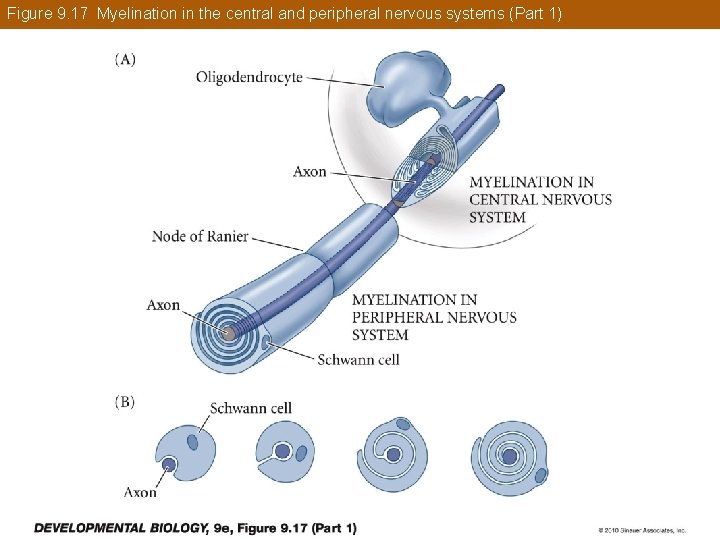
Figure 9. 17 Myelination in the central and peripheral nervous systems (Part 1)

Stereotypical Human Cell Cycle
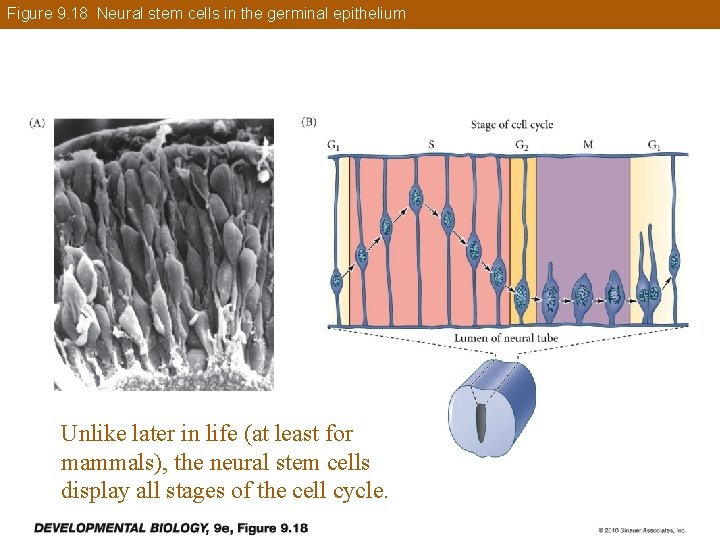
Figure 9. 18 Neural stem cells in the germinal epithelium Unlike later in life (at least for mammals), the neural stem cells display all stages of the cell cycle.

Bergmann glia - a type of glia also known as radial epithelial cells or Golgi Epithelial Cells are astrocytes in the cerebellum. Bergmann glia express high densities of glutamate transporters that limit diffusion of the neurotransmitter glutamate during its release from synaptic terminals. In addition to their role in early development of the cerebellum, Bergmann glia are also required for the pruning or addition of synapses.
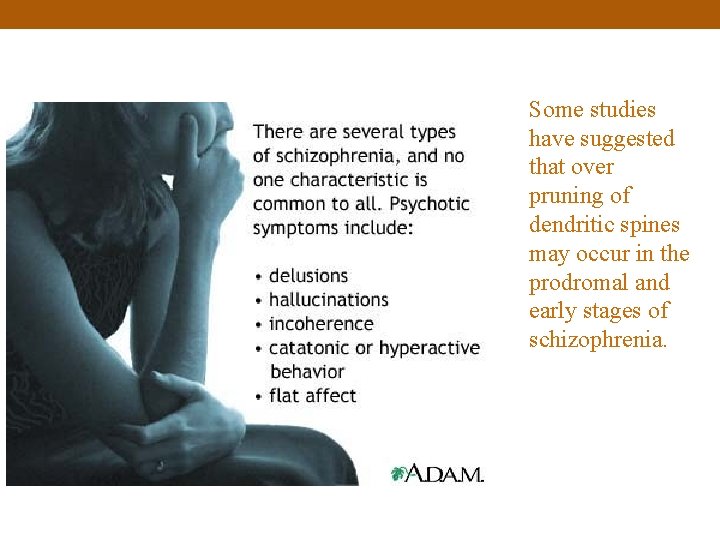
Some studies have suggested that over pruning of dendritic spines may occur in the prodromal and early stages of schizophrenia.
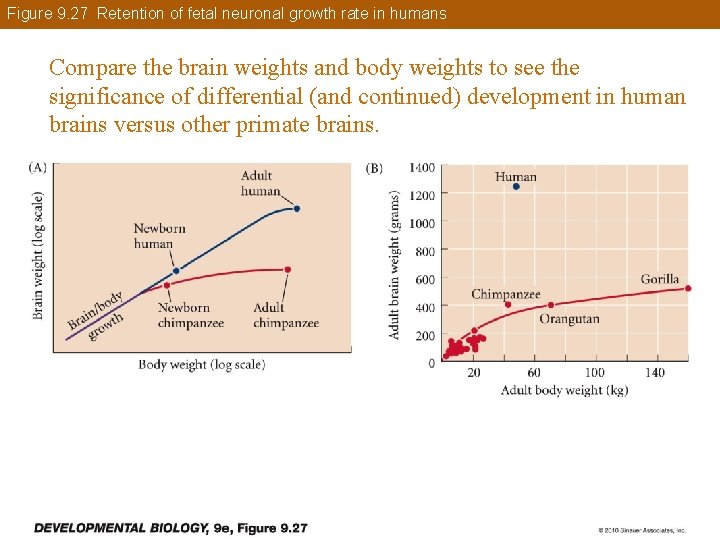
Figure 9. 27 Retention of fetal neuronal growth rate in humans Compare the brain weights and body weights to see the significance of differential (and continued) development in human brains versus other primate brains.
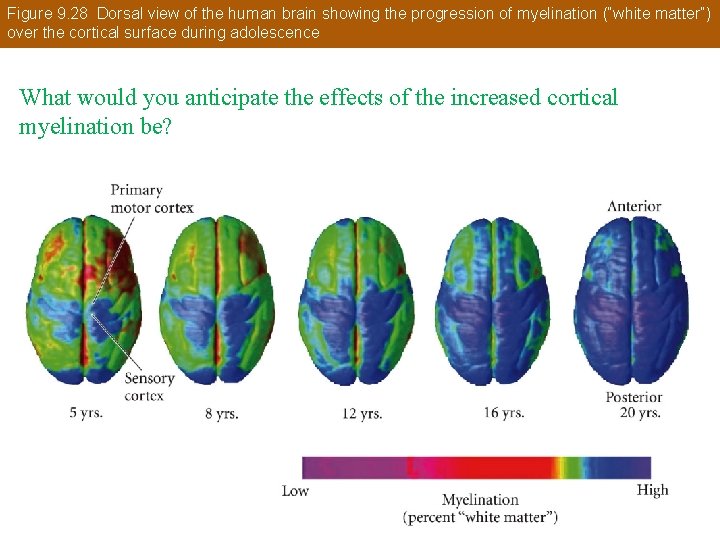
Figure 9. 28 Dorsal view of the human brain showing the progression of myelination (“white matter”) over the cortical surface during adolescence What would you anticipate the effects of the increased cortical myelination be?
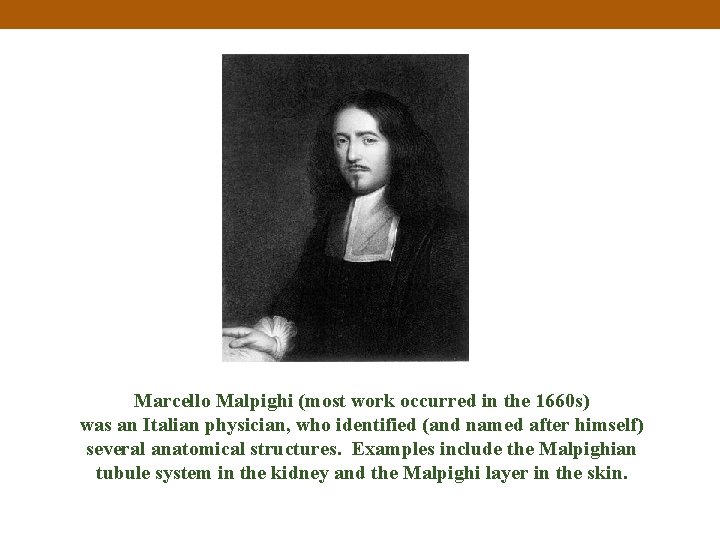
Marcello Malpighi (most work occurred in the 1660 s) was an Italian physician, who identified (and named after himself) several anatomical structures. Examples include the Malpighian tubule system in the kidney and the Malpighi layer in the skin.
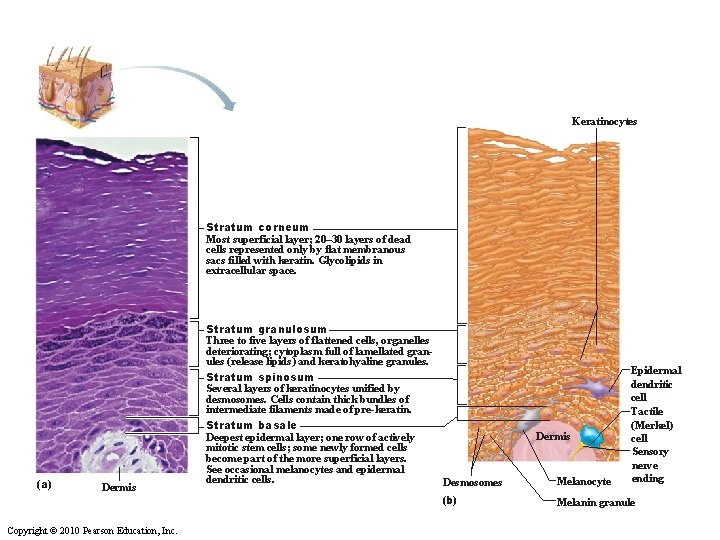
The main structural features of the skin epidermis. Keratinocytes Stratum corneum Most superficial layer; 20– 30 layers of dead cells represented only by flat membranous sacs filled with keratin. Glycolipids in extracellular space. (a) Dermis Copyright © 2010 Pearson Education, Inc. Stratum granulosum Three to five layers of flattened cells, organelles deteriorating; cytoplasm full of lamellated granules (release lipids) and keratohyaline granules. Stratum spinosum Several layers of keratinocytes unified by desmosomes. Cells contain thick bundles of intermediate filaments made of pre-keratin. Stratum basale Deepest epidermal layer; one row of actively mitotic stem cells; some newly formed cells become part of the more superficial layers. See occasional melanocytes and epidermal dendritic cells. Desmosomes (b) Dermis Melanocyte Epidermal dendritic cell Tactile (Merkel) cell Sensory nerve ending Melanin granule
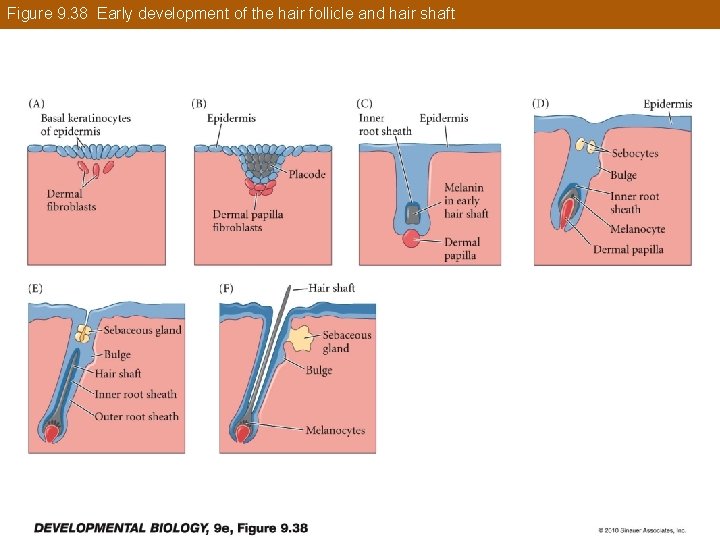
Figure 9. 38 Early development of the hair follicle and hair shaft
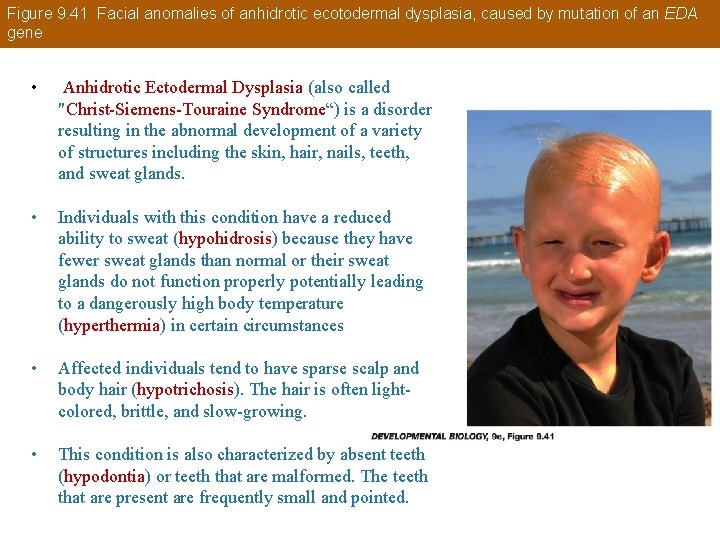
Figure 9. 41 Facial anomalies of anhidrotic ecotodermal dysplasia, caused by mutation of an EDA gene • Anhidrotic Ectodermal Dysplasia (also called "Christ-Siemens-Touraine Syndrome“) is a disorder resulting in the abnormal development of a variety of structures including the skin, hair, nails, teeth, and sweat glands. • Individuals with this condition have a reduced ability to sweat (hypohidrosis) because they have fewer sweat glands than normal or their sweat glands do not function properly potentially leading to a dangerously high body temperature (hyperthermia) in certain circumstances • Affected individuals tend to have sparse scalp and body hair (hypotrichosis). The hair is often lightcolored, brittle, and slow-growing. • This condition is also characterized by absent teeth (hypodontia) or teeth that are malformed. The teeth that are present are frequently small and pointed.
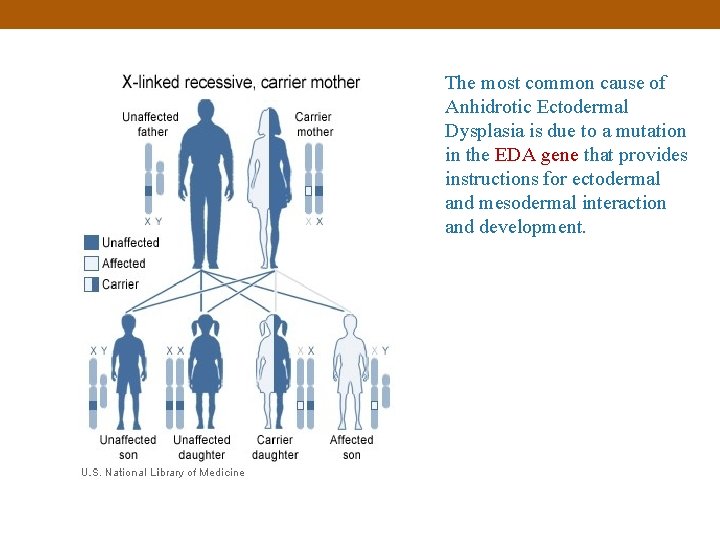
The most common cause of Anhidrotic Ectodermal Dysplasia is due to a mutation in the EDA gene that provides instructions for ectodermal and mesodermal interaction and development.

Ok, well…. that is it for this exam! Study hard!!!!!! You can do very, very well if you put in the time to learn the details and to think about their applications!!!! See you on Wednesday!
- Slides: 15