
BIOL 3316 Chapter 13 Prokaryotes Bacterial Morphologies Bacillus
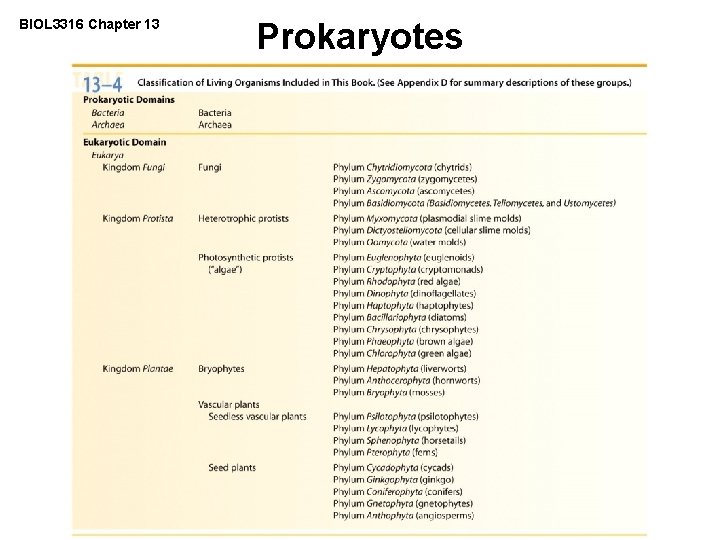
BIOL 3316 Chapter 13 Prokaryotes

Bacterial Morphologies Bacillus (bacilli) “rod-shaped”: Include many disease bacteria: E. coli, Clostridium spp. (tentanus, botulism), Yersinia (bubonic plague), but also Lactobacillus (which make yogurt and sourdough bread). � Coccus (cocci) “round-shaped”: Also include many disease bacteria: Staphlococcus, and Streptococcus (common and often fatal infections). � Spirillus (spirilla) “spiral-shaped” Human diseases include: Helicobacter (stomach ulcers), Teponema (syphilis), Borelia (Lyme �
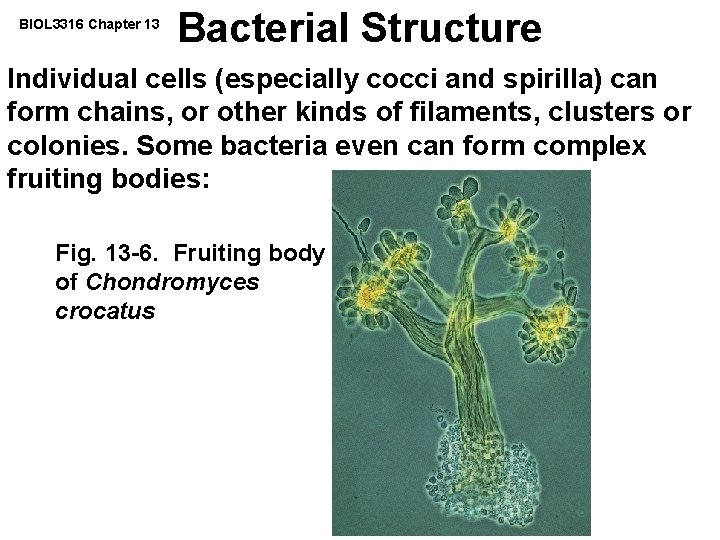
BIOL 3316 Chapter 13 Bacterial Structure Individual cells (especially cocci and spirilla) can form chains, or other kinds of filaments, clusters or colonies. Some bacteria even can form complex fruiting bodies: Fig. 13 -6. Fruiting body of Chondromyces crocatus
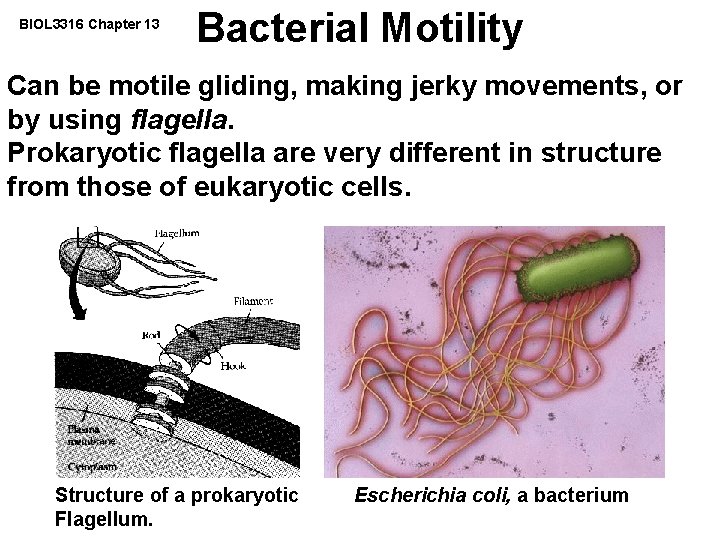
BIOL 3316 Chapter 13 Bacterial Motility Can be motile gliding, making jerky movements, or by using flagella. Prokaryotic flagella are very different in structure from those of eukaryotic cells. Structure of a prokaryotic Flagellum. Escherichia coli, a bacterium
Bacterial Ecologies Wide variety of distribution in abiotic and biotic environments: Free-living, parasitic, commensal, or mutualistic: � � Free-living bacteria exist independently in the environment. Parasitic bacteria consume the products of other living organisms to sustain themselves (‘disease-producing’ bacteria). Commensal bacteria live in close association with another species (i. e. , they are symbiotic). They gain benefit(s), but do not cause harm to the other species. Most mutualistic bacteria are also symbiotic, but produce benefits to the other species. • Exosymbiotic bacteria live on body surfaces. • Endosymbiotic bacteria live inside the body, often within the digestive tract.
Bacterial Metabolism Wide variety of metabolic types, substrates and end-products � May be autotrophs or heterotrophs • Autotrophs may be chemoautotrophs or photosynthetic. • Most, however, are heterotrophs (feeding off of other organisms) and most of these are saprophytes (consuming ‘dead’ organisms or their wastes). � May be strictly aerobic, facultatively anaerobic, or strictly anaerobic. • Obligate aerobes cannot make ATP in the absence of oxygen and die in the absence of oxygen. • Facultative anaerobes make ATP by aerobic respiration if oxygen is present, but can switch to fermentation or anaerobic respiration if oxygen is absent. • Obligate anaerobes make ATP in the absence of oxygen and die in the presence of oxygen.
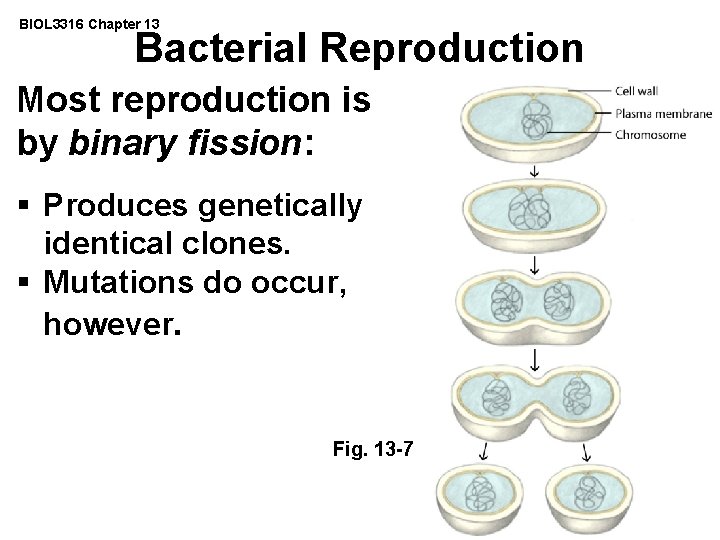
BIOL 3316 Chapter 13 Bacterial Reproduction Most reproduction is by binary fission: § Produces genetically identical clones. § Mutations do occur, however. Fig. 13 -7

BIOL 3316 Chapter 13 Bacterial Reproduction Exchange of genetic material can occur through: § Conjugation: one donor bacterium transfers genetic material to another recipient through direct contact. § Transduction: genes from a host bacterium are incorporated into the genome of a bacterial virus (bacteriophage) and then carried to another host cell when the bacteriophage initiates another cycle of infection. § Transformation: horizontal gene transfer by which some bacteria take up foreign genetic material (naked DNA) from the environment. Some bacteria can form endospores, that are dormant resting cells. Electron micrograph of conjugating E. coli cells (Fig 13 -4)
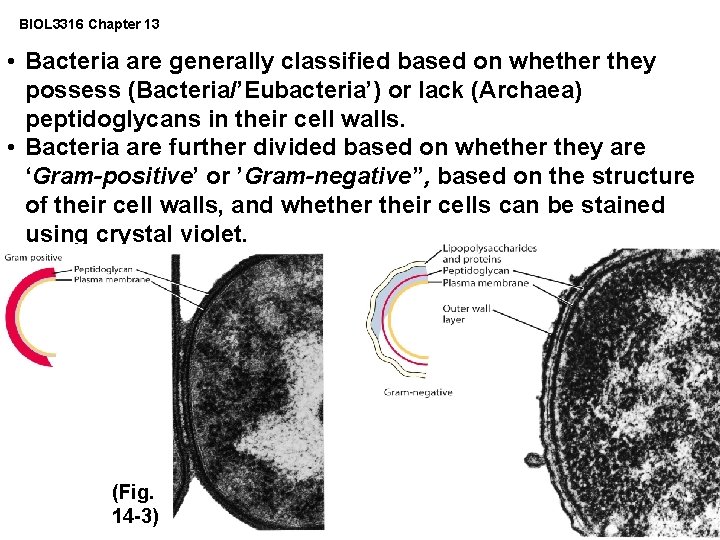
BIOL 3316 Chapter 13 • Bacteria are generally classified based on whether they possess (Bacteria/’Eubacteria’) or lack (Archaea) peptidoglycans in their cell walls. • Bacteria are further divided based on whether they are ‘Gram-positive’ or ’Gram-negative”, based on the structure of their cell walls, and whether their cells can be stained using crystal violet. (Fig. 14 -3)
BIOL 3316 Chapter 13 Gram-Positive Bacteria Genus Bacillus § Extremely diverse genus that includes species important medically in the production of antibiotics, the species that causes anthrax, and a species used as an organic pesticide. § Most are saprophytes, and they can be aerobes or facultative anaerobes. § They can produce endospores that are resistant to extreme heat, cold and disinfectants. § Can live in a wide diversity of habitats, including environments in which few other organisms can live, including insects, and humans.
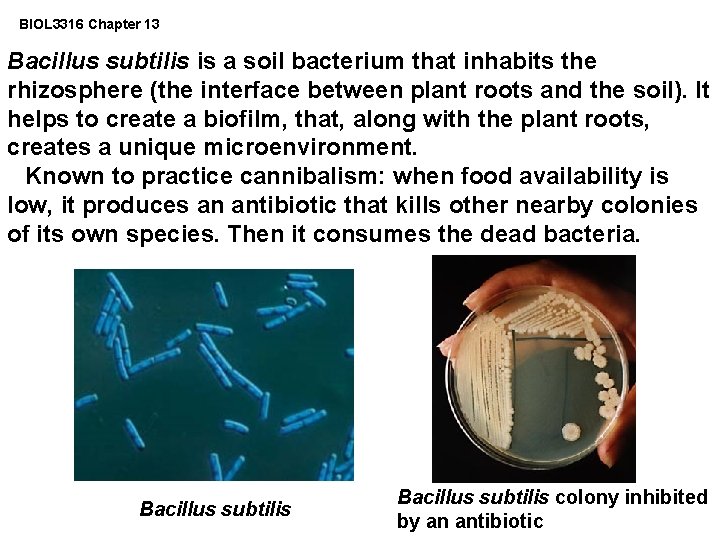
BIOL 3316 Chapter 13 Bacillus subtilis is a soil bacterium that inhabits the rhizosphere (the interface between plant roots and the soil). It helps to create a biofilm, that, along with the plant roots, creates a unique microenvironment. Known to practice cannibalism: when food availability is low, it produces an antibiotic that kills other nearby colonies of its own species. Then it consumes the dead bacteria. Bacillus subtilis colony inhibited by an antibiotic
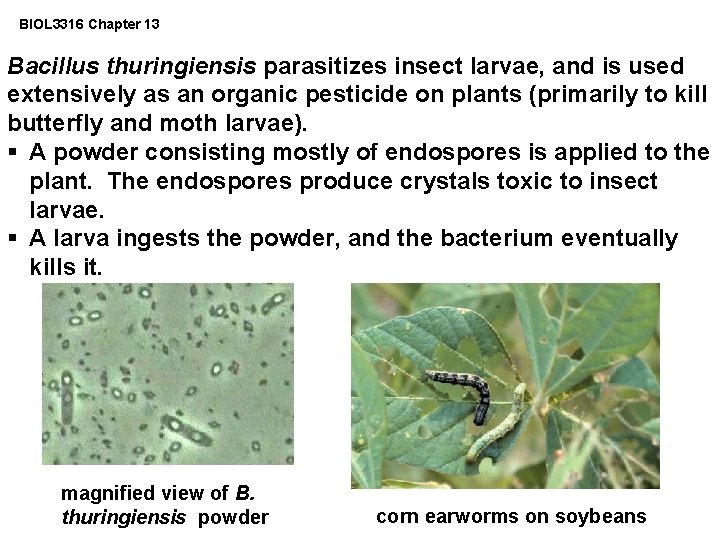
BIOL 3316 Chapter 13 Bacillus thuringiensis parasitizes insect larvae, and is used extensively as an organic pesticide on plants (primarily to kill butterfly and moth larvae). § A powder consisting mostly of endospores is applied to the plant. The endospores produce crystals toxic to insect larvae. § A larva ingests the powder, and the bacterium eventually kills it. magnified view of B. thuringiensis powder corn earworms on soybeans
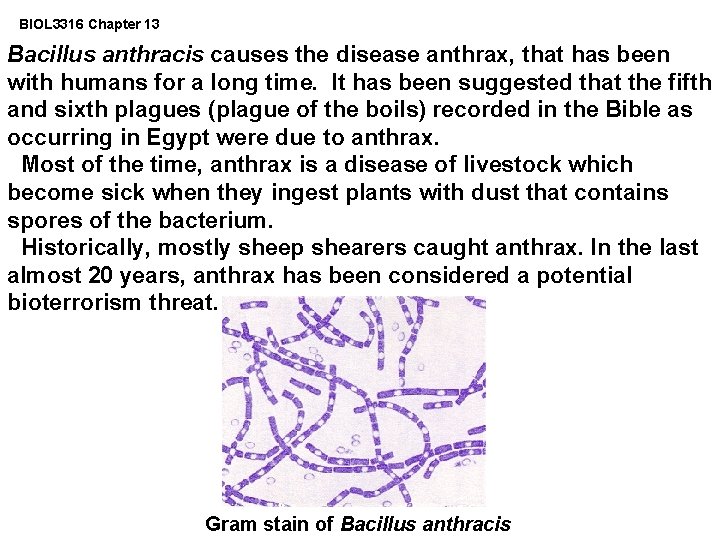
BIOL 3316 Chapter 13 Bacillus anthracis causes the disease anthrax, that has been with humans for a long time. It has been suggested that the fifth and sixth plagues (plague of the boils) recorded in the Bible as occurring in Egypt were due to anthrax. Most of the time, anthrax is a disease of livestock which become sick when they ingest plants with dust that contains spores of the bacterium. Historically, mostly sheep shearers caught anthrax. In the last almost 20 years, anthrax has been considered a potential bioterrorism threat. Gram stain of Bacillus anthracis
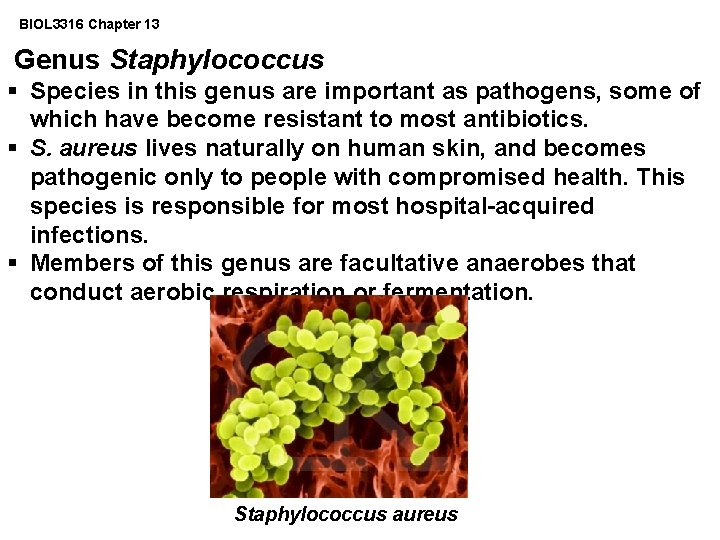
BIOL 3316 Chapter 13 Genus Staphylococcus § Species in this genus are important as pathogens, some of which have become resistant to most antibiotics. § S. aureus lives naturally on human skin, and becomes pathogenic only to people with compromised health. This species is responsible for most hospital-acquired infections. § Members of this genus are facultative anaerobes that conduct aerobic respiration or fermentation. Staphylococcus aureus
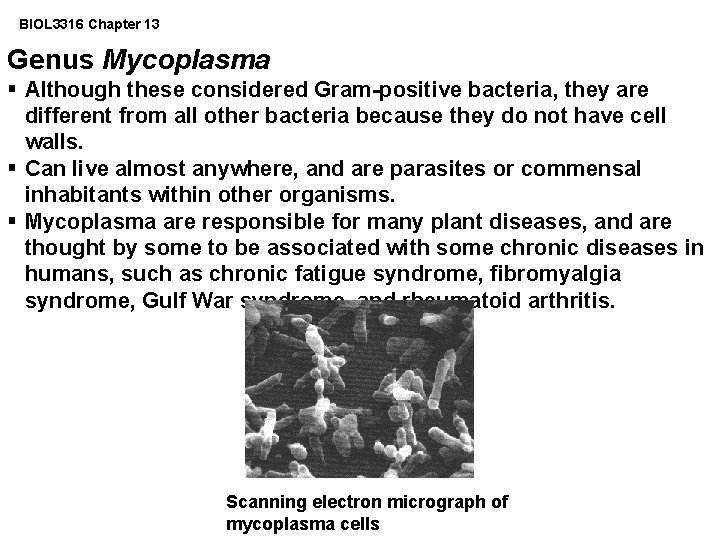
BIOL 3316 Chapter 13 Genus Mycoplasma § Although these considered Gram-positive bacteria, they are different from all other bacteria because they do not have cell walls. § Can live almost anywhere, and are parasites or commensal inhabitants within other organisms. § Mycoplasma are responsible for many plant diseases, and are thought by some to be associated with some chronic diseases in humans, such as chronic fatigue syndrome, fibromyalgia syndrome, Gulf War syndrome, and rheumatoid arthritis. Scanning electron micrograph of mycoplasma cells
BIOL 3316 Chapter 13 Gram-Negative Bacteria Have many types of metabolism: Chemoheterotrophic (heterotrophic)-obtain energy from organic compounds that have originated in other organisms. Genus Escherichia § § The most well known species in this genus is Escherichia coli. Species in this genus naturally live parasitically in the intestinal tract of animals (including humans). They usually are harmless-even helpful—because they make vitamin K and some vitamins in the B complex that we need. They also outcompete more pathogenic bacteria. A rare strain of E. coli, however, causes severe illness. E. coli are facultative anaerobes, able to conduct either aerobic respiration or fermentation.
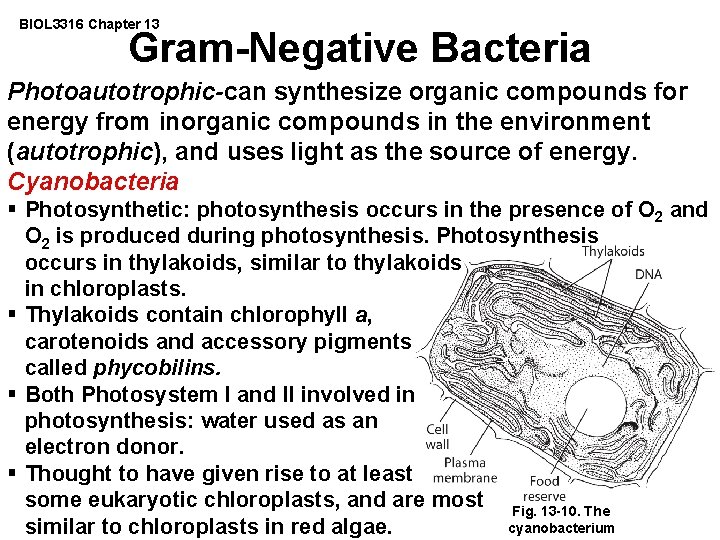
BIOL 3316 Chapter 13 Gram-Negative Bacteria Photoautotrophic-can synthesize organic compounds for energy from inorganic compounds in the environment (autotrophic), and uses light as the source of energy. Cyanobacteria § Photosynthetic: photosynthesis occurs in the presence of O 2 and O 2 is produced during photosynthesis. Photosynthesis occurs in thylakoids, similar to thylakoids in chloroplasts. § Thylakoids contain chlorophyll a, carotenoids and accessory pigments called phycobilins. § Both Photosystem I and II involved in photosynthesis: water used as an electron donor. § Thought to have given rise to at least some eukaryotic chloroplasts, and are most Fig. 13 -10. The cyanobacterium similar to chloroplasts in red algae.
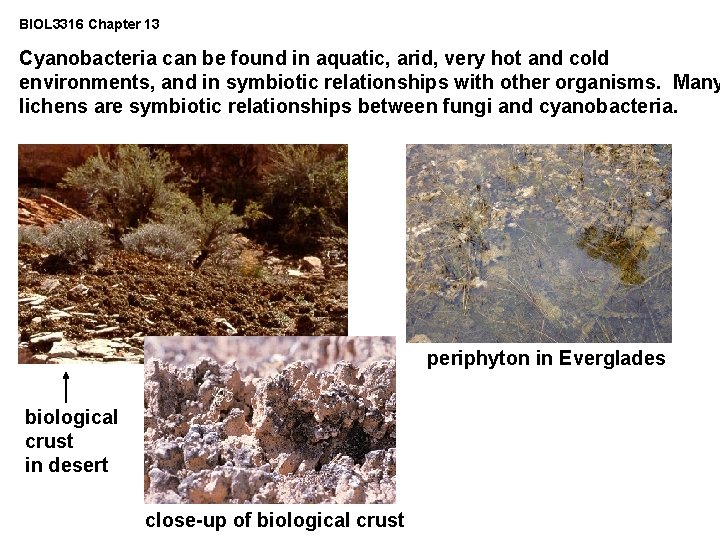
BIOL 3316 Chapter 13 Cyanobacteria can be found in aquatic, arid, very hot and cold environments, and in symbiotic relationships with other organisms. Many lichens are symbiotic relationships between fungi and cyanobacteria. periphyton in Everglades biological crust in desert close-up of biological crust
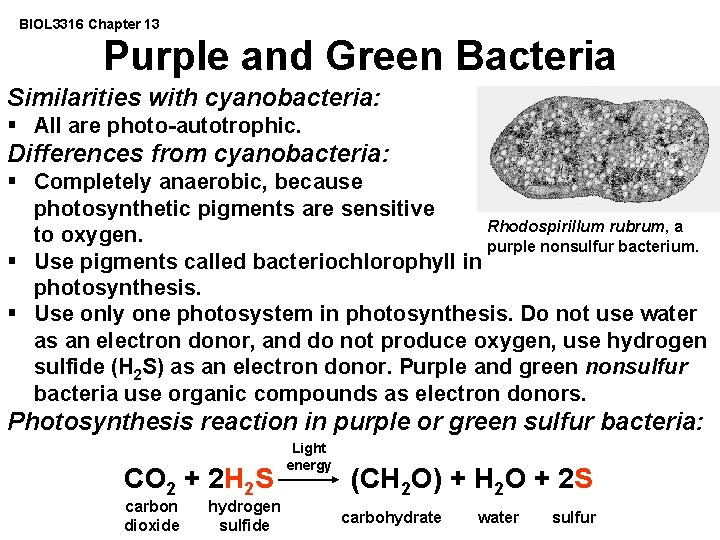
BIOL 3316 Chapter 13 Purple and Green Bacteria Similarities with cyanobacteria: § All are photo-autotrophic. Differences from cyanobacteria: § Completely anaerobic, because photosynthetic pigments are sensitive Rhodospirillum rubrum, a to oxygen. purple nonsulfur bacterium. § Use pigments called bacteriochlorophyll in photosynthesis. § Use only one photosystem in photosynthesis. Do not use water as an electron donor, and do not produce oxygen, use hydrogen sulfide (H 2 S) as an electron donor. Purple and green nonsulfur bacteria use organic compounds as electron donors. Photosynthesis reaction in purple or green sulfur bacteria: CO 2 + 2 H 2 S carbon dioxide hydrogen sulfide Light energy (CH 2 O) + H 2 O + 2 S carbohydrate water sulfur
The Nitrogen Cycle
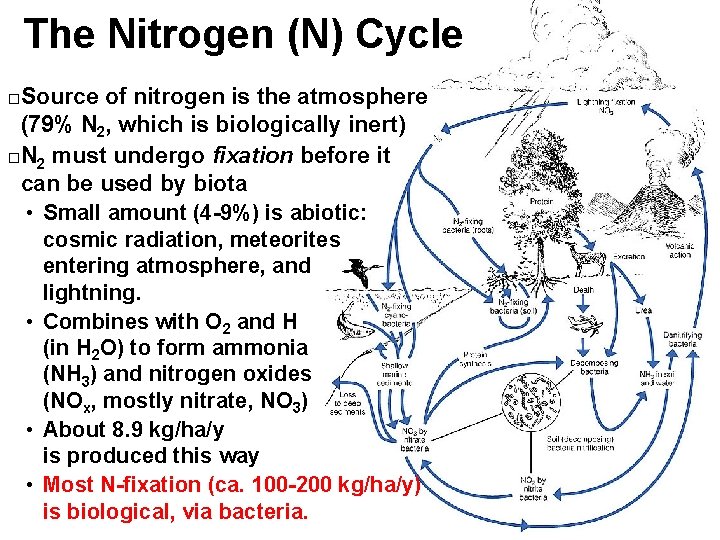
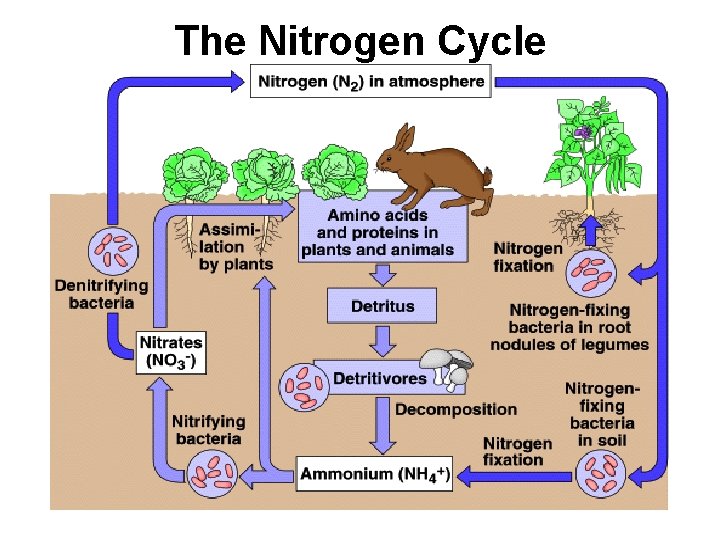
The Nitrogen (N) Cycle Source of nitrogen is the atmosphere (79% N 2, which is biologically inert) �N 2 must undergo fixation before it can be used by biota • Small amount (4 -9%) is abiotic: cosmic radiation, meteorites entering atmosphere, and lightning. • Combines with O 2 and H (in H 2 O) to form ammonia (NH 3) and nitrogen oxides (NOx, mostly nitrate, NO 3) • About 8. 9 kg/ha/y is produced this way • Most N-fixation (ca. 100 -200 kg/ha/y) is biological, via bacteria. �
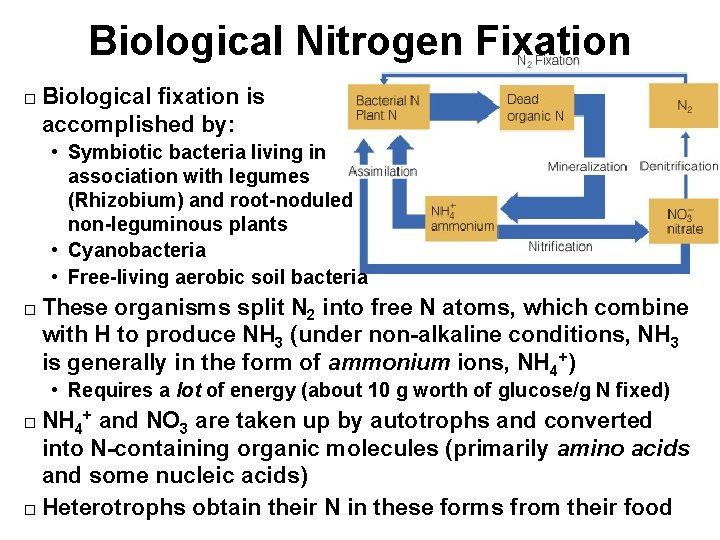
Biological Nitrogen Fixation � Biological fixation is accomplished by: • Symbiotic bacteria living in association with legumes (Rhizobium) and root-noduled non-leguminous plants • Cyanobacteria • Free-living aerobic soil bacteria � These organisms split N 2 into free N atoms, which combine with H to produce NH 3 (under non-alkaline conditions, NH 3 is generally in the form of ammonium ions, NH 4+) • Requires a lot of energy (about 10 g worth of glucose/g N fixed) NH 4+ and NO 3 are taken up by autotrophs and converted into N-containing organic molecules (primarily amino acids and some nucleic acids) � Heterotrophs obtain their N in these forms from their food �
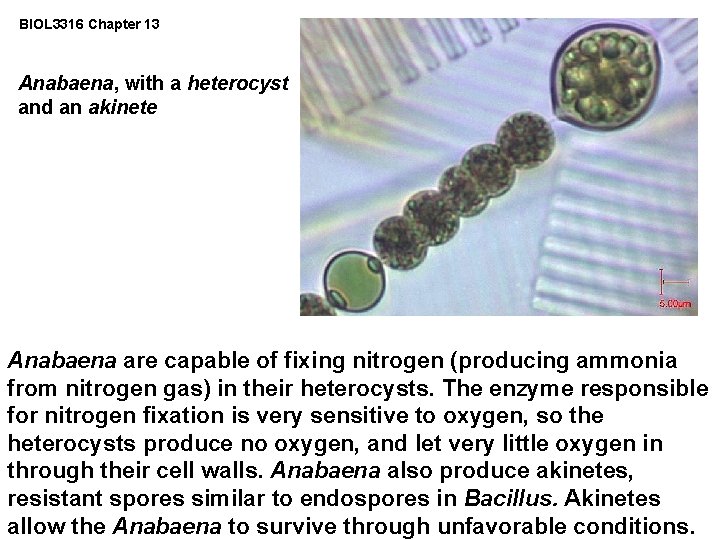
BIOL 3316 Chapter 13 Anabaena, with a heterocyst and an akinete Anabaena are capable of fixing nitrogen (producing ammonia from nitrogen gas) in their heterocysts. The enzyme responsible for nitrogen fixation is very sensitive to oxygen, so the heterocysts produce no oxygen, and let very little oxygen in through their cell walls. Anabaena also produce akinetes, resistant spores similar to endospores in Bacillus. Akinetes allow the Anabaena to survive through unfavorable conditions.
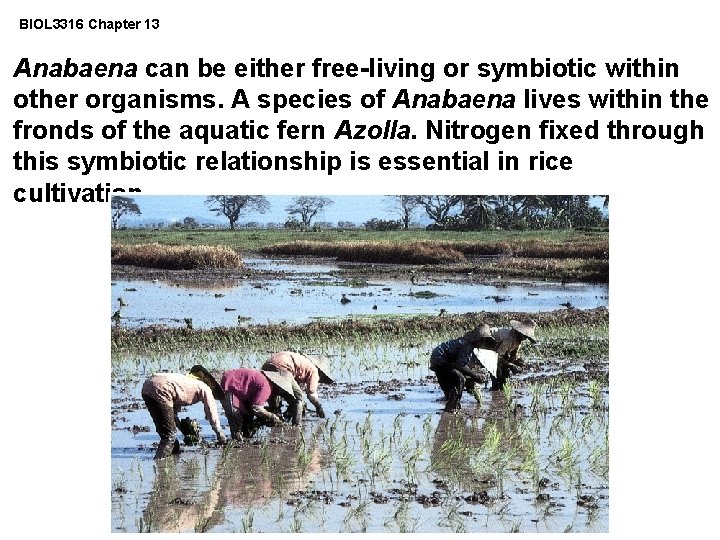
BIOL 3316 Chapter 13 Anabaena can be either free-living or symbiotic within other organisms. A species of Anabaena lives within the fronds of the aquatic fern Azolla. Nitrogen fixed through this symbiotic relationship is essential in rice cultivation.
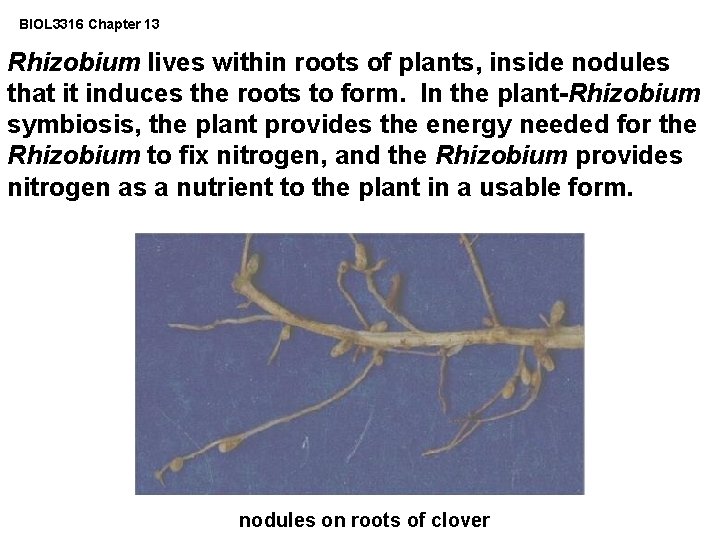
BIOL 3316 Chapter 13 Rhizobium lives within roots of plants, inside nodules that it induces the roots to form. In the plant-Rhizobium symbiosis, the plant provides the energy needed for the Rhizobium to fix nitrogen, and the Rhizobium provides nitrogen as a nutrient to the plant in a usable form. nodules on roots of clover
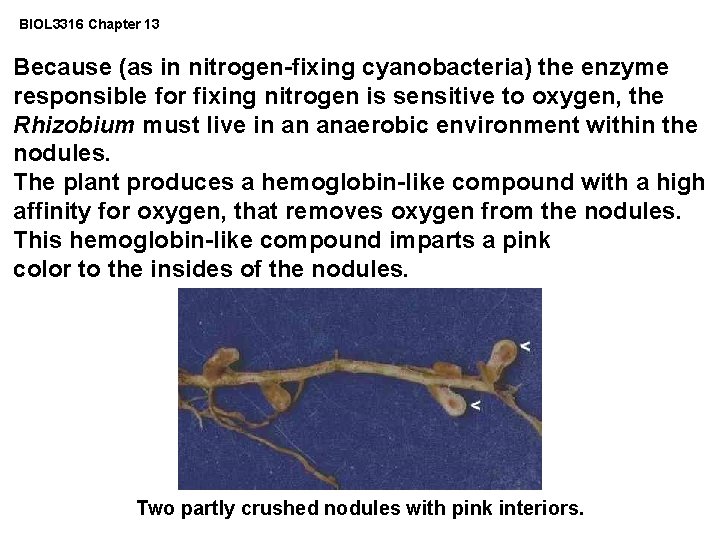
BIOL 3316 Chapter 13 Because (as in nitrogen-fixing cyanobacteria) the enzyme responsible for fixing nitrogen is sensitive to oxygen, the Rhizobium must live in an anaerobic environment within the nodules. The plant produces a hemoglobin-like compound with a high affinity for oxygen, that removes oxygen from the nodules. This hemoglobin-like compound imparts a pink color to the insides of the nodules. Two partly crushed nodules with pink interiors.
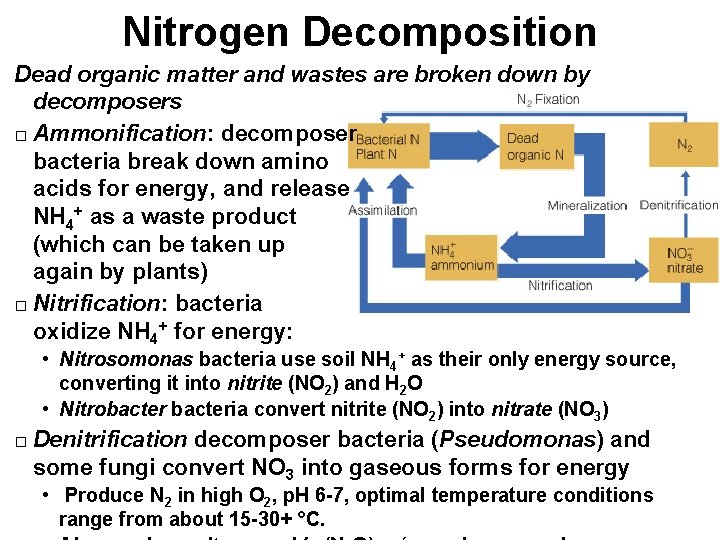
Nitrogen Decomposition Dead organic matter and wastes are broken down by decomposers � Ammonification: decomposer bacteria break down amino acids for energy, and release NH 4+ as a waste product (which can be taken up again by plants) � Nitrification: bacteria oxidize NH 4+ for energy: • Nitrosomonas bacteria use soil NH 4+ as their only energy source, converting it into nitrite (NO 2) and H 2 O • Nitrobacteria convert nitrite (NO 2) into nitrate (NO 3) � Denitrification decomposer bacteria (Pseudomonas) and some fungi convert NO 3 into gaseous forms for energy • Produce N 2 in high O 2, p. H 6 -7, optimal temperature conditions range from about 15 -30+ °C.
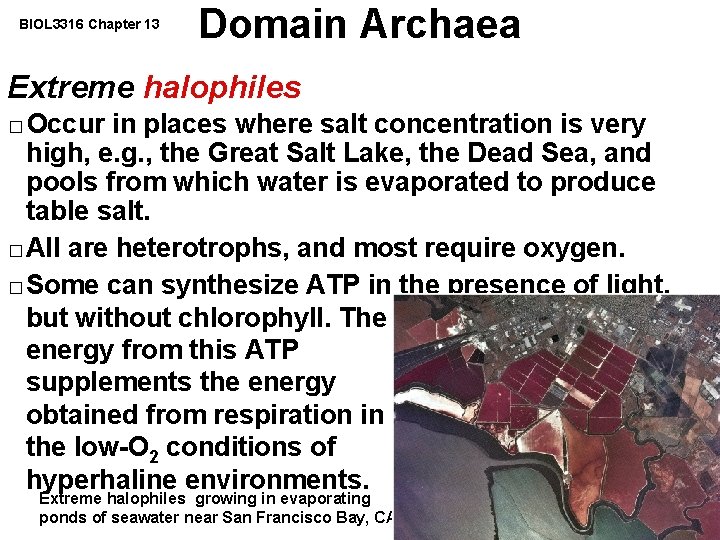
BIOL 3316 Chapter 13 Domain Archaea Extreme halophiles Occur in places where salt concentration is very high, e. g. , the Great Salt Lake, the Dead Sea, and pools from which water is evaporated to produce table salt. � All are heterotrophs, and most require oxygen. � Some can synthesize ATP in the presence of light, but without chlorophyll. The energy from this ATP supplements the energy obtained from respiration in the low-O 2 conditions of hyperhaline environments. � Extreme halophiles growing in evaporating ponds of seawater near San Francisco Bay, CA.
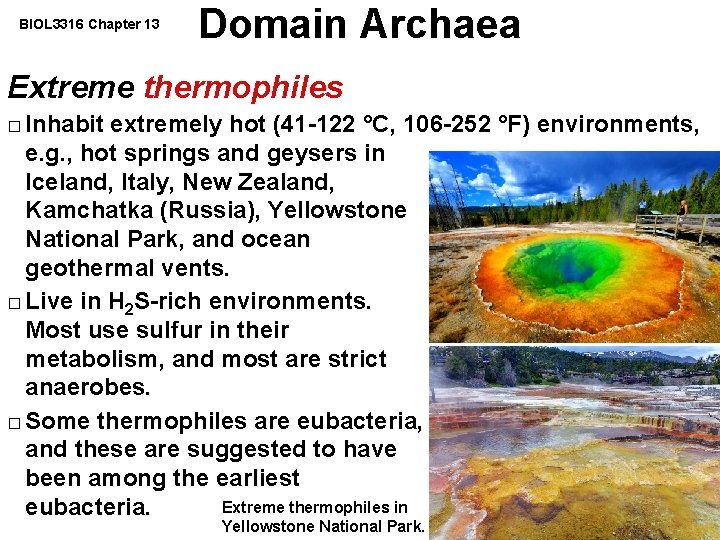
BIOL 3316 Chapter 13 Domain Archaea Extreme thermophiles Inhabit extremely hot (41 -122 °C, 106 -252 °F) environments, e. g. , hot springs and geysers in Iceland, Italy, New Zealand, Kamchatka (Russia), Yellowstone National Park, and ocean geothermal vents. � Live in H 2 S-rich environments. Most use sulfur in their metabolism, and most are strict anaerobes. � Some thermophiles are eubacteria, and these are suggested to have been among the earliest Extreme thermophiles in eubacteria. � Yellowstone National Park.
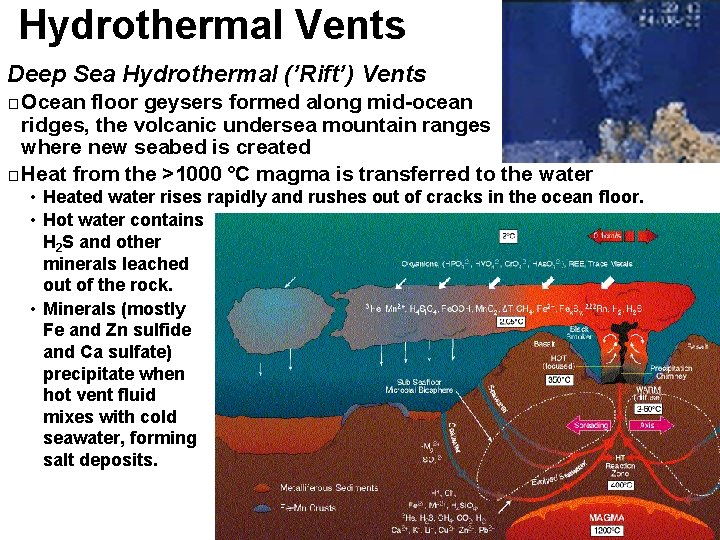
Hydrothermal Vents Deep Sea Hydrothermal (’Rift’) Vents Ocean floor geysers formed along mid-ocean ridges, the volcanic undersea mountain ranges where new seabed is created � Heat from the >1000 °C magma is transferred to the water � • Heated water rises rapidly and rushes out of cracks in the ocean floor. • Hot water contains H 2 S and other minerals leached out of the rock. • Minerals (mostly Fe and Zn sulfide and Ca sulfate) precipitate when hot vent fluid mixes with cold seawater, forming salt deposits.
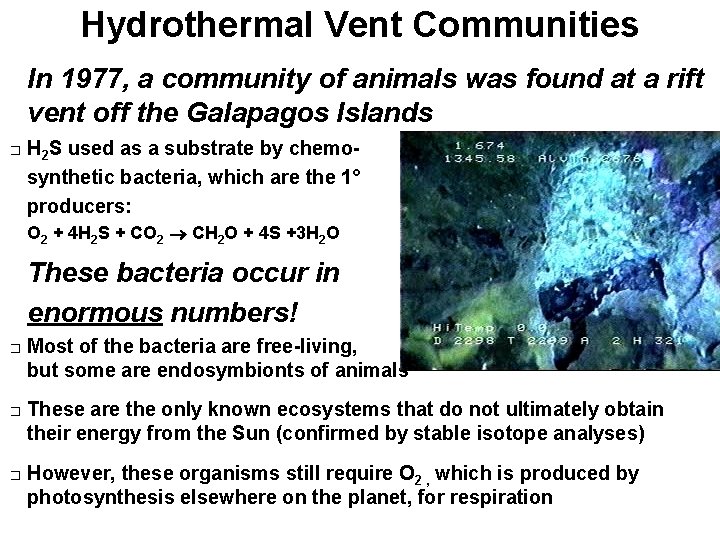
Hydrothermal Vent Communities In 1977, a community of animals was found at a rift vent off the Galapagos Islands � H 2 S used as a substrate by chemosynthetic bacteria, which are the 1° producers: O 2 + 4 H 2 S + CO 2 CH 2 O + 4 S +3 H 2 O These bacteria occur in enormous numbers! � � � Most of the bacteria are free-living, but some are endosymbionts of animals These are the only known ecosystems that do not ultimately obtain their energy from the Sun (confirmed by stable isotope analyses) However, these organisms still require O 2 , which is produced by photosynthesis elsewhere on the planet, for respiration
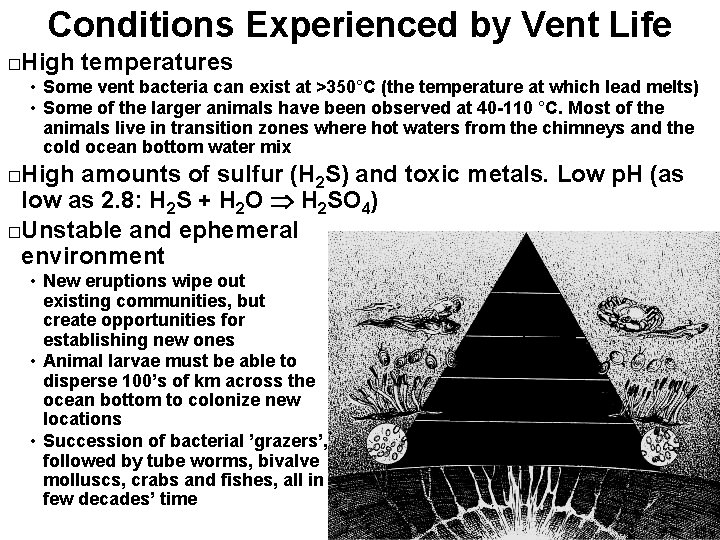
Conditions Experienced by Vent Life High temperatures � • Some vent bacteria can exist at >350°C (the temperature at which lead melts) • Some of the larger animals have been observed at 40 -110 °C. Most of the animals live in transition zones where hot waters from the chimneys and the cold ocean bottom water mix High amounts of sulfur (H 2 S) and toxic metals. Low p. H (as low as 2. 8: H 2 S + H 2 O H 2 SO 4) �Unstable and ephemeral environment ? � • New eruptions wipe out existing communities, but create opportunities for establishing new ones • Animal larvae must be able to disperse 100’s of km across the ocean bottom to colonize new locations • Succession of bacterial ’grazers’, followed by tube worms, bivalve molluscs, crabs and fishes, all in few decades’ time 2° consumers (fishes, crabs ) 1° consumers (limpets) symbiotic mollusks & tube worms 1° producers (chemosynthetic bacteria)
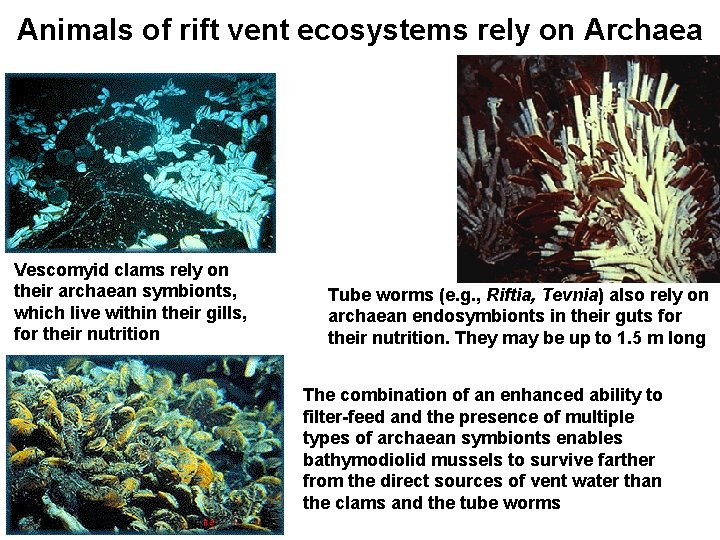
Animals of rift vent ecosystems rely on Archaea Vescomyid clams rely on their archaean symbionts, which live within their gills, for their nutrition Tube worms (e. g. , Riftia, Tevnia) also rely on archaean endosymbionts in their guts for their nutrition. They may be up to 1. 5 m long The combination of an enhanced ability to filter-feed and the presence of multiple types of archaean symbionts enables bathymodiolid mussels to survive farther from the direct sources of vent water than the clams and the tube worms
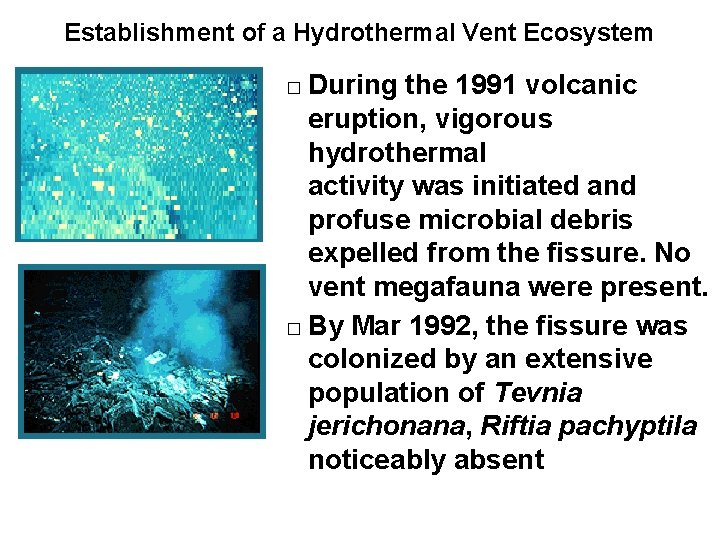
Establishment of a Hydrothermal Vent Ecosystem During the 1991 volcanic eruption, vigorous hydrothermal activity was initiated and profuse microbial debris expelled from the fissure. No vent megafauna were present. � By Mar 1992, the fissure was colonized by an extensive population of Tevnia jerichonana, Riftia pachyptila noticeably absent �
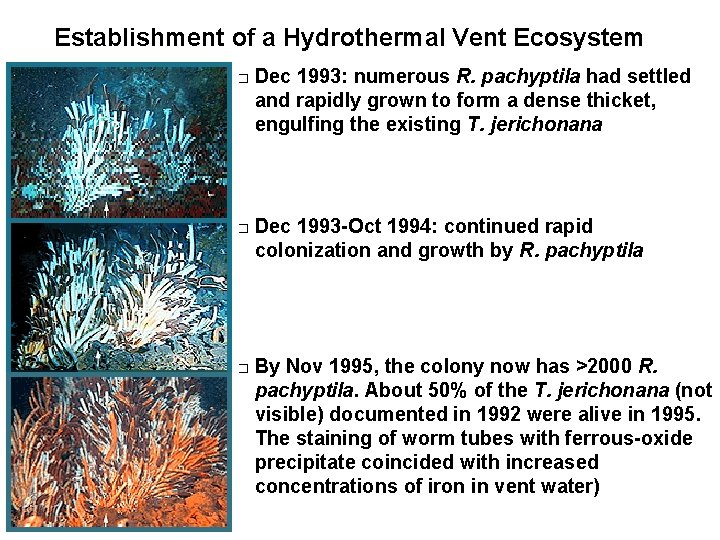
Establishment of a Hydrothermal Vent Ecosystem � � � Dec 1993: numerous R. pachyptila had settled and rapidly grown to form a dense thicket, engulfing the existing T. jerichonana Dec 1993 -Oct 1994: continued rapid colonization and growth by R. pachyptila By Nov 1995, the colony now has >2000 R. pachyptila. About 50% of the T. jerichonana (not visible) documented in 1992 were alive in 1995. The staining of worm tubes with ferrous-oxide precipitate coincided with increased concentrations of iron in vent water)
BIOL 3316 Chapter 13 Domain Archaea Methanogens � � � Produce methane as a metabolic byproduct under hypoxic conditions. Common in wetlands, where they are responsible for ‘marsh gas’ and in the digestive tracts of animals such as ruminants and other mammals (they are responsible for the methane content of belching in ruminants and flatulence in humans. In marine sediments, the biological production of methane (methangenesis), is generally confined to where sulfates are depleted, below the top layers. Play an indispensable role in anaerobic wastewater treatments. Others are extreme thermophiles, found in hot springs and hydrothermal vents, as well as in the ‘solid’ rock of Earth’s crust, kilometers below the surface.
BIOL 3316 Chapter 13 Domain Archaea Thermophiles without a cell wall � Archaeans with just a plasma membrane. Resemble mycoplasma, which also do not have cell walls and are very small. � Facultative anaerobes that respire using sulfur and organic carbon. � Two species: • Thermoplasma acidophilum is the type species. It thrives at 59 °C and p. H <2. Initially isolated from self-heating coal refuse piles in S Indiana and W Pennsylvania. • Thermoplasma volcanum is known from solfatara fields (a solfatera is a volcanic crater emitting only sulfurous and other gases). � The full genome of Thermoplasma acidophilum has been sequenced. It is only 1565 kb.
- Slides: 37