
BIOL 1220 SYNTHETIC BIOLOGY PCR AND PRIMER DESIGN
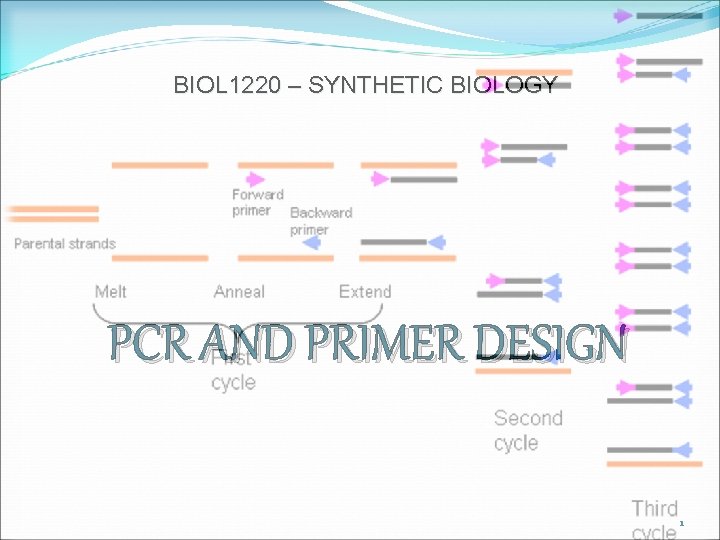
BIOL 1220 – SYNTHETIC BIOLOGY PCR AND PRIMER DESIGN 1
WHAT IS PCR? PRIMER DESIGN APPLICATIONS OF PCR MECHANICS OF PCR VARIANTS OF PCR 2
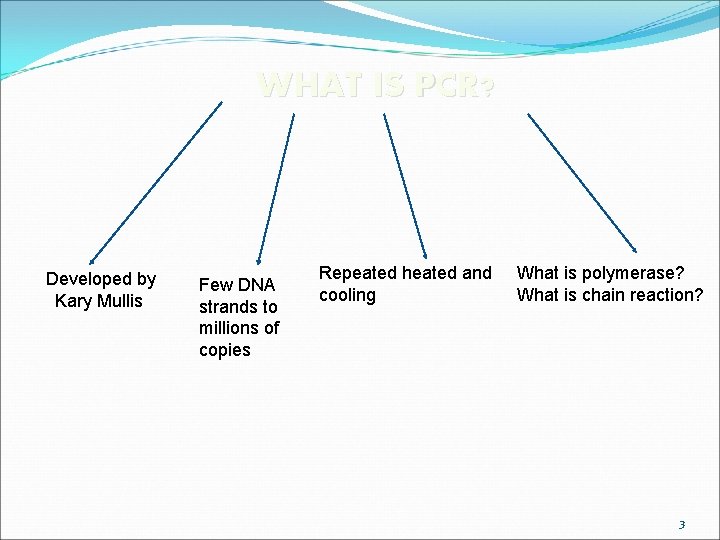
WHAT IS PCR? Developed by Kary Mullis Few DNA strands to millions of copies Repeated heated and cooling What is polymerase? What is chain reaction? 3
'My thi God st o i , you of DN sol pie ate cou A co ce o from a fr ld us nte f D ag e a m c xt. NA , fr ompl ent om ex its KARY MULLIS 4
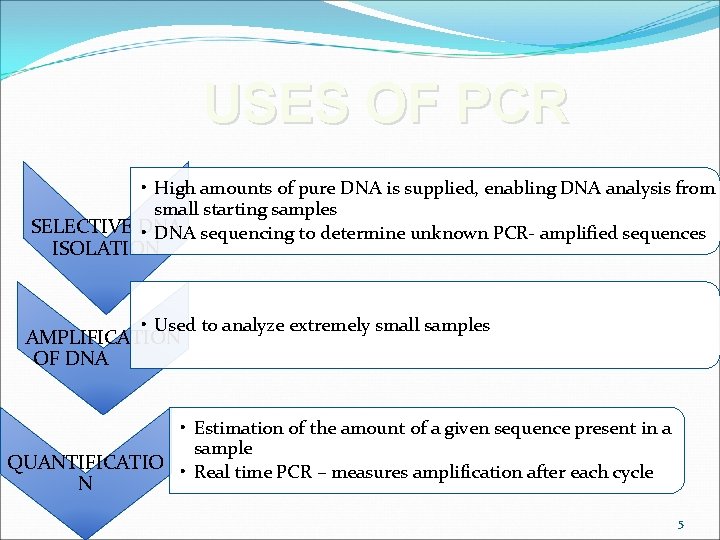
USES OF PCR • High amounts of pure DNA is supplied, enabling DNA analysis from small starting samples SELECTIVE DNA • DNA sequencing to determine unknown PCR- amplified sequences ISOLATION • Used to analyze extremely small samples AMPLIFICATION OF DNA • Estimation of the amount of a given sequence present in a sample QUANTIFICATIO • Real time PCR – measures amplification after each cycle N 5
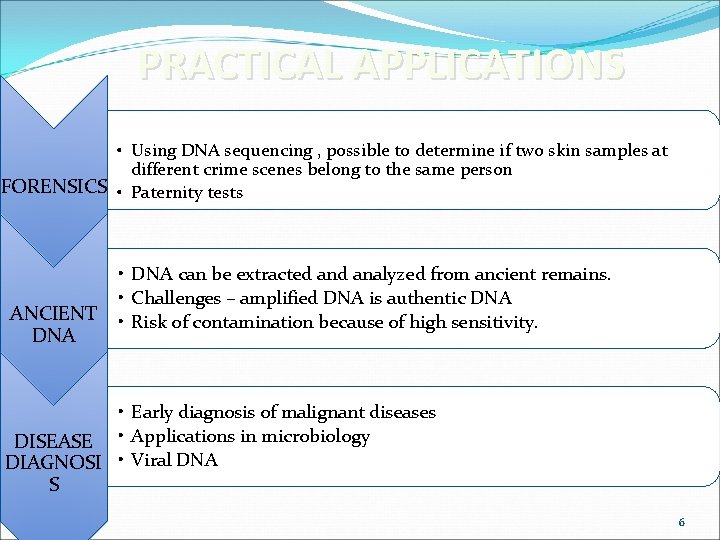
PRACTICAL APPLICATIONS • Using DNA sequencing , possible to determine if two skin samples at different crime scenes belong to the same person FORENSICS • Paternity tests ANCIENT DNA • DNA can be extracted analyzed from ancient remains. • Challenges – amplified DNA is authentic DNA • Risk of contamination because of high sensitivity. • Early diagnosis of malignant diseases DISEASE • Applications in microbiology DIAGNOSI • Viral DNA S 6
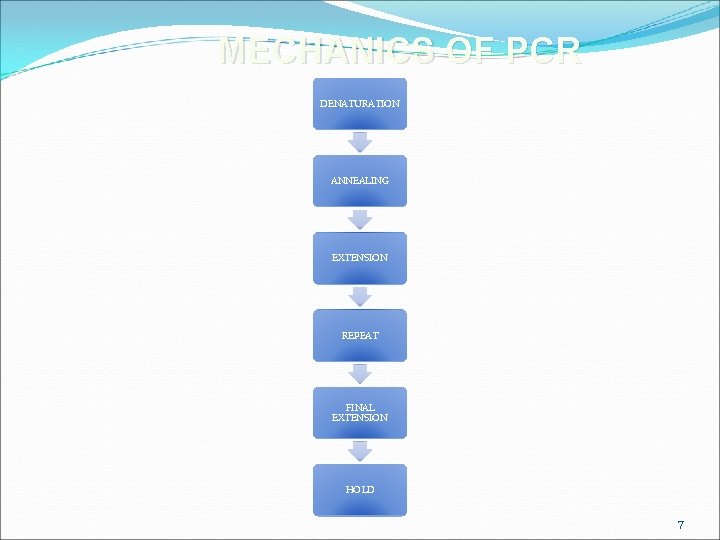
MECHANICS OF PCR DENATURATION ANNEALING EXTENSION REPEAT FINAL EXTENSION HOLD 7
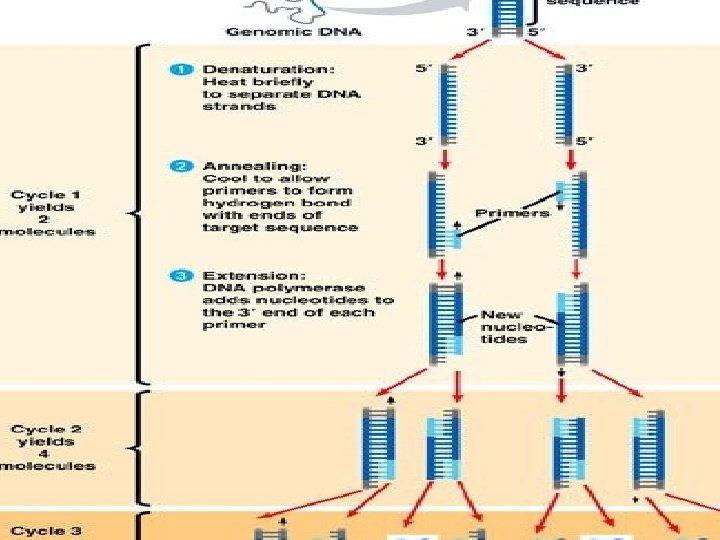
8
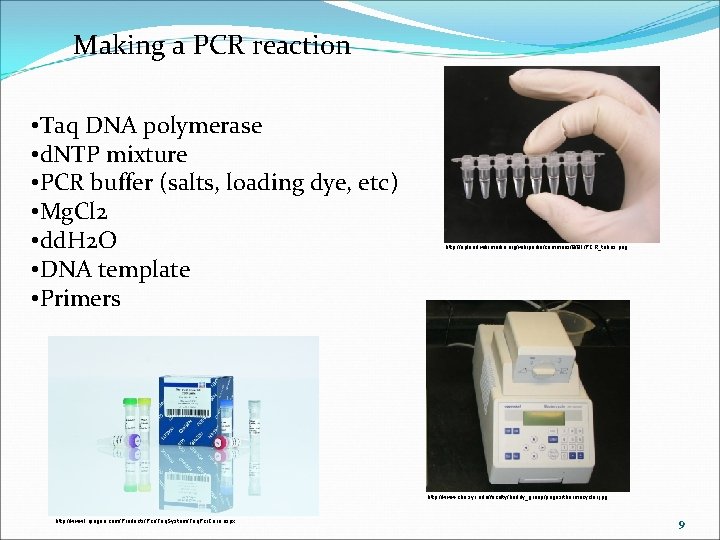
Making a PCR reaction • Taq DNA polymerase • d. NTP mixture • PCR buffer (salts, loading dye, etc) • Mg. Cl 2 • dd. H 2 O • DNA template • Primers http: //upload. wikimedia. org/wikipedia/commons/8/81/PCR_tubes. png http: //www-che. syr. edu/faculty/boddy_group/pages/thermocycler. jpg http: //www 1. qiagen. com/Products/Pcr/Taq. System/Taq. Pcr. Core. aspx 9
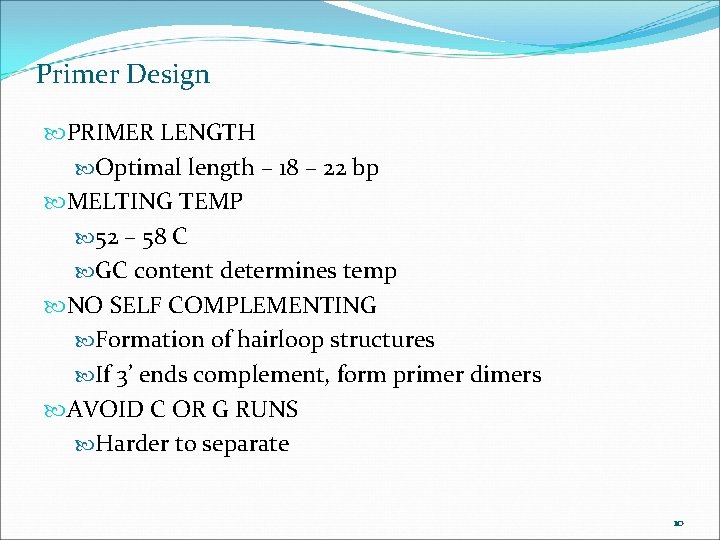
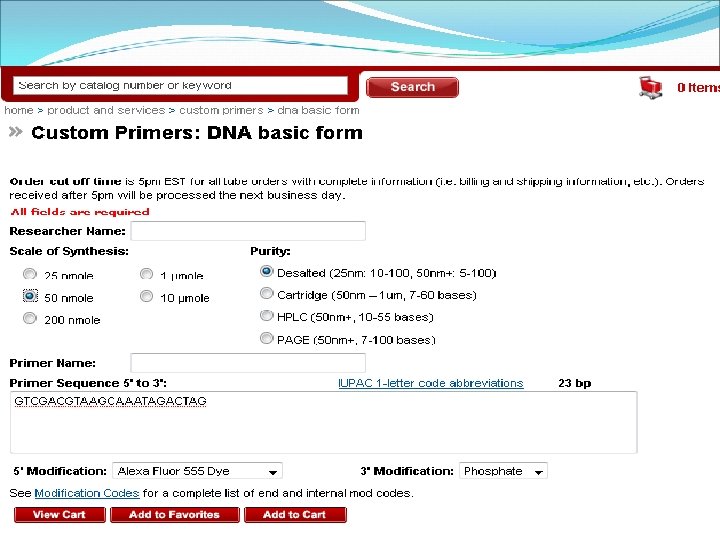
Primer Design PRIMER LENGTH Optimal length – 18 – 22 bp MELTING TEMP 52 – 58 C GC content determines temp NO SELF COMPLEMENTING Formation of hairloop structures If 3’ ends complement, form primer dimers AVOID C OR G RUNS Harder to separate 10
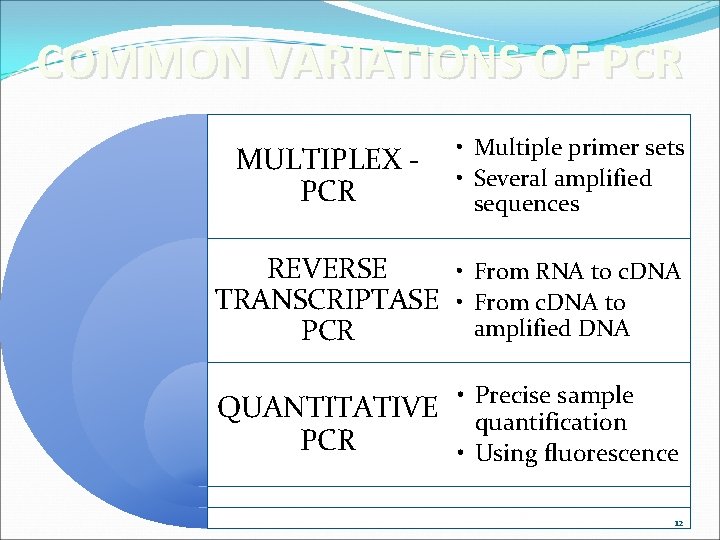
COMMON VARIATIONS OF PCR MULTIPLEX PCR • Multiple primer sets • Several amplified sequences REVERSE • From RNA to c. DNA TRANSCRIPTASE • From c. DNA to amplified DNA PCR • Precise sample QUANTITATIVE quantification PCR • Using fluorescence 12
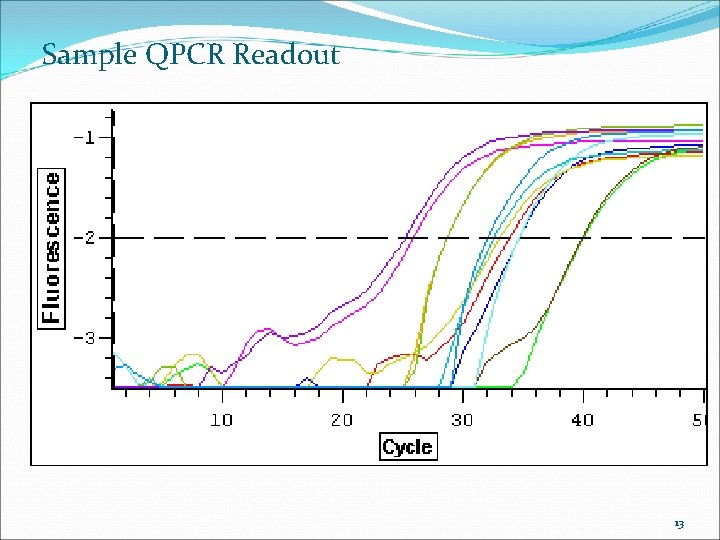
Sample QPCR Readout 13
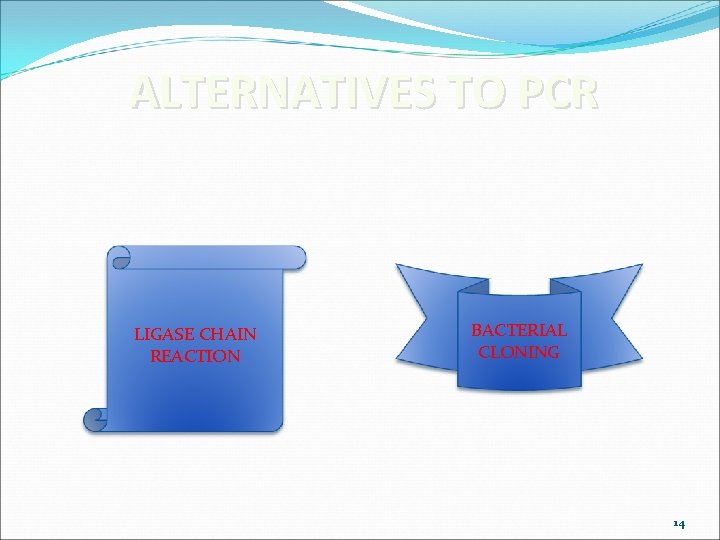
ALTERNATIVES TO PCR LIGASE CHAIN REACTION BACTERIAL CLONING 14
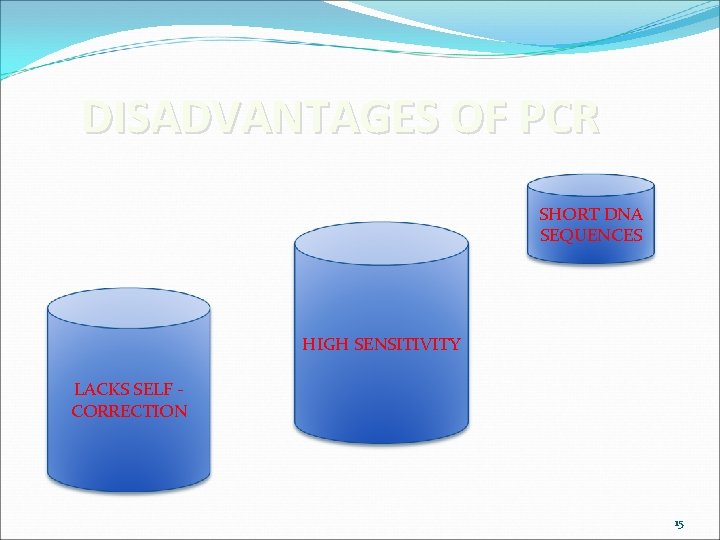
DISADVANTAGES OF PCR SHORT DNA SEQUENCES HIGH SENSITIVITY LACKS SELF CORRECTION 15

THANK YOU 16
- Slides: 16