
Biohazardous waste Definition Biohazards Biological substances that pose
Biohazardous waste
Definition: Biohazards Biological substances that pose a threat to the health of living organisms, primarily that of humans. Biohazards ------- biological hazards Examples medical waste or samples of a microorganisms, virus toxin (from a biological source) ---- human health
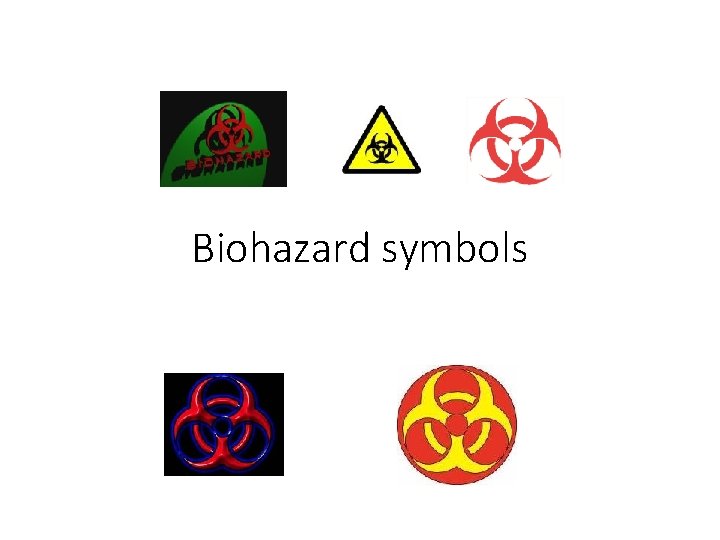
Biohazard symbols
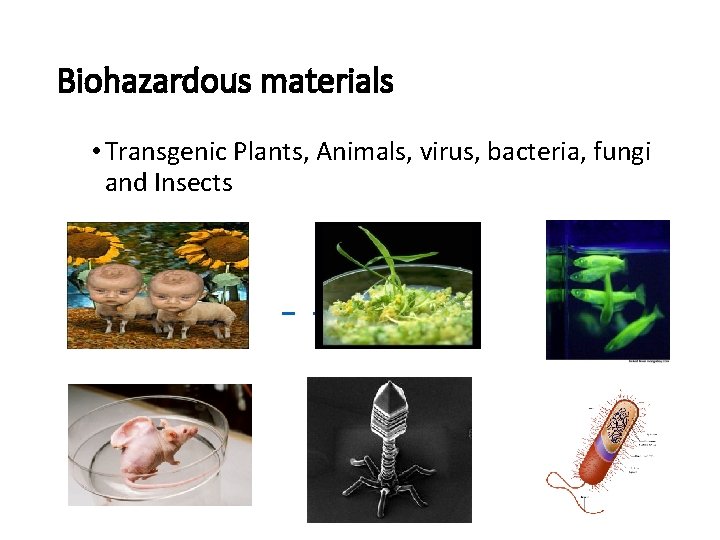
Biohazardous materials • Transgenic Plants, Animals, virus, bacteria, fungi and Insects
Biohazardous waste categories Main Four categories 1. 2. 3. 4. Solid Biohazardous waste Liquid Biohazardous waste Biohazardous sharps waste Pathological waste Each form must be segregated, identified, decontaminated and disposed of in an appropriate manner in order to minimize risks
1. Solid Biohazardous waste (non-sharps) • Gloves and other disposable PPE contaminated with culture material • Plasticware (pipettes or pipette tips, culture plates, specimen vials) • Cont. bacterial and cell culture material • Towels and bench paper • All culture or sample containers that are contaminated with biological materials • Vials of blood (glass blood vials -------break easily ----- as sharps waste)
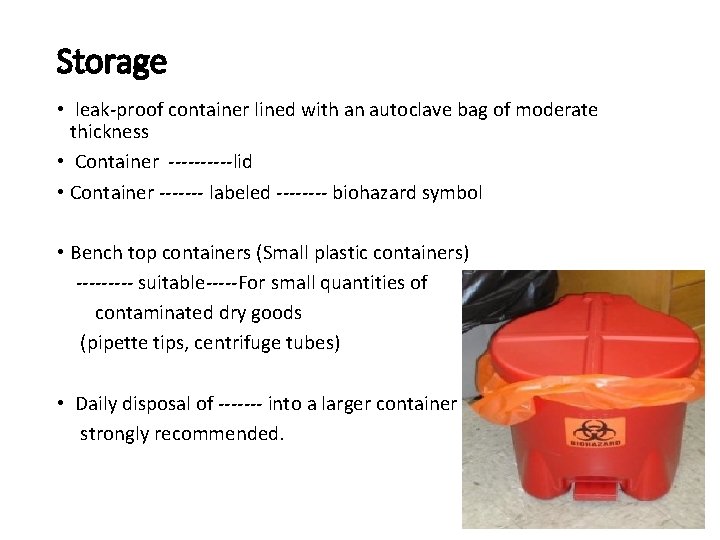
Storage • leak-proof container lined with an autoclave bag of moderate thickness • Container -----lid • Container ------- labeled ---- biohazard symbol • Bench top containers (Small plastic containers) ----- suitable-----For small quantities of contaminated dry goods (pipette tips, centrifuge tubes) • Daily disposal of ------- into a larger container strongly recommended.
Wastes Requiring Special Considerations • Breakable Biohazardous Wastes tubes of blood ------- create trouble treated as ------sharp waste • Serological pipettes All plastic pipettes------ segregated ----- puncture
Treatment and Disposal • The purpose of solid biohazardous waste treatment is biological inactivation in a manner that reduces hazardous exposure risk for lab workers and the environment. • This is generally achieved by autoclave treatment of waste or treatment and disposal through a medical waste disposal contractor who will autoclave or incinerate the waste.
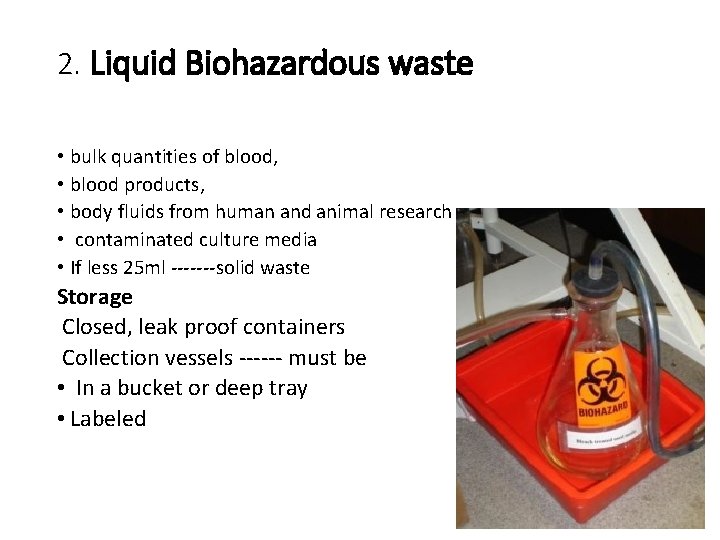
2. Liquid Biohazardous waste • bulk quantities of blood, • blood products, • body fluids from human and animal research • contaminated culture media • If less 25 ml -------solid waste Storage Closed, leak proof containers Collection vessels ------ must be • In a bucket or deep tray • Labeled
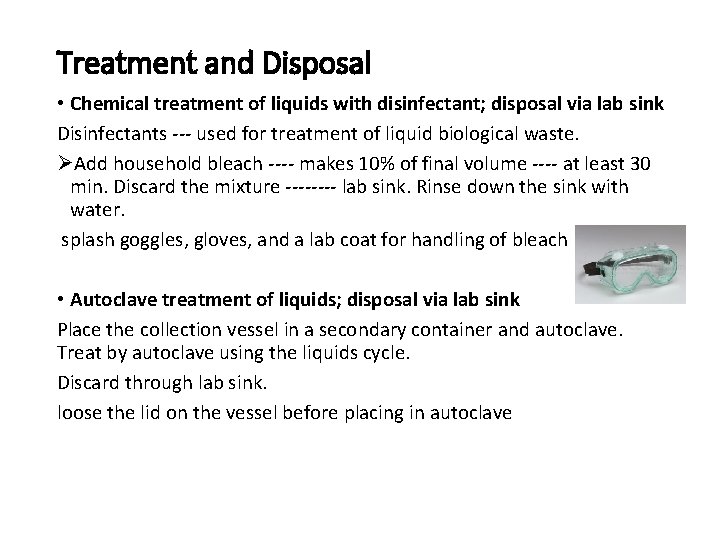
Treatment and Disposal • Chemical treatment of liquids with disinfectant; disposal via lab sink Disinfectants --- used for treatment of liquid biological waste. ØAdd household bleach ---- makes 10% of final volume ---- at least 30 min. Discard the mixture ---- lab sink. Rinse down the sink with water. splash goggles, gloves, and a lab coat for handling of bleach • Autoclave treatment of liquids; disposal via lab sink Place the collection vessel in a secondary container and autoclave. Treat by autoclave using the liquids cycle. Discard through lab sink. loose the lid on the vessel before placing in autoclave
3. Biohazardous sharps waste • Any device that is sharp enough to puncture the skin ------contaminated with a biological material that is an infectious disease transmission risk. Examples • Needles, • disposable syringes • capillary tubes • scalpels • Microscope slides • Pasteur pipettes • Small glass/broken tubes of blood cultures

Storage Specifically designed container • constructed of puncture-resistant material • leak-proof on the sides and bottom • marked ---- biohazard symbol • has a restricted opening to prevent items from coming back out of the container, and to prevent someone from sticking their hand inside.
Treatment and Disposal • Medical Waste disposal Contractor Departments ----- contract for pickup and disposal of waste Sharps containers must be permanently closed and wiped down with a disinfectant prior to removal from the lab and for disposal If any liquids ------ biohazardous sharps container, it must be placed in a leak-proof secondary container with a secure lid
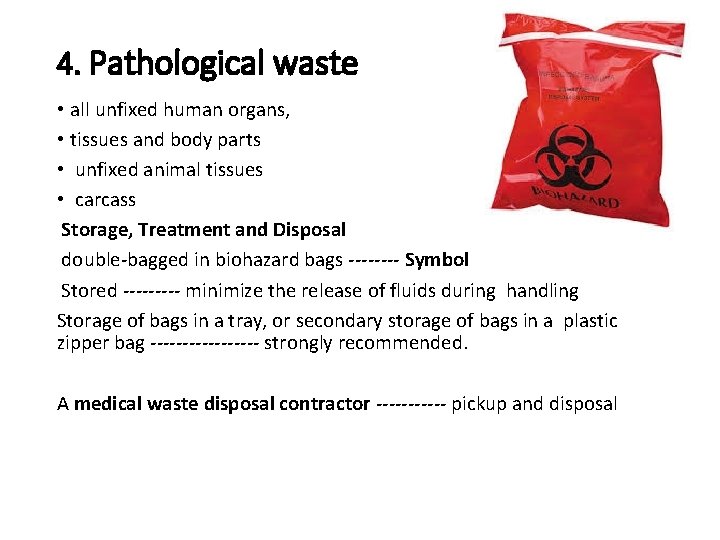
4. Pathological waste • all unfixed human organs, • tissues and body parts • unfixed animal tissues • carcass Storage, Treatment and Disposal double-bagged in biohazard bags ---- Symbol Stored ----- minimize the release of fluids during handling Storage of bags in a tray, or secondary storage of bags in a plastic zipper bag --------- strongly recommended. A medical waste disposal contractor ------ pickup and disposal
- Slides: 15