
Biogeographic Range Biological Distributions Cartographic and database problems
Biogeographic Range Biological Distributions Cartographic and database problems Restricted ranges: endemics Separated ranges: disjuncts Widespread ranges: cosmopolitans Provinces and realms Dynamic ranges

Cartographic and database problems in mapping biogeographic ranges • What scale (local - global)? • Dots or areas? • Static or dynamic? motile species (seasonal migrations, eruptives) dynamic ranges • Database issues?

Scale (defined by purpose of the range mapping exercise) global continental regional populations individuals

Range representation: dots or areas? e. g. swordfern (Polystichum munitum) “Ferns and Fern Allies of BC” “Ferns of North America”
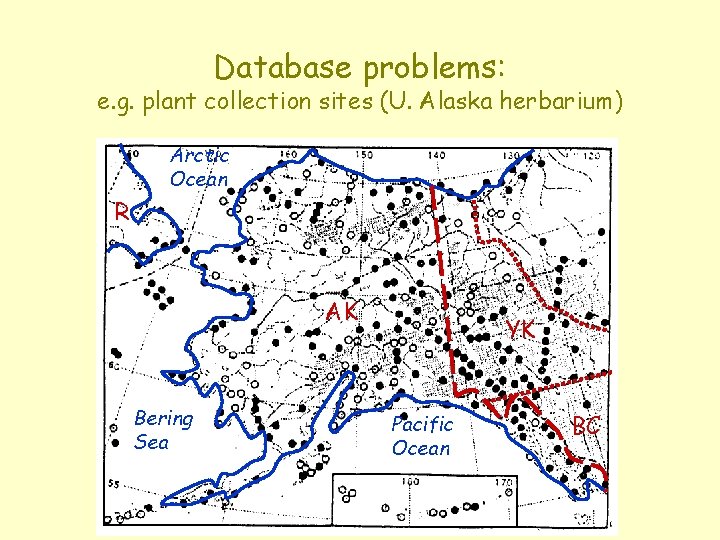
Database problems: e. g. plant collection sites (U. Alaska herbarium) Arctic Ocean R AK Bering Sea YK Pacific Ocean BC

Migratory species range maps http: //birds. cornell. edu/programs/All. About. Birds/Bird. Guide
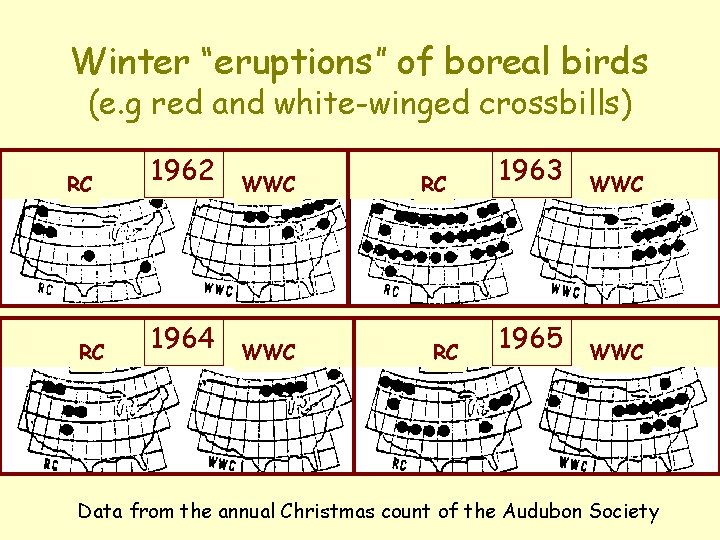
Winter “eruptions” of boreal birds (e. g red and white-winged crossbills) RC RC 1962 WWC 1964 WWC RC RC 1963 WWC 1965 WWC Data from the annual Christmas count of the Audubon Society
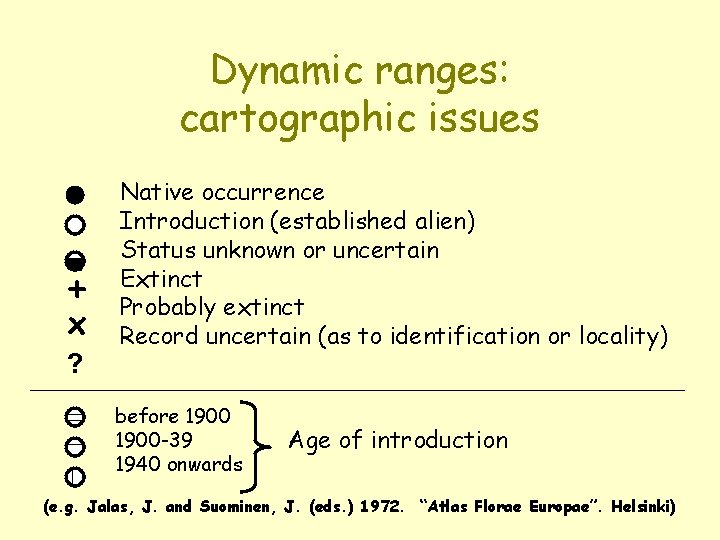
Dynamic ranges: cartographic issues + x ? Native occurrence Introduction (established alien) Status unknown or uncertain Extinct Probably extinct Record uncertain (as to identification or locality) before 1900 -39 1940 onwards Age of introduction (e. g. Jalas, J. and Suominen, J. (eds. ) 1972. “Atlas Florae Europae”. Helsinki)

Summarizing range 1. Extent endemic; provincial; continental; cosmopolitan 2. Location prefixes: amphi-/circum-/pan-/ suffixes: -tropical/-boreal/-arctic/-pacific biogeographic realm/province 3. Continuity continuous - disjunct

Endemics Organisms that have restricted distributions. The range can be very local (narrow endemics) or regional (broad endemics). Local endemics are of particular concern because they usually have small populations and may be under threat of extinction. Endemics may have evolved recently, and still be restricted to their place of origin (neoendemics) or be “living fossils” (palaeoendemics). The latter may survive in refuges from competition (evolutionary relicts) or in limited areas of suitable climate (climatic relicts).

Remote islands are neoendemism hotspots New Zealand Hawai’ian islands
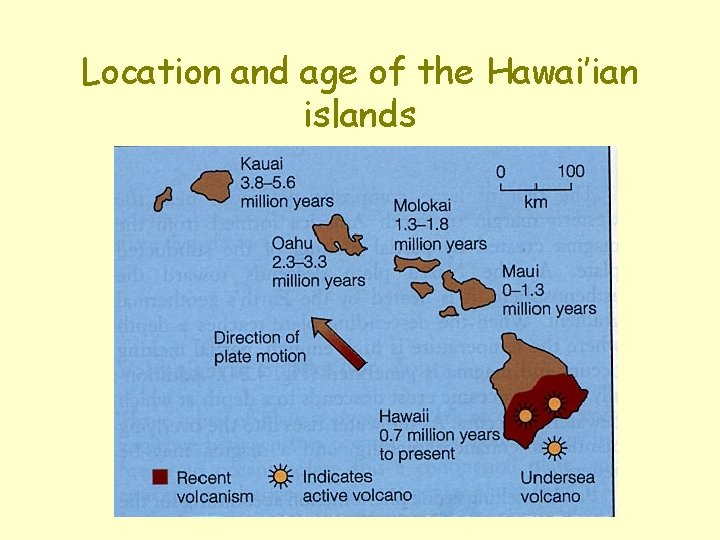
Location and age of the Hawai’ian islands

Hawai’ian endemics e. g. endemic crickets swordtails: 174 spp. tree crickets: 68 spp. ground crickets: 9 spp. e. g. endemic plants silverswords*: 28 spp. *silverswords and the closely related Hawai’ian tarweeds are members of the sunflower family

Endemism and island age

Galapagos geography 100 km

Endemism and isolation Endemic subspecies of Darwin’s Finches (%) (within the Galapagos archipelago) Distance of island from centre of archipelago (Santa Cruz Is. (Indefatigable)) [km]
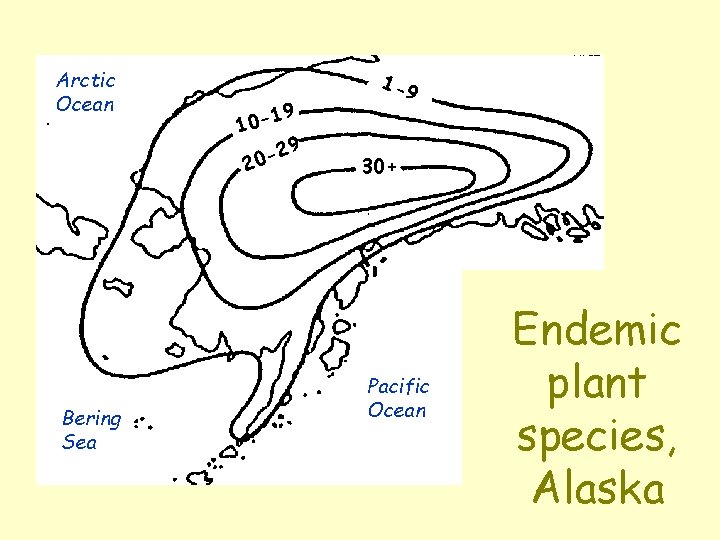
Arctic Ocean Bering Sea 19 0 1 29 0 2 1 -9 30+ Pacific Ocean Endemic plant species, Alaska
Paleoendemics: e. g. Gingko biloba (“the living fossil” - Darwin) “Discovered” by western science in 1691 by the German botanist/physician Engelbert Kaempfer in monastery gardens in southern China. Gingko trees had been cultivated by Buddhist monks from about AD 1100. Small populations are known from remote mountains between Zheijiang and Anhwei provinces in southwestern China. These may be native or temple escapes (seeds carried by birds). Kaempfer brought gingko seeds to Holland (planted AD 1730). Introduced into North America in 1784.
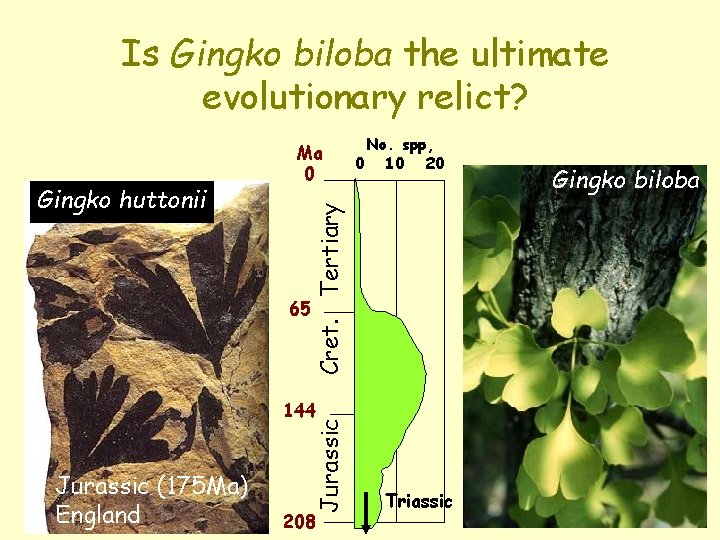
Is Gingko biloba the ultimate evolutionary relict? 65 No. spp, 0 10 20 Cret. Tertiary Gingko huttonii Ma 0 Jurassic (175 Ma) England Jurassic 144 208 Triassic Gingko biloba
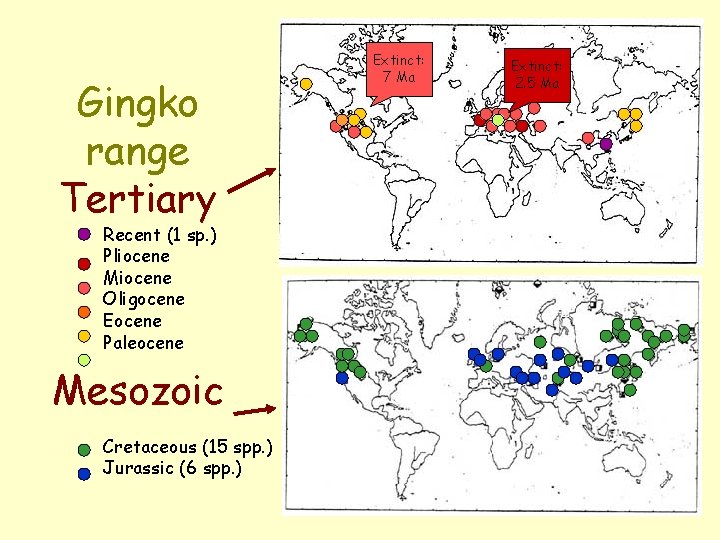
Gingko range Tertiary Recent (1 sp. ) Pliocene Miocene Oligocene Eocene Paleocene Mesozoic Cretaceous (15 spp. ) Jurassic (6 spp. ) Extinct: 7 Ma Extinct: 2. 5 Ma
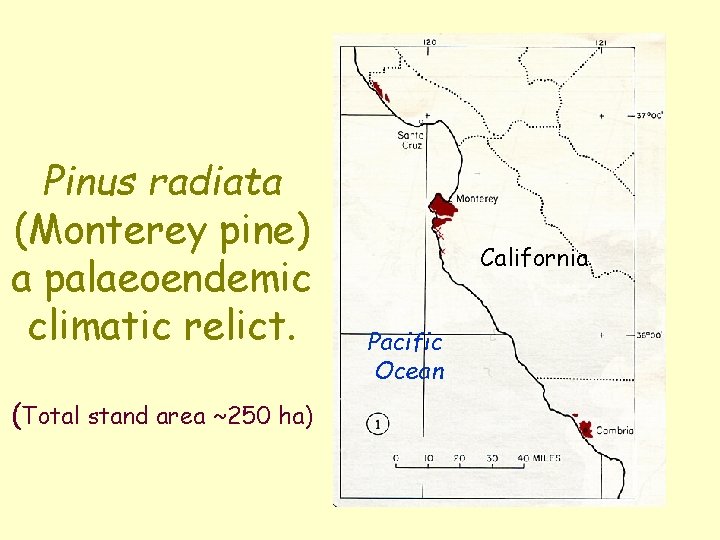
Pinus radiata (Monterey pine) a palaeoendemic climatic relict. (Total stand area ~250 ha) California Pacific Ocean
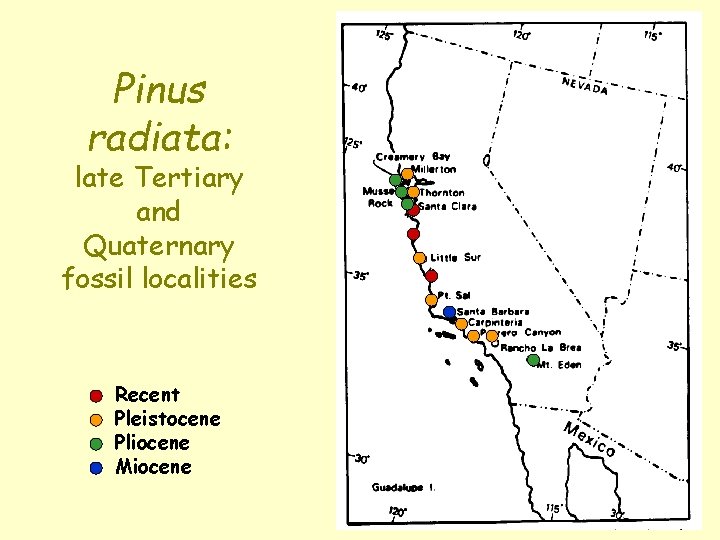
Pinus radiata: late Tertiary and Quaternary fossil localities Recent Pleistocene Pliocene Miocene

Radiata pine plantations now cover 10, 000 x the native area in California Now the world’s most widelyplanted softwood tree species. Favoured because its growth period is not genetically limited* and it is therefore never dormant. Consequently it is unable to withstand severe frosts. In NZ radiata pine grows 20 x times as fast as Canadian pines Chile: 1. 5 M ha NZ: 1. 4 M ha Australia: 0. 6 M ha S. Africa: ? ha
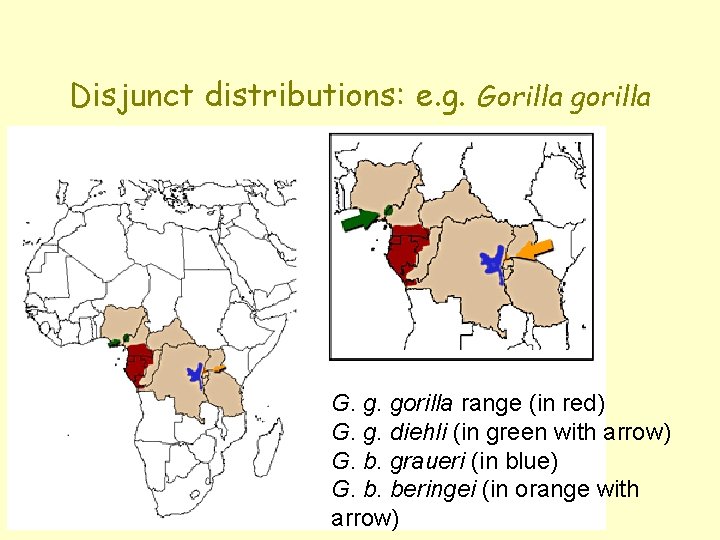
Disjunct distributions: e. g. Gorilla gorilla G. g. gorilla range (in red) G. g. diehli (in green with arrow) G. b. graueri (in blue) G. b. beringei (in orange with arrow)
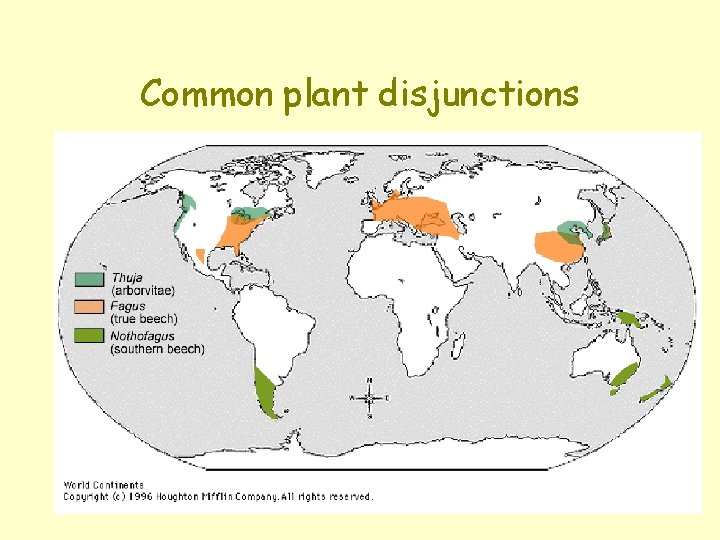
Common plant disjunctions
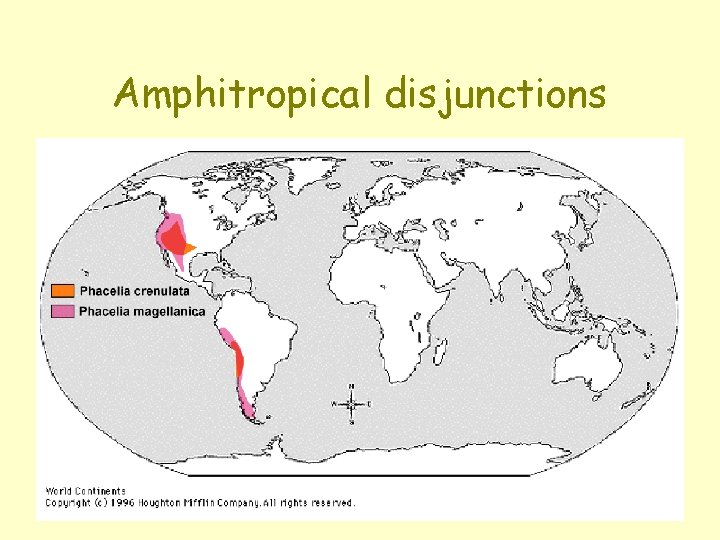
Amphitropical disjunctions
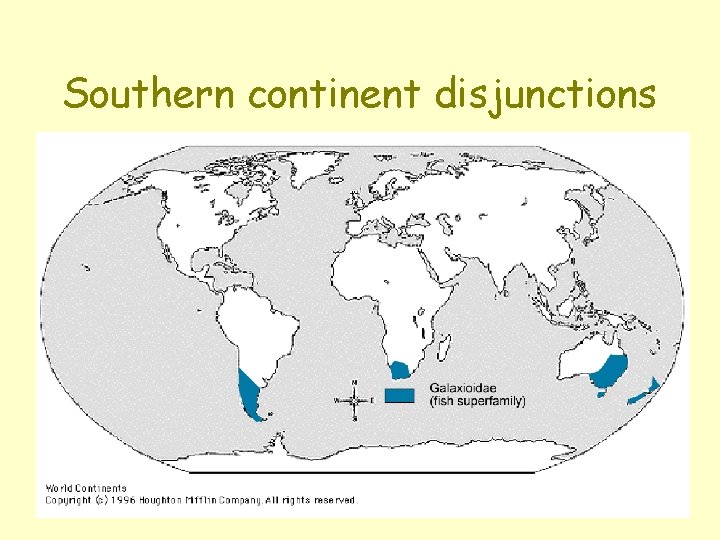
Southern continent disjunctions
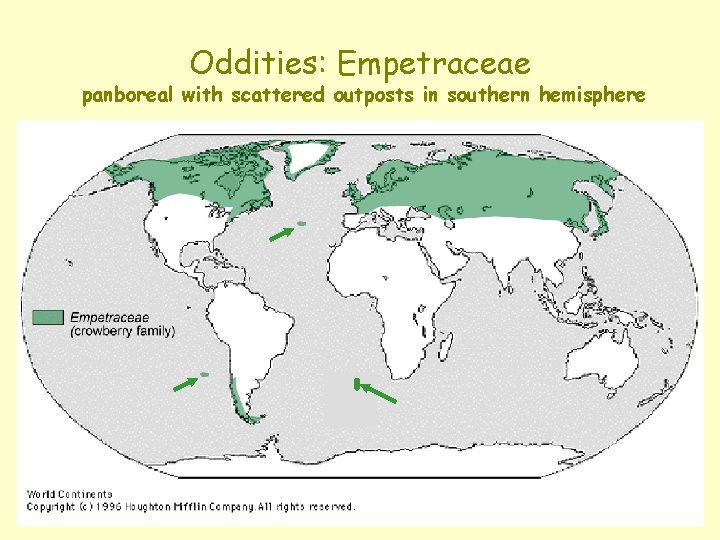
Oddities: Empetraceae panboreal with scattered outposts in southern hemisphere
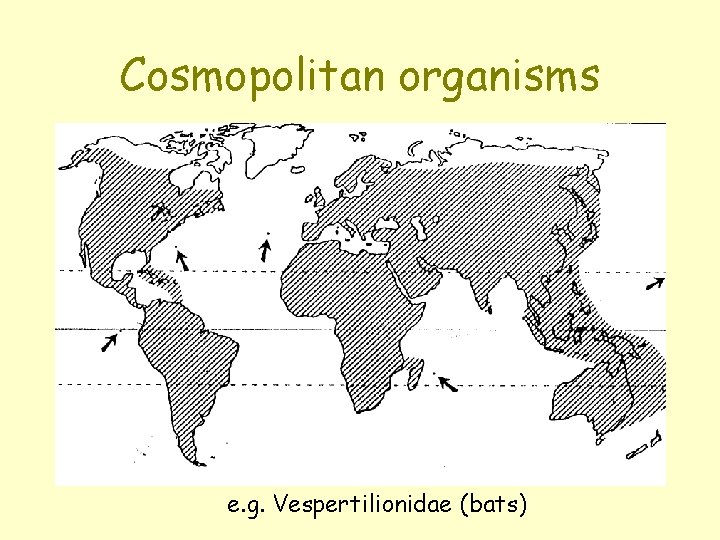
Cosmopolitan organisms e. g. Vespertilionidae (bats)

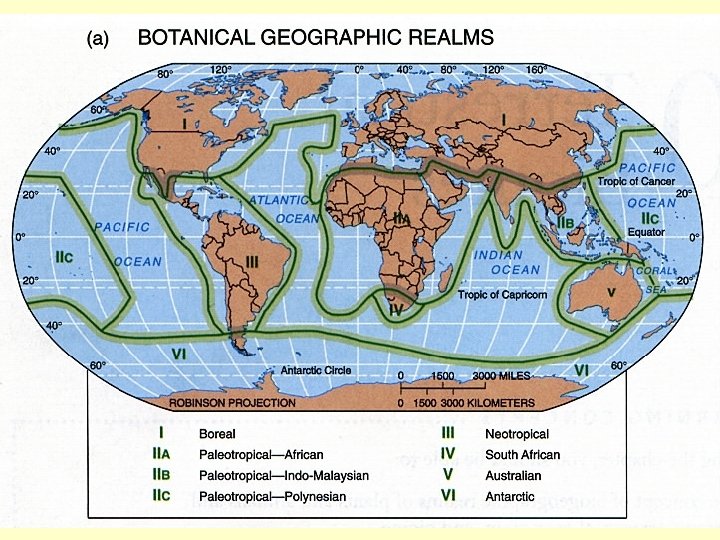
Biogeographic realms Defined as large areas (continental scale) having more-or-less uniform assemblages of species. Note differences between botanical and zoological realms (e. g. “boreal” vs. palearctic and nearctic)
Philip Sclater (1858) “On the General Geographical Distribution of the Members of the Class Aves” “An important problem in Natural History, and one that has hitherto been too little agitated, is that of ascertaining the most natural primary divisions of the earth's surface, taking the amount of similarity or dissimilarity of organized life solely as our guide. It is a well-known and universally acknowledged fact that we can choose two portions of the globe of which the respective Faunæ and Floræ shall be so different, that we should not be far wrong in supposing them to have been the result of distinct creations. Assuming then that there are, or may be, more areas of creation than one, the question naturally arises, how many of them are there, and what are their respective extents and boundaries, or in other words, what are the most natural primary ontological divisions of the earth's surface? ” Journal of the Proceedings of the Linnean Society: Zoology 2 (1858):
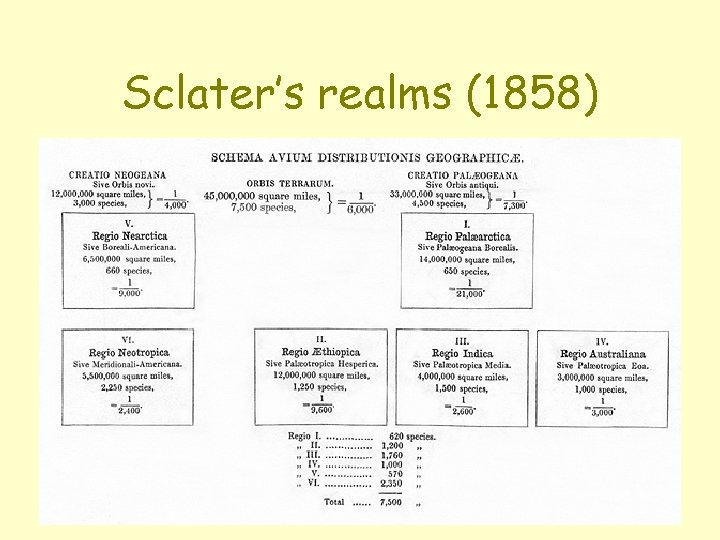
Sclater’s realms (1858)
Response from Alfred Wallace: My Dear Mr. Sclater --Your paper on "The Geographical Distribution of Birds” has particularly interested me, and I hope that a few remarks and criticisms thereon may not be unacceptable to you. With your division of the earth into six grand zoological provinces I perfectly agree, and believe they will be confirmed by every other department of zoology as well as by botany*. (*my italics) Letter from Mr. Wallace Concerning the Geographical Distribution of Birds (1859) Ibis, v. 1

Zoogeographic realms Largely based on Wallace’s analysis of the ranges of families of mammals

“Wallace’s Line” “There is perhaps no fact connected with geographical distribution more extraordinary, and at first sight inexplicable, than the division of such an apparently homogeneous tract as the Indian Archipelago* between two provinces which have less in common than any other two upon the earth. To the geographer and geologist, there is absolutely nothing to mark the division between the two regions. …… Between the Indian and Australian zoological regions, as above defined, I believe there is absolutely no true transition…. . I believe that these two regions are as absolutely distinct as South America and Africa, and it is only because they are separated by straits of from 20 to 100 miles wide, instead of the Atlantic, that they have become slightly connected by the interchange of a few species and genera. ” *Indonesian archipelago Letter from Mr. Wallace Concerning the Geographical Distribution of Birds (1859) Ibis, v. 1
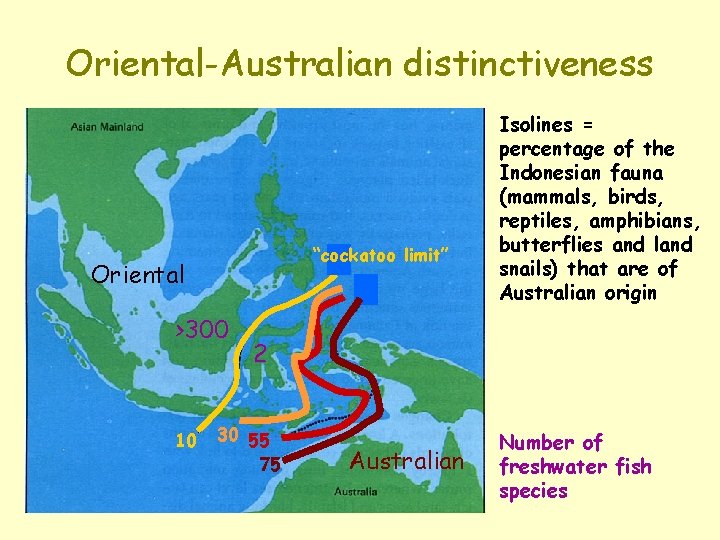
Oriental-Australian distinctiveness “cockatoo limit” Oriental >300 10 Isolines = percentage of the Indonesian fauna (mammals, birds, reptiles, amphibians, butterflies and land snails) that are of Australian origin 2 30 55 75 Australian Number of freshwater fish species
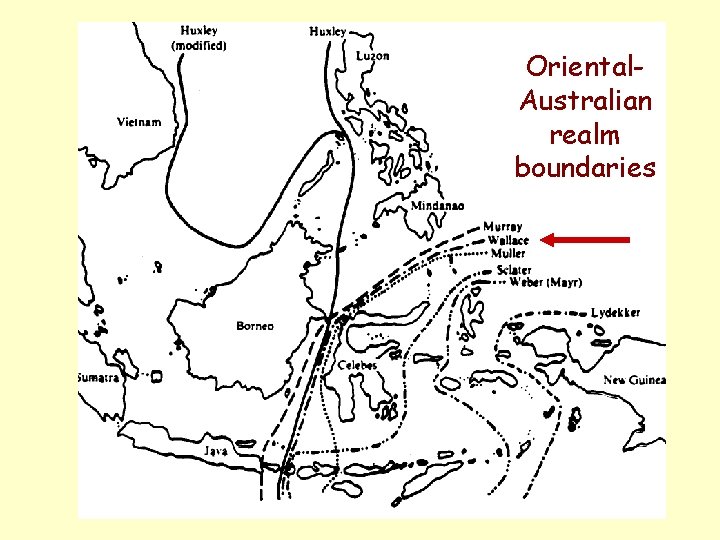
Oriental. Australian realm boundaries
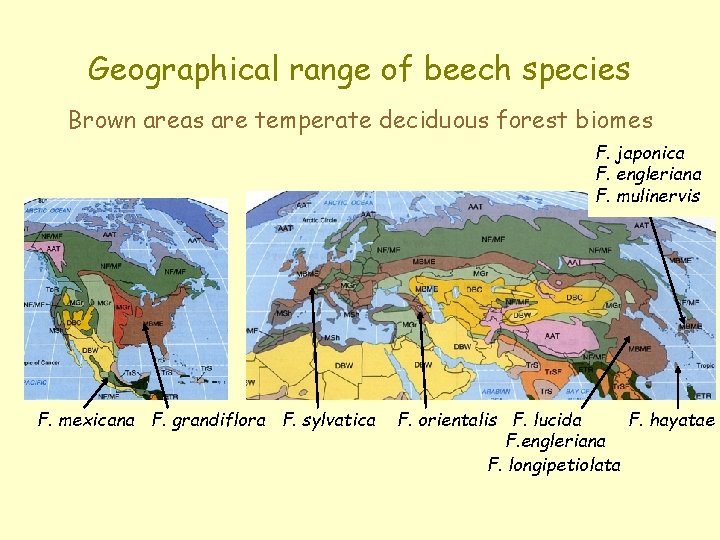
Geographical range of beech species Brown areas are temperate deciduous forest biomes F. japonica F. engleriana F. mulinervis F. mexicana F. grandiflora F. sylvatica F. orientalis F. lucida F. hayatae F. engleriana F. longipetiolata
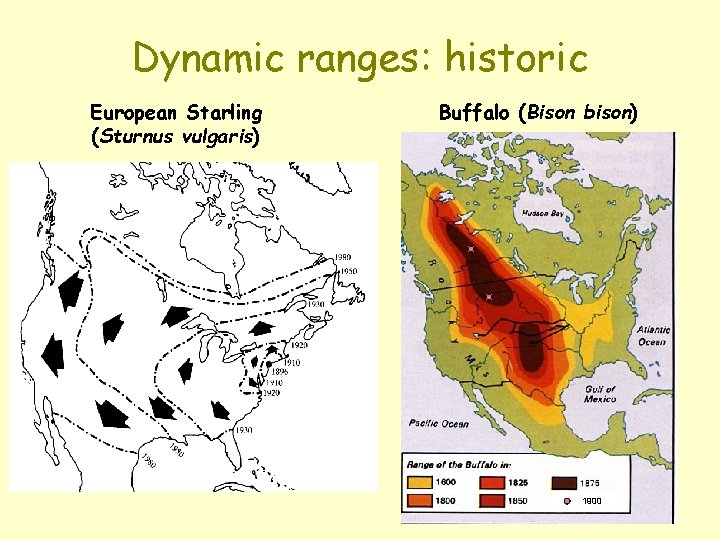
Dynamic ranges: historic European Starling (Sturnus vulgaris) Buffalo (Bison bison) 1900
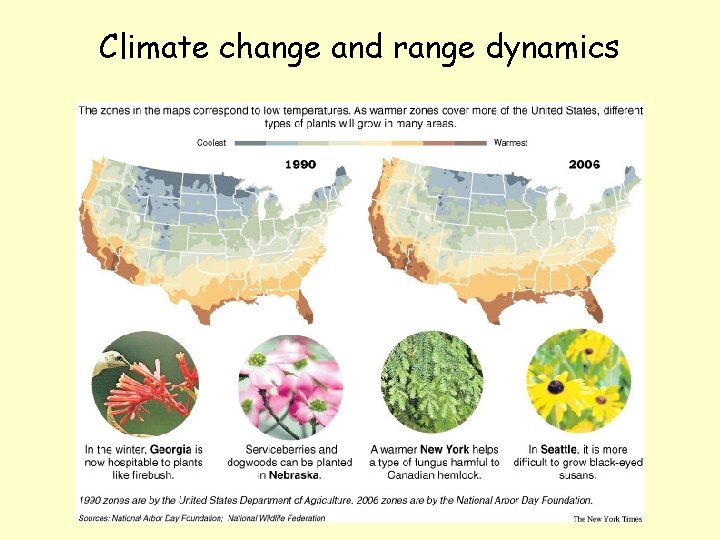
Climate change and range dynamics
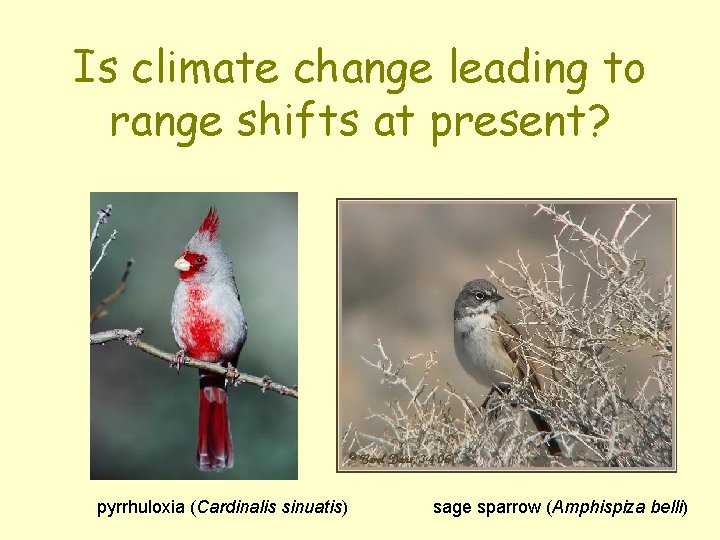
Is climate change leading to range shifts at present? pyrrhuloxia (Cardinalis sinuatis) sage sparrow (Amphispiza belli)
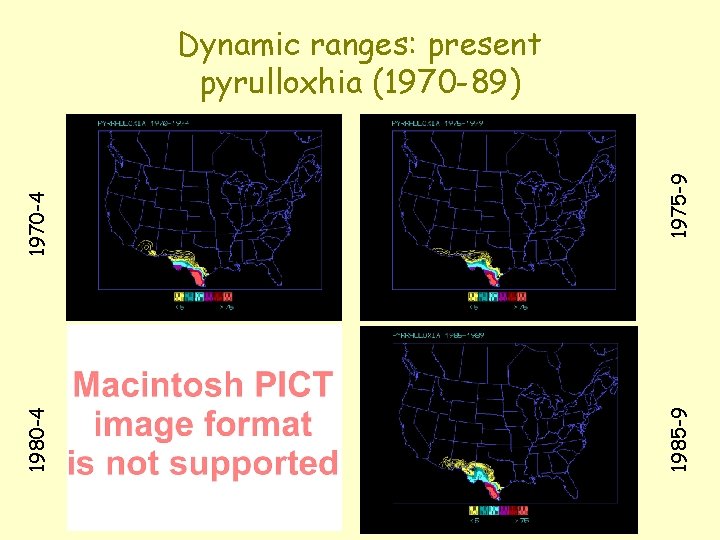
1975 -9 1980 -4 1970 -4 Dynamic ranges: present pyrulloxhia (1970 -89)
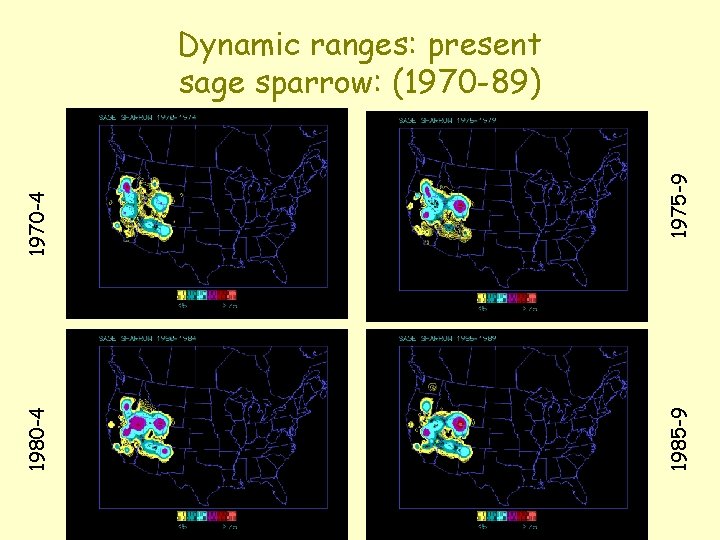
1975 -9 1980 -4 1970 -4 Dynamic ranges: present sage sparrow: (1970 -89)
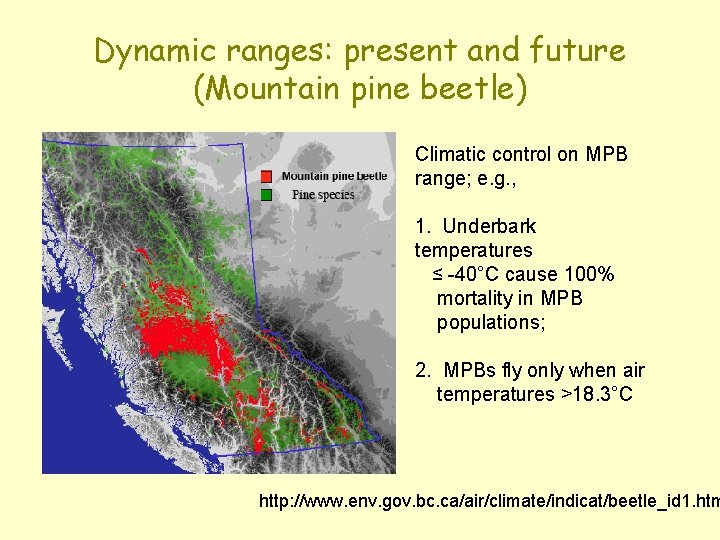
Dynamic ranges: present and future (Mountain pine beetle) Climatic control on MPB range; e. g. , 1. Underbark temperatures ≤ -40°C cause 100% mortality in MPB populations; 2. MPBs fly only when air temperatures >18. 3°C http: //www. env. gov. bc. ca/air/climate/indicat/beetle_id 1. htm

http: //www. env. gov. b c. ca/air/climate/indica t/beetle_id 1. html Dynamic ranges: present and future (Mountain pine beetle)

Dynamic ranges: future American beech PD (modeled at top left), and x 2 CO 2 scenarios (output from 5 climate models) Remnant stands in Appalachia and Maine? http: //www. fs. fed. us. /ne/delaware/atlas/

Dynamic ranges: future Future range of Fagus grandifolia (American beech) (x 2 CO 2 scenario)
- Slides: 48