
Biogeochemical Cycles What is a Biogeochemical Cycle Only
Biogeochemical Cycles • What is a Biogeochemical Cycle? – Only so much matter on earth because it is acts as a closed system. • Energy enters as sunlight, but no matter usually exits or enters. – These cycles act as a way to recycle matter within the biosphere from one form to another.
Energy Vs. Matter • Energy is TRANSFERRED – One-way flow of energy through food-chains and food webs. • Energy from sun goes to plants, which then goes to consumers. – Each trophic level loses ~90% of energy as heat. – Only 10% of energy is used for life processes. • Matter is TRANSFORMED – This is why we have biogeochemical cycles. – Only have a given amount of matter because Earth is a closed ecosystem.
Nutrient Cycles • Carbon - key ingredient in living tissue – “Carbon-based” life forms • Nitrogen - required for amino acids used in protein synthesis • Phosphorus - required for DNA and RNA
Water Cycle • Water is required by all living things on Earth, including us. • Cycles through atmosphere, ocean, and land
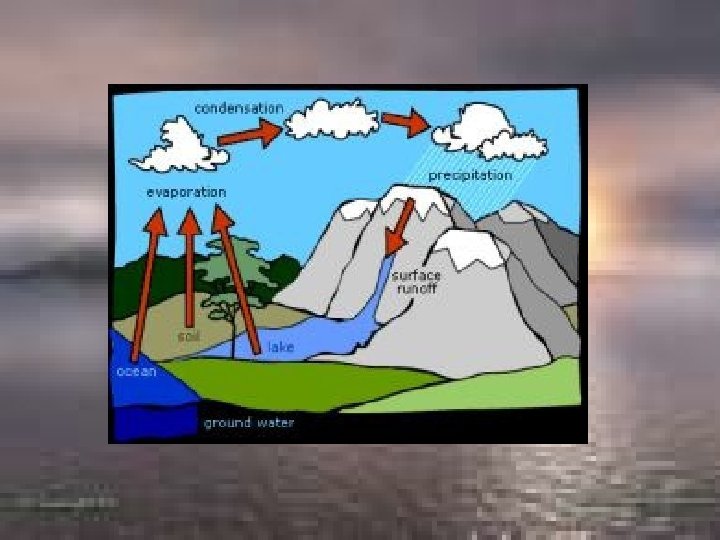
Water Cycle • Major processes that bring water into the atmosphere – Evapotranspiration • Evaporation - water heats up, forming water vapor, which then moves into atmosphere. • Transpiration - water from plant leaves evaporates. – Condensation • Cloud formation as water vapor in atmosphere cools, condensing into the small droplets that form clouds.
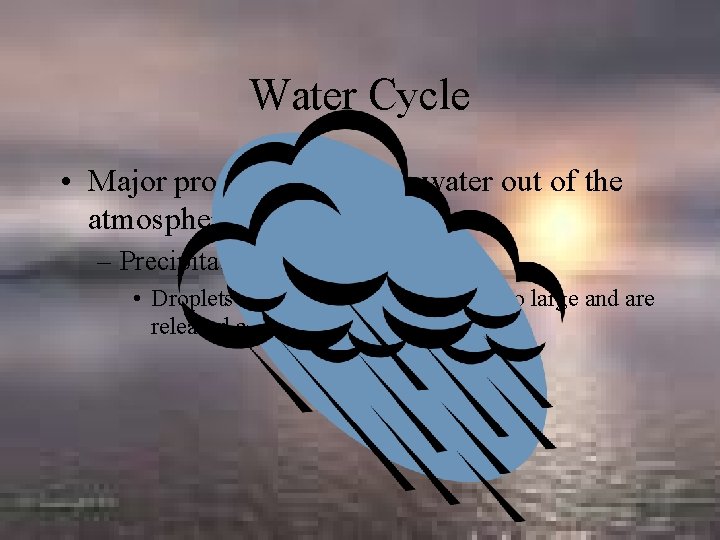
Water Cycle • Major process that brings water out of the atmosphere: – Precipitation • Droplets that formed clouds become to large and are released as snow, sleet, hail, or rain.
Water Cycle • Processes on land: – Runoff • Precipitation “runs” along land until it reaches a body of water, such as a lake, river, or ocean. – Seepage (aka infiltration) • Precipitation “seeps” (moves into) soil to form ground water below the soil’s surface. – Root uptake • Plants absorb ground water from soil via their roots.
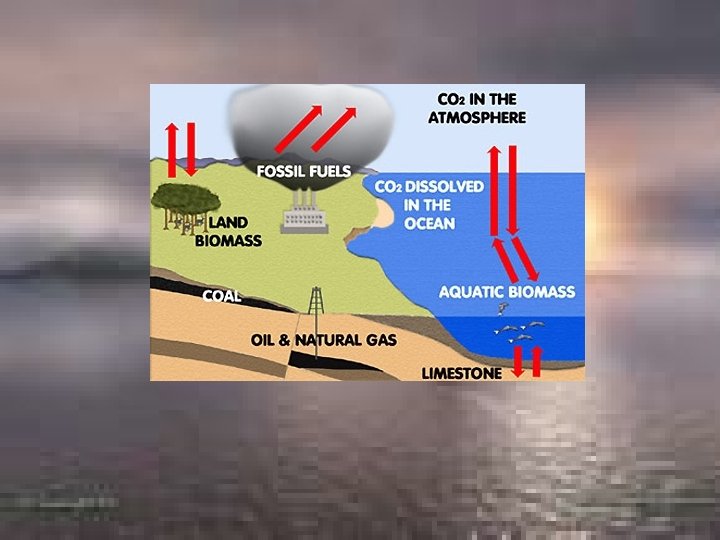
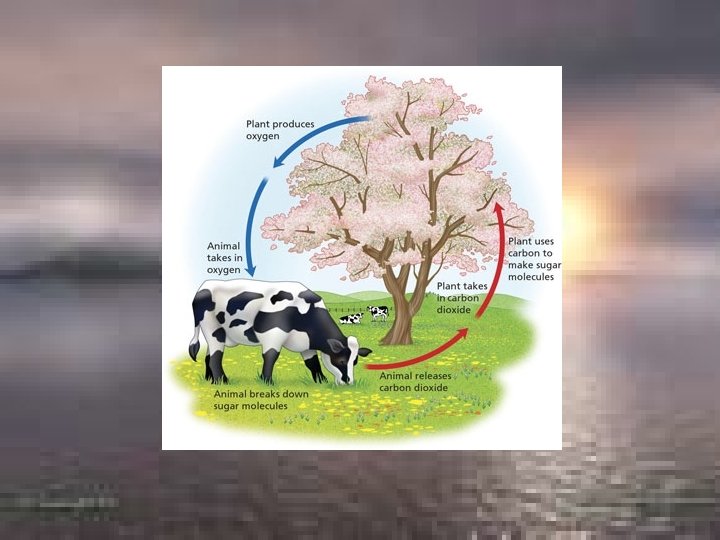
Carbon Cycle • How is carbon taken up and released? – Photosynthesis, respiration, decomposition – Erosion, volcanic activity, and other geological activity – Fossil fuel formation (deposition) – Human activity • All these activities transfer carbon dioxide.
Carbon Facts • 71% of world’s carbon is in the oceans. • 22% exists as fossils. • 3% contained in dead organic matter and phytoplankton. • 3% held in terrestrial ecosystems. • Only 1% within the atmosphere as carbon dioxide.
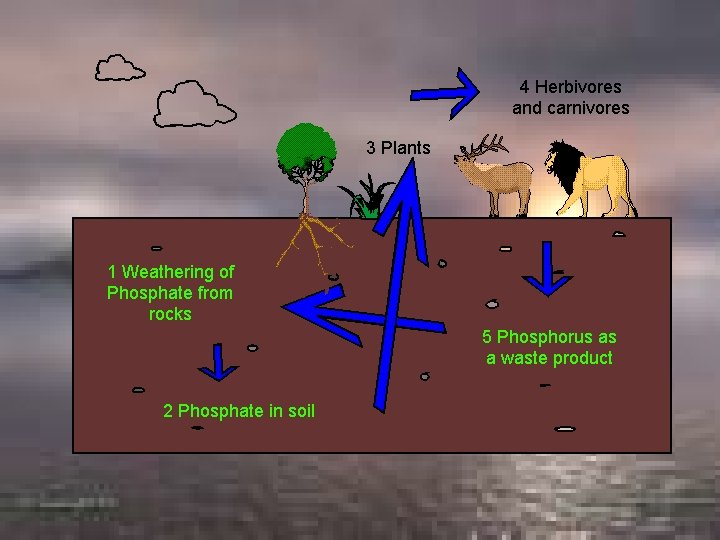
Phosphorus Cycle • Where is a majority of phosphorus located? – On land in rock and soil minerals. – In the ocean as sediment. – Small amount in living organisms, bound within organic molecules such as DNA and RNA as well as in skeletons of animals. – Unlike other nutrients, it DOES NOT enter the atmosphere.
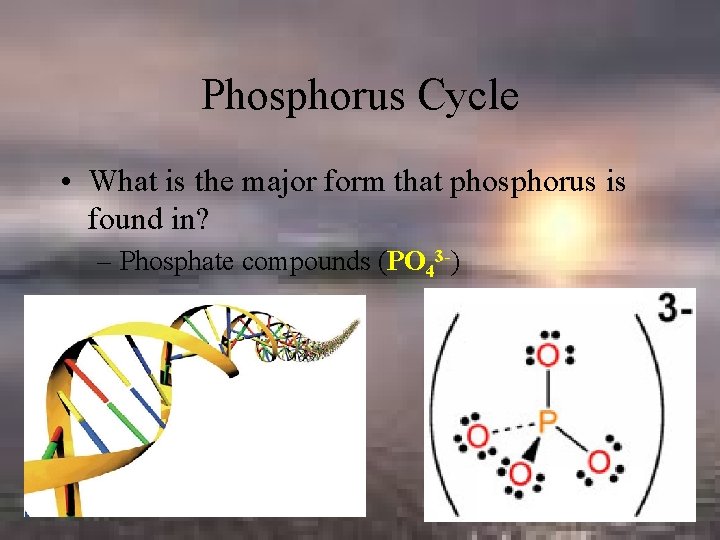
Phosphorus Cycle • What is the major form that phosphorus is found in? – Phosphate compounds (PO 43 -)
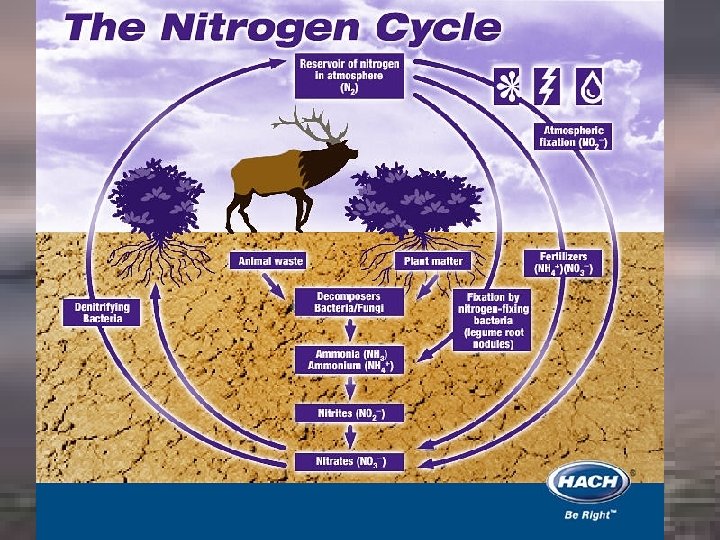
Nitrogen Cycle • What form does most nitrogen exist in? – Nitrogen gas in the atmosphere (N 2)
Nitrogen Cycle • How do we get to a usable form? – Bacterial nitrogen fixation – Atmospheric nitrogen fixation – Decomposition and excretion • What are these usable forms? – Ammonia (NH 3), Nitrate (NO 3 -) and nitrite (NO 2 -).
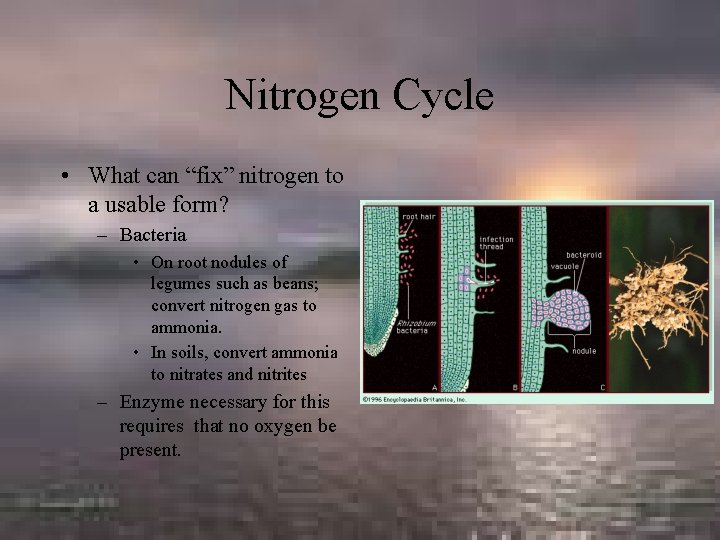
Nitrogen Cycle • What can “fix” nitrogen to a usable form? – Bacteria • On root nodules of legumes such as beans; convert nitrogen gas to ammonia. • In soils, convert ammonia to nitrates and nitrites – Enzyme necessary for this requires that no oxygen be present.
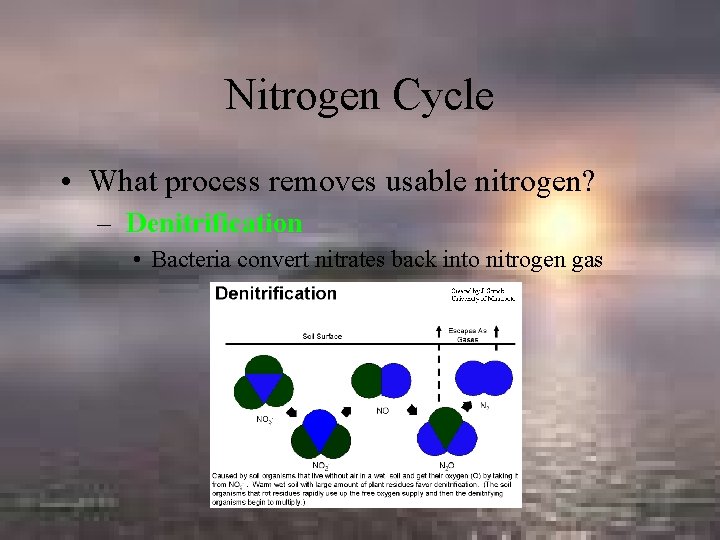
Nitrogen Cycle • What process removes usable nitrogen? – Denitrification • Bacteria convert nitrates back into nitrogen gas
How Nutrients Effect an Ecosystem • Nutrient limitation – Similar to when a person has a deficiency in a vitamin or necessary nutritional component (like iron or calcium), ecosystems can have a deficiency in a given nutrient. – This nutrient is called the limiting nutrient, because it limits the primary productivity of an ecosystem.
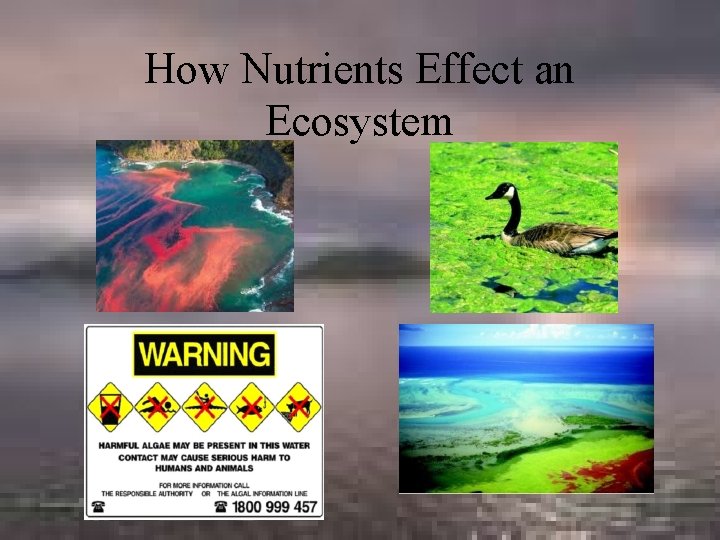
How Nutrients Effect an Ecosystem • What is primary productivity? – The rate at which organic material is created by producers, such as plants on land or phytoplankton in the ocean. • What happens when a limiting nutrient no longer becomes limiting? – In the ocean, this creates an algal bloom.
How Nutrients Effect an Ecosystem
Limiting Nutrients • A limiting nutrient limits the amount of primary productivity an ecosystem is capable of… – In the ocean, nitrogen is limiting. – In freshwater, phosphorus is limiting. • An increase in a limiting nutrient can lead to algal blooms…
Algal Blooms • Increase in algae as a result of increased nutrient. – Step 1: Algae grow and reproduce rapidly. – Step 2: Algae die. – Step 3: Decomposers (bacteria) in the water take up all the oxygen via respiration as they break down the dead algae. – Step 4: Limited to no oxygen left for other animals in the water column. – Step 5: Other animals such as fish, die due to lack of oxygen.
- Slides: 25