
Biogeochemical Cycles Water Cycle Defined Movement of water
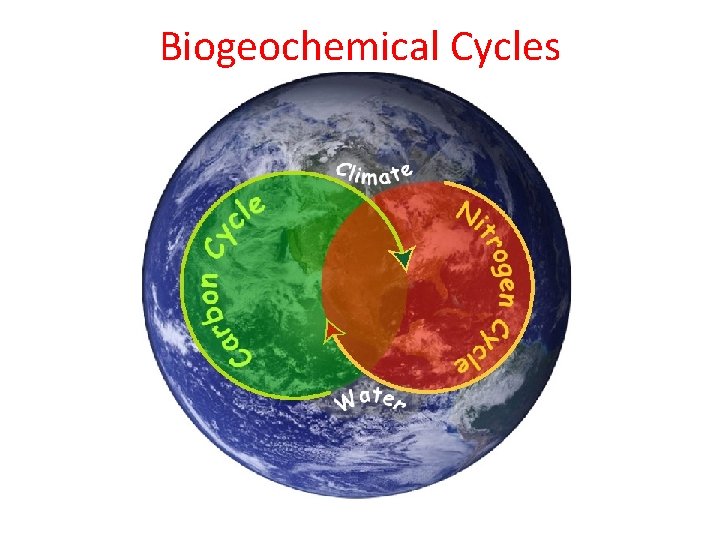
Biogeochemical Cycles
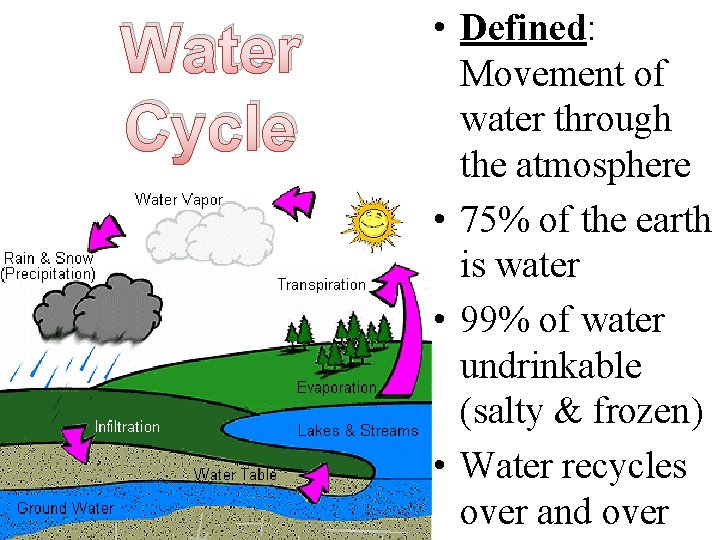
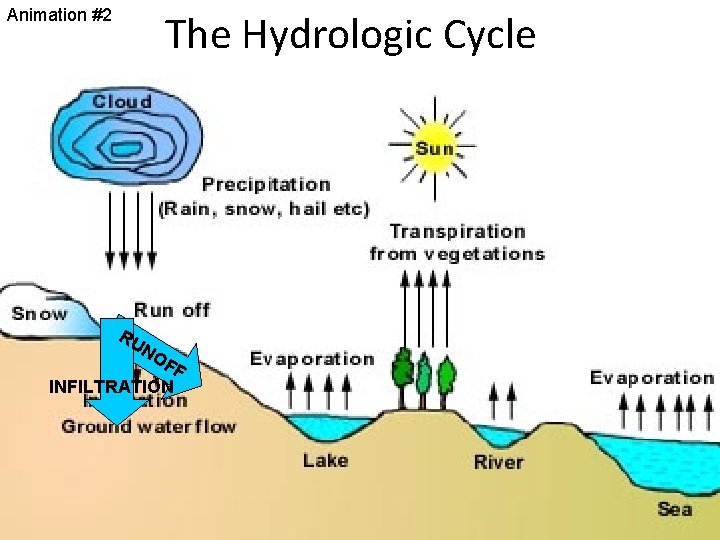
Water Cycle • Defined: Movement of water through the atmosphere • 75% of the earth is water • 99% of water undrinkable (salty & frozen) • Water recycles over and over
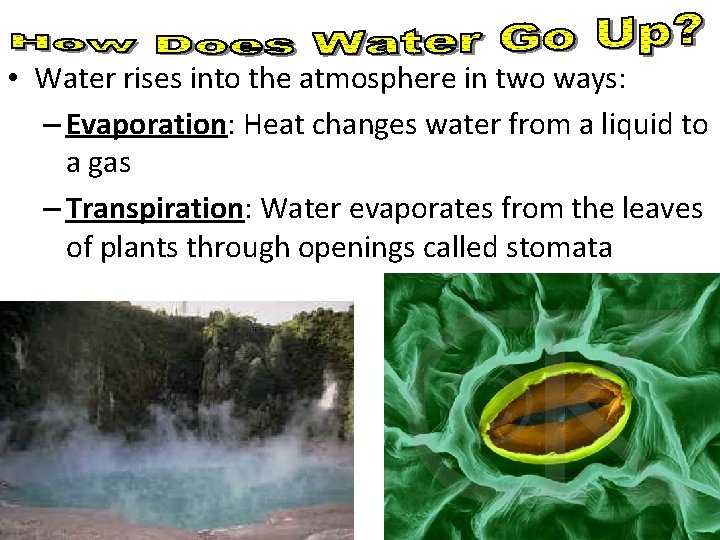
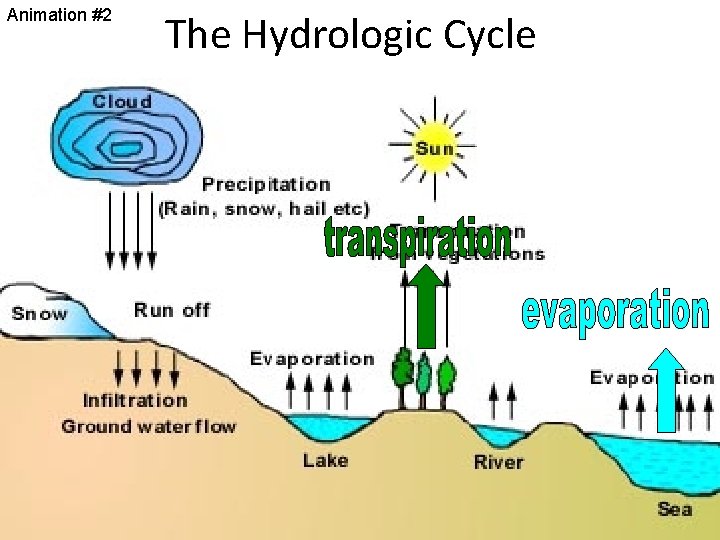
• Water rises into the atmosphere in two ways: – Evaporation: Heat changes water from a liquid to a gas – Transpiration: Water evaporates from the leaves of plants through openings called stomata
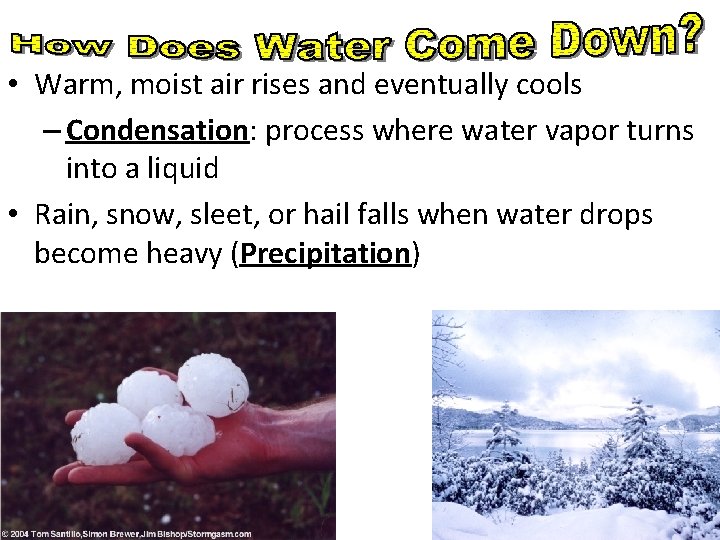
• Warm, moist air rises and eventually cools – Condensation: process where water vapor turns into a liquid • Rain, snow, sleet, or hail falls when water drops become heavy (Precipitation)
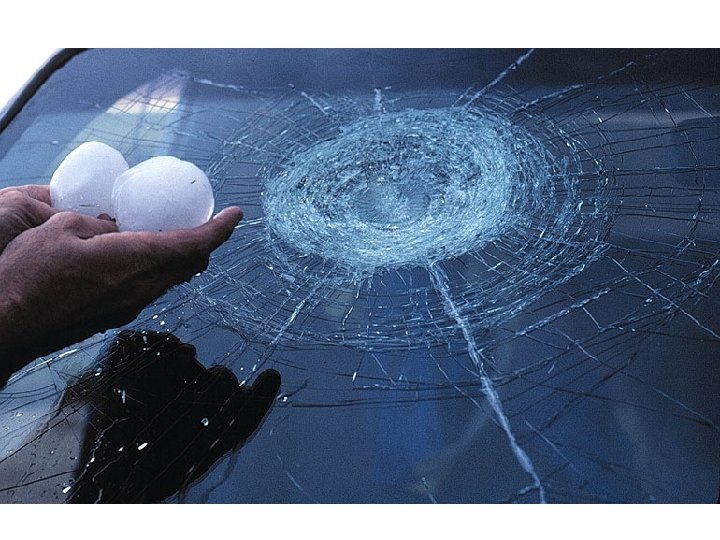
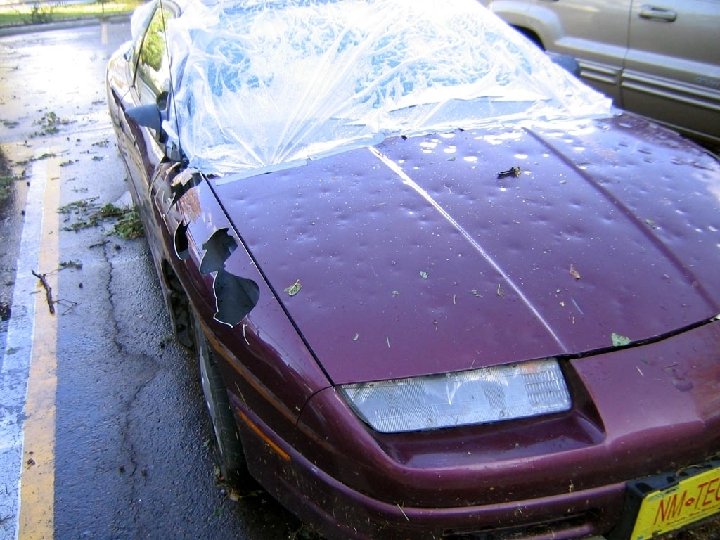
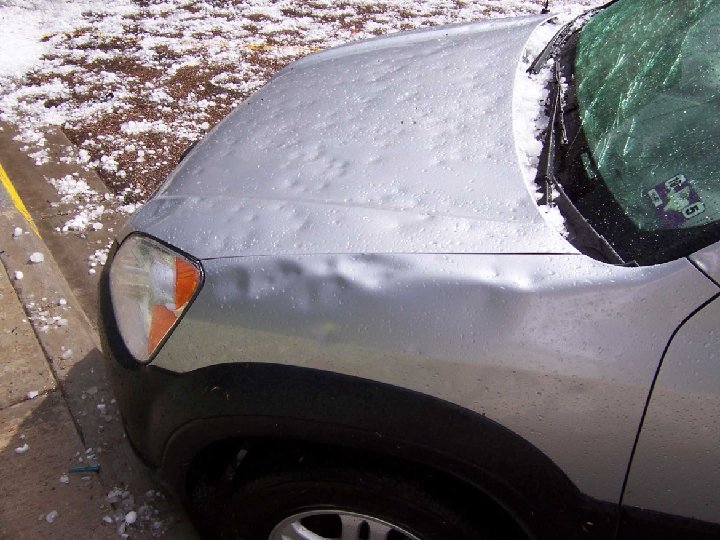
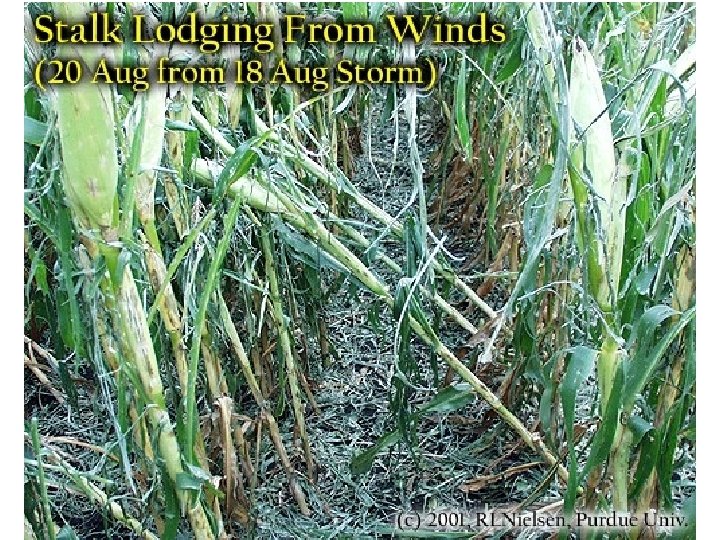


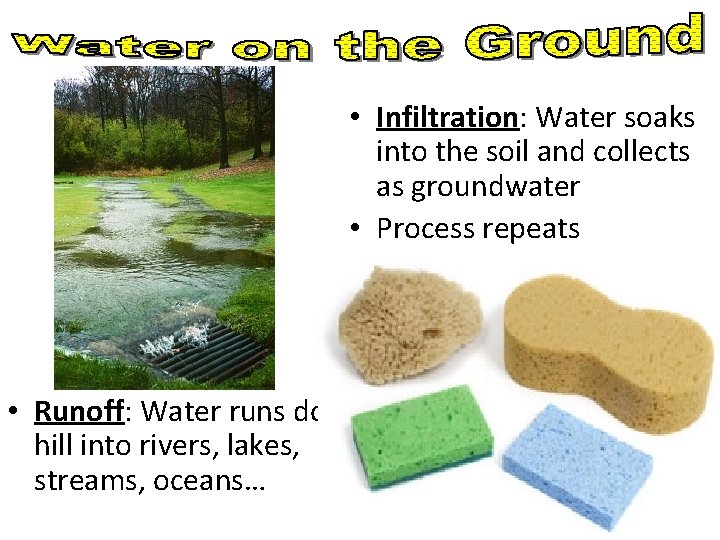
• Infiltration: Water soaks into the soil and collects as groundwater • Process repeats • Runoff: Water runs down hill into rivers, lakes, streams, oceans…
Animation Challenge Whose water cycle animation is better? Some guy on the Internet? ? ? Or Mr. Kobe’s? ?
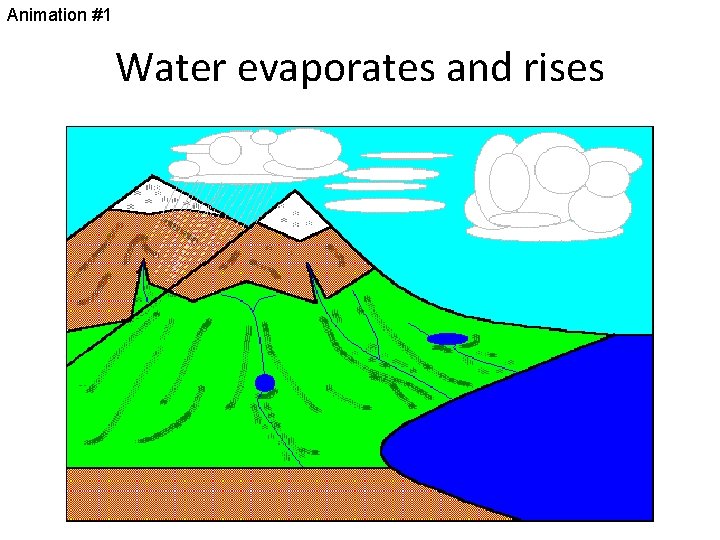
Animation #1 Water evaporates and rises
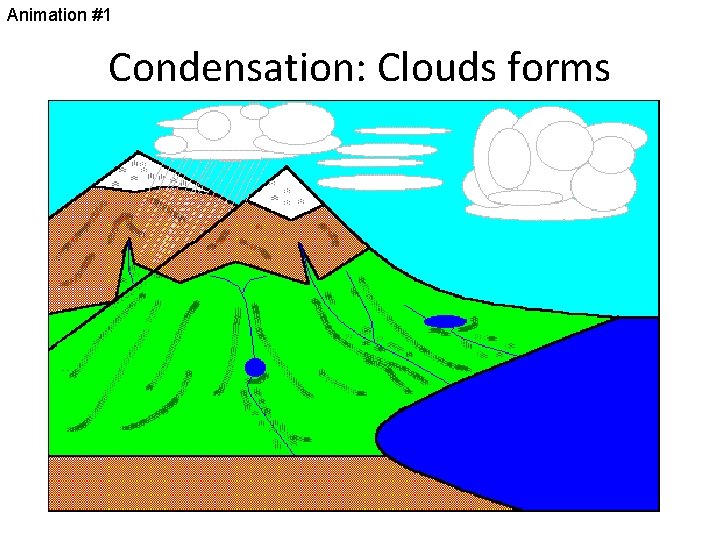
Animation #1 Condensation: Clouds forms
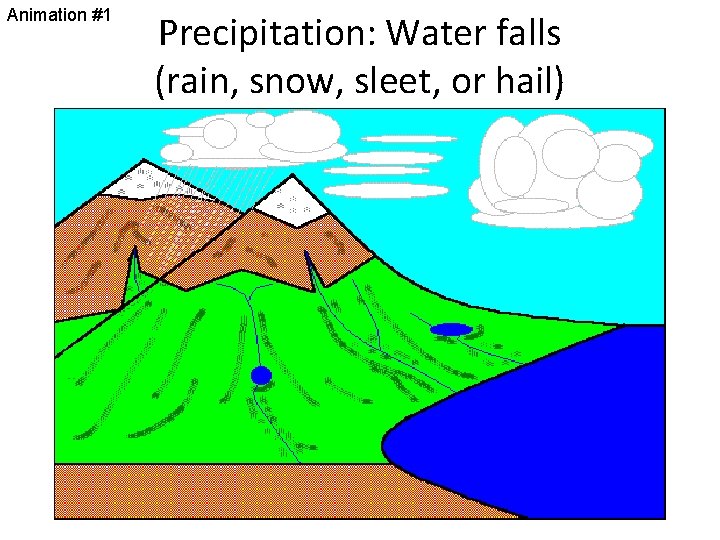
Animation #1 Precipitation: Water falls (rain, snow, sleet, or hail)
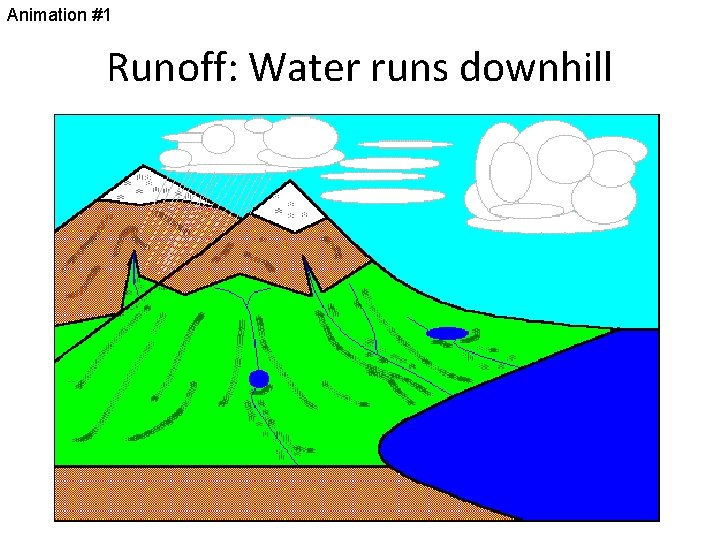
Animation #1 Runoff: Water runs downhill
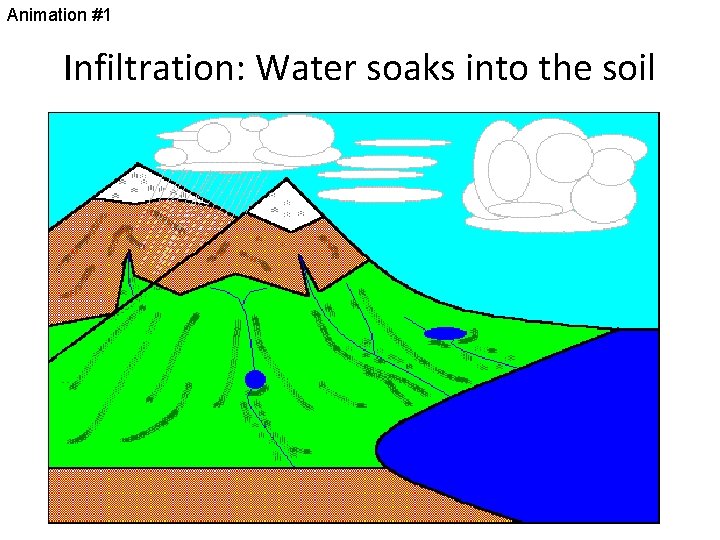
Animation #1 Infiltration: Water soaks into the soil
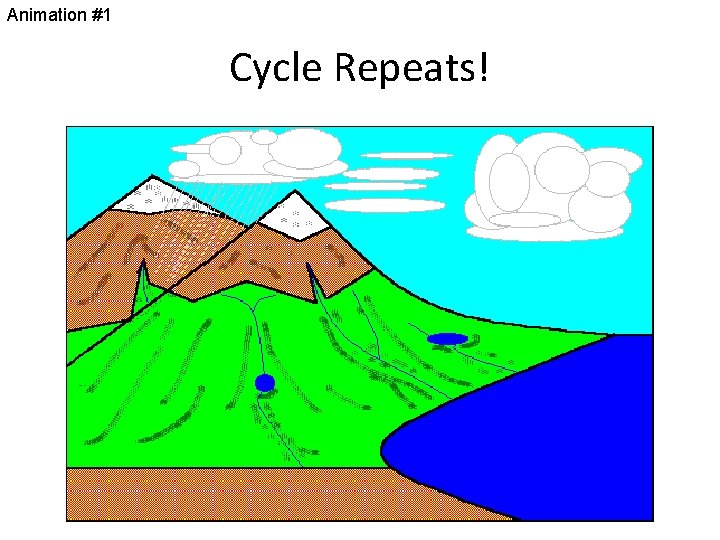
Animation #1 Cycle Repeats!
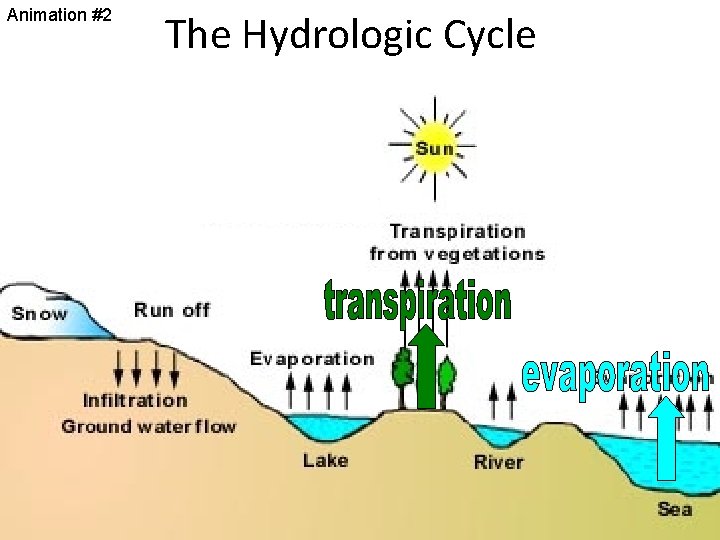
Animation #2 The Hydrologic Cycle
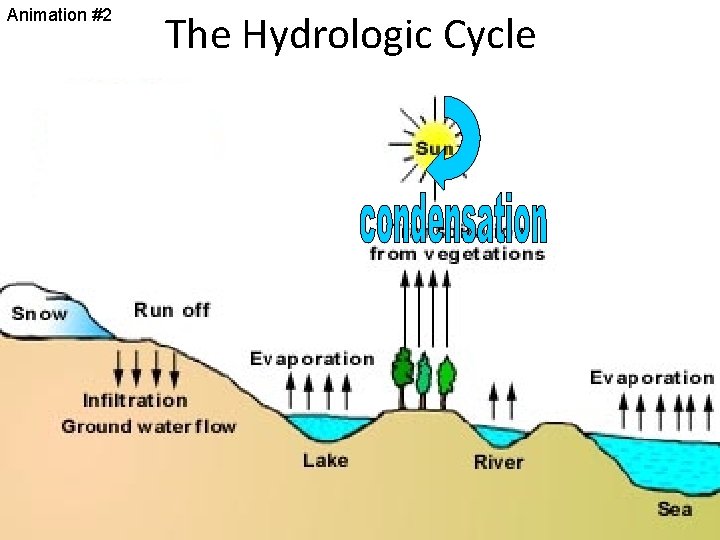
Animation #2 The Hydrologic Cycle
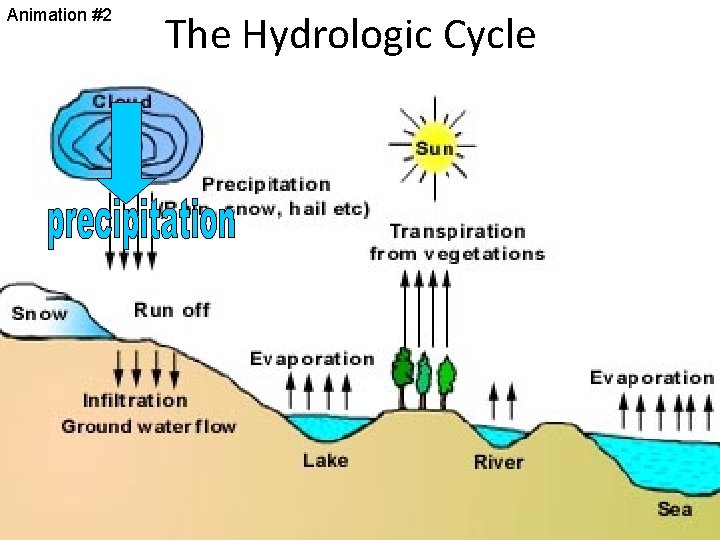
Animation #2 The Hydrologic Cycle
Animation #2 The Hydrologic Cycle RU N OF F INFILTRATION
Animation #2 The Hydrologic Cycle
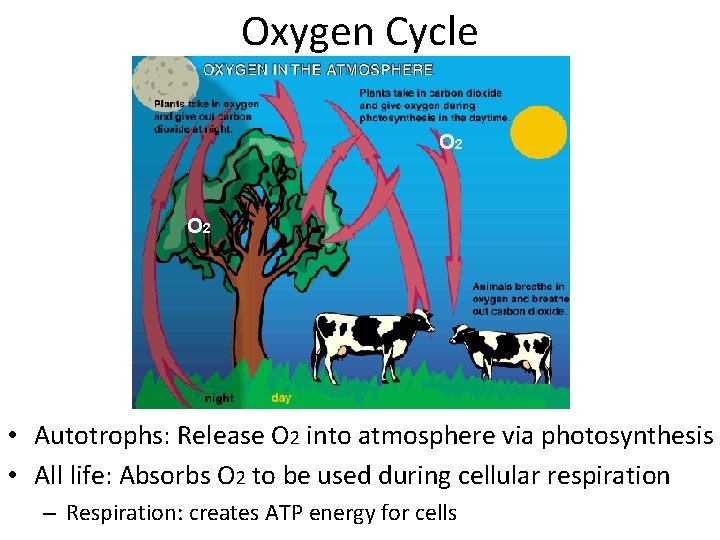
Oxygen Cycle O 2 • Autotrophs: Release O 2 into atmosphere via photosynthesis • All life: Absorbs O 2 to be used during cellular respiration – Respiration: creates ATP energy for cells
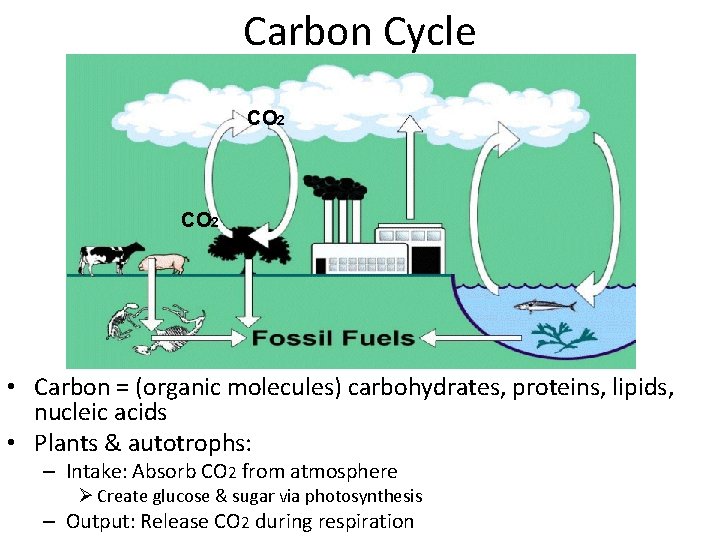
Carbon Cycle CO 2 • Carbon = (organic molecules) carbohydrates, proteins, lipids, nucleic acids • Plants & autotrophs: – Intake: Absorb CO 2 from atmosphere Ø Create glucose & sugar via photosynthesis – Output: Release CO 2 during respiration
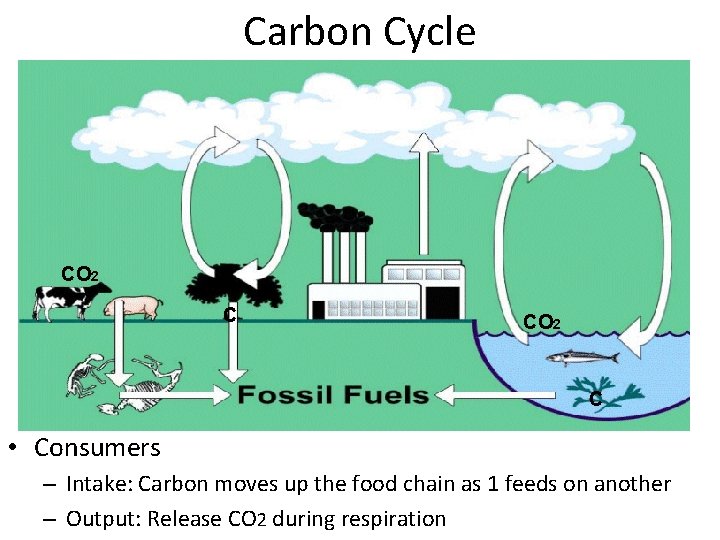
Carbon Cycle CO 2 C • Consumers – Intake: Carbon moves up the food chain as 1 feeds on another – Output: Release CO 2 during respiration
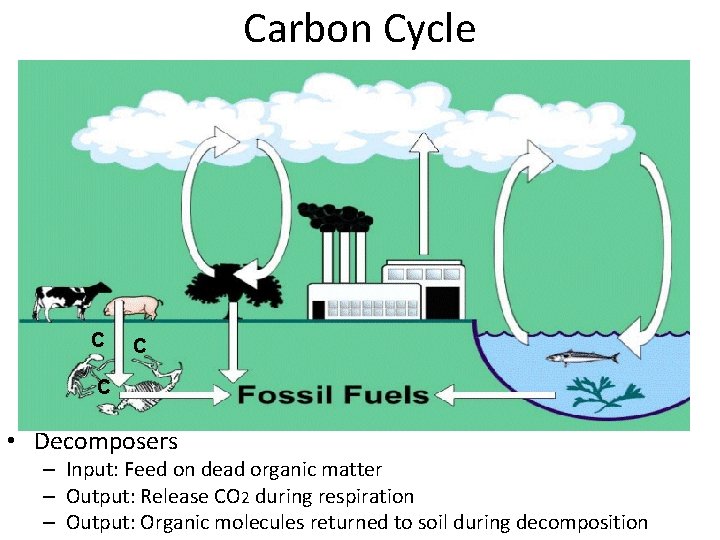
Carbon Cycle C C C • Decomposers – Input: Feed on dead organic matter – Output: Release CO 2 during respiration – Output: Organic molecules returned to soil during decomposition
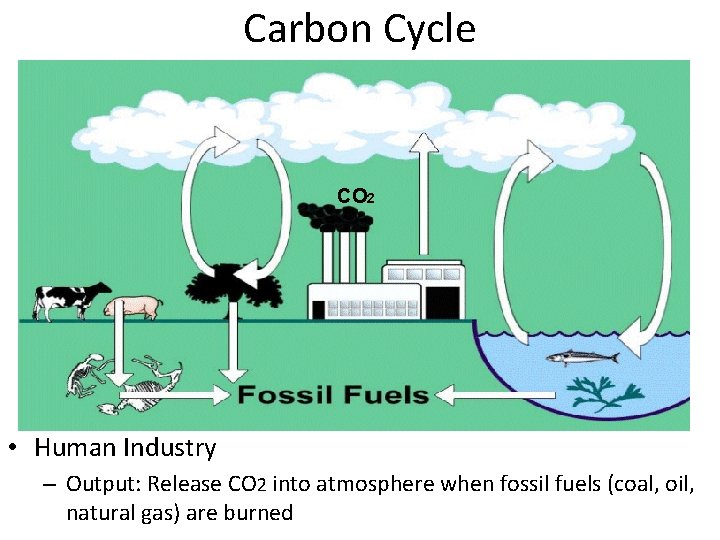
Carbon Cycle CO 2 • Human Industry – Output: Release CO 2 into atmosphere when fossil fuels (coal, oil, natural gas) are burned
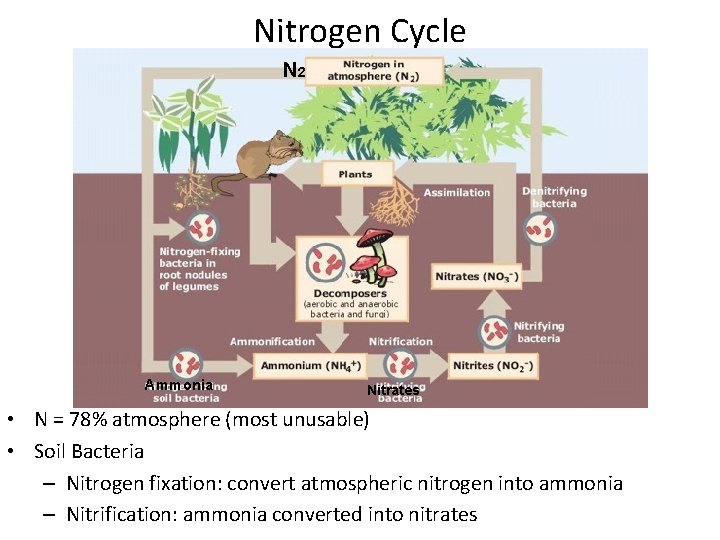
Nitrogen Cycle N 2 Ammonia Nitrates • N = 78% atmosphere (most unusable) • Soil Bacteria – Nitrogen fixation: convert atmospheric nitrogen into ammonia – Nitrification: ammonia converted into nitrates
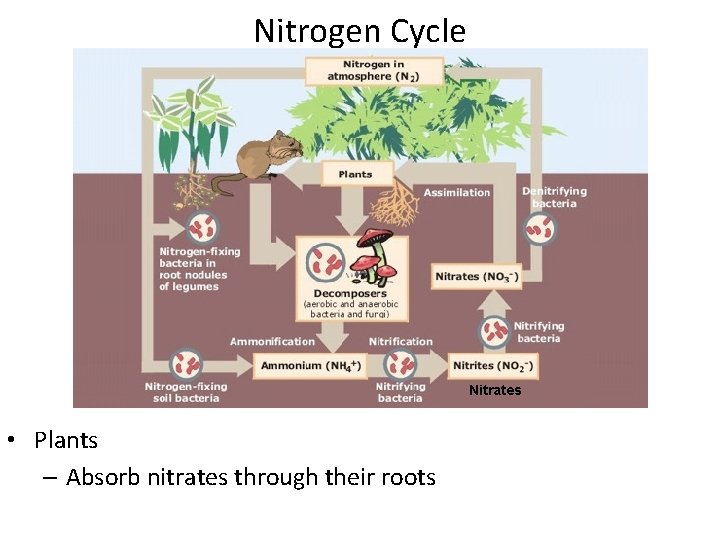
Nitrogen Cycle Nitrates • Plants – Absorb nitrates through their roots
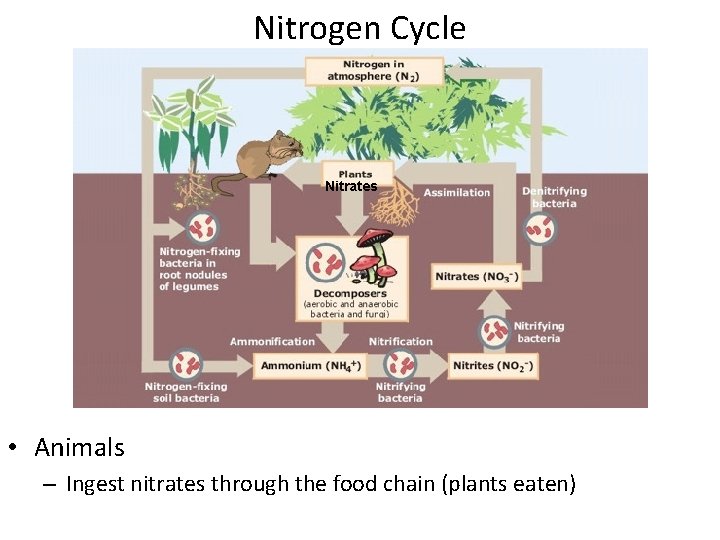
Nitrogen Cycle Nitrates • Animals – Ingest nitrates through the food chain (plants eaten)
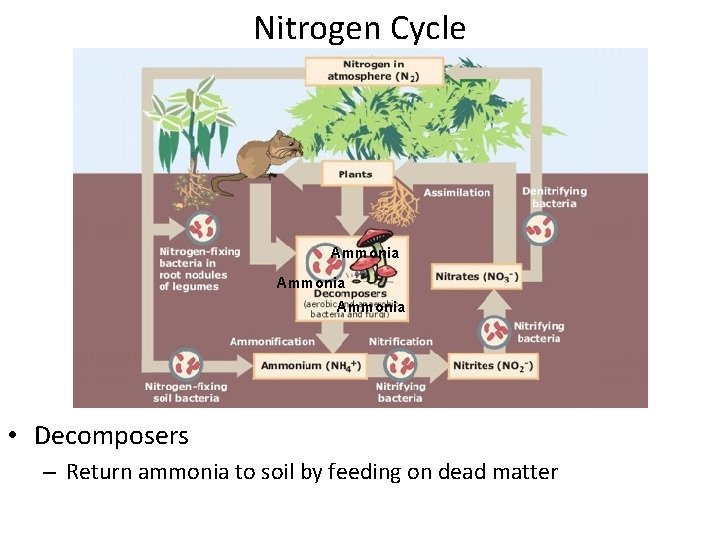
Nitrogen Cycle Ammonia • Decomposers – Return ammonia to soil by feeding on dead matter
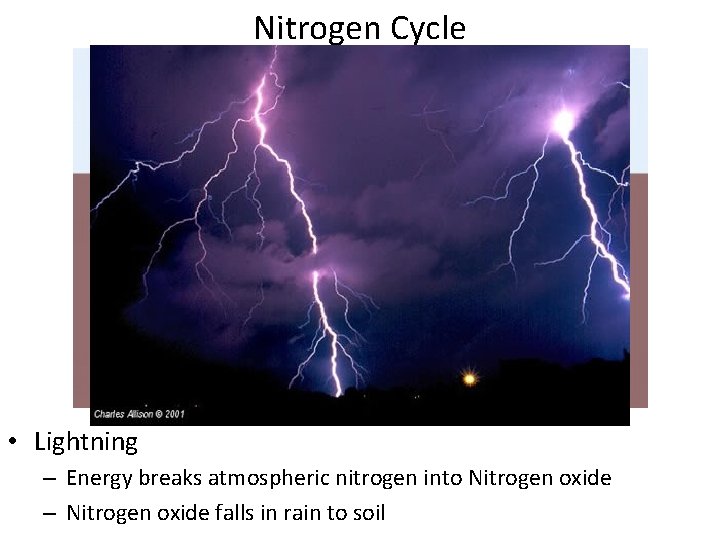
Nitrogen Cycle • Lightning – Energy breaks atmospheric nitrogen into Nitrogen oxide – Nitrogen oxide falls in rain to soil
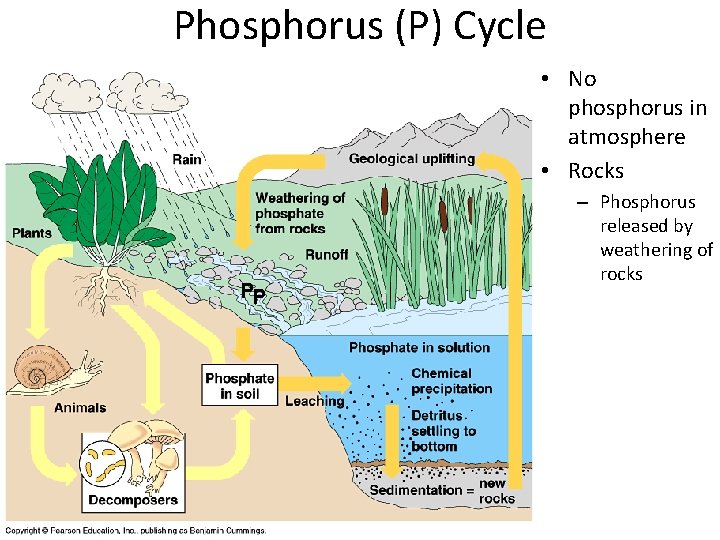
Phosphorus (P) Cycle • No phosphorus in atmosphere • Rocks PP – Phosphorus released by weathering of rocks
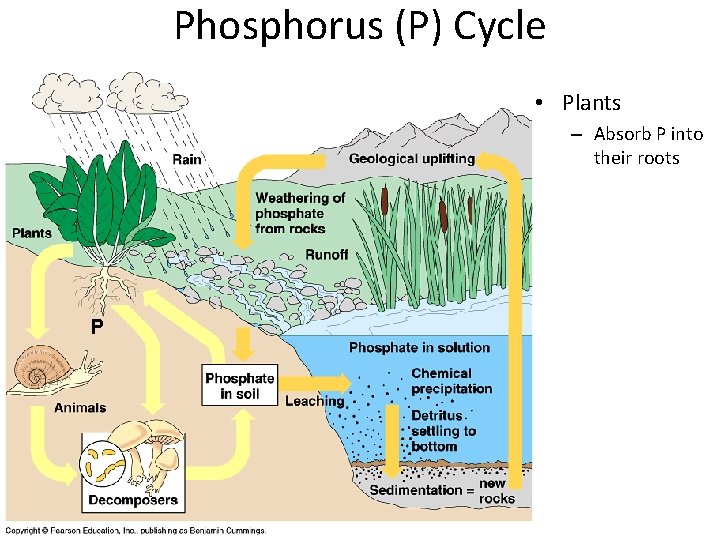
Phosphorus (P) Cycle • Plants – Absorb P into their roots P
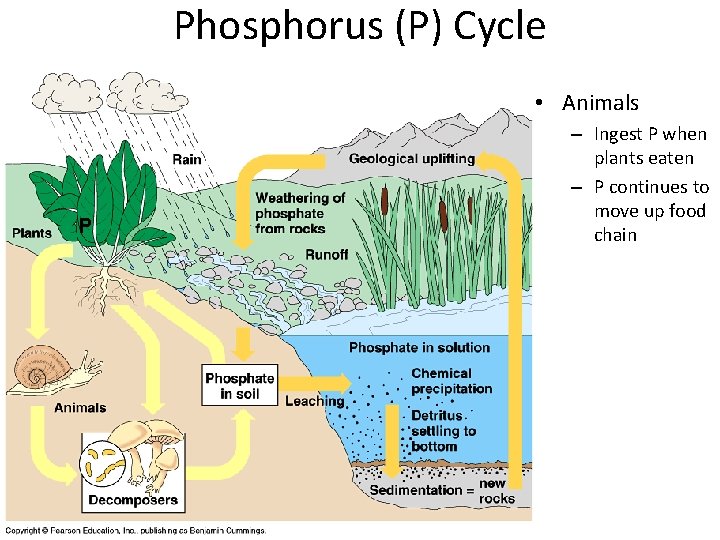
Phosphorus (P) Cycle • Animals P – Ingest P when plants eaten – P continues to move up food chain
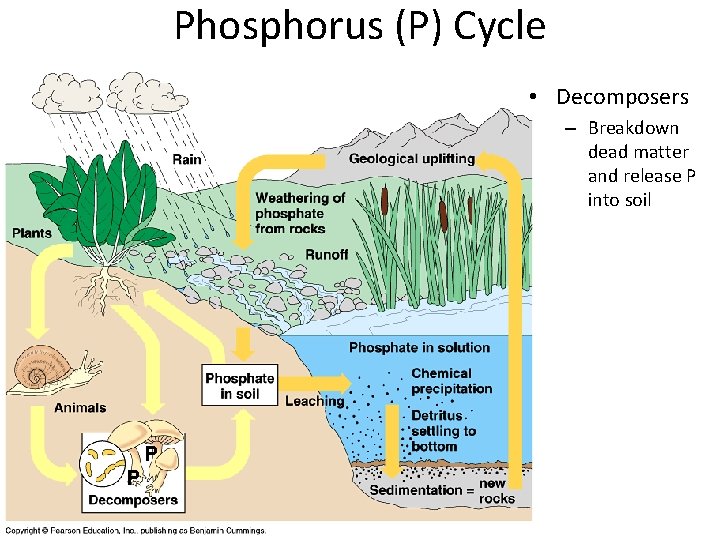
Phosphorus (P) Cycle • Decomposers – Breakdown dead matter and release P into soil P P
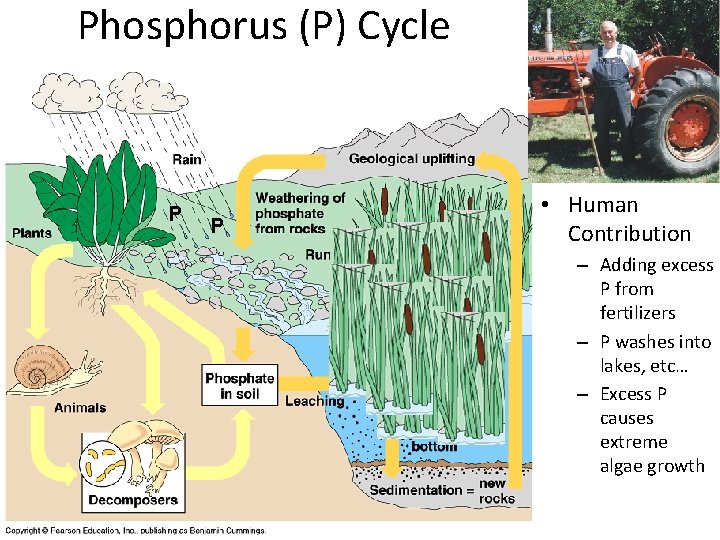
Phosphorus (P) Cycle P P P • Human Contribution – Adding excess P from fertilizers – P washes into lakes, etc… – Excess P causes extreme algae growth
Kobe Kuiz 1) Name and define the 6 stages of the water cycle. 2) How is oxygen released into the atmosphere? 3) In which cellular process is oxygen removed and used from the atmosphere? 4) Which organic molecule is created by photosynthesis? 5) In which cellular process is carbon dioxide released into the atmosphere? 6) How are humans disrupting the carbon cycle? 7) How does nitrogen fixation and nitrification differ? 8) How do plants obtain nitrogen? 9) Which objects release phosphorus over time? 10) How are humans disrupting the phosphorus cycle?
- Slides: 40