
Biogeochemical Cycles Proportions of organic elements in seawater
Biogeochemical Cycles • Proportions of organic elements in seawater differ from the proportions of sea salts because: – The principle of constant proportions does not apply to these elements. – These nonconservative constituents have concentrations and proportions that vary independently of salinity owing to biological and geological activity. • All life depends on material from the nonliving part of the Earth. – The continuous flow of elements and compounds between organisms (biological form) and the Earth (geological form) is the biogeochemical cycle.
• Organisms require specific elements and compounds to stay alive. – Aside from gases used in respiration or photosynthesis, those substances required for life are called nutrients. • The primary nutrient elements related to seawater chemistry are carbon, nitrogen, phosphorus, silicon, iron, and a few other trace metals. • Not all nutrients and compounds cycle at the same rate. • The biogeochemical cycle of the various nutrients affects the nature of organisms and where they live in the sea.
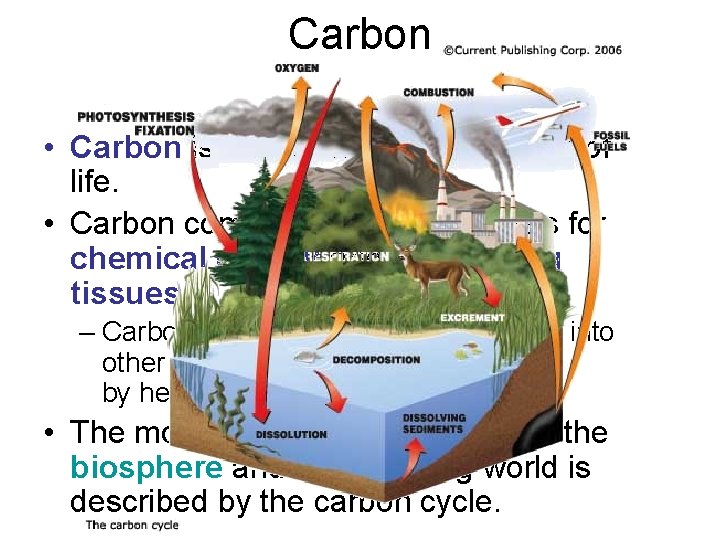
Carbon • Carbon is the fundamental element of life. • Carbon compounds form the basis for chemical energy and for building tissues. – Carbon dioxide must be transformed into other carbon compounds for use by heterotrophs. • The movement of carbon between the biosphere and the nonliving world is described by the carbon cycle.
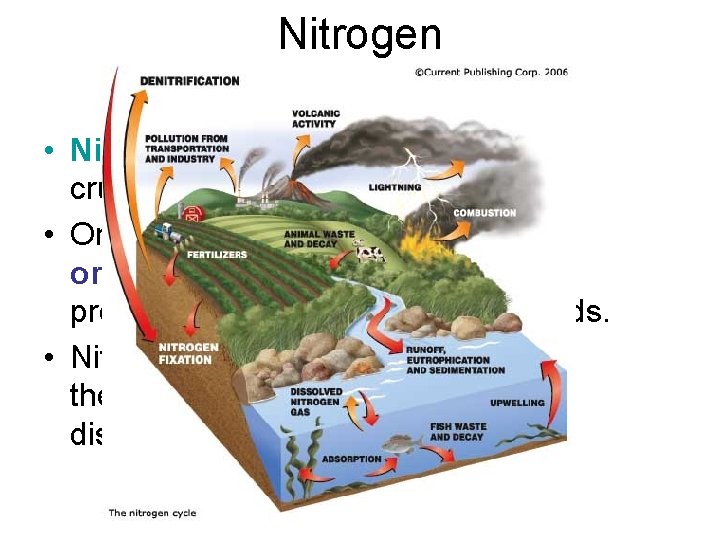
Nitrogen • Nitrogen is another element crucial to life on Earth. • Organisms require nitrogen for organic compounds such as protein, chlorophyll, and nucleic acids. • Nitrogen makes up about 78% of the air and 48% of the gases dissolved in seawater.
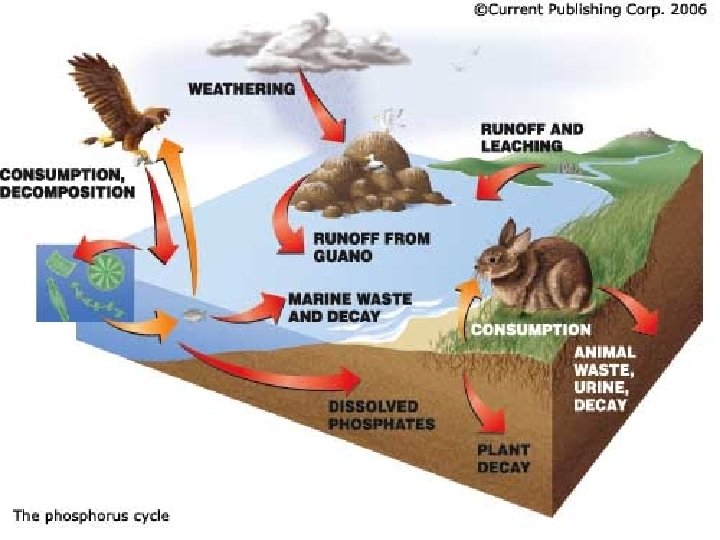
Phosphorus and Silicon • Phosphorus is another element important to life because it is used in the ADP/ATP cycle, by which cells convert chemical energy into the energy required for life. – Phosphorus combined with calcium carbonate is a primary component of bones and teeth.
• Silicon is used similarly by some organisms in the marine environment (including diatoms and radiolarians) for their shells and skeletons. – Silicon exists in these organisms as silicon dioxide, called silica.
Iron and Trace Metals • Iron and other trace metals fit into the definition of a micronutrient. – These are essential to organisms for constructing specialized proteins, including hemoglobin and enzymes. – Other trace metals used in enzymes include manganese, copper, and zinc.
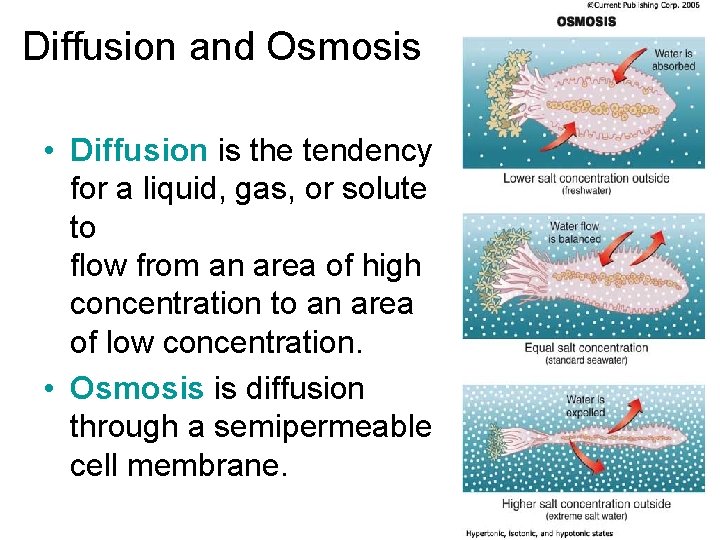
Diffusion and Osmosis • Diffusion is the tendency for a liquid, gas, or solute to flow from an area of high concentration to an area of low concentration. • Osmosis is diffusion through a semipermeable cell membrane.
• This has important implications with respect to marine animals. – Hypertonic - having a higher salt concentration, and the water will diffuse into the cells. • It is what happens when you put a marine fish into fresh water. – Isotonic - when water concentration inside the cell is the same as the surrounding water outside the cell. There is no osmotic pressure in either direction. • Marine fish cells are isotonic. – Hypotonic - having a lower salt concentration than the surrounding water. • It is what happens when you put a freshwater fish into seawater.
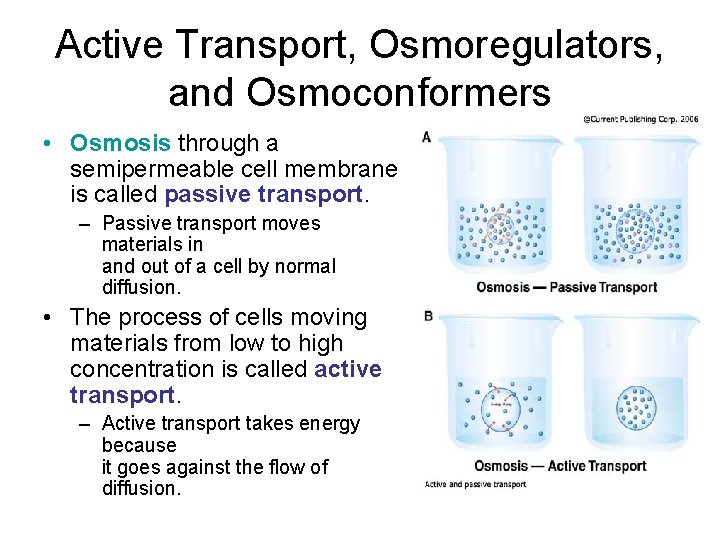
Active Transport, Osmoregulators, and Osmoconformers • Osmosis through a semipermeable cell membrane is called passive transport. – Passive transport moves materials in and out of a cell by normal diffusion. • The process of cells moving materials from low to high concentration is called active transport. – Active transport takes energy because it goes against the flow of diffusion.
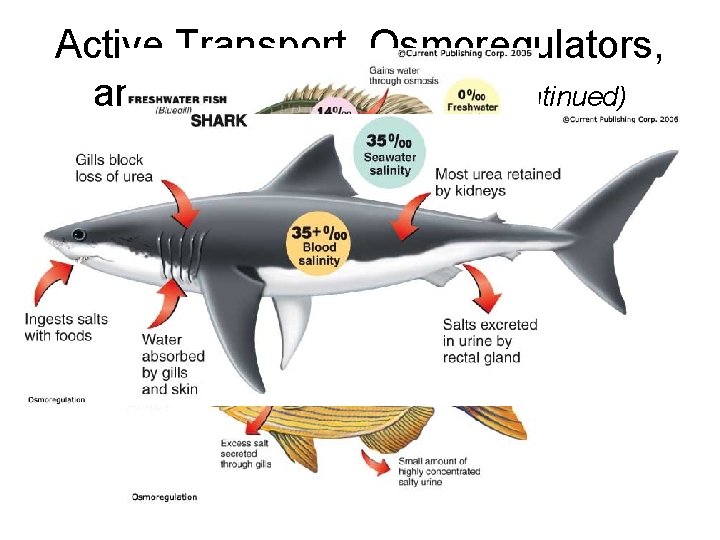
Active Transport, Osmoregulators, and Osmoconformers (continued) • Marine fish that have a regulation process that allows them to use active transport to adjust water concentration within their cells are osmoregulators. • Marine organisms that have their internal salinity rise and fall along with the water salinity are osmoconformers.
- Slides: 12