
Biogeochemical Cycles Objectives Identify and describe the flow
Biogeochemical Cycles
Objectives: Ø Identify and describe the flow of nutrients in each biogeochemical cycle. Ø Explain the impact that humans have on the biogeochemical cycles.
Chapter Overview Questions Ø What happens to energy in an ecosystem? Ø What happens to matter in an ecosystem?
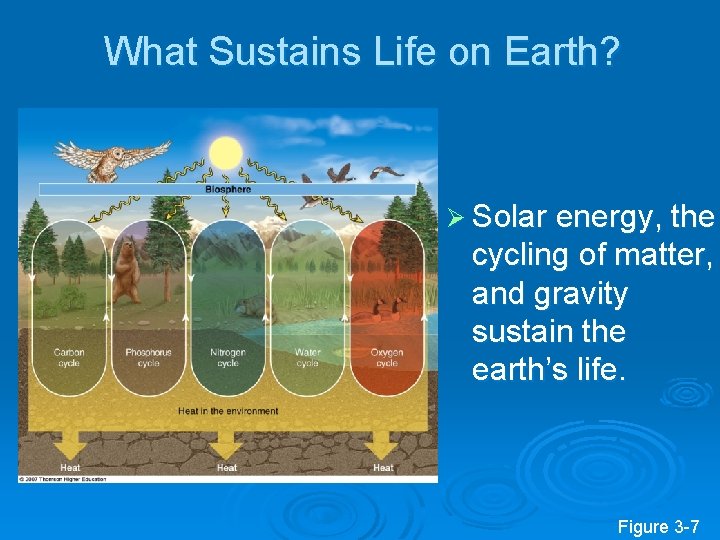
What Sustains Life on Earth? Ø Solar energy, the cycling of matter, and gravity sustain the earth’s life. Figure 3 -7
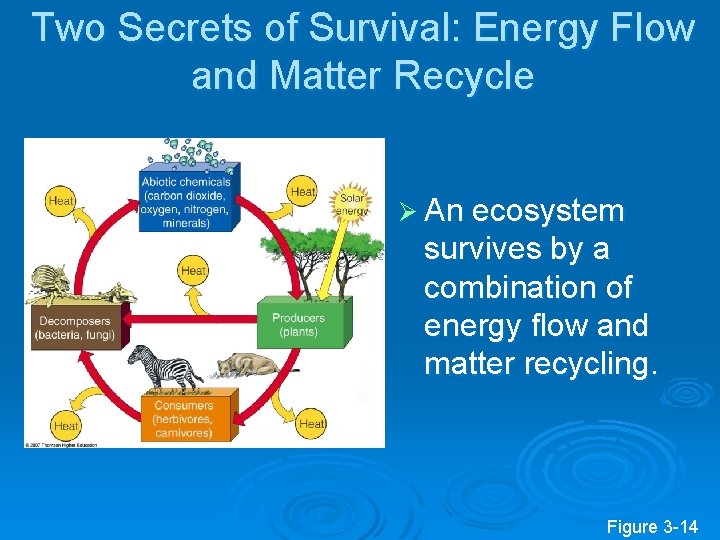
Two Secrets of Survival: Energy Flow and Matter Recycle Ø An ecosystem survives by a combination of energy flow and matter recycling. Figure 3 -14
MATTER CYCLING IN ECOSYSTEMS Ø Nutrient Cycles: Global Recycling l l l Global Cycles recycle nutrients through the earth’s air, land, water, and living organisms. Nutrients are the elements and compounds that organisms need to live, grow, and reproduce. Biogeochemical cycles move these substances through air, water, soil, rock and living organisms.
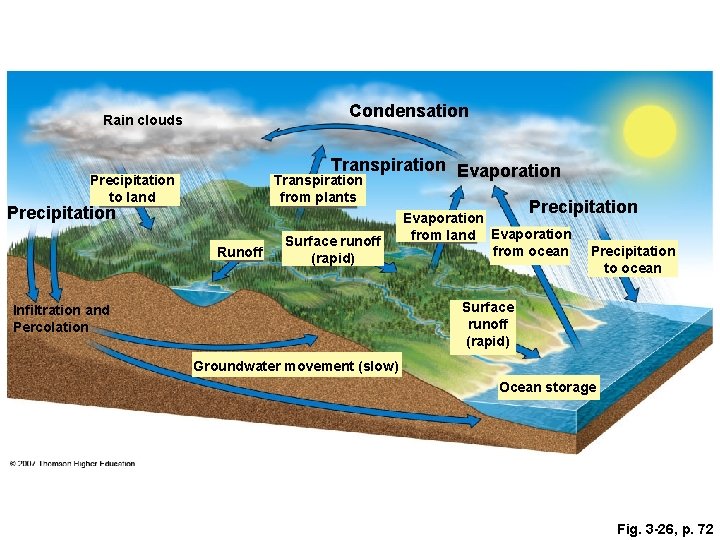
Condensation Rain clouds Transpiration Evaporation Transpiration Precipitation to land from plants Precipitation Runoff Surface runoff (rapid) Precipitation Evaporation from land Evaporation from ocean Precipitation to ocean Surface runoff (rapid) Infiltration and Percolation Groundwater movement (slow) Ocean storage Fig. 3 -26, p. 72
Effects of Human Activities on Water Cycle Ø We alter the water cycle by: l l Withdrawing large amounts of freshwater. Clearing vegetation and eroding soils. Polluting surface and underground water. Contributing to climate change.
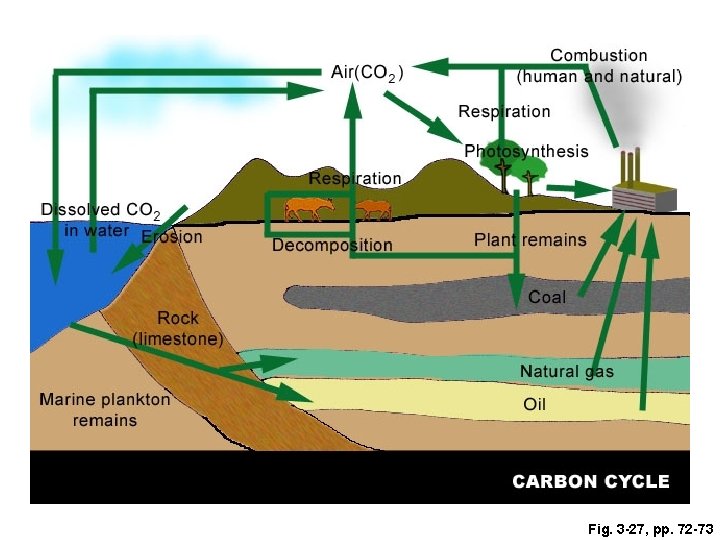
Fig. 3 -27, pp. 72 -73
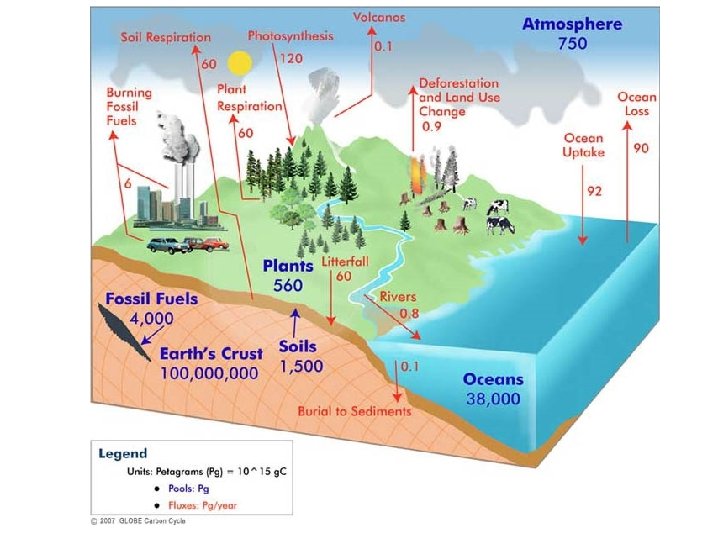
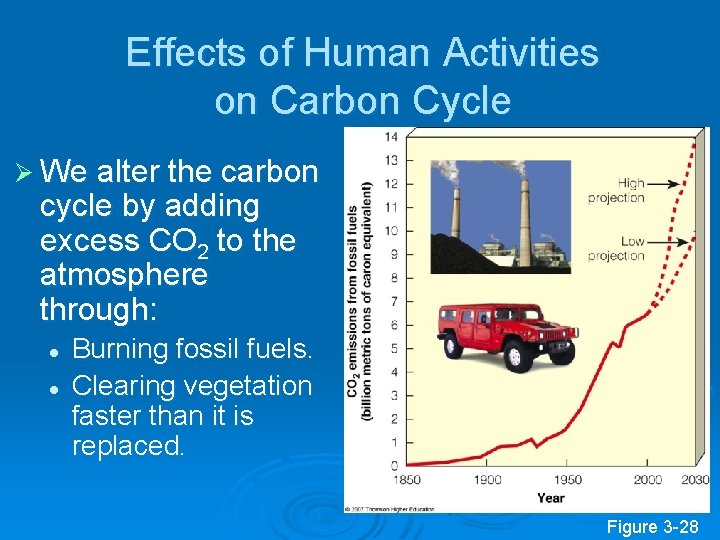
Effects of Human Activities on Carbon Cycle Ø We alter the carbon cycle by adding excess CO 2 to the atmosphere through: l l Burning fossil fuels. Clearing vegetation faster than it is replaced. Figure 3 -28
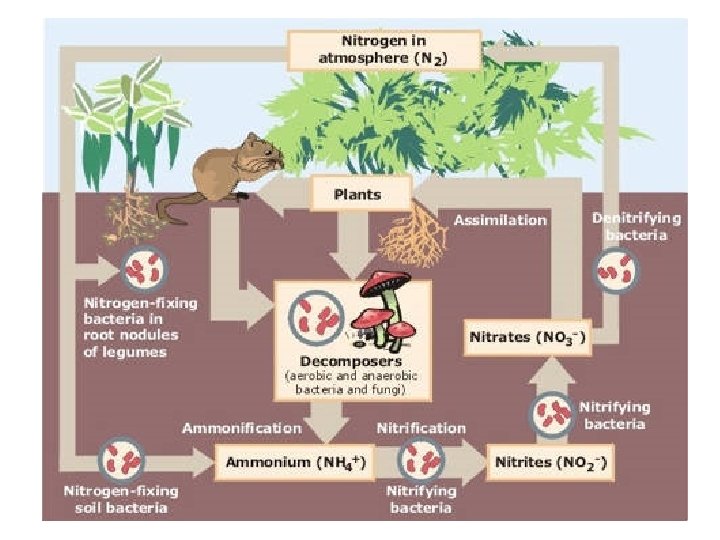
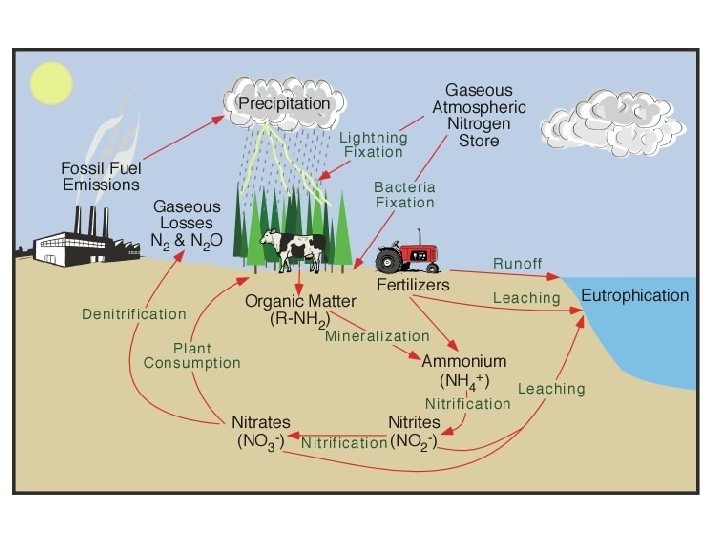
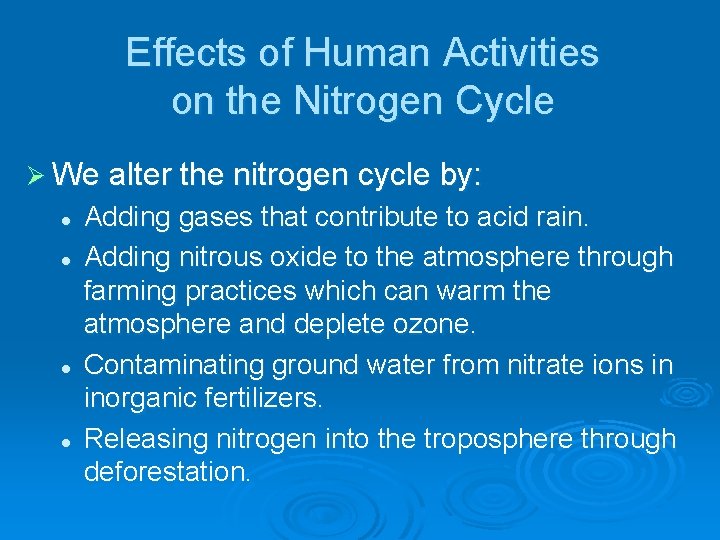
Effects of Human Activities on the Nitrogen Cycle Ø We alter the nitrogen cycle by: l l Adding gases that contribute to acid rain. Adding nitrous oxide to the atmosphere through farming practices which can warm the atmosphere and deplete ozone. Contaminating ground water from nitrate ions in inorganic fertilizers. Releasing nitrogen into the troposphere through deforestation.
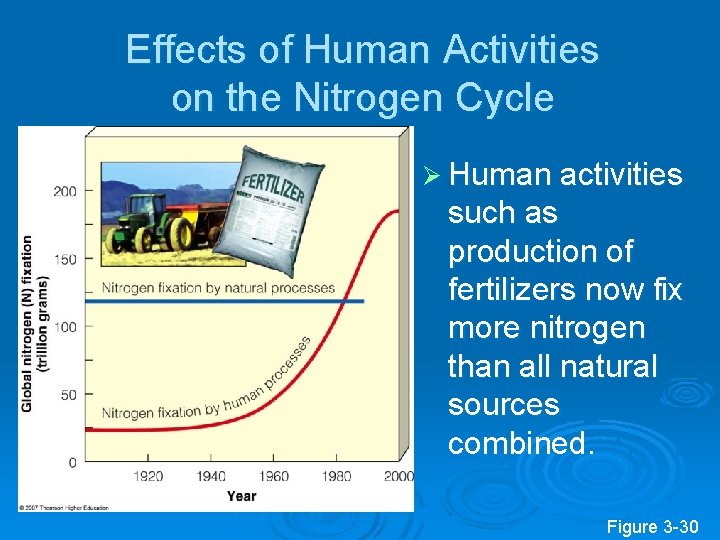
Effects of Human Activities on the Nitrogen Cycle Ø Human activities such as production of fertilizers now fix more nitrogen than all natural sources combined. Figure 3 -30
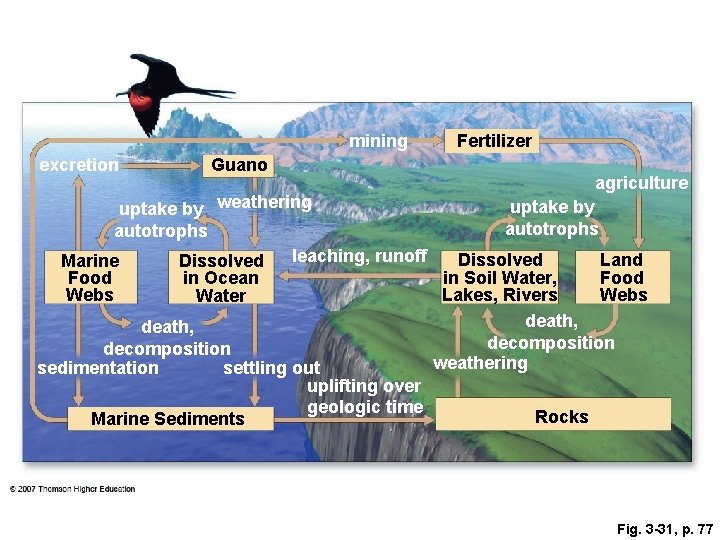
mining excretion Guano Fertilizer agriculture uptake by weathering autotrophs leaching, runoff Dissolved Land Marine Dissolved in Soil Water, Food in Ocean Lakes, Rivers Webs Water death, decomposition weathering sedimentation settling out uplifting over geologic time Rocks Marine Sediments Fig. 3 -31, p. 77
Effects of Human Activities on the Phosphorous Cycle Ø We remove large amounts of phosphate from the earth to make fertilizer. Ø We reduce phosphorous in tropical soils by clearing forests. Ø We add excess phosphates to aquatic systems from runoff of animal wastes and fertilizers.
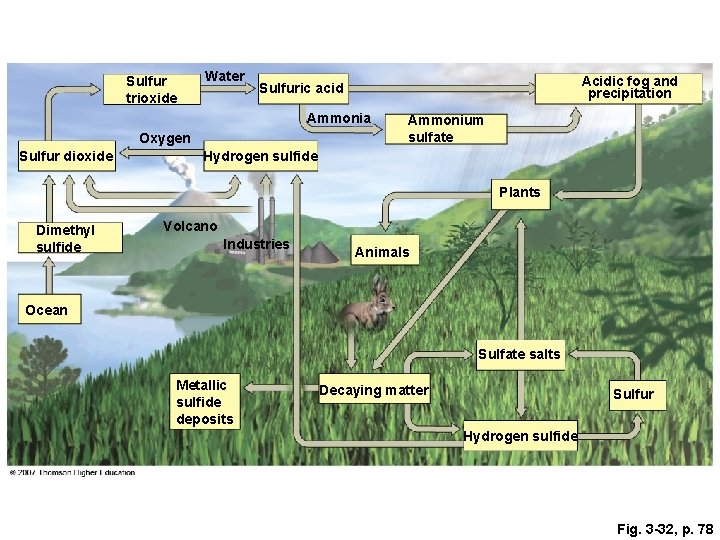
Sulfur trioxide Water Acidic fog and precipitation Sulfuric acid Ammonia Oxygen Sulfur dioxide Ammonium sulfate Hydrogen sulfide Plants Dimethyl sulfide Volcano Industries Animals Ocean Sulfate salts Metallic sulfide deposits Decaying matter Sulfur Hydrogen sulfide Fig. 3 -32, p. 78
Effects of Human Activities on the Sulfur Cycle Ø We add sulfur dioxide to the atmosphere by: l l l Burning coal and oil Refining sulfur containing petroleum. Convert sulfur-containing metallic ores into free metals such as copper, lead, and zinc releasing sulfur dioxide into the environment.
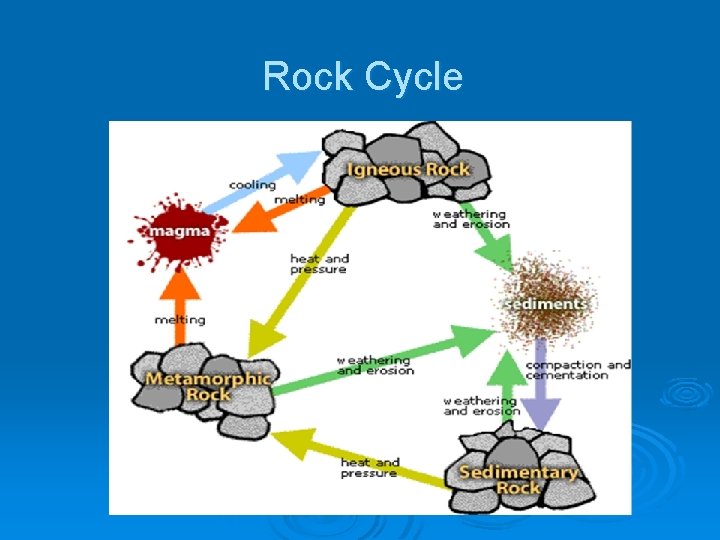
Rock Cycle Ø We affect the rock cycle in the following - ways: Construction/building/changing landforms Building dams Mining/drilling/fracking Human effects cause erosion, loss of topsoil and lower layers of soil
Rock Cycle Ø Rocks can be broken down by chemical or physical means: Ø Chemical weathering/acid rain Ø Physical weathering Ø Three types of rock: igneous, in and near volcanoes metamorphic, mountainous and canyon areas sedimentary, ocean basins, rivers, deserts, etc fossils form here
Rock Cycle
- Slides: 22