
Biogeochemical cycle Concept of genus species and habitat
Biogeochemical cycle, Concept of genus species and habitat 1
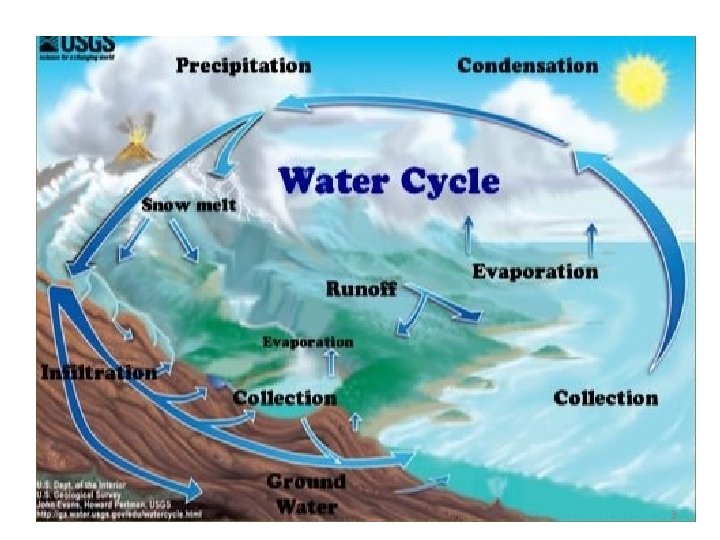
Biogeochemical cycles • It is defined as the study of how living systems influence and are controlled by the geology and chemistry of the earth. 1. Water cycle • The water cycle, describes the continuous movement of water on, above and below the surface of the Earth. • It is vital for all known forms of life. 2
3
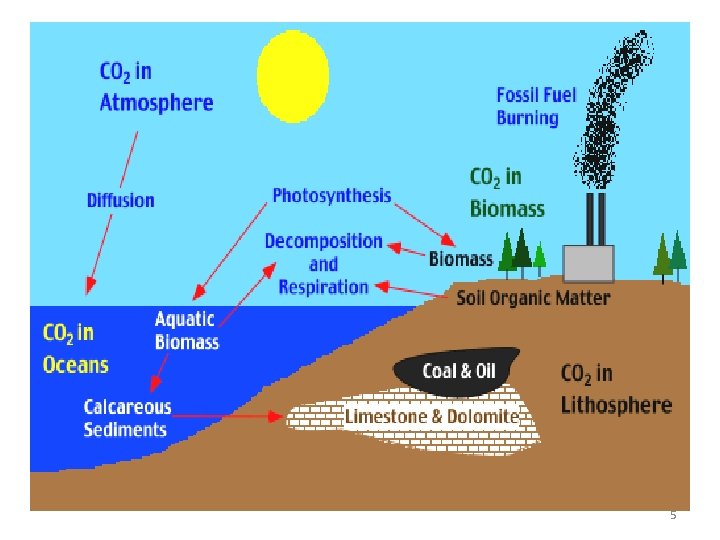
2. Carbon cycle • A Cycle by which carbon is exchanged among the layers of the biosphere. • Carbon-based molecules are crucial for life on Earth and is the main component of biological compounds. • Carbon is also a major component of many minerals. • Carbon also exists in various forms in the atmosphere. 4
5
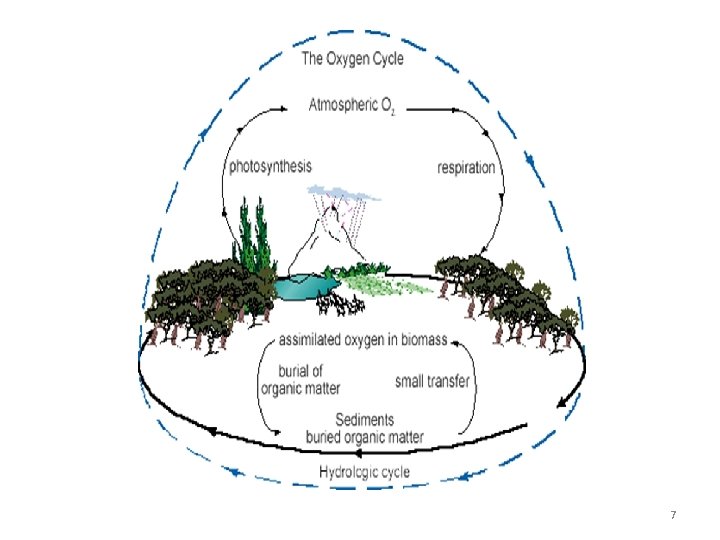
3. Oxygen cycle It describes the movement of oxygen within its three main reservoirs: • The atmosphere (air), • The total content of biological matter within the hydrosphere and • The lithosphere (Earth's crust). 6
7
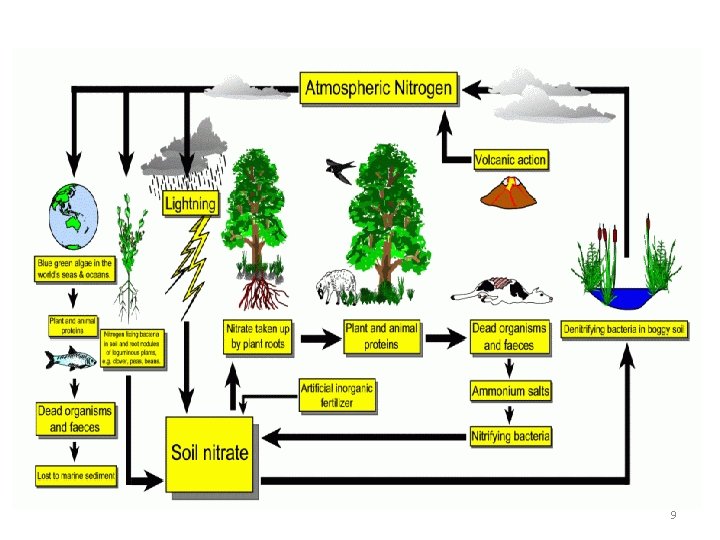
4. Nitrogen cycle • Nitrogen is necessary for all known forms of life on Earth. • It is a component in all amino acids, present in the bases that make up nucleic acids such as RNA and DNA. • Nitrogen gas (N 2) is the largest constituent of the Earth's atmosphere. • The process by which nitrogen is converted between its various chemical forms can be carried out through both biological and physical processes. • Important processes in the nitrogen cycle include fixation, ammonification, nitrification, and denitrification. 8
9
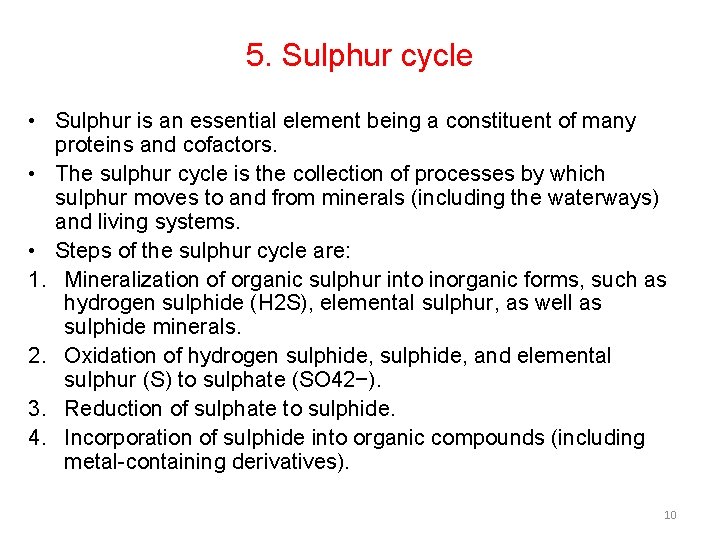
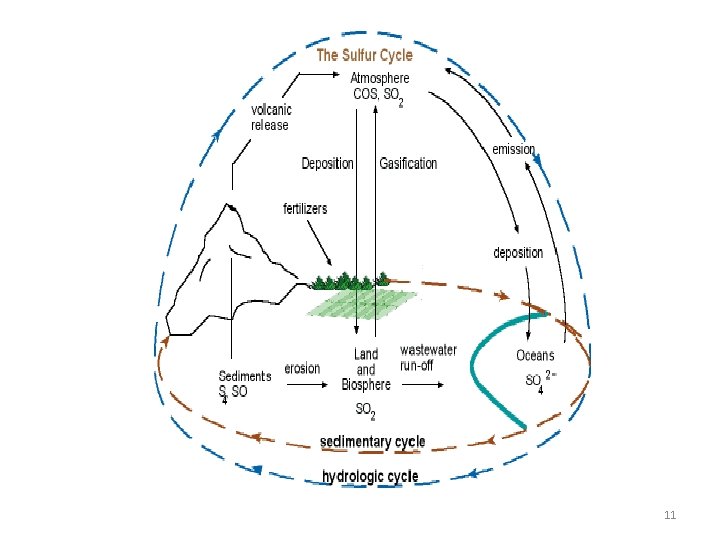
5. Sulphur cycle • Sulphur is an essential element being a constituent of many proteins and cofactors. • The sulphur cycle is the collection of processes by which sulphur moves to and from minerals (including the waterways) and living systems. • Steps of the sulphur cycle are: 1. Mineralization of organic sulphur into inorganic forms, such as hydrogen sulphide (H 2 S), elemental sulphur, as well as sulphide minerals. 2. Oxidation of hydrogen sulphide, and elemental sulphur (S) to sulphate (SO 42−). 3. Reduction of sulphate to sulphide. 4. Incorporation of sulphide into organic compounds (including metal-containing derivatives). 10
11
6. Phosphorus cycle • The phosphorus cycle describes the movement of phosphorus through the biosphere. • Phosphorus is an essential nutrient for plants and animals. • Phosphorus is a limiting nutrient for aquatic organisms. • 80 % of the mined phosphorus is used to make fertilizers. • Phosphorus does not enter the atmosphere, remaining mostly on land in rock and soil minerals. 12
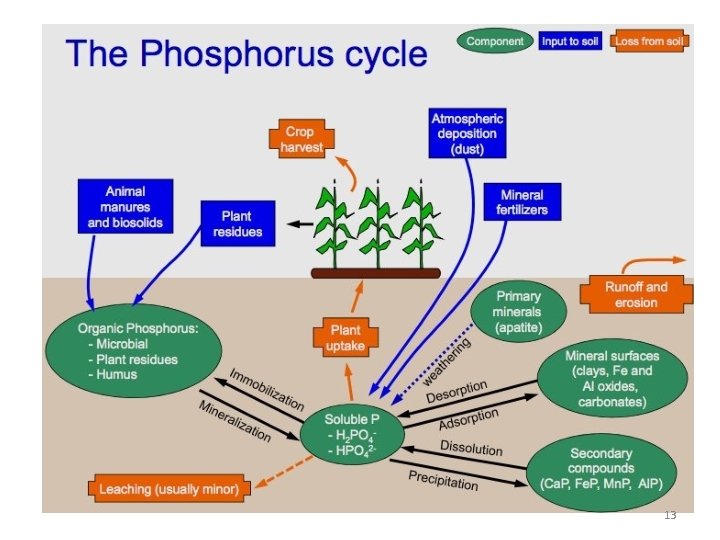
13
Species and genus concept • A species is often defined as the largest group of organisms where two individuals are capable of reproducing fertile offspring, typically using sexual reproduction. • Genus can be defined as a group of animal that belong to the same family but cannot reproduce viable fertile offspring. • Genus ranks above species and below family, and is denoted by a capitalized Latin name. • Kingdom Phylum Class Order Family Genus Species 14
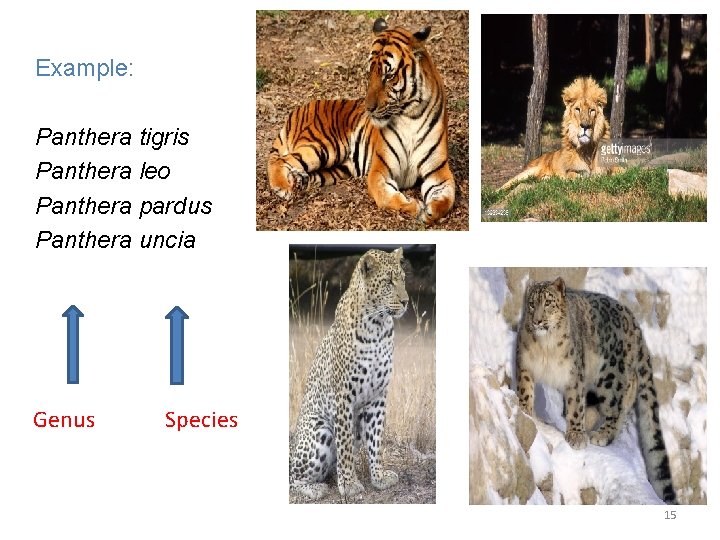
Example: Panthera tigris Panthera leo Panthera pardus Panthera uncia Genus Species 15
Habitat • A habitat is an ecological area that is inhabited by a particular species of animal or plant where essential resources are present for survival. • You might think of an animal's habitat as its "home" or its "address" in the community. • Habitats can be very different in size, from a small pond (for a tadpole) to an entire forest (for a tiger). • Habitat must have four essential things: 1. Food 2. Water 3. Cover 4. Space 16
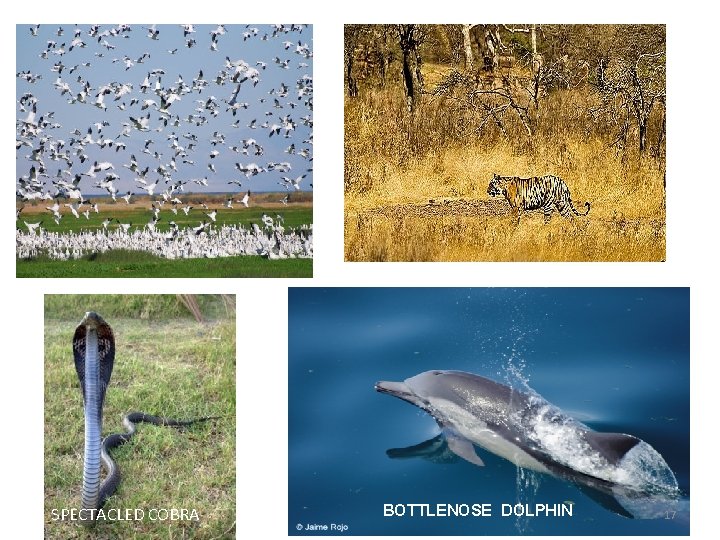
SPECTACLED COBRA BOTTLENOSE DOLPHIN 17

Thanks 18
- Slides: 18