
Biogas to Energy at Municipal Waste Water Treatment
Biogas to Energy at Municipal Waste Water Treatment Works A Toolkit for Municipalities to Assess the Potential at Individual Plants Presentation
OUTLINE 1. What is Biogas? 2. Biogas to Energy at a WWTW 3. Assessment of biogas to energy potential at a WWTW 4. Licensing and Regulatory Framework 5. Results of the biogas to energy potential assessment tool 6. Recommendations and Way Forward 2
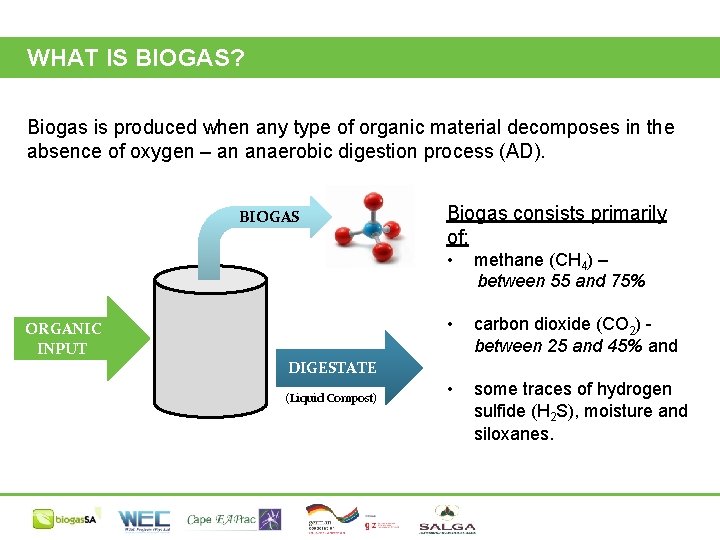
WHAT IS BIOGAS? Biogas is produced when any type of organic material decomposes in the absence of oxygen – an anaerobic digestion process (AD). BIOGAS ORGANIC INPUT Biogas consists primarily of: • methane (CH 4) – between 55 and 75% • carbon dioxide (CO 2) between 25 and 45% and • some traces of hydrogen sulfide (H 2 S), moisture and siloxanes. DIGESTATE (Liquid Compost)
TYPICAL FEEDSTOCKS (INPUT) Sewerage: domestic, municipal, schools, hotels, etc Food waste: domestic & industrial / commercial, incl. fats and oils Manure: pig, cattle - dairy or feedlot, chicken, etc Agricultural: vegetables, fruit, maize, sugar cane, etc Commercial: abattoirs, cheese factories, breweries, wine estates, processing plants, fruit & veg packaging plants, etc
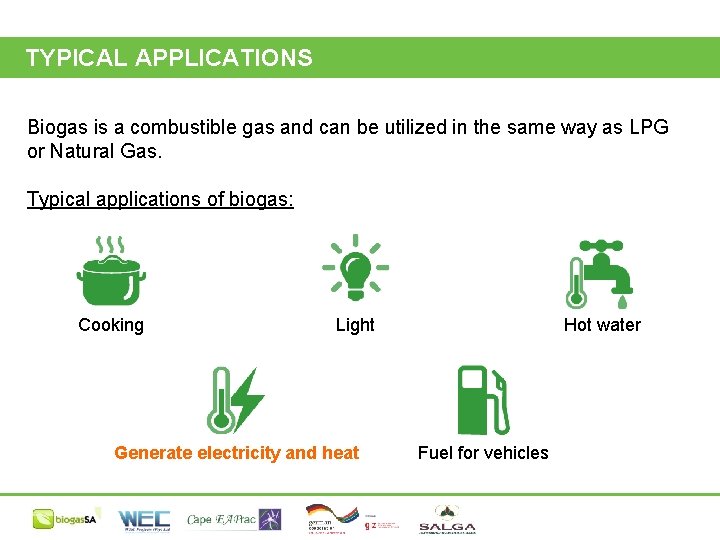
TYPICAL APPLICATIONS Biogas is a combustible gas and can be utilized in the same way as LPG or Natural Gas. Typical applications of biogas: Cooking Light Generate electricity and heat Hot water Fuel for vehicles
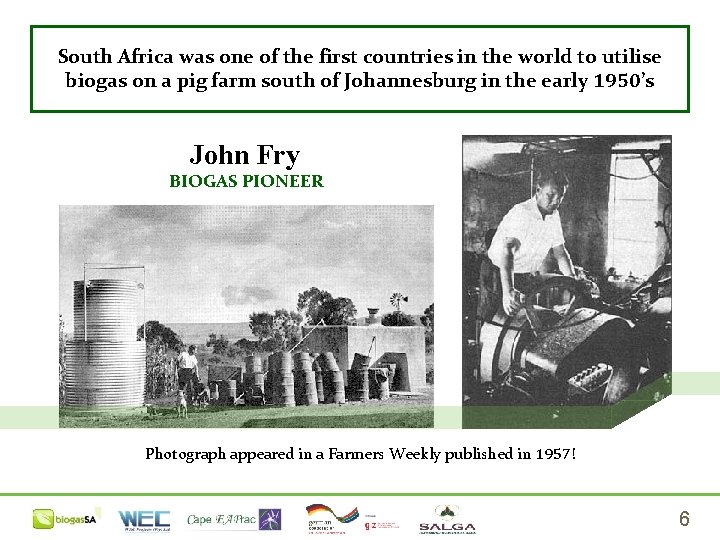
South Africa was one of the first countries in the world to utilise biogas on a pig farm south of Johannesburg in the early 1950’s John Fry BIOGAS PIONEER Photograph appeared in a Farmers Weekly published in 1957! 6
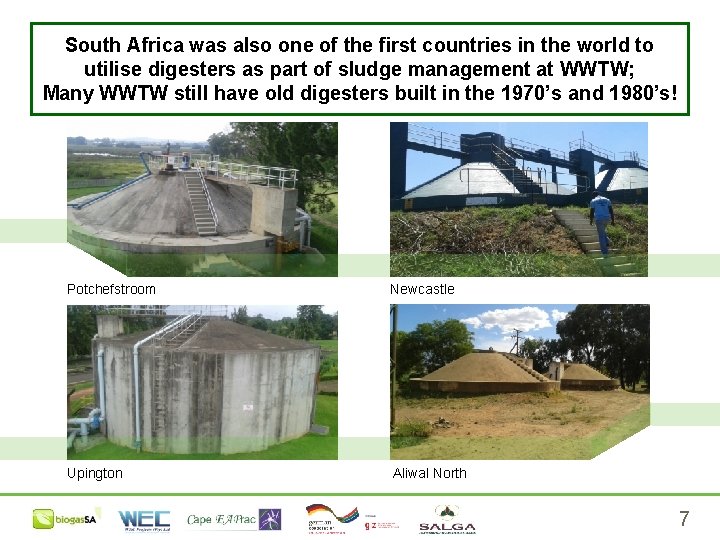
South Africa was also one of the first countries in the world to utilise digesters as part of sludge management at WWTW; Many WWTW still have old digesters built in the 1970’s and 1980’s! Potchefstroom Newcastle Upington Aliwal North 7
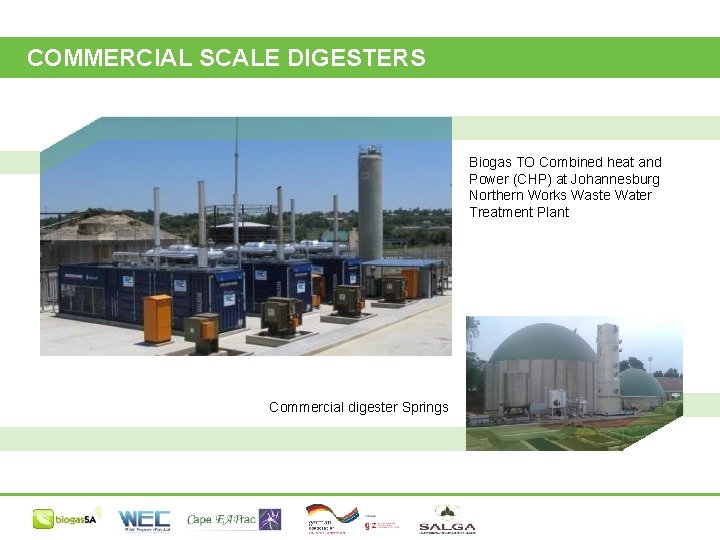
COMMERCIAL SCALE DIGESTERS Biogas TO Combined heat and Power (CHP) at Johannesburg Northern Works Waste Water Treatment Plant Commercial digester Springs
OUTLINE 1. What is Biogas? 2. Biogas to Energy at a WWTW 3. Assessment of biogas to energy potential at a WWTW 4. Licensing and Regulatory Framework 5. Results of the biogas to energy potential assessment tool 6. Recommendations and Way Forward 9
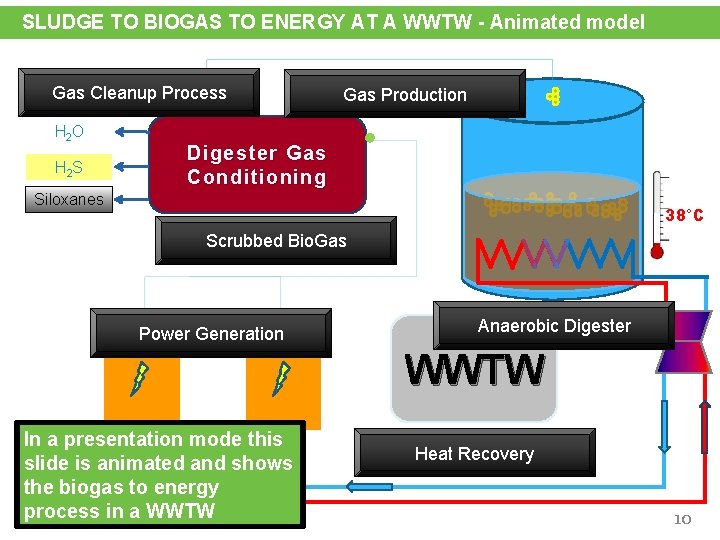
SLUDGE TO BIOGAS TO ENERGY AT A WWTW - Animated model Gas Cleanup Process H 2 O Gas Production Digester Gas Conditioning H 2 S Siloxanes 38°C Scrubbed Bio. Gas Power Generation Gen. Set In a presentation mode this slide is animated and shows the biogas to energy process in a WWTW Anaerobic Digester WWTW Heat Recovery 10
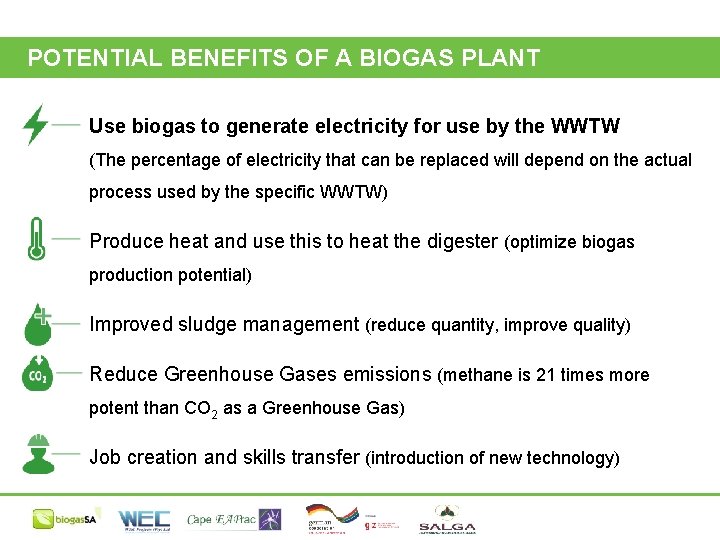
POTENTIAL BENEFITS OF A BIOGAS PLANT Use biogas to generate electricity for use by the WWTW (The percentage of electricity that can be replaced will depend on the actual process used by the specific WWTW) Produce heat and use this to heat the digester (optimize biogas production potential) Improved sludge management (reduce quantity, improve quality) Reduce Greenhouse Gases emissions (methane is 21 times more potent than CO 2 as a Greenhouse Gas) Job creation and skills transfer (introduction of new technology)
OUTLINE 1. What is Biogas? 2. Biogas to Energy at a WWTW 3. Assessment of biogas to energy potential at a WWTW 4. Licensing and Regulatory Framework 5. Results of the biogas to energy potential assessment tool 6. Recommendations and Way Forward 12
BIOGAS POTENTIAL ASSESSMENT The ultimate viability of establishing a cogeneration plant from biogas at a municipal WWTW is primarily dependant on the quantity and quality of sludge being produced by the works, which can then be used as feedstock for the biogas digester. The quantity and quality in turn is highly dependant on the specific treatment processes used by each WWTW. GIZ, SALGA and the service providers involved do not take any responsibility for the results of the tool. These results highly depend on the assumption and need to be verified through an in-depth assessment.
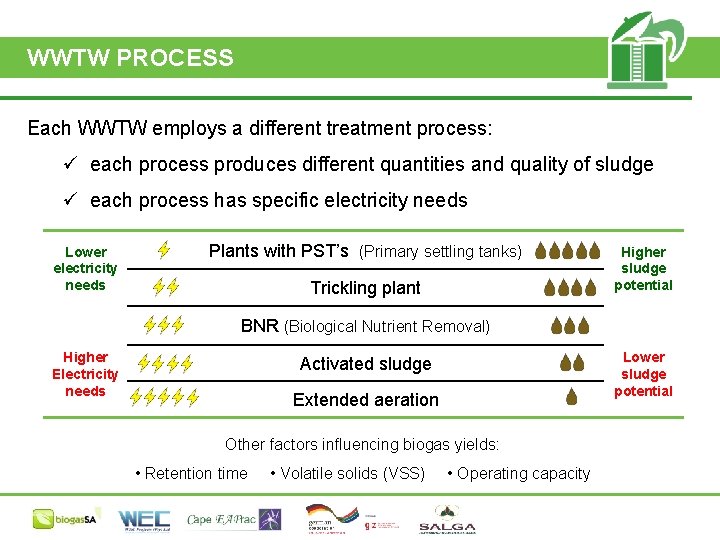
WWTW PROCESS Each WWTW employs a different treatment process: ü each process produces different quantities and quality of sludge ü each process has specific electricity needs Lower electricity needs Plants with PST’s (Primary settling tanks) Trickling plant Higher sludge potential BNR (Biological Nutrient Removal) Higher Electricity needs Lower sludge potential Activated sludge Extended aeration Other factors influencing biogas yields: • Retention time • Volatile solids (VSS) • Operating capacity
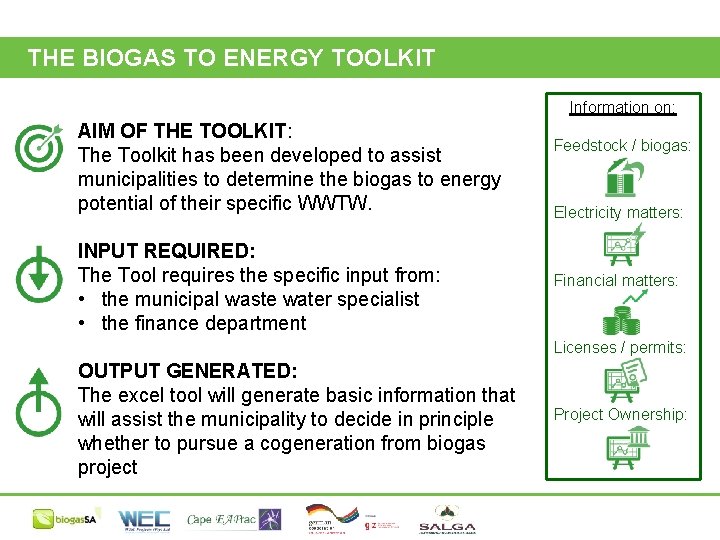
THE BIOGAS TO ENERGY TOOLKIT Information on: AIM OF THE TOOLKIT: The Toolkit has been developed to assist municipalities to determine the biogas to energy potential of their specific WWTW. INPUT REQUIRED: The Tool requires the specific input from: • the municipal waste water specialist • the finance department Feedstock / biogas: Electricity matters: Financial matters: Licenses / permits: OUTPUT GENERATED: The excel tool will generate basic information that will assist the municipality to decide in principle whether to pursue a cogeneration from biogas project Project Ownership:
OUTLINE 1. What is Biogas? 2. Biogas to Energy at a WWTW 3. Assessment of biogas to energy potential at a WWTW 4. Licensing and Regulatory Framework 5. Results of the biogas to energy potential assessment tool 6. Recommendations and Way Forward 16
LICENSES AND AUTHORISATIONS: • The authorisations required (depending on size and location of the project): • • • Environmental Authorisation (EA) Water Use License (WULA) or General Authorisation (GA) Air Emissions License (AEL) • Existing WWTW must be lawful i. e. have the necessary approvals / licenses / permits to operate • The relevant Acts are amended on a continuous basis • The need for specific licenses and authorisation is triggered by project and waste amounts. Each project will require different licenses.
OUTLINE 1. What is Biogas? 2. Biogas to Energy at a WWTW 3. Assessment of biogas to energy potential at a WWTW 4. Licensing and Regulatory Framework 5. Results of the biogas to energy potential assessment tool 6. Recommendations and Way Forward 18
RESULTS OF THE BIOGAS POTENTIAL ASSESSMENT TOOL MAIN TECHNICAL ASSUMPTIONS: • Number of modules: xx modules • Total installed capacity: xxx Ml/day - Current inflow: xxx Ml/day • Main processes used: • Sludge management processes: (and any current challenges with sludge if any): • Existing operational digesters: xxx digesters (not) heated / (not) mixed • Electricity consumption (in k. Wh and/or Rands): xxx k. Wh/month or xxx rands/months 19
RESULTS OF THE BIOGAS POTENTIAL ASSESSMENT TOOL FLOW DIAGRAM N E M I C E P S 20
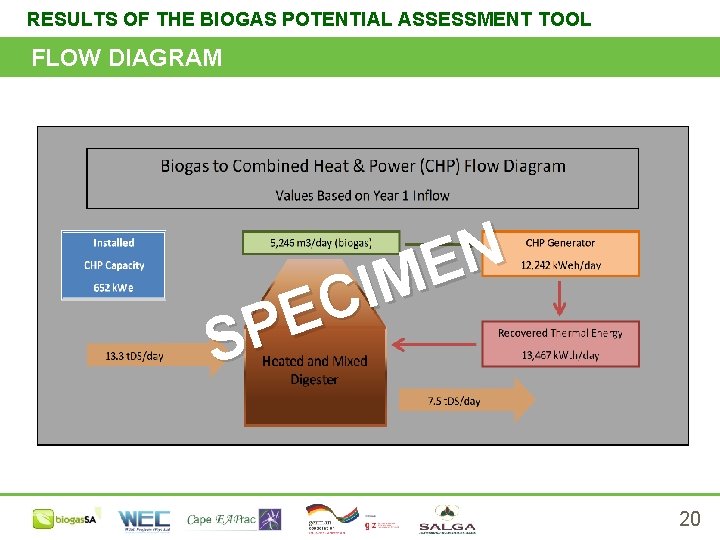
RESULTS OF THE BIOGAS POTENTIAL ASSESSMENT TOOL RESULTS FROM THE PREVIOUS FLOW DIAGRAM • A biogas plant could results in electricity saving of XXXXX KWh/day (or per month or per year) • This could lead to savings of XXXXXX rands/year (using average electricity price) • The installed capacity of the engine could be XXX k. We • Sludge production can be reduced by XXX tons of dry solid / day 21
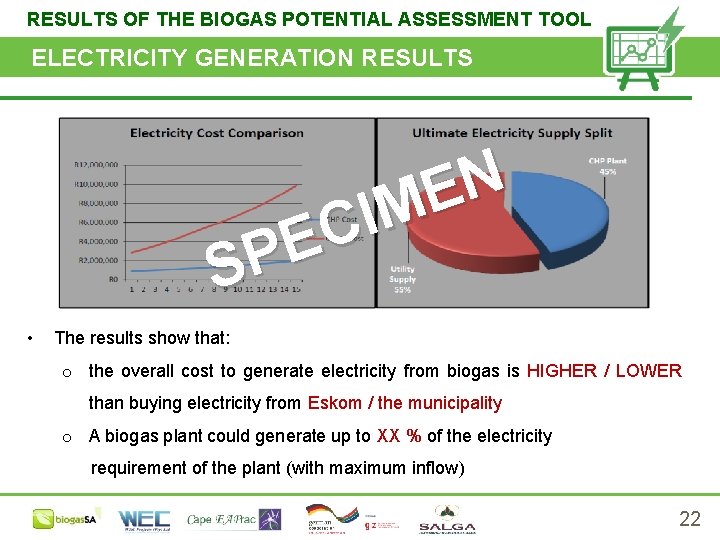
RESULTS OF THE BIOGAS POTENTIAL ASSESSMENT TOOL ELECTRICITY GENERATION RESULTS N E M I C E SP • The results show that: o the overall cost to generate electricity from biogas is HIGHER / LOWER than buying electricity from Eskom / the municipality o A biogas plant could generate up to XX % of the electricity requirement of the plant (with maximum inflow) 22
RESULTS OF THE BIOGAS POTENTIAL ASSESSMENT TOOL MAIN FINANCIAL RESULTS N E M I C E P S 23
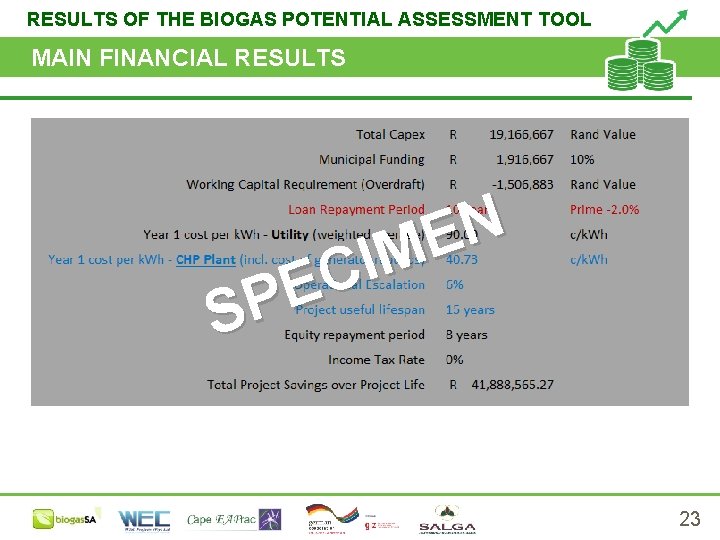
RESULTS OF THE BIOGAS POTENTIAL ASSESSMENT TOOL MAIN FINANCIAL RESULTS • Total investment costs: xxx million Rands • Total operational cost: xxx Rands/month • Average electricity price currently paid by the WWTW: xxx c/k. Wh • Average electricity price from CHP engines: xxx c/k. Wh • Total project savings over project life: xxx million Rands • Repayment period (payback period): xx years 24
OUTLINE 1. What is Biogas? 2. Biogas to Energy at a WWTW 3. Assessment of biogas to energy potential at a WWTW 4. Licensing and Regulatory Framework 5. Results of the biogas to energy potential assessment tool 6. Recommendations and Way Forward 25
RECOMMENDED BUSINESS MODEL Because of the project size and in order to save time and complicated contractual issues, a successful business model has been found to be: • Full ownership of the plant by the municipality • Investment by the municipality • Appointment, through competitive tender, of a service provider to design, build, manage and operate the plant for a period of 7 – 10 years
WAY FORWARD • This is just a high level evaluation • Should a decision be taken for the project, an in-depth study should be conducted to: o Confirm these results o Identify additional opportunities and optimisation options which could lead to higher biogas potential o Prepare the tender documents o Secure funding
ANY QUESTIONS ON THE TOOL? For GIZ: Contact: Sofja Giljova Cell: 012 423 5900 Email: sofja. giljova@giz. de or sagen@giz. de For SALGA: Contact: Aurelie Ferry Cell: 012 369 8000 Email: aferry@salga. org. za 28
- Slides: 28