
BIOGAS PRODUCTION Introduction n n Animal and agricultural
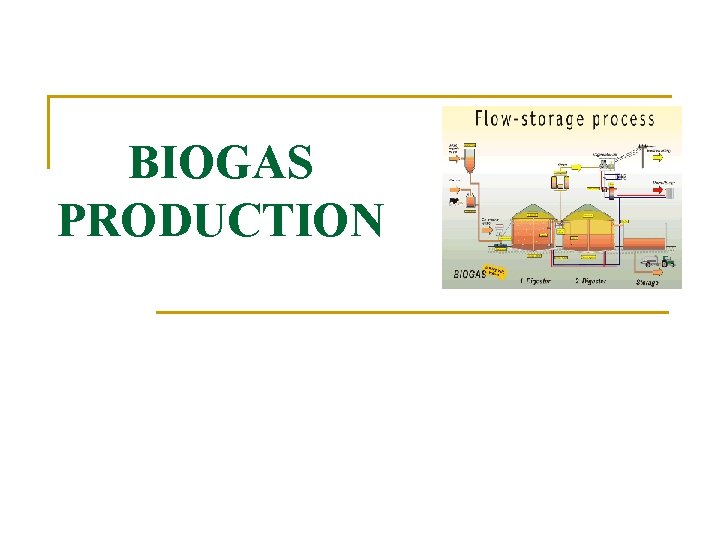
BIOGAS PRODUCTION
Introduction n n Animal and agricultural wastes constitute a high proportion of biomass and their utilization and recycling is important for economical and environmental aspects. Anaerobic digestion Methanogens the most widely used processes for treating these wastes and represents an attractive method for treating organic wastes for biogas production as alternative energy sources
Waste treatment: n n Anaerobic digestion is usually the basic biological treatment process for high organic strength wastewaters to produce biogas methane gas. The process can be carried out in relatively inexpensive and simple reactor design and operating procedures.
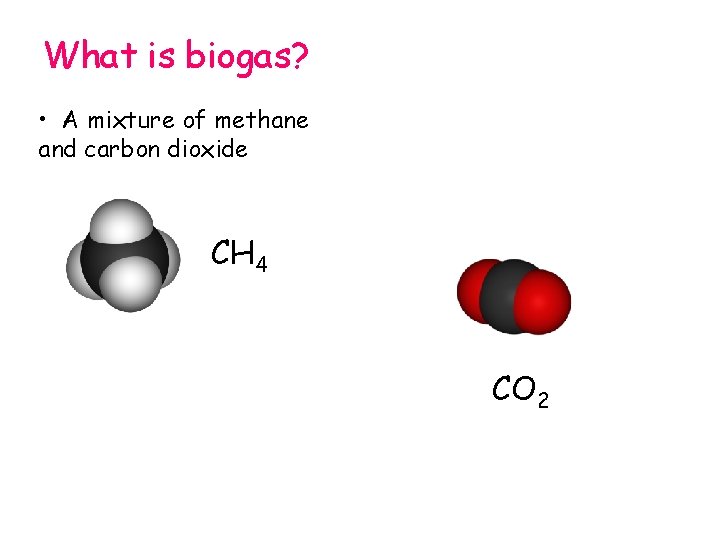
What is biogas? • A mixture of methane and carbon dioxide CH 4 CO 2
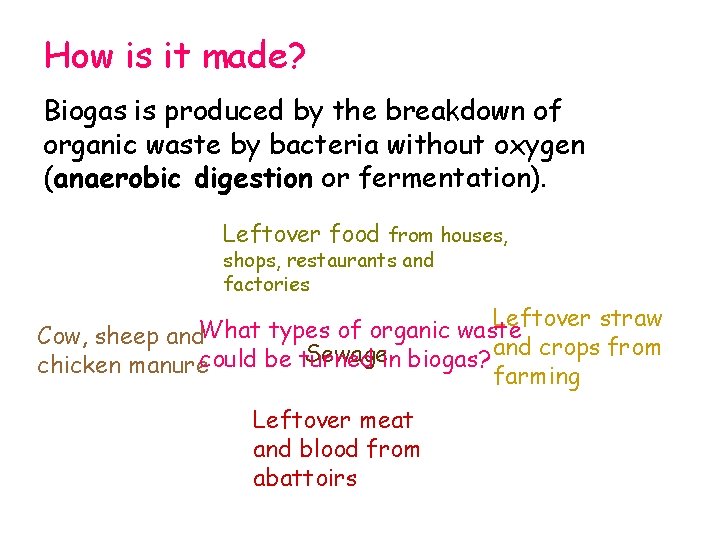
How is it made? Biogas is produced by the breakdown of organic waste by bacteria without oxygen (anaerobic digestion or fermentation). Leftover food from houses, shops, restaurants and factories Leftover straw What types of organic waste Cow, sheep and crops from Sewage could be turned in biogas? chicken manure farming Leftover meat and blood from abattoirs
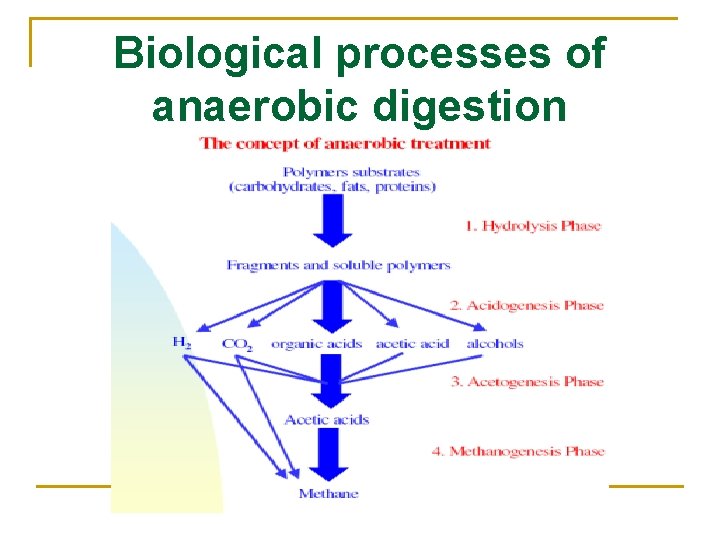
Biological processes of anaerobic digestion
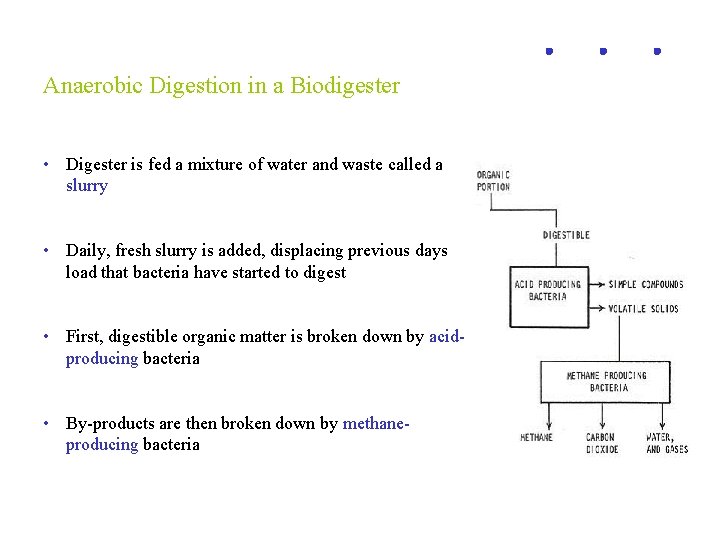
Anaerobic Digestion in a Biodigester • Digester is fed a mixture of water and waste called a slurry • Daily, fresh slurry is added, displacing previous days load that bacteria have started to digest • First, digestible organic matter is broken down by acidproducing bacteria • By-products are then broken down by methaneproducing bacteria
How Much Biogas Can I Get From My Waste? • Amount of biogas depends on the waste itself and design of the digester. • Some digesters can yield 20 liters of biogas per kilogram of waste up to 800 liters per kilogram. • Factors: waste quality, digester design, temperature, system operation, presence of oxygen.

Methanogens n n n Methanogens are group of microbes known as methanogens that produce methane gas They can be used as sources of biogas This would be a renewable source of energy

Classification n. Methanogens belong to the Archaea group n. Examples Methanococcus jannaschii Methanobacterium thermoautotrophicum The prokaryote kingdom has been split into several further kingdoms (e. g. Archaea and Eubacteria) based on the genetics and biochemistry of microbes Methanogens can also utilize methane as a substrate in conjunction with the reduction of sulfate and nitrate.
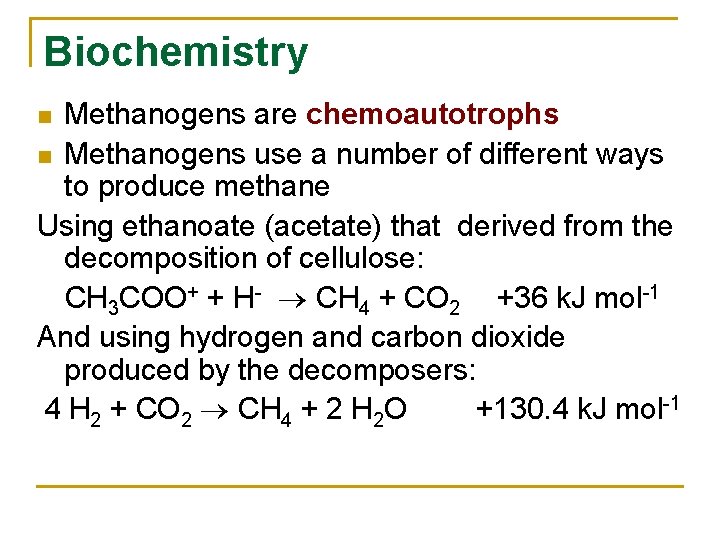
Biochemistry Methanogens are chemoautotrophs n Methanogens use a number of different ways to produce methane Using ethanoate (acetate) that derived from the decomposition of cellulose: CH 3 COO+ + H- CH 4 + CO 2 +36 k. J mol-1 And using hydrogen and carbon dioxide produced by the decomposers: 4 H 2 + CO 2 CH 4 + 2 H 2 O +130. 4 k. J mol-1 n
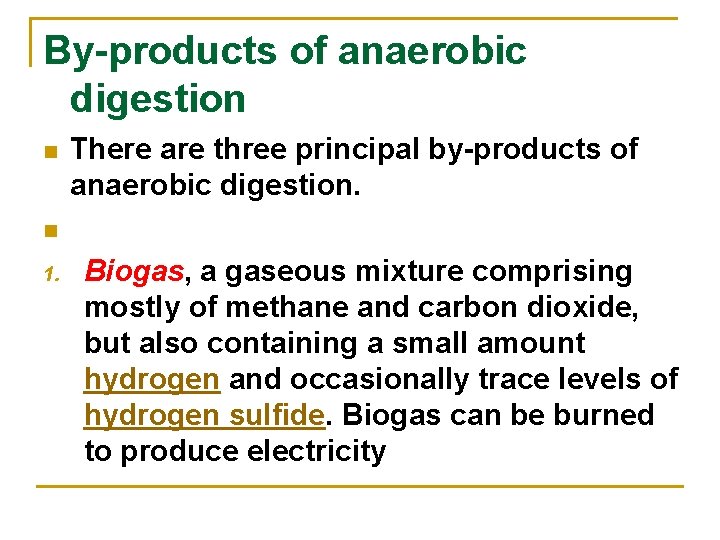
By-products of anaerobic digestion n n 1. There are three principal by-products of anaerobic digestion. Biogas, a gaseous mixture comprising mostly of methane and carbon dioxide, but also containing a small amount hydrogen and occasionally trace levels of hydrogen sulfide. Biogas can be burned to produce electricity
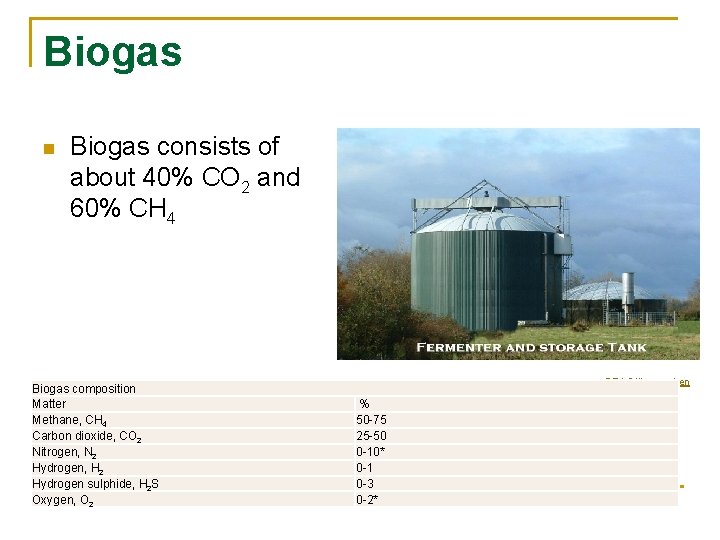
Biogas n Biogas consists of about 40% CO 2 and 60% CH 4 Biogas composition Matter Methane, CH 4 Carbon dioxide, CO 2 Nitrogen, N 2 Hydrogen, H 2 Hydrogen sulphide, H 2 S Oxygen, O 2 BEA Dithmarschen % 50 -75 25 -50 0 -10* 0 -1 0 -3 0 -2*
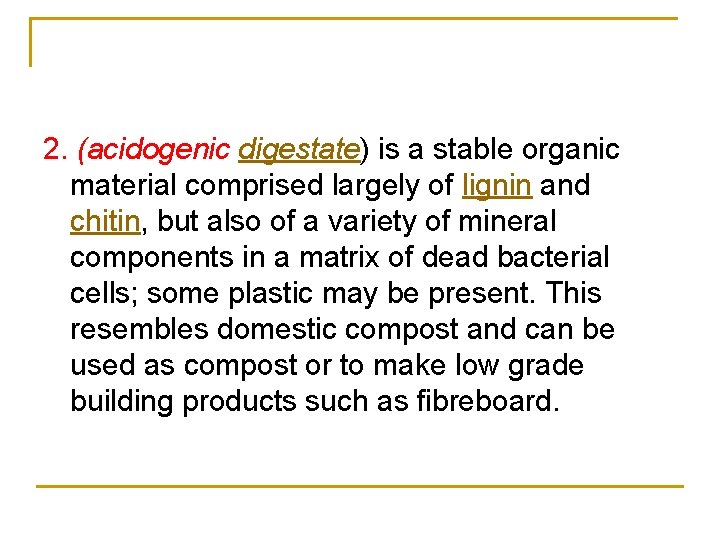
2. (acidogenic digestate) is a stable organic material comprised largely of lignin and chitin, but also of a variety of mineral components in a matrix of dead bacterial cells; some plastic may be present. This resembles domestic compost and can be used as compost or to make low grade building products such as fibreboard.
3. A liquid (methanogenic digestate) that is rich in nutrients and can be an excellent fertilizer dependent on the quality of the material being digested.
Biogas production n n n Requirements & Materials: Anaerobic fermenter (methanogens and decomposers) anaerobic conditions an optimum temperature of 30 - 35°C an optimum p. H of 6. 5 to 8 This needs to be monitored as the decomposers produce acids and they work faster than the methanogens consume the acids organic waste (biomass) e. g. sewage, wood , animal wastes and olive oil wastes
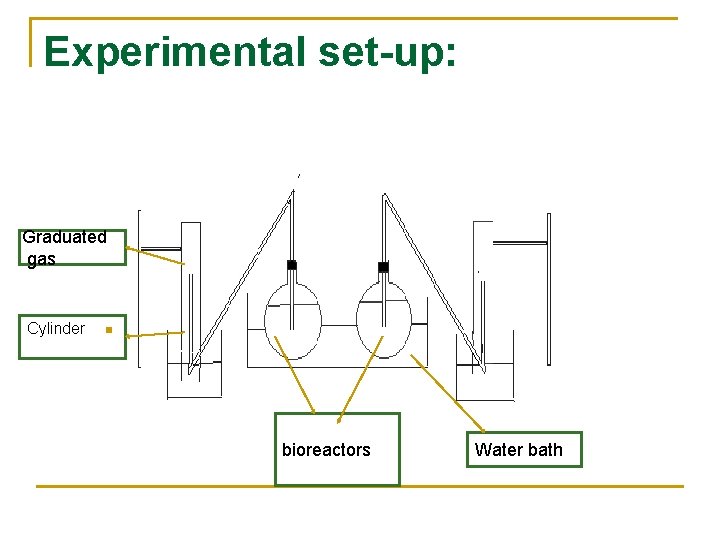
Experimental set-up: Graduated gas Cylinder n bioreactors Water bath
- Slides: 17