
Biofumigation Julie Finnigan Kelvin Montagu Copyright AHR Biofumigation
Biofumigation Julie Finnigan & Kelvin Montagu Copyright © AHR
“Biofumigation offers the opportunity to improve soil health, lower the incidence and severity of soil borne pests and diseases, and achieve sustainable crop production outcomes”. Copyright © AHR
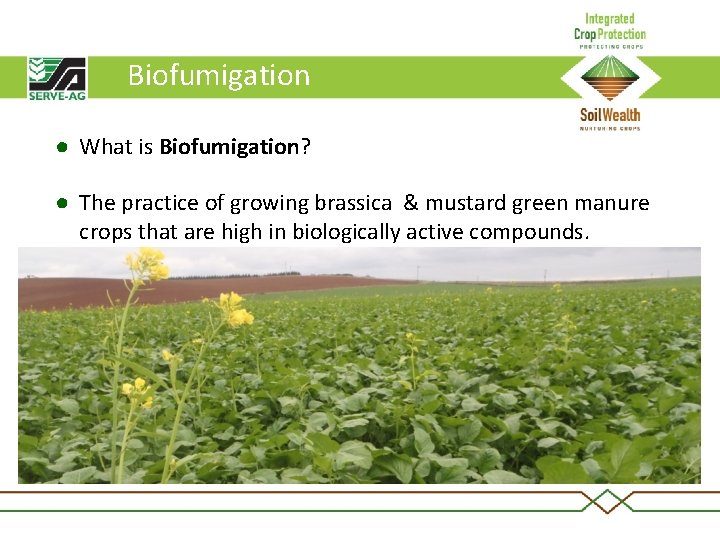
Biofumigation ● What is Biofumigation? ● The practice of growing brassica & mustard green manure crops that are high in biologically active compounds. Copyright © AHR
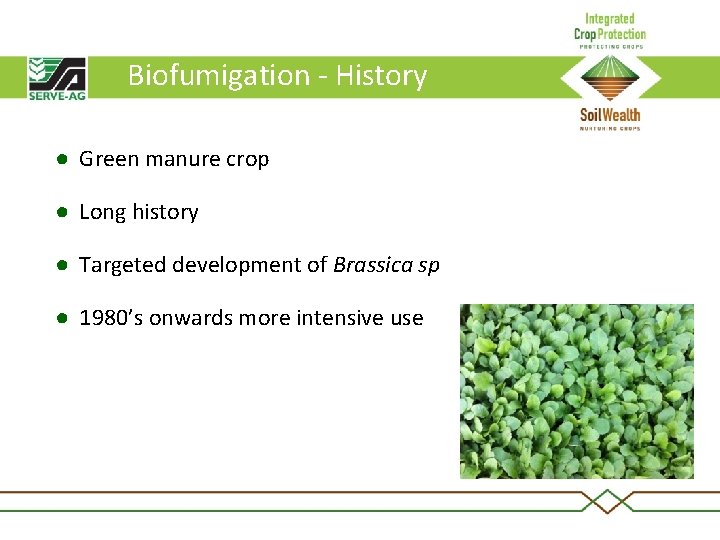
Biofumigation - History ● Green manure crop ● Long history ● Targeted development of Brassica sp ● 1980’s onwards more intensive use Copyright © AHR
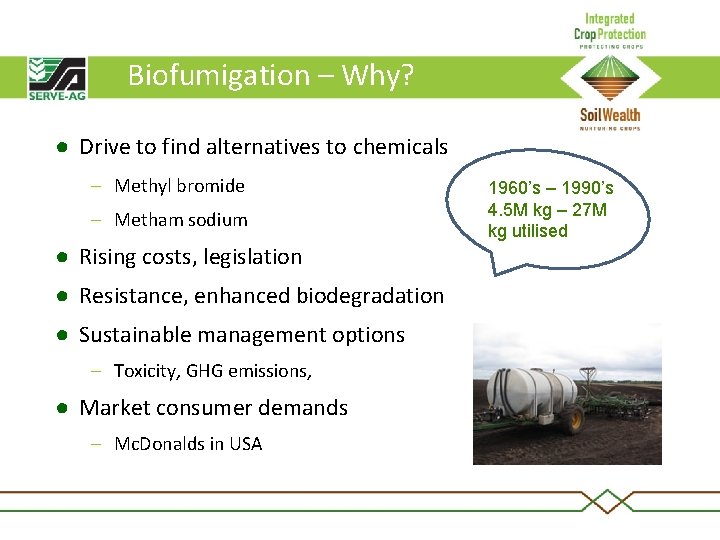
Biofumigation – Why? ● Drive to find alternatives to chemicals – Methyl bromide 1960’s – 1990’s 4. 5 M kg – 27 M kg utilised – Metham sodium ● Rising costs, legislation ● Resistance, enhanced biodegradation ● Sustainable management options – Toxicity, GHG emissions, ● Market consumer demands – Mc. Donalds in USA Copyright © AHR
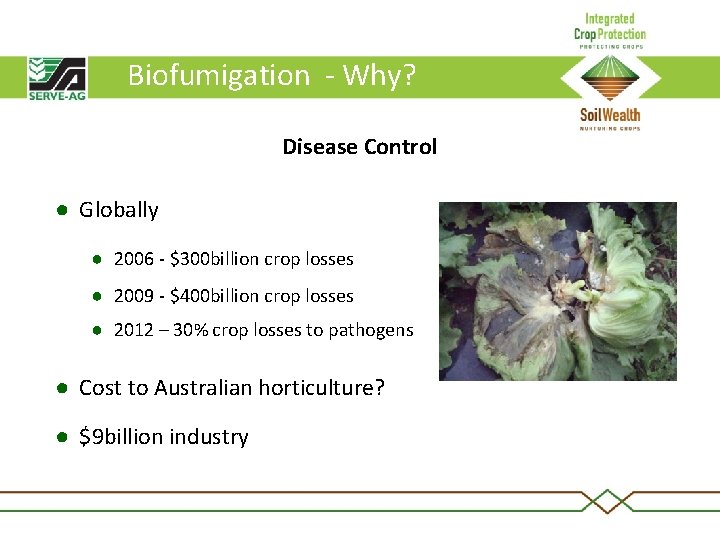
Biofumigation - Why? Disease Control ● Globally ● 2006 - $300 billion crop losses ● 2009 - $400 billion crop losses ● 2012 – 30% crop losses to pathogens ● Cost to Australian horticulture? ● $9 billion industry Copyright © AHR
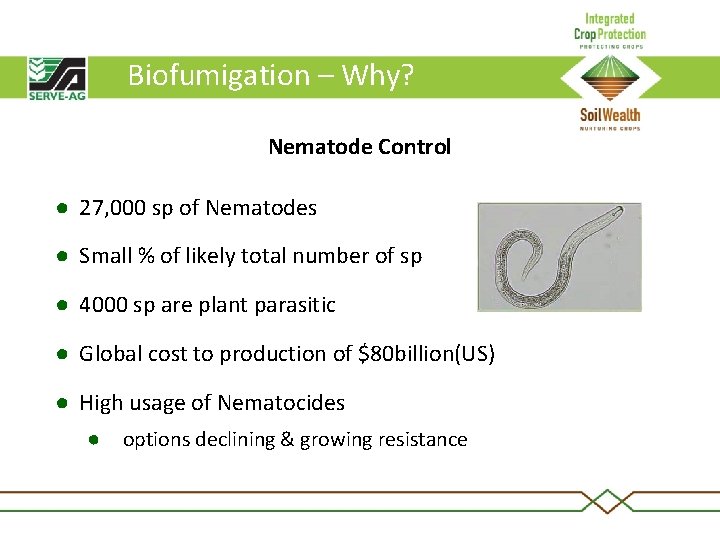
Biofumigation – Why? Nematode Control ● 27, 000 sp of Nematodes ● Small % of likely total number of sp ● 4000 sp are plant parasitic ● Global cost to production of $80 billion(US) ● High usage of Nematocides ● options declining & growing resistance Copyright © AHR
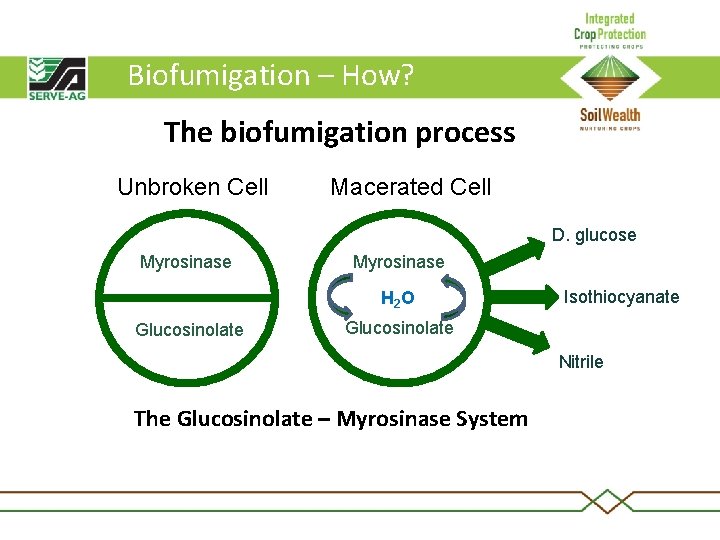
Biofumigation – How? The biofumigation process Unbroken Cell Macerated Cell D. glucose Myrosinase H 2 O Glucosinolate Isothiocyanate Glucosinolate Nitrile The Glucosinolate – Myrosinase System Copyright © AHR
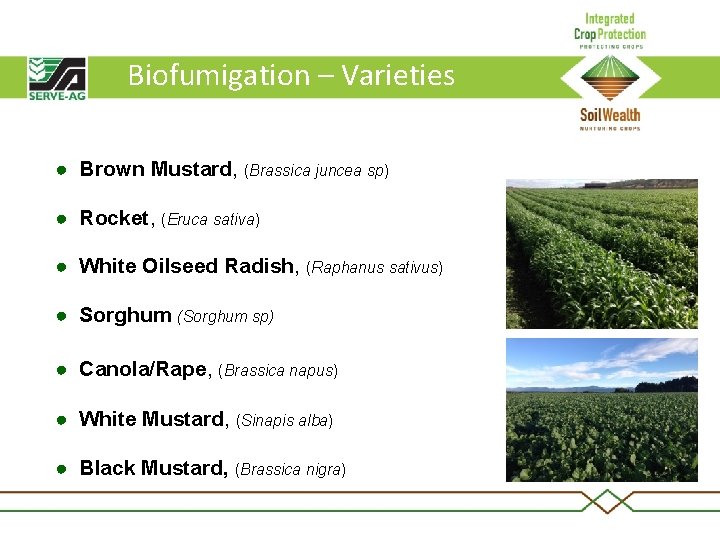
Biofumigation – Varieties ● Brown Mustard, (Brassica juncea sp) ● Rocket, (Eruca sativa) ● White Oilseed Radish, (Raphanus sativus) ● Sorghum (Sorghum sp) ● Canola/Rape, (Brassica napus) ● White Mustard, (Sinapis alba) ● Black Mustard, (Brassica nigra) Copyright © AHR
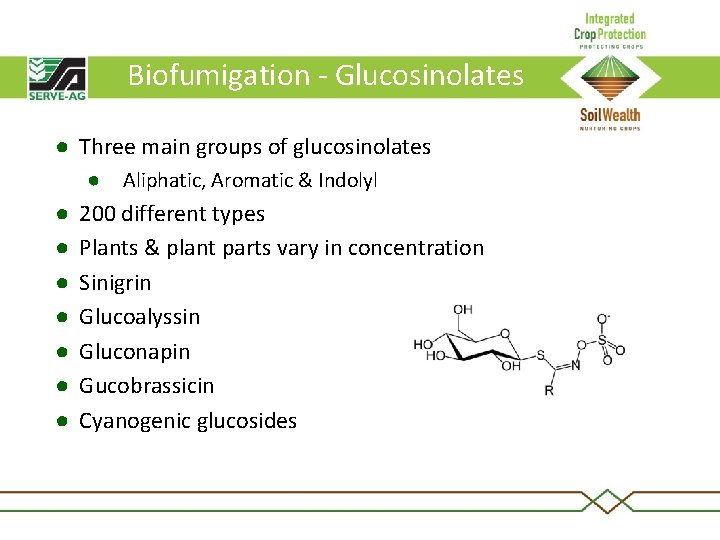
Biofumigation - Glucosinolates ● Three main groups of glucosinolates ● Aliphatic, Aromatic & Indolyl ● ● ● ● 200 different types Plants & plant parts vary in concentration Sinigrin Glucoalyssin Gluconapin Gucobrassicin Cyanogenic glucosides Copyright © AHR
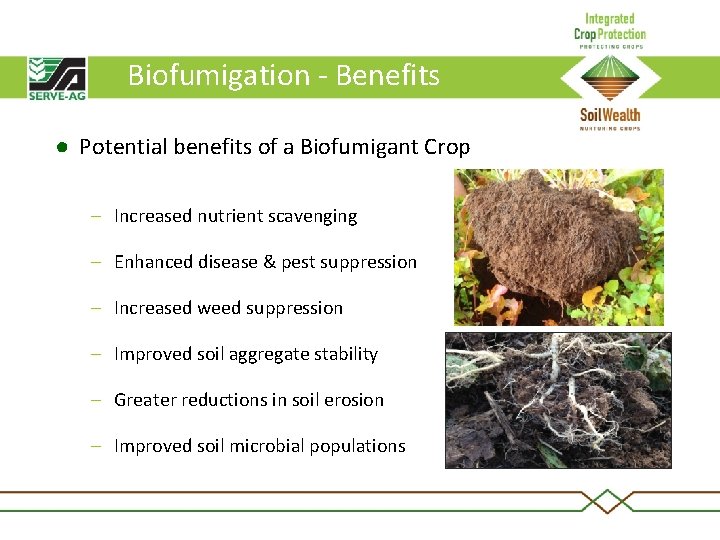
Biofumigation - Benefits ● Potential benefits of a Biofumigant Crop – Increased nutrient scavenging – Enhanced disease & pest suppression – Increased weed suppression – Improved soil aggregate stability – Greater reductions in soil erosion – Improved soil microbial populations Copyright © AHR
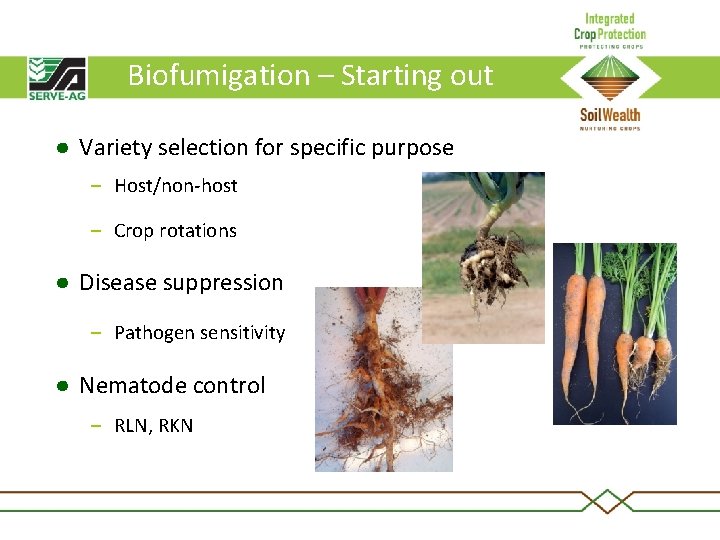
Biofumigation – Starting out ● Variety selection for specific purpose – Host/non-host – Crop rotations ● Disease suppression – Pathogen sensitivity ● Nematode control – RLN, RKN Copyright © AHR
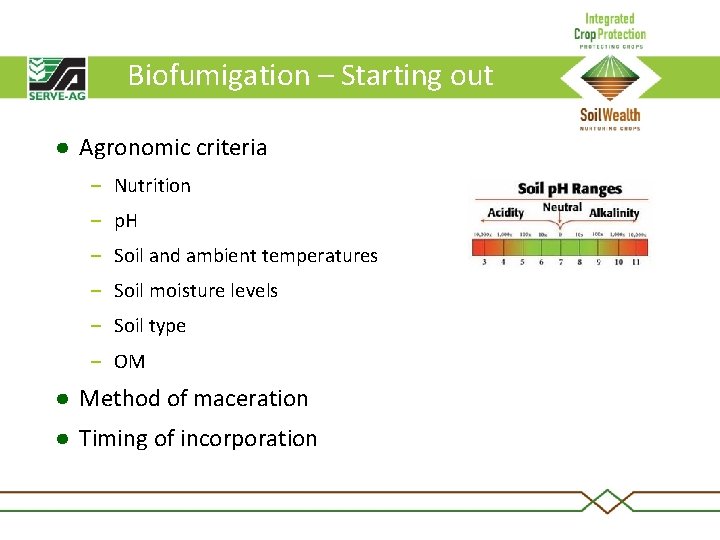
Biofumigation – Starting out ● Agronomic criteria – Nutrition – p. H – Soil and ambient temperatures – Soil moisture levels – Soil type – OM ● Method of maceration ● Timing of incorporation Copyright © AHR
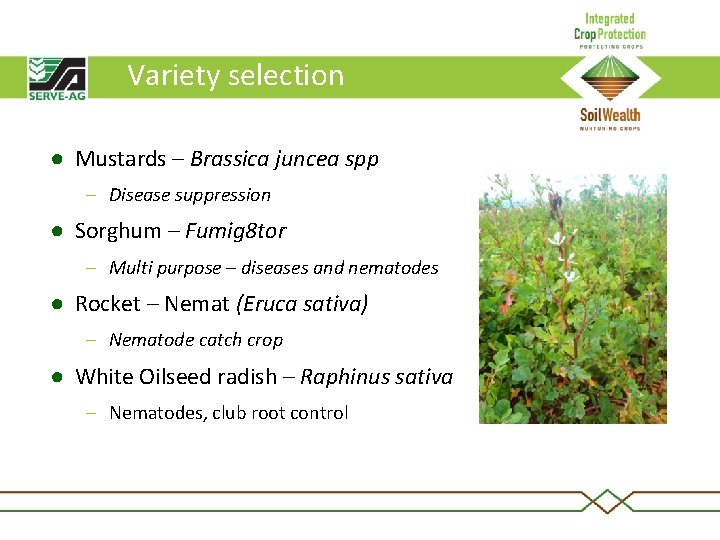
Variety selection ● Mustards – Brassica juncea spp – Disease suppression ● Sorghum – Fumig 8 tor – Multi purpose – diseases and nematodes ● Rocket – Nemat (Eruca sativa) – Nematode catch crop ● White Oilseed radish – Raphinus sativa – Nematodes, club root control Copyright © AHR
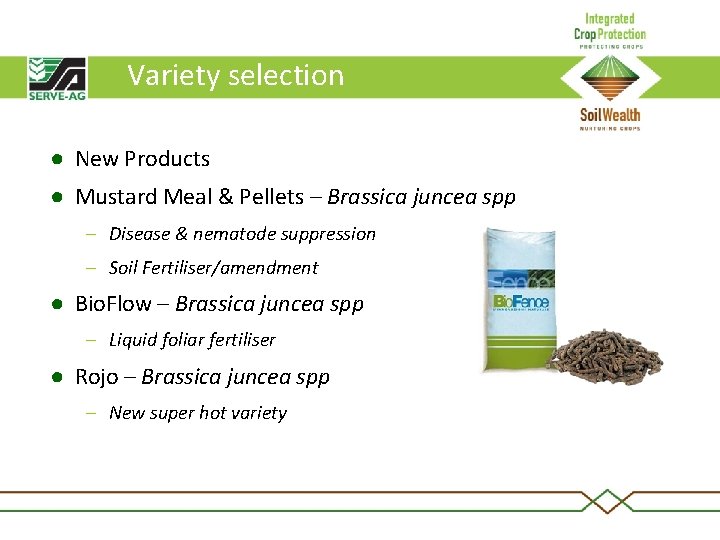
Variety selection ● New Products ● Mustard Meal & Pellets – Brassica juncea spp – Disease & nematode suppression – Soil Fertiliser/amendment ● Bio. Flow – Brassica juncea spp – Liquid foliar fertiliser ● Rojo – Brassica juncea spp – New super hot variety Copyright © AHR
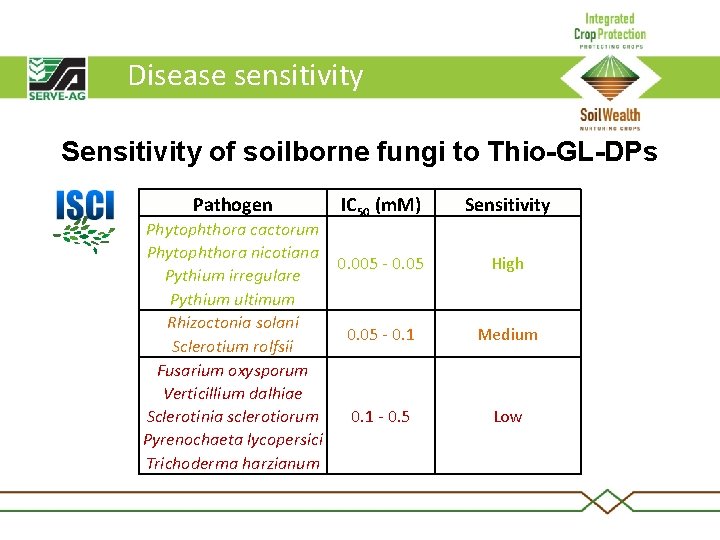
Disease sensitivity Sensitivity of soilborne fungi to Thio-GL-DPs Pathogen IC 50 (m. M) Phytophthora cactorum Phytophthora nicotiana 0. 005 - 0. 05 Pythium irregulare Pythium ultimum Rhizoctonia solani 0. 05 - 0. 1 Sclerotium rolfsii Fusarium oxysporum Verticillium dalhiae 0. 1 - 0. 5 Sclerotinia sclerotiorum Pyrenochaeta lycopersici Trichoderma harzianum Copyright © AHR Sensitivity High Medium Low
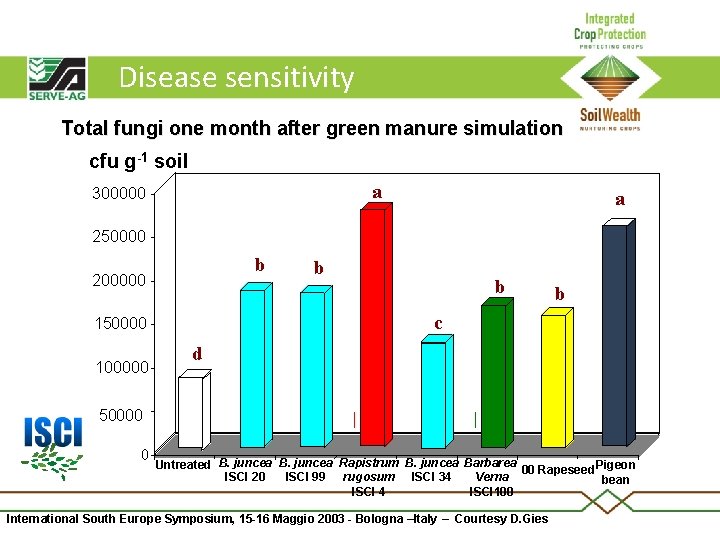
Disease sensitivity Total fungi one month after green manure simulation cfu g-1 soil a 300000 a 250000 b 200000 b b c 150000 100000 b d 50000 0 Untreated B. juncea Rapistrum B. juncea Barbarea 00 Rapeseed Pigeon ISCI 20 ISCI 99 rugosum ISCI 34 Verna bean ISCI 4 ISCI 100 International South Europe Symposium, 15 -16 Maggio 2003 - Bologna –Italy – Courtesy D. Gies
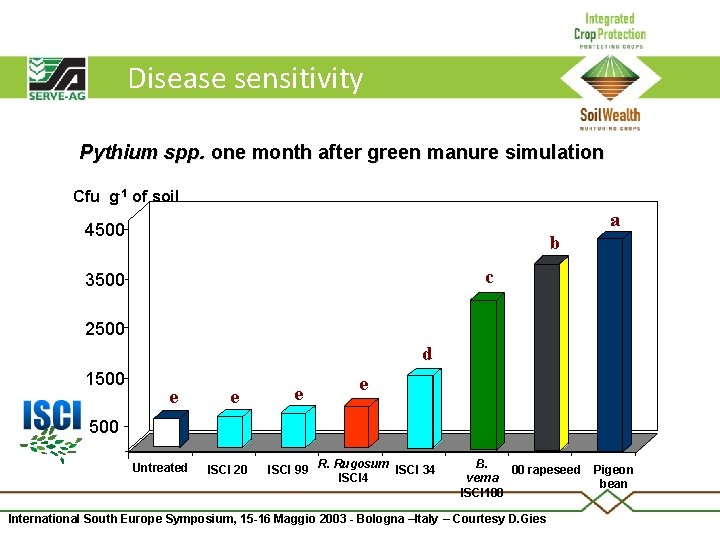
Disease sensitivity Pythium spp. one month after green manure simulation Cfu g-1 of soil a 4500 b c 3500 2500 d 1500 e e 500 Untreated ISCI 20 ISCI 99 R. Rugosum ISCI 34 ISCI 4 B. 00 rapeseed verna ISCI 100 International South Europe Symposium, 15 -16 Maggio 2003 - Bologna –Italy – Courtesy D. Gies Pigeon bean
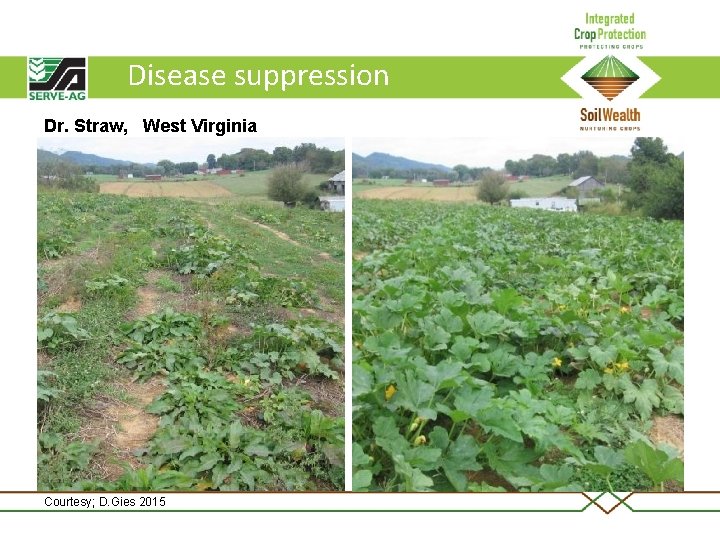
Disease suppression Dr. Straw, West Virginia Courtesy; D. Gies 2015 Copyright © AHR
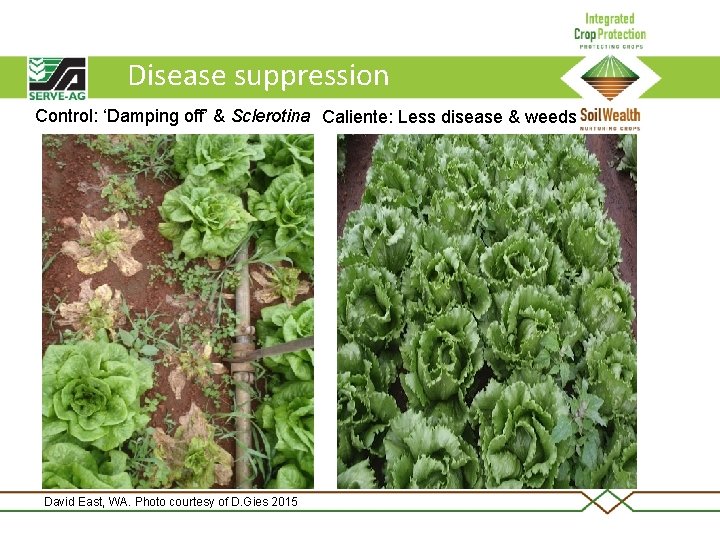
Disease suppression Control: ‘Damping off’ & Sclerotina Caliente: Less disease & weeds David East, WA. Photo courtesy of D. Gies 2015 Copyright © AHR
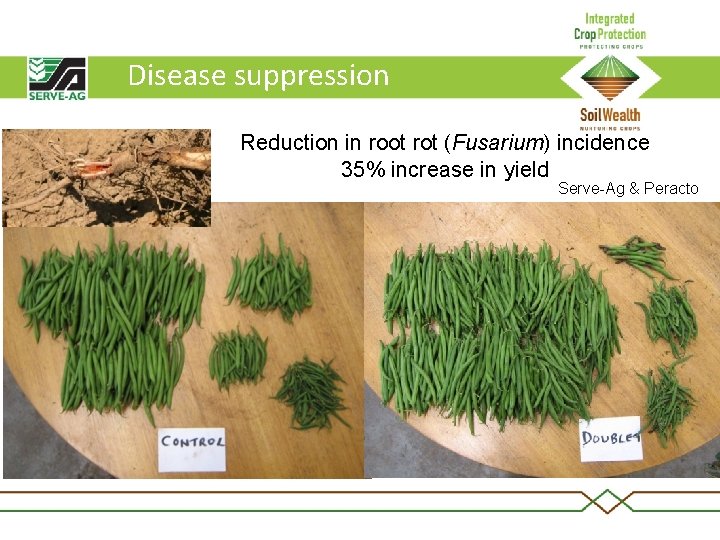
Disease suppression Reduction in root rot (Fusarium) incidence 35% increase in yield Serve-Ag & Peracto Copyright © AHR
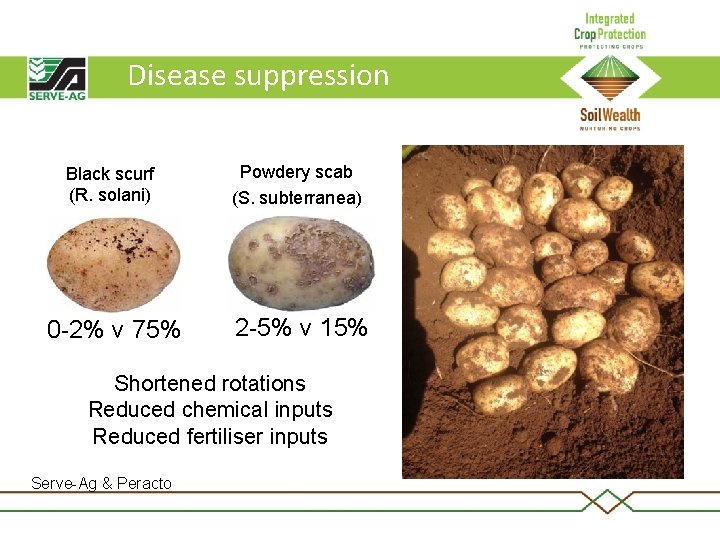
Disease suppression Black scurf (R. solani) 0 -2% v 75% Powdery scab (S. subterranea) 2 -5% v 15% Shortened rotations Reduced chemical inputs Reduced fertiliser inputs Serve-Ag & Peracto Copyright © AHR
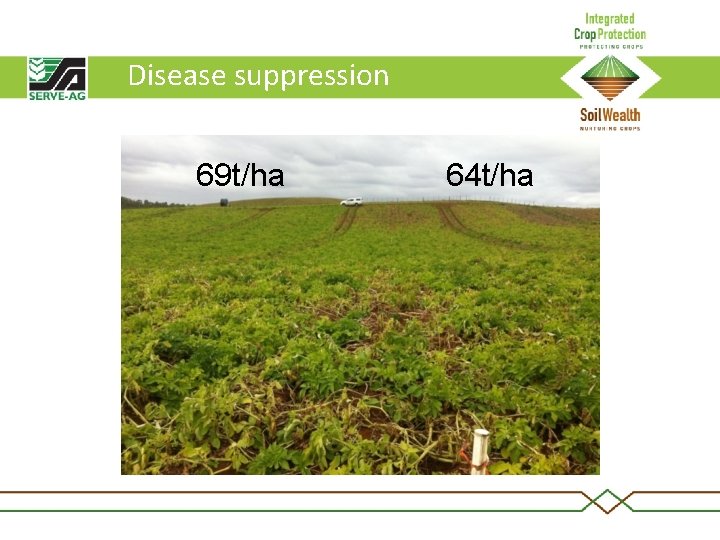
Disease suppression 69 t/ha 64 t/ha Copyright © AHR
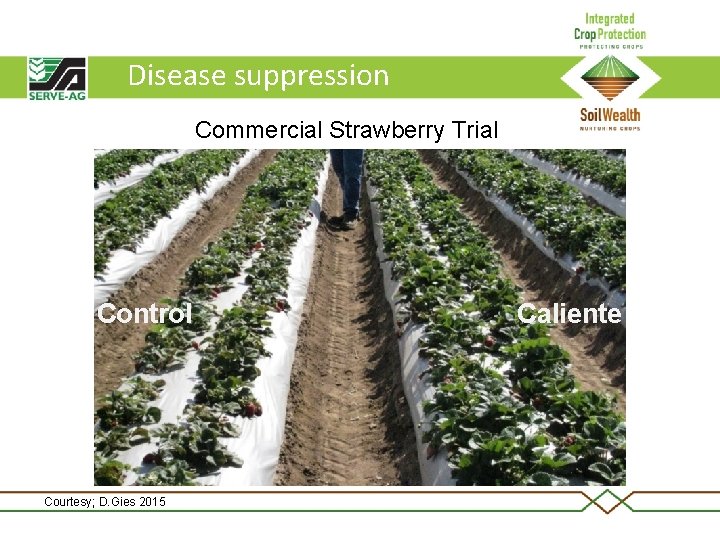
Disease suppression Commercial Strawberry Trial Control Caliente Courtesy; D. Gies 2015 Copyright © AHR
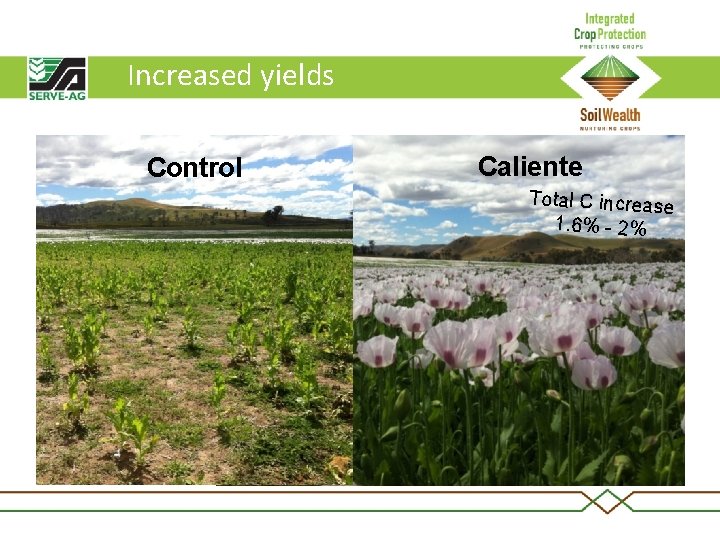
Increased yields Caliente Control Total C increase 1. 6% - 2% Copyright © AHR
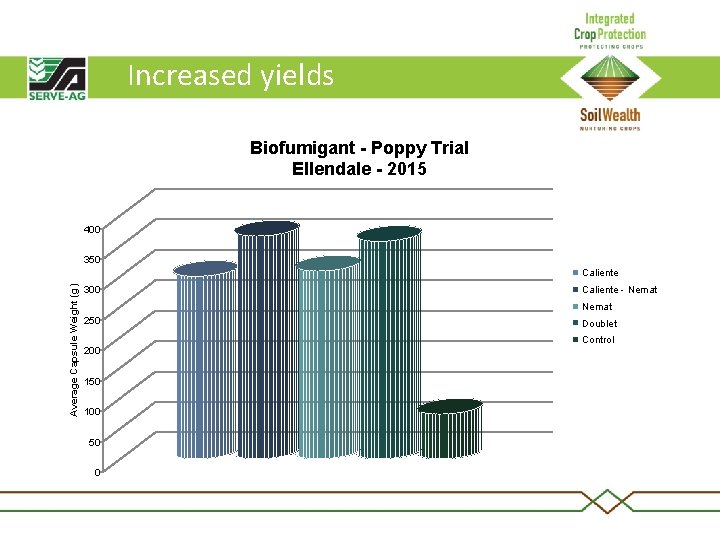
Increased yields Biofumigant - Poppy Trial Ellendale - 2015 400 350 Average Capsule Weight (g) Caliente 300 Caliente - Nemat 250 Doublet Control 200 150 100 50 0 Copyright © AHR
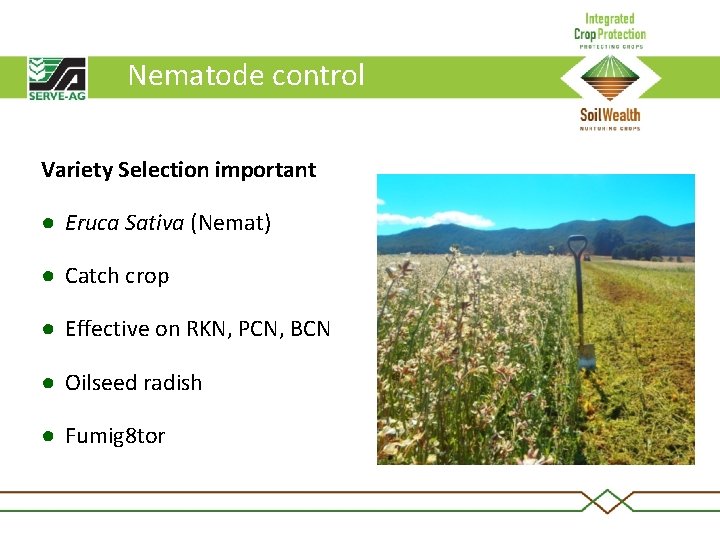
Nematode control Variety Selection important ● Eruca Sativa (Nemat) ● Catch crop ● Effective on RKN, PCN, BCN ● Oilseed radish ● Fumig 8 tor Copyright © AHR
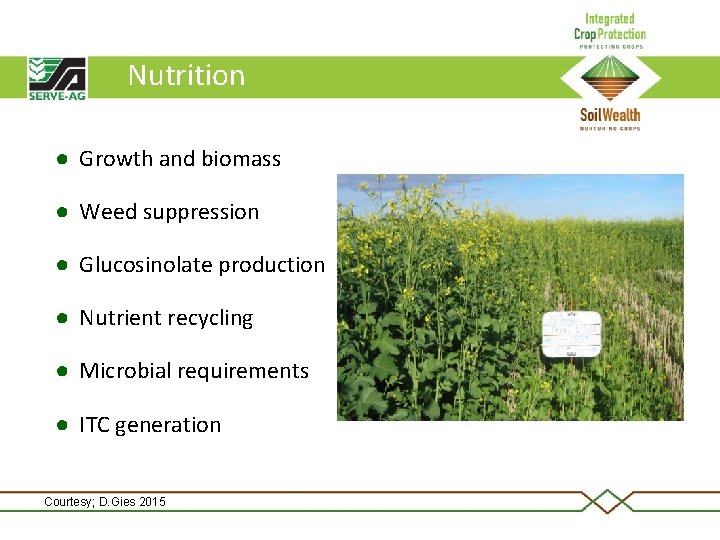
Nutrition ● Growth and biomass ● Weed suppression ● Glucosinolate production ● Nutrient recycling ● Microbial requirements ● ITC generation Courtesy; D. Gies 2015 Copyright © AHR
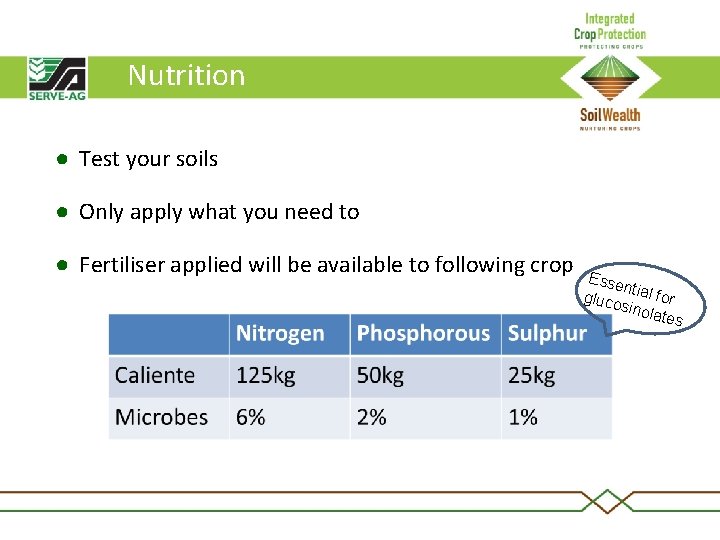
Nutrition ● Test your soils ● Only apply what you need to ● Fertiliser applied will be available to following crop Copyright © AHR Esse n gluco tial for sinol ates
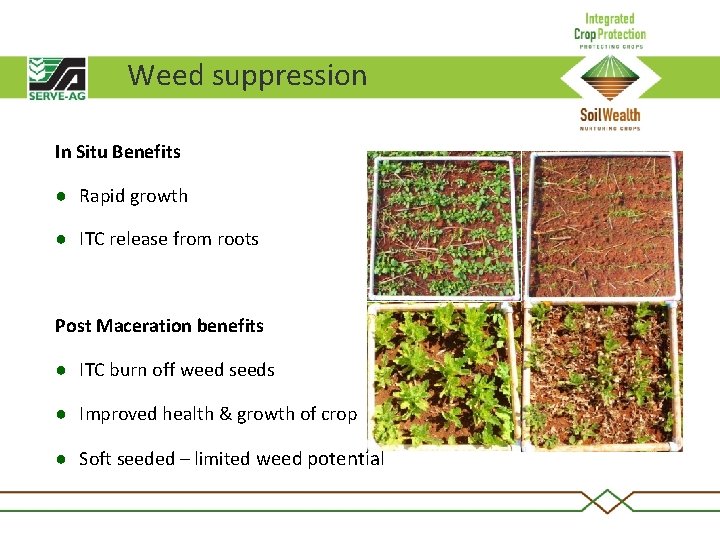
Weed suppression In Situ Benefits ● Rapid growth ● ITC release from roots Post Maceration benefits ● ITC burn off weed seeds ● Improved health & growth of crop ● Soft seeded – limited weed potential Copyright © AHR
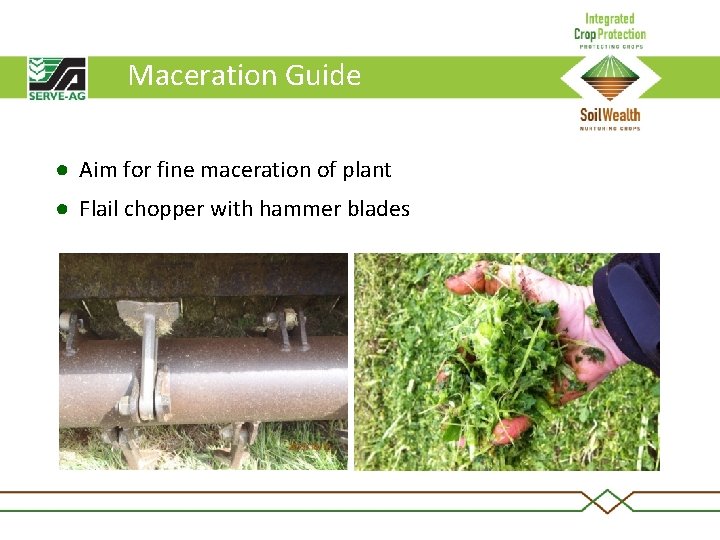
Maceration Guide ● Aim for fine maceration of plant ● Flail chopper with hammer blades Copyright © AHR
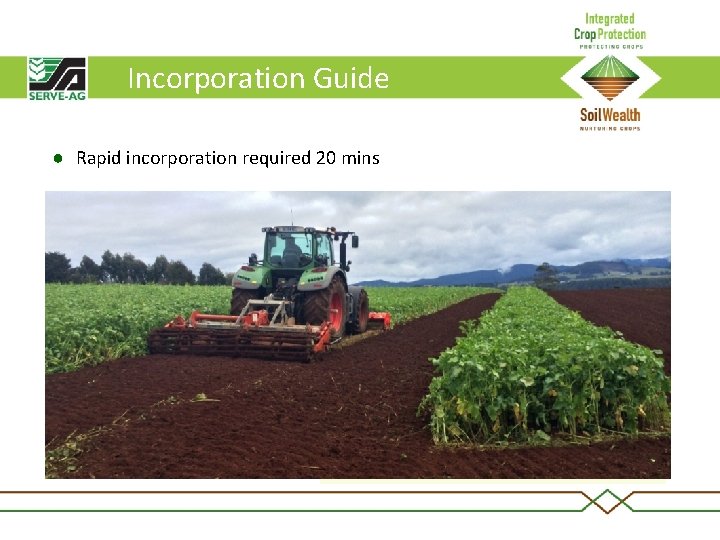
Incorporation Guide ● Rapid incorporation required 20 mins
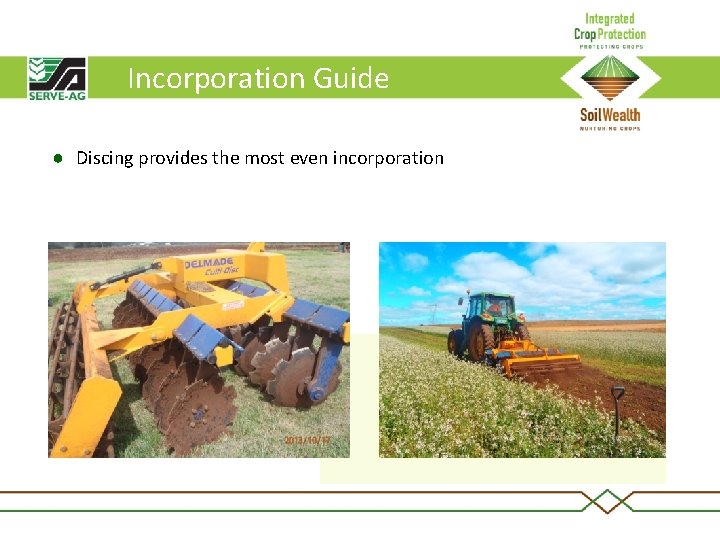
Incorporation Guide ● Discing provides the most even incorporation
Incorporation Guide ● Macerate only if soil moisture is suitable ● AVOID WET SOILS ● Irrigate lightly to help seal in ITC’s ● Time incorporation to precede rainfall
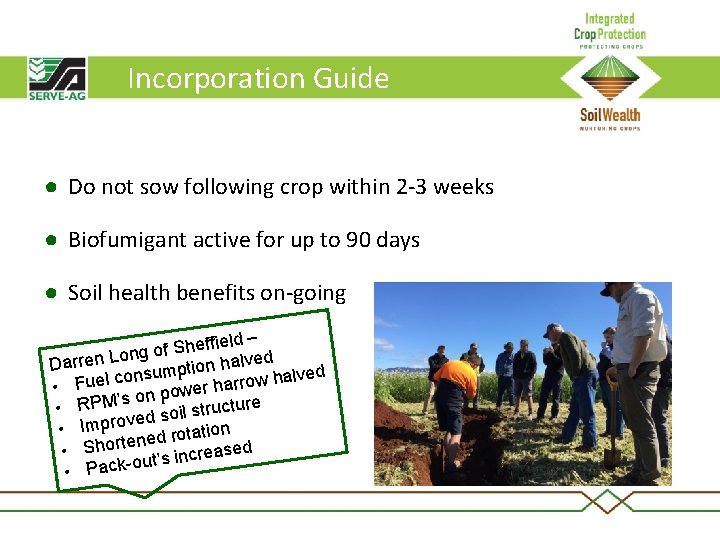
Incorporation Guide ● Do not sow following crop within 2 -3 weeks ● Biofumigant active for up to 90 days ● Soil health benefits on-going effield – h S f o g on Darren L sumption halved on c h l w e o u r F r a • power h n o s ’ M • RP ructure t s l i o s d ve • Impro ation t o r d e n e • Short eased r c n i s ’ t u o • Pack-
Cost -Benefits Things to Consider: Establishment & management costs more expensive Timing difficulties (mulching & crop rotations) Longer term returns gained • Less herbicide generally required • Fertiliser applied is returned to next crop • Improved soil structure • Reduced irrigation requirements • Improved drainage • Improved yields & quality • Suppression of pests & diseases • Reduced mechanical soil preparation • Fuel & time saving
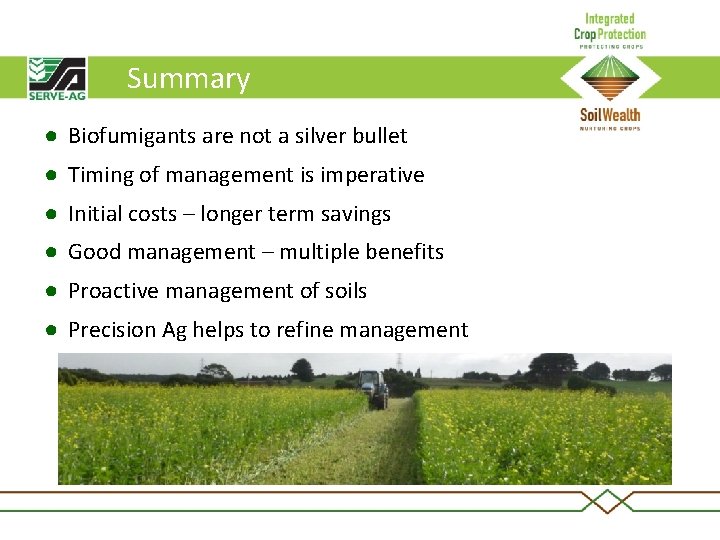
Summary ● Biofumigants are not a silver bullet ● Timing of management is imperative ● Initial costs – longer term savings ● Good management – multiple benefits ● Proactive management of soils ● Precision Ag helps to refine management
Thank You Copyright © AHR
- Slides: 38