
Biofuels in Brazil Prof Donato Aranda Federal Univ
Biofuels in Brazil Prof. Donato Aranda Federal Univ. Rio de Janeiro “van’t Hoff Institute for Molecular Sciences” Amsterdam, 2007
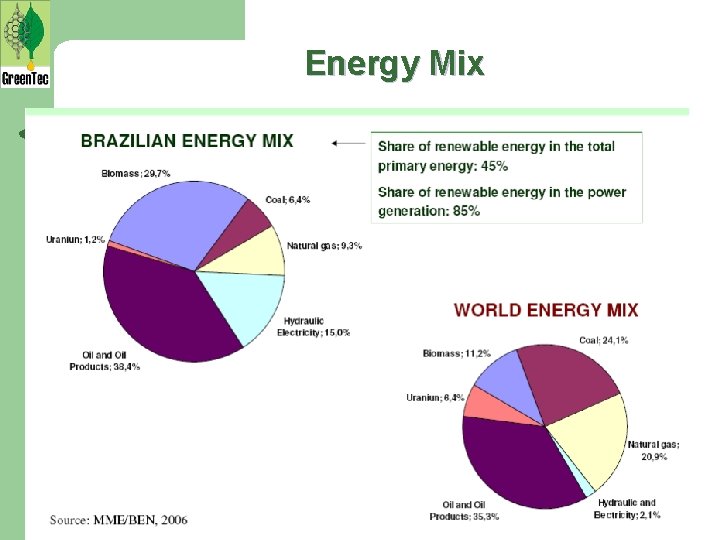
Energy Mix
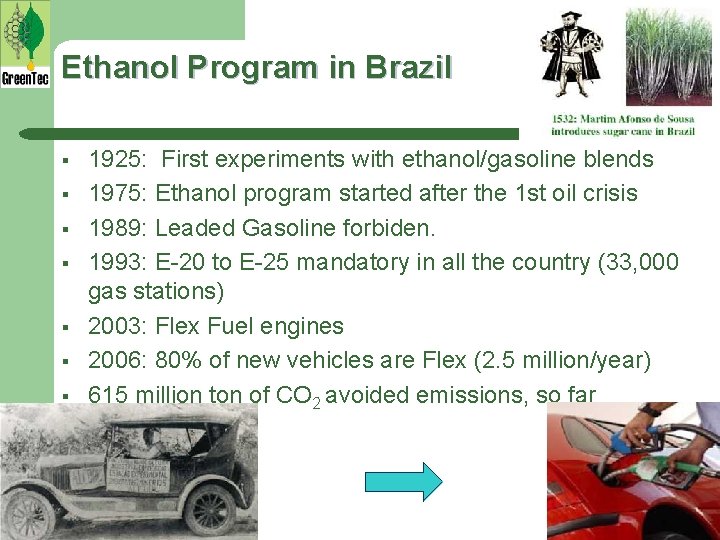
Ethanol Program in Brazil § § § § 1925: First experiments with ethanol/gasoline blends 1975: Ethanol program started after the 1 st oil crisis 1989: Leaded Gasoline forbiden. 1993: E-20 to E-25 mandatory in all the country (33, 000 gas stations) 2003: Flex Fuel engines 2006: 80% of new vehicles are Flex (2. 5 million/year) 615 million ton of CO 2 avoided emissions, so far
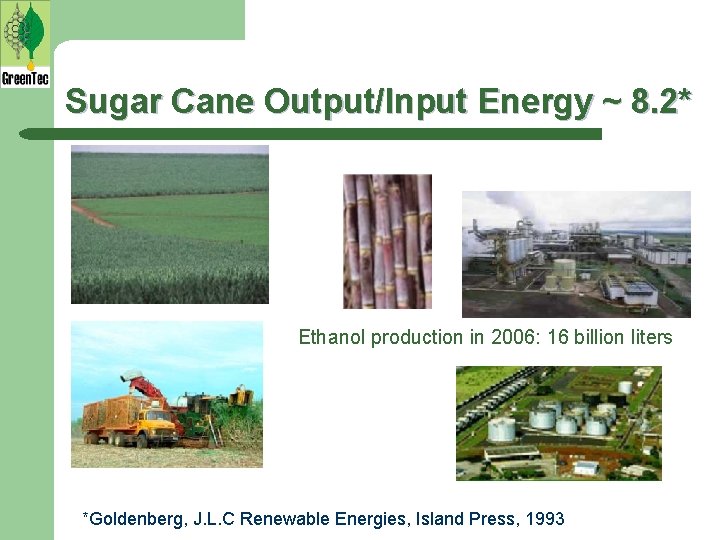
Sugar Cane Output/Input Energy ~ 8. 2* Ethanol production in 2006: 16 billion liters *Goldenberg, J. L. C Renewable Energies, Island Press, 1993
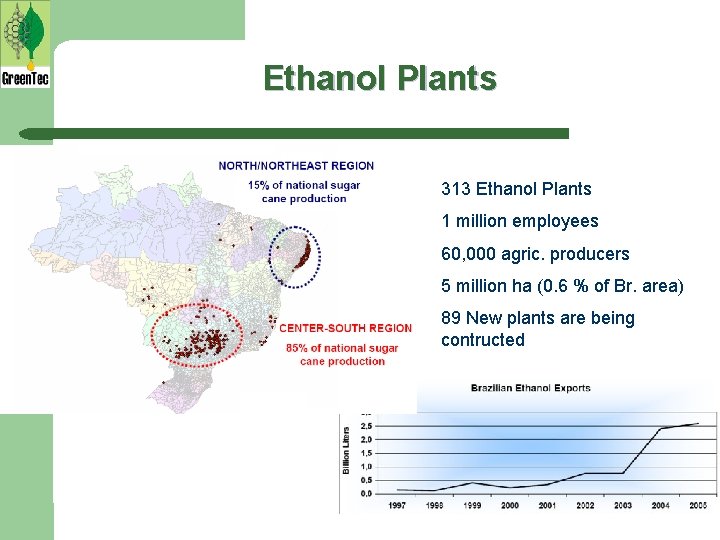
Ethanol Plants 313 Ethanol Plants 1 million employees 60, 000 agric. producers 5 million ha (0. 6 % of Br. area) 89 New plants are being contructed
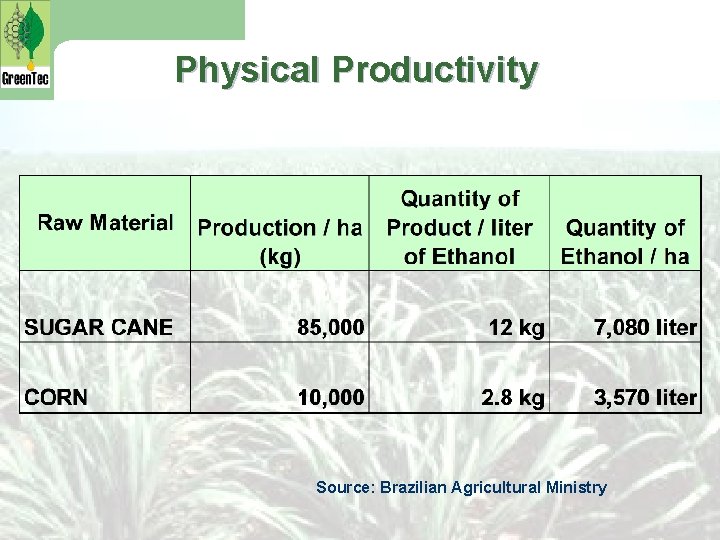
Physical Productivity Source: Brazilian Agricultural Ministry
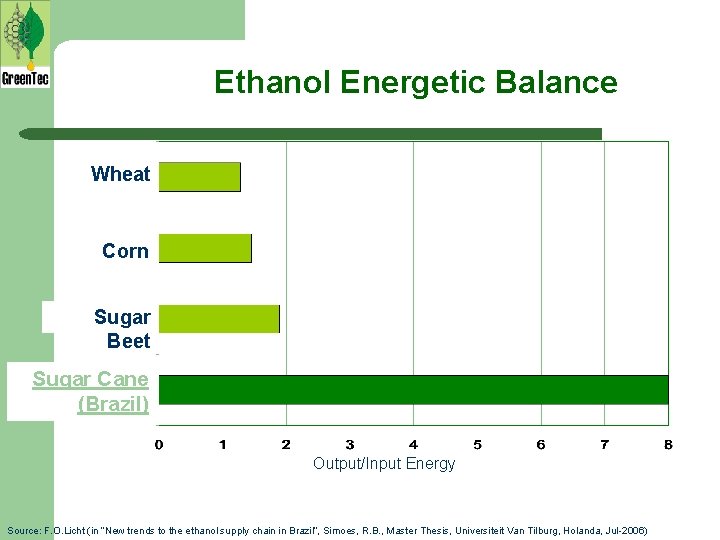
Ethanol Energetic Balance Wheat Corn Sugar Beet Sugar Cane (Brazil) Output/Input Energy Source: F. O. Licht (in “New trends to the ethanol supply chain in Brazil”, Simoes, R. B. , Master Thesis, Universiteit Van Tilburg, Holanda, Jul-2006)
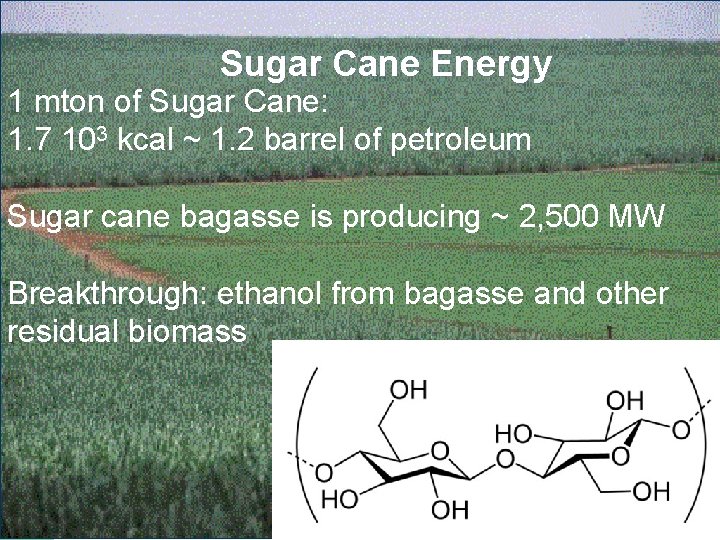
Sugar Cane Energy 1 mton of Sugar Cane: 1. 7 103 kcal ~ 1. 2 barrel of petroleum Sugar cane bagasse is producing ~ 2, 500 MW Breakthrough: ethanol from bagasse and other residual biomass
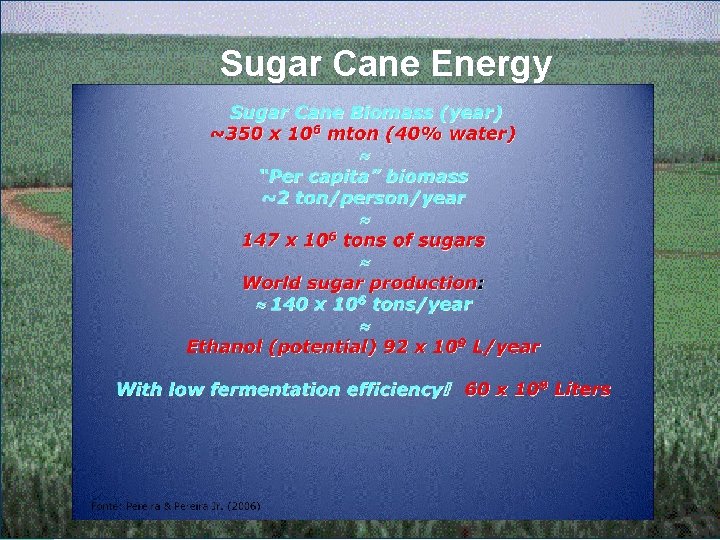
Sugar Cane Energy
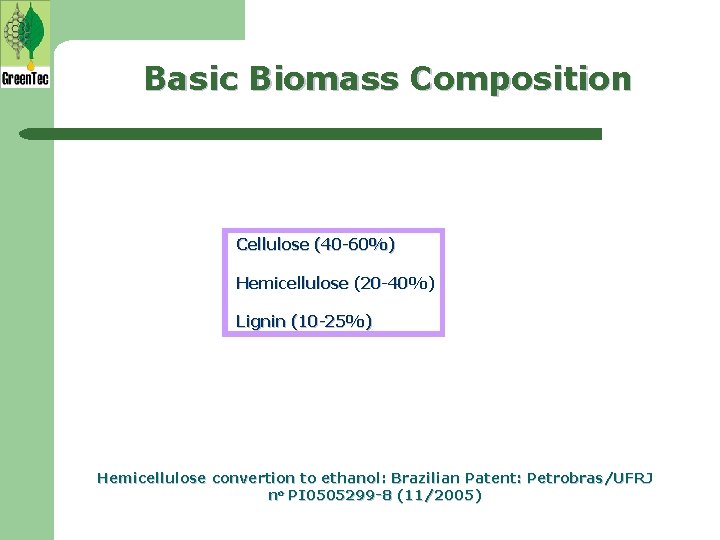
Basic Biomass Composition Cellulose (40 -60%) Hemicellulose (20 -40%) Lignin (10 -25%) Hemicellulose convertion to ethanol: Brazilian Patent: Petrobras/UFRJ no PI 0505299 -8 (11/2005)
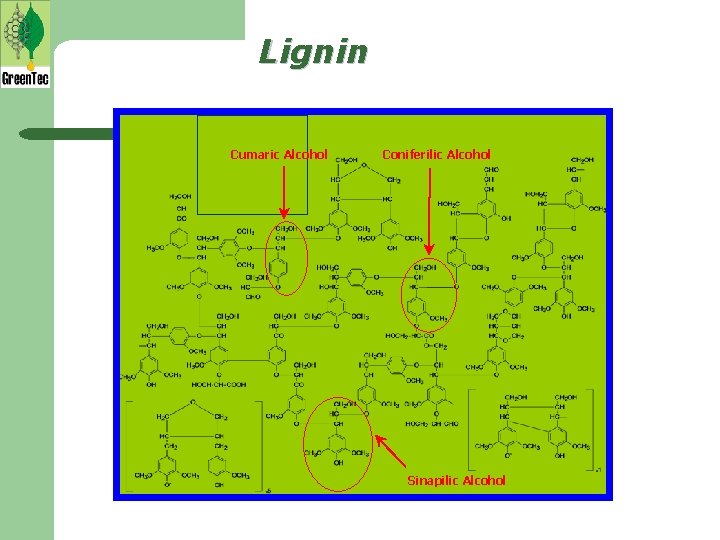
Lignin Cumaric Alcohol Coniferilic Alcohol Sinapilic Alcohol

Flash Pyrolysis
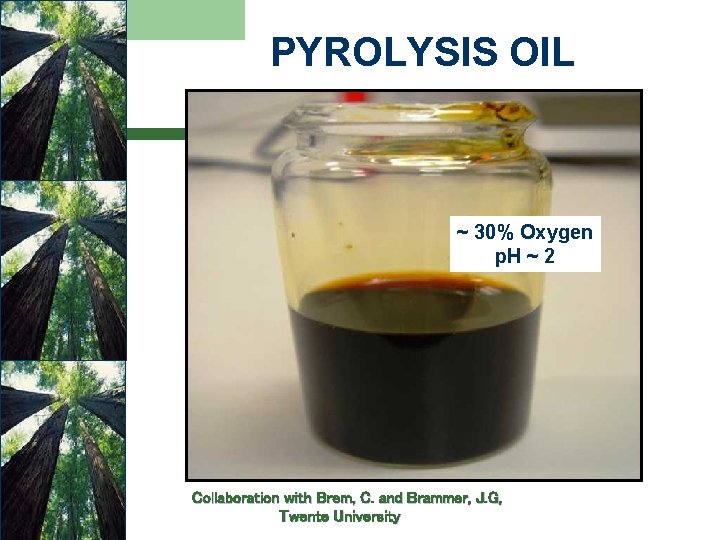
PYROLYSIS OIL ~ 30% Oxygen p. H ~ 2 Collaboration with Brem, C. and Brammer, J. G, Twente University
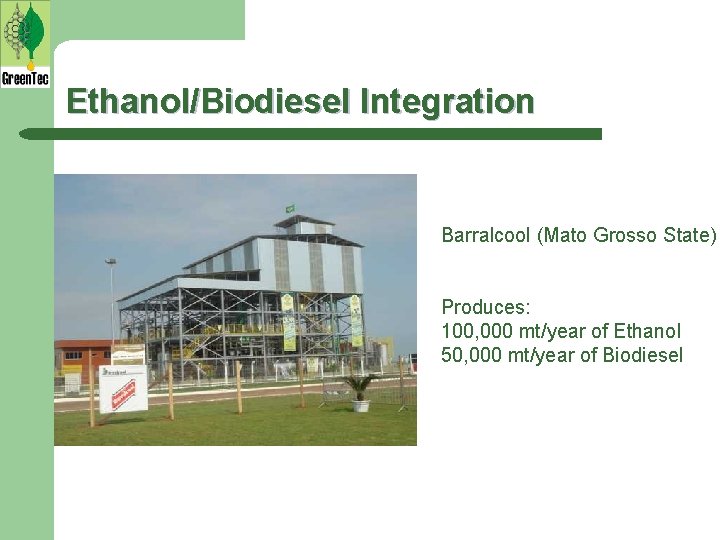
Ethanol/Biodiesel Integration Barralcool (Mato Grosso State) Produces: 100, 000 mt/year of Ethanol 50, 000 mt/year of Biodiesel
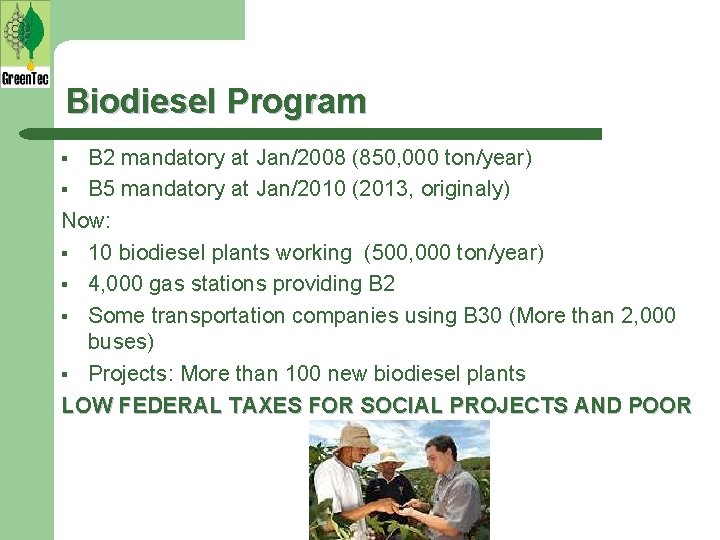
Biodiesel Program B 2 mandatory at Jan/2008 (850, 000 ton/year) § B 5 mandatory at Jan/2010 (2013, originaly) Now: § 10 biodiesel plants working (500, 000 ton/year) § 4, 000 gas stations providing B 2 § Some transportation companies using B 30 (More than 2, 000 buses) § Projects: More than 100 new biodiesel plants LOW FEDERAL TAXES FOR SOCIAL PROJECTS AND POOR REGIONS §
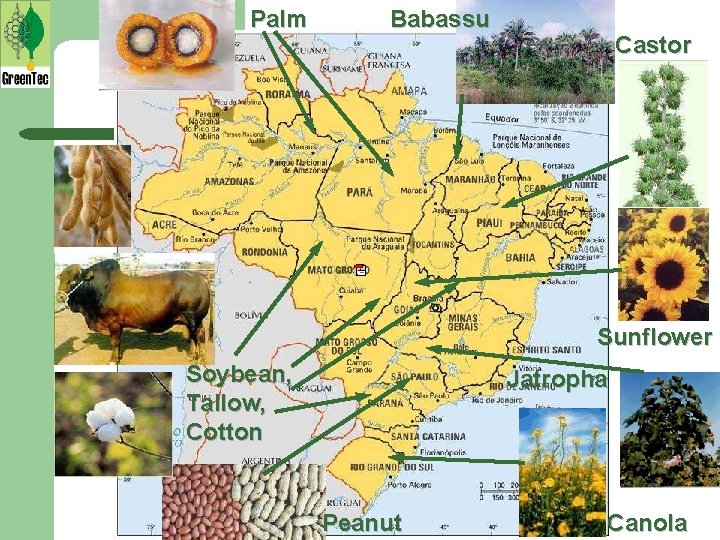
Palm Babassu Castor Sunflower Soybean, Tallow, Cotton Jatropha Peanut Canola
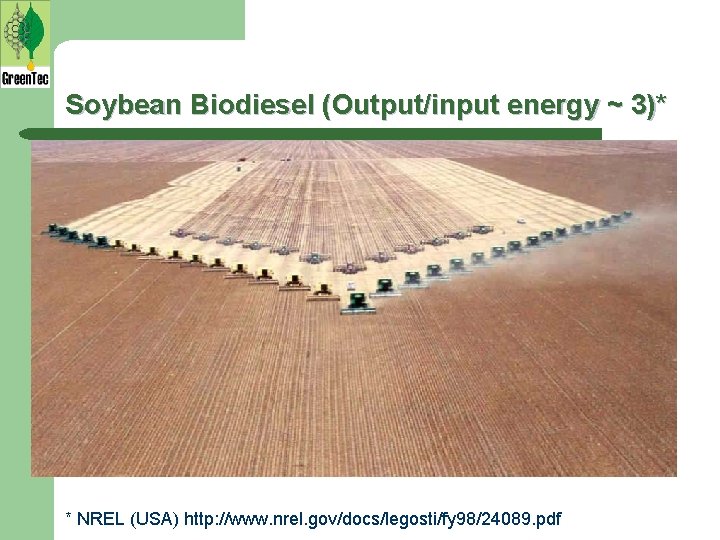
Soybean Biodiesel (Output/input energy ~ 3)* * NREL (USA) http: //www. nrel. gov/docs/legosti/fy 98/24089. pdf
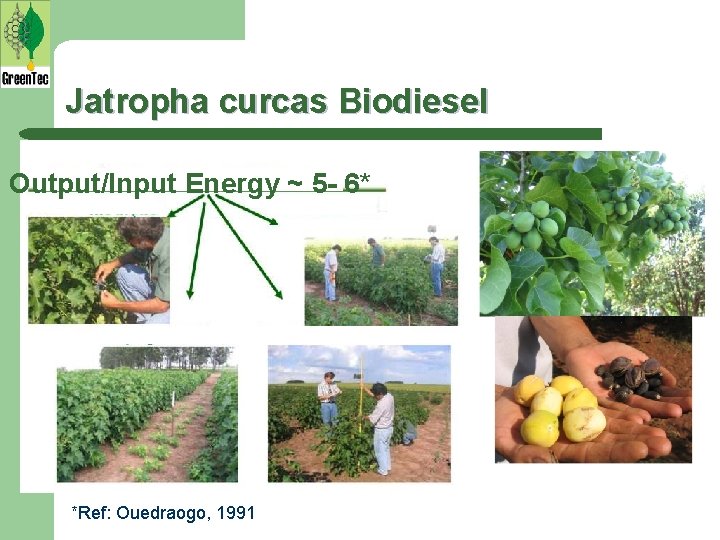
Jatropha curcas Biodiesel Output/Input Energy ~ 5 - 6* *Ref: Ouedraogo, 1991
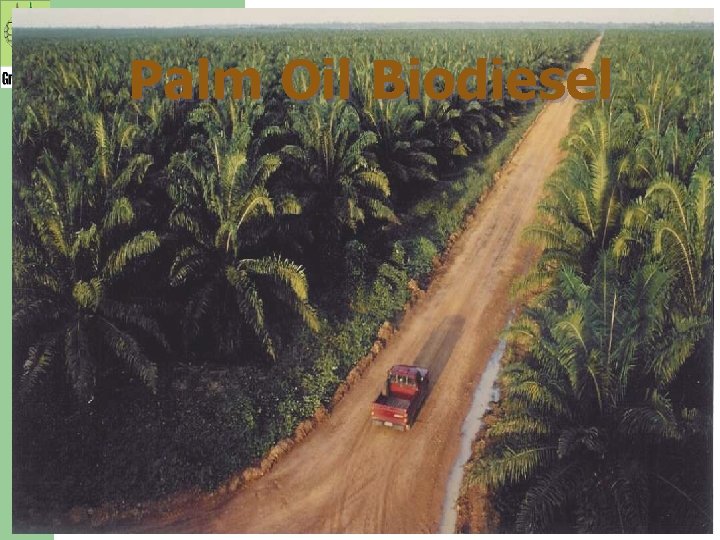
Palm Oil Biodiesel
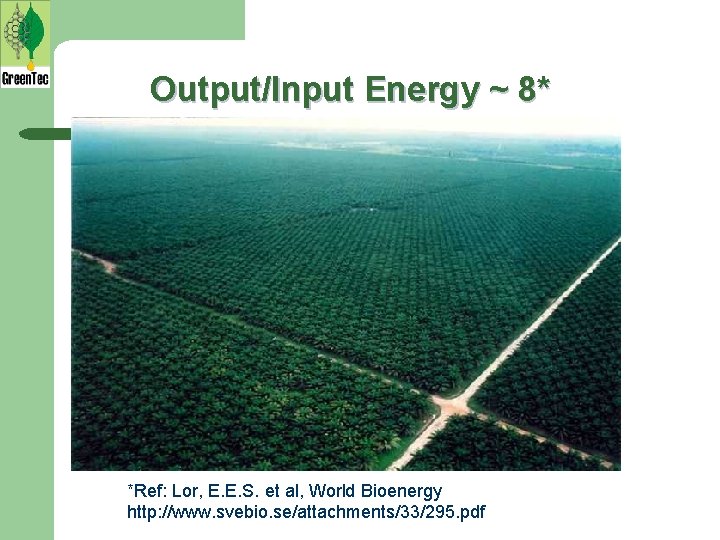
Output/Input Energy ~ 8* *Ref: Lor, E. E. S. et al, World Bioenergy http: //www. svebio. se/attachments/33/295. pdf
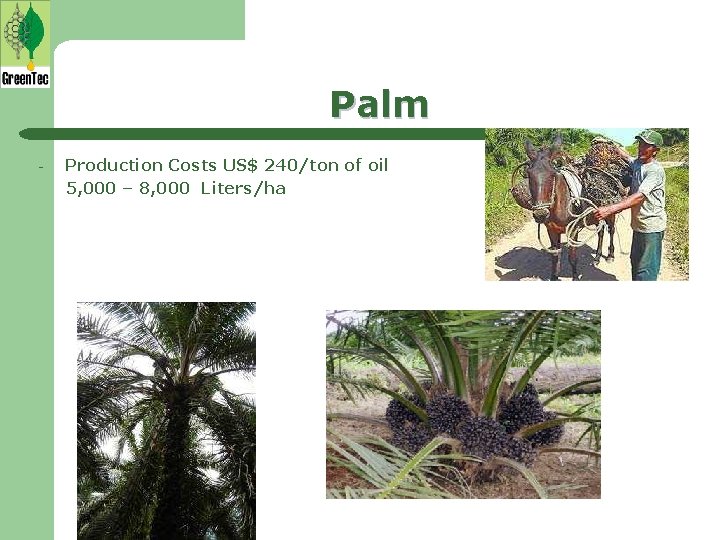
Palm - Production Costs US$ 240/ton of oil 5, 000 – 8, 000 Liters/ha
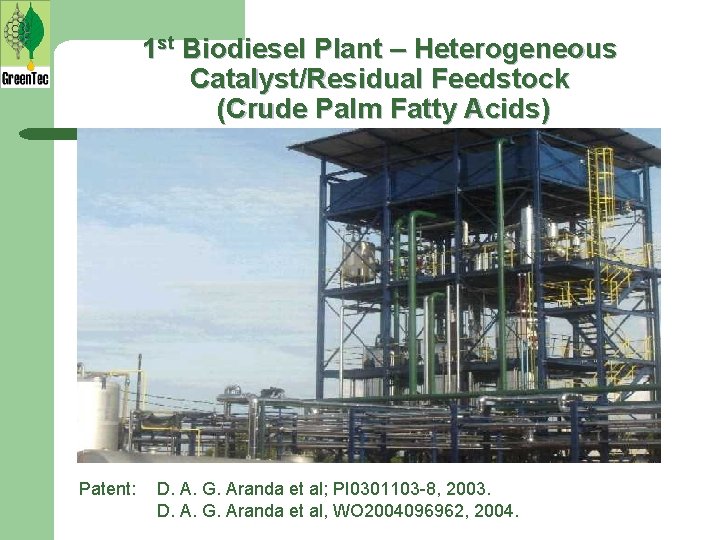
1 st Biodiesel Plant – Heterogeneous Catalyst/Residual Feedstock (Crude Palm Fatty Acids) Patent: D. A. G. Aranda et al; PI 0301103 -8, 2003. D. A. G. Aranda et al, WO 2004096962, 2004.
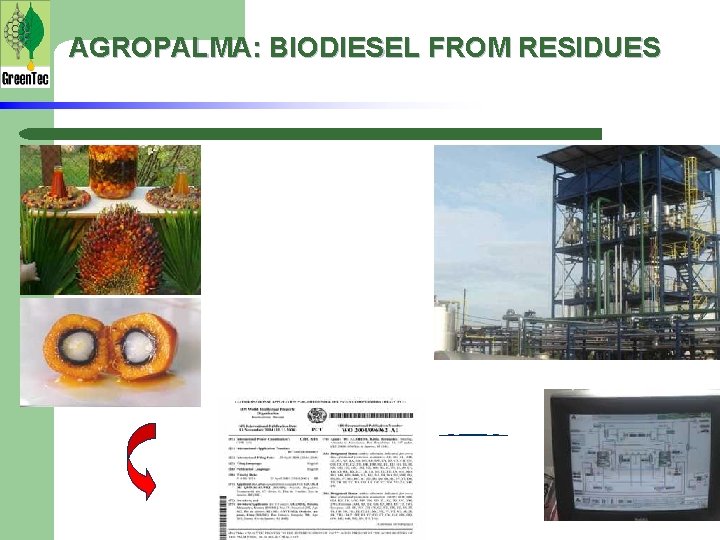
AGROPALMA: BIODIESEL FROM RESIDUES
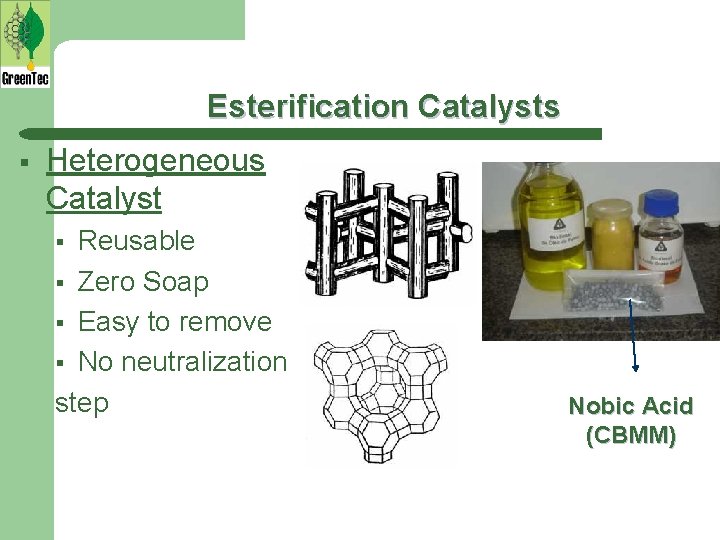
Esterification Catalysts § Heterogeneous Catalyst Reusable § Zero Soap § Easy to remove § No neutralization step § Nobic Acid (CBMM)
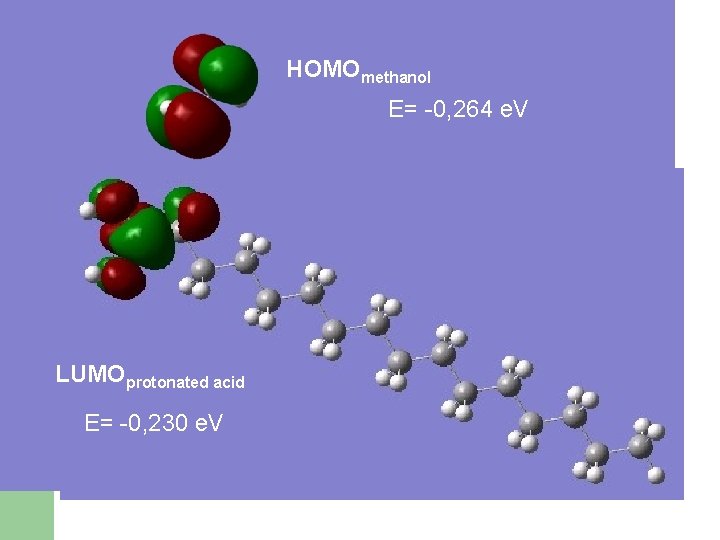
HOMOmethanol E= -0, 264 e. V LUMOprotonated acid E= -0, 230 e. V
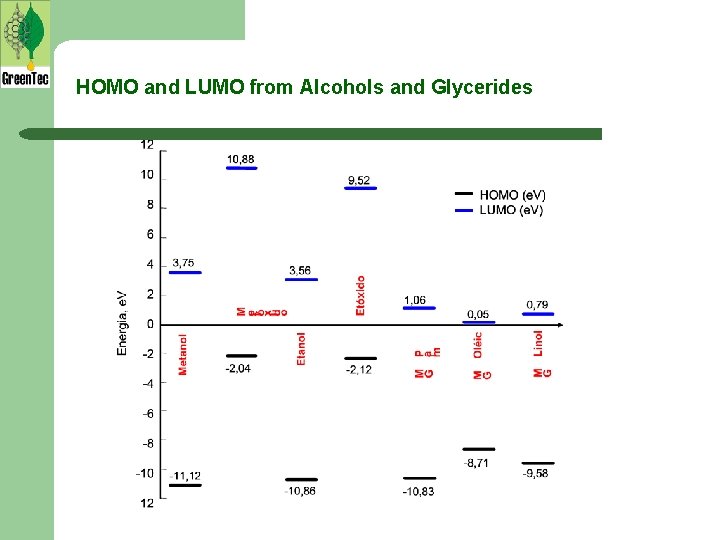
HOMO and LUMO from Alcohols and Glycerides
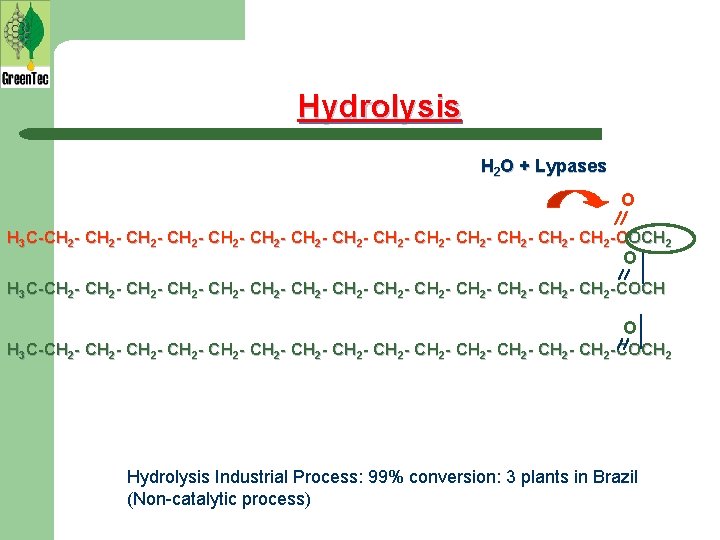
Hydrolysis H 2 O + Lypases O H 3 C-CH 2 - CH 2 - CH 2 - CH 2 -COCH 2 O H 3 C-CH 2 - CH 2 - CH 2 - CH 2 - CH 2 - CH 2 - CH 2 -COCH 2 Hydrolysis Industrial Process: 99% conversion: 3 plants in Brazil (Non-catalytic process)
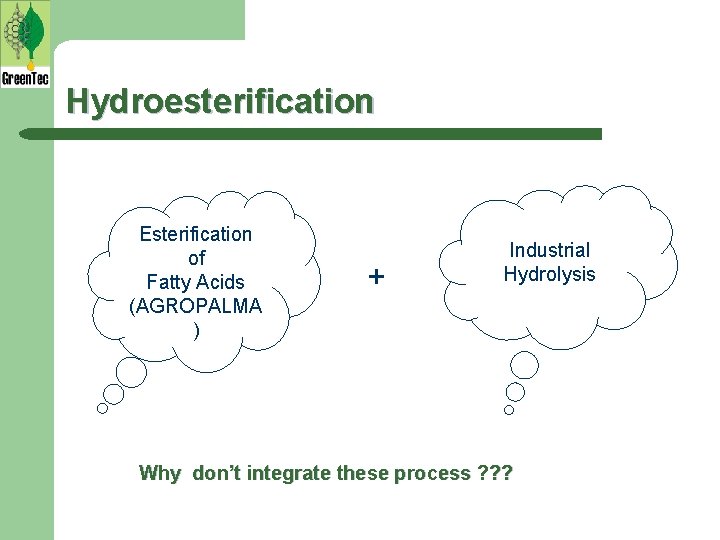
Hydroesterification Esterification of Fatty Acids (AGROPALMA ) + Industrial Hydrolysis Why don’t integrate these process ? ? ?
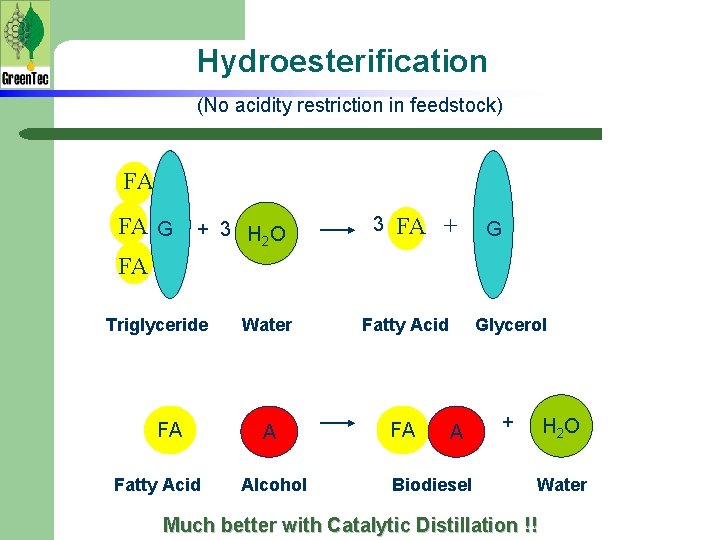
Hydroesterification (No acidity restriction in feedstock) FA FA G + 3 H 2 O 3 FA + G FA Triglyceride FA Fatty Acid Water Fatty Acid A FA Alcohol Glycerol A Biodiesel + H 2 O Water Much better with Catalytic Distillation !!
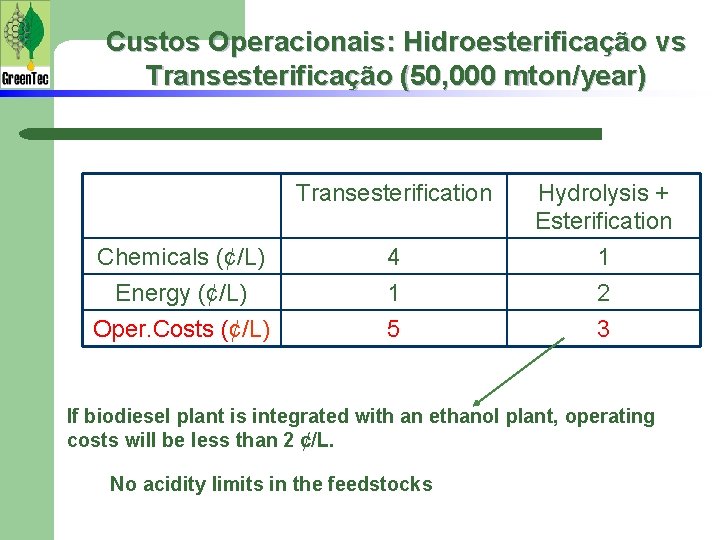
Custos Operacionais: Hidroesterificação vs Transesterificação (50, 000 mton/year) Chemicals (¢/L) Energy (¢/L) Oper. Costs (¢/L) Transesterification Hydrolysis + Esterification 4 1 5 1 2 3 If biodiesel plant is integrated with an ethanol plant, operating costs will be less than 2 ¢/L. No acidity limits in the feedstocks
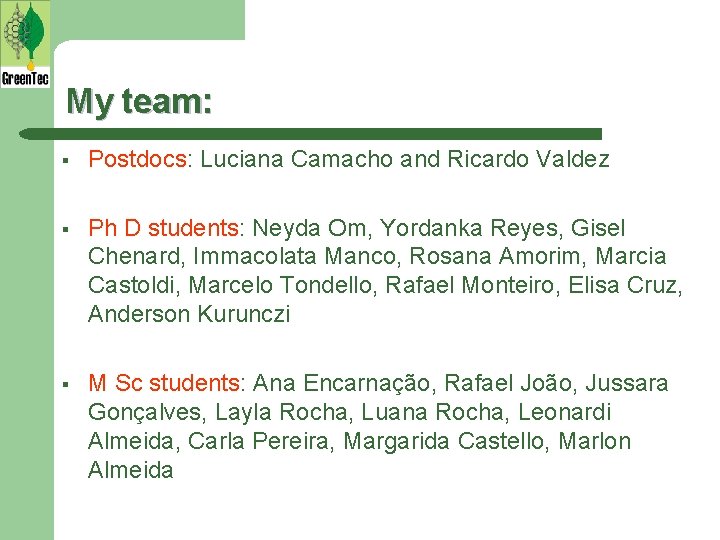
My team: § Postdocs: Luciana Camacho and Ricardo Valdez § Ph D students: Neyda Om, Yordanka Reyes, Gisel Chenard, Immacolata Manco, Rosana Amorim, Marcia Castoldi, Marcelo Tondello, Rafael Monteiro, Elisa Cruz, Anderson Kurunczi § M Sc students: Ana Encarnação, Rafael João, Jussara Gonçalves, Layla Rocha, Luana Rocha, Leonardi Almeida, Carla Pereira, Margarida Castello, Marlon Almeida

Thank you ! www. greentec-ufrj. com “ God causes all things to work together for good to those who love Him” ( Rm 8, 28)
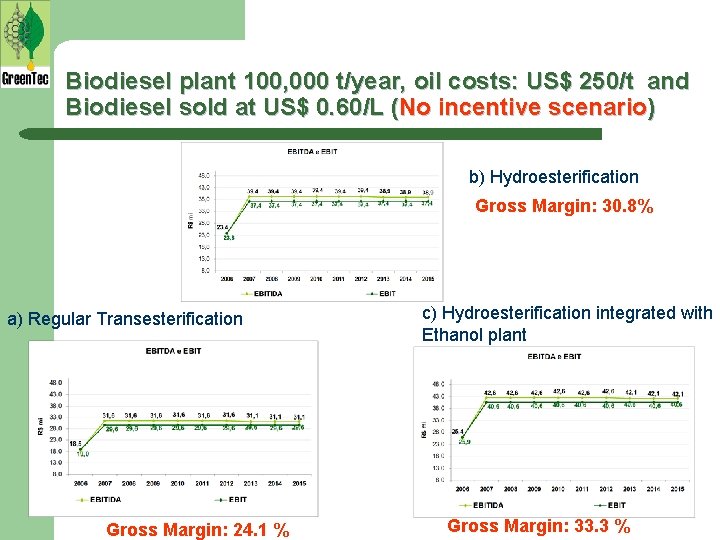
Biodiesel plant 100, 000 t/year, oil costs: US$ 250/t and Biodiesel sold at US$ 0. 60/L (No incentive scenario) b) Hydroesterification Gross Margin: 30. 8% a) Regular Transesterification Gross Margin: 24. 1 % c) Hydroesterification integrated with Ethanol plant Gross Margin: 33. 3 %
- Slides: 34