
Biofortified crops to reduce malnutrition in Southern Africa
Biofortified crops to reduce malnutrition in Southern Africa FANRPAN 2009 Economic Contribution from Food Systems: Biosafety & Biotechnology Maputo, Mozambique 1 st September 2009 Eugenia Barros (Ph. D) CSIR – Biosciences
Outline * What is biofortification * Methods of biofortification of crops * Examples * Benefits Slide 2 © CSIR 2006 www. csir. co. za

Biofortification is the development of crops with increased nutritional value using the best conventional breeding practices and modern biotechnology Slide 3 © CSIR 2006 www. csir. co. za

Methods of biofortification 1 - Selective breeding ■ search seed or germplasm banks for crop varieties that are naturally high in nutrients ■ crossbreed these high-nutrient varieties with high-yielding crop varieties ► seed with high yields and increased nutritional value Slide 4 © CSIR 2006 www. csir. co. za

Methods of biofortification (cont. ) 2 - Genetic modification ■ identify the source of genes to be introduced into the crop eg genes from soil bacterium Erwinia or daffodil plants that contain increased levels of β-carotene (converted by the body into vitamin A) ■ can crossbreed the GM crop with high-yielding non. GM crop varieties ► seed with high yields and increased nutritional value Slide 5 © CSIR 2006 www. csir. co. za
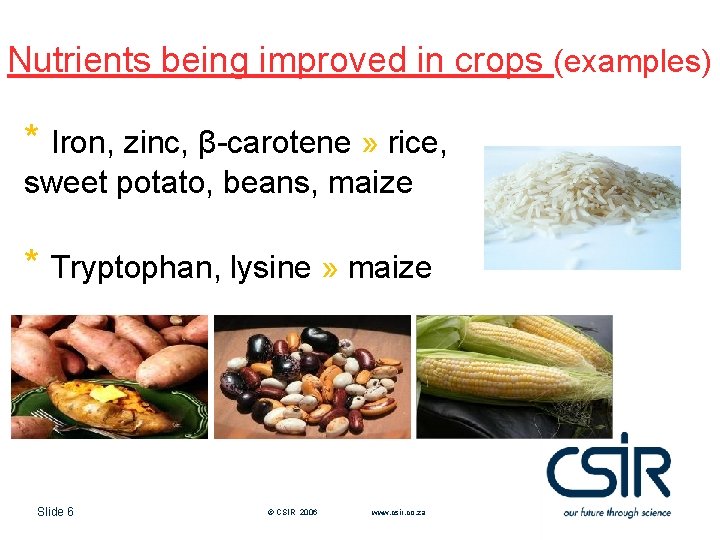
Nutrients being improved in crops (examples) * Iron, zinc, β-carotene » rice, sweet potato, beans, maize * Tryptophan, lysine » maize Slide 6 © CSIR 2006 www. csir. co. za
Biofortification vs Conventional fortification * Biofortification focuses on making plant foods more nutritious as the plants are growing * Conventional fortification nutrients are added to the foods as they are being processed * Better strategy for dealing with micronutrient deficiencies in the developing world * Sustainable approach * Cost effective Slide 7 © CSIR 2006 www. csir. co. za
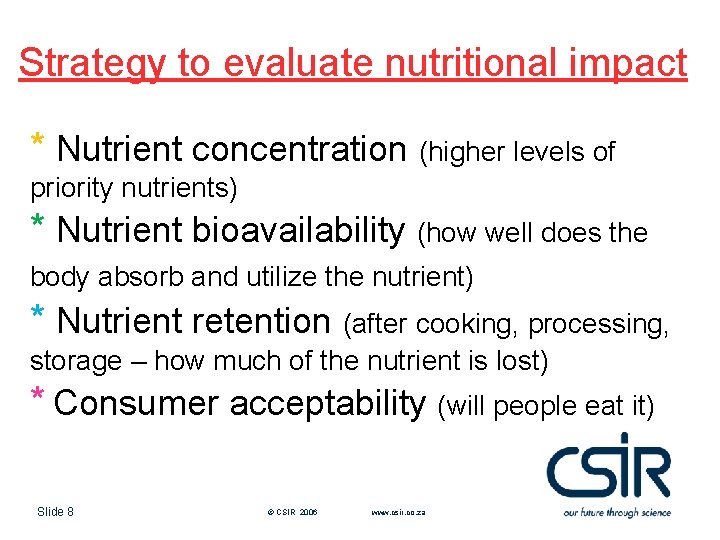
Strategy to evaluate nutritional impact * Nutrient concentration (higher levels of priority nutrients) * Nutrient bioavailability (how well does the body absorb and utilize the nutrient) * Nutrient retention (after cooking, processing, storage – how much of the nutrient is lost) * Consumer acceptability (will people eat it) Slide 8 © CSIR 2006 www. csir. co. za

Thank you. Obrigado.
- Slides: 9