
Biofilm formation and efflux mediated azole resistance among
Biofilm formation and efflux mediated azole resistance among clinical isolates of Candida albicans - an in vitro study Faseela TS/71/January 2012 batch Pre Colloquium 20 02 2017 Name of the student: Mrs. Faseela TS Dept. of Microbiology YMC Guide: Dr. Raja Gopal K Professor & HOD Dept. of OBG, YMC 1
Introduction • The genus Candida have exploded into prominence in recent years as opportunistic and nosocomial pathogen • C. albicans is the most common species • Biofilm formed on biomaterials is a risk factor • It leads to persistence of infection and increased drug resistance • Azoles are the primary drugs in the management Candidiasis • There is a spurt of resistance to azoles recently in Candida including C. albicans 2
• Azole resistance is mainly due to increased drug efflux by efflux pumps • The ATP binding cassette (ABC) and major facilitator super family (MFS) transporters are important efflux pumps • Azoles and Rhodamine 6 G are the substrates for ABC transport pumps coded by Ca. CDR 1 and Ca. CDR 2 genes. • The drugs which interfere with efflux can potentiate the antifungal activity of azoles 3
Review of Literature • Candida is fourth commonest cause of blood stream infections (Todd Mc. Carty et al. , 2015)1 • The fifth most common cause of nosocomial infection and fourth among blood stream pathogens according to CDC NHSN report (Dawn M et al. , 2013)2 • In India, incidence of candidiasis varies from 5. 7% to 18% (Giri S et al. , 2012)3 • An increase in the incidence of candidiasis has also been reported from different parts of the world 4
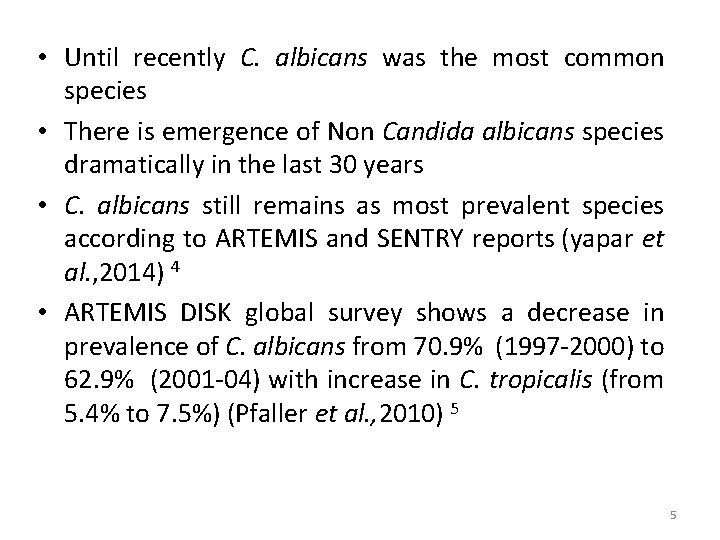
• Until recently C. albicans was the most common species • There is emergence of Non Candida albicans species dramatically in the last 30 years • C. albicans still remains as most prevalent species according to ARTEMIS and SENTRY reports (yapar et al. , 2014) 4 • ARTEMIS DISK global survey shows a decrease in prevalence of C. albicans from 70. 9% (1997 2000) to 62. 9% (2001 04) with increase in C. tropicalis (from 5. 4% to 7. 5%) (Pfaller et al. , 2010) 5 5
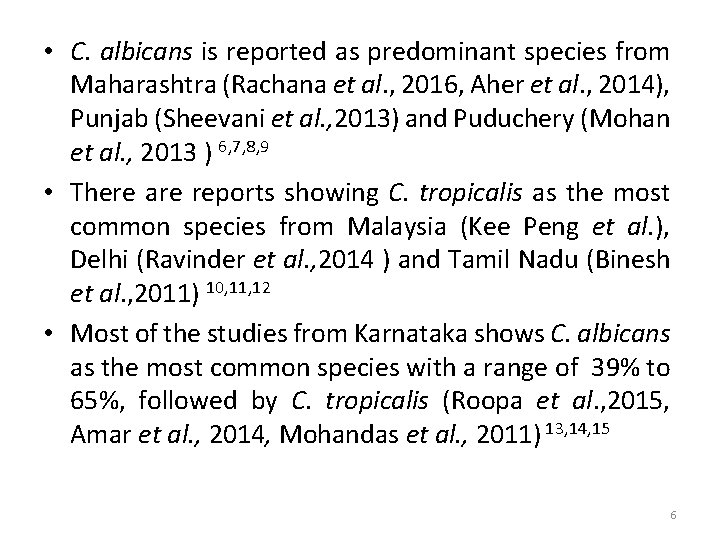
• C. albicans is reported as predominant species from Maharashtra (Rachana et al. , 2016, Aher et al. , 2014), Punjab (Sheevani et al. , 2013) and Puduchery (Mohan et al. , 2013 ) 6, 7, 8, 9 • There are reports showing C. tropicalis as the most common species from Malaysia (Kee Peng et al. ), Delhi (Ravinder et al. , 2014 ) and Tamil Nadu (Binesh et al. , 2011) 10, 11, 12 • Most of the studies from Karnataka shows C. albicans as the most common species with a range of 39% to 65%, followed by C. tropicalis (Roopa et al. , 2015, Amar et al. , 2014, Mohandas et al. , 2011) 13, 14, 15 6
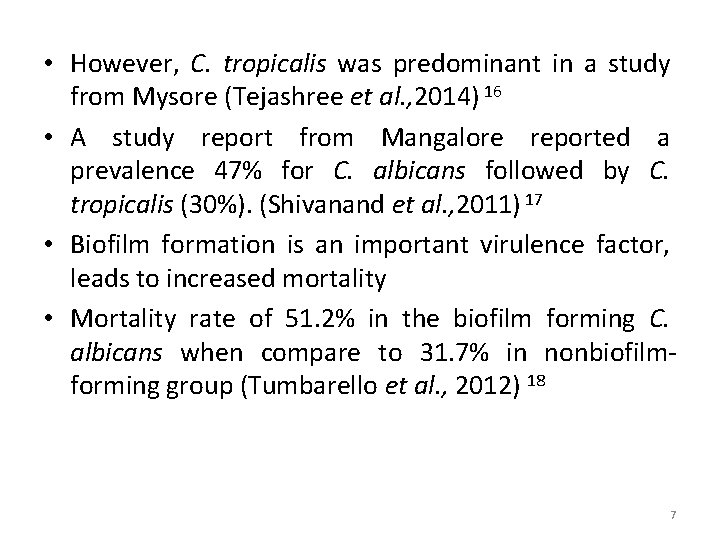
• However, C. tropicalis was predominant in a study from Mysore (Tejashree et al. , 2014) 16 • A study report from Mangalore reported a prevalence 47% for C. albicans followed by C. tropicalis (30%). (Shivanand et al. , 2011) 17 • Biofilm formation is an important virulence factor, leads to increased mortality • Mortality rate of 51. 2% in the biofilm forming C. albicans when compare to 31. 7% in nonbiofilm forming group (Tumbarello et al. , 2012) 18 7
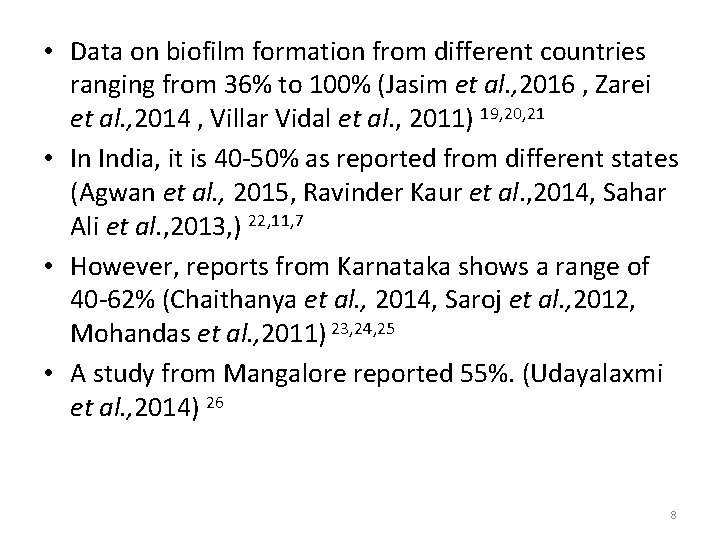
• Data on biofilm formation from different countries ranging from 36% to 100% (Jasim et al. , 2016 , Zarei et al. , 2014 , Villar Vidal et al. , 2011) 19, 20, 21 • In India, it is 40 50% as reported from different states (Agwan et al. , 2015, Ravinder Kaur et al. , 2014, Sahar Ali et al. , 2013, ) 22, 11, 7 • However, reports from Karnataka shows a range of 40 62% (Chaithanya et al. , 2014, Saroj et al. , 2012, Mohandas et al. , 2011) 23, 24, 25 • A study from Mangalore reported 55%. (Udayalaxmi et al. , 2014) 26 8
• WHO report on antimicrobial resistance surveillance published 2% (Korea, Denmark) 50%(South Africa) azole resistance among C. albicans (WHO, 2014) 27 • Studies from India report azole resistance ranging from 0% to 63% (Kumar et al. , 2016, Mohan et al. , 2016, Sheevani et al. , 2013 ) 8, 9, 78 • Reports published from Karnataka shows a range of 0 38% (Tejashree et al. , 2015, Chaithanya et al. , 2014, Roopa et al. , 2015, Amar et al. , 2014, Shivanand et al. , 2011) 13, 14, 16, 17, 23 9
• An increased glucose induced efflux of Rhodamine 6 G is reported in experimental FLC resistant C. albicans (Lan Yang et al. , 2008, Mishra et al. , 2007) 29 • Azole resistant C. albicans are shown to over express genes encoding drug efflux pump proteins (Monika et al. , 2011, Oscar Marchetti et al. , 2000) 30, 31 • The agents that prevent efflux may be useful for management of azole resistant C. albicans • MET inhibitors such as cyclosporine A and ibuprofen showed potent antifungal effect when used in combination with azole (Marchetti et al. , 2000, Monika Sharma et al. , 2005) 30, 31 10
Social relevance of the study • This study will show the distribution pattern of different species of Candida in candidiasis • Status of drug resistance among C. albicans • Antifungal susceptibility test data of various drugs may lead to development of guidelines for effective treatment of candidiasis • The study on biofilm formation will contribute towards the development of preventive strategies and patient management 11
• The study on in vitro efflux mechanism of drug resistance will be the base for developing new antifungal drugs • The study on combination of azole with cyclosporine and ibuprofen might open a new therapeutic approach for the management of drug resistant C. albicans infections 12
Aim To study biofilm formation, azole resistance and energy dependent efflux among Candida albicans isolated from clinical specimens and to study antifungal effect of azole efflux inhibitor combinations on them 13
Objectives 1. To identify clinical isolates of Candida species 2. To study biofilm formation in C. albicans 3. To determine in vitro antifungal susceptibility and minimum inhibitory concentration of antifungal agents used for parenteral, oral and topical applications 4. To study in vitro energy dependent efflux among azole resistant C. albicans 5. To study the antifungal effect of azole efflux inhibitor combinations on those strains 14
Research methodology Materials and Methods: • Experimental design: Prospective observational experimental study • Sample size: Two hundred Candida species isolated from clinical specimens • Place of study: Department of Microbiology, Yenepoya Medical College ØInclusion criteria: Candida isolated from patients with suspected candidiasis ØExclusion criteria: Polymicrobial growth from normally sterile specimen 15
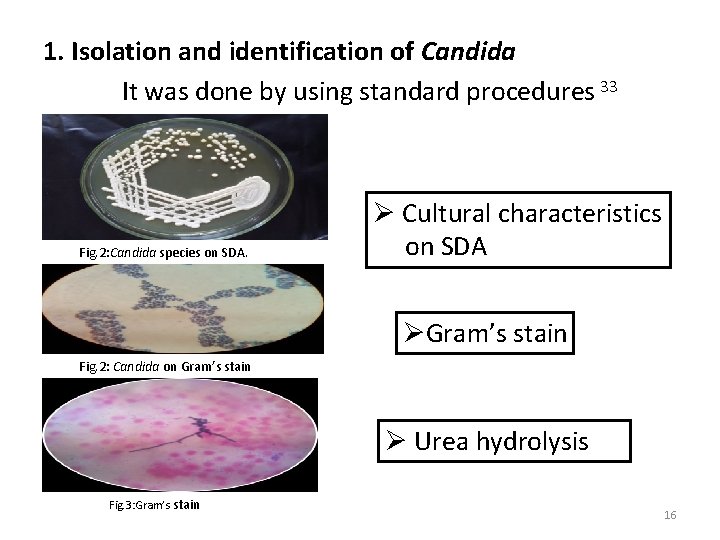
1. Isolation and identification of Candida It was done by using standard procedures 33 Fig. 2: Candida species on SDA. Ø Cultural characteristics on SDA ØGram’s stain Fig. 2: Candida on Gram’s stain Ø Urea hydrolysis Fig. 3: Gram’s stain 16
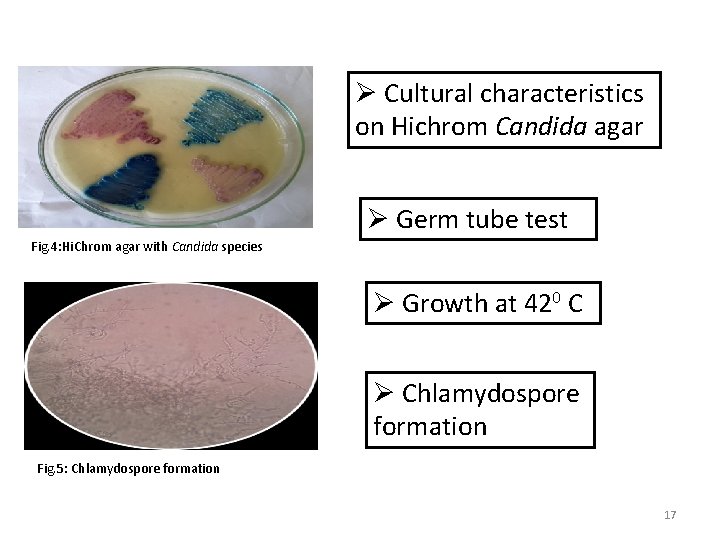
Ø Cultural characteristics on Hichrom Candida agar Ø Germ tube test Fig. 4: Hi. Chrom agar with Candida species Ø Growth at 420 C Ø Chlamydospore formation Fig. 5: Chlamydospore formation 17
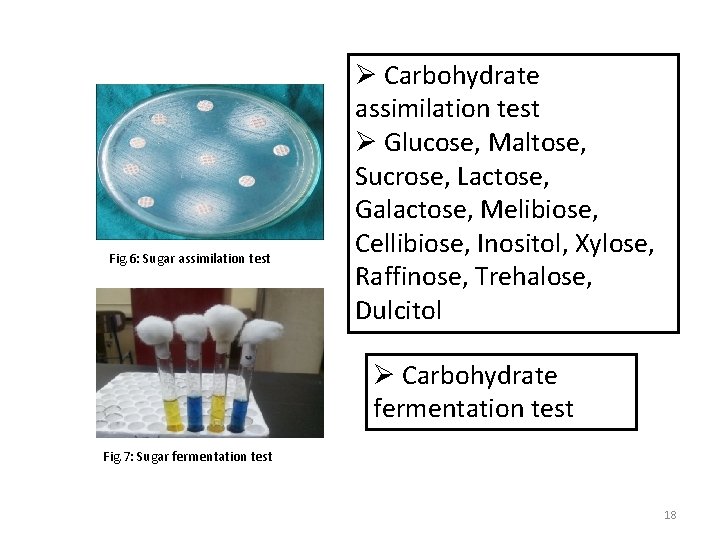
Fig. 6: Sugar assimilation test Ø Carbohydrate assimilation test Ø Glucose, Maltose, Sucrose, Lactose, Galactose, Melibiose, Cellibiose, Inositol, Xylose, Raffinose, Trehalose, Dulcitol Ø Carbohydrate fermentation test Fig. 7: Sugar fermentation test 18
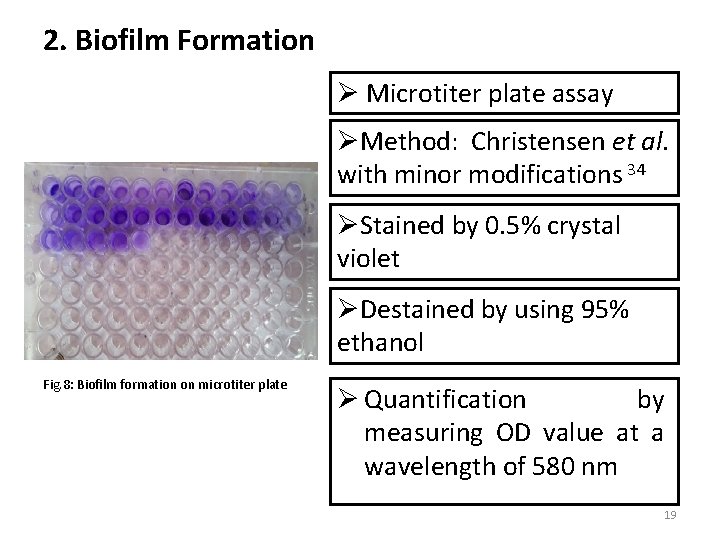
2. Biofilm Formation Ø Microtiter plate assay ØMethod: Christensen et al. with minor modifications 34 ØStained by 0. 5% crystal violet ØDestained by using 95% ethanol Fig. 8: Biofilm formation on microtiter plate Ø Quantification by measuring OD value at a wavelength of 580 nm 19
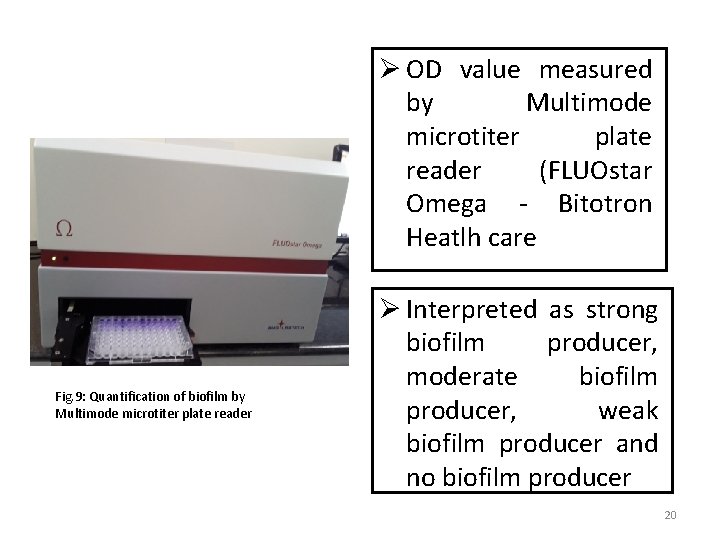
Ø OD value measured by Multimode microtiter plate reader (FLUOstar Omega Bitotron Heatlh care Fig. 9: Quantification of biofilm by Multimode microtiter plate reader Ø Interpreted as strong biofilm producer, moderate biofilm producer, weak biofilm producer and no biofilm producer 20
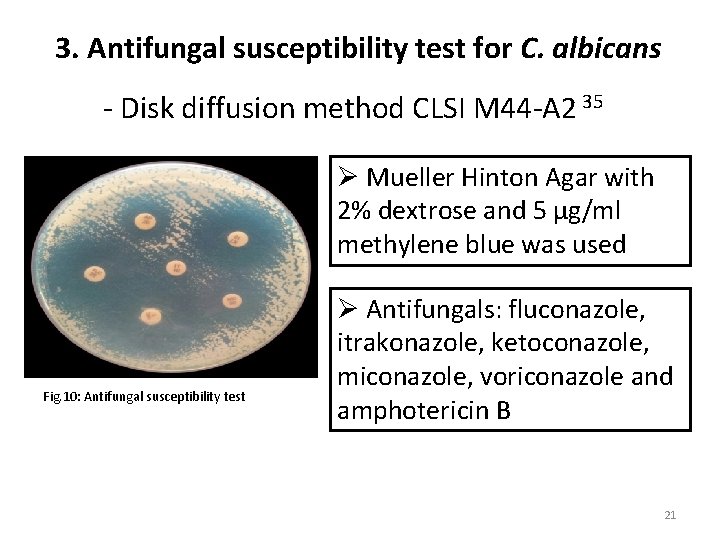
3. Antifungal susceptibility test for C. albicans Disk diffusion method CLSI M 44 A 2 35 Ø Mueller Hinton Agar with 2% dextrose and 5 µg/ml methylene blue was used Fig. 10: Antifungal susceptibility test Ø Antifungals: fluconazole, itrakonazole, ketoconazole, miconazole, voriconazole and amphotericin B 21
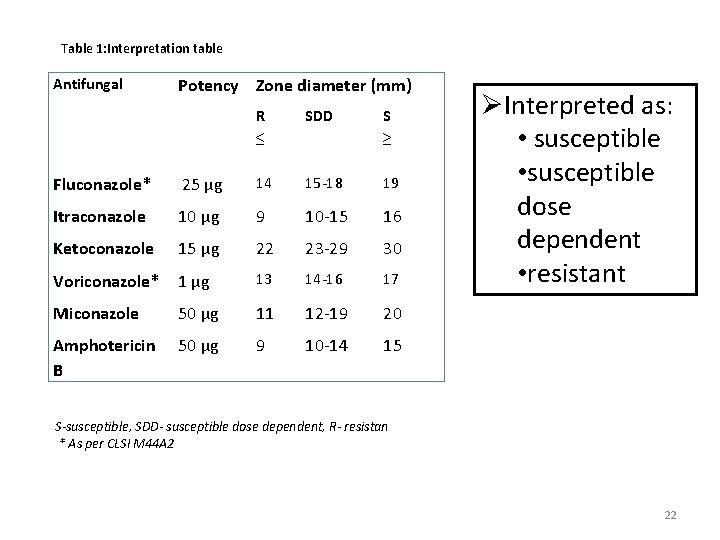
Table 1: Interpretation table Antifungal Potency Zone diameter (mm) R ≤ SDD S ≥ Fluconazole* 25 µg 14 15 18 19 Itraconazole 10 µg 9 10 15 16 Ketoconazole 15 µg 22 23 29 30 Voriconazole* 1 µg 13 14 16 17 Miconazole 50 µg 11 12 19 20 Amphotericin B 50 µg 9 10 14 15 ØInterpreted as: • susceptible dose dependent • resistant S-susceptible, SDD- susceptible dose dependent, R- resistan * As per CLSI M 44 A 2 22
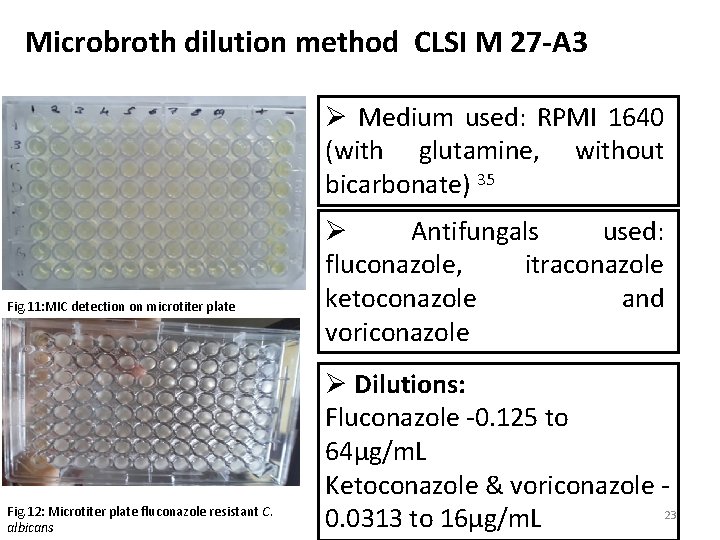
Microbroth dilution method CLSI M 27 -A 3 Ø Medium used: RPMI 1640 (with glutamine, without bicarbonate) 35 Fig. 11: MIC detection on microtiter plate Fig. 12: Microtiter plate fluconazole resistant C. albicans Ø Antifungals used: fluconazole, itraconazole ketoconazole and voriconazole Ø Dilutions: Fluconazole 0. 125 to 64μg/m. L Ketoconazole & voriconazole 23 0. 0313 to 16μg/m. L
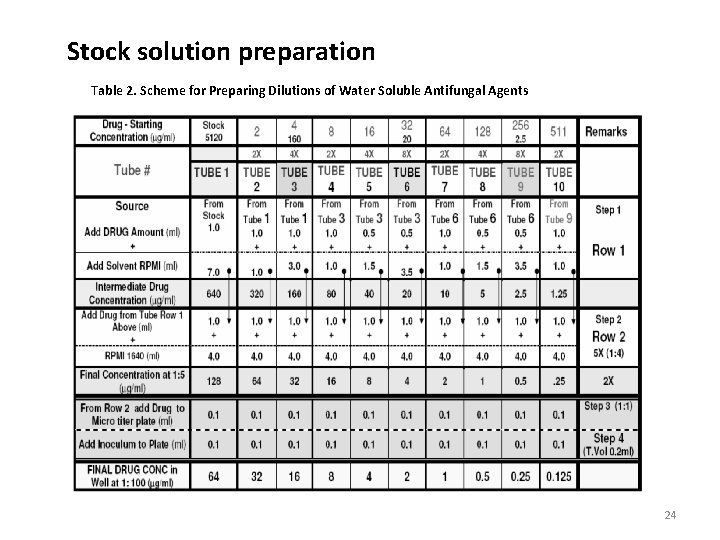
Stock solution preparation Table 2. Scheme for Preparing Dilutions of Water Soluble Antifungal Agents 24
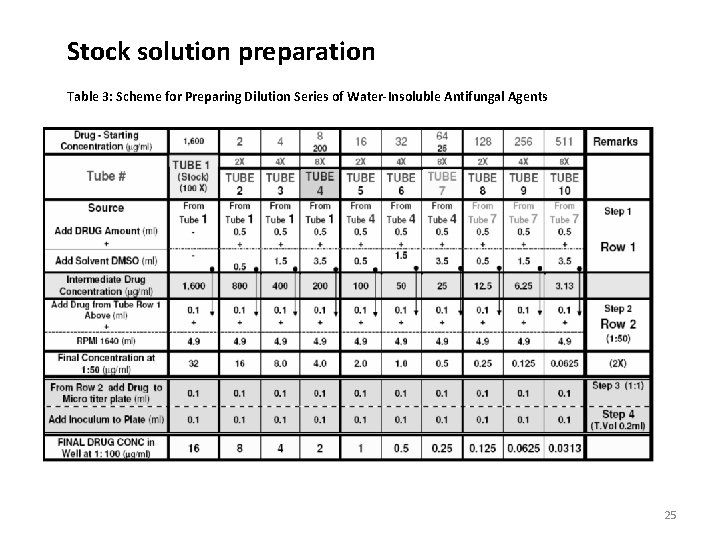
Stock solution preparation Table 3: Scheme for Preparing Dilution Series of Water-Insoluble Antifungal Agents 25
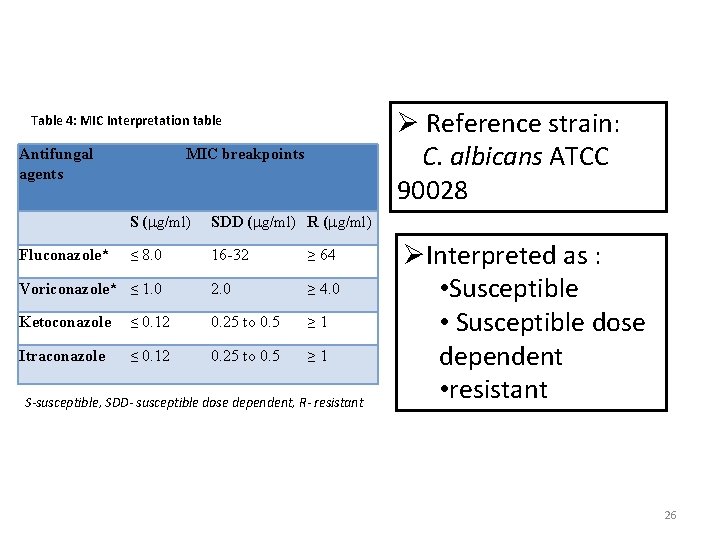
Table 4: MIC Interpretation table Antifungal agents MIC breakpoints S ( g/ml) SDD ( g/ml) R ( g/ml) ≤ 8. 0 16 -32 ≥ 64 Voriconazole* ≤ 1. 0 2. 0 ≥ 4. 0 Ketoconazole ≤ 0. 12 0. 25 to 0. 5 ≥ 1 Itraconazole ≤ 0. 12 0. 25 to 0. 5 ≥ 1 Fluconazole* S-susceptible, SDD- susceptible dose dependent, R- resistant Ø Reference strain: C. albicans ATCC 90028 ØInterpreted as : • Susceptible dose dependent • resistant 26
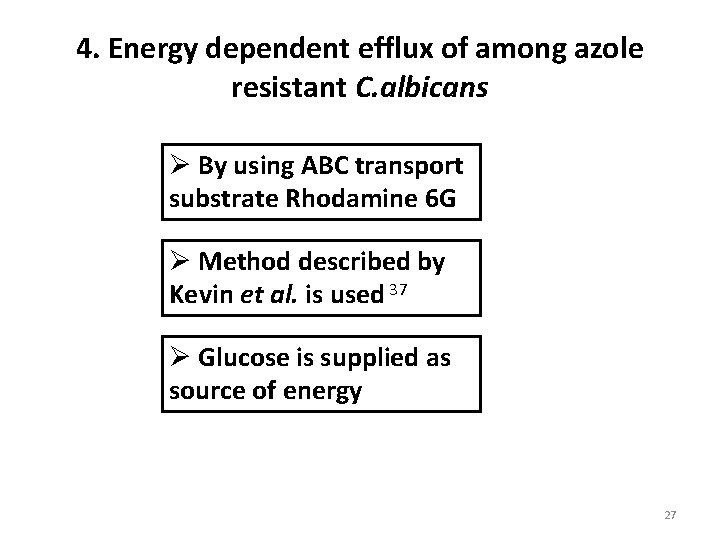
4. Energy dependent efflux of among azole resistant C. albicans Ø By using ABC transport substrate Rhodamine 6 G Ø Method described by Kevin et al. is used 37 Ø Glucose is supplied as source of energy 27
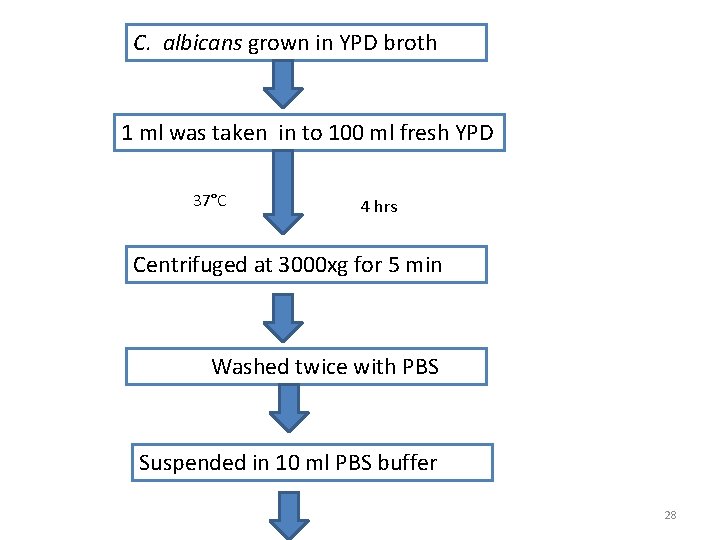
C. albicans grown in YPD broth 1 ml was taken in to 100 ml fresh YPD 37°C 4 hrs Centrifuged at 3000 xg for 5 min Washed twice with PBS Suspended in 10 ml PBS buffer 28
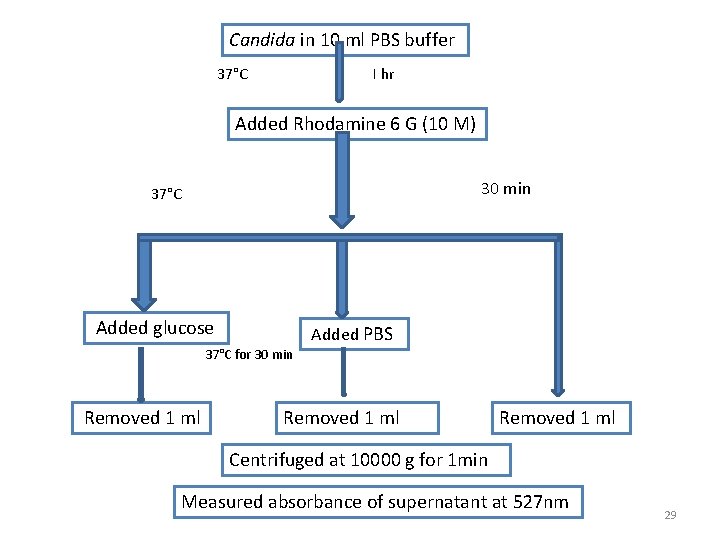
Candida in 10 ml PBS buffer 37°C I hr Added Rhodamine 6 G (10 M) 30 min 37°C Added glucose 37°C for 30 min Removed 1 ml Added PBS Removed 1 ml Centrifuged at 10000 g for 1 min Measured absorbance of supernatant at 527 nm 29
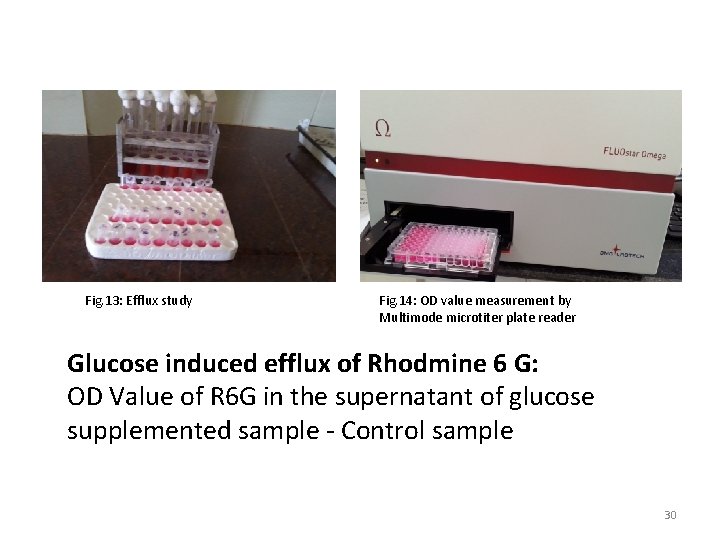
Fig. 13: Efflux study Fig. 14: OD value measurement by Multimode microtiter plate reader Glucose induced efflux of Rhodmine 6 G: OD Value of R 6 G in the supernatant of glucose supplemented sample Control sample 30
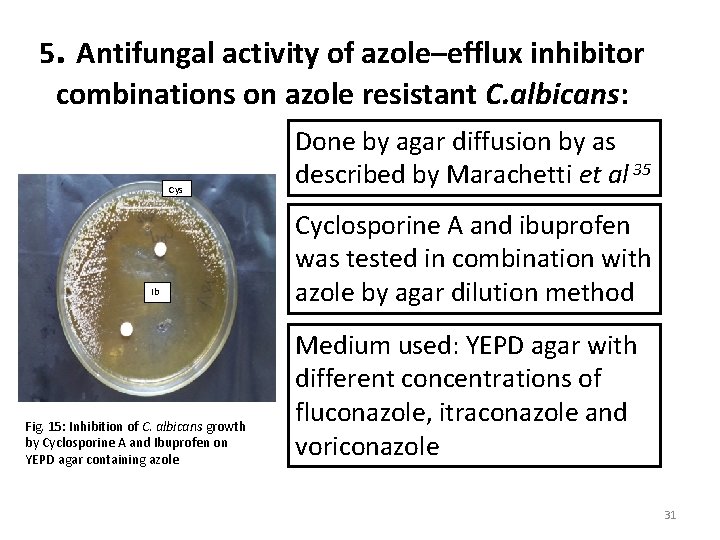
5. Antifungal activity of azole–efflux inhibitor combinations on azole resistant C. albicans: Cys Ib Fig. 15: Inhibition of C. albicans growth by Cyclosporine A and Ibuprofen on YEPD agar containing azole Done by agar diffusion by as described by Marachetti et al 35 Cyclosporine A and ibuprofen was tested in combination with azole by agar dilution method Medium used: YEPD agar with different concentrations of fluconazole, itraconazole and voriconazole 31
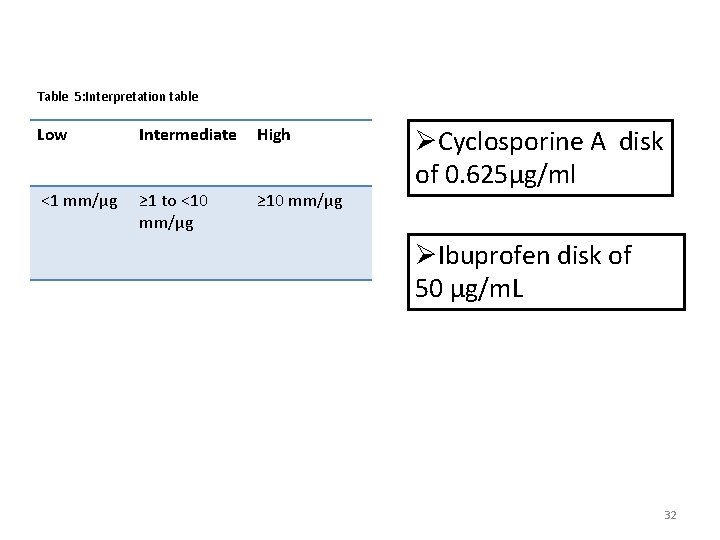
Table 5: Interpretation table Low Intermediate High <1 mm/μg ≥ 1 to <10 mm/μg ≥ 10 mm/μg ØCyclosporine A disk of 0. 625µg/ml ØIbuprofen disk of 50 μg/m. L 32
Data management and statistical analysis • By using SPSS software • Chi square test ant fishers exact test was used for comparison of variables • P values of <0. 05 was considered statistically significant 33

Results 34
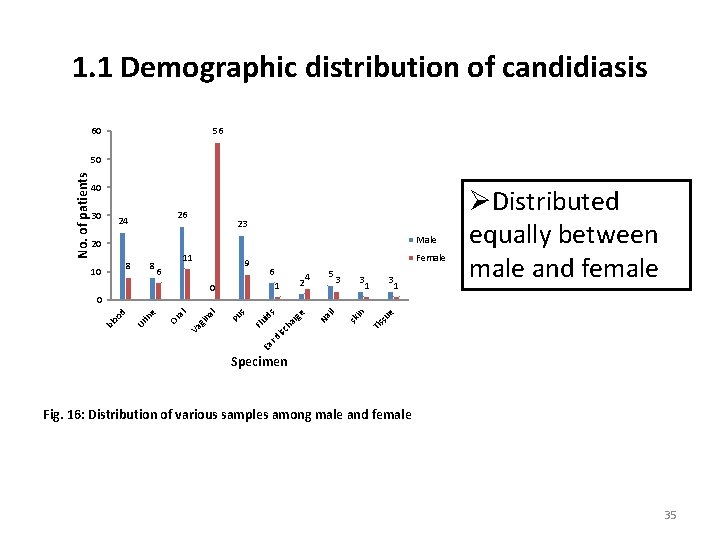
1. 1 Demographic distribution of candidiasis 56 60 40 30 26 24 23 Male 20 Female 3 3 3 1 1 ss ue ha isc 5 Ti id s 4 ØDistributed equally between male and female Ea r d Flu al gin al Va Or e in Ur bl oo d 0 2 1 0 sk in 6 il 9 Na 11 6 e 8 rg 8 10 Pu s No. of patients 50 Specimen Fig. 16: Distribution of various samples among male and female 35
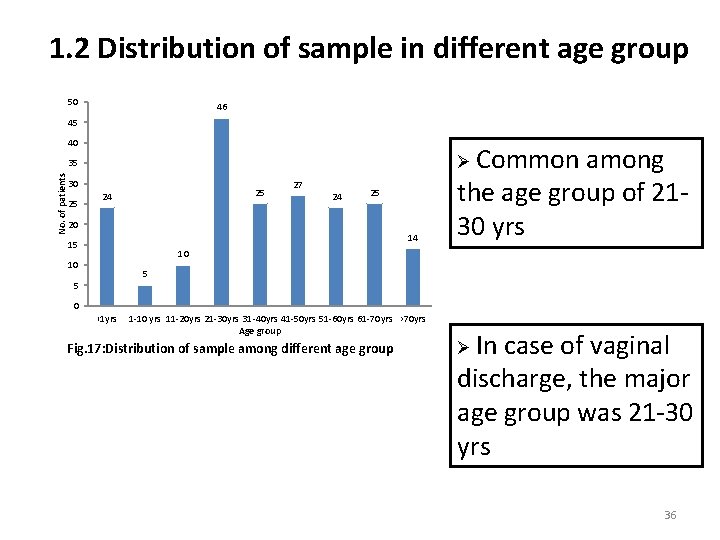
1. 2 Distribution of sample in different age group 50 46 45 40 Ø Common among No. of patients 35 30 25 25 24 27 24 25 20 14 15 the age group of 21 30 yrs 10 10 5 5 0 ‹ 1 yrs 1 10 yrs 11 20 yrs 21 30 yrs 31 40 yrs 41 50 yrs 51 60 yrs 61 70 yrs › 70 yrs Age group Fig. 17: Distribution of sample among different age group Ø In case of vaginal discharge, the major age group was 21 30 yrs 36
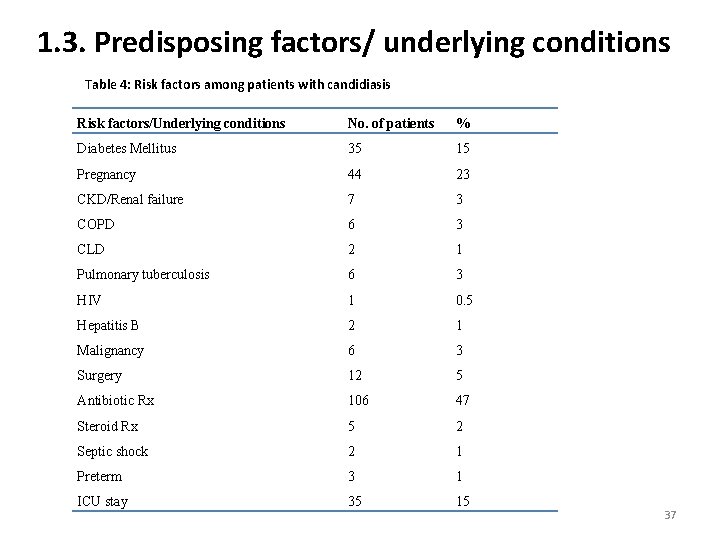
1. 3. Predisposing factors/ underlying conditions Table 4: Risk factors among patients with candidiasis Risk factors/Underlying conditions No. of patients % Diabetes Mellitus 35 15 Pregnancy 44 23 CKD/Renal failure 7 3 COPD 6 3 CLD 2 1 Pulmonary tuberculosis 6 3 HIV 1 0. 5 Hepatitis B 2 1 Malignancy 6 3 Surgery 12 5 Antibiotic Rx 106 47 Steroid Rx 5 2 Septic shock 2 1 Preterm 3 1 ICU stay 35 15 37
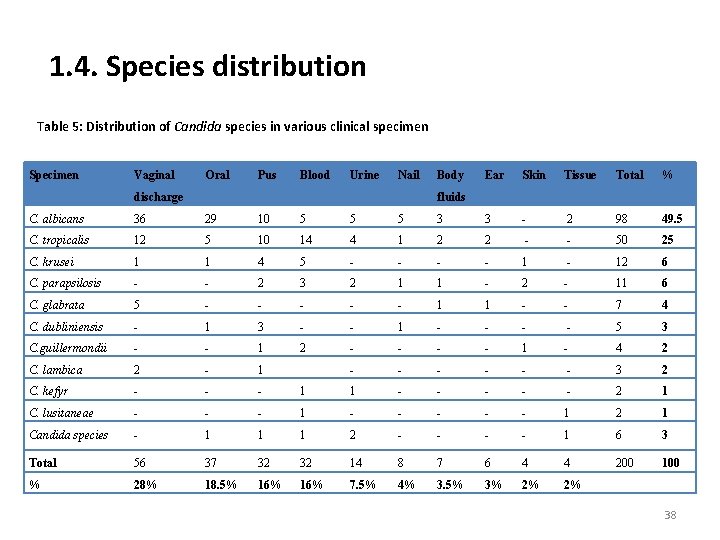
1. 4. Species distribution Table 5: Distribution of Candida species in various clinical specimen Specimen Vaginal Oral Pus Blood Urine Nail discharge Body Ear Skin Tissue Total % fluids C. albicans 36 29 10 5 5 5 3 3 - 2 98 49. 5 C. tropicalis 12 5 10 14 4 1 2 2 - - 50 25 C. krusei 1 1 4 5 - - 12 6 C. parapsilosis - - 2 3 2 1 1 - 2 - 11 6 C. glabrata 5 - - - 1 1 - - 7 4 C. dubliniensis - 1 3 - - 1 - - - - 5 3 C. guillermondii - - 1 2 - - 1 - 4 2 C. lambica 2 - 1 - - - - 3 2 C. kefyr - - - 1 1 - - - 2 1 C. lusitaneae - - - 1 2 1 Candida species - 1 1 1 2 - - 1 6 3 Total 56 37 32 32 14 8 7 6 4 4 200 100 % 28% 18. 5% 16% 7. 5% 4% 3. 5% 3% 2% 2% 38
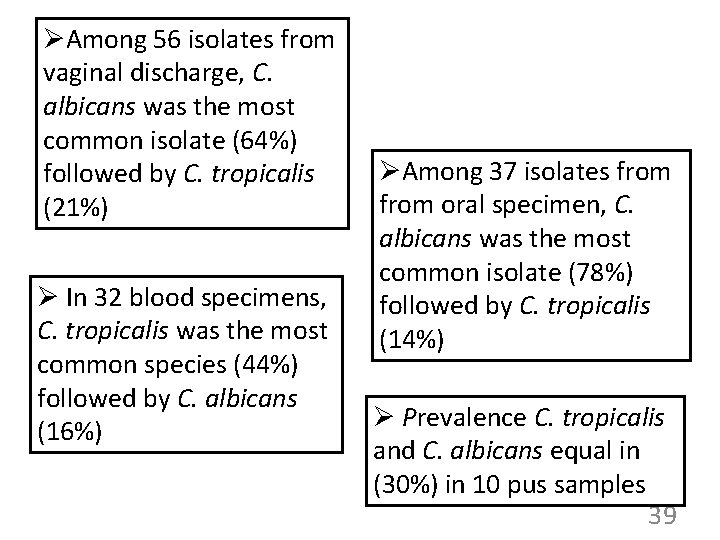
ØAmong 56 isolates from vaginal discharge, C. albicans was the most common isolate (64%) followed by C. tropicalis (21%) Ø In 32 blood specimens, C. tropicalis was the most common species (44%) followed by C. albicans (16%) ØAmong 37 isolates from oral specimen, C. albicans was the most common isolate (78%) followed by C. tropicalis (14%) Ø Prevalence C. tropicalis and C. albicans equal in (30%) in 10 pus samples 39
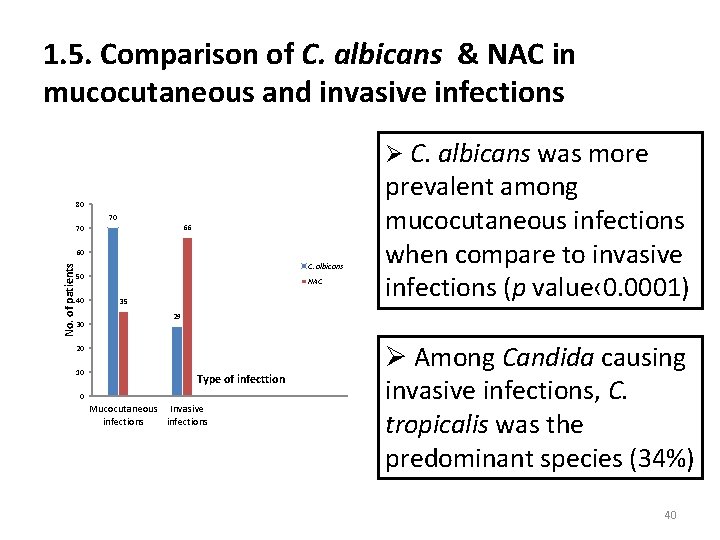
1. 5. Comparison of C. albicans & NAC in mucocutaneous and invasive infections Ø C. albicans was more 80 70 66 70 No. of patients 60 C. albicans 50 40 30 NAC 35 29 20 10 prevalent among mucocutaneous infections when compare to invasive infections (p value‹ 0. 0001) Type of infecttion 0 Mucocutaneous Invasive infections Ø Among Candida causing invasive infections, C. tropicalis was the predominant species (34%) 40
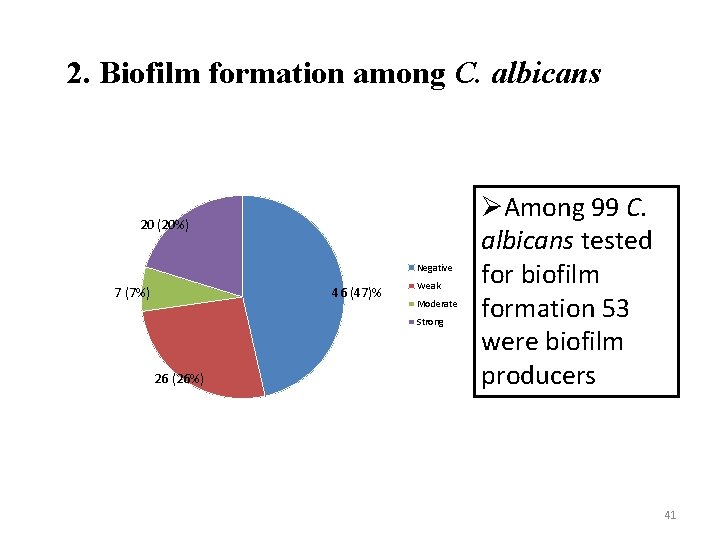
2. Biofilm formation among C. albicans 20 (20%) Negative 46 (47)% 7 (7%) Weak Moderate Strong 26 (26%) ØAmong 99 C. albicans tested for biofilm formation 53 were biofilm producers 41
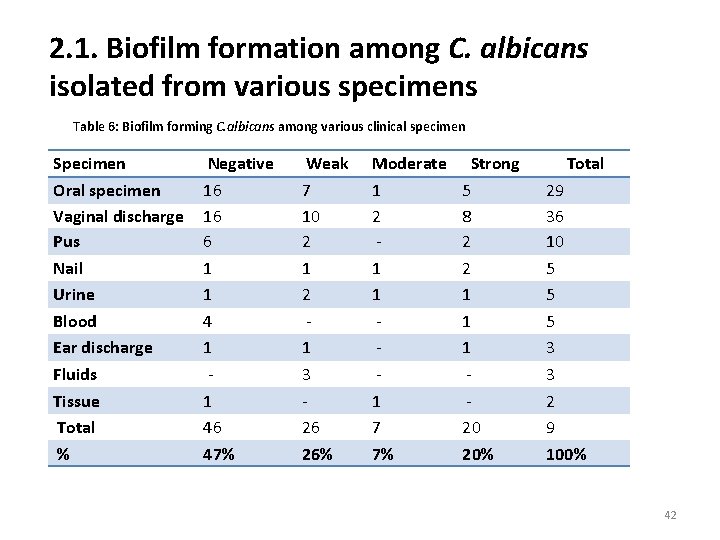
2. 1. Biofilm formation among C. albicans isolated from various specimens Table 6: Biofilm forming C. albicans among various clinical specimen Specimen Oral specimen Vaginal discharge Pus Nail Urine Blood Ear discharge Fluids Tissue Total % Negative 16 16 6 1 1 4 1 1 46 47% Weak 7 10 2 1 2 1 3 26 26% Moderate 1 2 1 1 1 7 7% Strong 5 8 2 2 1 1 1 20 20% Total 29 36 10 5 5 5 3 3 2 9 100% 42
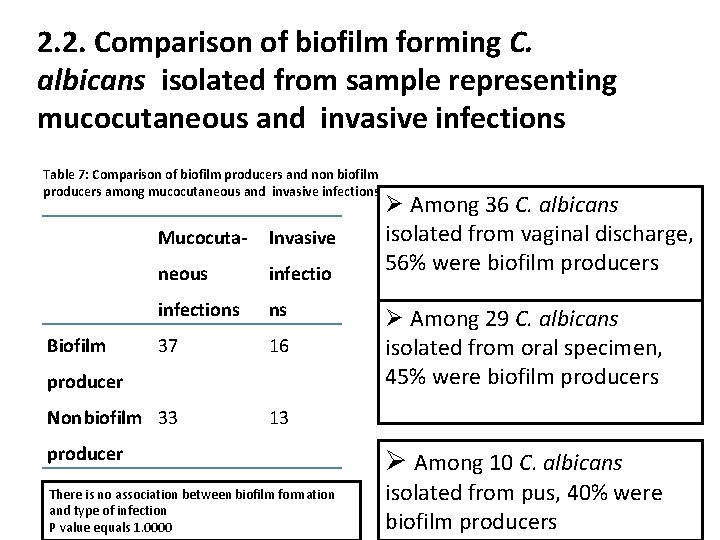
2. 2. Comparison of biofilm forming C. albicans isolated from sample representing mucocutaneous and invasive infections Table 7: Comparison of biofilm producers and non biofilm producers among mucocutaneous and invasive infections Mucocuta- Invasive neous infections ns 37 16 Non biofilm 33 13 Biofilm producer There is no association between biofilm formation and type of infection P value equals 1. 0000 Ø Among 36 C. albicans isolated from vaginal discharge, 56% were biofilm producers Ø Among 29 C. albicans isolated from oral specimen, 45% were biofilm producers Ø Among 10 C. albicans isolated from pus, 40% were 43 biofilm producers
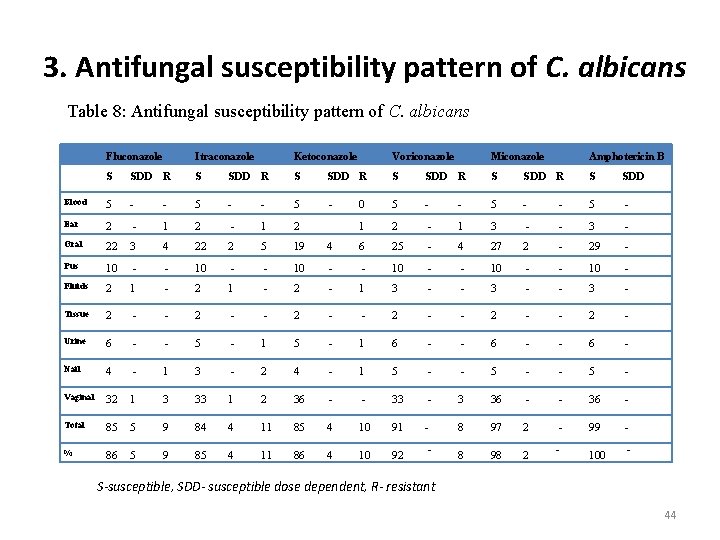
3. Antifungal susceptibility pattern of C. albicans Table 8: Antifungal susceptibility pattern of C. albicans Fluconazole Itraconazole Ketoconazole Voriconazole Miconazole Amphotericin B S SDD R S SDD R S SDD Blood 5 - - 5 - 0 5 - - 5 - - 5 - Ear 2 - 1 2 1 2 - 1 3 - - 3 - Oral 22 3 4 22 2 5 19 4 6 25 - 4 27 2 - 29 - Pus 10 - - 10 - - 10 - Fluids 2 1 - 2 - 1 3 - - 3 - Tissue 2 - - 2 - - 2 - Urine 6 - - 5 - 1 6 - - 6 - Nail 4 - 1 3 - 2 4 - 1 5 - - 5 - Vaginal 32 1 3 33 1 2 36 - - 33 - 3 36 - - 36 - Total 85 5 9 84 4 11 85 4 10 91 - 8 97 2 - 99 - % 86 5 9 85 4 11 86 4 10 92 8 98 2 100 S-susceptible, SDD- susceptible dose dependent, R- resistant 44
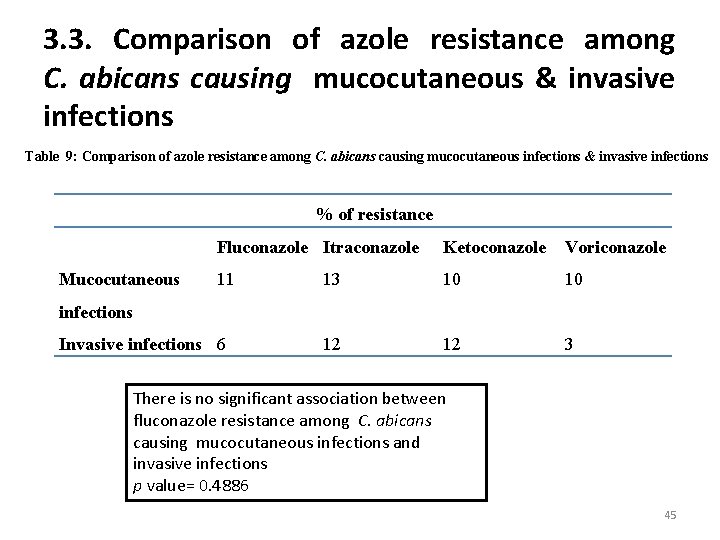
3. 3. Comparison of azole resistance among C. abicans causing mucocutaneous & invasive infections Table 9: Comparison of azole resistance among C. abicans causing mucocutaneous infections & invasive infections % of resistance Mucocutaneous Fluconazole Itraconazole Ketoconazole Voriconazole 11 13 10 10 12 12 3 infections Invasive infections 6 There is no significant association between fluconazole resistance among C. abicans causing mucocutaneous infections and invasive infections p value= 0. 4886 45
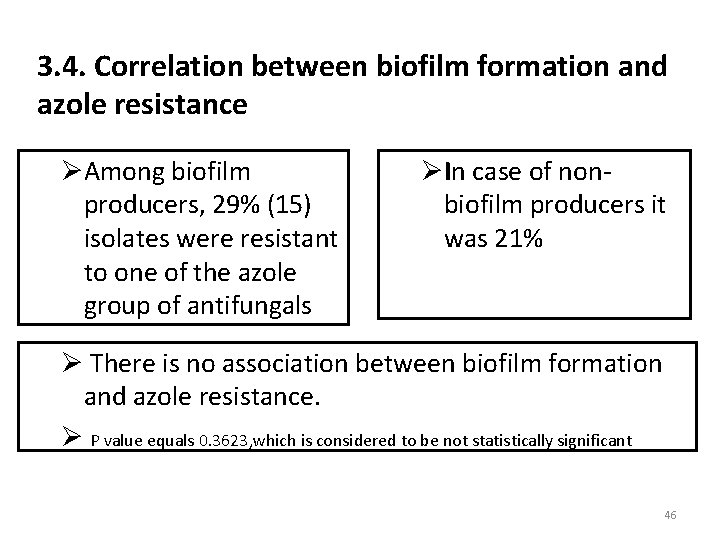
3. 4. Correlation between biofilm formation and azole resistance ØAmong biofilm producers, 29% (15) isolates were resistant to one of the azole group of antifungals ØIn case of non biofilm producers it was 21% Ø There is no association between biofilm formation and azole resistance. Ø P value equals 0. 3623, which is considered to be not statistically significant 46
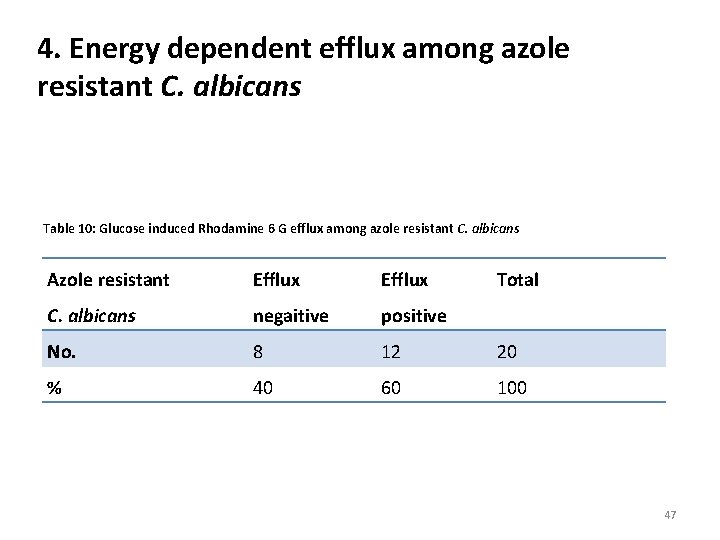
4. Energy dependent efflux among azole resistant C. albicans Table 10: Glucose induced Rhodamine 6 G efflux among azole resistant C. albicans Azole resistant Efflux Total C. albicans negaitive positive No. 8 12 20 % 40 60 100 47
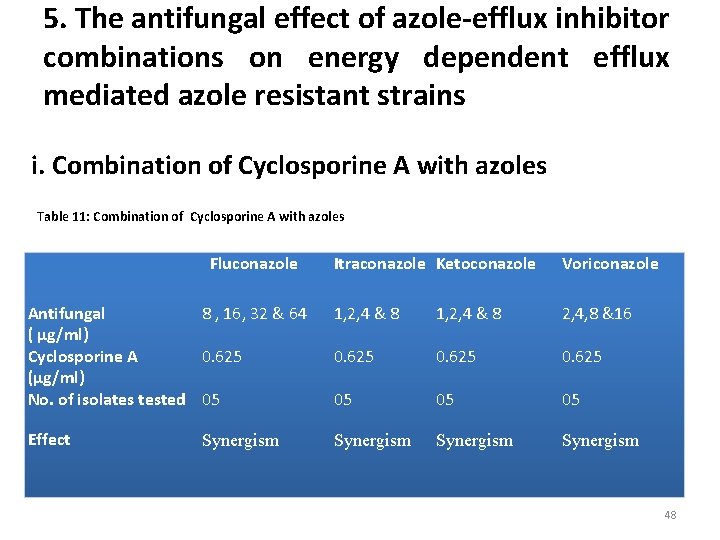
5. The antifungal effect of azole-efflux inhibitor combinations on energy dependent efflux mediated azole resistant strains i. Combination of Cyclosporine A with azoles Table 11: Combination of Cyclosporine A with azoles Fluconazole Itraconazole Ketoconazole Voriconazole Antifungal 8 , 16, 32 & 64 ( µg/ml) Cyclosporine A 0. 625 (µg/ml) No. of isolates tested 05 1, 2, 4 & 8 2, 4, 8 &16 0. 625 05 05 05 Effect Synergism 48
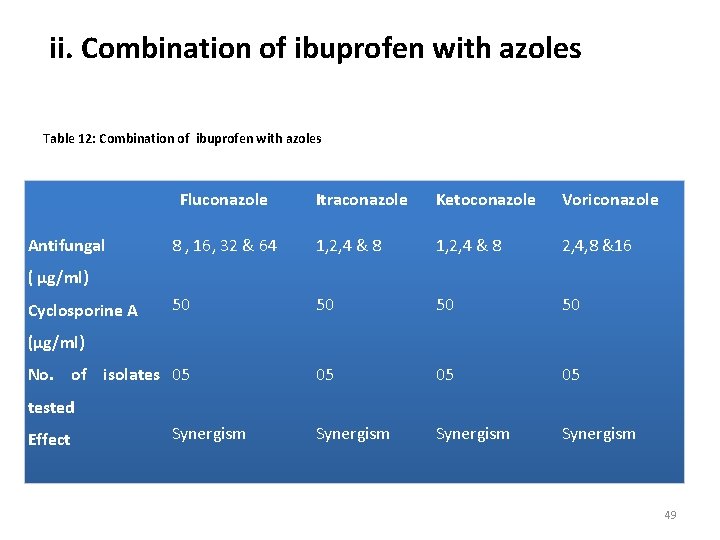
ii. Combination of ibuprofen with azoles Table 12: Combination of ibuprofen with azoles Fluconazole Itraconazole Ketoconazole Voriconazole 8 , 16, 32 & 64 1, 2, 4 & 8 2, 4, 8 &16 50 50 No. of isolates 05 05 Synergism Antifungal ( µg/ml) Cyclosporine A (µg/ml) tested Effect Synergism 49
Discussion 1. 1. Demographic distribution of candidiasis • There is no association between candidiasis and gender in present study • There are previous study reports showing more prevalence in female (Shivanand et al. 2011) 17 and male (Amar et al. , 2014, Ravinder et al. , 2014) 11, 14 • The most commonest age groups are of 21 30 years • Previous study shows wide difference in this aspect • Shivanand et al. reported 18 45 years as common age group 17 50
1. 2. Predisposing factors and underlying conditions • Broad spectrum antibiotic treatment, pregnancy and diabetes mellitus were the important risk factors • It is comparable with previous reports (Ravinder et al. , 2014, Amar et al. , 2014, Shivanand et al. , 2011) 11, 14, 17 51
1. 3. Species distribution • C. albicans was major species followed by C. tropicalis • Comparable with previous studies (Rachana et al. , 2016, Roopa et al. , 2015, Udayalaxmi et al. , 2014, Shivanand et al. , 2011)6, 14, 17, 26 • C. tropicalis is the predominant isolate in a few studies (Kumar et al. , 2016, Tejashree et al. , 2014, Binesh et al. , 2011)12, 16, 28 52
5. Biofilm formation • Biofilm producers in the present study were 50% • Comparable with previous studies (Mohandas et al. , Kumar et al. , 2016)25, 28 • A higher prevalence of 60 100% is reported previously (Jasim et al. , 2016, Chaithanya et al. 2014, Zarei et al. , 2014, )119, 20, 23 53
6. Antifungal susceptibility pattern • Antifungal sensitivity in present study was 86%, 85%, 86% and 92% for fluconazole, Itraconazole, ketoconazole and voriconazole respectively • Similar to previous studies (Binesh et al. , 2011, Mondal et al. 2013, Yashwanth et al. , 2013) 12, 38, 39 • But, there also a few reports of 100% sensitivity to azoles (Yotsabeth et al. , 2015, Tejashree et al. , 2014, Sheevani et al. , 2013) 8, 16, 40 • A higher resistance of more than 50% also reported previously (Mohan et al. , 2016 )25 54
7. Rhodamine efflux among azole resistant C. albicans • Increased Rhodamine efflux was seen among 60% of the azole resistant C. albicans when energy was supplied • Increased efflux of Rhodamine 6 G is reported previously also among azole resistant C. albicans (Mishra et al. , 2007, Lan Yang et al. , 2008, Jin Yan et al. , 2015) 29, 41, 42 55
7. Azole –efflux inhibitor combination on azole resistant C. albicans with Rhodamine efflux • All the azole resistant C. albicans positive for glucose induced Rhodamine efflux became susceptible to azole when it combine with Cyclosporine A and ibuprofen • Similar reports published by (Marchetti et al. , 2000, Monika et al. , 2005) 30, 31 • Pina Vaz et al reported that eight of the 12 strains of Candida studied showed synergic activity when fluconazole combined with ibuprofen (Pina Vaz et al. , 2005)43 56
Conclusions • Even though there are many changes in the epidemiology, C. albicans remains as major pathogen of Candidiasis in this area • There is an emergence of Non albicans Candida species such as C. tropicalis, C. krusei, C. parapsilosis, C. glabrata, C. dubliniensis and C. guillermondii • It emphasizes the need to speciate Candida isolates routinely in diagnostic laboratories • C. albicans still shows good susceptibility to Amphotericin B. 57
• However, up 15% of them show resistance to azoles that makes routine antifungal susceptibility test and periodic surveillance mandatory • biofilm formation seen in 50% of the C. albicans highlight importance of practicing effective patient management in the hospital • Increased efflux is the one of the major mechanisms of azole resistance • Efflux inhibitors such as ibuprofen and cyclosporine A in combination with azoles could be the possible treatment option for azole resistant C. albicans 58
Highlights of the study • C. albicans is the major species causing candidiasis • C. tropicalis is predominant in blood and pus sample • Azole resistance and biofilm formation are problems associated with C. albicans • More than half of the C. albicans are with increased efflux indicate it as the one of the major mechanisms of azole resistance • Combination studies highlight the effectiveness of ibuprofen and cyclosporine A along with azoles against azole resistant efflux positive C. albicans 59
Limitations of the study • Detection of azole efflux was not done specificlly • Molecular method for detection of efflux was not attempted Scope for future work • Rapid method for detection of azole resistant C. albicans by using molecular method will be useful for management of patient • Biofilm formation has to be evaluated by using materials which are commonly used on patients in the hospital 60
• The structural resolution of efflux pumps may help in rational drug design • Detailed study on azole efflux inhibitor combination may be useful to develop treatment strategies for azole resistant Candida • Effectiveness of the combinations has to be evaluated in vivo 61
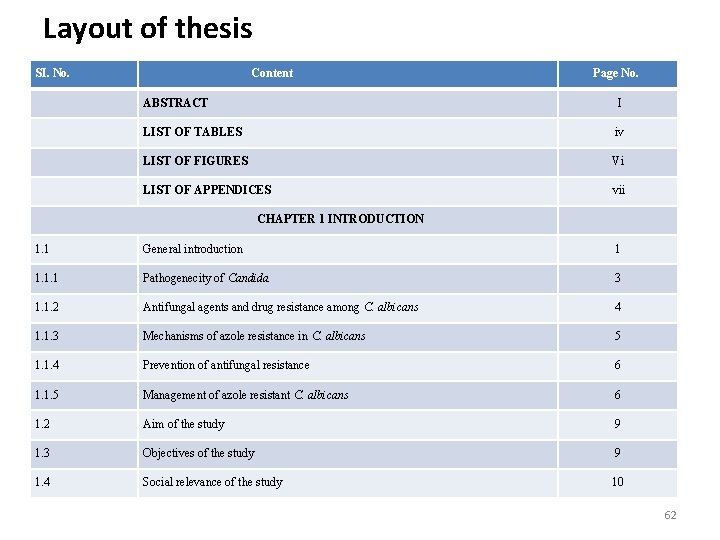
Layout of thesis SI. No. Content Page No. ABSTRACT I LIST OF TABLES iv LIST OF FIGURES Vi LIST OF APPENDICES vii CHAPTER 1 INTRODUCTION 1. 1 General introduction 1 1. 1. 1 Pathogenecity of Candida 3 1. 1. 2 Antifungal agents and drug resistance among C. albicans 4 1. 1. 3 Mechanisms of azole resistance in C. albicans 5 1. 1. 4 Prevention of antifungal resistance 6 1. 1. 5 Management of azole resistant C. albicans 6 1. 2 Aim of the study 9 1. 3 Objectives of the study 9 1. 4 Social relevance of the study 10 62
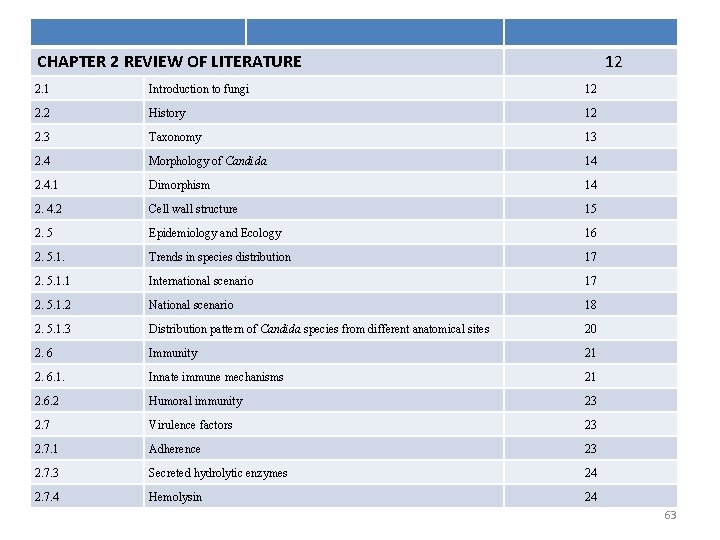
CHAPTER 2 REVIEW OF LITERATURE 12 2. 1 Introduction to fungi 12 2. 2 History 12 2. 3 Taxonomy 13 2. 4 Morphology of Candida 14 2. 4. 1 Dimorphism 14 2. 4. 2 Cell wall structure 15 2. 5 Epidemiology and Ecology 16 2. 5. 1. Trends in species distribution 17 2. 5. 1. 1 International scenario 17 2. 5. 1. 2 National scenario 18 2. 5. 1. 3 Distribution pattern of Candida species from different anatomical sites 20 2. 6 Immunity 21 2. 6. 1. Innate immune mechanisms 21 2. 6. 2 Humoral immunity 23 2. 7 Virulence factors 23 2. 7. 1 Adherence 23 2. 7. 3 Secreted hydrolytic enzymes 24 2. 7. 4 Hemolysin 24 63
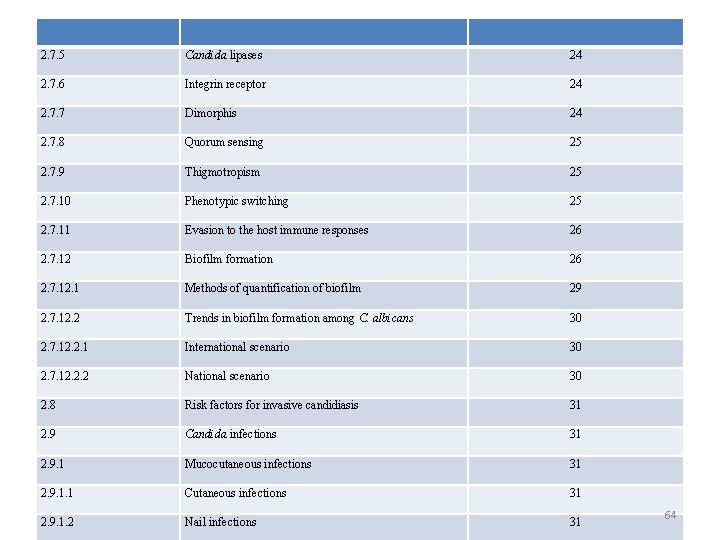
2. 7. 5 Candida lipases 24 2. 7. 6 Integrin receptor 24 2. 7. 7 Dimorphis 24 2. 7. 8 Quorum sensing 25 2. 7. 9 Thigmotropism 25 2. 7. 10 Phenotypic switching 25 2. 7. 11 Evasion to the host immune responses 26 2. 7. 12 Biofilm formation 26 2. 7. 12. 1 Methods of quantification of biofilm 29 2. 7. 12. 2 Trends in biofilm formation among C. albicans 30 2. 7. 12. 2. 1 International scenario 30 2. 7. 12. 2. 2 National scenario 30 2. 8 Risk factors for invasive candidiasis 31 2. 9 Candida infections 31 2. 9. 1 Mucocutaneous infections 31 2. 9. 1. 1 Cutaneous infections 31 2. 9. 1. 2 Nail infections 31 64
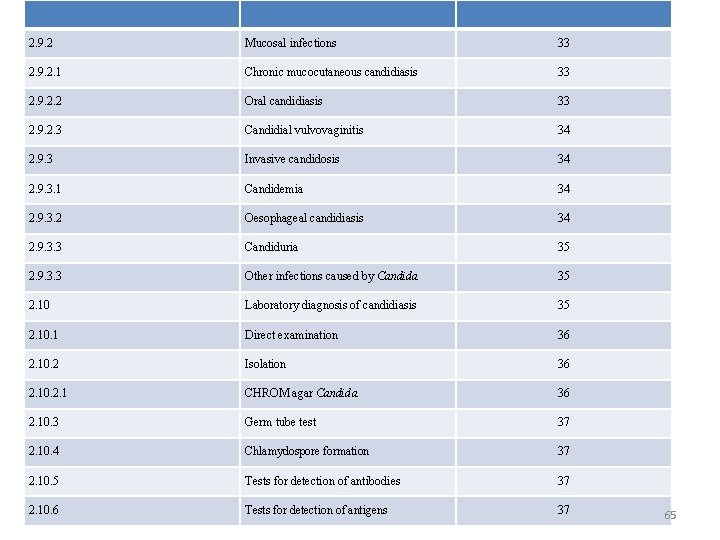
2. 9. 2 Mucosal infections 33 2. 9. 2. 1 Chronic mucocutaneous candidiasis 33 2. 9. 2. 2 Oral candidiasis 33 2. 9. 2. 3 Candidial vulvovaginitis 34 2. 9. 3 Invasive candidosis 34 2. 9. 3. 1 Candidemia 34 2. 9. 3. 2 Oesophageal candidiasis 34 2. 9. 3. 3 Candiduria 35 2. 9. 3. 3 Other infections caused by Candida 35 2. 10 Laboratory diagnosis of candidiasis 35 2. 10. 1 Direct examination 36 2. 10. 2 Isolation 36 2. 10. 2. 1 CHROM agar Candida 36 2. 10. 3 Germ tube test 37 2. 10. 4 Chlamydospore formation 37 2. 10. 5 Tests for detection of antibodies 37 2. 10. 6 Tests for detection of antigens 37 65
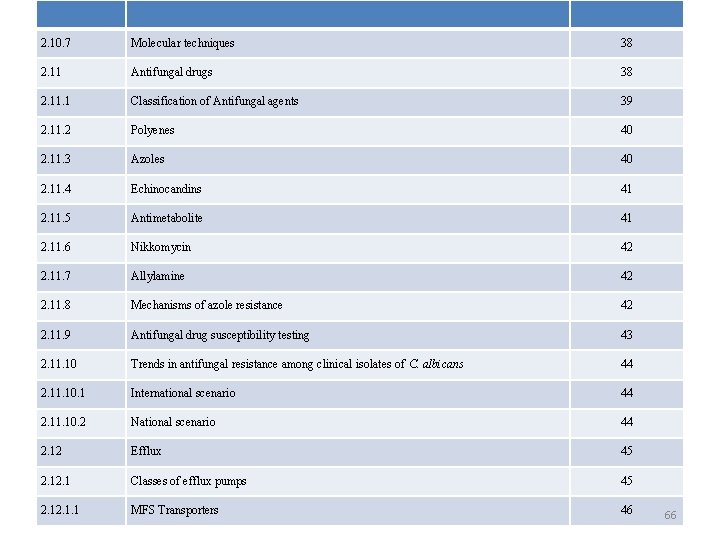
2. 10. 7 Molecular techniques 38 2. 11 Antifungal drugs 38 2. 11. 1 Classification of Antifungal agents 39 2. 11. 2 Polyenes 40 2. 11. 3 Azoles 40 2. 11. 4 Echinocandins 41 2. 11. 5 Antimetabolite 41 2. 11. 6 Nikkomycin 42 2. 11. 7 Allylamine 42 2. 11. 8 Mechanisms of azole resistance 42 2. 11. 9 Antifungal drug susceptibility testing 43 2. 11. 10 Trends in antifungal resistance among clinical isolates of C. albicans 44 2. 11. 10. 1 International scenario 44 2. 11. 10. 2 National scenario 44 2. 12 Efflux 45 2. 1 Classes of efflux pumps 45 2. 1. 1 MFS Transporters 46 66
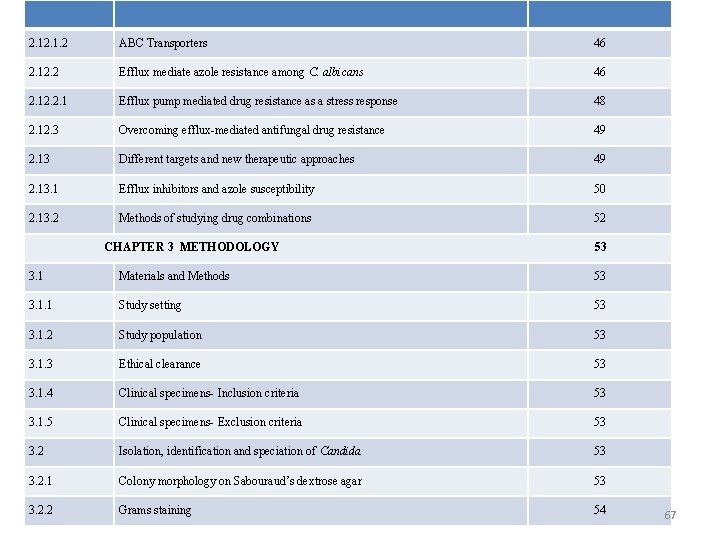
2. 1. 2 ABC Transporters 46 2. 12. 2 Efflux mediate azole resistance among C. albicans 46 2. 12. 2. 1 Efflux pump mediated drug resistance as a stress response 48 2. 12. 3 Overcoming efflux-mediated antifungal drug resistance 49 2. 13 Different targets and new therapeutic approaches 49 2. 13. 1 Efflux inhibitors and azole susceptibility 50 2. 13. 2 Methods of studying drug combinations 52 CHAPTER 3 METHODOLOGY 53 3. 1 Materials and Methods 53 3. 1. 1 Study setting 53 3. 1. 2 Study population 53 3. 1. 3 Ethical clearance 53 3. 1. 4 Clinical specimens- Inclusion criteria 53 3. 1. 5 Clinical specimens- Exclusion criteria 53 3. 2 Isolation, identification and speciation of Candida 53 3. 2. 1 Colony morphology on Sabouraud’s dextrose agar 53 3. 2. 2 Grams staining 54 67
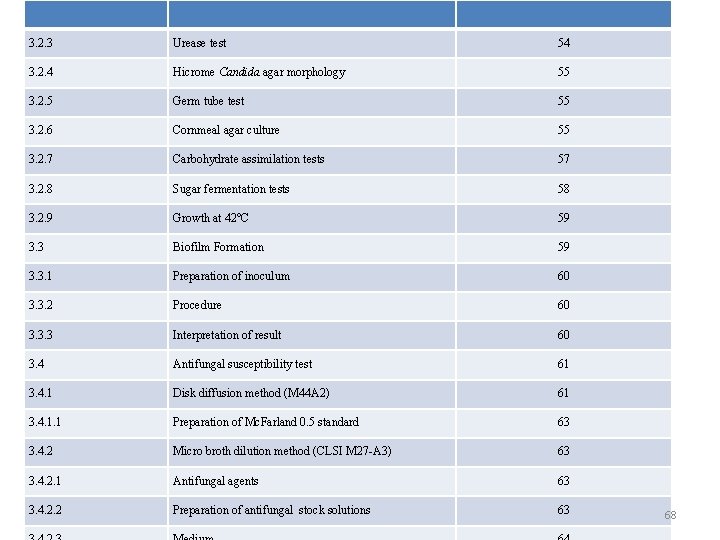
3. 2. 3 Urease test 54 3. 2. 4 Hicrome Candida agar morphology 55 3. 2. 5 Germ tube test 55 3. 2. 6 Cornmeal agar culture 55 3. 2. 7 Carbohydrate assimilation tests 57 3. 2. 8 Sugar fermentation tests 58 3. 2. 9 Growth at 42°C 59 3. 3 Biofilm Formation 59 3. 3. 1 Preparation of inoculum 60 3. 3. 2 Procedure 60 3. 3. 3 Interpretation of result 60 3. 4 Antifungal susceptibility test 61 3. 4. 1 Disk diffusion method (M 44 A 2) 61 3. 4. 1. 1 Preparation of Mc. Farland 0. 5 standard 63 3. 4. 2 Micro broth dilution method (CLSI M 27 -A 3) 63 3. 4. 2. 1 Antifungal agents 63 3. 4. 2. 2 Preparation of antifungal stock solutions 63 68
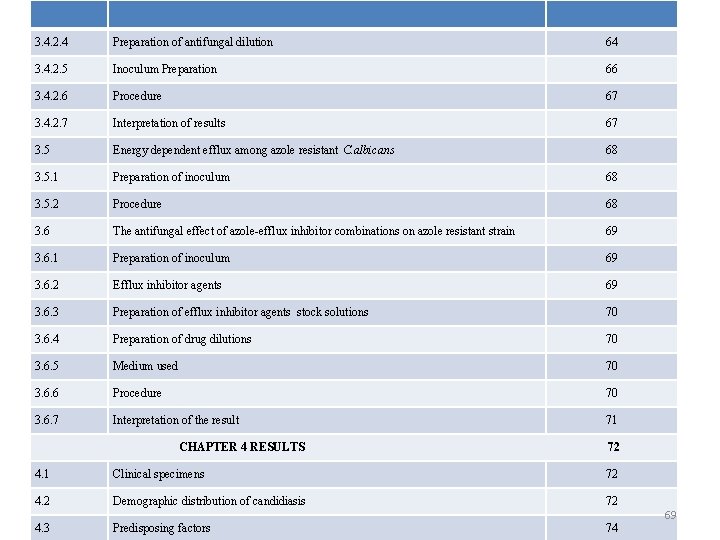
3. 4. 2. 4 Preparation of antifungal dilution 64 3. 4. 2. 5 Inoculum Preparation 66 3. 4. 2. 6 Procedure 67 3. 4. 2. 7 Interpretation of results 67 3. 5 Energy dependent efflux among azole resistant C. albicans 68 3. 5. 1 Preparation of inoculum 68 3. 5. 2 Procedure 68 3. 6 The antifungal effect of azole-efflux inhibitor combinations on azole resistant strain 69 3. 6. 1 Preparation of inoculum 69 3. 6. 2 Efflux inhibitor agents 69 3. 6. 3 Preparation of efflux inhibitor agents stock solutions 70 3. 6. 4 Preparation of drug dilutions 70 3. 6. 5 Medium used 70 3. 6. 6 Procedure 70 3. 6. 7 Interpretation of the result 71 CHAPTER 4 RESULTS 72 4. 1 Clinical specimens 72 4. 2 Demographic distribution of candidiasis 72 4. 3 Predisposing factors 74 69
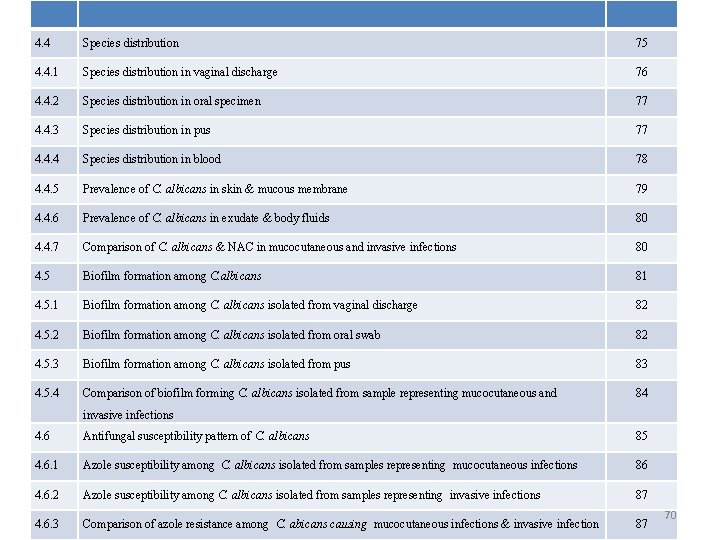
4. 4 Species distribution 75 4. 4. 1 Species distribution in vaginal discharge 76 4. 4. 2 Species distribution in oral specimen 77 4. 4. 3 Species distribution in pus 77 4. 4. 4 Species distribution in blood 78 4. 4. 5 Prevalence of C. albicans in skin & mucous membrane 79 4. 4. 6 Prevalence of C. albicans in exudate & body fluids 80 4. 4. 7 Comparison of C. albicans & NAC in mucocutaneous and invasive infections 80 4. 5 Biofilm formation among C. albicans 81 4. 5. 1 Biofilm formation among C. albicans isolated from vaginal discharge 82 4. 5. 2 Biofilm formation among C. albicans isolated from oral swab 82 4. 5. 3 Biofilm formation among C. albicans isolated from pus 83 4. 5. 4 Comparison of biofilm forming C. albicans isolated from sample representing mucocutaneous and 84 invasive infections 4. 6 Antifungal susceptibility pattern of C. albicans 85 4. 6. 1 Azole susceptibility among C. albicans isolated from samples representing mucocutaneous infections 86 4. 6. 2 Azole susceptibility among C. albicans isolated from samples representing invasive infections 87 4. 6. 3 Comparison of azole resistance among C. abicans causing mucocutaneous infections & invasive infection 87 70
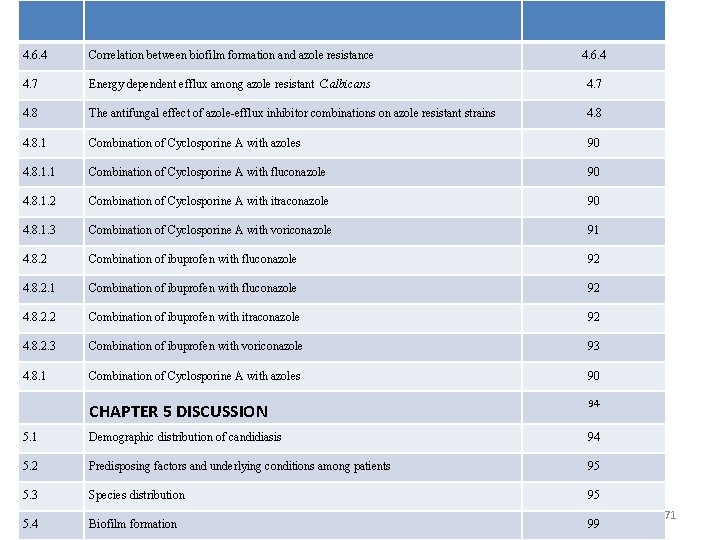
4. 6. 4 Correlation between biofilm formation and azole resistance 4. 6. 4 4. 7 Energy dependent efflux among azole resistant C. albicans 4. 7 4. 8 The antifungal effect of azole-efflux inhibitor combinations on azole resistant strains 4. 8. 1 Combination of Cyclosporine A with azoles 90 4. 8. 1. 1 Combination of Cyclosporine A with fluconazole 90 4. 8. 1. 2 Combination of Cyclosporine A with itraconazole 90 4. 8. 1. 3 Combination of Cyclosporine A with voriconazole 91 4. 8. 2 Combination of ibuprofen with fluconazole 92 4. 8. 2. 1 Combination of ibuprofen with fluconazole 92 4. 8. 2. 2 Combination of ibuprofen with itraconazole 92 4. 8. 2. 3 Combination of ibuprofen with voriconazole 93 4. 8. 1 Combination of Cyclosporine A with azoles 90 CHAPTER 5 DISCUSSION 94 5. 1 Demographic distribution of candidiasis 94 5. 2 Predisposing factors and underlying conditions among patients 95 5. 3 Species distribution 95 5. 4 Biofilm formation 99 71
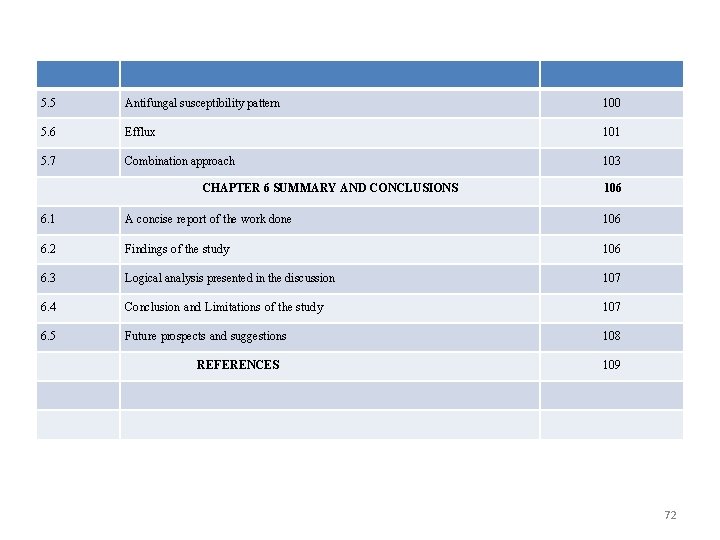
5. 5 Antifungal susceptibility pattern 100 5. 6 Efflux 101 5. 7 Combination approach 103 CHAPTER 6 SUMMARY AND CONCLUSIONS 106 6. 1 A concise report of the work done 106 6. 2 Findings of the study 106 6. 3 Logical analysis presented in the discussion 107 6. 4 Conclusion and Limitations of the study 107 6. 5 Future prospects and suggestions 108 REFERENCES 109 72
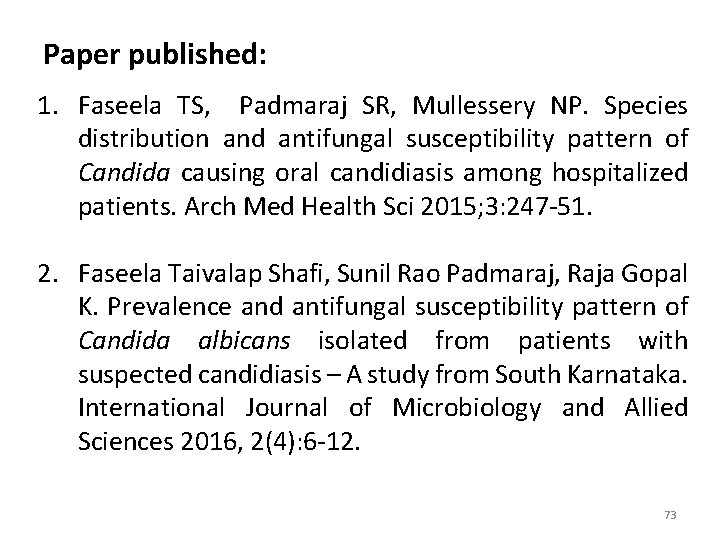
Paper published: 1. Faseela TS, Padmaraj SR, Mullessery NP. Species distribution and antifungal susceptibility pattern of Candida causing oral candidiasis among hospitalized patients. Arch Med Health Sci 2015; 3: 247 51. 2. Faseela Taivalap Shafi, Sunil Rao Padmaraj, Raja Gopal K. Prevalence and antifungal susceptibility pattern of Candida albicans isolated from patients with suspected candidiasis – A study from South Karnataka. International Journal of Microbiology and Allied Sciences 2016, 2(4): 6 12. 73
References 1. 2. Todd P. Mc. Carty, Peter. G. Pappas. I nvasive Candidiasis. Infect Dis Clin North Am. 2016 ; 30: 103 24. Dawn M. Sievert, Philip Ricks, Jonathan R Edwards, Amy Schneider, Jean Patel, et al. Antimicrobial resistant pathogens associated with healthcare associated infections: Summary of data reported to the National Healthcare Safety Network at the Centers for Disease Control and Prevention, 2009– 2010. Infection Control and Hospital Epidemiology 2013; 34: 1. 3. Giri S, Kindo A J. A review of Candida species causing blood stream infection. Indian Journal of Medical Microbiology 2012; 30: 270 8. 4. Yapar N. Epidemiology and risk factors for invasive candidiasis. Therapeutics and Clinical Risk Management 2014; 10: 95 105. doi: 10. 2147/TCRM. S 40160. 5. Pfaller MA, Diekema DJ, Gibbs DL, et al; Global Antifungal Surveillance Group. Results from the ARTEMIS DISK global antifungal surveillance study, 1997 to 2007: a 10. 5 year analysis of susceptibilities of Candida species to fluconazole and voriconazole as determined by CLSI standardized disk diffusion. J Clin Microbiol. 2010; 48(4): 1366– 1377. 6. Rachana Mehta, Anupama S. Wyawahare. Evaluation of Hicrome Candida differential agar for species identification of Candida isolates from various clinical samples. International Journal of Contemporary Medical Research 2016; 3(4): 1219 1222. 7. Changdeo S Aher. Species distribution, virulence factors and antifungal susceptibility profile of Candida isolated from Oropharyngeal lesions of HIV infected patients. International Journal of Current Microbioligy and Applied Sciences 2014; 31: 453 460. 8. Sheevani, Poonam Sharma, Aruna Agarwal. Nosocomial Candida Infection. Journal of Clinical and Diagnostic Research 2013; 7: 405 406. 9. Mohan S, Karthikeyan D. Speciation and Antifungal Susceptibility Pattern of Candida Isolated from Clinical Specimens. International Journal of Current Microbiology and Applied Sciences 2016; 5(4): 820 824. 10. Kee Peng Ng, Chee Sian Kuan, Harvinder Kaur, Shiang Ling Na, Nadia Atiya and Rukumani Devi Velayuthan. Candida species epidemiology 2000– 2013: a laboratory based Report. Tropical Medicine and International Health 2015; 20: 1447– 1453. 11. Ravinder Kaur, Ritu Goyal, Megh S Dhakad, Preena Bhalla, Rakesh Kumar. Epidemiology and virulence determinants including biofilm profile of Candida infections in an ICU in a tertiary hospital in India. Journal of Mycology 2014; 30: 34 91. 74
12. 13. 14. 15. 16. 17. 18. 19. 20. Binesh LY, Kalyani M. Phenotypic characterization of Candida species and their antifungal susceptibility from a tertiary care centre. Journal of Pharmaceutical and Biomedical Sciences 2011; 11(11): 1 5. Roopa C, Sunilkumar Biradar. Isolation of Candida and its Speciation in Various Samples in a Tertiary Care Hospital in North Karnataka, India. International Journal of Current Microbiology and Applied Sciences 2015; 4(9): 996 1000. Amar C Sajjan, Mahalakshmi VV. Drvinay Hajare. Prevalence and antifungal susceptibility of Candida species isolated from patients attending tertiary care hospital. IOSR Journal of Dental and Medical Sciences 2014; 13: 44 49 Mohandas V, Ballal M. Distribution of Candida Species in Different Clinical Samples and Their Virulence: Biofilm Formation, Proteinase and Phospholipase Production: A Study on Hospitalized Patients in Southern India. Journal of Global Infectious Diseases 2011; 3(1): 4 8. . Tejashree A , Raghavendra Rao M , Rashmi P Mahale , Madhuri Kulkarini. Speciation and Invitro Antifungal Susceptibility Testing of Candida isolates in various clinical samples in a Tertiary Care Hospital in South India. International Journal of Advanced Scientific and Technical Research 2014; 5: 438 444. Shivanand Dharwad, Saldanha Dominic RM. Species identification of Candida isolates in various clinical specimens with their antifungal susceptibility patterns. Journal of Clinical and Diagnostic Research 2011; 5: 1177 1181. Tumbarello M, Fiori B, Trecarichi EM, Posteraro P, Losito AR, De Luca A, et al. Risk factors and outcomes of candidemia caused bybiofilm forming isolates in a tertiary care hospital. PLo. S One 2012; 7: e 33705. Saif Talib Jasim, May Talib Flayyih and Abdullah Abdulla Kareem Hassan. World Journal of Pharmacy and Pharmaceutical Sciences 2016; 5: 1704 16 Zarei Mahmoudabadi A, Zarrin M, Kiasat N. Biofilm Formation and Susceptibility to Amphotericin B and Fluconazole in Candida albicans. Jundishapur Journal of Microbiology. 2014; 7(7): e 17105. doi: 10. 5812/jjm. 17105.
21. 22. 23. 24. 25. 26. 27. 28. 29. 30. 31. Villar Vidal M, Marcos Arias C, Eraso E, Quindos G. Variation in biofilm formation among blood and oral isolates of Candida albicans and Candida dubliniensis. Enfermedades Infecciosas y Microbiologia Clinica 2011; 29(9): 660– 5. Agwan V, Butola R, Madan M. Comparison of biofilm formation in clinical isolates of Candida species in a tertiary care center, North Indian Journal of Pathology and Microbiology 2015; 58: 475 8. Chaitanya Tellapragada, Vandana Kalwaje Eshwara, Ruqaiyah Johar, et al. , Antifungal susceptibility patterns, in vitro production of virulence factors, and evaluation of diagnostic modalities for the speciation of pathogenic Candida from blood stream infections and vulvovaginal candidiasis. Journal of Pathogens 2014; Article ID 142864; doi: 10. 1155/2014/142864 Saroj Golia, Vivek Hittinahalli, Sangeetha K. T, Vasudha C. L. Study of biofilm formation as a virulence marker in Candida species isolated from various clinical specimens. Journal of evolution of medical and dental sciences 2012; 1: 1238 46. Mohandas V, Ballal M. Distribution of Candida Species in Different Clinical Samples and Their Virulence: Biofilm Formation, Proteinase and Phospholipase Production: A Study on Hospitalized Patients in Southern India. Journal of Global Infectious Diseases 2011; 3(1): 4 8. Udayalaxmi, Shani Jacob, Diney DSouza. Comparison between virulence factors of Candida albicans and Non Albicans Species of Candida Isolated from genitourinary. Journal of Clinical and Diagnostic Research 2014; 8: DC 15 DC 17. Antimicrobial resistance global report on surveillance 2014. WHO. Kumar D, Banerjee T, Chakravarty J, Singh SK, Dwivedi A, Tilak R. Identification, antifungal resistance profile, in vitro biofilm formation and ultrastructural characteristics of Candida species isolated from diabetic foot patients in Northern Indian Journal of Medical microbiology 2016; 34: 308 14. Mishra N N, Sharma N, Singh V, Gupta D K. Rhodamine 6 G uptake and efflux in clinical isolates of Candida albicans isolated from immunocompromised patients. Journal of Immunology and Immunopathology 2007; 9: 61 63. Monika Sharm, Rajendra Prasad. The Quorum sensing molecule farnesol is a modulator of drug efflux mediated by ABC multidrug transporters and synergizes with drugs in Candida albicans. . Antimicrob Agents and Chemotherapy 2011; 55: 4834– 4843. Oscar Marchetti, Philippe Moreillon, Michel Pulauser, Jacques Billes, Dominique Sanglard. Potent synergism of the combination of fluconazole and cyclosporine in Candida albicans. Antimicrobial Agents and Chemotherapy 2000; 44: 2373– 2381
33. 34. 35. 36. 37. 38. 39. 40. 41. 42. 43. WHO. Laboratory manual for diagnosis of fungal opportunistic infections in HIV/AIDS patients. Christensen GD, Simpson WA, Younger JA et al. Adherence of coagulase negative Staphylococci to plastic tissue cultures: a quantitative model for the adherence of Staphylococci to medical devices. J Clin Microbiol 1995; 22: 996 1006. CLSI, Clinical and Laboratory Standards Institute. Method for antifungal disk diffusion susceptibility testing of yeasts: Approved guideline M 44 A 2, Clinical and Laboratory Standards Institute, Wayne, PA, USA. 2009: 65 74. CLSI. M 27 A 3. Reference Method for Broth Dilution Antifungal Susceptibility Testing of Yeasts: Third edition. Wayne, PA: Clinical and Laboratory Standards Institute 2008. Kevin Kavanagh. Medical Mycology. Cellular and Molecular Techniques. John Wiley and sons Ltd; 2007: 102 10. Mondal S, Mondal A, Pal N, Banerjee P, Kumar S, Bhargava D. Species distribution and in vitro antifungal susceptibility patterns of Candida. Journal of Institute of Medicine 2013; 35: 45 49. Yashvanth R, Shiju MP, Bhaskar UA, Ronald R, Anita KB. Candiduria: Prevalence and Trends in Antifungal Susceptibility in A Tertiary Care Hospital of Mangalore. Journal of Clinical and Diagnostic Research JCDR. 2013; 7(11): 2459 61. Yotsabeth Sau Garcia, Leyla Humbria, Garcia, Rosaura Hernandez, Valles. Species distribution and antifungal susceptibility of Candida spp. causing superficial mycosis. Coro, Falcon state, Venezuela. Invest Clin 2015; 56(3): 276 283. Lan Yan, Jundong Zhang, Miaohai Li, Yongbing Cao, Zheng Xu, Yingying Cao, Pinghui Gao, Yan Wang, Yuanying Jiang. DNA microarray analysis of fluconazole resistance in a laboratory Candida albicans strain. Acta Biochim Biophys Sin 2008; 40(12): 1048 1060 Jin Yan Liu, Ce Shi, Ying Wang, Wen Jing Li, Yue Zhao, Ming Jie Xiang. Mechanisms of azole resistance in Candida albicans clinical isolates from Shanghai, China. Research in Microbiology 2015; 1 9 http: //dx. doi. org Pina Vaz C, Rodrigues AG, Costa de Oliveira S, Ricardo E, Mårdh PA. Potent synergic effect between ibuprofen and azoles on Candida resulting from blockade of efflux pumps as determined by FUN 1 staining and flow cytometry. Journal of Antimicrobial Chemotherapy. 2005; 56: 678 85.
45. Bitar I, Khalaf R A, Harastani H, Tokajian S. Identification, typing, antifungal resistance profile, and biofilm formation of Candida albicans isolates from Lebanese hospital patients. Biomed Research International 2014; 931372 32. Naushaba Siddiqui, Samia Kirmani, Fatima Khan. Prevalence and risk factors of Candida blood stream infections in a tertiary care hospital. Int JC urr Microbiol App Sci 2015 ; 1: 157 162. 46. Chaitanya Tellapragada, Vandana Kalwaje Eshwara, Ruqaiyah Johar et al. Antifungal susceptibility patterns in vitro production of virulence factors, and evaluation of diagnostic modalities for the speciation of pathogenic Candida from blood stream infections and vulvovaginal candidiasis, Journal of Pathogens 2014, Article ID 142864. 47. Guinea J. Global trends in the distribution of Candida species causing candidemia. Clin Microbiol Infect: The official publication of the European society of clinical microbiology and infectious diseases. 2014 Suppl 65 10. 48. Zhang J, Liu F et al. Vulvovaginal candidiasis: species distribution, fluconazole resistance and drug efflux pump gene overexpression. Mycoses 2014; 57: 584 591. 49 Phenotypic and Virulence activity of Candida species from immunocompromised patients Padmapriya GAA, Muthulakshmi K, Kamal Raj M and Amshavathani SK. Int J Curr Res Aca Rev 2015; 3: 108 115. 50. Naushaba Siddiqui, Samia Kirmani, Fatima Khan. Prevalence and risk factors of Candida blood stream infections in a tertiary care hospital. Int JC urr Microbiol App Sci 2015 ; 1: 157 162. 51. Ibrahim Bitar, Roy A. Khalaf, Houda Harastani, and Sima Tokajian, Identification, typing, antifungal resistance profile and biofilm formation of Candida albicans isolates from Lebanese hospital patients. Biomed research international 2014. Article ID 931372 78
52. Lvyin Hu, Xin Du, Genetic and phenotypic characterization of Candida albicans strains isolat Tianming Li, Yan Song, Shuberi Zai, Xiangnam Hu, Xiaonan Zhang, Min Li. Genetic and phenotypic characterization of Candida albicans strains isolated from infectious disease patients in Shanghai. J Med Microbiol January 2015. 64 ; 1: 74 83. 53. Fothergill AW, Sutton DA, Mc. Carthy DI, Wiederhold NP. Impact of New Antifungal Breakpoints on Antifungal Resistance in Candida Species. Journal of Clinical Microbiology 2014; 52: 994 997. 54. Ruzickav F, Holam Votava, Tejkalova. R. Importance of biofilm in Candida parapsilosis and evaluation of its susceptibility to antifungal agents by colorimetric method. Folia microbial 2007. 52; 3: 209– 21. 55. Srdjan Stepanovic, Dragana Vukovic, Ivana Dakic, Branislava Savic, Milena svabic, Vlahovic. A modified microtiter plate test for quantification of staphylococcal biofilm formation. Journal of microbiologic methods 2000. 40; 2: 175– 179 56. Peeters E, Nelis HJ, Coenye T. Comparison of multiple methods for quantification of microbial biofilms grown in microtiter plates. Journal of Microbiological Methods 2008. 72: 157 165. 57. Mounyr Balouiri, Moulay Sadiki, Saad Koraichi Ibnsouda. Methods for in vitro evaluatingantimicrobialactivity: Areview. Journal of Pharmaceutical Analysis 2016; 6 : 71– 79. 58. Cidalia Pina Vaz, Filipe Sansonetty, Acacio G R, Martinez De J, Antonio F Fonnseca, Per Anders Mardh. Antifungal activity of Ibuprofen alone and in combination with fluconazole against Candida species. J Med Microbiol. 2000; 49: 831 840. 59. akashi Yoshida, Kumiko Jono, Kenji Okonogi. Modified agar dilution susceptibility testing method for determining in vitro activities of antifungal agents, including azole compounds. Antimicrob Agents Chemother. 1997; 41: 1349 1351. 79
60. Monika Sharma. Debasis Biswas, Arti Kotwal, Bhaskar Thakuria, Barnali Kakati, Bhupendra sing Chauhan, Abhishek Patras. , Ibuprofen Mediated Reversal of Fluconazole Resistance in Clinical Isolates of Candida. Journal of Clinical and Diagnostic Research. 2015; 9: 20 22 61. Costa de Oliveira S, Miranda IM, Silva Dias A, Silva AP, Rodrigues AG, Pina Vaz C. 2015. Ibuprofen potentiates the in vivo antifungal activity of fluconazole against Candida albicans murine infection. Antimicrob Agents Chemother 59: 4289 – 4292. 62. Keniya MV, Fleischer E, Klinger A, Cannon RD, Monk BC. Inhibitors of the Candida albicans Major Facilitator Superfamily Transporter Mdr 1 p Responsible for Fluconazole resistance. PLo. S ONE. 2015(5): e 0126350. doi: 10. 1371/journal. pone. 0126350. 63. Chris N Lyons Theodore C. White. Analyses of antifungal drug resistance in C. albicans. Antimicrob. Agents chemother. 2000; 44: 2296– 2303. 64. Mustapha Moussa. I F, Philippe Jacques, peter Schaarw Chter, Herbert Budzikiewicz, Philippe Thonart. Cyclosporin C Is the Main Antifungal Compound Produced by Acremonium luzulae. Applied and Environmental microbiology. 1997; 63: 1739 43. 80
• • Mansfield BE, Oltean HN, Oliver BG, Hoot SJ, Leyde SE, et al. Azole drugs are imported by facilitated diffusion in Candida albicans and other pathogenic fungi 2010. PLo. S Pathog 6(9): e 1001126. doi: 10. 1371/journal. ppat. 1001126. Ghannoum MA, Rice LB. Antifungal Agents: Mode of Action, Mechanisms of Resistance, and Correlation of These Mechanisms with Bacterial Resistance. Clinical Microbiology Reviews. 1999; 12: 501 17. Pramod Kumar Nigam. Antifungal drugs and resistance: Current concepts. Our Dermatol Online 2015; 6(2): 212 221. Orasch C, Marchetti O, Garbino J, Schrenzel J, Zimmerli S, Muhlethaler K et al. Candida species distribution and antifungal susceptibility testing according to European Committee on Antimicrobial Susceptibility Testing and new vs. old Clinical and Laboratory Standards Institute clinical breakpoints: a 6 year prospective Candidaemia survey from the fungal infection network of Switzerland. Clinical microbiology and infection. 2014; 20: 698– 705. Pfaller MA, Rhomberg PR, Messer SA, Jones RN, Castanheira M. Isavuconazole, micafungin, and 8 comparator antifungal agents susceptibility profiles for common and uncommon opportunistic fungi collected in 2013: temporal analysis of antifungal drug resistance using CLSI species specific clinical breakpoints and proposed epidemiological cutoff values. Diagnostic microbiology and infectious diseases 2015; 82: 303– 13. Eddouzi J, Parker JE, Vale Silva LA, Coste A, Ischer F, Kelly S et al. Molecular mechanisms of drug resistance in clinical Candida species isolated from Tunisian hospitals. Antimicrobial Agents and Chemotherapy 2013; 57: 3182– 93. Chen TC, Chen YH, Chen YC, Lu PL. Fluconazole exposure rather than clonal spreading is correlated with the emergence of Candida glabrata with cross resistance to triazole antifungal agents. Kaohsiung Journal of Medical Sciences 2012; 28: 306– 15. Sharma M, Biswas D, Kotwal A, Thakuria B, Kakati B, Chauhan BS et al. Ibuprofen mediated reversal of fluconazole resistance in clinical isolates of Candida. Journal of Clinical Diagnostic Research 2015; 9: DC 20– 2. 81
• • • Niimi M, Niimi K, Takano Y, Holmes AR, Fischer FJ, Uehara Y et al. Regulated overexpression of CDR 1 in Candida albicans confers multidrug resistance. Journal of Antimicrobial Chemotherapy 2004: 54: 999– 1006. Monk BC, Niimi K, Lin S, Knight A, Kardos TB, Cannon RD et al. Surface active fungicidal D peptide inhibitors of the plasma membrane proton pump that block azole resistance. Antimicrobial Agents and Chemotherapy 2005; 49: 57– 70. Niimi K, Harding DR, Holmes AR, Lamping E, Niimi M, Tyndall JD, et al. Specific interactions between the Candida albicans ABC transporter Cdr 1 p ectodomain and a D octapeptide derivative inhibitor. Molecular Microbiology 2012; 85: 747– 767. Liu S, Yue L, Gu W, Li X, Zhang L, Sun S. Synergistic effect of fluconazole and calcium channel blockers against resistant Candida albicans. PLo. S ONE 2016; 11(3): e 0150859. Yu Q, Xiao C, Zhang K, Jia C, Ding X, Zhang B, et al. The calcium channel blocker verapamil inhibits oxidative stress response in Candida albicans. Mycopathologia. 2014; 177: 167– 77. Yu Q, Ding X, Zhang B, Xu N, Jia C, Mao J, et al. Inhibitory effect of verapamil on Candida albicans hyphal development, adhesion and gastrointestinal colonization. FEMS Yeast Res. 2014; 14: 633– 41. Rodrigues AA, Pina Vaz C, Mardh PA, Martinez de Oliveira J, Freitas da Fonseca A. Inhibition of germ tube formation by Candida albicans by local anesthetics: an effect related to ionic channel blockade. Current Microbiology 2000; 40: 145– 8. Liu S, Hou Y, Liu W, Lu C, Wang W, Sun S. Components of the calcium calcineurin signaling pathway in fungal cells and their potential as antifungal targets. Eukaryotic Cell. 2015; 14: 324– 34. Liu FF, Pu L, Zheng QQ, Zhang YW, Gao RS, Xu XS, et al. Calcium signaling mediates antifungal activity of triazole drugs in the Aspergilli. Fungal Genetics and Biology 2015; 81: 182– 90. Chen YL, Yu SJ, Huang HY, Chang YL, Lehman VN, Silao FG, et al. Calcineurin controls hyphal growth, virulence, and drug tolerance of Candida tropicalis. Eukaryotic Cell. 2014; 13: 844– 54. 82
• • • Zhang J, Silao FG, Bigol UG, Bungay AA, Nicolas MG, Heitman J et al. Calcineurin is required for pseudohyphal growth, virulence, and drug resistance in Candida lusitaniae. PLo. S One 2012; 7: e 44192. Blankenship JR, Heitman J. Calcineurin is required for Candida albicans to survive calcium stress in serum. Infection and Immunity. 2005; 73: 5767– 74. Chen YL, Brand A, Morrison EL, Silao FG, Bigol UG, Malbas FF Jr. et al. Calcineurin controls drug tolerance, hyphal growth, and virulence in Candida dubliniensis. Eukaryotic Cell. 2011; 10: 803– 19. Yu Q, Wang F, Zhao Q, Chen J, Zhang B, Ding X, et al. A novel role of the vacuolar calcium channel Yvc 1 in stress response, morphogenesis and pathogenicity of Candida albicans. International Journal of Medical microbiology 2014; 304: 339– 50. Onyewu C, Blankenship JR, Del Poeta M et al. Ergosterol biosynthesis inhibitors become fungicidal when combined with calcineurin inhibitors against Candida albicans, Candida glabrata, and Candida krusei. Antimicroial Agents and Chemotherapy 2003; 47: 956– 64. Marchetti O, Moreillon P, Entenza JM et al. Fungicidal synergism of fluconazole and cyclosporine in Candida albicans is not dependent on multidrug efflux transporters encoded by the CDR 1, CDR 2, Ca. MDR 1, and FLC 1 genes. Antimicrobial Agents and Chemotherapy 2003; 47: 1565– 70. Cruz MC, Goldstein AL, Blankenship JR, Del Poeta M, Davis D, Cardenas ME, Perfect JR, Mc. Cusker JH, Heitman J. Calcineurin is essential for survival during membrane stress in Candida albicans. EMBO Journal 2002; 21(4): 546– 59. Juvvadi PR, Lamoth F, Steinbach WJ. Calcineurin as a multifunctional regulator: unraveling novel functions in fungal stress responses, hyphal growth, drug resistance, and pathogenesis. Fungal Biology Reviews. 2014; 28(2– 3): 56– 69. Wei Jia, Haiyun Zhang, Caiyun Li, Gang Li 1, Xiaoming Liu, Jun Wei. The calcineruin inhibitor cyclosporine a synergistically enhances the susceptibility of Candida albicans biofilms to fluconazole by multiple mechanisms. BMC Microbiology 2016; 16: 113. Cardenas ME, Cruz MC, Del Poeta M et al. Antifungal activities of antineoplastic agents: Saccharomyces cerevisiae as a model system to study drug action. Clinical Microbiology Reviews 1999; 12: 583– 611. 83
• • • Wong S, Fares MA, Zimmermann W, Butler G, Wolfe KH. Evidence from comparative genomics for a complete sexual cycle in the 'asexual' pathogenic yeast Candida glabrata. Genome Biology 2003; 4(2): R 10. Diezmann S, Cox CJ, Schonian G, Vilgalys RJ, Mitchell TG. Phylogeny and evolution of medical species of Candida and related taxa: a multigenic analysis. Journal of Clinical Microbiology. 2004; 42(12): 5624. Prescott LM, Harley JP, Klein DA. Microbiology, Brown publishers 1996. Kurtzman CP and Fell JW. Yeast a taxonomic study. 6 th edition, 2006. North Holland Publ. Co. Amsterdam. Elsevier. Sudbery P, Gow N, Berman J. The distinct morphogenic states of Candida albicans. Trends in Microbiology 2004; 12(7): 317 24. Benjamin N Gantner, Randi M Simmons, David M Underhill. Dectin 1 mediates macrophage recognition of Candida albicans yeast but not. The EMBO Journal 2005; 24, 1277– 1286. . Bowman SM, Free SJ. The structure and synthesis of the fungal cell wall. Bio. Essays 2006; 28(8): 799– 808. Philipp H Fesel, Alga Zuccaro. β glucan: Crucial component of the fungal cell wall an elusive MAMP in plants. Fungal Genetics and Biology 2016; 90: 53– 60. Pfaller MA, Diekema DJ. Epidemiology of invasive candidiasis: a persistent problem. Clinical Microbiology Reviews. 2007; 20(1): 133– 163. Sievert, Ricks P, Edwards JR, Schneider A, Patel J, Srinivasan A et al. National Healthcare Safety Network (NHSN) Team and Participating NHSN Facilities. Antimicrobial resistant pathogens associated with healthcare associated infections: summary of data reported to the National Healthcare Safety Network at the Centers for Disease Control and Prevention, 2009 2010. Infection Control and Hospital Epidemiology 2013; 34: 1– 14. Mean M, Marchetti O, Calandra T. Bench to bedside review: Candida infections in the intensive care unit. Critical Care 2008; 12: 204. Thierry Calandra, Jason A Roberts, Massimo Antonelli, Matteo Bassetti, Jean L Vincent. Diagnosis and management of invasive candidiasis in the ICU: an updated approach to an old enemy. Critical Care 2016; 20: 125. 84
• • • Mean M, Marchetti O, Calandra T. Bench to bedside review: Candida infections in the intensive care unit. Critical Care 2008; 12: 204. Thierry Calandra, Jason A Roberts, Massimo Antonelli, Matteo Bassetti, Jean L Vincent. Diagnosis and management of invasive candidiasis in the ICU: an updated approach to an old enemy. Critical Care 2016; 20: 125. Vincent JL, Rello J, Marshall J, Silva E, Anzueto A, Martin CD et al. International study of the prevalence and outcomes of infection in intensive care units. JAMA 2009; 302: 2323– 9. Lortholary O, Renaudat C, Sitbon K, Madec Y, Denoeud Ndam L, Wolff M et al. Worrisome trends in incidence and mortality of candidemia in intensive care units (Paris area, 2002– 2010). Intensive Care Medicine 2014; 40: 1303– 12. Colombo AL, Guimaraes T, Sukienik T, Pasqualotto AC, Andreotti R, Queiroz Telles F et al. Prognostic factors and historical trends in the epidemiology of candidemia in critically ill patients: an analysis of five multicenter studies sequentially conducted over a 9 year period. Intensive Care Med. 2014; 40: 1489– 98. Singh N. Trends in the epidemiology of opportunistic fungal infections: predisposing factors and the impact of antimicrobial use practices. Clinical Infectious Diseases 2001; 33: 1692– 1696. Richard D. Cannon, Erwin Lamping, Ann R. Holmes, Kyoko Niimi, Philippe V et al. Clinical Microbiology Reviews 2009; 22(2): 291– 321. Poikonen E, Lyytikainen O, Anttila VJ et al. Secular trend in candi demia and the use of fluconazole in Finland, 2004– 2007. BMC Infectious Diseases 2010; 10: 312. Poikonen E, Lyytikäinen O, Anttila VJ, Ruutu P. Candidemia in Finland, 1995– 1999. Emerging Infectious Diseases 2003; 9(8): 985– 990. 85
• • • Arendrup MC, Dzajic E, Jensen RH et al. Epidemiological changes with potential implication for antifungal prescription recommendations for fungaemia: data from a nationwide fungaemia surveillance programme. Clinical Microbiology and Infection 2013; 19(8): E 343–E 353. Cisterna R, Ezpeleta G, Tellaria O, et al; Spanish Candidemia Surveil lance Group. Nationwide sentinel surveillance of bloodstream Candida infections in 40 tertiary care hospital in Spain. Journal of Clinical Microbiology. 2010; 48(11): 4200– 4206. Tortorano AM, Peman J, Bernhardt H, et al. ECMM Working Group on Candidaemia. Epidemiology of candidaemia in Europe: results of 28 month European Confederation of Medical Mycology (ECMM) hospital based surveillance study. European Journal of Clinical Microbiology and Infectious Diseases 2004; 23(4): 317– 322. Kibbler CC, Seaton S, Barnes RA, et al. Management and outcome of bloodstream infections due to Candida species in England Wales. Journal of Hospital Infection 2003; 54(1): 18– 24. Montagna MT, Caggiano G, Lovero G, et al. Epidemiology of invasive fungal infections in the intensive care unit: Results of a multicenter Italian survey (AURORA Project). Infection 2013; 41(3): 645– 653. Meyer E, Geffers C, Gastmeier P, Schwab F. No increase in primary nosocomial candidemia in 682 German intensive care units during 2006 to 2011. Euro Surveill 2013; 18(24). Cordoba S, Vivot W, Bosco Borgeat ME, et al; Red Nacional De Laboratorios De Micologia. Species distribution and susceptibility profile of yeasts isolated from blood cultures: results of a multicenter active laboratory based surveillance study in Argentina. Revista Argentina de microbiologia 2011; 43(3): 176– 185. Borg von Zepelin M, Kunz L, Rüchel R, Reichard U, Weig M, Gross U. Epidemiology and antifungal susceptibilities of Candida spp. to six antifungal agents: Results from a surveillance study on fungaemia in Germany from July 2004 to August 2005. Journal of Antimicrobial Chemotherapy. 2007; 60(2): 424– 428. Chalmers C, Gaur S, Chew J, et al. Epidemiology and management of Candidaemia a retrospective multicentre study in five hospitals in the UK. Mycoses 2011; 54(6): e 795–e 800. Yapar N, Pullukcu H, Avkan Oguz V, et al. Evaluation of species distri bution and risk factors of candidemia: a multicenter case control study. Medical Mycology. 2011; 49(1): 26– 31. Shelley S. Magill, Jonathan R. Edwards, Wendy Bamberg et al. Multistate Point Prevalence Survey of Health 86 Care–Associated Infections. N Engl J Med 2014; 370: 1198 208.

THANK YOU 87
- Slides: 87