
Bioethics in Anatomy Education Resources Informed Consent in
Bioethics in Anatomy Education Resources: Informed Consent in Body Donation Description: These Power. Point slides provide information on informed consent in body donation programs. Feel free to use or modify the text. The topics covered by this resource include: Informed consent Body donation Ethics Creator(s): Thomas Champney Contact details: tchampney@med. miami. edu Further reading: Zealey, JA. Ensuring informed consent in whole-body donation: a comprehensive analysis of 110 whole body donation documents from across the United States. Masters Thesis in Bioethics, Ohio State University, 2020.
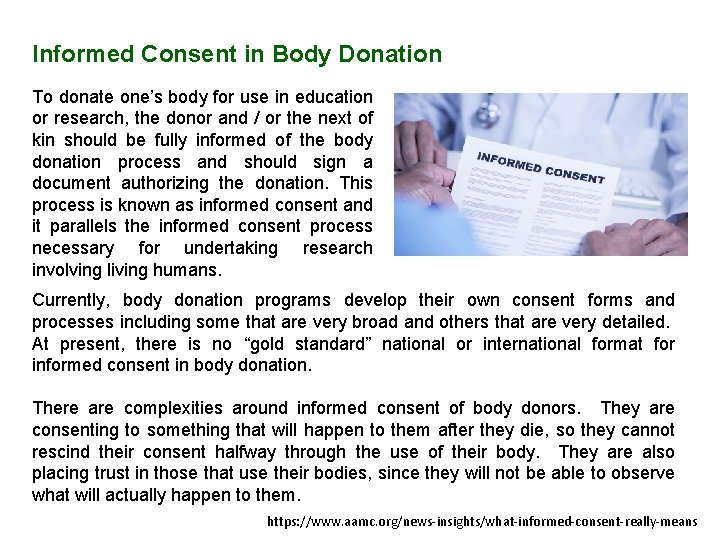
Informed Consent in Body Donation To donate one’s body for use in education or research, the donor and / or the next of kin should be fully informed of the body donation process and should sign a document authorizing the donation. This process is known as informed consent and it parallels the informed consent process necessary for undertaking research involving living humans. Currently, body donation programs develop their own consent forms and processes including some that are very broad and others that are very detailed. At present, there is no “gold standard” national or international format for informed consent in body donation. There are complexities around informed consent of body donors. They are consenting to something that will happen to them after they die, so they cannot rescind their consent halfway through the use of their body. They are also placing trust in those that use their bodies, since they will not be able to observe what will actually happen to them. https: //www. aamc. org/news-insights/what-informed-consent-really-means
Informed Consent in Body Donation Can family members rescind the informed consent of the donor? What level of detail should informed consent forms contain? Should the donor consent to specific practices (check boxes)? For example, use of their body outside of the local jurisdiction; use in specific traumatic research; use of images or videos of the donor; retention of specific tissues; length of time of tissue retention? Should all information about the donation be on the consent forms or can some information be available in other documents? Who should sign consent forms besides the donor? Witnesses? Can family members donate a loved one who has recently died (therefore, no informed consent from the donor)? Image by freepik
- Slides: 3