
Bioenergy Platforms and Technologies By Prof Thomson Sinkala
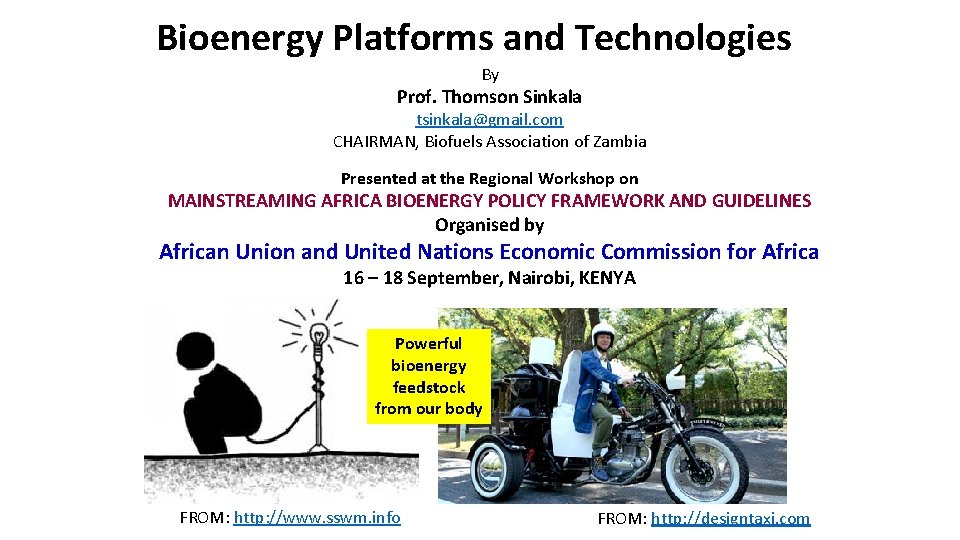
Bioenergy Platforms and Technologies By Prof. Thomson Sinkala tsinkala@gmail. com CHAIRMAN, Biofuels Association of Zambia Presented at the Regional Workshop on MAINSTREAMING AFRICA BIOENERGY POLICY FRAMEWORK AND GUIDELINES Organised by African Union and United Nations Economic Commission for Africa 16 – 18 September, Nairobi, KENYA Powerful bioenergy feedstock from our body FROM: http: //www. sswm. info FROM: http: //designtaxi. com
CONTENTS • Bioenergy production technologies • Research, development, demonstration and deployment • Institutional and technical capacity development • Conclusions
BIOENERGY PRODUCTION TECHNOLOGIES 3
GENERAL ORGANISATION OF TECHNOLOGIES • • Fuel wood Charcoal Agricultural waste Wood pellets Biogas Bioethanol (equivalent of gasoline) Biodiesel (equivalent of diesel), and Bioelectricity
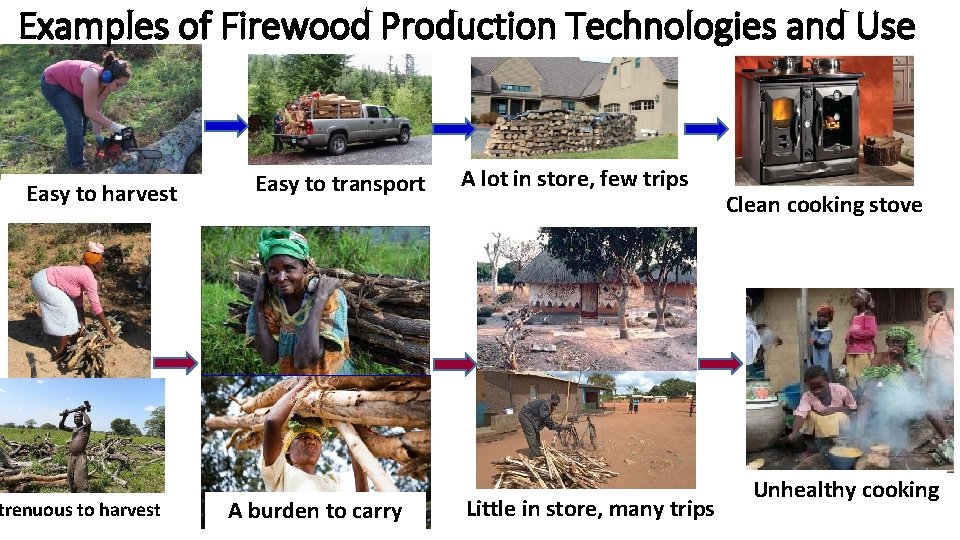
Examples of Firewood Production Technologies and Use Easy to harvest trenuous to harvest Easy to transport A burden to carry A lot in store, few trips Little in store, many trips Clean cooking stove Unhealthy cooking
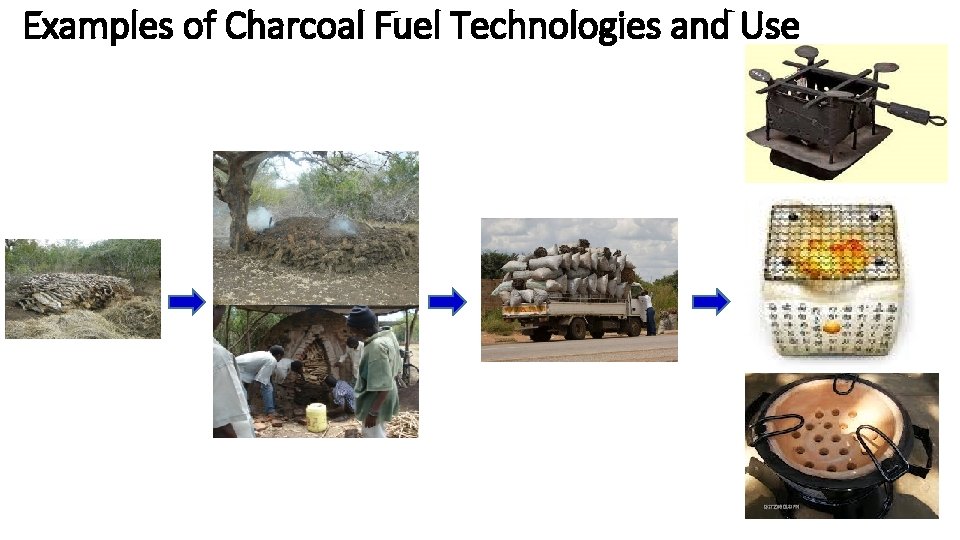
Examples of Charcoal Fuel Technologies and Use
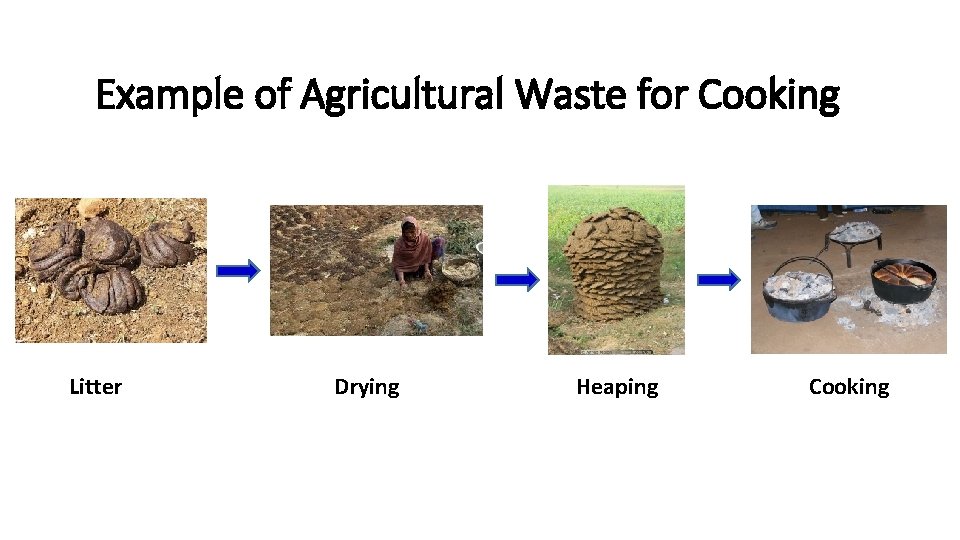
Example of Agricultural Waste for Cooking Litter Drying Heaping Cooking
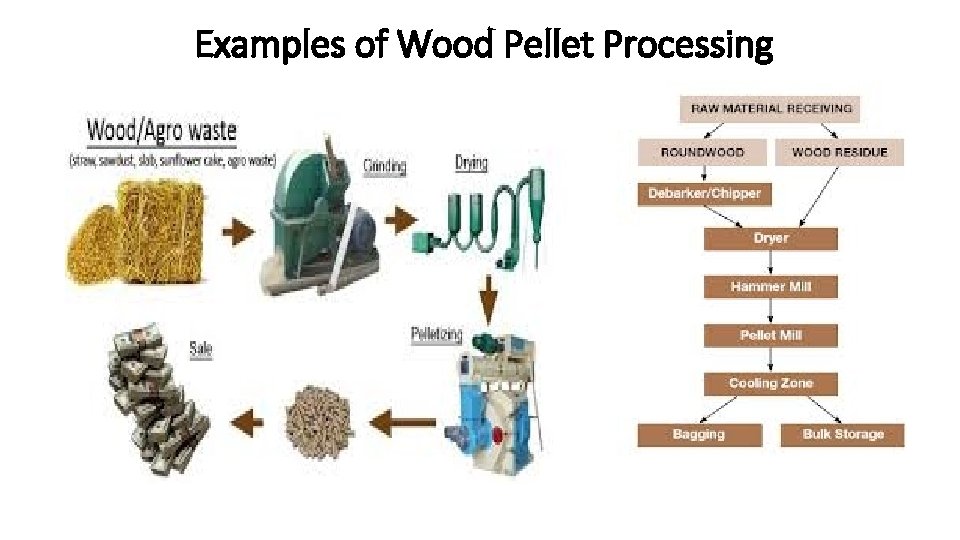
Examples of Wood Pellet Processing
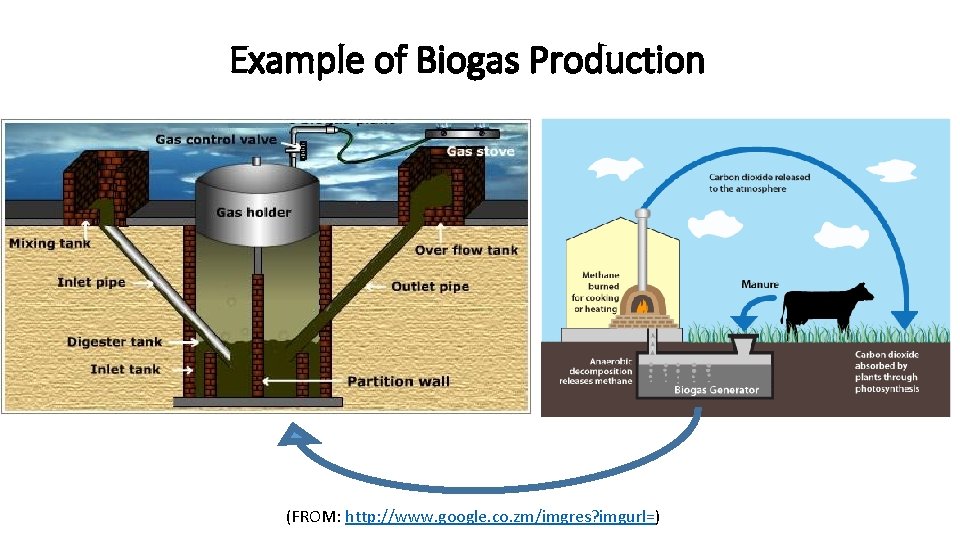
Example of Biogas Production (FROM: http: //www. google. co. zm/imgres? imgurl=)
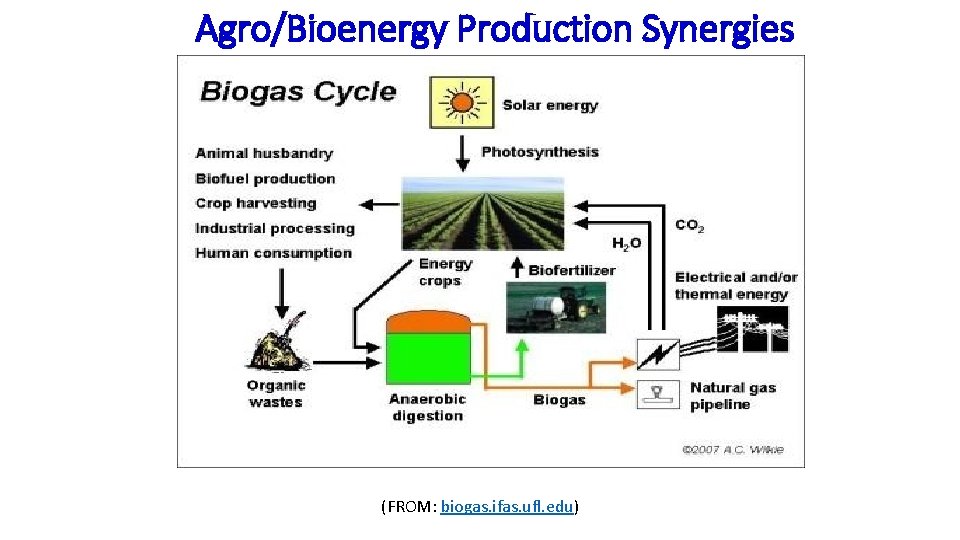
Agro/Bioenergy Production Synergies (FROM: biogas. ifas. ufl. edu)
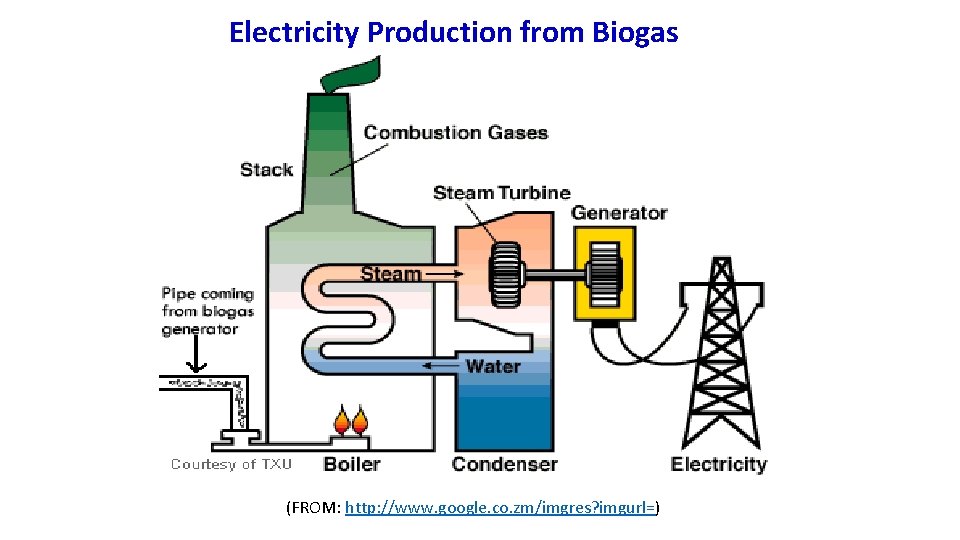
Electricity Production from Biogas (FROM: http: //www. google. co. zm/imgres? imgurl=)
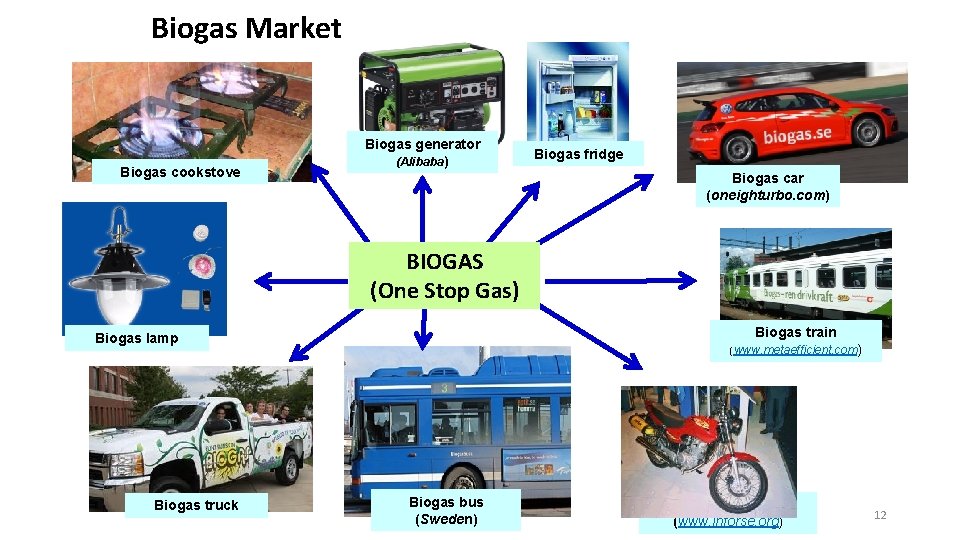
Biogas Market Biogas cookstove Biogas generator (Alibaba) Biogas fridge Biogas car (oneighturbo. com) BIOGAS (One Stop Gas) Biogas train Biogas lamp Biogas truck (www. metaefficient. com) Biogas bus (Sweden) Biogas motorbike (www. inforse. org) 12
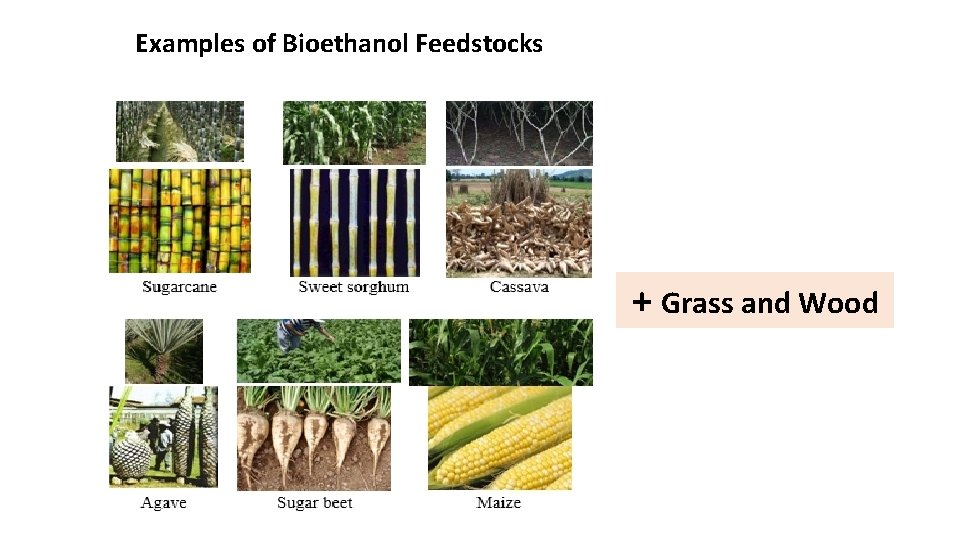
Examples of Bioethanol Feedstocks + Grass and Wood
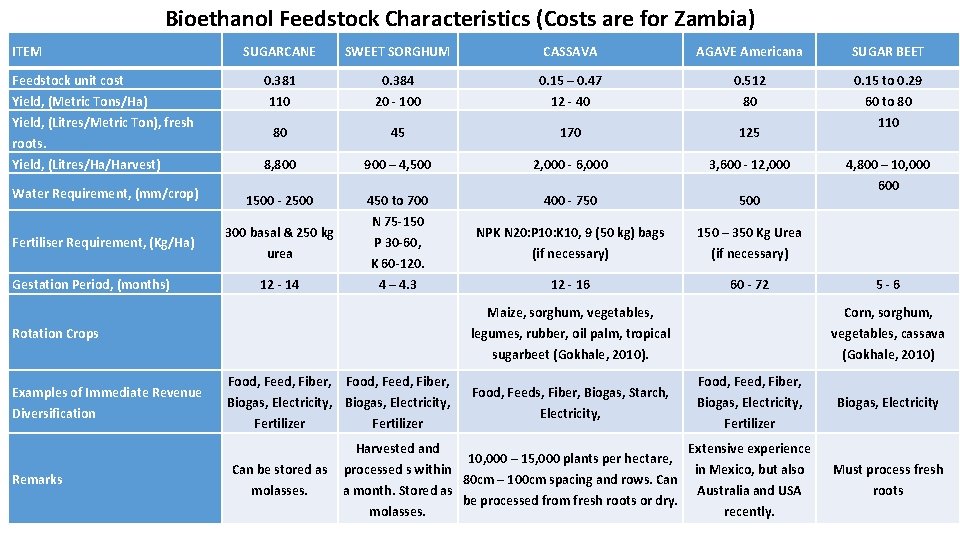
Bioethanol Feedstock Characteristics (Costs are for Zambia) ITEM Feedstock unit cost Yield, (Metric Tons/Ha) Yield, (Litres/Metric Ton), fresh roots. Yield, (Litres/Ha/Harvest) Water Requirement, (mm/crop) Fertiliser Requirement, (Kg/Ha) Gestation Period, (months) SUGARCANE SWEET SORGHUM CASSAVA AGAVE Americana SUGAR BEET 0. 381 110 0. 384 20 - 100 0. 15 – 0. 47 12 - 40 0. 512 80 80 45 170 125 0. 15 to 0. 29 60 to 80 110 8, 800 900 – 4, 500 2, 000 - 6, 000 3, 600 - 12, 000 1500 - 2500 300 basal & 250 kg 450 to 700 N 75 -150 urea P 30 -60, K 60 -120. 12 - 14 4 – 4. 3 Rotation Crops Examples of Immediate Revenue Diversification Food, Feed, Fiber, Biogas, Electricity, Fertilizer Harvested and Remarks 400 - 750 500 NPK N 20: P 10: K 10, 9 (50 kg) bags 150 – 350 Kg Urea (if necessary) 12 - 16 60 - 72 4, 800 – 10, 000 600 5 - 6 Maize, sorghum, vegetables, Corn, sorghum, legumes, rubber, oil palm, tropical sugarbeet (Gokhale, 2010). vegetables, cassava (Gokhale, 2010) Food, Feeds, Fiber, Biogas, Starch, Electricity, 10, 000 – 15, 000 plants per hectare, Food, Feed, Fiber, Biogas, Electricity, Fertilizer Biogas, Electricity Extensive experience Can be stored as processed s within in Mexico, but also 80 cm – 100 cm spacing and rows. Can a month. Stored as Australia and USA molasses. be processed from fresh roots or dry. molasses. recently. Must process fresh roots
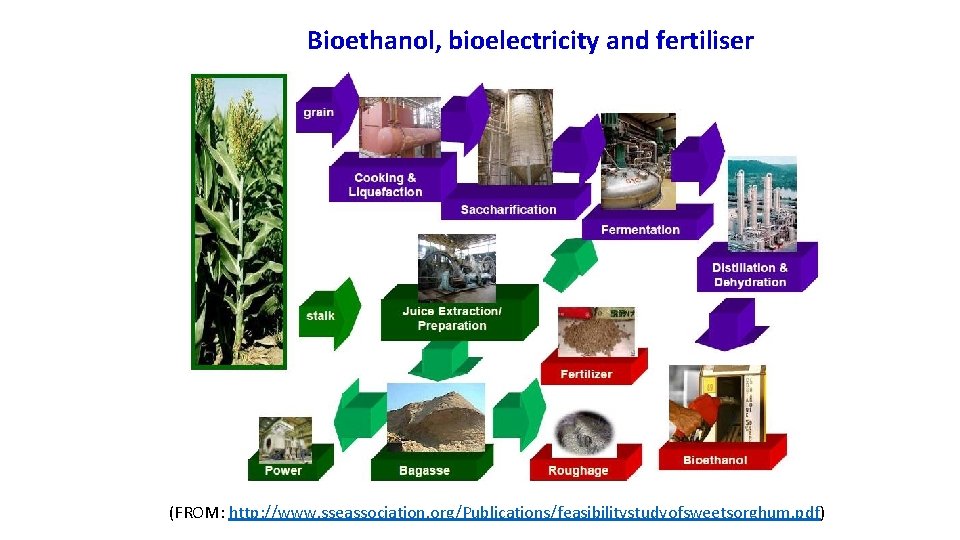
Bioethanol, bioelectricity and fertiliser (FROM: http: //www. sseassociation. org/Publications/feasibilitystudyofsweetsorghum. pdf)
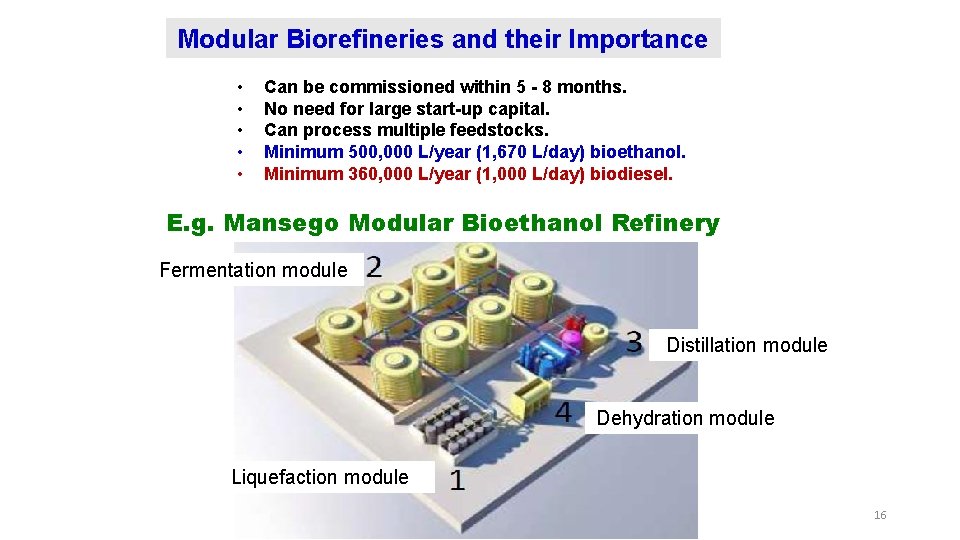
Modular Biorefineries and their Importance • • • Can be commissioned within 5 - 8 months. No need for large start-up capital. Can process multiple feedstocks. Minimum 500, 000 L/year (1, 670 L/day) bioethanol. Minimum 360, 000 L/year (1, 000 L/day) biodiesel. E. g. Mansego Modular Bioethanol Refinery Fermentation module Distillation module Dehydration module Liquefaction module 16
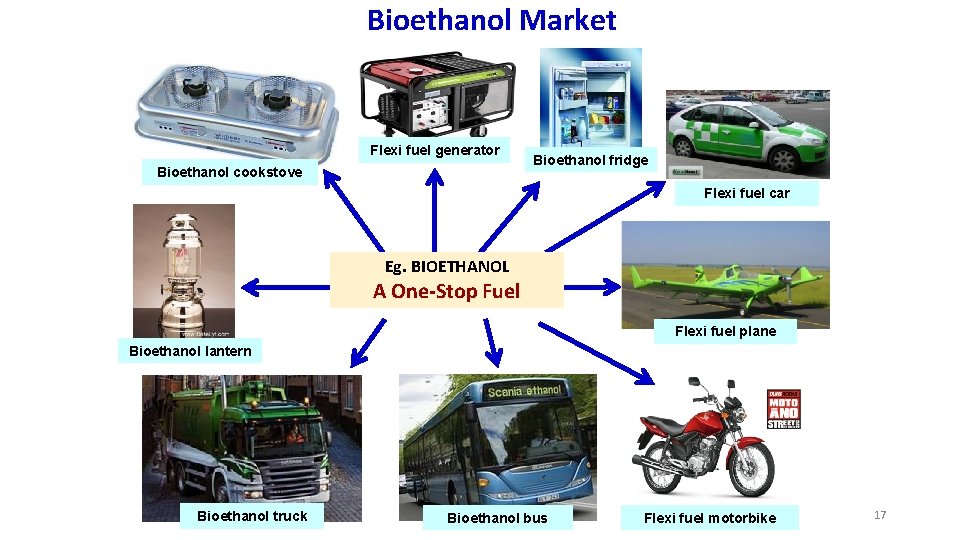
Bioethanol Market Flexi fuel generator Bioethanol cookstove Bioethanol fridge Flexi fuel car Eg. BIOETHANOL A One-Stop Fuel Flexi fuel plane Bioethanol lantern Bioethanol truck Bioethanol bus Flexi fuel motorbike 17
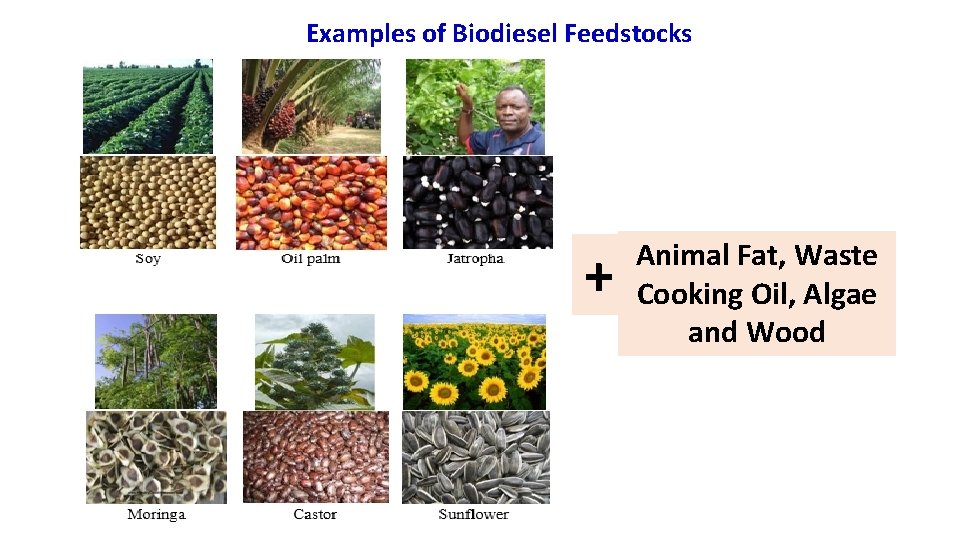
Examples of Biodiesel Feedstocks + Animal Fat, Waste Cooking Oil, Algae and Wood
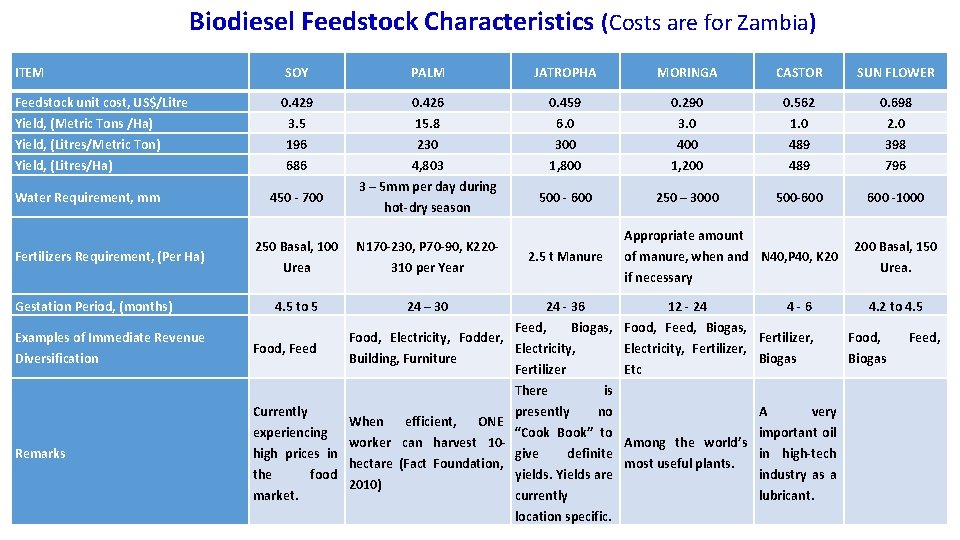
Biodiesel Feedstock Characteristics (Costs are for Zambia) ITEM Feedstock unit cost, US$/Litre Yield, (Metric Tons /Ha) Yield, (Litres/Metric Ton) Yield, (Litres/Ha) Water Requirement, mm Fertilizers Requirement, (Per Ha) Gestation Period, (months) Examples of Immediate Revenue Diversification SOY PALM JATROPHA MORINGA CASTOR SUN FLOWER 0. 429 3. 5 196 686 0. 426 15. 8 230 4, 803 3 – 5 mm per day during 0. 459 6. 0 300 1, 800 0. 290 3. 0 400 1, 200 0. 562 1. 0 489 0. 698 2. 0 398 796 500 - 600 250 – 3000 500 -600 -1000 450 - 700 250 Basal, 100 Urea N 170 -230, P 70 -90, K 220310 per Year 4. 5 to 5 24 – 30 Food, Feed Currently Remarks hot-dry season Food, Electricity, Fodder, Building, Furniture Appropriate amount 2. 5 t Manure 24 - 36 12 - 24 Feed, Biogas, Food, Feed, Biogas, Electricity, Fertilizer There efficient, ONE 4 - 6 Fertilizer, Electricity, Fertilizer, Biogas Etc 4. 2 to 4. 5 Food, Biogas is presently no experiencing “Cook Book” to worker can harvest 10 Among the world’s high prices in give definite hectare (Fact Foundation, most useful plants. the food yields. Yields are 2010) market. currently location specific. When 200 Basal, 150 Urea. of manure, when and N 40, P 40, K 20 if necessary A very important oil in high-tech industry as a lubricant. Feed,
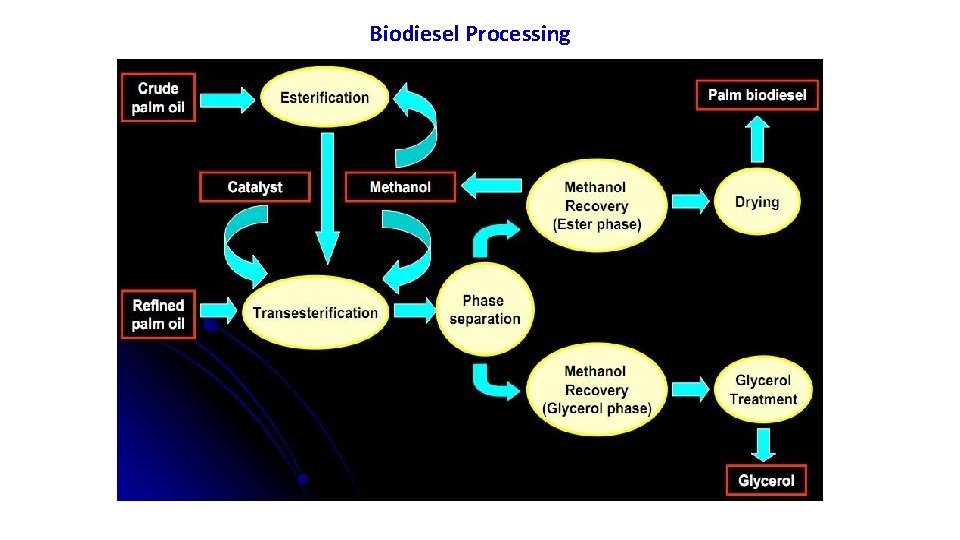
Biodiesel Processing
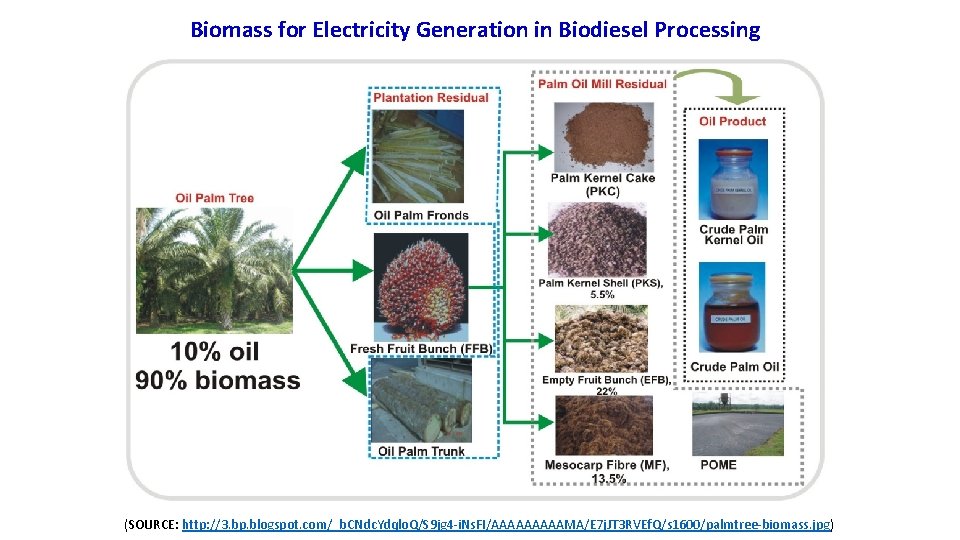
Biomass for Electricity Generation in Biodiesel Processing (SOURCE: http: //3. bp. blogspot. com/_b. CNdc. Ydqlo. Q/S 9 jg 4 -i. Ns. FI/AAAAAMA/E 7 j. JT 3 RVEf. Q/s 1600/palmtree-biomass. jpg)
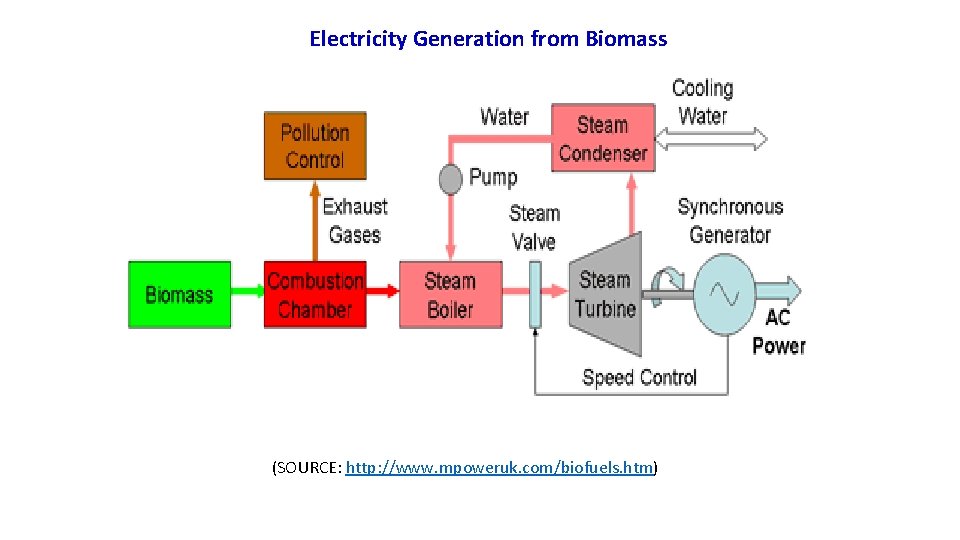
Electricity Generation from Biomass (SOURCE: http: //www. mpoweruk. com/biofuels. htm)
RESEARCH, DEVELOPMENT, DEMONSTRATION AND DEPLOYMENT 23
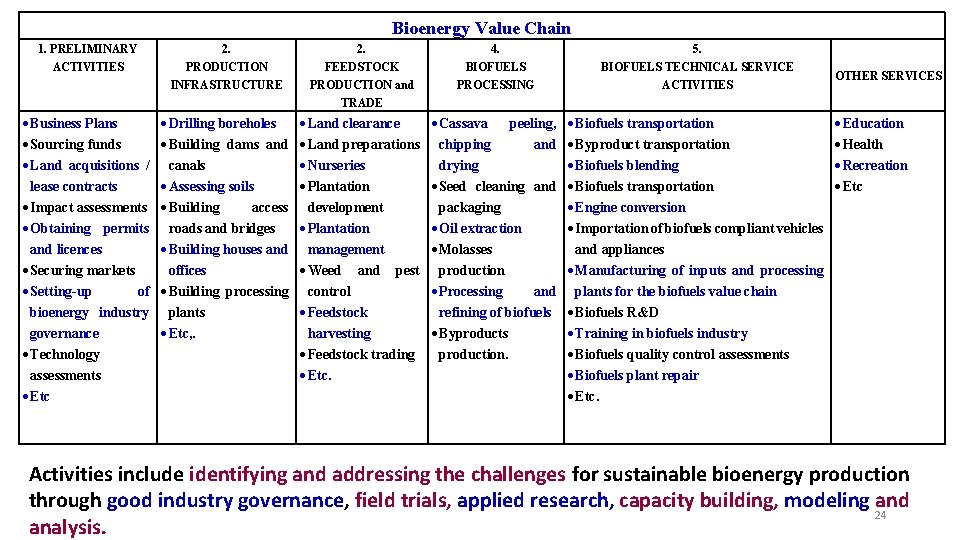
Bioenergy Value Chain 1. PRELIMINARY ACTIVITIES 2. PRODUCTION INFRASTRUCTURE 2. FEEDSTOCK PRODUCTION and 4. BIOFUELS PROCESSING 5. BIOFUELS TECHNICAL SERVICE ACTIVITIES Cassava peeling, chipping and drying Seed cleaning and packaging Oil extraction Molasses production Processing and refining of biofuels Byproducts production. Biofuels transportation Byproduct transportation Biofuels blending Biofuels transportation Engine conversion Importation of biofuels compliant vehicles and appliances Manufacturing of inputs and processing plants for the biofuels value chain Biofuels R&D Training in biofuels industry Biofuels quality control assessments Biofuels plant repair Etc. OTHER SERVICES TRADE Business Plans Sourcing funds Land acquisitions / lease contracts Impact assessments Obtaining permits and licences Securing markets Setting-up of bioenergy industry governance Technology assessments Etc Drilling boreholes Building dams and canals Assessing soils Building access roads and bridges Building houses and offices Building processing plants Etc, . Land clearance Land preparations Nurseries Plantation development Plantation management Weed and pest control Feedstock harvesting Feedstock trading Etc. Education Health Recreation Etc Activities include identifying and addressing the challenges for sustainable bioenergy production through good industry governance, field trials, applied research, capacity building, modeling and 24 analysis.
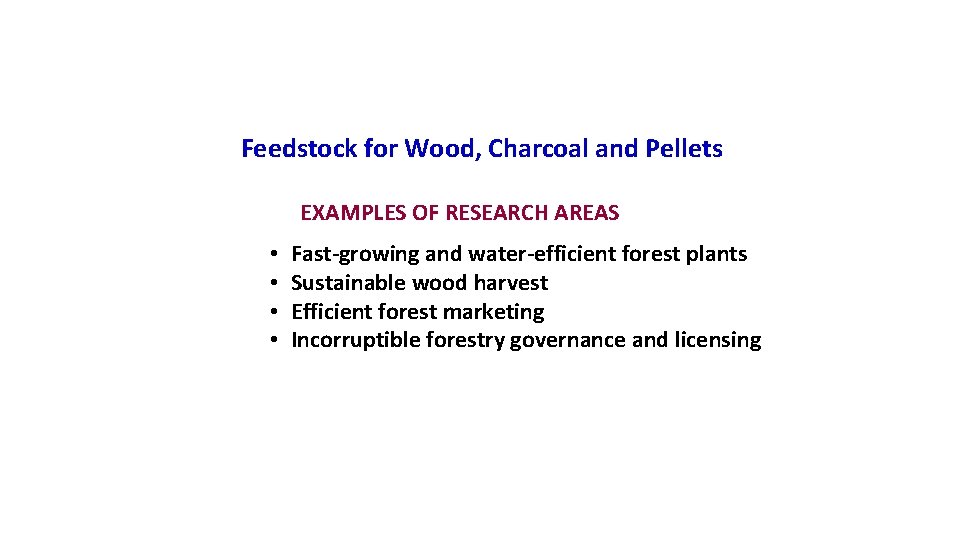
Feedstock for Wood, Charcoal and Pellets EXAMPLES OF RESEARCH AREAS • • Fast-growing and water-efficient forest plants Sustainable wood harvest Efficient forest marketing Incorruptible forestry governance and licensing
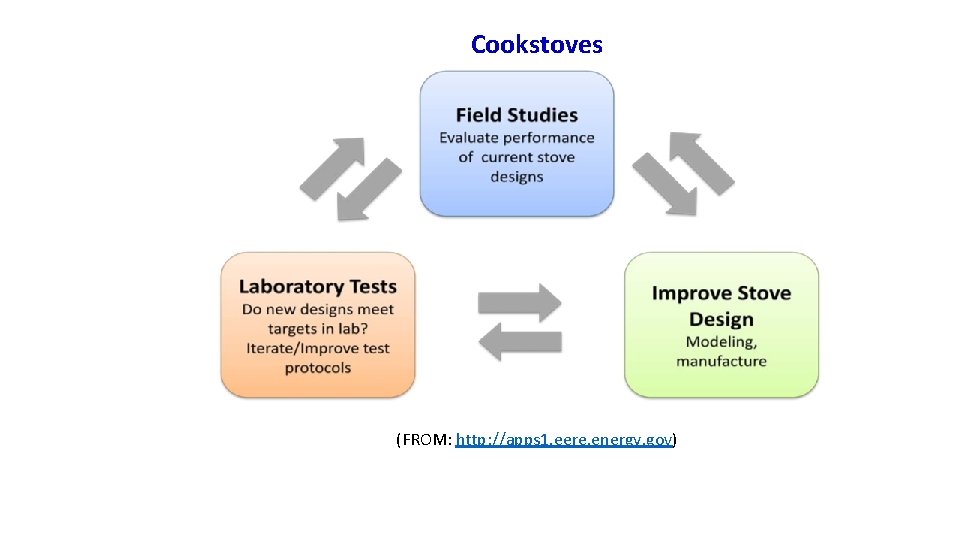
Cookstoves (FROM: http: //apps 1. eere. energy. gov)
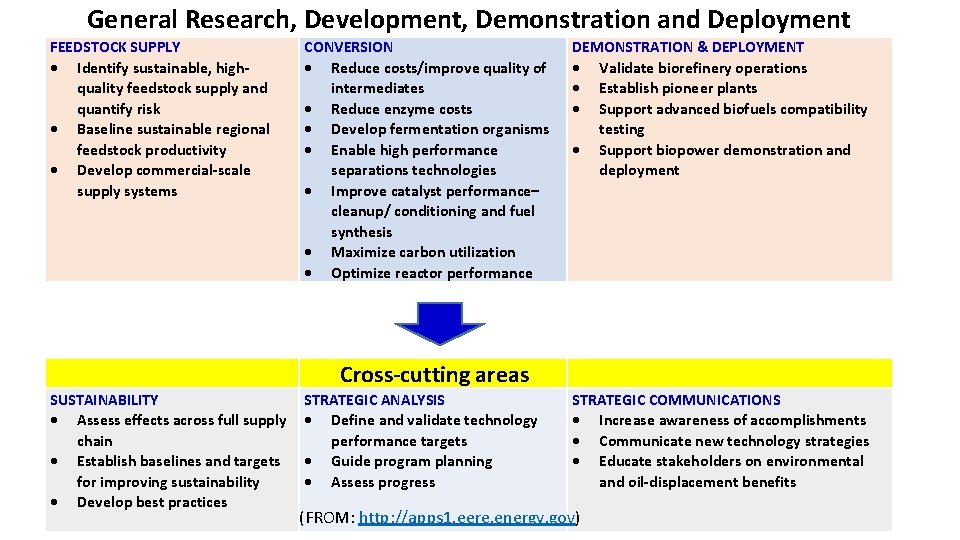
General Research, Development, Demonstration and Deployment FEEDSTOCK SUPPLY Identify sustainable, highquality feedstock supply and quantify risk Baseline sustainable regional feedstock productivity Develop commercial-scale supply systems CONVERSION Reduce costs/improve quality of intermediates Reduce enzyme costs Develop fermentation organisms Enable high performance separations technologies Improve catalyst performance– cleanup/ conditioning and fuel synthesis Maximize carbon utilization Optimize reactor performance DEMONSTRATION & DEPLOYMENT Validate biorefinery operations Establish pioneer plants Support advanced biofuels compatibility testing Support biopower demonstration and deployment Cross-cutting areas SUSTAINABILITY STRATEGIC ANALYSIS Assess effects across full supply Define and validate technology chain performance targets Establish baselines and targets Guide program planning for improving sustainability Assess progress Develop best practices STRATEGIC COMMUNICATIONS Increase awareness of accomplishments Communicate new technology strategies Educate stakeholders on environmental and oil-displacement benefits (FROM: http: //apps 1. eere. energy. gov)
Feedstock Supply and Logistics Feedstock constitutes about 70% of final bioenergy product. Providing biomass for conversion into biofuels represents an economic opportunity for communities across Africa. This requires developing the technologies and systems needed to sustainably and economically deliver a broad range of biomass in formats that enable efficient use in biorefineries.
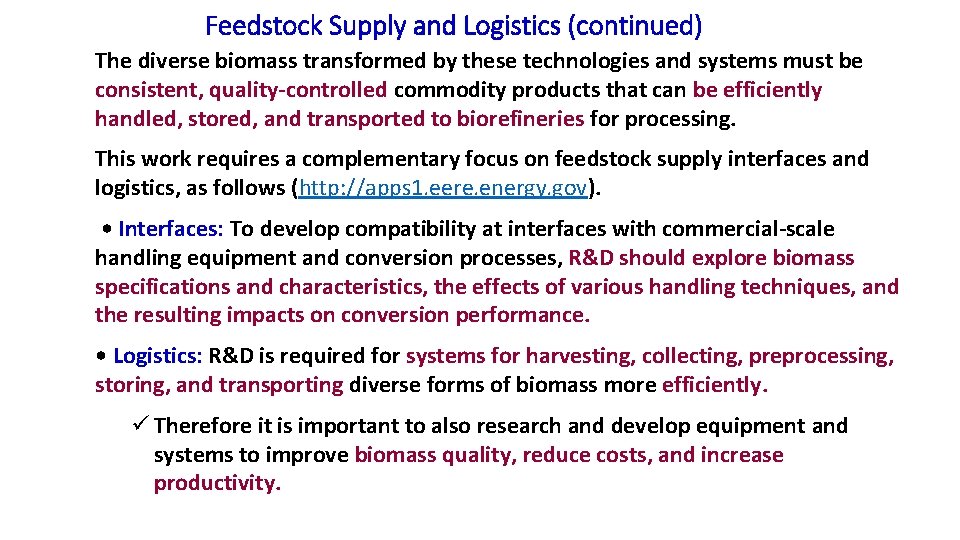
Feedstock Supply and Logistics (continued) The diverse biomass transformed by these technologies and systems must be consistent, quality-controlled commodity products that can be efficiently handled, stored, and transported to biorefineries for processing. This work requires a complementary focus on feedstock supply interfaces and logistics, as follows (http: //apps 1. eere. energy. gov). • Interfaces: To develop compatibility at interfaces with commercial-scale handling equipment and conversion processes, R&D should explore biomass specifications and characteristics, the effects of various handling techniques, and the resulting impacts on conversion performance. • Logistics: R&D is required for systems for harvesting, collecting, preprocessing, storing, and transporting diverse forms of biomass more efficiently. ü Therefore it is important to also research and develop equipment and systems to improve biomass quality, reduce costs, and increase productivity.
INSTITUTIONAL AND TECHNICAL CAPACITY DEVELOPMENT 30
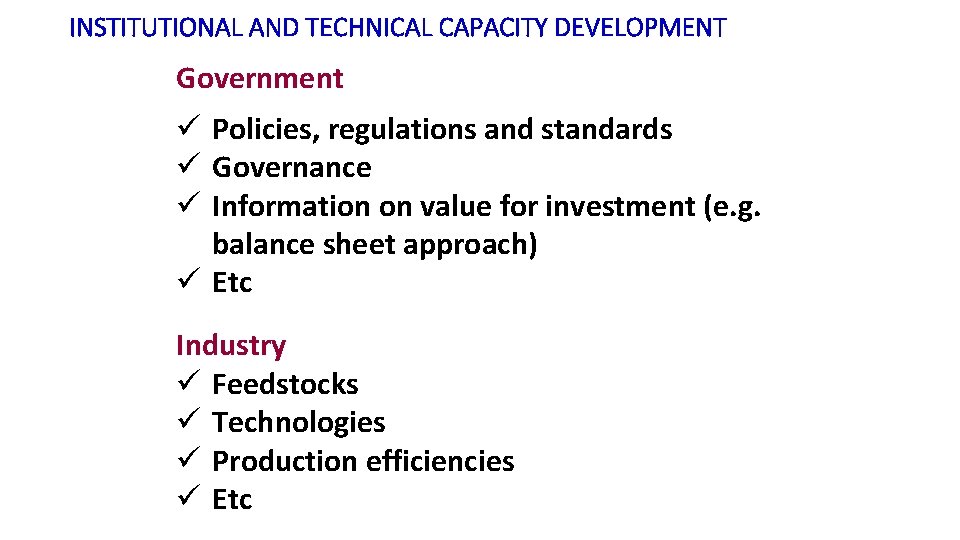
INSTITUTIONAL AND TECHNICAL CAPACITY DEVELOPMENT Government ü Policies, regulations and standards ü Governance ü Information on value for investment (e. g. balance sheet approach) ü Etc Industry ü Feedstocks ü Technologies ü Production efficiencies ü Etc
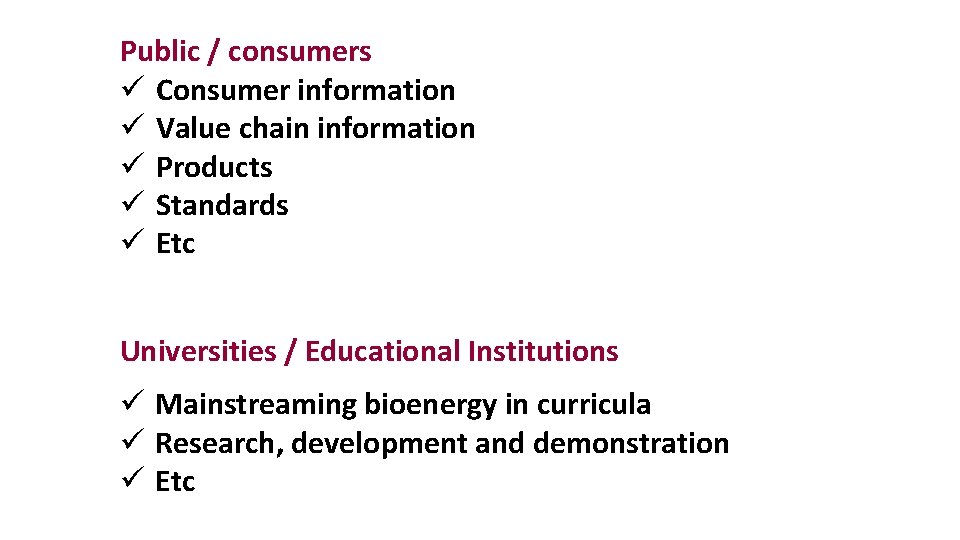
Public / consumers ü Consumer information ü Value chain information ü Products ü Standards ü Etc Universities / Educational Institutions ü Mainstreaming bioenergy in curricula ü Research, development and demonstration ü Etc
NGOs ü Community needs and information ü Bioenergy industry participatory methods ü Community resource management ü Land rights ü Gender issues ü Etc RECs ü Identifying and providing info on best practices in bioenergy development ü Capacity building in cross-border bioenergy issues ü Etc
CONCLUSIONS 34
ü Africa has resources (material and human), but lacks productive action. ü Available technologies can be used to establish a vibrant bioenergy industry in Africa. ü Bioenergy is (probably) the only industry that can benefit on sustainable basis. ü Economic empowerment from bioenergy industry, if well organised, can reduce conflicts and save the environment. 35

Thank you for your attention
- Slides: 36