
BiodiversityEnvironmental Impacts and Waste Management Types of biodiversity
Biodiversity-Environmental Impacts and Waste Management
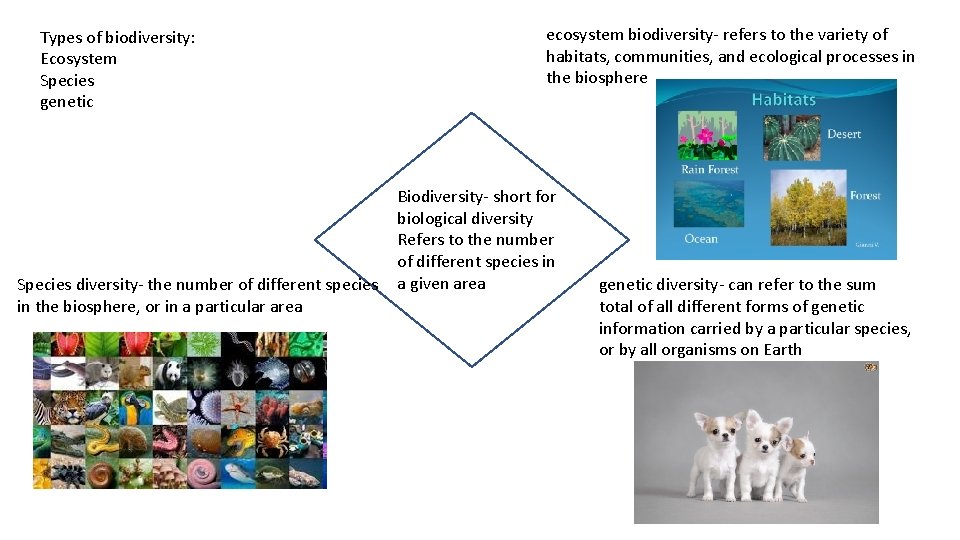
Types of biodiversity: Ecosystem Species genetic Species diversity- the number of different species in the biosphere, or in a particular area ecosystem biodiversity- refers to the variety of habitats, communities, and ecological processes in the biosphere Biodiversity- short for biological diversity Refers to the number of different species in a given area genetic diversity- can refer to the sum total of all different forms of genetic information carried by a particular species, or by all organisms on Earth
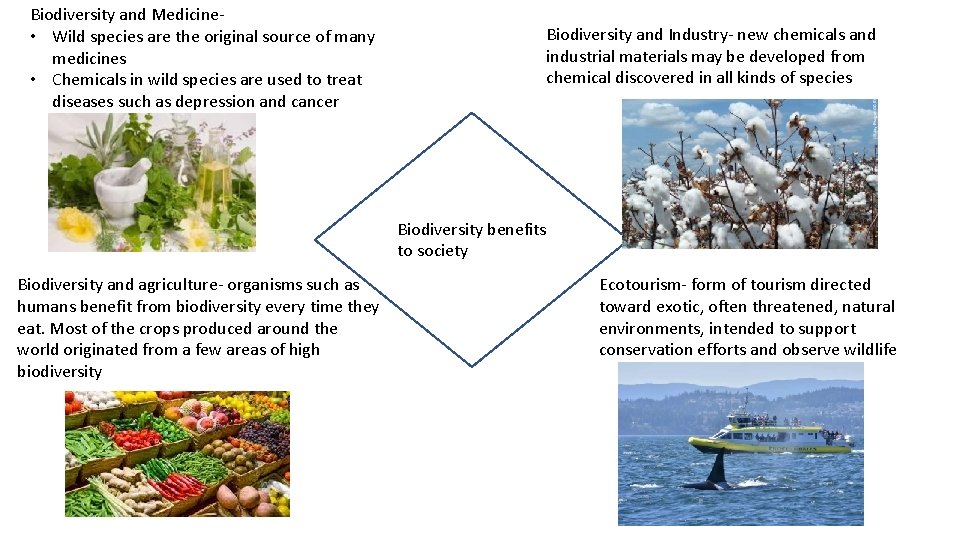
Biodiversity and Medicine • Wild species are the original source of many medicines • Chemicals in wild species are used to treat diseases such as depression and cancer Biodiversity and Industry- new chemicals and industrial materials may be developed from chemical discovered in all kinds of species Biodiversity benefits to society Biodiversity and agriculture- organisms such as humans benefit from biodiversity every time they eat. Most of the crops produced around the world originated from a few areas of high biodiversity Ecotourism- form of tourism directed toward exotic, often threatened, natural environments, intended to support conservation efforts and observe wildlife

Some humans reduce biodiversity by altering habitats, hunting, introducing invasive species, releasing pollution Keystone species- species that are critical to the functioning of an ecosystem Biodiversity at Risk Habitat fragmentation- are habitats that were once connected but are now separated into smaller, isolated areas because of new roads, parking lots and housing developments, etc. Poaching- known as the illegal hunting or capturing of wildlife
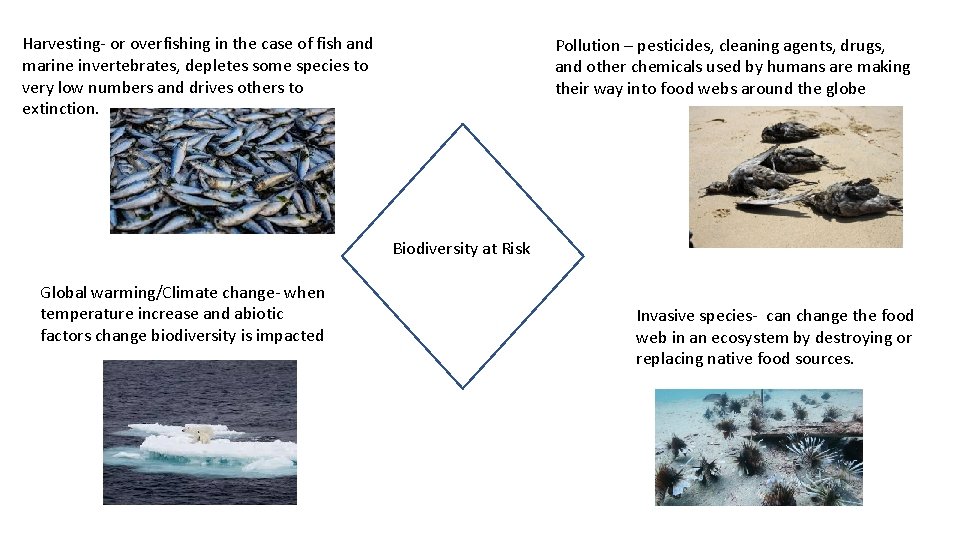
Harvesting- or overfishing in the case of fish and marine invertebrates, depletes some species to very low numbers and drives others to extinction. Pollution – pesticides, cleaning agents, drugs, and other chemicals used by humans are making their way into food webs around the globe Biodiversity at Risk Global warming/Climate change- when temperature increase and abiotic factors change biodiversity is impacted Invasive species- can change the food web in an ecosystem by destroying or replacing native food sources.
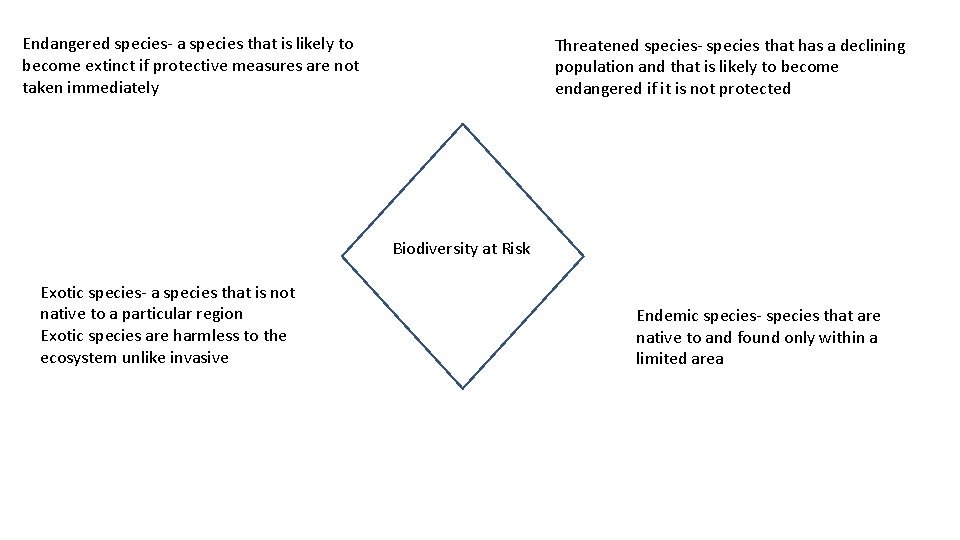
Endangered species- a species that is likely to become extinct if protective measures are not taken immediately Threatened species- species that has a declining population and that is likely to become endangered if it is not protected Biodiversity at Risk Exotic species- a species that is not native to a particular region Exotic species are harmless to the ecosystem unlike invasive Endemic species- species that are native to and found only within a limited area
Video: Why is biodiversity so important? Duration 4: 18
Waste Management Strategies
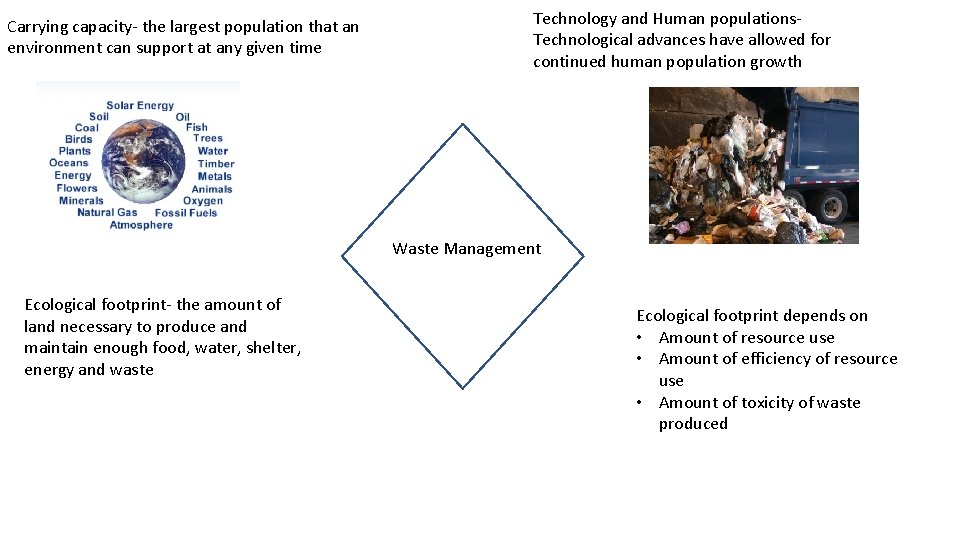
Carrying capacity- the largest population that an environment can support at any given time Technology and Human populations. Technological advances have allowed for continued human population growth Waste Management Ecological footprint- the amount of land necessary to produce and maintain enough food, water, shelter, energy and waste Ecological footprint depends on • Amount of resource use • Amount of efficiency of resource use • Amount of toxicity of waste produced
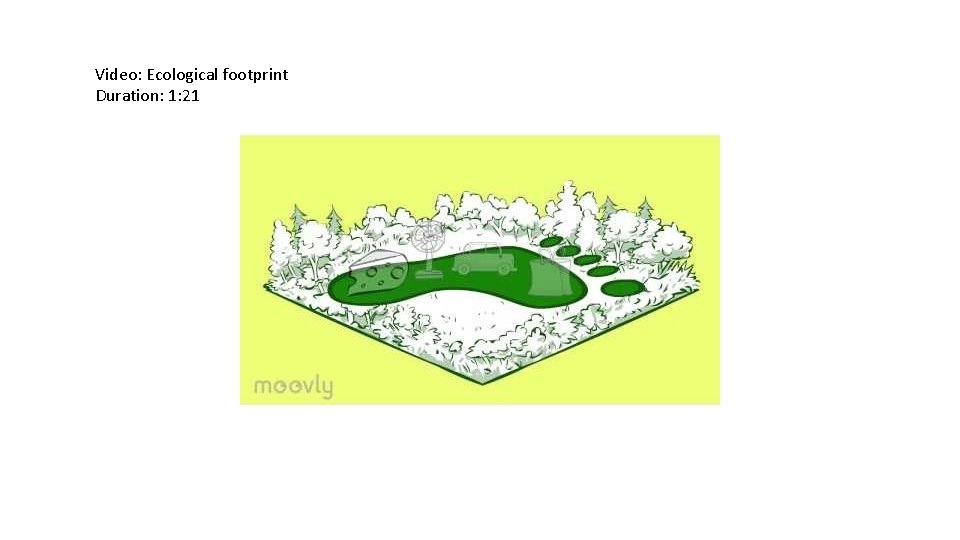
Video: Ecological footprint Duration: 1: 21
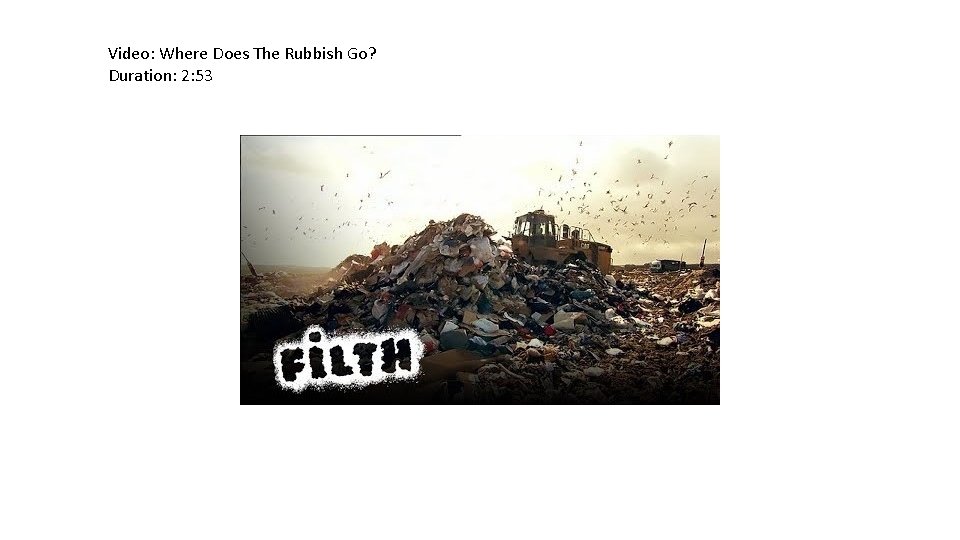
Video: Where Does The Rubbish Go? Duration: 2: 53
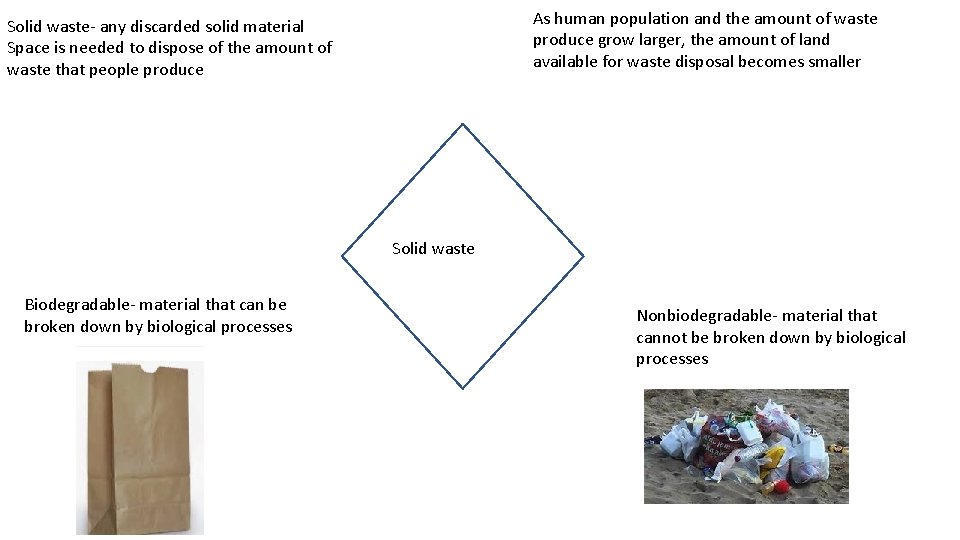
As human population and the amount of waste produce grow larger, the amount of land available for waste disposal becomes smaller Solid waste- any discarded solid material Space is needed to dispose of the amount of waste that people produce Solid waste Biodegradable- material that can be broken down by biological processes Nonbiodegradable- material that cannot be broken down by biological processes
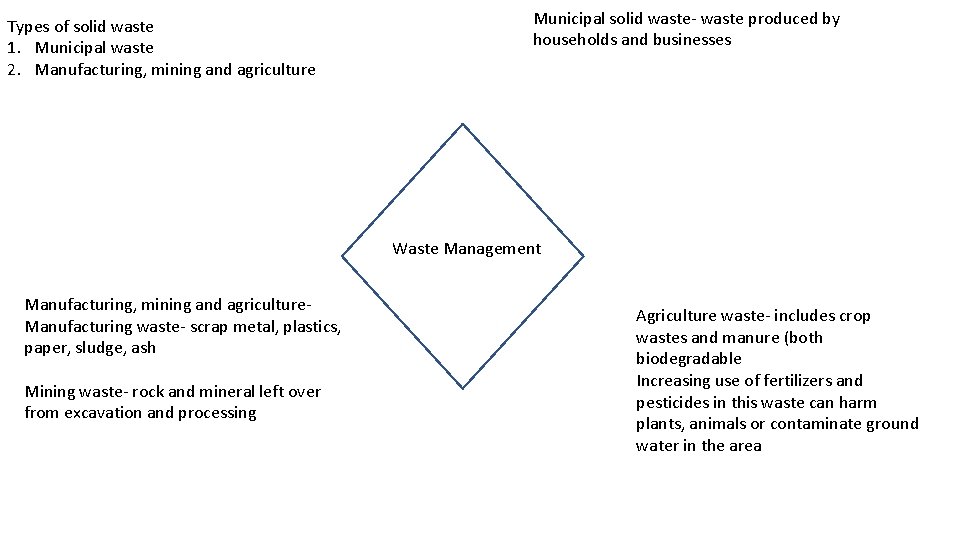
Types of solid waste 1. Municipal waste 2. Manufacturing, mining and agriculture Municipal solid waste- waste produced by households and businesses Waste Management Manufacturing, mining and agriculture. Manufacturing waste- scrap metal, plastics, paper, sludge, ash Mining waste- rock and mineral left over from excavation and processing Agriculture waste- includes crop wastes and manure (both biodegradable Increasing use of fertilizers and pesticides in this waste can harm plants, animals or contaminate ground water in the area
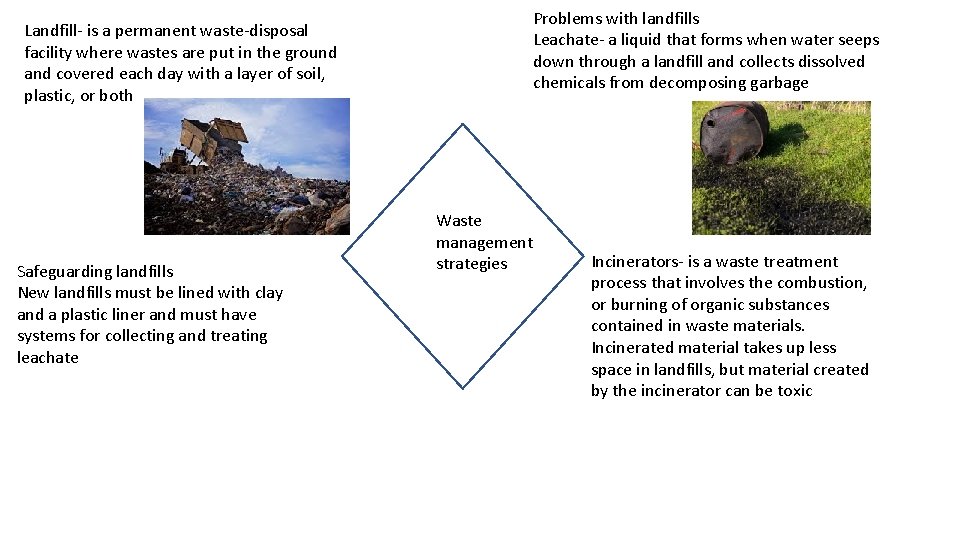
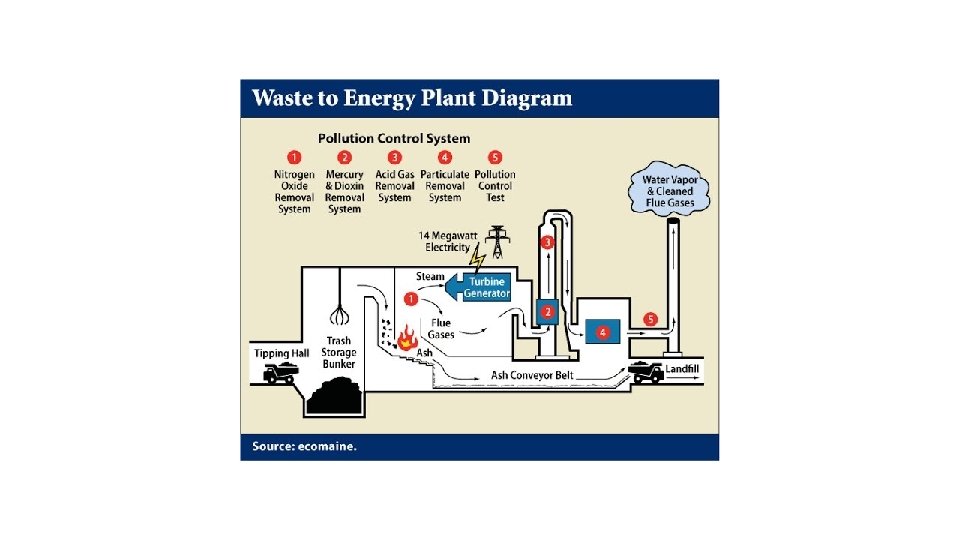
Landfill- is a permanent waste-disposal facility where wastes are put in the ground and covered each day with a layer of soil, plastic, or both Safeguarding landfills New landfills must be lined with clay and a plastic liner and must have systems for collecting and treating leachate Problems with landfills Leachate- a liquid that forms when water seeps down through a landfill and collects dissolved chemicals from decomposing garbage Waste management strategies Incinerators- is a waste treatment process that involves the combustion, or burning of organic substances contained in waste materials. Incinerated material takes up less space in landfills, but material created by the incinerator can be toxic
Video: How a Landfill Works Duration: 2: 49
Video: What really happens to the plastic you throw awa Duration: 4: 06
- Slides: 17