
Biodiversity The Kingdoms of Life By Emily Freel
Biodiversity: The Kingdoms of Life By Emily Freel
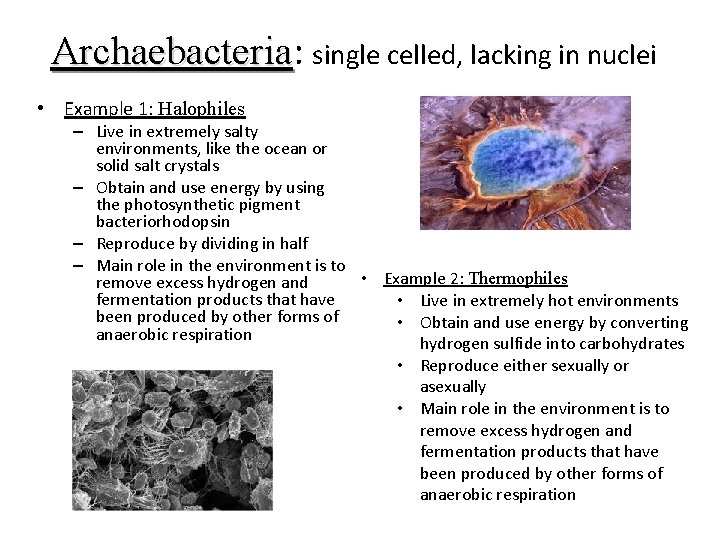
Archaebacteria: Archaebacteria single celled, lacking in nuclei • Example 1: Halophiles – Live in extremely salty environments, like the ocean or solid salt crystals – Obtain and use energy by using the photosynthetic pigment bacteriorhodopsin – Reproduce by dividing in half – Main role in the environment is to • Example 2: Thermophiles remove excess hydrogen and fermentation products that have • Live in extremely hot environments been produced by other forms of • Obtain and use energy by converting anaerobic respiration hydrogen sulfide into carbohydrates • Reproduce either sexually or asexually • Main role in the environment is to remove excess hydrogen and fermentation products that have been produced by other forms of anaerobic respiration
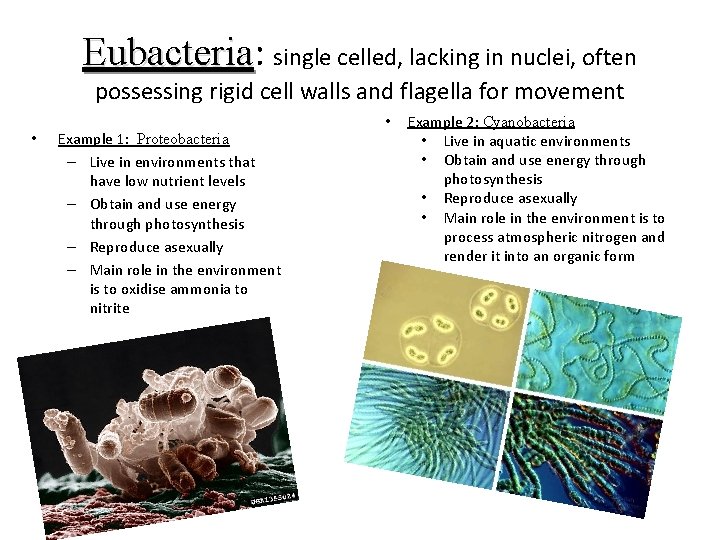
Eubacteria: Eubacteria single celled, lacking in nuclei, often possessing rigid cell walls and flagella for movement • Example 1: Proteobacteria – Live in environments that have low nutrient levels – Obtain and use energy through photosynthesis – Reproduce asexually – Main role in the environment is to oxidise ammonia to nitrite • Example 2: Cyanobacteria • Live in aquatic environments • Obtain and use energy through photosynthesis • Reproduce asexually • Main role in the environment is to process atmospheric nitrogen and render it into an organic form
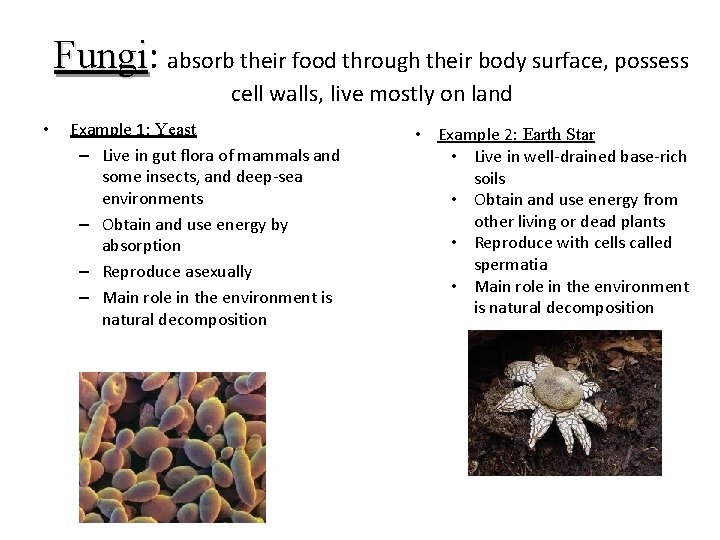
Fungi: Fungi absorb their food through their body surface, possess cell walls, live mostly on land • Example 1: Yeast – Live in gut flora of mammals and some insects, and deep-sea environments – Obtain and use energy by absorption – Reproduce asexually – Main role in the environment is natural decomposition • Example 2: Earth Star • Live in well-drained base-rich soils • Obtain and use energy from other living or dead plants • Reproduce with cells called spermatia • Main role in the environment is natural decomposition

Protists: Protists primarily single-celled; free living or colonial organisms with diverse nutritional and reproductive modes • Example 1: Paramecia – Live in water – Obtain and use energy by breaking apart the chemical bonds of small food molecules like glucose – Reproduce by splitting in two – Main role in the environment is aid in decomposition • Example 2: Amoebas • Live in water • Obtain and use energy by taking in small food particles • Reproduce asexually • Main role in the environment is recycling bacterial productivity and ensuring nutrient regeneration and continued functioning of the ecosystem
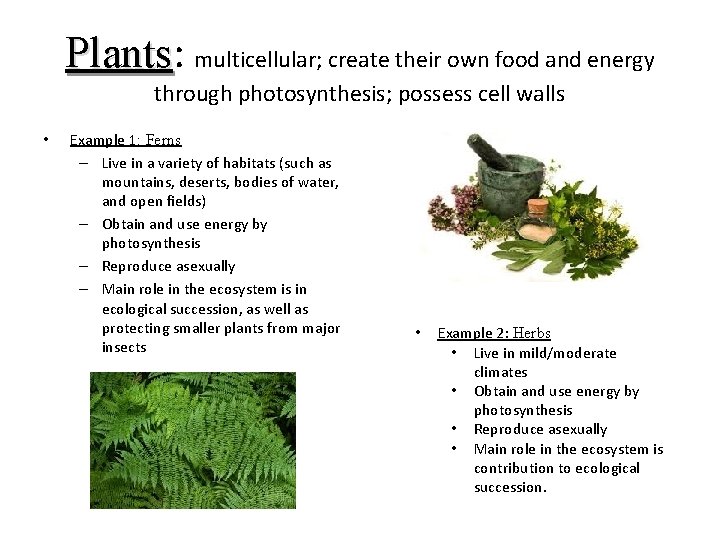
Plants: Plants multicellular; create their own food and energy through photosynthesis; possess cell walls • Example 1: Ferns – Live in a variety of habitats (such as mountains, deserts, bodies of water, and open fields) – Obtain and use energy by photosynthesis – Reproduce asexually – Main role in the ecosystem is in ecological succession, as well as protecting smaller plants from major insects • Example 2: Herbs • Live in mild/moderate climates • Obtain and use energy by photosynthesis • Reproduce asexually • Main role in the ecosystem is contribution to ecological succession.
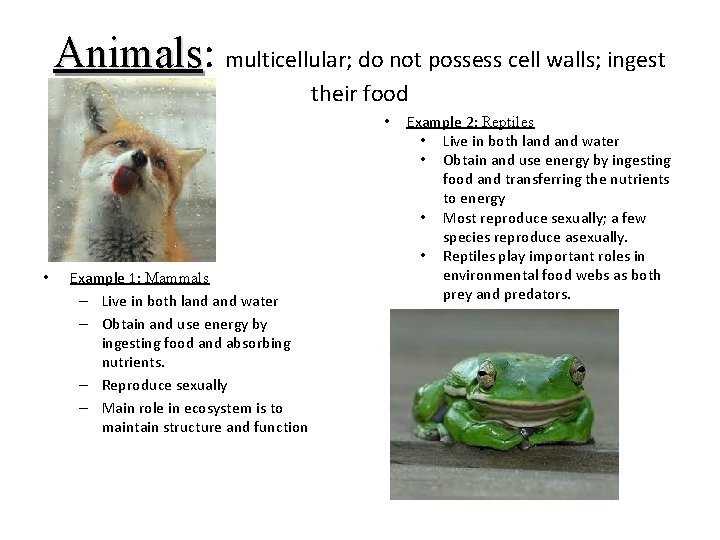
Animals: Animals multicellular; do not possess cell walls; ingest their food • • Example 1: Mammals – Live in both land water – Obtain and use energy by ingesting food and absorbing nutrients. – Reproduce sexually – Main role in ecosystem is to maintain structure and function Example 2: Reptiles • Live in both land water • Obtain and use energy by ingesting food and transferring the nutrients to energy • Most reproduce sexually; a few species reproduce asexually. • Reptiles play important roles in environmental food webs as both prey and predators.
- Slides: 7