
Biodiversity Succession and Resources Evolutionary processes have resulted
Biodiversity, Succession and Resources Evolutionary processes have resulted in a DIVERSITY of organisms and a diversity of roles in ecosystems. http: //www. bing. com/videos/search? q=BIODIVERSI TY+VIDEO&FORM=VIRE 2&adlt=strict#view=detail &mid=85 A 62 B 4 A 0 ADCF 60678 A 1
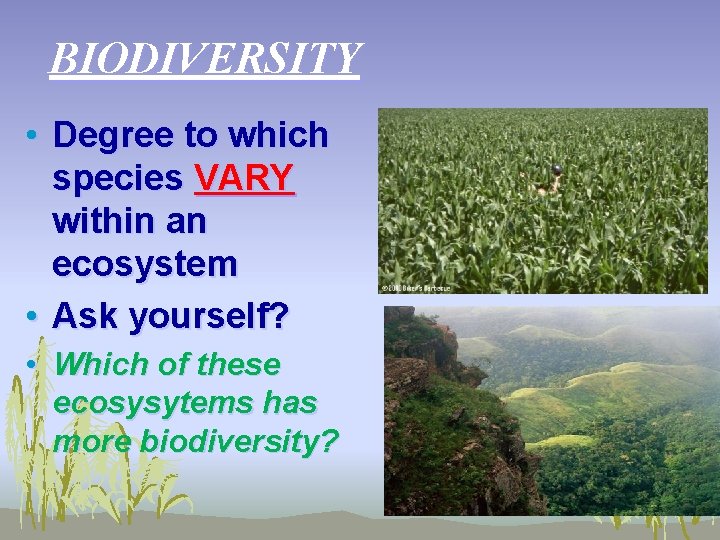
BIODIVERSITY • Degree to which species VARY within an ecosystem • Ask yourself? • Which of these ecosysytems has more biodiversity?
• Increased biodiversity increases the stability of an ecosystem. • Increased biodiversity increases the chance that at least some living things will survive in the face of large changes in the environment.
WHY IS BIODIVERSITY SO IMPORTANT? • The Back-up plan: • “Backup” organisms - if one species due to disease, there is another one to fill the niche • Maintains stable ecosystem: • If lots of organism, every niche can be filled! Therefore, stable ecosystem! • Benefits Humans!: • Ensures a variety of genetic material • Vast rainforests may hold cures, medicines and other useful resources!
Video on Threats to Biodiversity – 26 min
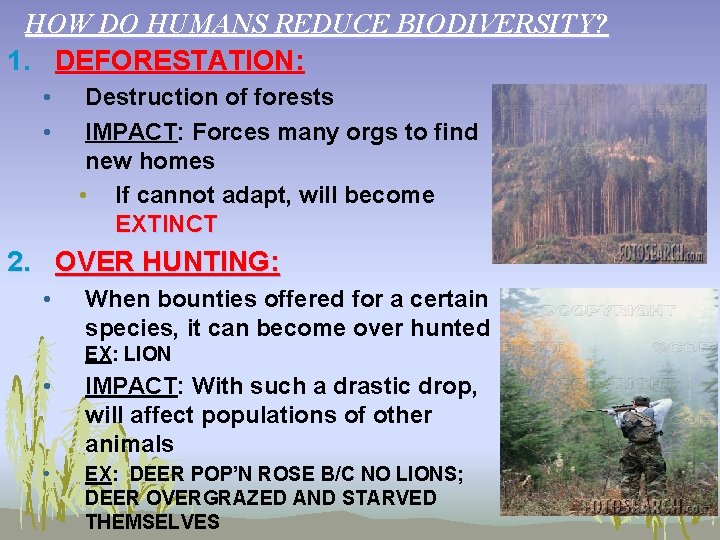
HOW DO HUMANS REDUCE BIODIVERSITY? 1. DEFORESTATION: • • Destruction of forests IMPACT: Forces many orgs to find new homes • If cannot adapt, will become EXTINCT 2. OVER HUNTING: • When bounties offered for a certain species, it can become over hunted EX: LION • IMPACT: With such a drastic drop, will affect populations of other animals • EX: DEER POP’N ROSE B/C NO LIONS; DEER OVERGRAZED AND STARVED THEMSELVES
HOW DO HUMANS REDUCE BIODIVERSITY? 3. CLEARING LAND FOR FARMING AND SPACE: • • Replacing a diverse ecosystem with one or two crops IMPACT: Taking away resources for ourselves and other species 4. DIRECT HARVESTING: • • Taking species out of natural habitat for our benefit (wanting unusual pets or plants) IMPACT: We are reducing the # of those species in their natural habitat
HOW DO HUMANS REDUCE BIODIVERSITY? 5. IMPORTED SPECIES : • • When a species is imported and released into a new environment IMPACT: New species may adapt well and drive out existing species • EX: Rabbits in Australia • IMPACT: New species often become pests because they have NO NATURAL PREDATORS • EX: Zebra mussels in NY waterways
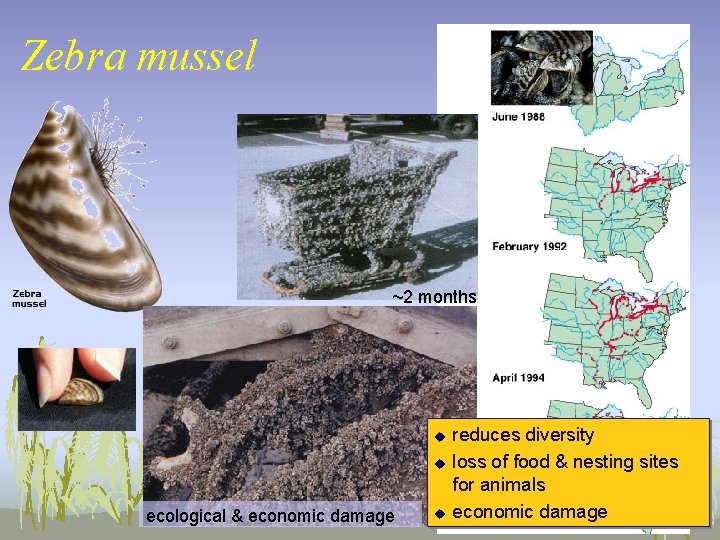
Zebra mussel ~2 months u u ecological & economic damage u reduces diversity loss of food & nesting sites for animals economic damage
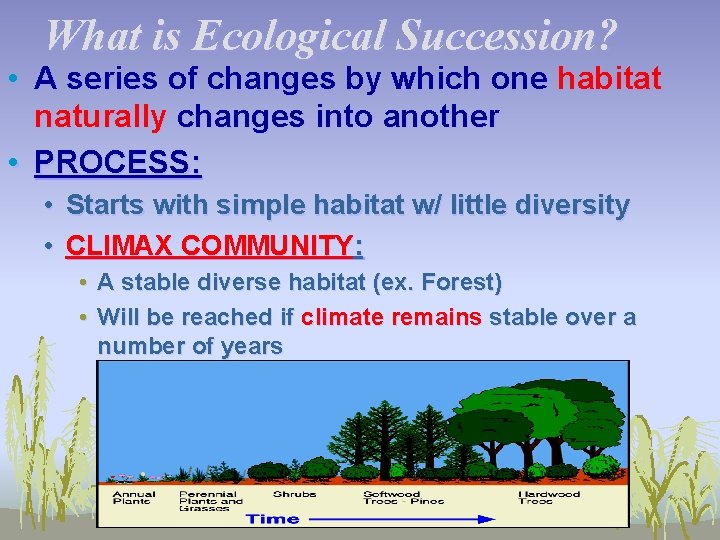
What is Ecological Succession? • A series of changes by which one habitat naturally changes into another • PROCESS: • Starts with simple habitat w/ little diversity • CLIMAX COMMUNITY: • A stable diverse habitat (ex. Forest) • Will be reached if climate remains stable over a number of years
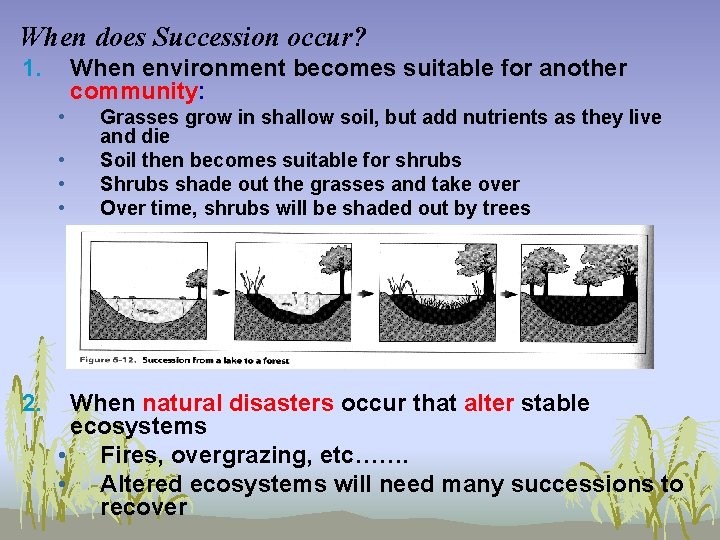
When does Succession occur? 1. When environment becomes suitable for another community: • • 2. Grasses grow in shallow soil, but add nutrients as they live and die Soil then becomes suitable for shrubs Shrubs shade out the grasses and take over Over time, shrubs will be shaded out by trees When natural disasters occur that alter stable ecosystems • Fires, overgrazing, etc……. • Altered ecosystems will need many successions to recover
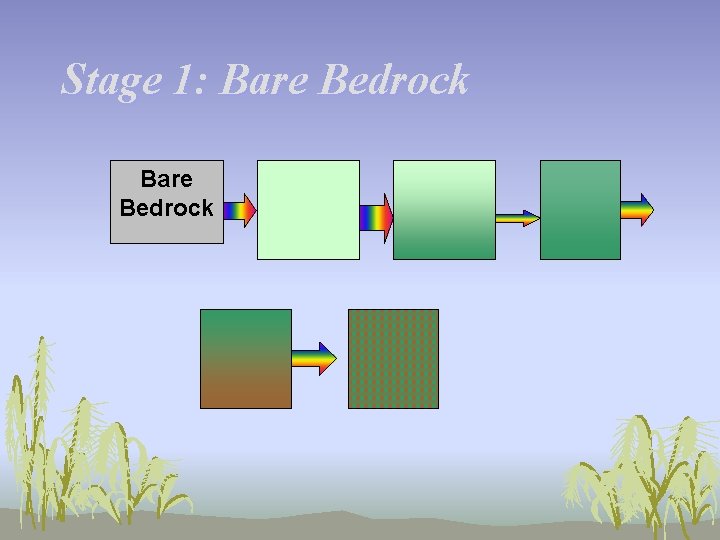
Stage 1: Bare Bedrock
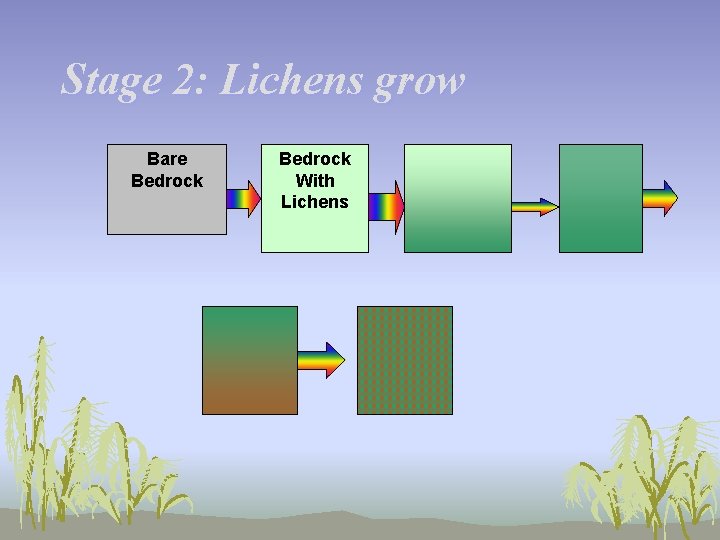
Stage 2: Lichens grow Bare Bedrock With Lichens
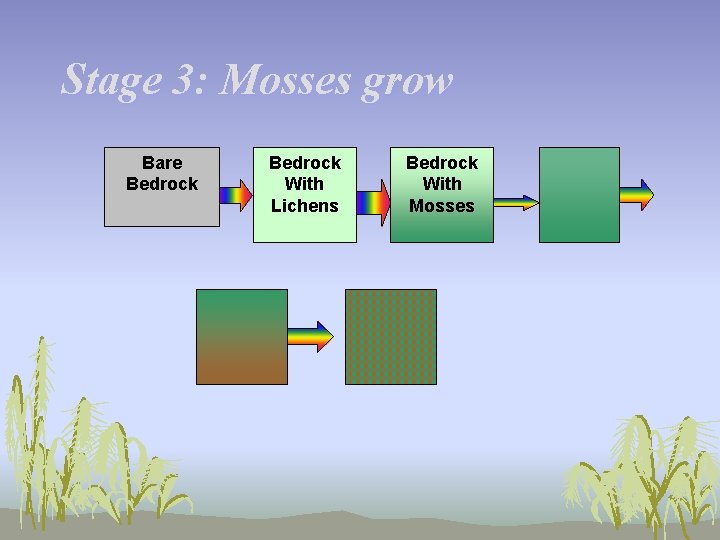
Stage 3: Mosses grow Bare Bedrock With Lichens Bedrock With Mosses
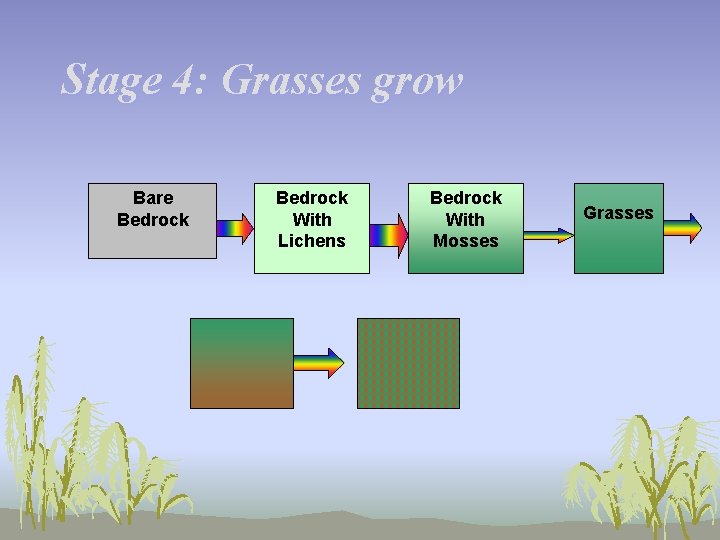
Stage 4: Grasses grow Bare Bedrock With Lichens Bedrock With Mosses Grasses
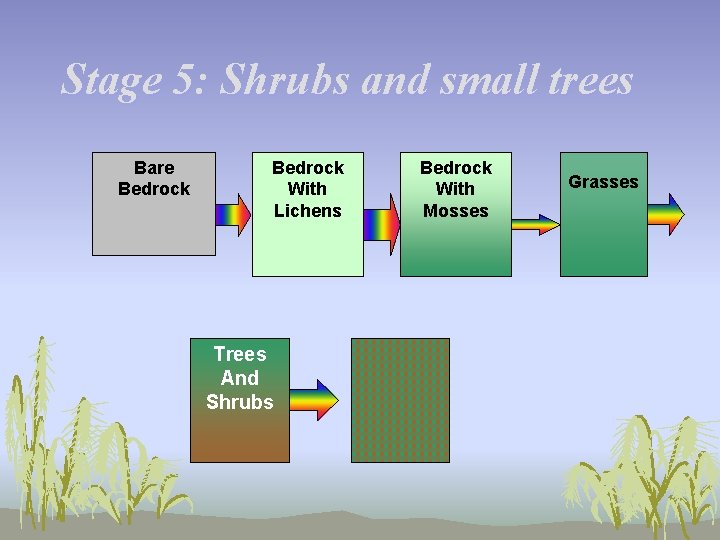
Stage 5: Shrubs and small trees Bare Bedrock With Lichens Trees And Shrubs Bedrock With Mosses Grasses
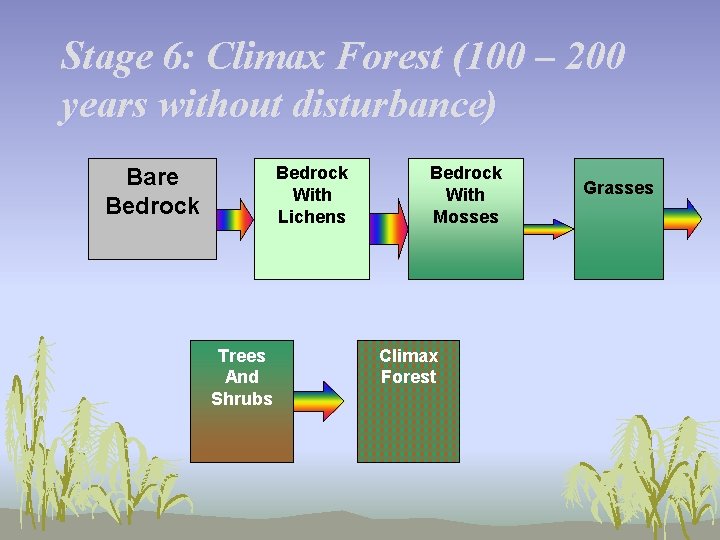
Stage 6: Climax Forest (100 – 200 years without disturbance) Bedrock With Lichens Bare Bedrock Trees And Shrubs Bedrock With Mosses Climax Forest Grasses
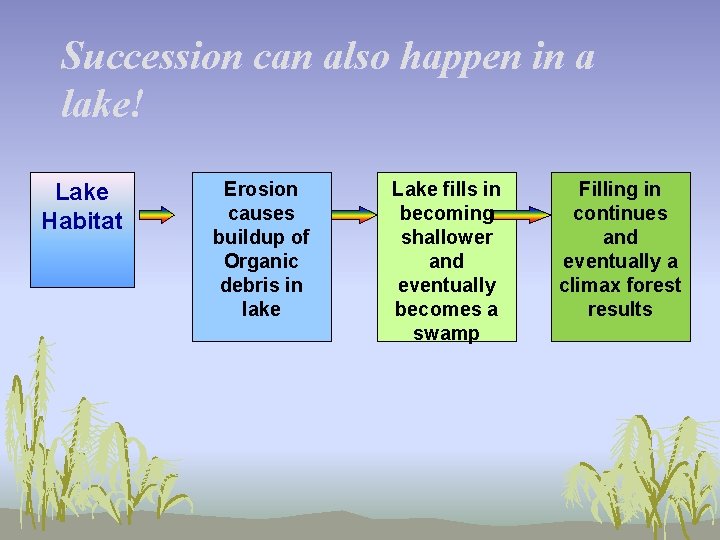
Succession can also happen in a lake! Lake Habitat Erosion causes buildup of Organic debris in lake Lake fills in becoming shallower and eventually becomes a swamp Filling in continues and eventually a climax forest results
View the process of ecological succession as it occurs in coastal lowlands by clicking on the image below Friday, June 6, 11: 34: 32 AM
What resources can we use over and over again? 1. RENEWABLE RESOURCES • Can be replaced naturally • Still need to be used carefully • EX: Fish are renewable but over harvesting and damaging environment can inhibit renewal • Can you name some renewable resources? • Water, food, solar energy, fruits/vegs, Wood, Bamboo
What resources do we use that cannot be replaced? 2. NONRENEWABLE RESOURCES • Decisions we make today affect what our future will have • Most things we use are being depleted due to industrialization and technology • Can you list some nonrenewable resources? • Fossil fuels (coal, oil, natural gas), minerals • PRESERVATION = The 3 R’s REDUCE REUSE RECYCLE – Brain Pop Video (3: 32)
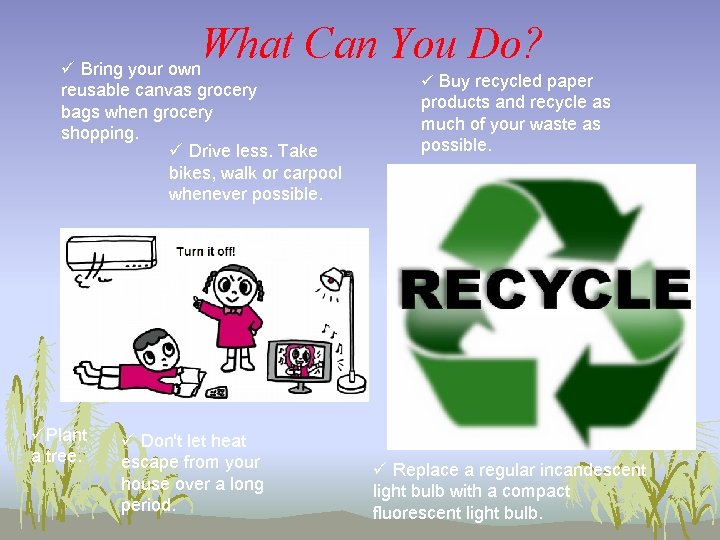
What Can You Do? ü Bring your own reusable canvas grocery bags when grocery shopping. ü Drive less. Take bikes, walk or carpool whenever possible. üPlant a tree. ü Don't let heat escape from your house over a long period. ü Buy recycled paper products and recycle as much of your waste as possible. ü Replace a regular incandescent light bulb with a compact fluorescent light bulb.
- Slides: 22