
Biodiversity Species Interactions and Population Control Chapter 5
Biodiversity, Species Interactions, and Population Control Chapter 5
Biodiversity, Species Interactions, and Population Control Chapter 5 Part 1: Species Interactions
Review! § What is evolution? • Change in a species over time (many generations!) § What is natural selection? • Pressures of environment ‘select’ genes that survive to produce more offspring § What is an adaptation? • Trait that improves chances for survival and reproduction

Coevolution § The process by which two species evolve in response to changes in each other over time • Sometimes organisms that are closely connected to one another by ecological interactions evolve together.

Coevolution: A Langohrfledermaus Bat Hunting a Moth
Species Interact in Five Major Ways § Interspecific Competition § Predation § Parasitism § Mutualism § Commensalism
Most Species Compete with One Another for Certain Resources § Competition • When two species compete, their niches overlap § Competitive exclusion principle – no two species can occupy exactly the same ecological niche for very long • Both species suffer harm • Migration or predation will ultimately occur
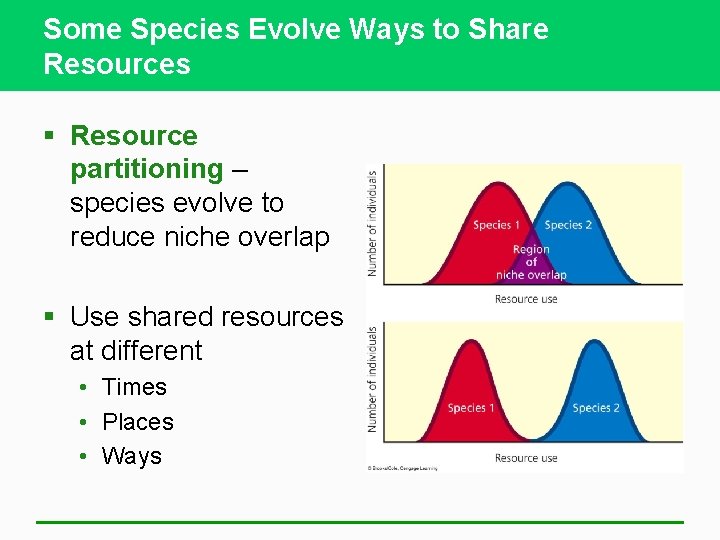
Some Species Evolve Ways to Share Resources § Resource partitioning – species evolve to reduce niche overlap § Use shared resources at different • Times • Places • Ways
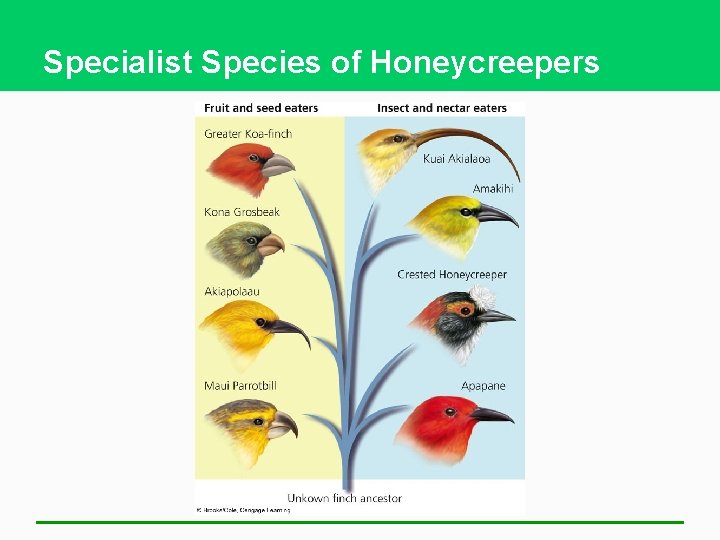
Specialist Species of Honeycreepers
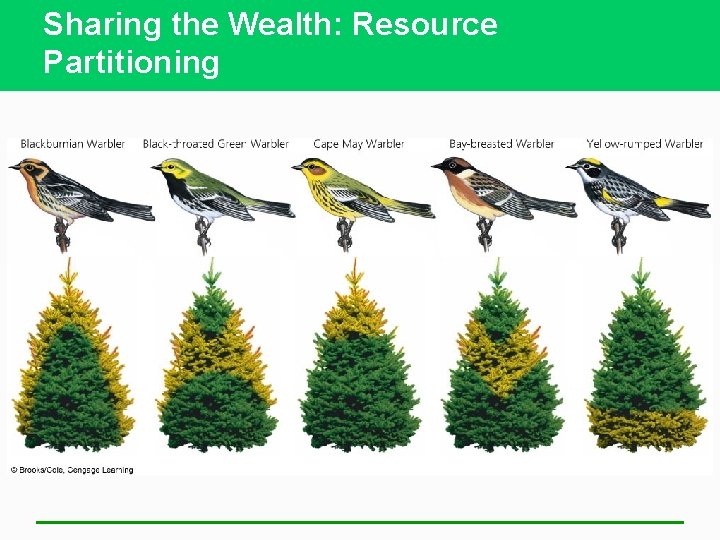
Sharing the Wealth: Resource Partitioning
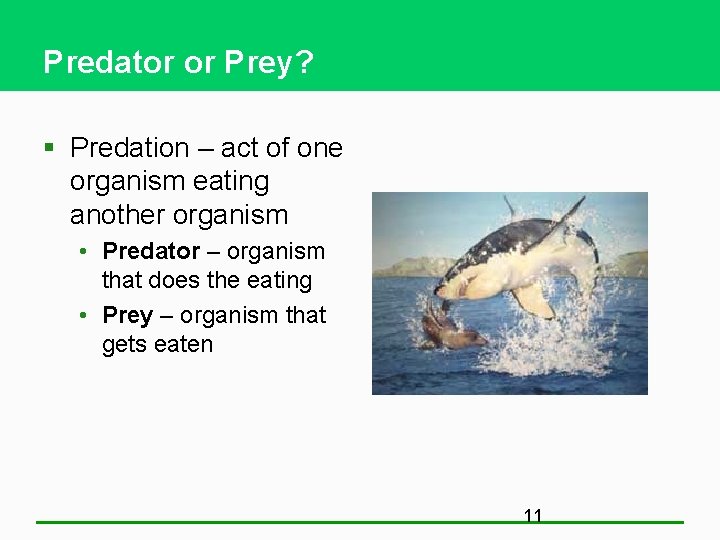
Predator or Prey? § Predation – act of one organism eating another organism • Predator – organism that does the eating • Prey – organism that gets eaten 11
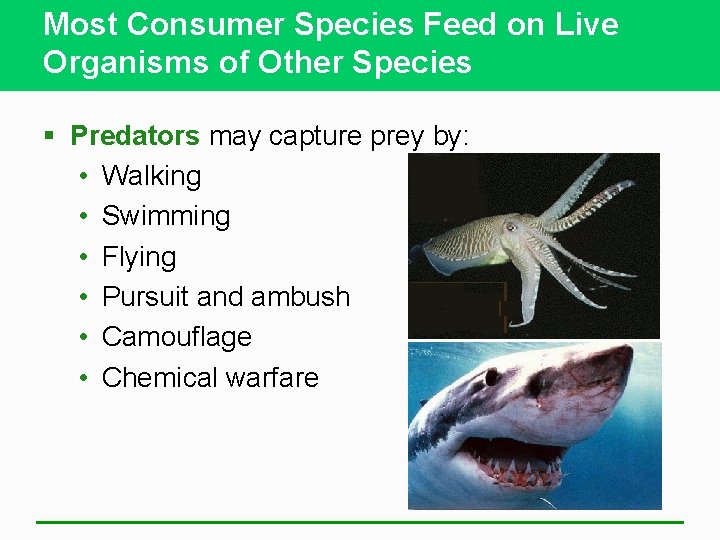
Most Consumer Species Feed on Live Organisms of Other Species § Predators may capture prey by: • Walking • Swimming • Flying • Pursuit and ambush • Camouflage • Chemical warfare
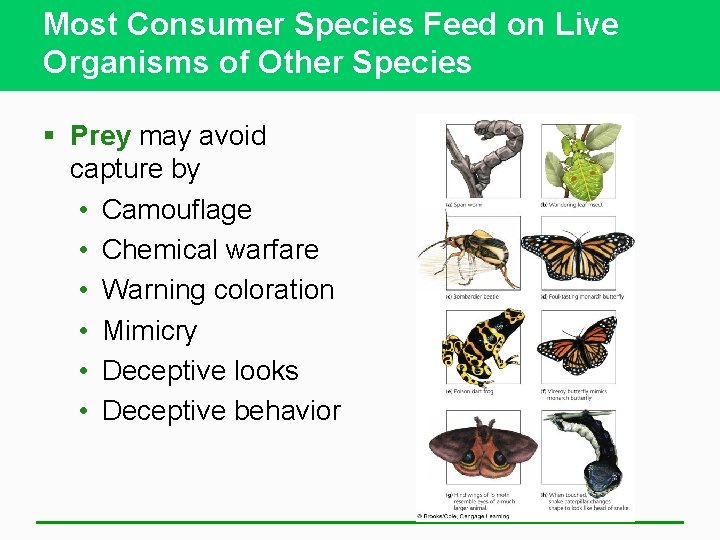
Most Consumer Species Feed on Live Organisms of Other Species § Prey may avoid capture by • Camouflage • Chemical warfare • Warning coloration • Mimicry • Deceptive looks • Deceptive behavior
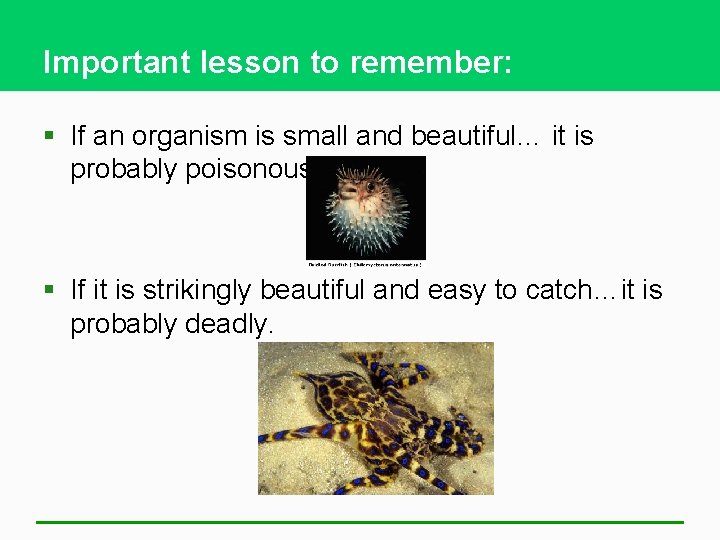
Important lesson to remember: § If an organism is small and beautiful… it is probably poisonous. § If it is strikingly beautiful and easy to catch…it is probably deadly.
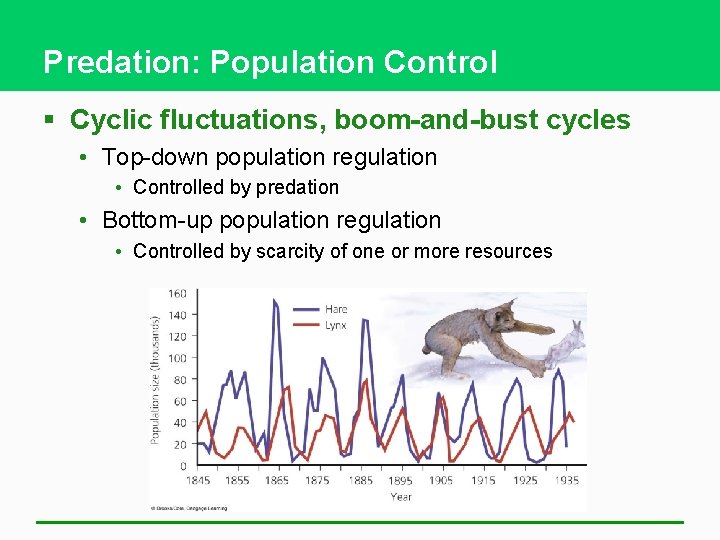
Predation: Population Control § Cyclic fluctuations, boom-and-bust cycles • Top-down population regulation • Controlled by predation • Bottom-up population regulation • Controlled by scarcity of one or more resources
Your Turn! § Predator Prey Relationships

Video Clip § Orca Training Session • 22: 42 to 31: 00
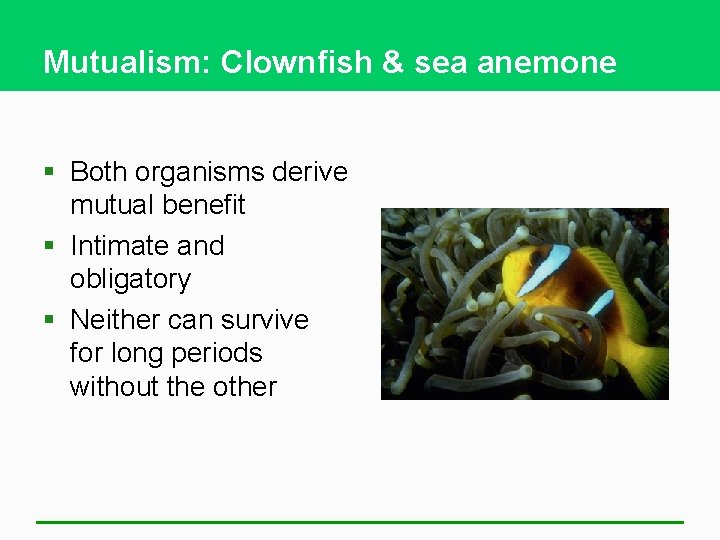
Mutualism: Clownfish & sea anemone § Both organisms derive mutual benefit § Intimate and obligatory § Neither can survive for long periods without the other
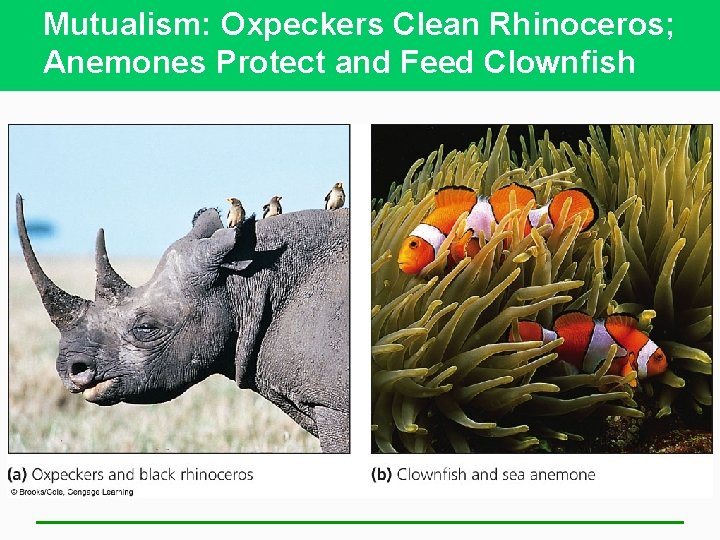
Mutualism: Oxpeckers Clean Rhinoceros; Anemones Protect and Feed Clownfish
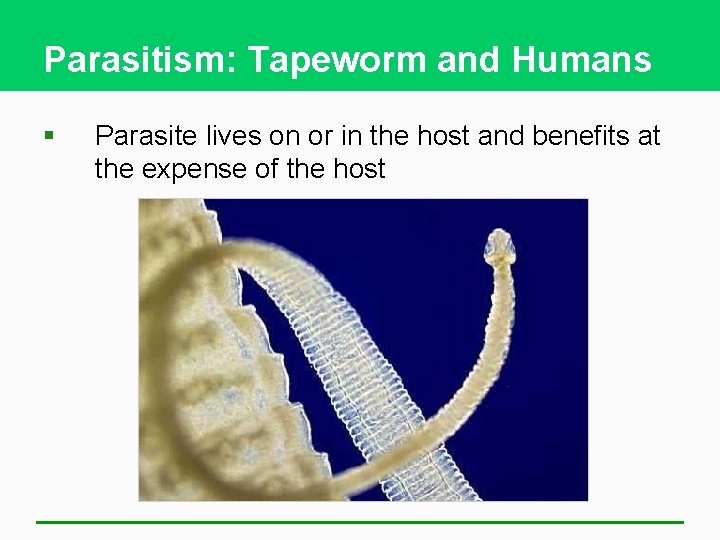
Parasitism: Tapeworm and Humans § Parasite lives on or in the host and benefits at the expense of the host
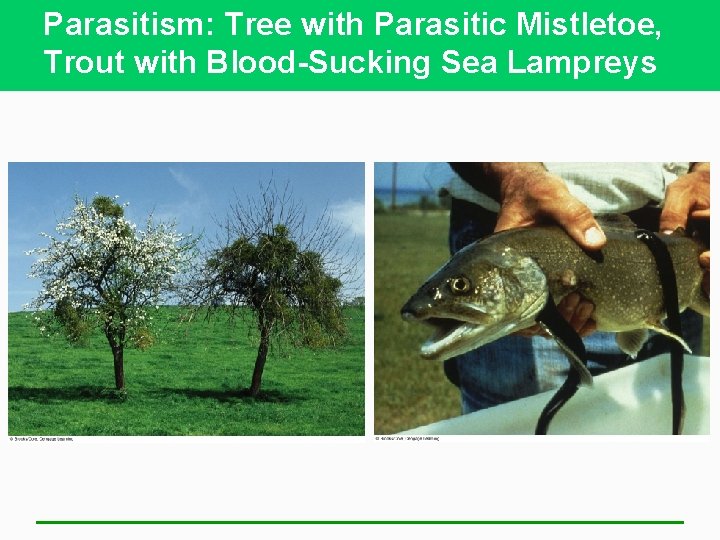
Parasitism: Tree with Parasitic Mistletoe, Trout with Blood-Sucking Sea Lampreys
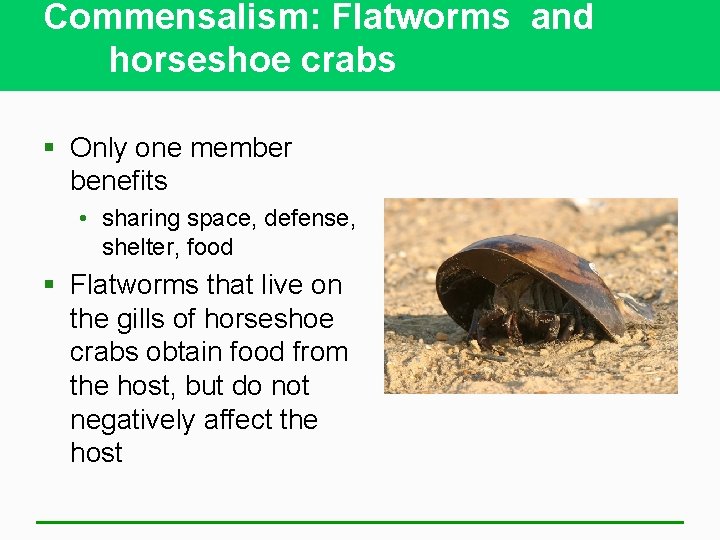
Commensalism: Flatworms and horseshoe crabs § Only one member benefits • sharing space, defense, shelter, food § Flatworms that live on the gills of horseshoe crabs obtain food from the host, but do not negatively affect the host
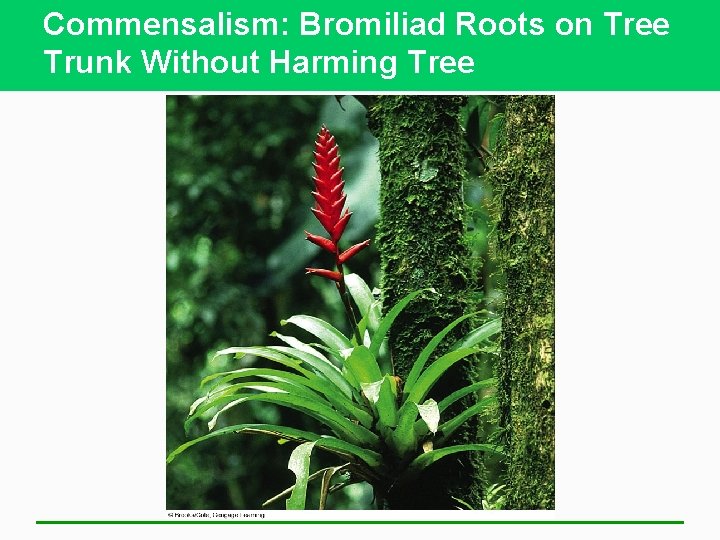
Commensalism: Bromiliad Roots on Tree Trunk Without Harming Tree
Your Turn! § http: //www. pbs. org/wnet/nature/lessons/symbioti c-strategies/video-segments/1496/ • Ecological Relationships • • • Predation Competition Commensalism Mutualism Parasitism
Biodiversity, Species Interactions, and Population Control Chapter 5 Part 2: Population Dynamics
Populations Have Certain Characteristics § Population dynamics – study of how characteristics of a population changes in response to changes in the environmental conditions § Populations differ in • Distribution • Numbers • Age structure
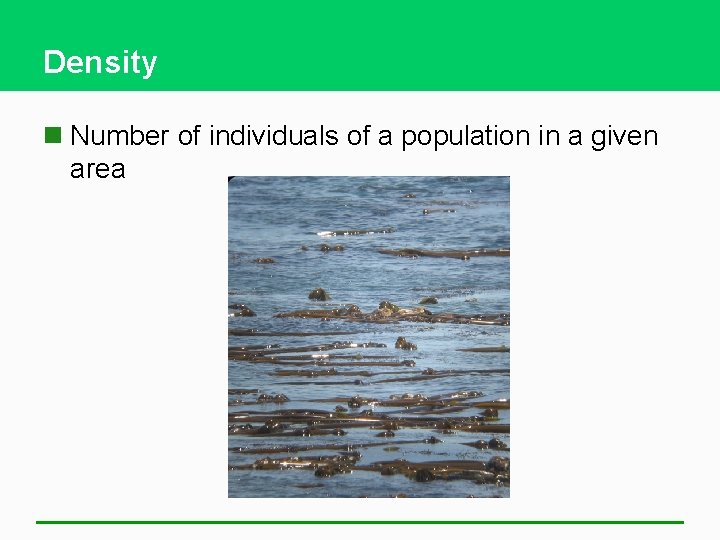
Density n Number of individuals of a population in a given area
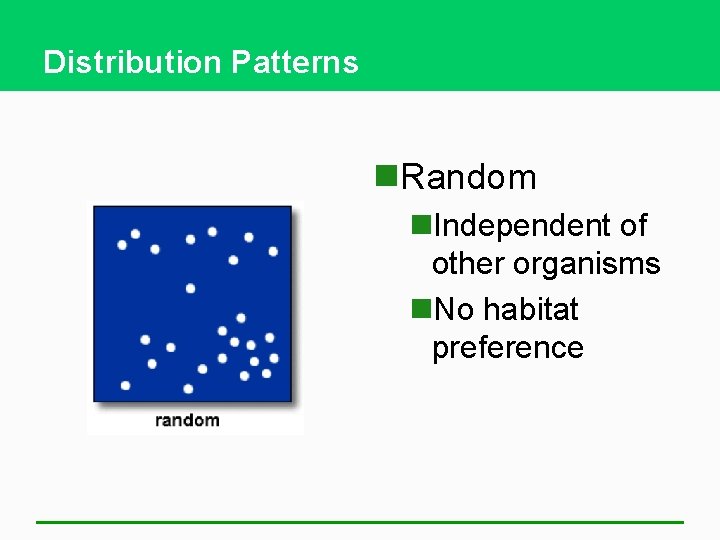
Distribution Patterns n. Random n. Independent of other organisms n. No habitat preference
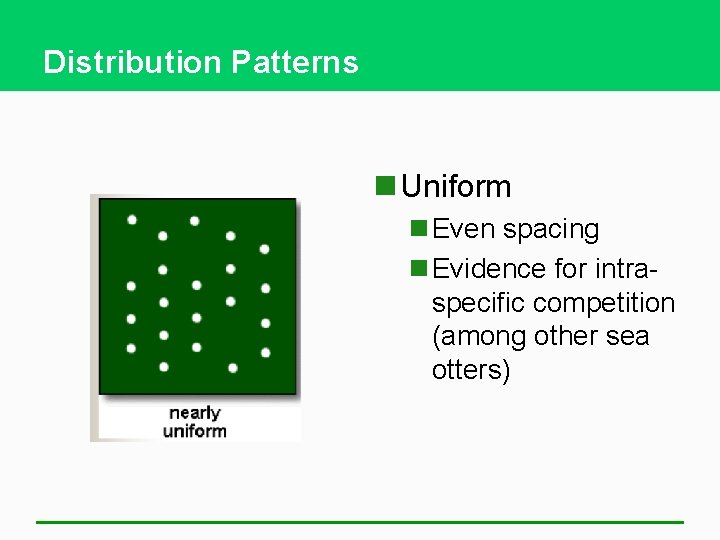
Distribution Patterns n Uniform n Even spacing n Evidence for intraspecific competition (among other sea otters)
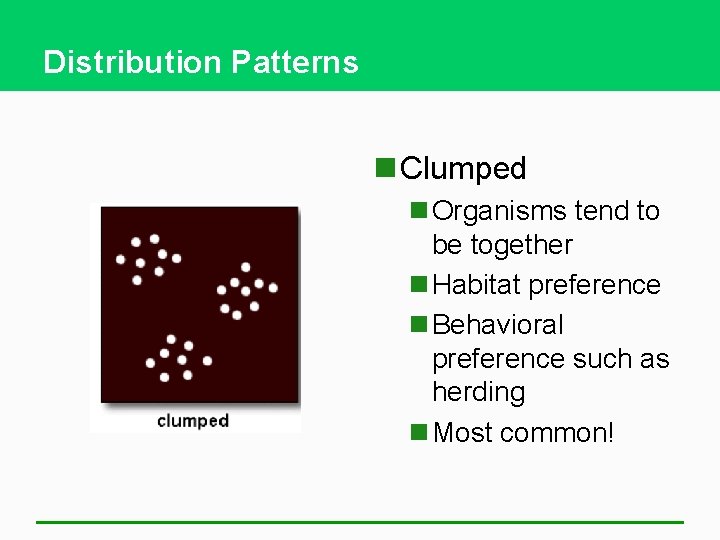
Distribution Patterns n Clumped n Organisms tend to be together n Habitat preference n Behavioral preference such as herding n Most common!
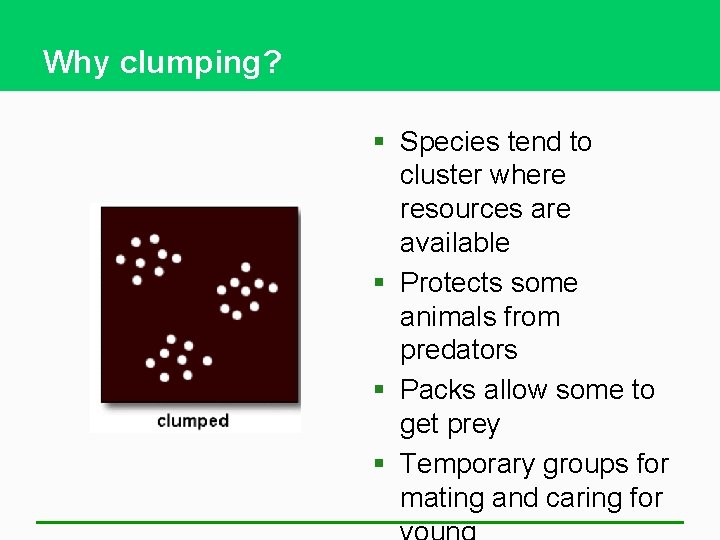
Why clumping? § Species tend to cluster where resources are available § Protects some animals from predators § Packs allow some to get prey § Temporary groups for mating and caring for
Populations Can Grow, Shrink, or Remain Stable § Population size governed by • • Births Deaths Immigration Emigration § Population change = (births + immigration) – (deaths + emigration)
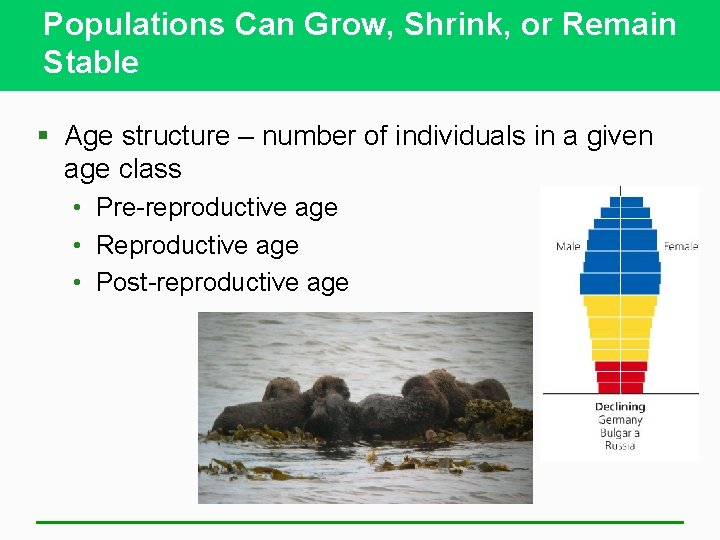
Populations Can Grow, Shrink, or Remain Stable § Age structure – number of individuals in a given age class • Pre-reproductive age • Reproductive age • Post-reproductive age
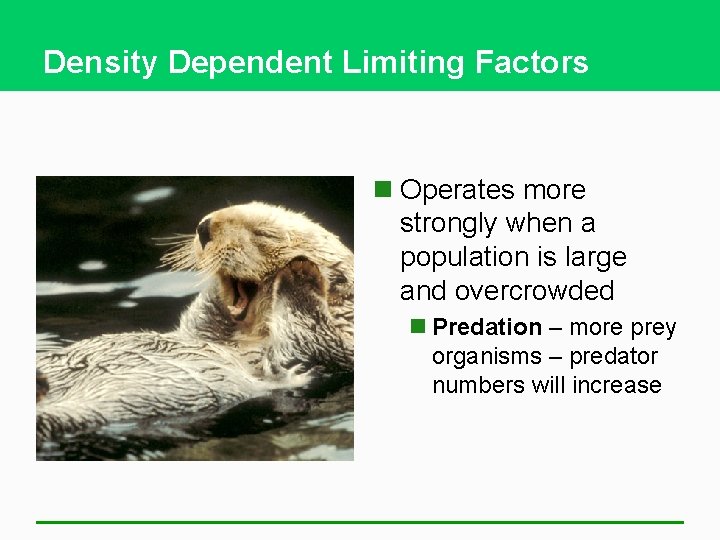
Density Dependent Limiting Factors n Operates more strongly when a population is large and overcrowded n Predation – more prey organisms – predator numbers will increase
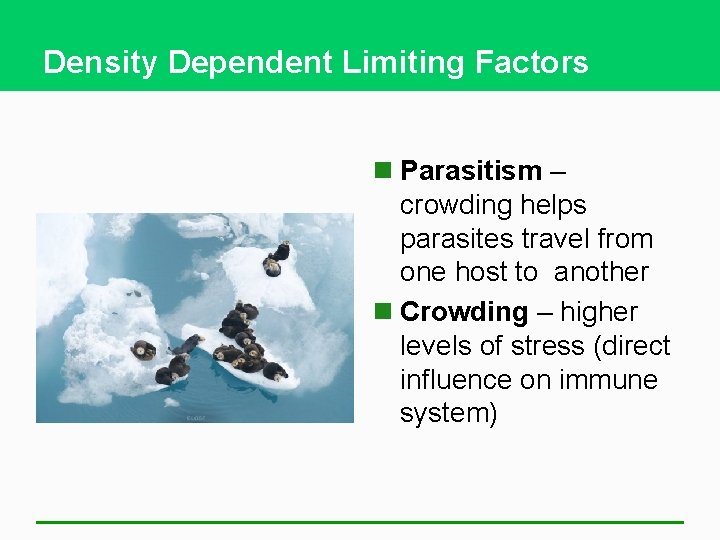
Density Dependent Limiting Factors n Parasitism – crowding helps parasites travel from one host to another n Crowding – higher levels of stress (direct influence on immune system)
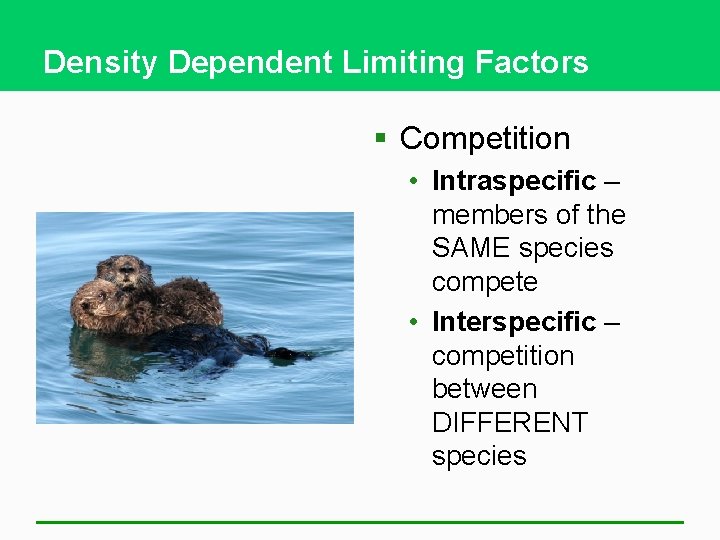
Density Dependent Limiting Factors § Competition • Intraspecific – members of the SAME species compete • Interspecific – competition between DIFFERENT species
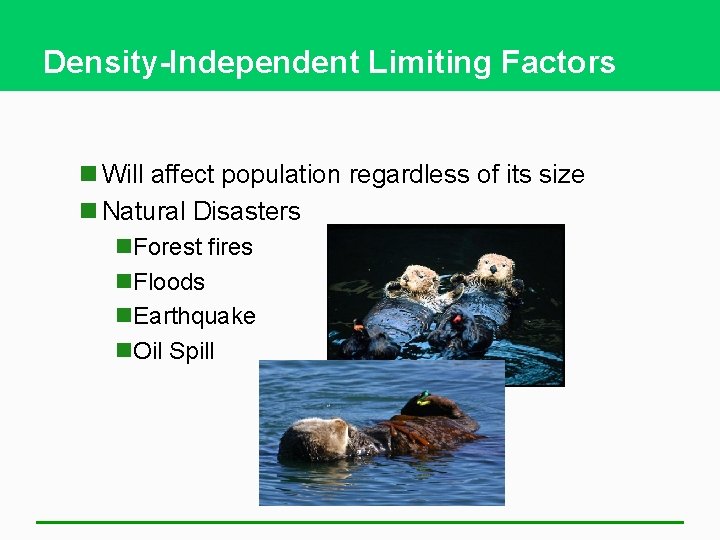
Density-Independent Limiting Factors n Will affect population regardless of its size n Natural Disasters n. Forest fires n. Floods n. Earthquake n. Oil Spill
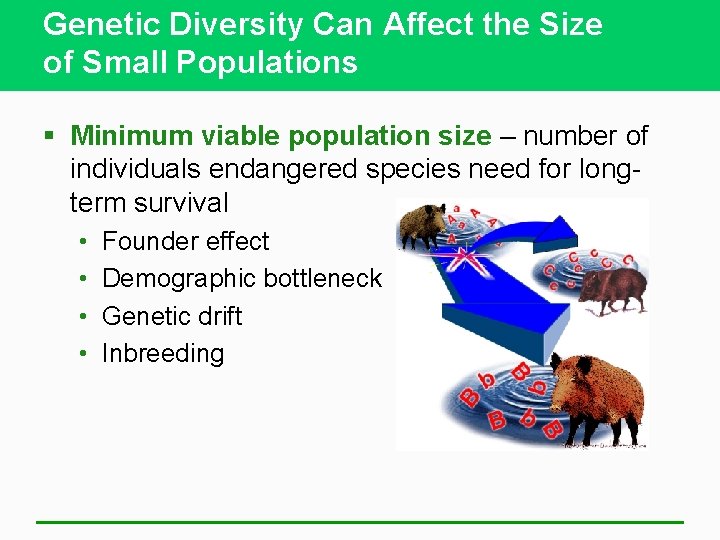
Genetic Diversity Can Affect the Size of Small Populations § Minimum viable population size – number of individuals endangered species need for longterm survival • • Founder effect Demographic bottleneck Genetic drift Inbreeding
Case Study: Exploding White-Tailed Deer Population in the U. S. § 1900: deer habitat destruction and uncontrolled hunting § 1920 s– 1930 s: laws to protect the deer § Current population explosion for deer • Lyme disease • Deer-vehicle accidents • Eating garden plants and shrubs § Ways to control the deer population
- Slides: 39