
Biodiversity Species Interactions and Population Control Chapter 5
Biodiversity, Species Interactions, and Population Control Chapter 5 -part two of unit two
5 -1 How Do Species Interact? § Concept 5 -1 Five types of species interactions —competition, predation, parasitism, mutualism, and commensalism—affect the resource use and population sizes of the species in an ecosystem.
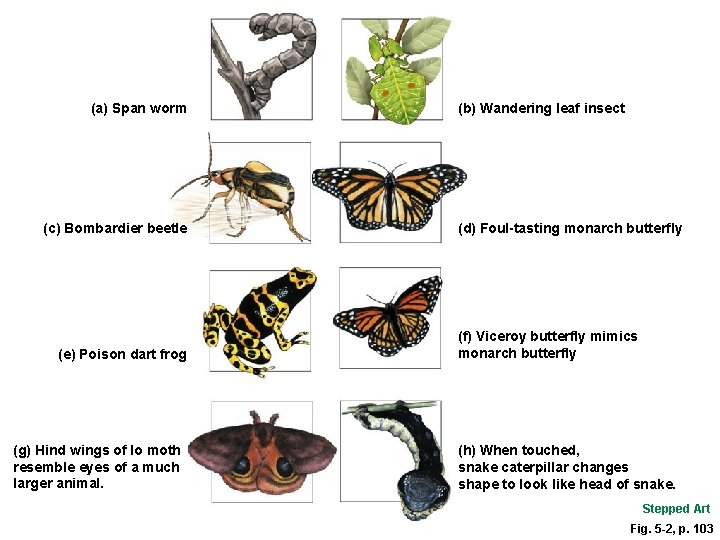
(a) Span worm (c) Bombardier beetle (e) Poison dart frog (g) Hind wings of Io moth resemble eyes of a much larger animal. (b) Wandering leaf insect (d) Foul-tasting monarch butterfly (f) Viceroy butterfly mimics monarch butterfly (h) When touched, snake caterpillar changes shape to look like head of snake. Stepped Art Fig. 5 -2, p. 103
Some Species Feed off Other Species by Living on or in Them § Parasitism § Parasite-host interaction may lead to coevolution
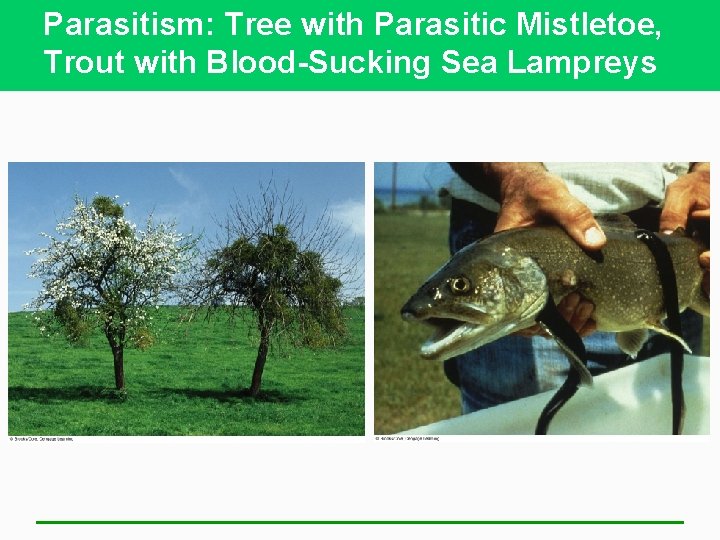
Parasitism: Tree with Parasitic Mistletoe, Trout with Blood-Sucking Sea Lampreys
In Some Interactions, Both Species Benefit § Mutualism § Nutrition and protection relationship § Gut inhabitant mutualism
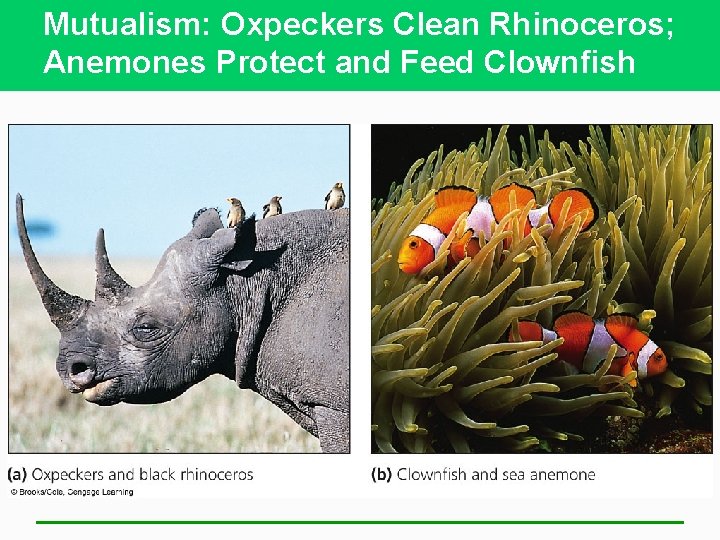
Mutualism: Oxpeckers Clean Rhinoceros; Anemones Protect and Feed Clownfish
In Some Interactions, One Species Benefits and the Other Is Not Harmed § Commensalism § Epiphytes- any plant that grows upon or is in some manner attached to another plant or object merely for physical support. Epiphytes are primarily tropical § Birds nesting in trees
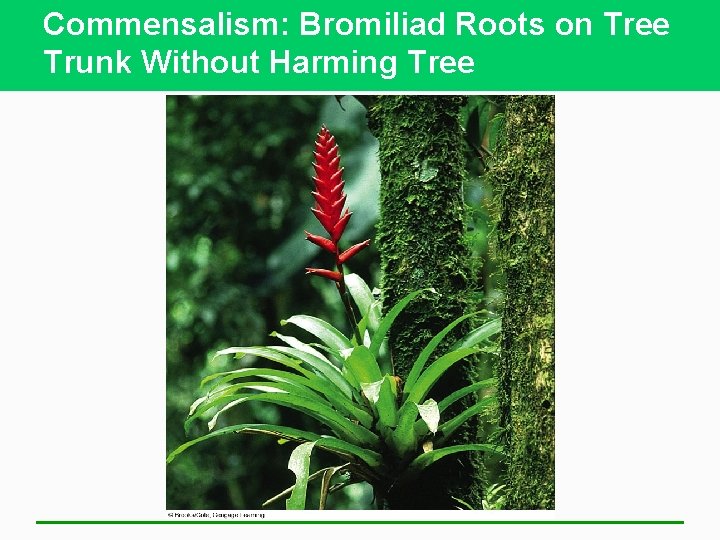
Commensalism: Bromiliad Roots on Tree Trunk Without Harming Tree
5 -2 How Can Natural Selection Reduce Competition between Species? § Concept 5 -2 Some species develop adaptations that allow them to reduce or avoid competition with other species for resources.
Some Species Evolve Ways to Share Resources § Resource partitioning § Reduce niche overlap § Use shared resources at different • Times • Places • Ways
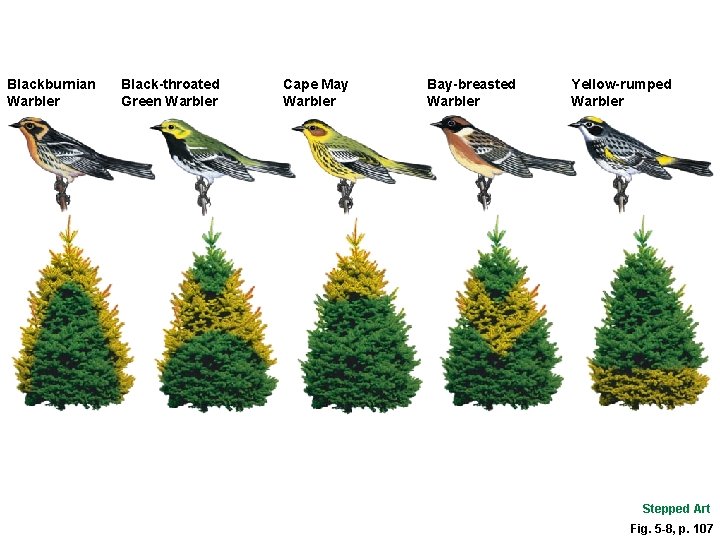
Blackburnian Warbler Black-throated Green Warbler Cape May Warbler Bay-breasted Warbler Yellow-rumped Warbler Stepped Art Fig. 5 -8, p. 107
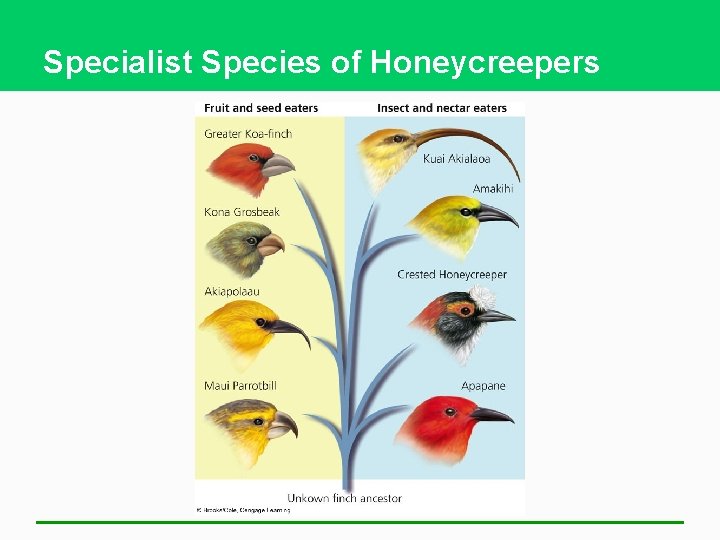
Specialist Species of Honeycreepers
5 -3 What Limits the Growth of Populations? § Concept 5 -3 No population can continue to grow indefinitely because of limitations on resources and because of competition among species for those resources.
Populations Have Certain Characteristics (1) § Populations differ in • Distribution • Numbers • Age structure § Population dynamics
Populations Have Certain Characteristics (2) § Changes in population characteristics due to: • Temperature • Presence of disease organisms or harmful chemicals • Resource availability • Arrival or disappearance of competing species
Most Populations Live Together in Clumps or Patches (1) § Population distribution • Clumping • Uniform dispersion • Random dispersion
Most Populations Live Together in Clumps or Patches (2) § Why clumping? • Species tend to cluster where resources are available • Groups have a better chance of finding clumped resources • Protects some animals from predators • Packs allow some to get prey • Temporary groups for mating and caring for young
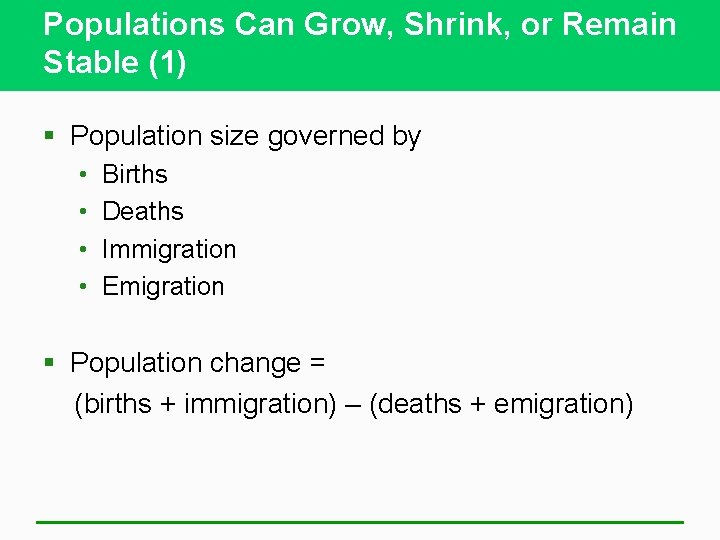
Populations Can Grow, Shrink, or Remain Stable (1) § Population size governed by • • Births Deaths Immigration Emigration § Population change = (births + immigration) – (deaths + emigration)
Populations Can Grow, Shrink, or Remain Stable (2) § Age structure • Pre-reproductive age • Reproductive age • Post-reproductive age
No Population Can Grow Indefinitely: J-Curves and S-Curves (2) § Size of populations limited by • • • Light Water Space Nutrients Exposure to too many competitors, predators or infectious diseases
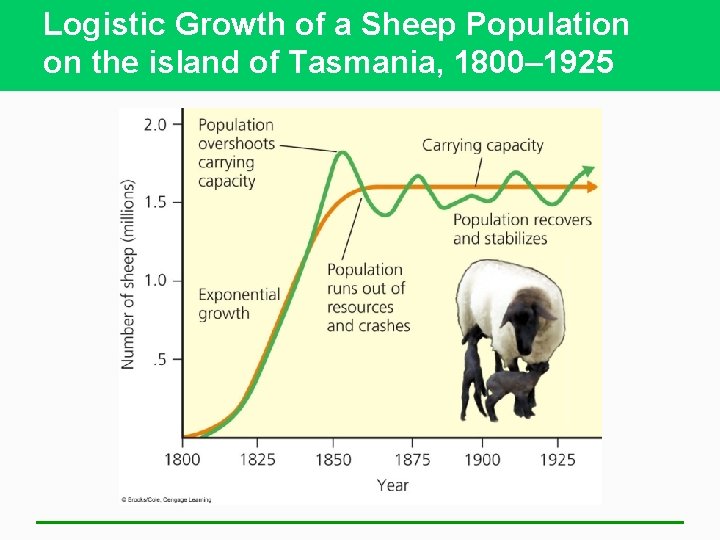
Logistic Growth of a Sheep Population on the island of Tasmania, 1800– 1925
When a Population Exceeds Its Habitat’s Carrying Capacity, Its Population Can Crash § Carrying capacity: not fixed § Reproductive time lag may lead to overshoot • Dieback (crash) § Damage may reduce area’s carrying capacity
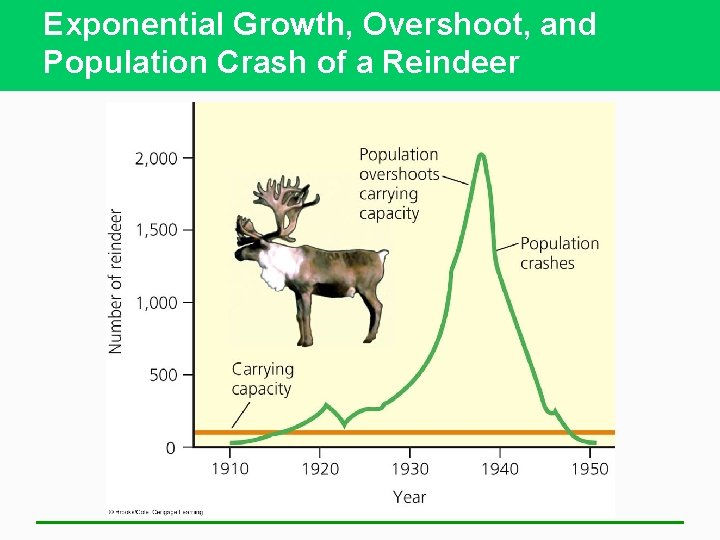
Exponential Growth, Overshoot, and Population Crash of a Reindeer
Species Have Different Reproductive Patterns § r-Selected species, opportunists § K-selected species, competitors
Genetic Diversity Can Affect the Size of Small Populations § Founder effect § Demographic bottleneck § Genetic drift § Inbreeding § Minimum viable population size
Under Some Circumstances Population Density Affects Population Size § Density-dependent population controls • • Predation Parasitism Infectious disease Competition for resources
Several Different Types of Population Change Occur in Nature § Stable § Irruptive-moving out of area (birds) § Cyclic fluctuations, boom-and-bust cycles • Top-down population regulation • Bottom-up population regulation § Irregular
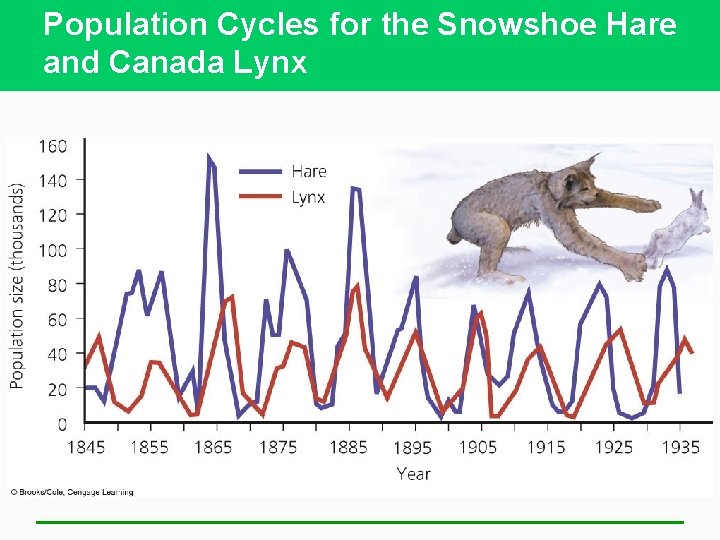
Population Cycles for the Snowshoe Hare and Canada Lynx
Humans Are Not Exempt from Nature’s Population Controls § Ireland • Potato crop in 1845 § Bubonic plague • Fourteenth century § AIDS • Global epidemic
5 -4 How Do Communities and Ecosystems Respond to Changing Environmental Conditions? § Concept 5 -4 The structure and species composition of communities and ecosystems change in response to changing environmental conditions through a process called ecological succession.
Communities and Ecosystems Change over Time: Ecological Succession § Natural ecological restoration • Primary succession • Secondary succession
Some Ecosystems Start from Scratch: Primary Succession § No soil in a terrestrial system § No bottom sediment in an aquatic system § Early successional plant species, pioneer § Midsuccessional plant species § Late successional plant species
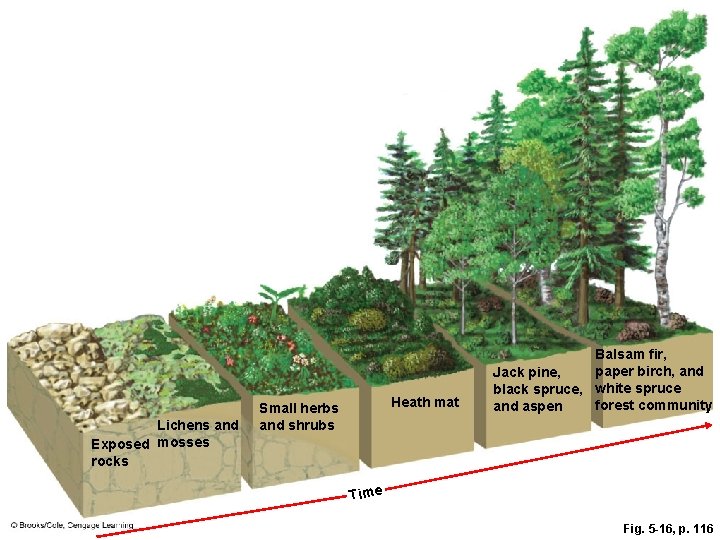
Lichens and Exposed mosses rocks Heath mat Small herbs and shrubs Balsam fir, paper birch, and Jack pine, black spruce, white spruce forest community and aspen Time Fig. 5 -16, p. 116
Some Ecosystems Do Not Have to Start from Scratch: Secondary Succession (1) § Some soil remains in a terrestrial system § Some bottom sediment remains in an aquatic system § Ecosystem has been • Disturbed • Removed • Destroyed
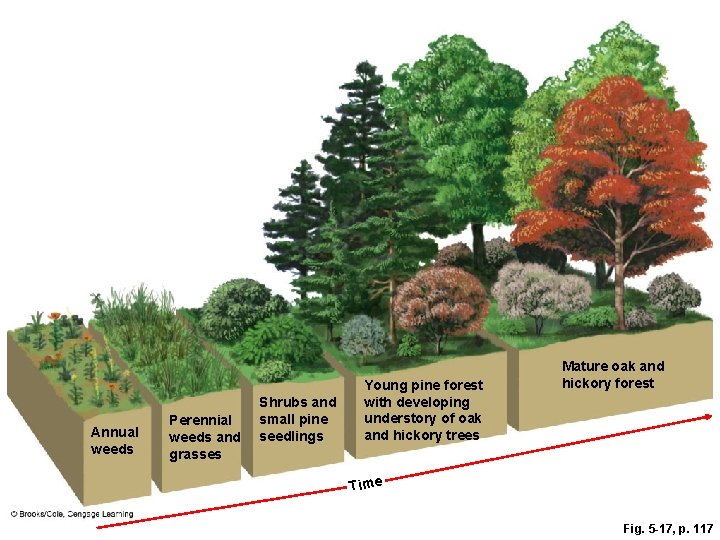
Annual weeds Perennial weeds and grasses Shrubs and small pine seedlings Young pine forest with developing understory of oak and hickory trees Mature oak and hickory forest Time Fig. 5 -17, p. 117
Some Ecosystems Do Not Have to Start from Scratch: Secondary Succession (2) § Primary and secondary succession • Tend to increase biodiversity • Increase species richness and interactions among species § Primary and secondary succession can be interrupted by • • • Fires Hurricanes Clear-cutting of forests Plowing of grasslands Invasion by nonnative species
- Slides: 37