
Biodiversity of Alabama Endangered Species Reasons for endangerment
Biodiversity of Alabama: Endangered Species

Reasons for endangerment: n n Habitat destruction Pollution Overexploitation (hunting, poaching, capture) Invasive species
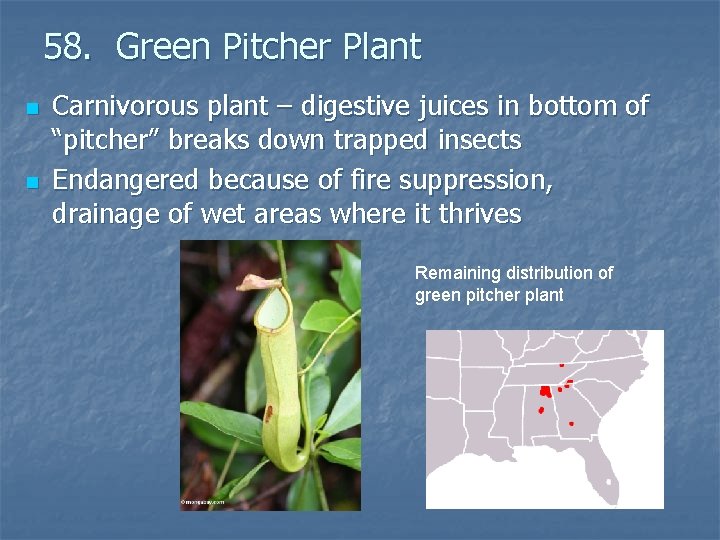
58. Green Pitcher Plant n n Carnivorous plant – digestive juices in bottom of “pitcher” breaks down trapped insects Endangered because of fire suppression, drainage of wet areas where it thrives Remaining distribution of green pitcher plant
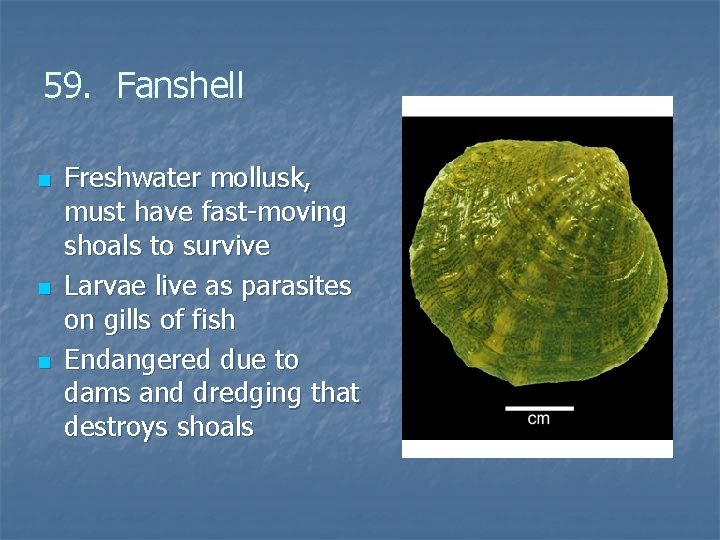
59. Fanshell n n n Freshwater mollusk, must have fast-moving shoals to survive Larvae live as parasites on gills of fish Endangered due to dams and dredging that destroys shoals
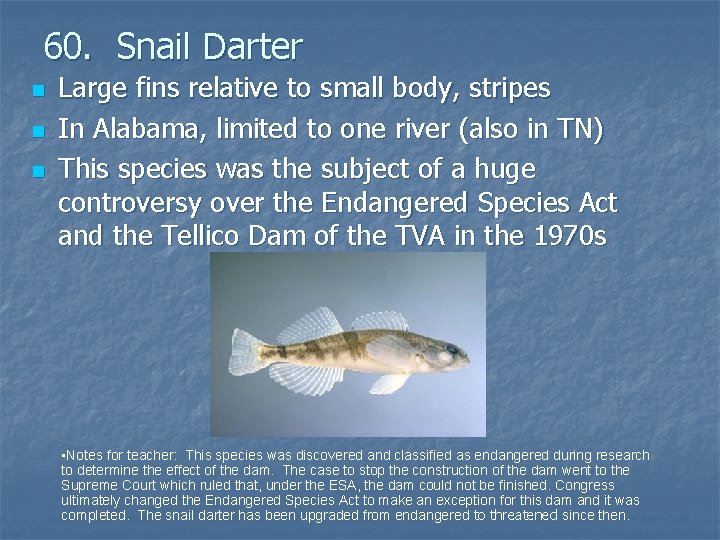
60. Snail Darter n n n Large fins relative to small body, stripes In Alabama, limited to one river (also in TN) This species was the subject of a huge controversy over the Endangered Species Act and the Tellico Dam of the TVA in the 1970 s • Notes for teacher: This species was discovered and classified as endangered during research to determine the effect of the dam. The case to stop the construction of the dam went to the Supreme Court which ruled that, under the ESA, the dam could not be finished. Congress ultimately changed the Endangered Species Act to make an exception for this dam and it was completed. The snail darter has been upgraded from endangered to threatened since then.
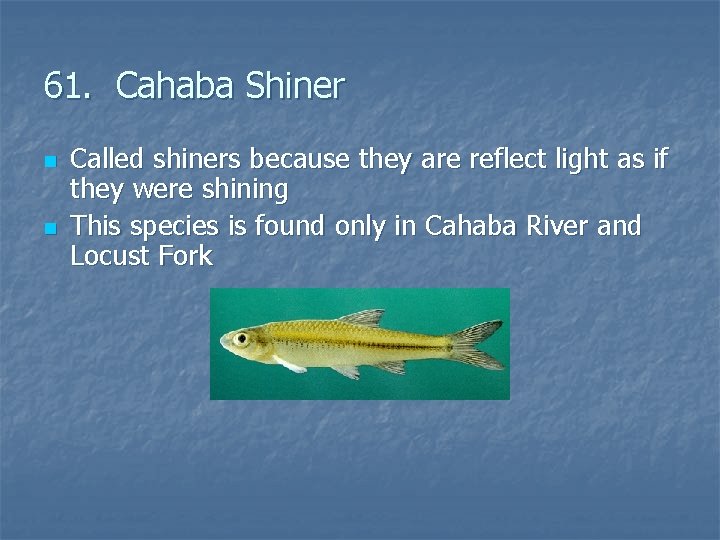
61. Cahaba Shiner n n Called shiners because they are reflect light as if they were shining This species is found only in Cahaba River and Locust Fork
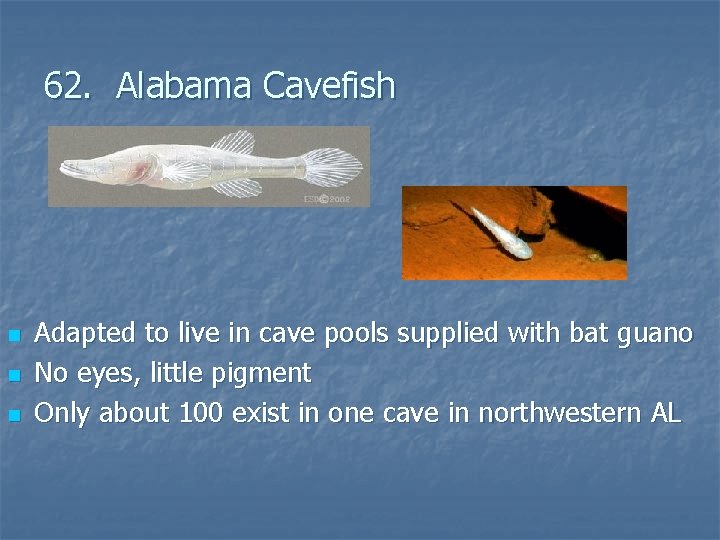
62. Alabama Cavefish n n n Adapted to live in cave pools supplied with bat guano No eyes, little pigment Only about 100 exist in one cave in northwestern AL
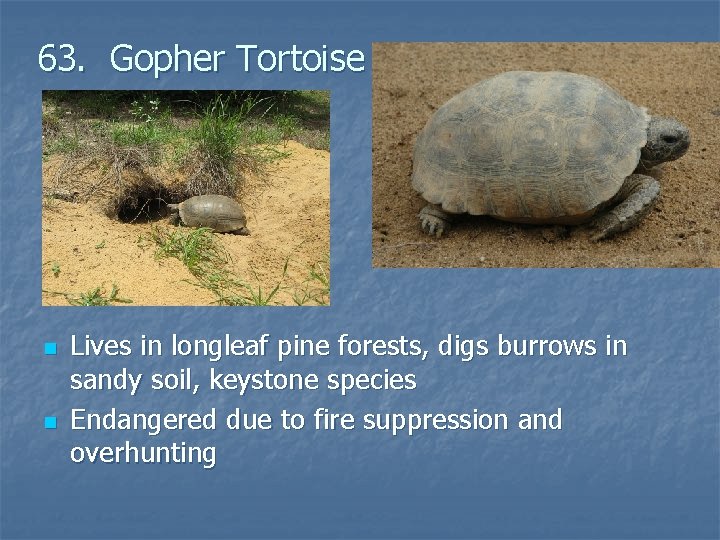
63. Gopher Tortoise n n Lives in longleaf pine forests, digs burrows in sandy soil, keystone species Endangered due to fire suppression and overhunting
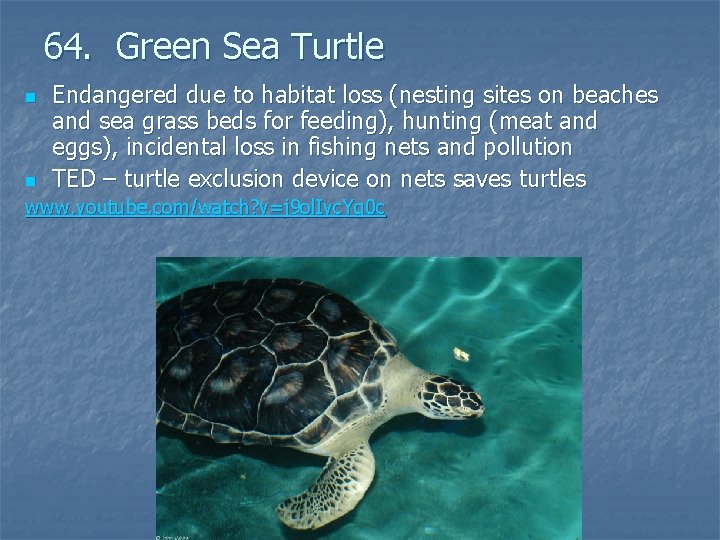
64. Green Sea Turtle n n Endangered due to habitat loss (nesting sites on beaches and sea grass beds for feeding), hunting (meat and eggs), incidental loss in fishing nets and pollution TED – turtle exclusion device on nets saves turtles www. youtube. com/watch? v=j 9 ol. Iyc. Yg 0 c
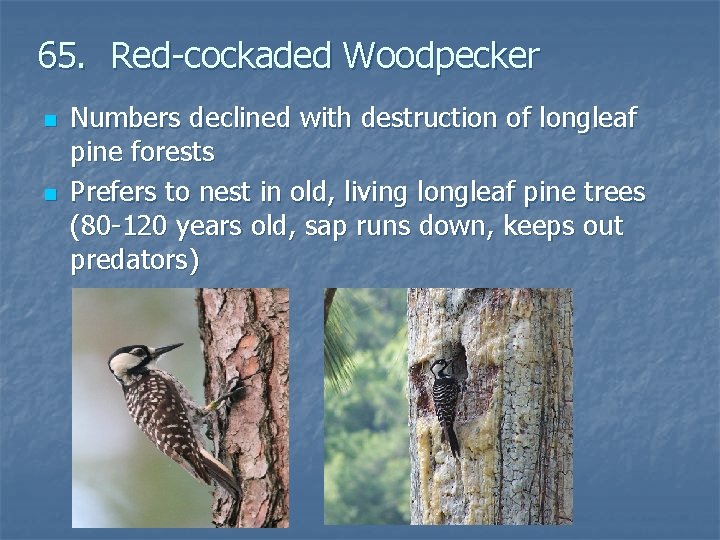
65. Red-cockaded Woodpecker n n Numbers declined with destruction of longleaf pine forests Prefers to nest in old, living longleaf pine trees (80 -120 years old, sap runs down, keeps out predators)
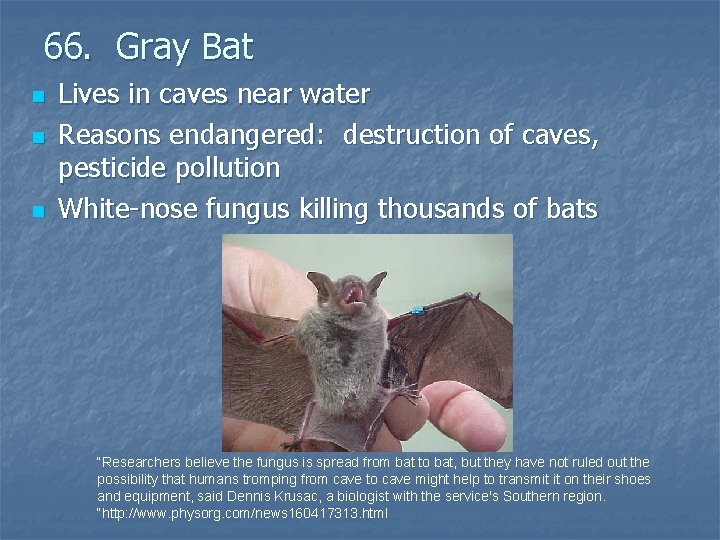
66. Gray Bat n n n Lives in caves near water Reasons endangered: destruction of caves, pesticide pollution White-nose fungus killing thousands of bats “Researchers believe the fungus is spread from bat to bat, but they have not ruled out the possibility that humans tromping from cave to cave might help to transmit it on their shoes and equipment, said Dennis Krusac, a biologist with the service's Southern region. “http: //www. physorg. com/news 160417313. html
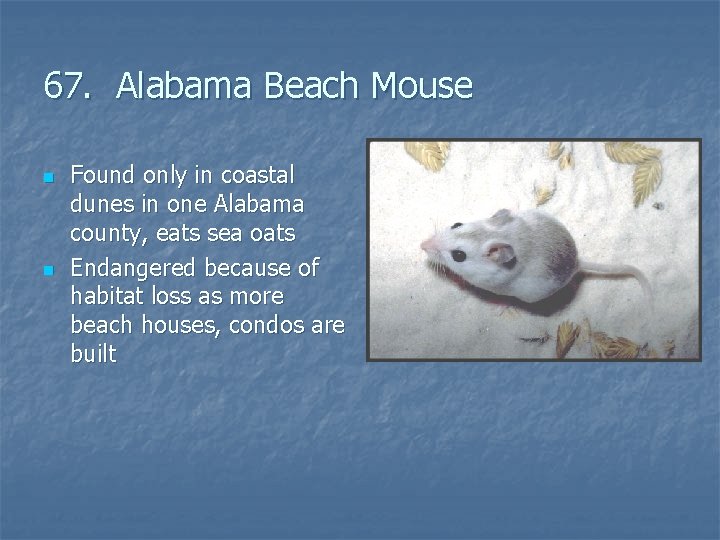
67. Alabama Beach Mouse n n Found only in coastal dunes in one Alabama county, eats sea oats Endangered because of habitat loss as more beach houses, condos are built
- Slides: 12