
Biodiversity Environmental Science Notes Series What is Biodiversity
Biodiversity Environmental Science Notes Series
What is Biodiversity? • Species Richness is another term for biodiversity • Density is an important factor in terms of biodiversity • Carrying capacity: resource availability is important (Tillman curve)
Niche • The role of an organisms within its environment (habitat) that is specific. • Gause’s competitive exclusion theory – no two organisms (populations) can occupy the same niche indefinitely (Andrews. edu). • Niche is important in terms of competition.
Species Abundance? • The amount of a particular species in a given habitat is important, this is abundance. • Sometimes this does not support species richness if the species out-competes others species.
Biodiversity • According to Peter Raven (2007) there approximately 1. 5 million known species on earth with a high extinction rate. • There may be 8 – 10 million species on earth today, but not much is known about the lower taxa. • Biodiversity is being impacted by humans at an unprecedented rate of extinction of up to 200 species per day.
Competition • There a number of ways in which a species competes for resources: 1. Exploitation: this is when a species can utilize resources better than other species (i. e. Aureococcus) 2. Interference: when a species can create its own environment and manipulate it for its advantage (i. e. Sour weed)
Ecology • Ecology is a young field (started in the 1950’s), exploring the role of organisms within their environments and how it relates to survival. • Ecology takes into account habitat, environmental factors, biological functions and physical conditions.
Population Estimates • Use basic population models… Interspecies: Margelef, Menhenick, Jaccard’s indices Inter/Intraspecies: Simpson’s Index
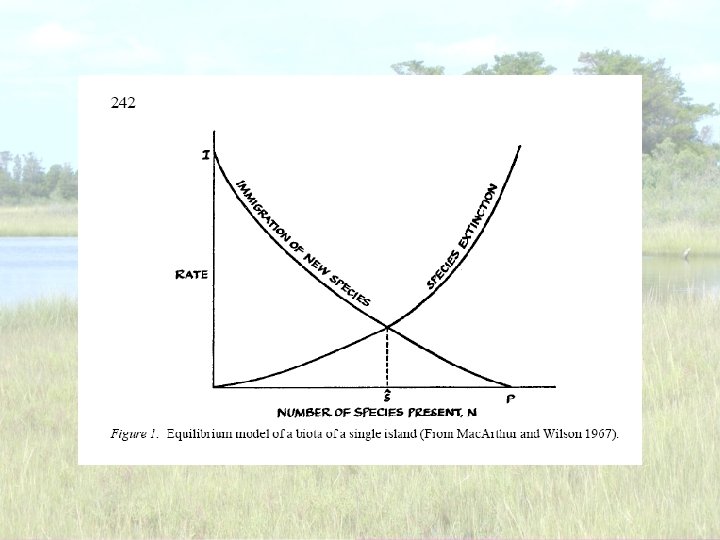
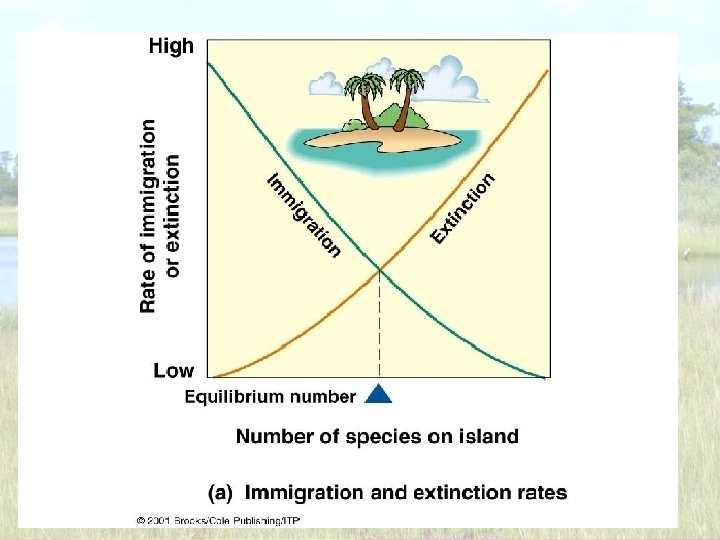
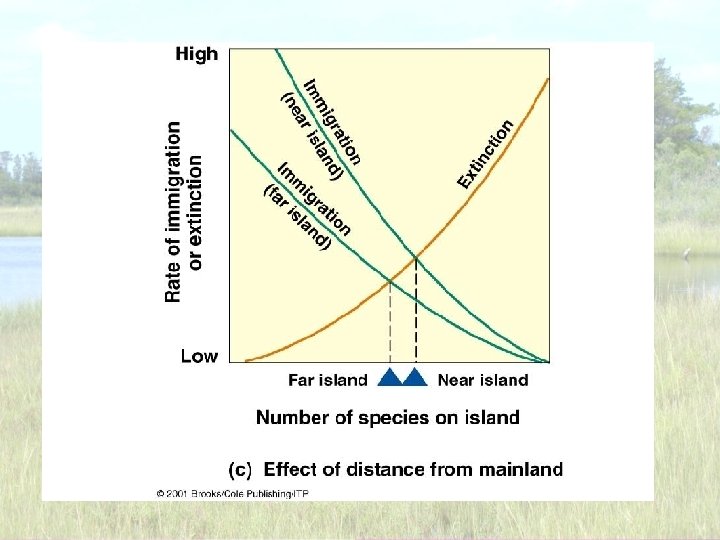
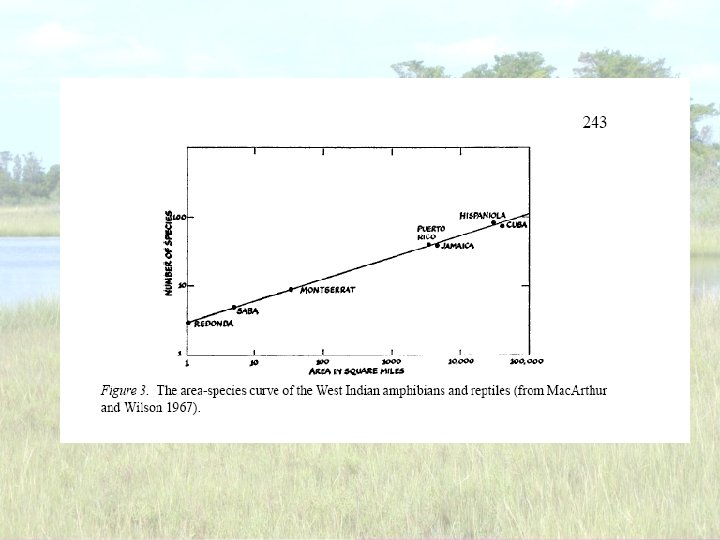
Island Biogeography • Robert Mac. Arthur and Edward O. Wilson, theorized about space and resources looking at islands. • They hypothesized that islands further from a mainland would have less species diversity than those closer. • They also hypothesized that larger islands would support more diversity than smaller islands.
Sustaining Wild Species • Over 90% of today’s crops are domesticated and basically 4 crop types provide a majority of the world its food requirement. • Over 80% of the world needs plants for medicinal purposes.
Sustaining Wild Species? • Is survival of the human species a key to survival of other species? • We look at things from an anthropogenic view. • It is thought that over 1 million species live in the rainforests (known) with an extinction rate of 2% per year!
Species protection categories • Endangered – reduced mating pairs to the point where populations cannot sustain themselves (Kemp’s ridley sea turtle) • Threatened – declining in numbers, but must be protected (Osprey) • Concern – Decline, possibly due to habitat loss or resource limitations
Protection • Endangered Species Preservation Act (1973): Species are listed under Federal and Statewide basis. Therefore, they could receive protection under different categories. American alligator – Federal Threatened, varies statewide
IUCN: Red List Program • The International Union for the Conservation of Nature established a program through the United Nations for global protection of species • Under the Red List Program (www. iucnredlist. org) has a well organized system of species rankings.
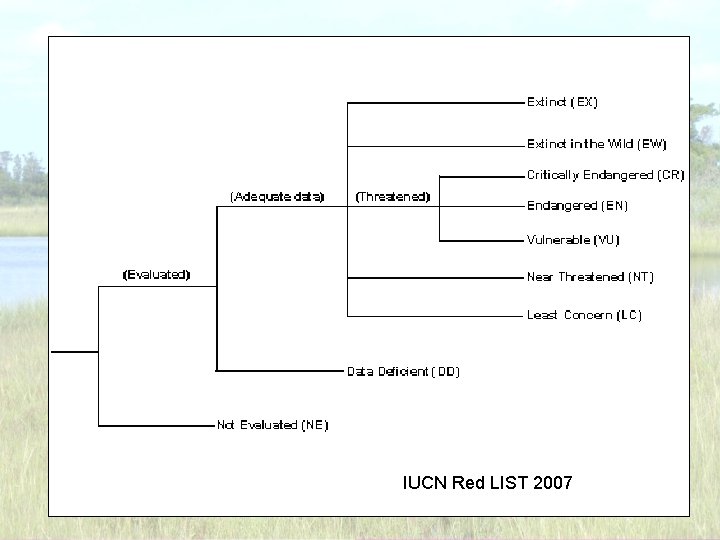
IUCN Red LIST 2007
Protection • Enforcement of the Endangered Species Act is a Federal Mandate and falls under the following… – U. S. Fish and Wildlife Service – National Oceanic & Atmospheric Administration, National Marine Fisheries
U. S. Fish & Wildlife • Department of the Interior. • Responsible for all beaches, inland waters, except Great Lakes. • Species management, control and manage lands that are moderatelyrestricted (over 500 refuges and rangelands).
“NOAA Fisheries Service conserves, protects, and manages living marine resources in a way that ensures their continuation as functioning components of marine ecosystems, affords economic opportunities, and enhances the quality of life for the American public” (NOAA 2007).
NOAA • National Estuarine Research Reserve Program • Sanctuaries and Protected Areas (called Marine Protected Areas • Fisheries Quotas and Enforcement
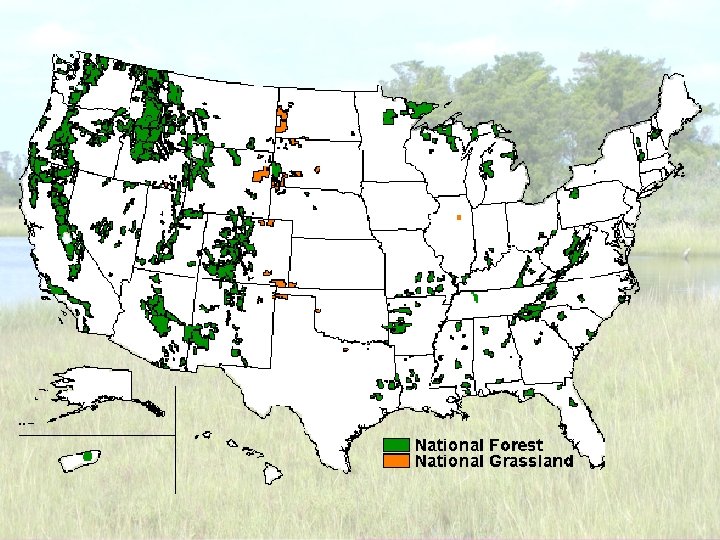
Other players in management • Multiple Use Lands. . National Forests which include over 150 Forests and 19 grasslands managed through the U. S. Forest Service
Other players in management • Multiple Use Lands… • The largest is the Bureau of Land Management which includes prairies, deserts, scrub forests and open spaces mostly in the western U. S.
Other players in management • Restricted Use Lands The National Park Service has over 370 units and 50+ major parks throughout with close to 50% in the wilderness (www. nps. gov).
- Slides: 27