
BIODIVERSITY Community Ecology I Introduction II Multispecies Interactions
BIODIVERSITY
Community Ecology I. Introduction II. Multispecies Interactions with a Trophic Level III. Multispecies Interactions across Trophic Levels IV. Succession V. Biodiversity: Patterns and Processes A. The Species-Area Relationship 1. The pattern
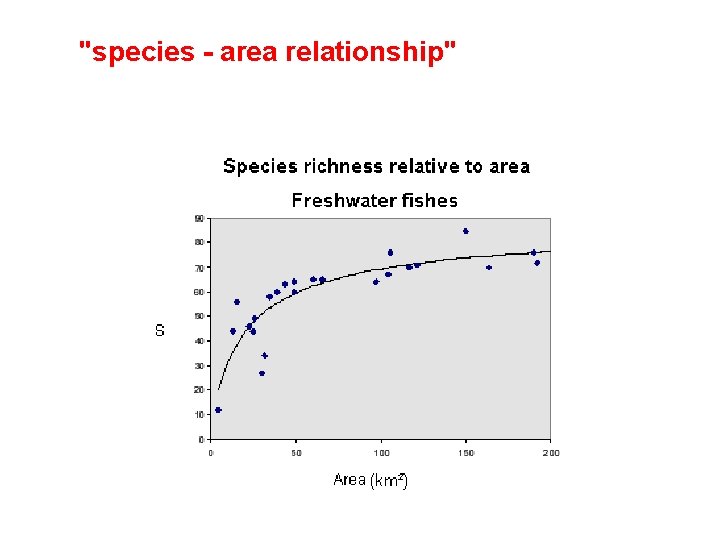
"species - area relationship"
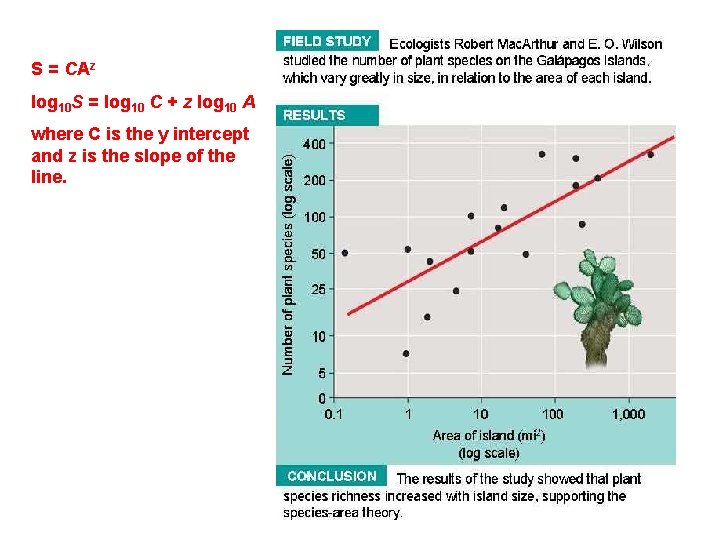
S = CAz log 10 S = log 10 C + z log 10 A where C is the y intercept and z is the slope of the line.
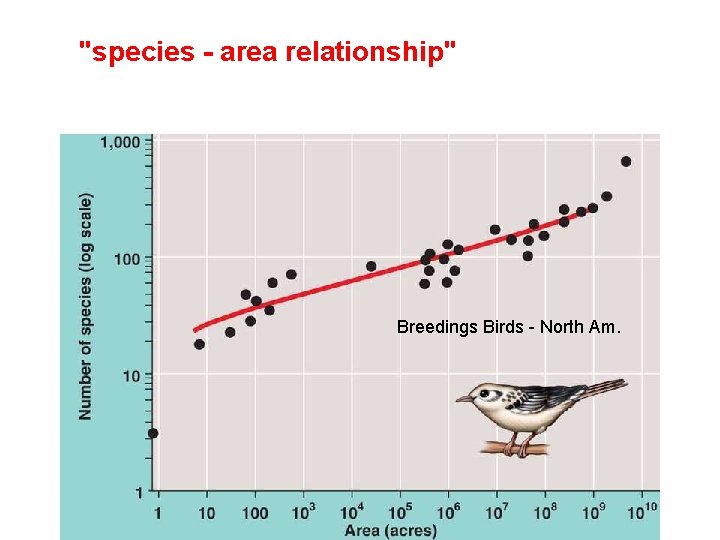
"species - area relationship" Breedings Birds - North Am.

Number of Bat Species log(N) "species - area relationship" Island Area log(square km)
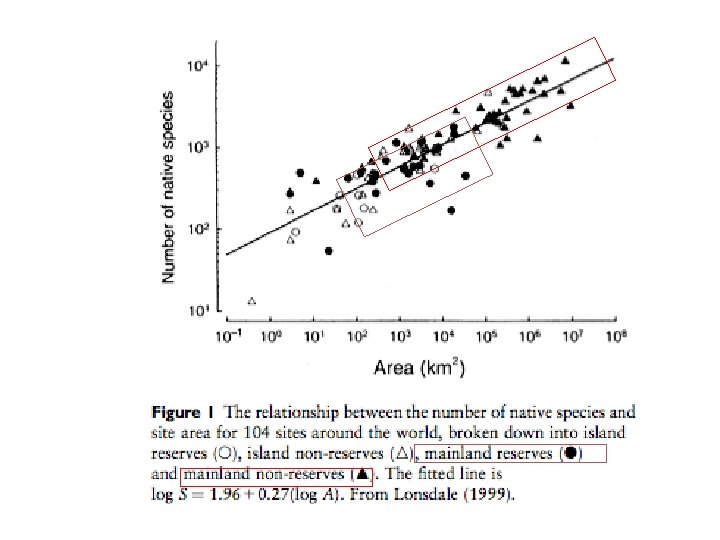
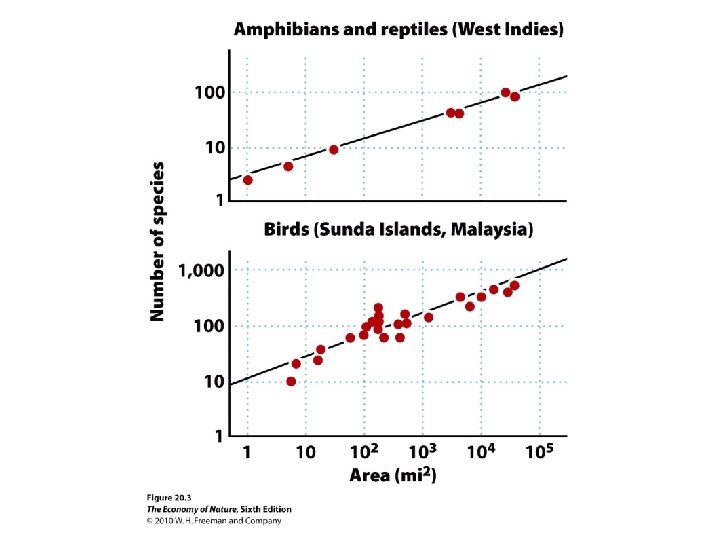
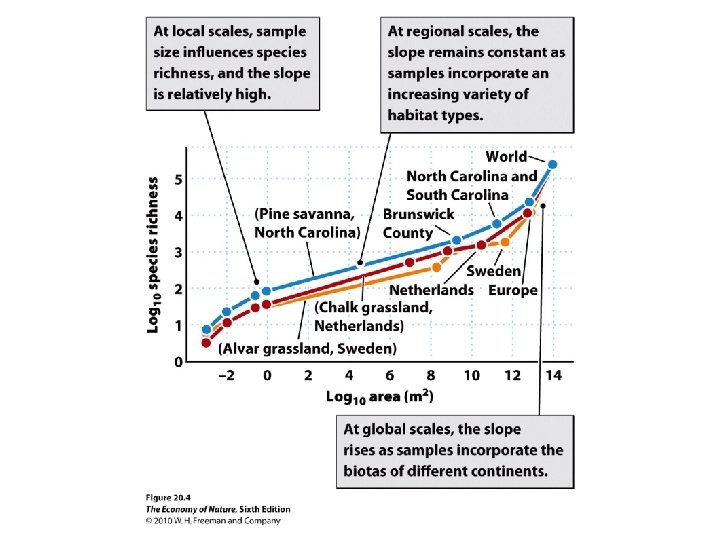
Community Ecology I. Introduction II. Multispecies Interactions with a Trophic Level III. Multispecies Interactions across Trophic Levels IV. Succession V. Biodiversity: Patterns and Processes A. The Species-Area Relationship 1. The pattern 2. Theory of Island Biogeography

Mac. Arthur and Wilson (1967) THEORY OF ISLAND BIOGEOGRAPHY Edward O. Wilson Prof. Emer. , Harvard Robert Mac. Arthur 1930 -1972
Mac. Arthur and Wilson (1967) THEORY OF ISLAND BIOGEOGRAPHY - Species Richness is a balance between COLONIZATION (adds species) and EXTINCTION (subtracts species)
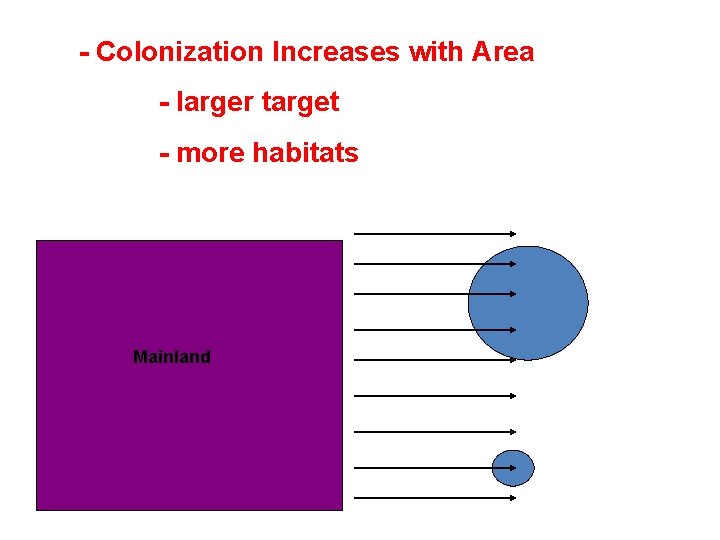
- Colonization Increases with Area - larger target - more habitats Mainland
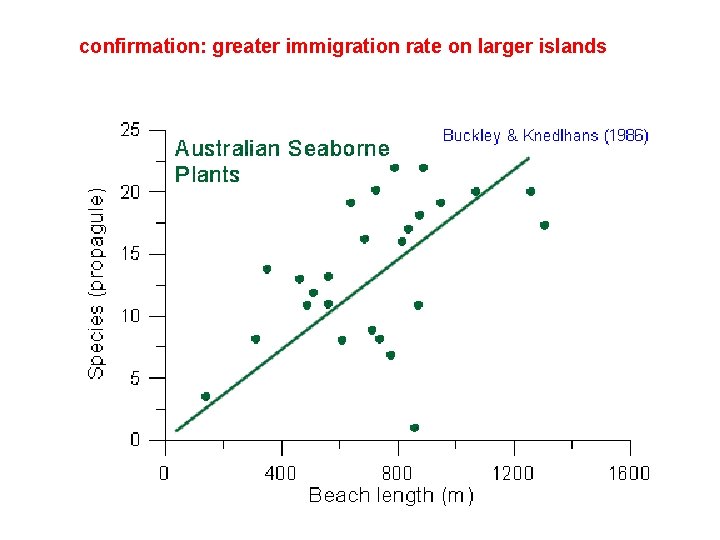
confirmation: greater immigration rate on larger islands
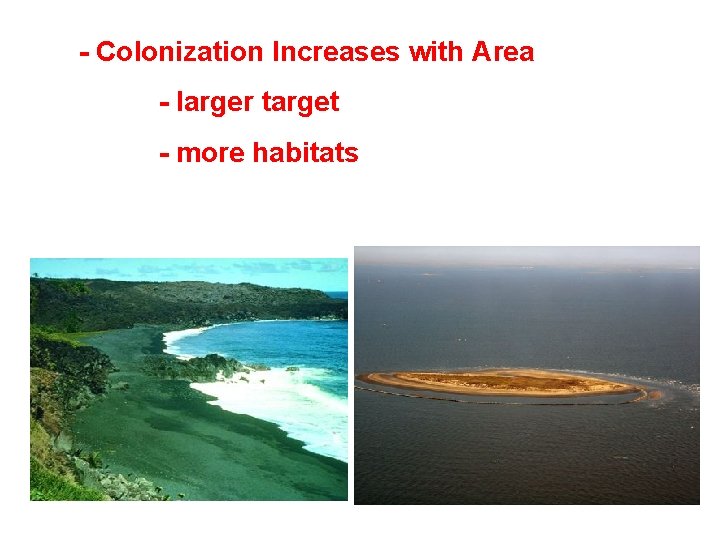
- Colonization Increases with Area - larger target - more habitats
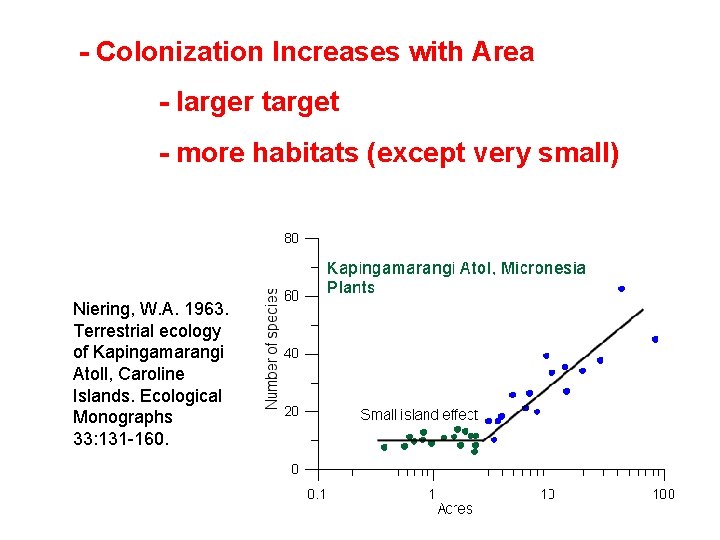
- Colonization Increases with Area - larger target - more habitats (except very small) Niering, W. A. 1963. Terrestrial ecology of Kapingamarangi Atoll, Caroline Islands. Ecological Monographs 33: 131 -160.
- Colonization Increases with Area - larger target - more habitats - Extinction Decreases with Area - more food means larger populations that are less likely to bounce to a size of "0" (extinction)
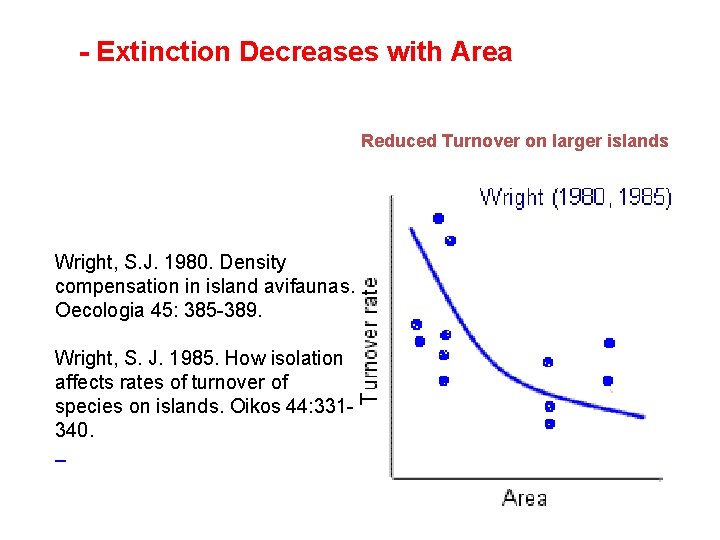
- Extinction Decreases with Area Reduced Turnover on larger islands Wright, S. J. 1980. Density compensation in island avifaunas. Oecologia 45: 385 -389. Wright, S. J. 1985. How isolation affects rates of turnover of species on islands. Oikos 44: 331340.
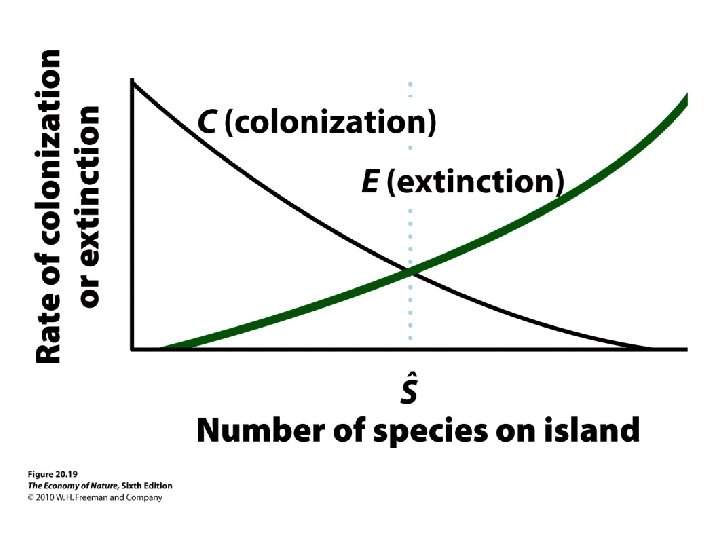
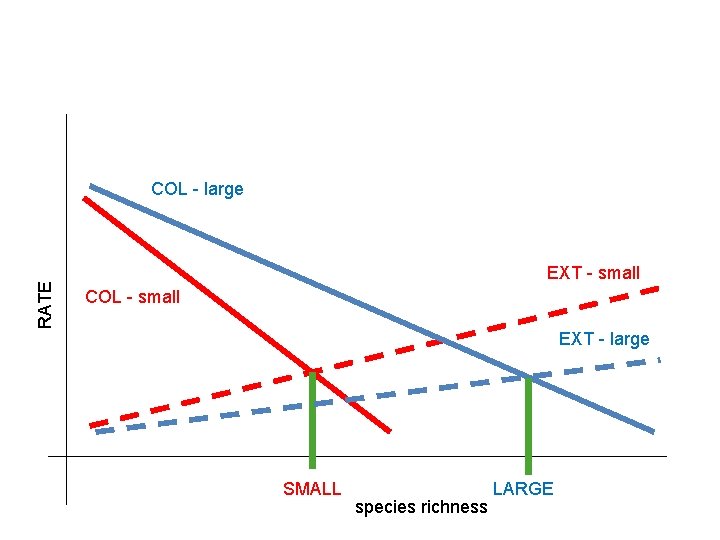
RATE COL - large EXT - small COL - small EXT - large SMALL species richness LARGE
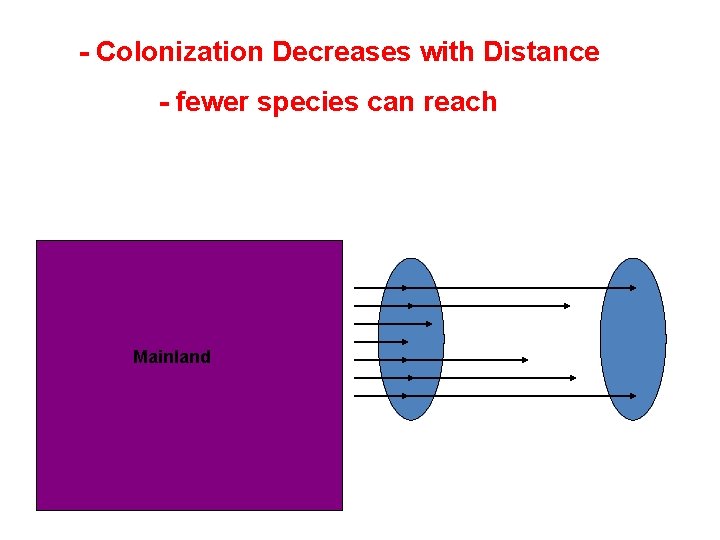
- Colonization Decreases with Distance - fewer species can reach Mainland
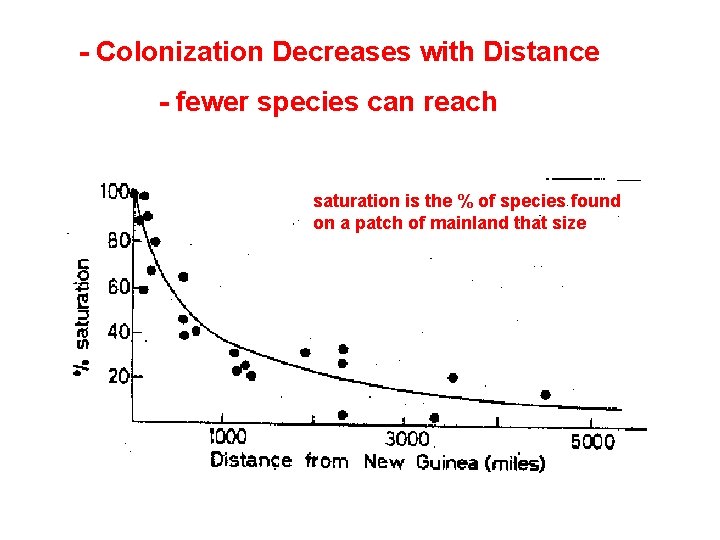
- Colonization Decreases with Distance - fewer species can reach saturation is the % of species found on a patch of mainland that size
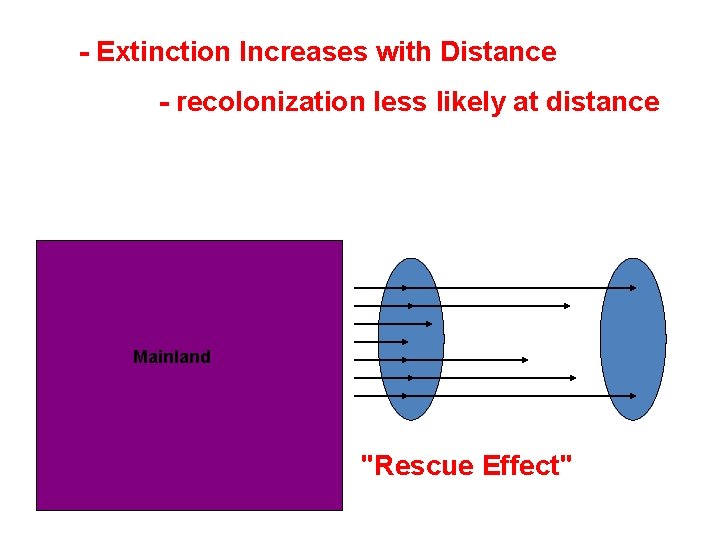
- Extinction Increases with Distance - recolonization less likely at distance Mainland "Rescue Effect"
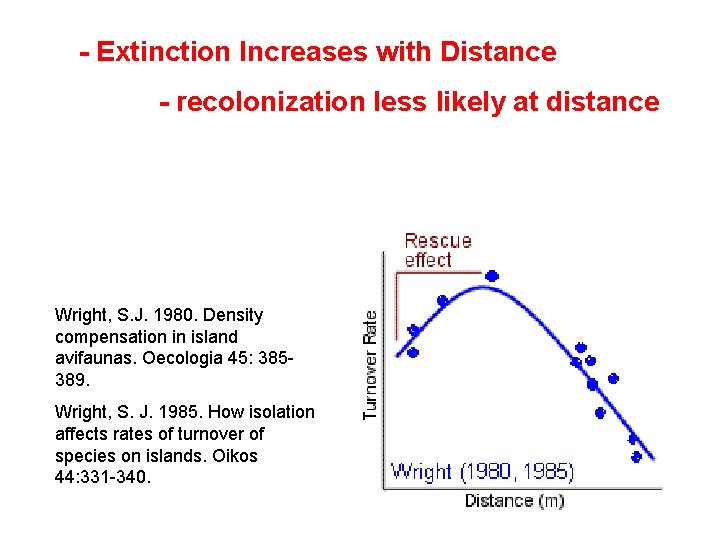
- Extinction Increases with Distance - recolonization less likely at distance Wright, S. J. 1980. Density compensation in island avifaunas. Oecologia 45: 385389. Wright, S. J. 1985. How isolation affects rates of turnover of species on islands. Oikos 44: 331 -340.
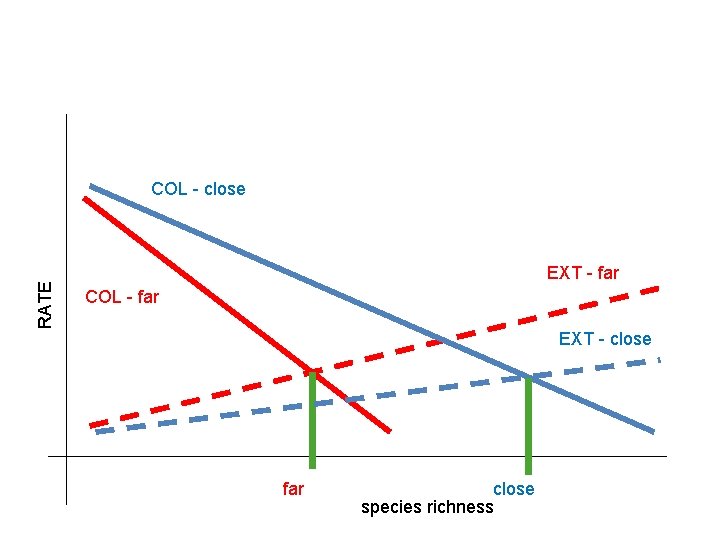
RATE COL - close EXT - far COL - far EXT - close far close species richness
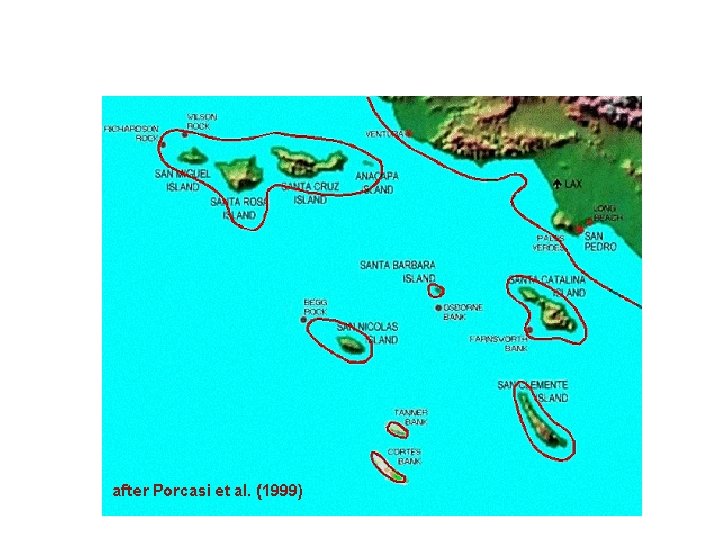
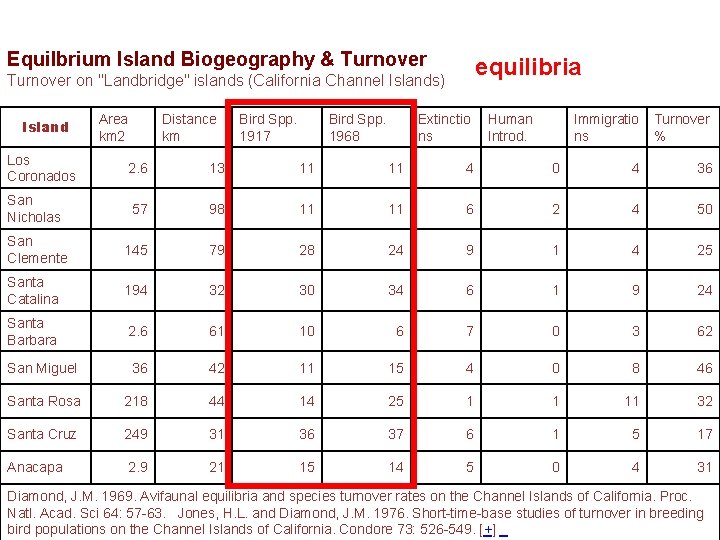
Equilbrium Island Biogeography & Turnover equilibria Turnover on "Landbridge" islands (California Channel Islands) Island Area km 2 Distance km Bird Spp. 1917 Bird Spp. 1968 Extinctio ns Human Introd. Immigratio ns Turnover % Los Coronados 2. 6 13 11 11 4 0 4 36 San Nicholas 57 98 11 11 6 2 4 50 San Clemente 145 79 28 24 9 1 4 25 Santa Catalina 194 32 30 34 6 1 9 24 Santa Barbara 2. 6 61 10 6 7 0 3 62 San Miguel 36 42 11 15 4 0 8 46 Santa Rosa 218 44 14 25 1 1 11 32 Santa Cruz 249 31 36 37 6 1 5 17 Anacapa 2. 9 21 15 14 5 0 4 31 Diamond, J. M. 1969. Avifaunal equilibria and species turnover rates on the Channel Islands of California. Proc. Natl. Acad. Sci 64: 57 -63. Jones, H. L. and Diamond, J. M. 1976. Short-time-base studies of turnover in breeding bird populations on the Channel Islands of California. Condore 73: 526 -549. [+]
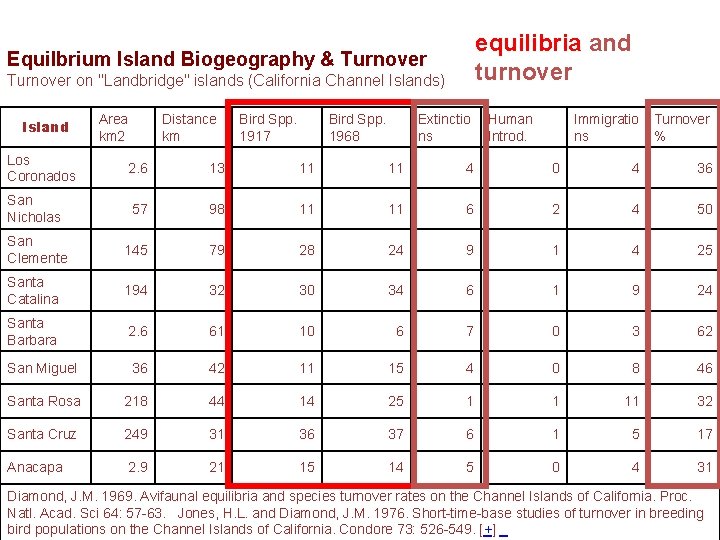
equilibria and turnover Equilbrium Island Biogeography & Turnover on "Landbridge" islands (California Channel Islands) Island Area km 2 Distance km Bird Spp. 1917 Bird Spp. 1968 Extinctio ns Human Introd. Immigratio ns Turnover % Los Coronados 2. 6 13 11 11 4 0 4 36 San Nicholas 57 98 11 11 6 2 4 50 San Clemente 145 79 28 24 9 1 4 25 Santa Catalina 194 32 30 34 6 1 9 24 Santa Barbara 2. 6 61 10 6 7 0 3 62 San Miguel 36 42 11 15 4 0 8 46 Santa Rosa 218 44 14 25 1 1 11 32 Santa Cruz 249 31 36 37 6 1 5 17 Anacapa 2. 9 21 15 14 5 0 4 31 Diamond, J. M. 1969. Avifaunal equilibria and species turnover rates on the Channel Islands of California. Proc. Natl. Acad. Sci 64: 57 -63. Jones, H. L. and Diamond, J. M. 1976. Short-time-base studies of turnover in breeding bird populations on the Channel Islands of California. Condore 73: 526 -549. [+]
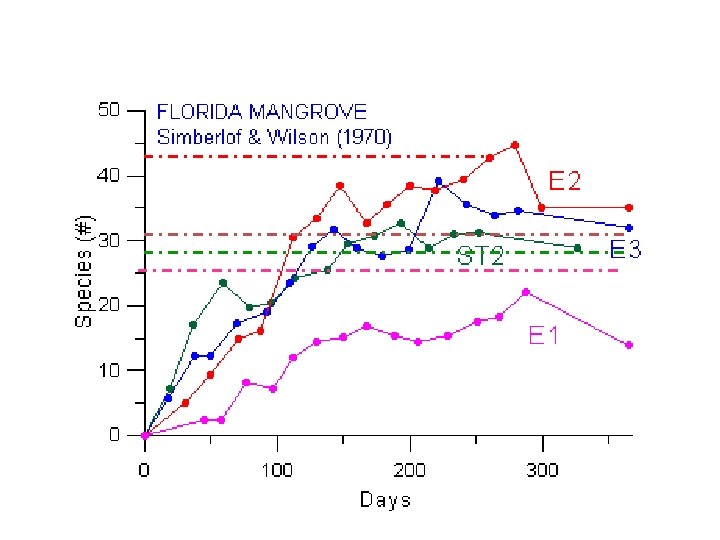
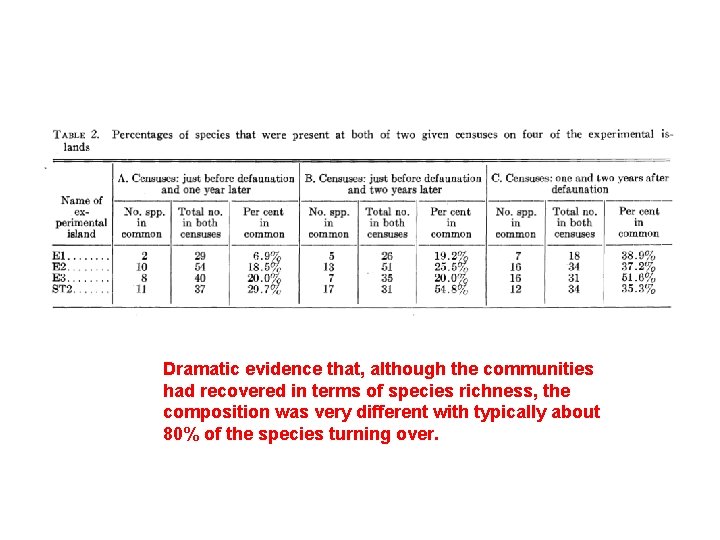
Dramatic evidence that, although the communities had recovered in terms of species richness, the composition was very different with typically about 80% of the species turning over.
Community Ecology I. Introduction II. Multispecies Interactions with a Trophic Level III. Multispecies Interactions across Trophic Levels IV. Succession V. Biodiversity: Patterns and Processes A. The Species-Area Relationship 1. The pattern 2. Theory of Island Biogeography 3. Why is this important? Fragmentation
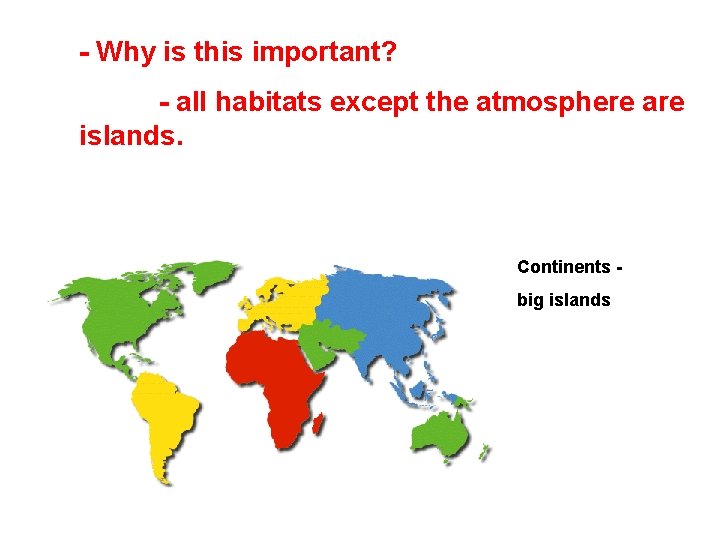
- Why is this important? - all habitats except the atmosphere are islands. Continents big islands
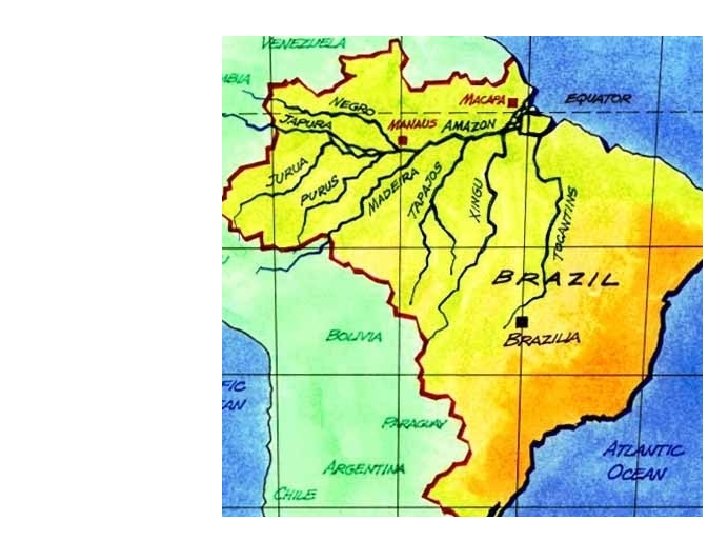
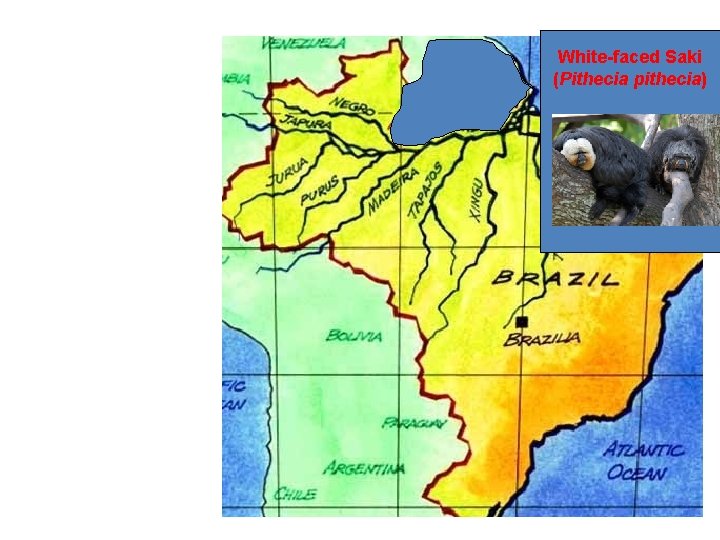
White-faced Saki (Pithecia pithecia)
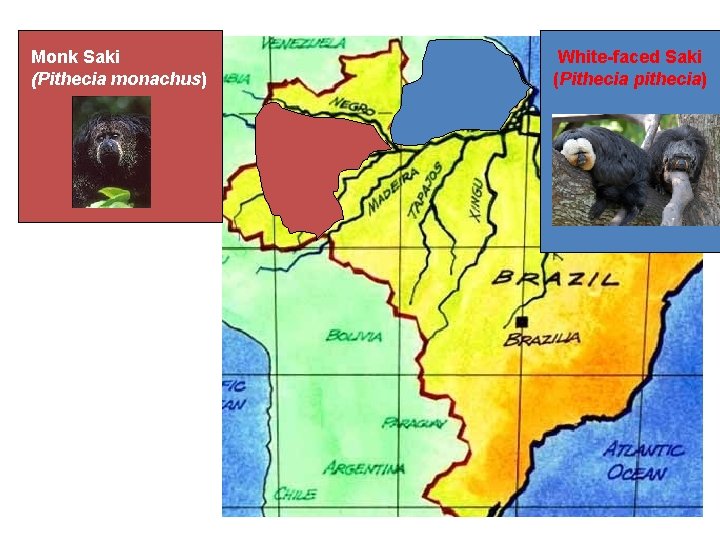
Monk Saki (Pithecia monachus) White-faced Saki (Pithecia pithecia)
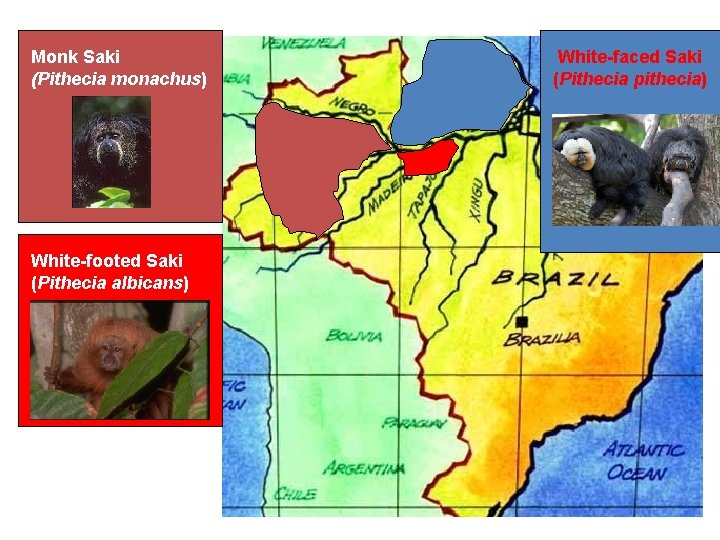
Monk Saki (Pithecia monachus) White-footed Saki (Pithecia albicans) White-faced Saki (Pithecia pithecia)
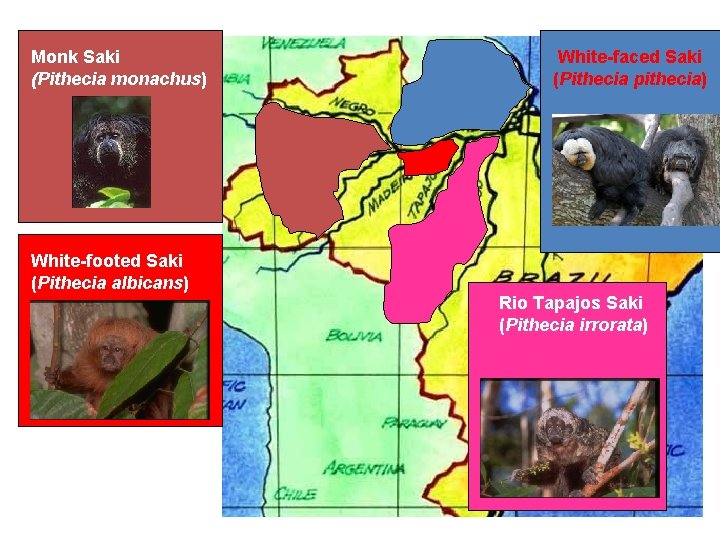
Monk Saki (Pithecia monachus) White-faced Saki (Pithecia pithecia) White-footed Saki (Pithecia albicans) Rio Tapajos Saki (Pithecia irrorata)
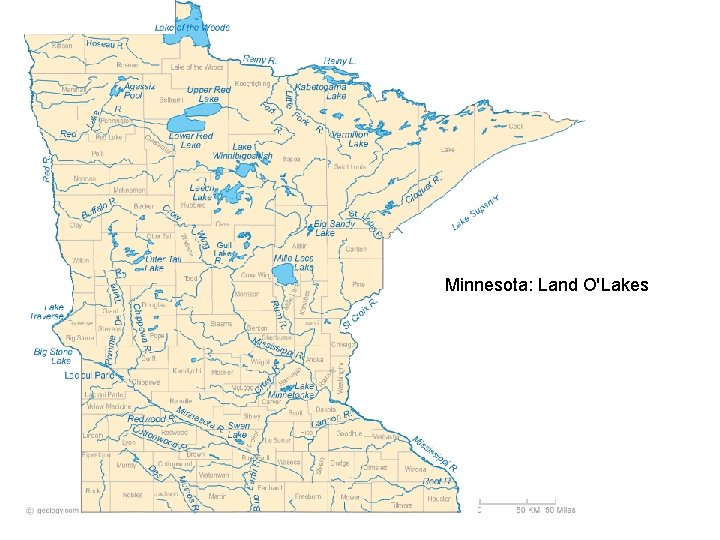
Minnesota: Land O'Lakes
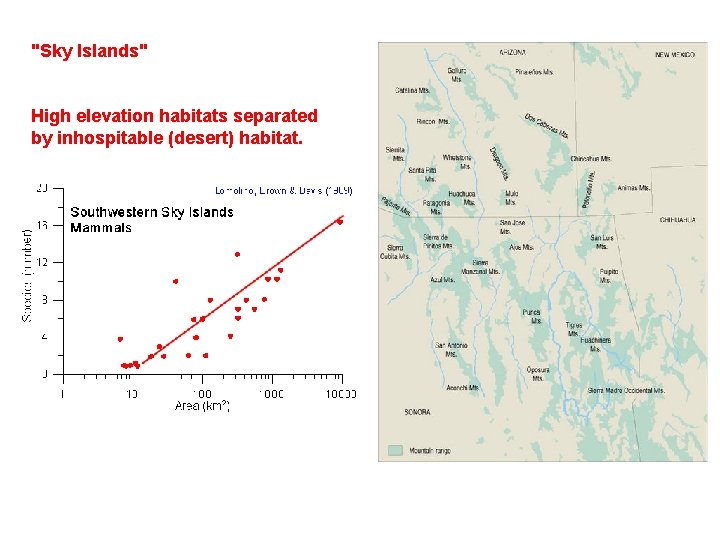
"Sky Islands" High elevation habitats separated by inhospitable (desert) habitat.
- Why is this important? - all habitats except the atmosphere are islands. - human activity fragments a landscape, making lots of islands, too.
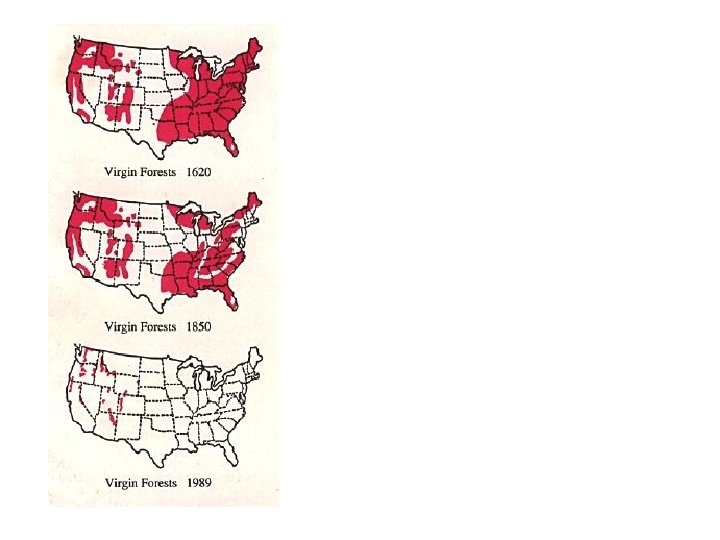
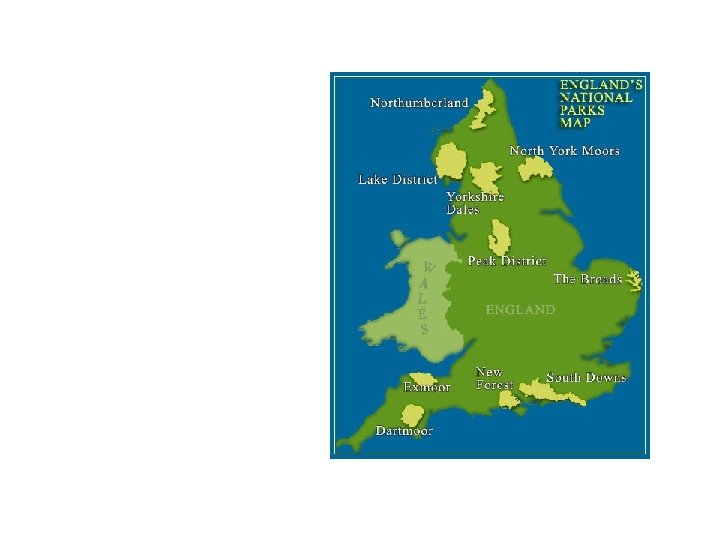
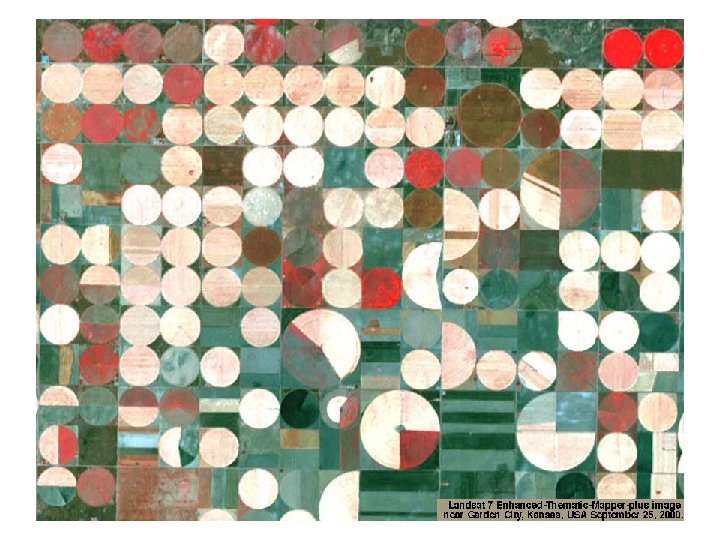
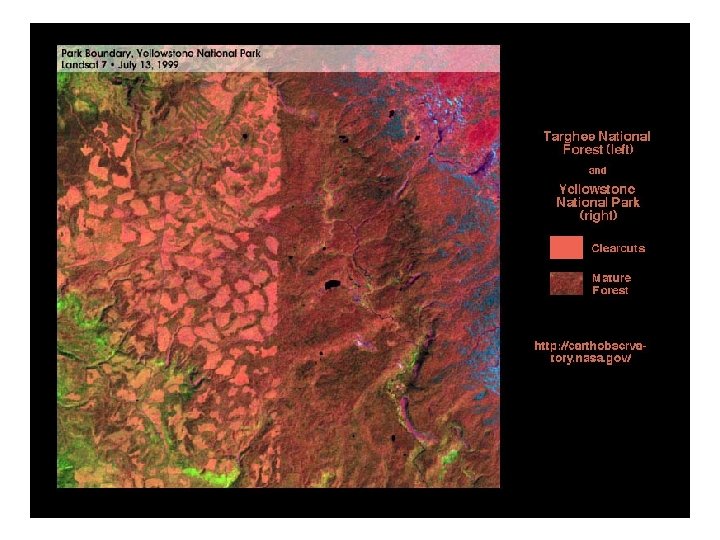
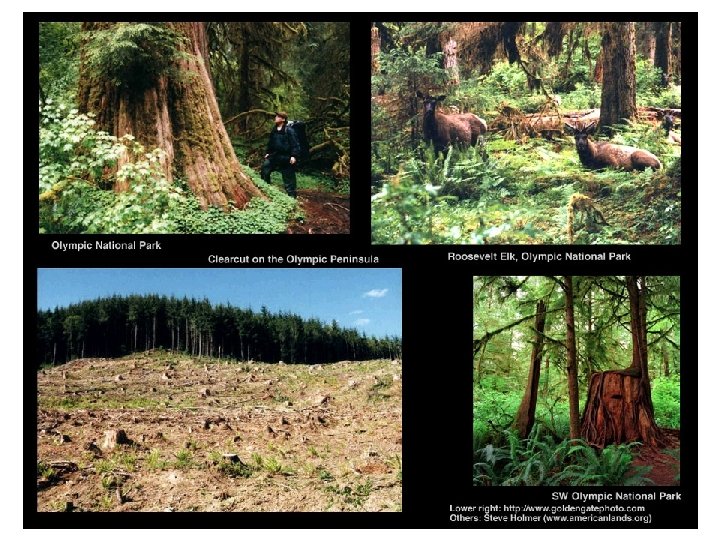
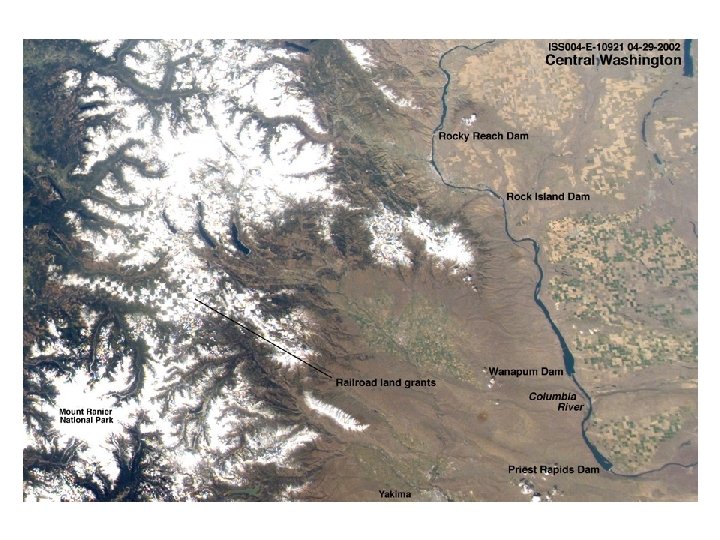
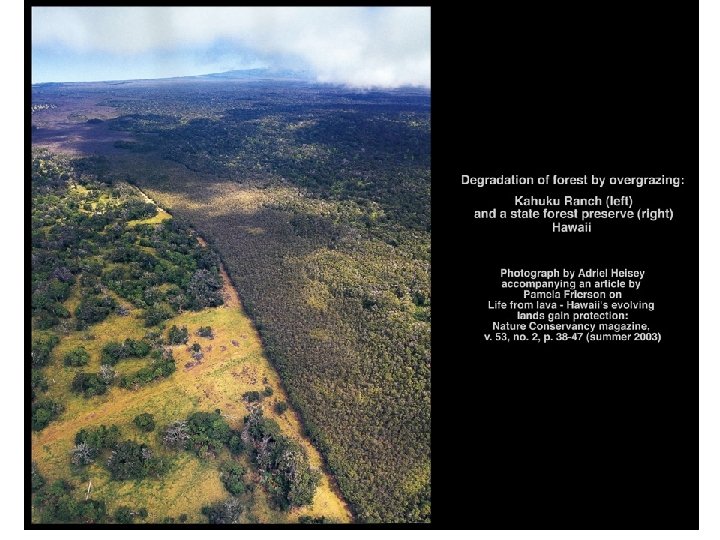
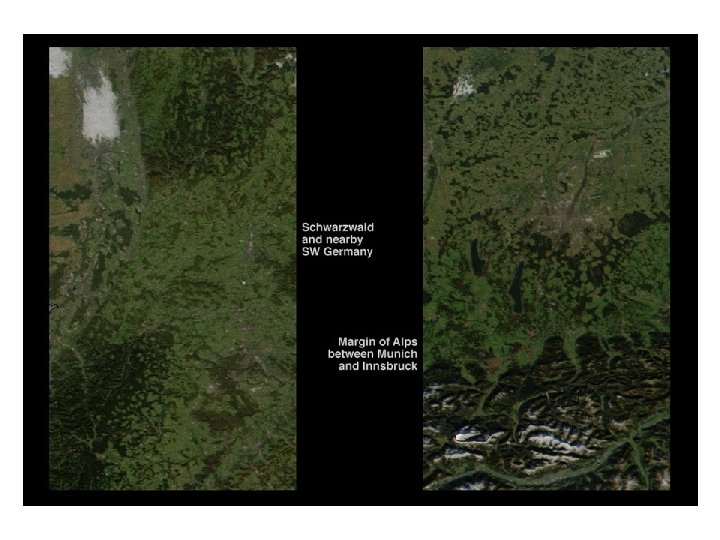
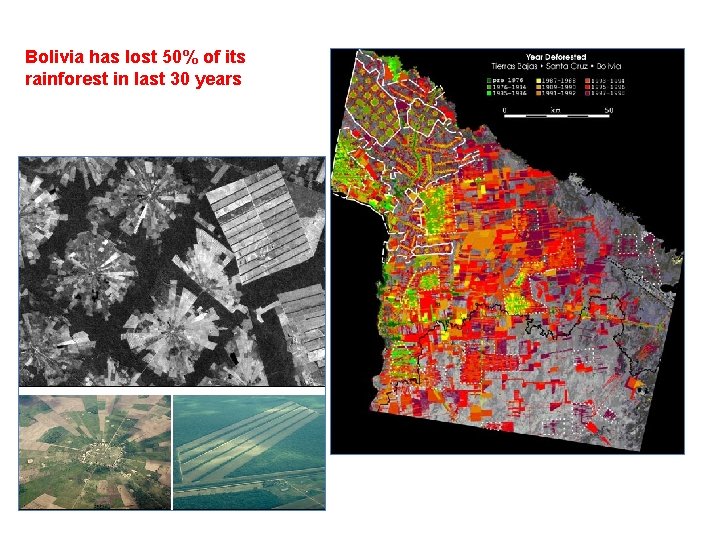
Bolivia has lost 50% of its rainforest in last 30 years
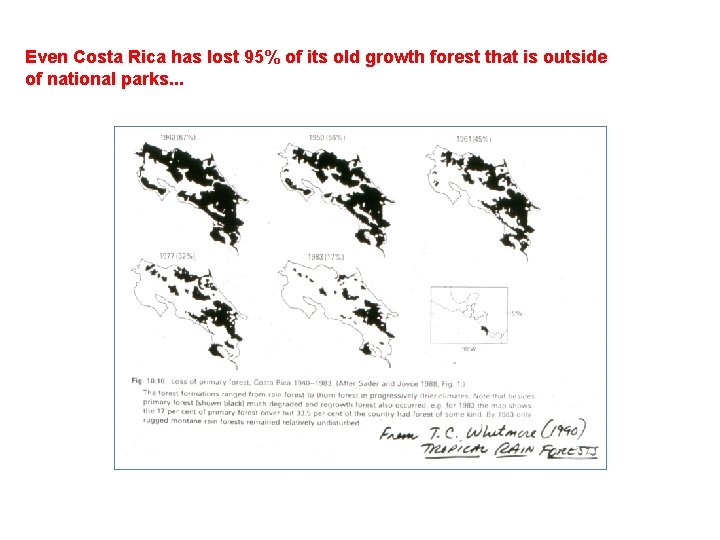
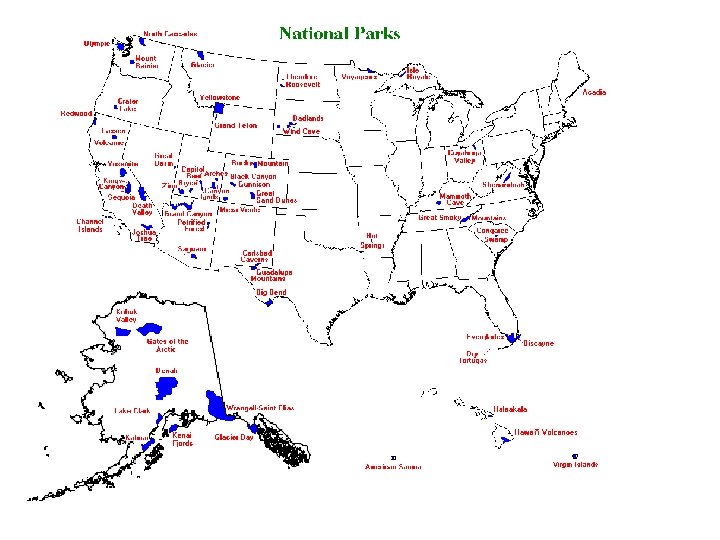
Even Costa Rica has lost 95% of its old growth forest that is outside of national parks. . .
Community Ecology I. Introduction II. Multispecies Interactions with a Trophic Level III. Multispecies Interactions across Trophic Levels IV. Succession V. Biodiversity: Patterns and Processes A. The Species-Area Relationship 1. The pattern 2. Theory of Island Biogeography 3. Why is this important? Fragmentation 4. The SLOSS debate
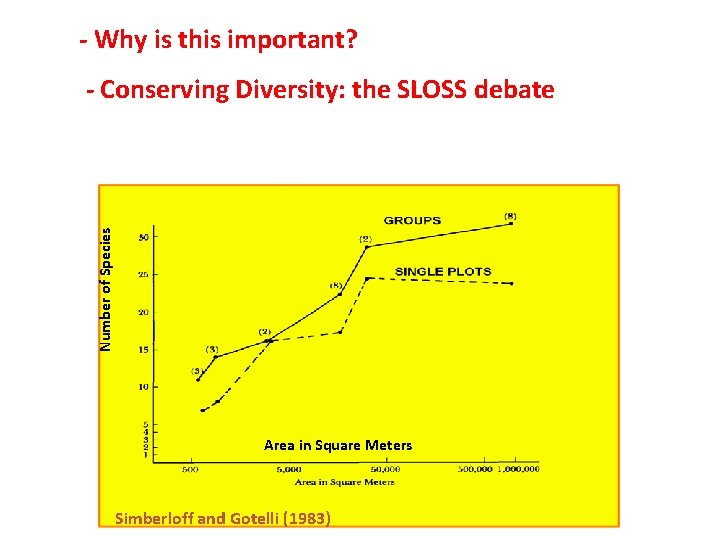
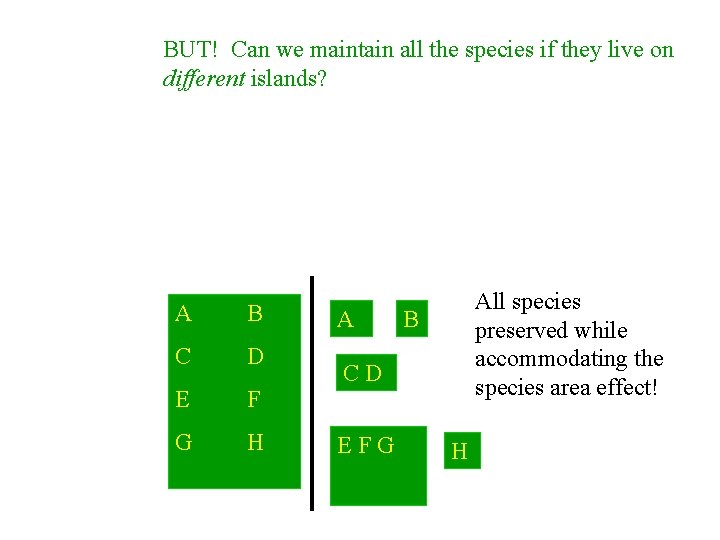
- The SLOSS Debate - So, to preserve biodiversity (and the ecosystem services it provides to humanity), conservationists began to consider the best strategy for maximizing the preservation of diversity. . . should we preserve several small areas, or a single large one?
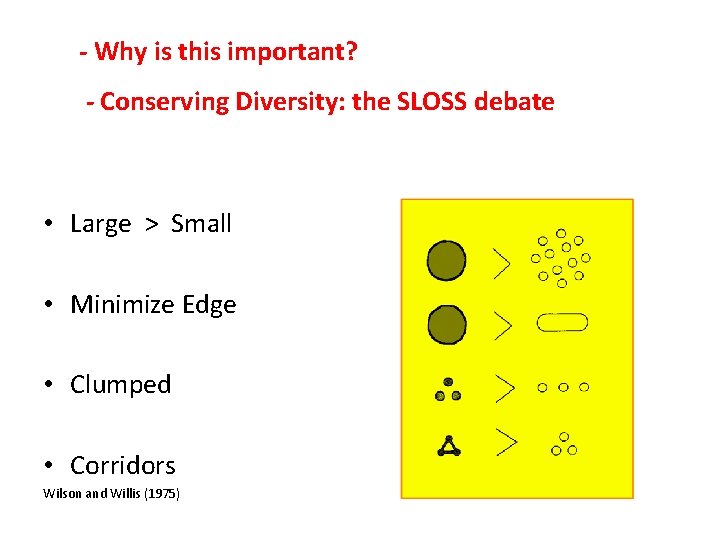
- Why is this important? - Conserving Diversity: the SLOSS debate • Large > Small • Minimize Edge • Clumped • Corridors Wilson and Willis (1975)
- Why is this important? Number of Species - Conserving Diversity: the SLOSS debate Area in Square Meters Simberloff and Gotelli (1983)
BUT! Can we maintain all the species if they live on different islands? A B C D E F G H A All species preserved while accommodating the species area effect! B CD EFG H
- BUT! Can we maintain all the species if they live on different islands? - Probably not, because communities are NESTED. A B C D E F G H A B CD EFG H
- BUT! Can we maintain all the species if they live on different islands? - Probably not, because communities are NESTED. Nested Subset Structure: Species on speciespoor islands are also found on species-rich islands. A B C D E F G H A B CD EFG H
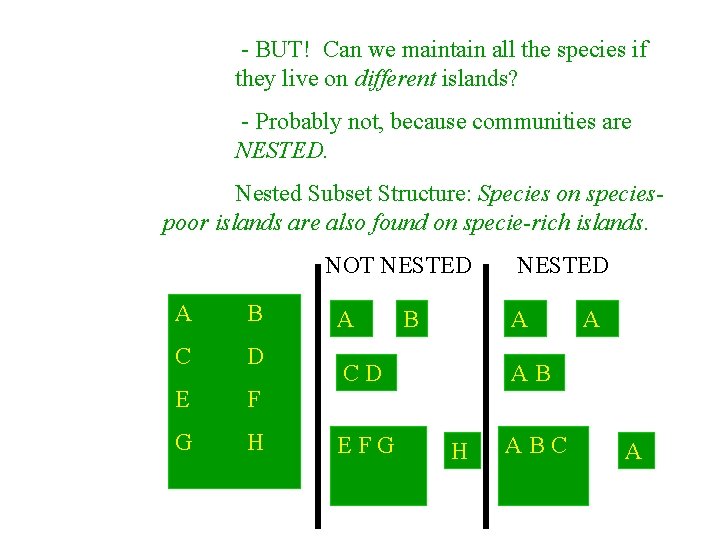
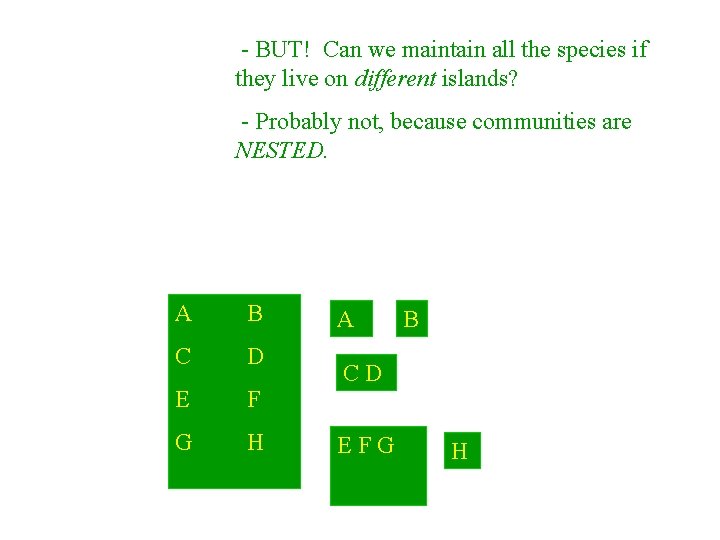
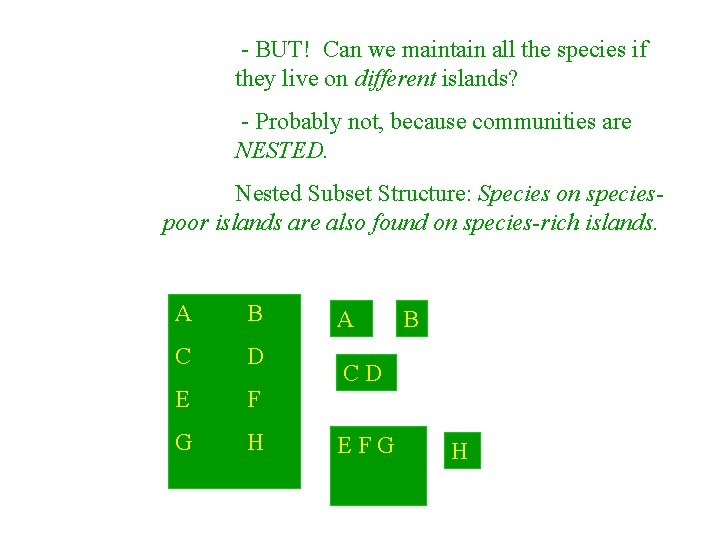
- BUT! Can we maintain all the species if they live on different islands? - Probably not, because communities are NESTED. Nested Subset Structure: Species on speciespoor islands are also found on specie-rich islands. NOT NESTED A B C D E F G H A B A CD EFG NESTED A AB H ABC A
Community Ecology I. Introduction II. Multispecies Interactions with a Trophic Level III. Multispecies Interactions across Trophic Levels IV. Succession V. Biodiversity: Patterns and Processes A. The Species-Area Relationship 1. The pattern 2. Theory of Island Biogeography 3. Why is this important? Fragmentation 4. The SLOSS debate 5. Nestedness
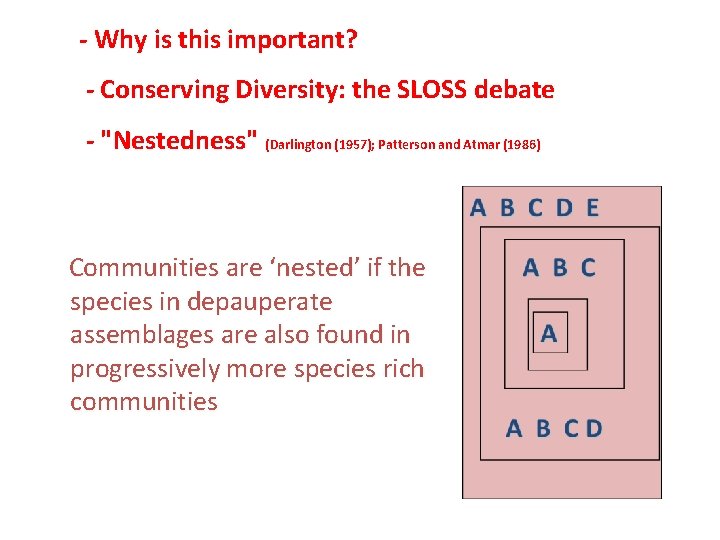
- Why is this important? - Conserving Diversity: the SLOSS debate NESTED-SUBSET STRUCTURE: (Darlington 1957, Patterson andand Atmar - "Nestedness" (Darlington (1957); Patterson Atmar 1986) (1986) Communities are ‘nested’ if the species in depauperate assemblages are also found in progressively more species rich communities
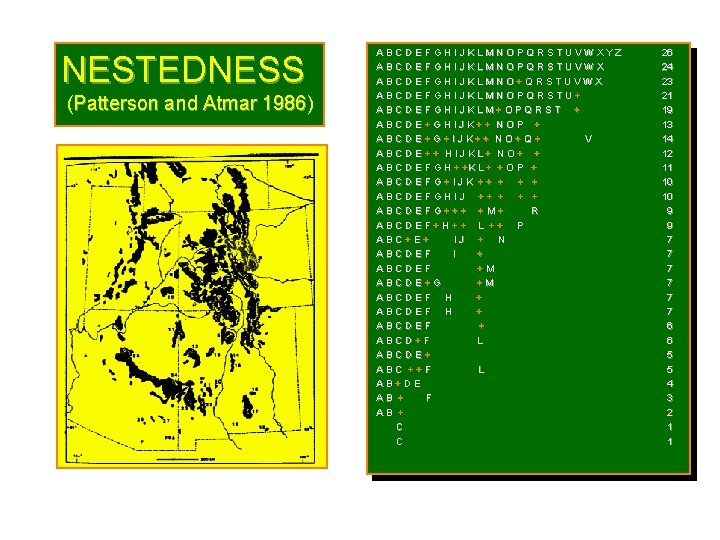
NESTEDNESS (Patterson and Atmar 1986) A B C D E F G H I J K L M N O P Q R S T U V W X Y Z A B C D E F G H I J K L M N O P Q R S T U V W X A B C D E F G H I J K L M N O + Q R S T U V W X A B C D E F G H I J K L M N O P Q R S T U + A B C D E F G H I J K L M + O P Q R S T + A B C D E + + G H I J K + + N O P + + A B C D E G H I J K A B C D E + N O + + Q + A B C D E + G + I J K + + N O Q + V A B C D E + + H I J K L + + N O + A B C D E + + H I J K L N O + + + A B C D E F G H + + K L + + O P + + A B C D E F G H + +K L A B C D E F G + I J K + + + + + A B C D E F G H I J + + + + + A B C D E F G + + + M + R A B C D E F + L + + P P A B C D E F + H + + L A B C + E + I J + N A B C D E F I + A B C D E F + M A B C D E + G + M A B C D E F H + A B C D E F + A B C D + + F L A B C D E + A B C + + F L A B + D E A B + F A B + A B C 26 24 23 21 19 13 14 12 11 10 10 9 9 7 7 7 6 6 6 5 5 5 4 3 2 2 1 1
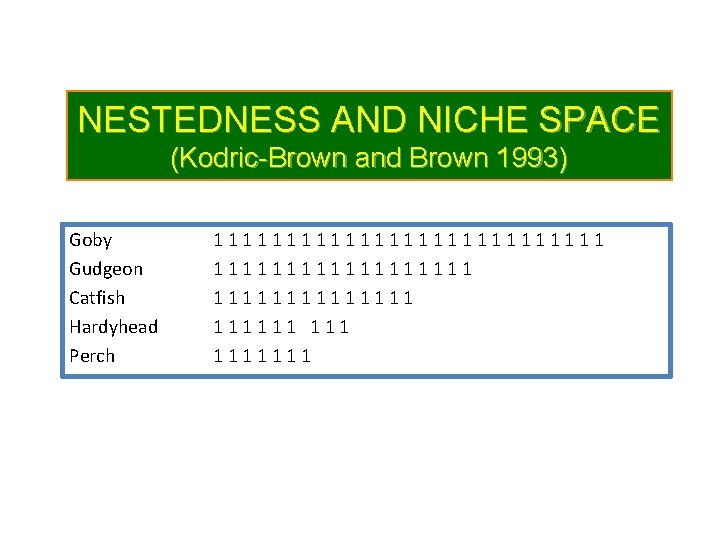
NESTEDNESS AND NICHE SPACE (Kodric-Brown and Brown 1993) Goby Gudgeon Catfish Hardyhead Perch 11111111111111 1111111 1111111
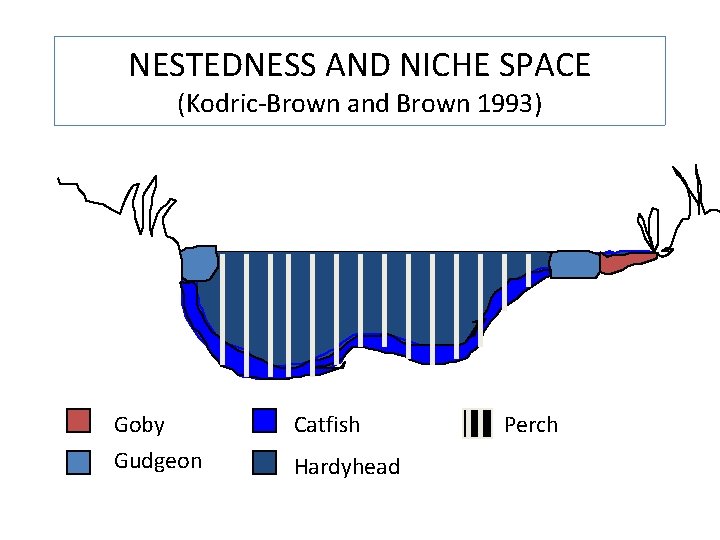
NESTEDNESS AND NICHE SPACE (Kodric-Brown and Brown 1993) Goby Catfish Gudgeon Hardyhead Perch
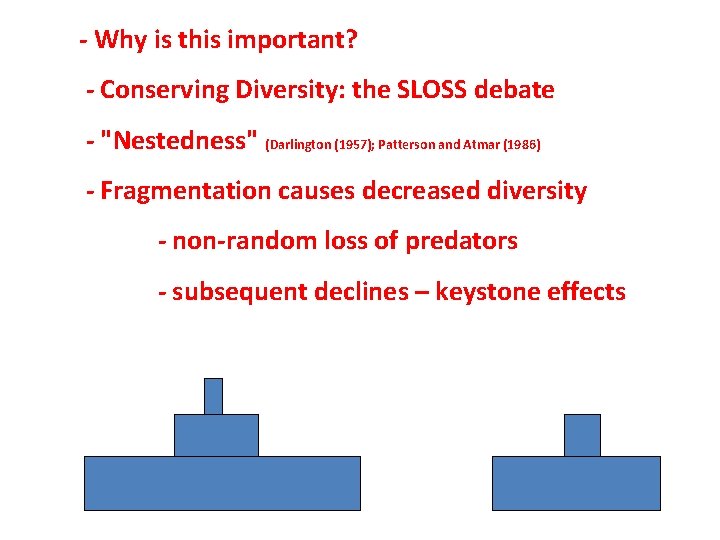
- Why is this important? - Conserving Diversity: the SLOSS debate - "Nestedness" (Darlington (1957); Patterson and Atmar (1986) - Fragmentation causes decreased diversity - non-random loss of predators - subsequent declines – keystone effects
- Why is this important? - Conserving Diversity: the SLOSS debate - "Nestedness" (Darlington (1957); Patterson and Atmar (1986) - Fragmentation causes decreased diversity - increased stress decreases diversity non-randomly
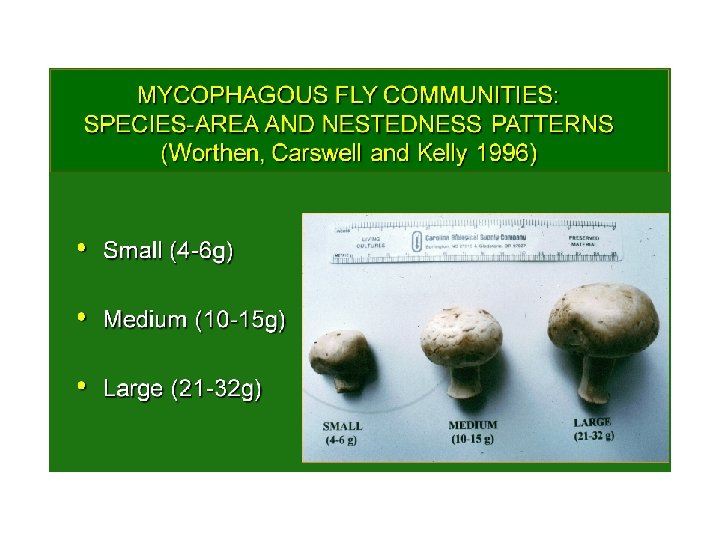




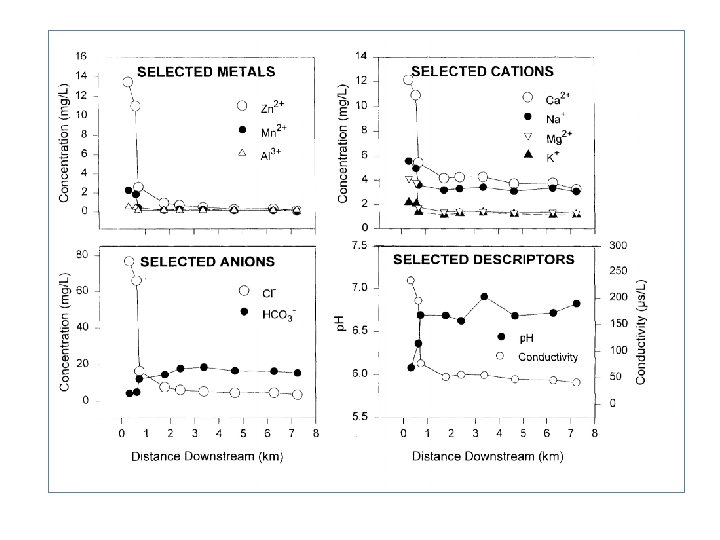
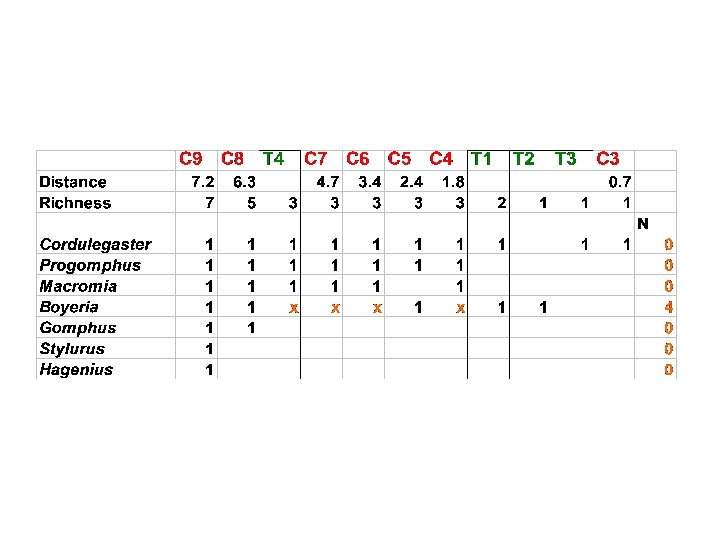

Summary: Causes of nestedness - nested niche space - differences in dispersal capabilities -differences in extinction probabilities As these are the same factors that cause the species-area relationship, itself, we should not be surprized that communities distributed across habitats of different size are often nested, too.
- Slides: 76