
BIODIVERSITY AND ITS CONSERVATION Evolution of the Cosmos
BIODIVERSITY AND ITS CONSERVATION
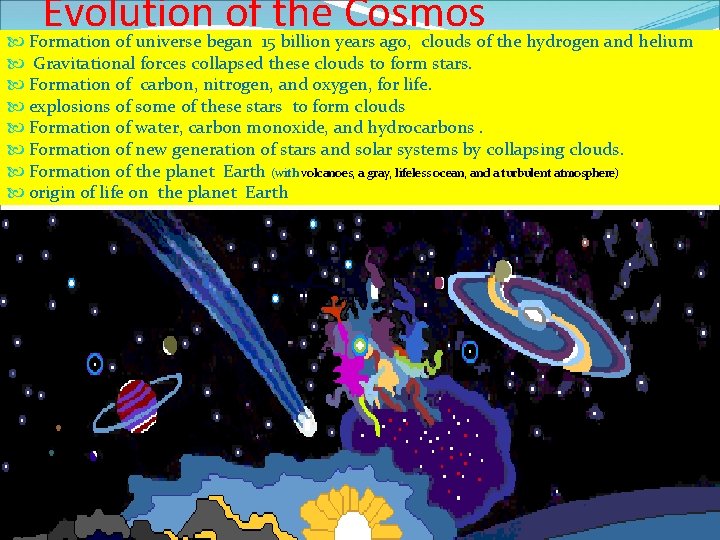
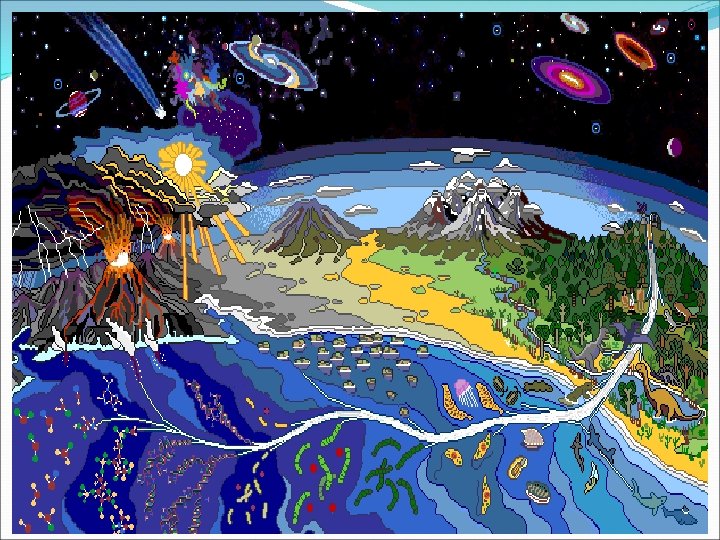
Evolution of the Cosmos Formation of universe began 15 billion years ago, clouds of the hydrogen and helium Gravitational forces collapsed these clouds to form stars. Formation of carbon, nitrogen, and oxygen, for life. explosions of some of these stars to form clouds Formation of water, carbon monoxide, and hydrocarbons. Formation of new generation of stars and solar systems by collapsing clouds. Formation of the planet Earth (with volcanoes, a gray, lifeless ocean, and a turbulent atmosphere) origin of life on the planet Earth
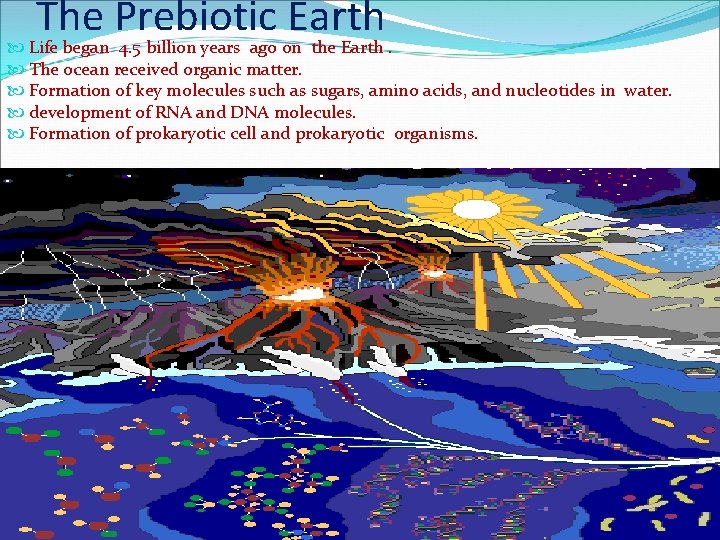
The Prebiotic Earth Life began 4. 5 billion years ago on the Earth. The ocean received organic matter. Formation 0 f key molecules such as sugars, amino acids, and nucleotides in water. development of RNA and DNA molecules. Formation of prokaryotic cell and prokaryotic organisms.
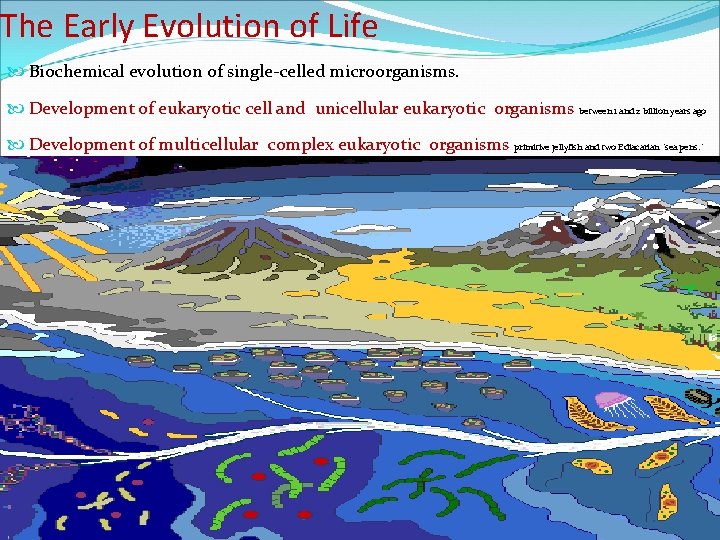
The Early Evolution of Life Biochemical evolution of single-celled microorganisms. Development of eukaryotic cell and unicellular eukaryotic organisms between 1 and 2 billion years ago Development of multicellular complex eukaryotic organisms primitive jellyfish and two Ediacarian "sea pens. "
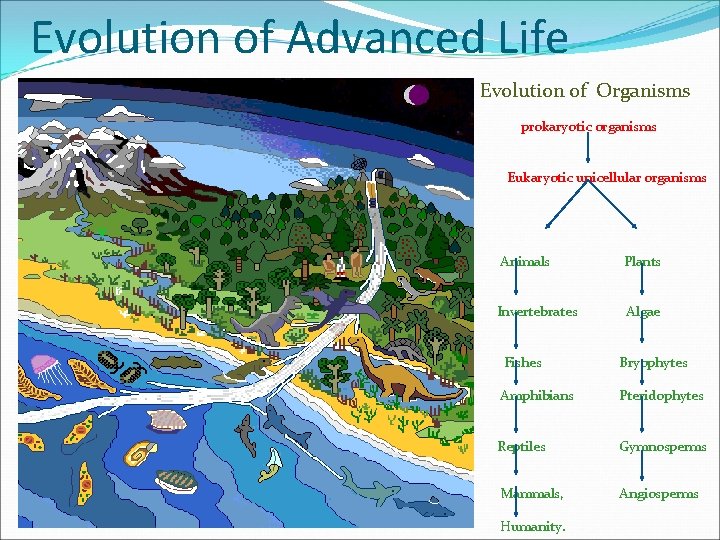
Evolution of Advanced Life Evolution of Organisms prokaryotic organisms Eukaryotic unicellular organisms Animals Plants Invertebrates Algae Fishes Bryophytes Amphibians Pteridophytes Reptiles Gymnosperms Mammals, Angiosperms Humanity.
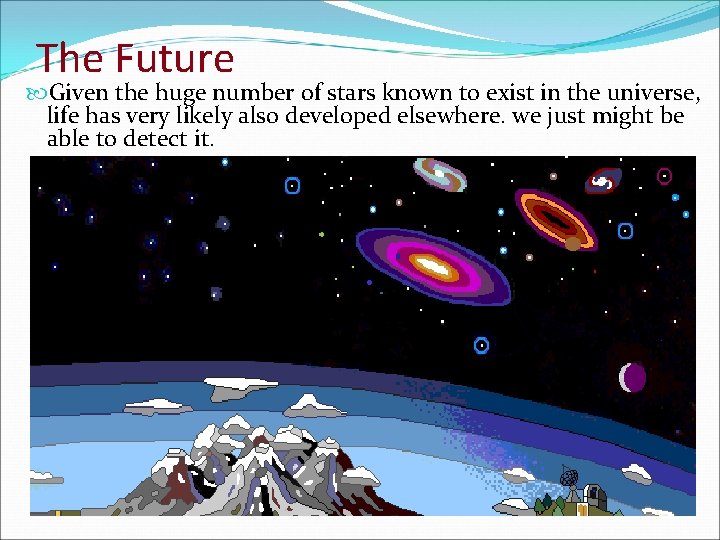
The Future Given the huge number of stars known to exist in the universe, life has very likely also developed elsewhere. we just might be able to detect it.
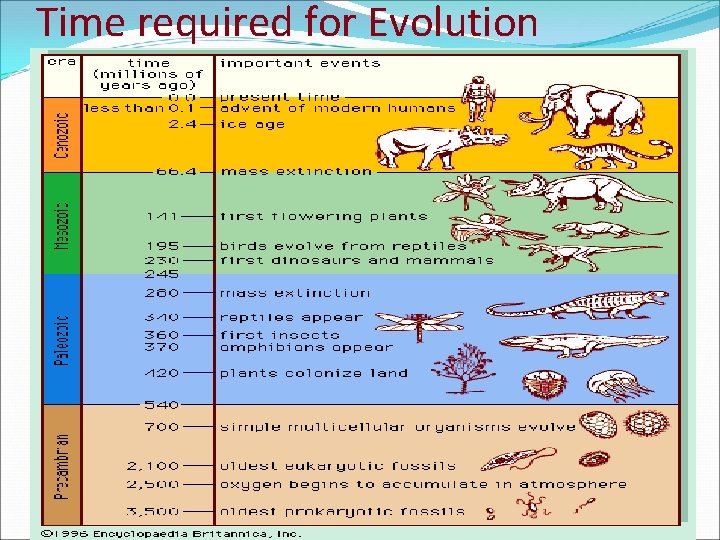
Time required for Evolution
DEFINITION Biodiversity or biological diversity is the variation of taxonomic life forms within a given ecosystem, biome or for the entire. Earth. Biodiversity refers to variety and variability among all groups of living organisms and the ecosystemcomplexes in which they occur.
LEVELS OF BIODIVERSITY Biodiversity ranges from the genetic level within a species to the biota in a specific region and may extend up to the great diversity found in different biomes. Genetic Diversity - diversity of genes within a species. There is a genetic variability among the populations and the individuals of the same species. Species Diversity - diversity among species in anecosystem. “Biodiversity hotspots" are excellent examples of species diversity. Ecosystem Diversity - diversity at a higher level of organization, the ecosystem.
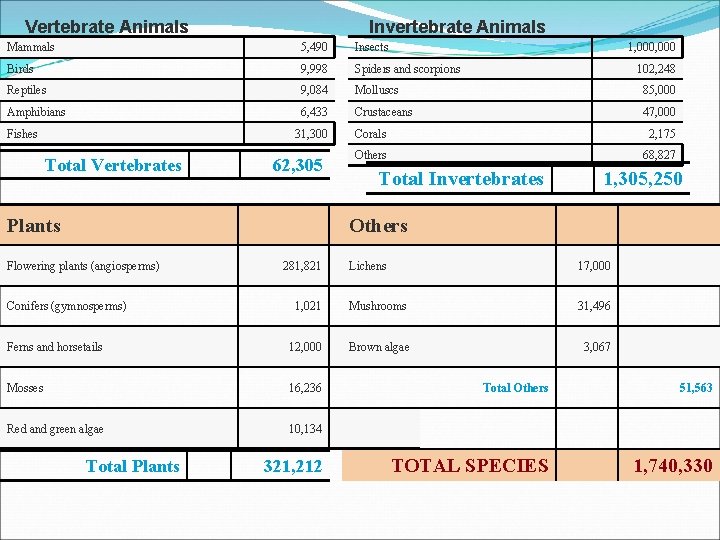
Vertebrate Animals Invertebrate Animals Mammals 5, 490 Insects Birds 9, 998 Spiders and scorpions Reptiles 9, 084 Molluscs 85, 000 Amphibians 6, 433 Crustaceans 47, 000 Fishes 31, 300 Total Vertebrates 62, 305 1, 000 102, 248 Corals 2, 175 Others 68, 827 Total Invertebrates 1, 305, 250 Others Plants Lichens 17, 000 1, 021 Mushrooms 31, 496 Ferns and horsetails 12, 000 Brown algae 3, 067 Mosses 16, 236 Red and green algae 10, 134 Flowering plants (angiosperms) Conifers (gymnosperms) Total Plants 281, 821 321, 212 Total Others 51, 563 TOTAL SPECIES 1, 740, 330
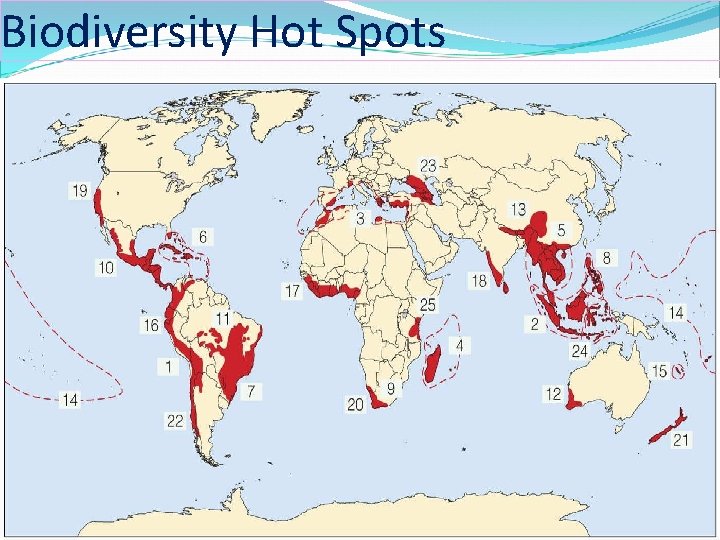
Biodiversity Hot Spots
VALUE OF BIODIVERSITY In terms of ≈Commercial Utility ≈Ecological Services ≈Social and Aesthetic Value The multiple uses of Biodiversity or Biodiversity are as fallows
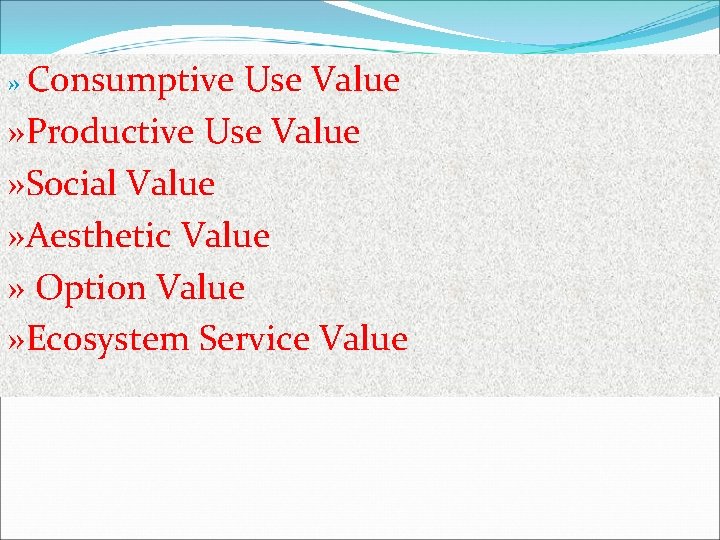
» Consumptive Use Value » Productive Use Value » Social Value » Aesthetic Value » Option Value » Ecosystem Service Value
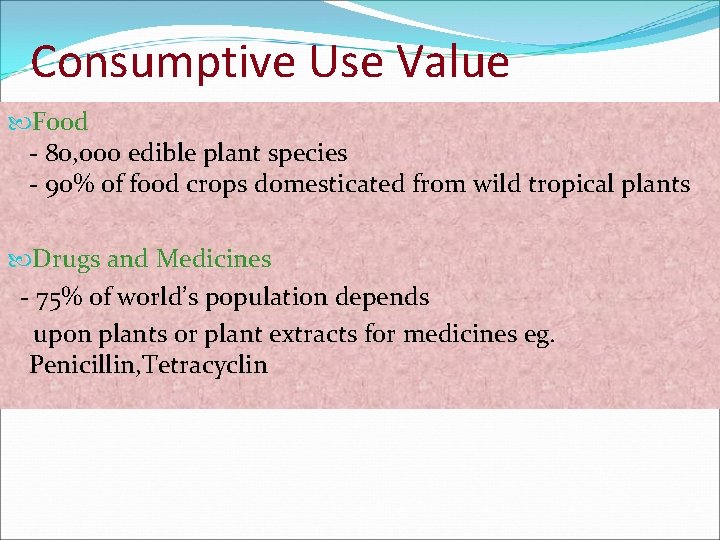
Consumptive Use Value Food - 80, 000 edible plant species - 90% of food crops domesticated from wild tropical plants Drugs and Medicines - 75% of world’s population depends upon plants or plant extracts for medicines eg. Penicillin, Tetracyclin
Energy resources Fuel - Forests used for Fuel Wood. - Fossil fuels Coal, Petroleum and Natural Gas are also products of fossilized biodiversity Different furniture’s
Productive Use Value Commercially usable values where the product is marketed and sold » Wild Gene Resources – traded for use by scientists for introducing desirable traits in the crops and domesticated animals » Others – Tusks of Elephants, Musk from Musk deers, Silk from Silk Worms, Wool from Sheep etc. Biodiesel Petroleum products
Industries dependant upon the productive use value of Biodiversity Paper and Pulp Play wood Rubber Textile Leather
Social Values associated with social life, customs, religion and psycho-spiritual aspects of the people → Plants like Tulsi, Peepal, Mango, Lotus etc. are considered holy and their leaves, fruits and flowers are used in worship.
Ethical Value Ethical issues like “ all life must be preserved”. Based on the concept of “ Live and Let Live”.
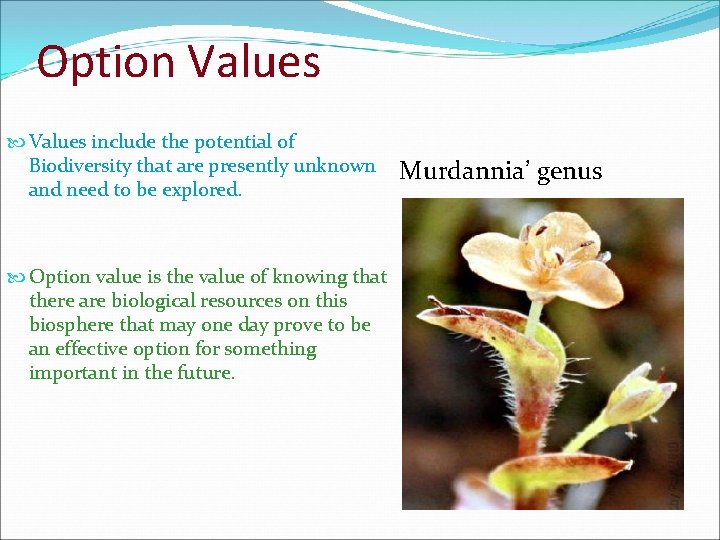
Option Values include the potential of Biodiversity that are presently unknown and need to be explored. Option value is the value of knowing that there are biological resources on this biosphere that may one day prove to be an effective option for something important in the future. Murdannia’ genus
Aesthetic Value “ Willingness to pay” concept → Eco-tourism is estimated to generate about 12 million dollars of revenue annually.
What is risk ? Different categories of biodiversity value clearly indicate that ecosystem, species and genetic biodiversity all have enormous potential and a decline in biodiversity will lead to huge economic, ecological and socio-cultural losses.
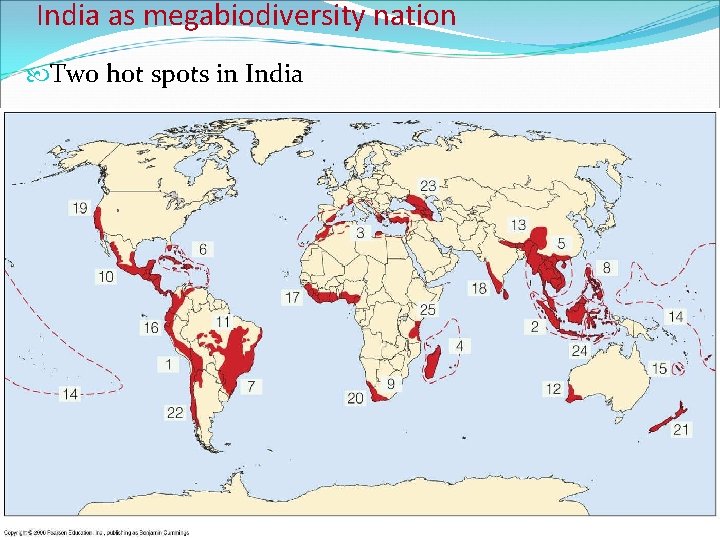
India as megabiodiversity nation Two hot spots in India
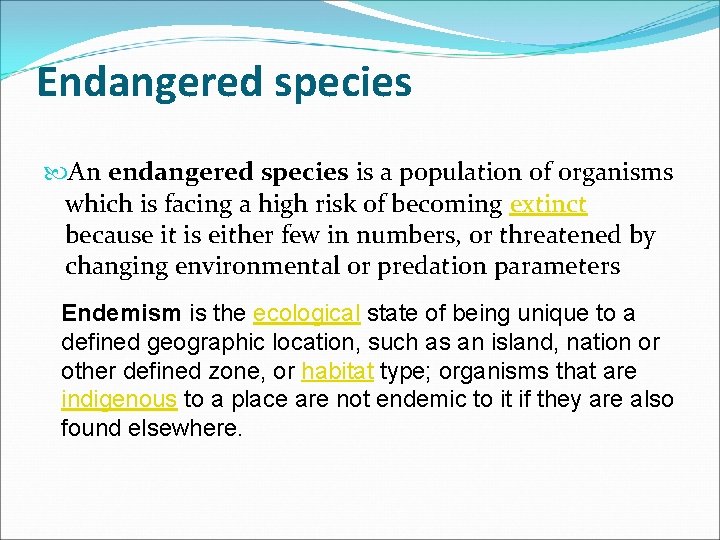
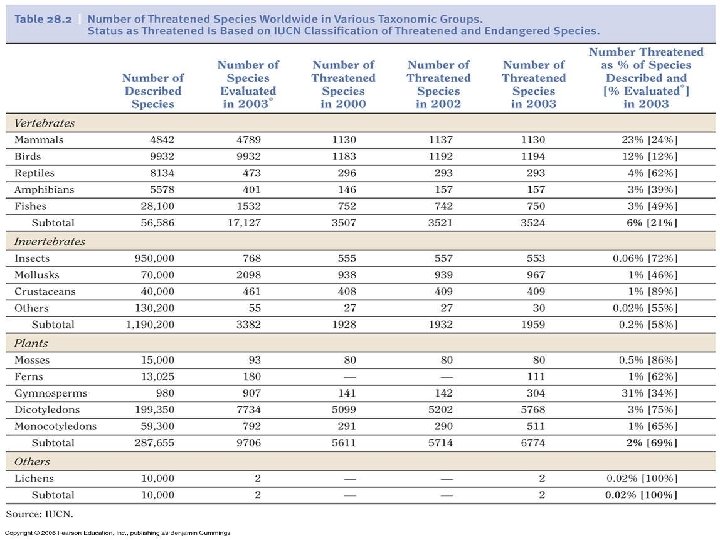
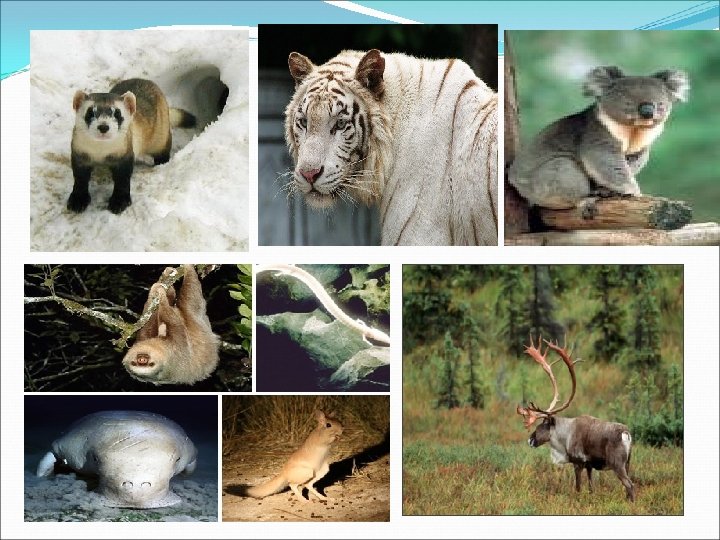
Endangered species An endangered species is a population of organisms which is facing a high risk of becoming extinct because it is either few in numbers, or threatened by changing environmental or predation parameters Endemism is the ecological state of being unique to a defined geographic location, such as an island, nation or other defined zone, or habitat type; organisms that are indigenous to a place are not endemic to it if they are also found elsewhere.
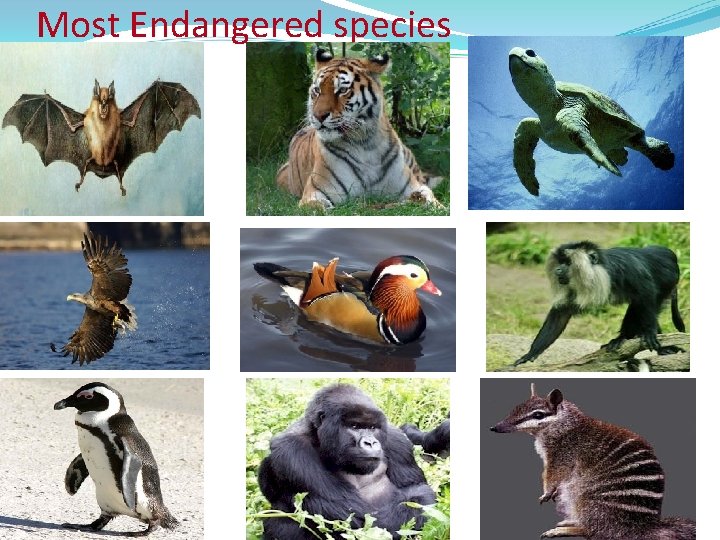
Most Endangered species
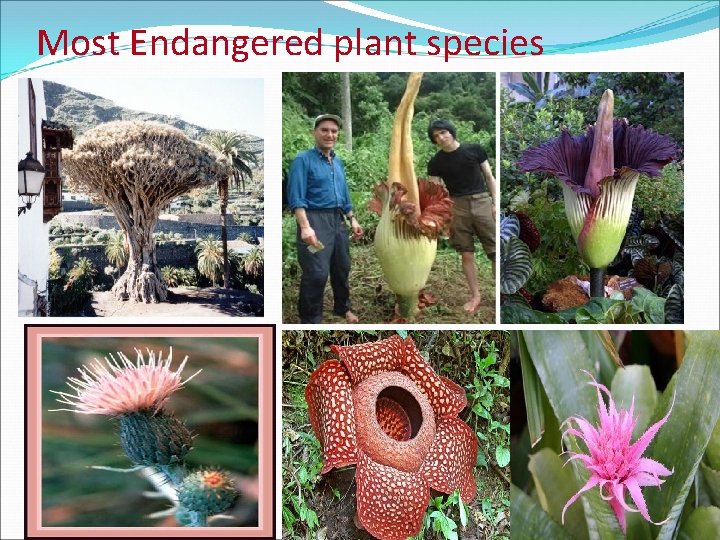
Most Endangered plant species
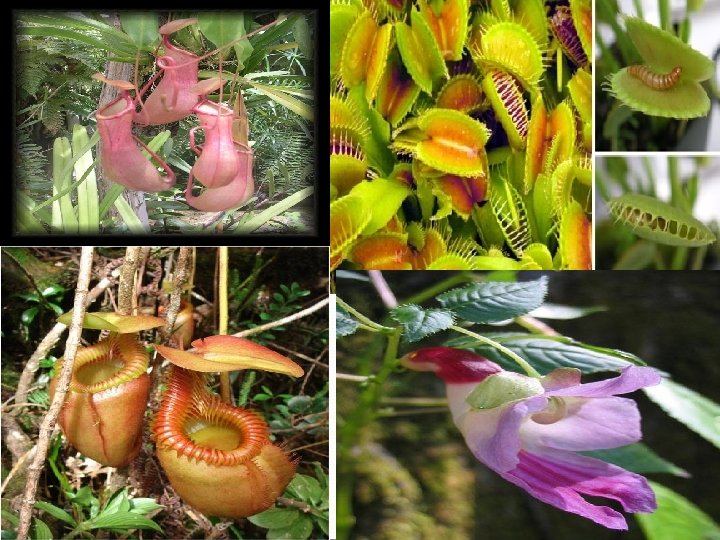
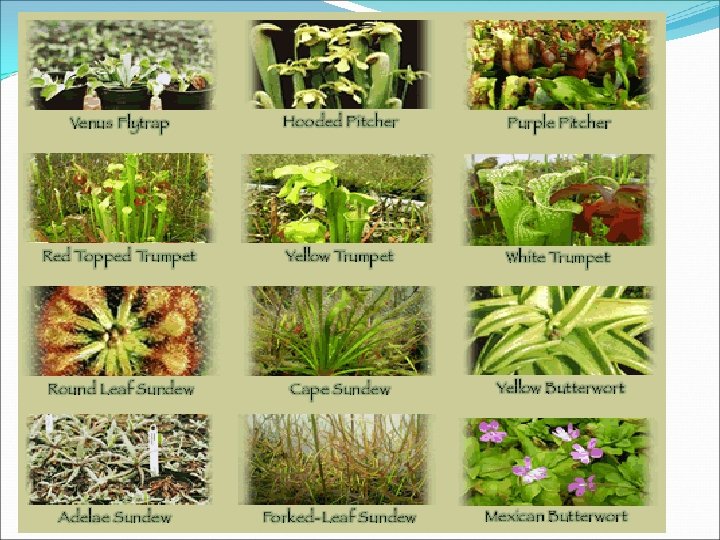
Picture plant
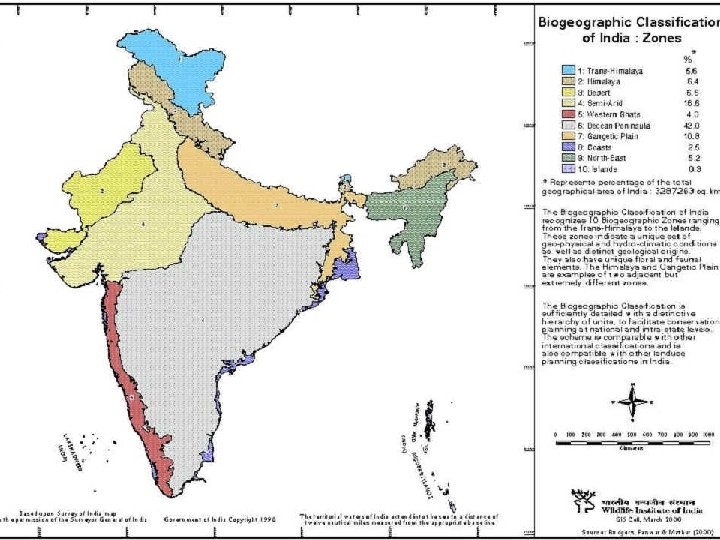
BIOGEOGRAPHICAL CLASSIFICATION OF INDIA Climate and Topography Variety of Flora and Fauna Rich heritage of Biological Diversity 10 th position among plant rich nations of the world
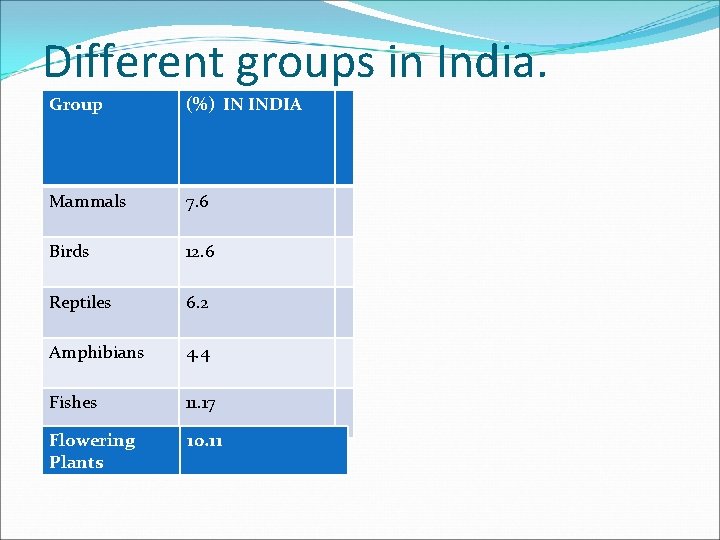
Different groups in India. Group (%) IN INDIA Mammals 7. 6 Birds 12. 6 Reptiles 6. 2 Amphibians 4. 4 Fishes 11. 17 Flowering Plants 10. 11

- Slides: 36