
BIODIVERSITY An introduction to biodiversity Origins of word
BIODIVERSITY An introduction to biodiversity.
Origins of word “biology” Biology (Greek or Latin origin) Bios = life Logos = study of
Branches of Biology 1. Zoology- the study of animals 2. Ichthyology- the study of fish 3. Mammalogy- study of mammals (NASA) 4. Ornithology- the study of birds 5. Botany- the study of plants 6. Microbiology- study of small life 7. Anatomy- study of an organism’s parts 8. Physiology- study of how organism’s parts work 9. Entomology- study of insects 10. Genetics- study of heredity and genetic material (DNA/RNA, chromosomes, genes) 11. Ecology- study of all life in a particular area, the relationships b/t those life forms and the environment 12. Cell Biology- the study of cells
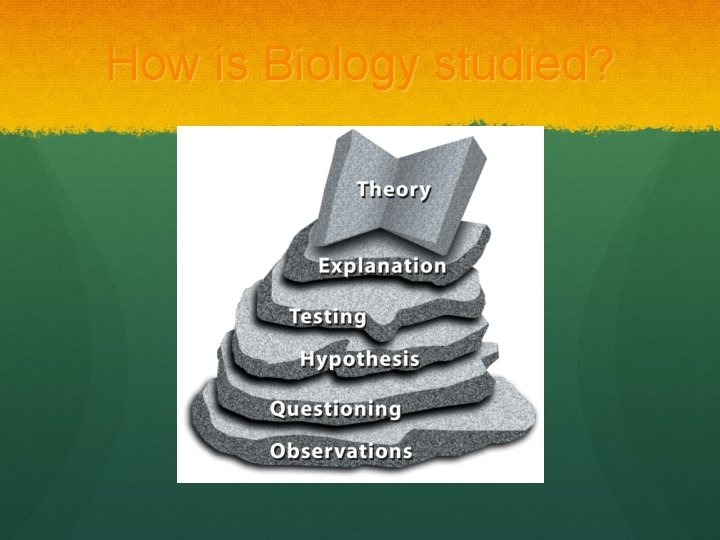
How is Biology studied? Insert F 01 -06
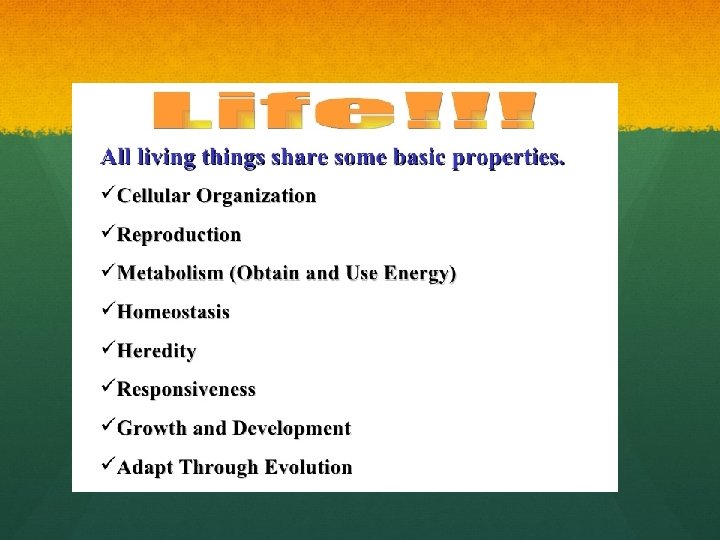
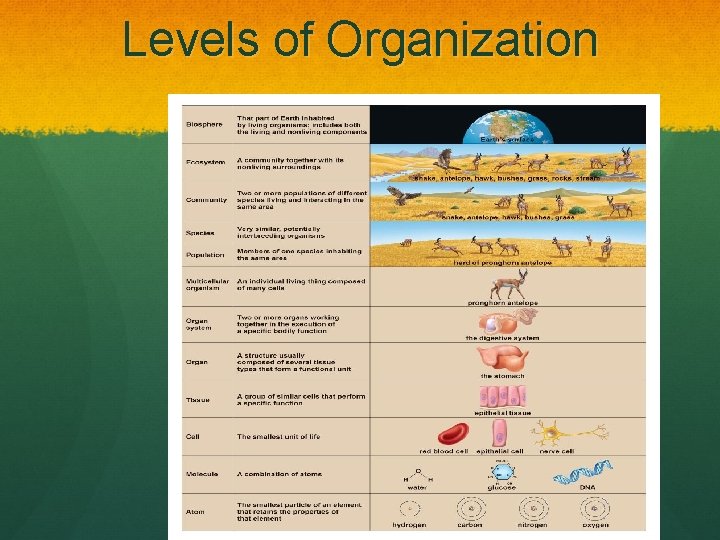
Levels of Organization
What is Biodiversity? Biodiversity is the variety or richness of life at all structural levels (molecular/genetic, species, ecosystem). It is an essential renewable resource.
Why is biodiversity important? Biodiversity provides us with: l Natural Resources (food, water, wood, energy, and medicines) l Natural (Ecosystem) Services including: air and water purification, soil fertility, waste disposal, pest control) l Aesthetic pleasure
“The decline of Earth’s biodiversity is an unintended consequence of multiple factors that have been enhanced by human activity. They can be summarized by the acronym HIPPO, with the order of the letters corresponding to their rank in destructiveness. ” H Habitat loss, including that caused by change. human-induced climate I Invasive species (harmful aliens, including predators, diseases, and competitors that displace native species P Pollution P Population, Human overpopulation to be the other four factors O Overharvesting, Overuse (hunting, fishing, gathering) exact, a root cause of
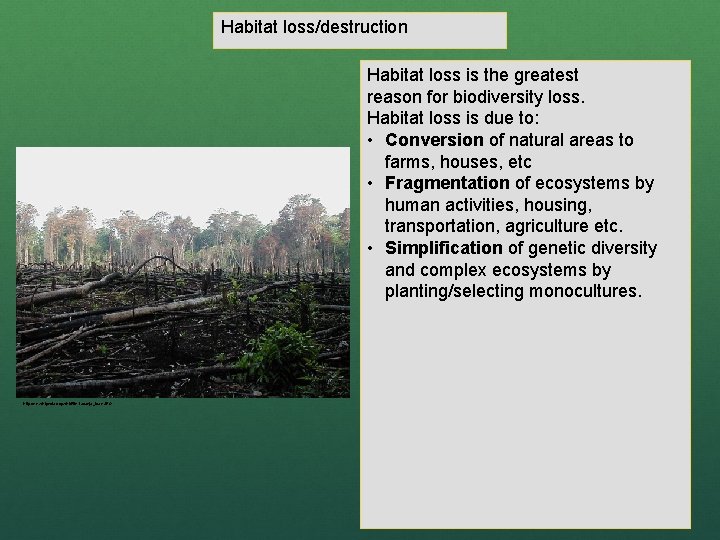
Habitat loss/destruction Habitat loss is the greatest reason for biodiversity loss. Habitat loss is due to: • Conversion of natural areas to farms, houses, etc • Fragmentation of ecosystems by human activities, housing, transportation, agriculture etc. • Simplification of genetic diversity and complex ecosystems by planting/selecting monocultures. http: //en. wikipedia. org/wiki/File: Lacanja_burn. JPG
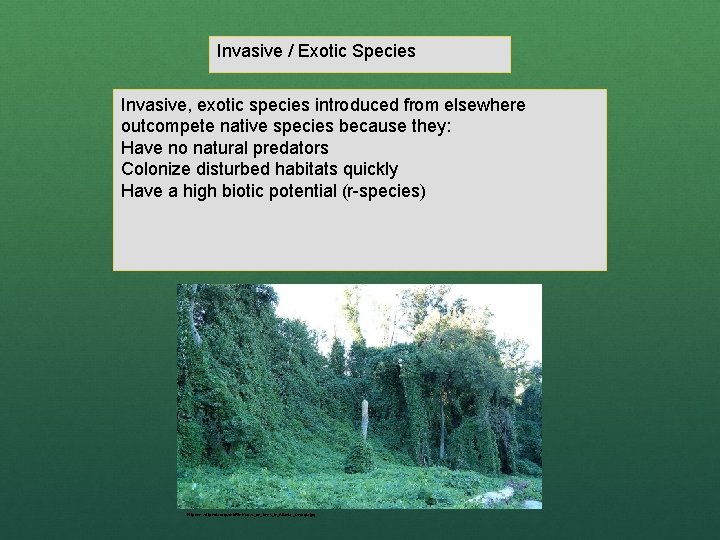
Invasive / Exotic Species Invasive, exotic species introduced from elsewhere outcompete native species because they: Have no natural predators Colonize disturbed habitats quickly Have a high biotic potential (r-species) http: //en. wikipedia. org/wiki/File: Kudzu_on_trees_in_Atlanta, _Georgia. jpg
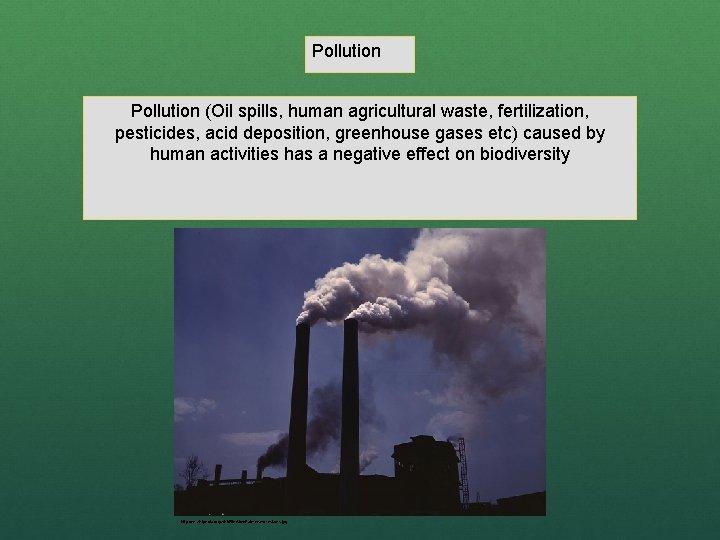
Pollution (Oil spills, human agricultural waste, fertilization, pesticides, acid deposition, greenhouse gases etc) caused by human activities has a negative effect on biodiversity http: //en. wikipedia. org/wiki/File: Alfed. Palmersmokestacks. jpg
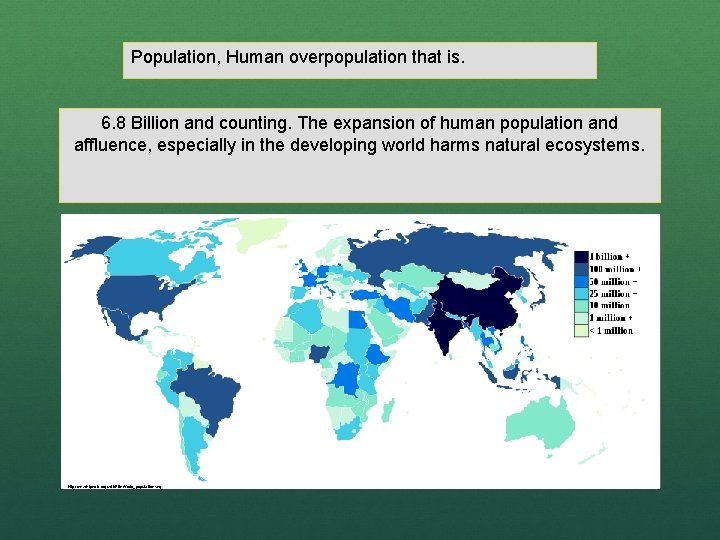
Population, Human overpopulation that is. 6. 8 Billion and counting. The expansion of human population and affluence, especially in the developing world harms natural ecosystems. http: //en. wikipedia. org/wiki/File: World_population. svg
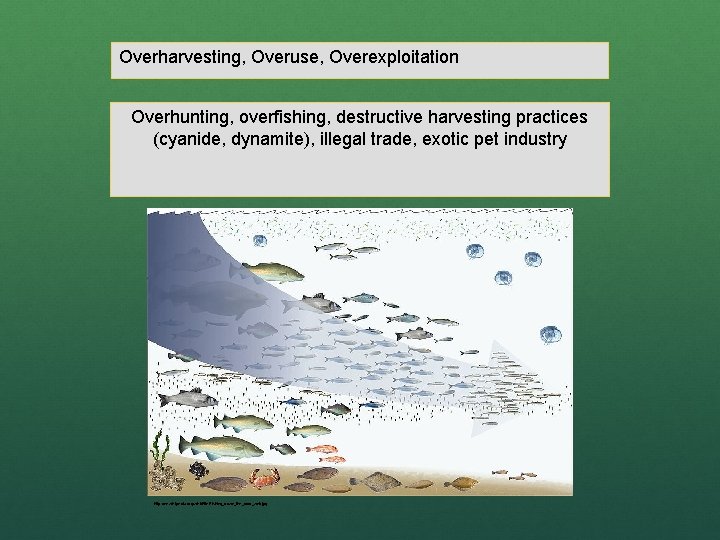
Overharvesting, Overuse, Overexploitation Overhunting, overfishing, destructive harvesting practices (cyanide, dynamite), illegal trade, exotic pet industry http: //en. wikipedia. org/wiki/File: Fishing_down_the_food_web. jpg
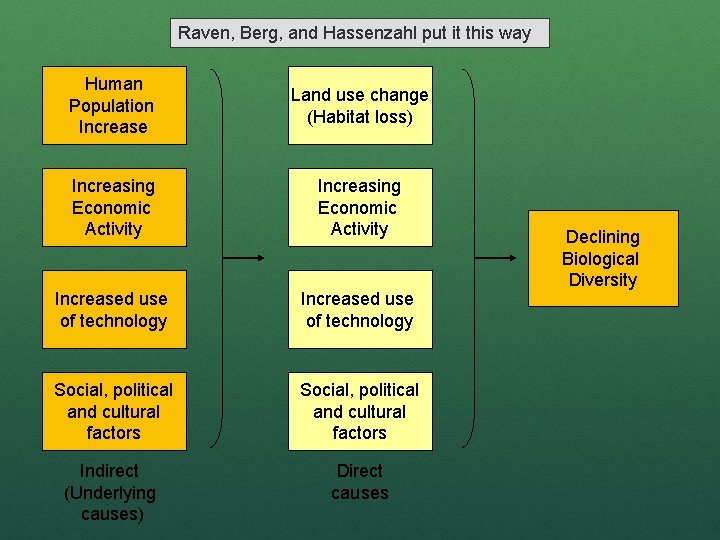
Raven, Berg, and Hassenzahl put it this way Human Population Increase Land use change (Habitat loss) Increasing Economic Activity Increased use of technology Social, political and cultural factors Indirect (Underlying causes) Direct causes Declining Biological Diversity

THANK YOU Lecturer: Ms. Eugene BSc, MBA, M. I. Biol (Sri Lanka)
- Slides: 16