
Biodiesel Technical Issues and Benefits What is Biodiesel
Biodiesel Technical Issues and Benefits
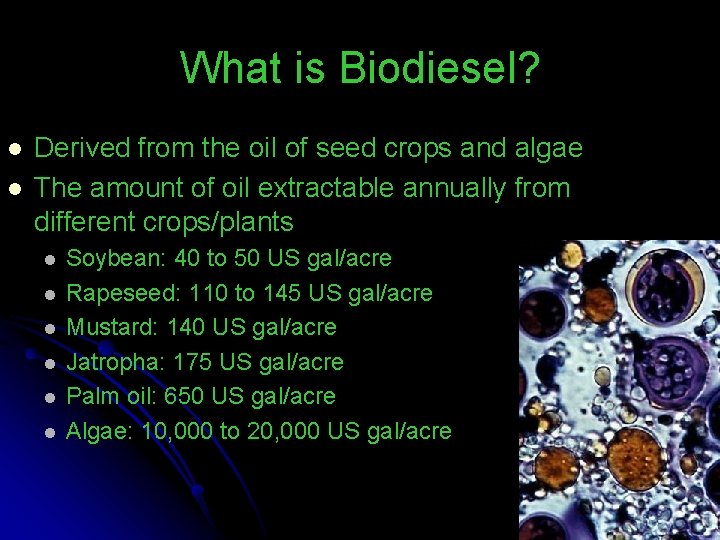
What is Biodiesel? l l Derived from the oil of seed crops and algae The amount of oil extractable annually from different crops/plants l l l Soybean: 40 to 50 US gal/acre Rapeseed: 110 to 145 US gal/acre Mustard: 140 US gal/acre Jatropha: 175 US gal/acre Palm oil: 650 US gal/acre Algae: 10, 000 to 20, 000 US gal/acre
Transesterification l Process of: Purifying oil l Reacting it to Alcohol (methanol or ethanol) l l In l l the presence of a catalyst (KOH or Na. OH) End products are Glycerol and Esters (which is the biodiesel) 100 lbs of oil + 10 lbs of methanol → 100 lbs of biodiesel + 10 lbs of glycerol
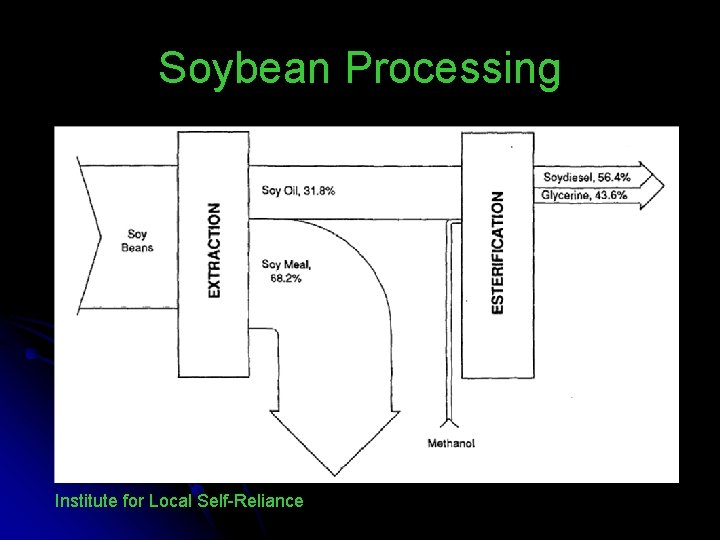
Soybean Processing Institute for Local Self-Reliance
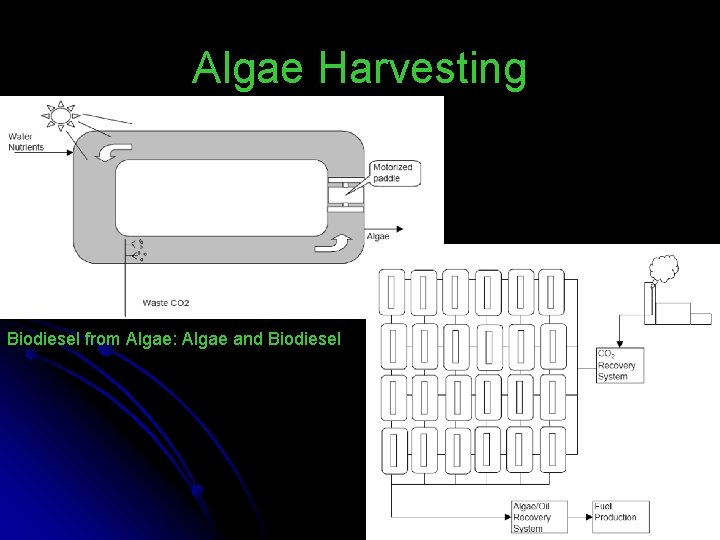
Algae Harvesting Biodiesel from Algae: Algae and Biodiesel
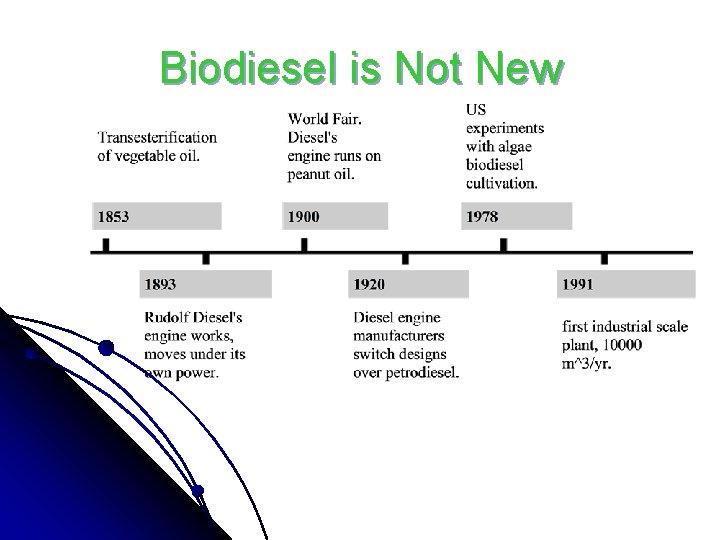
Biodiesel is Not New
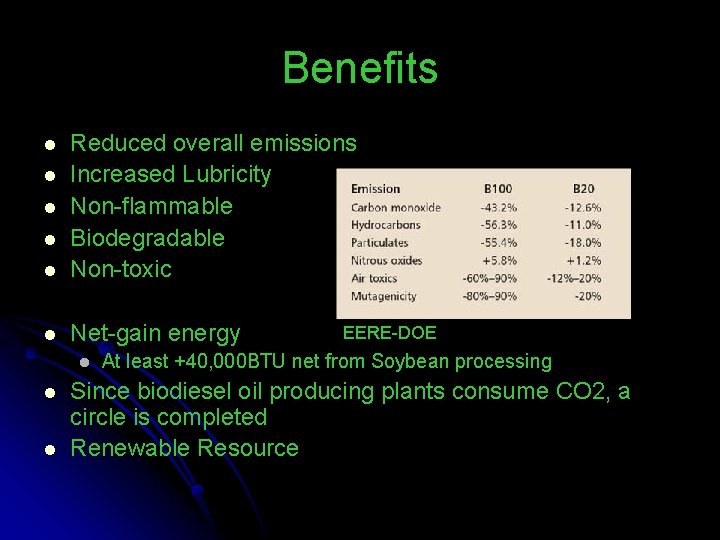
Benefits l Reduced overall emissions Increased Lubricity Non-flammable Biodegradable Non-toxic l Net-gain energy l l l l EERE-DOE At least +40, 000 BTU net from Soybean processing Since biodiesel oil producing plants consume CO 2, a circle is completed Renewable Resource

Bio vs. diesel EERE-DOE
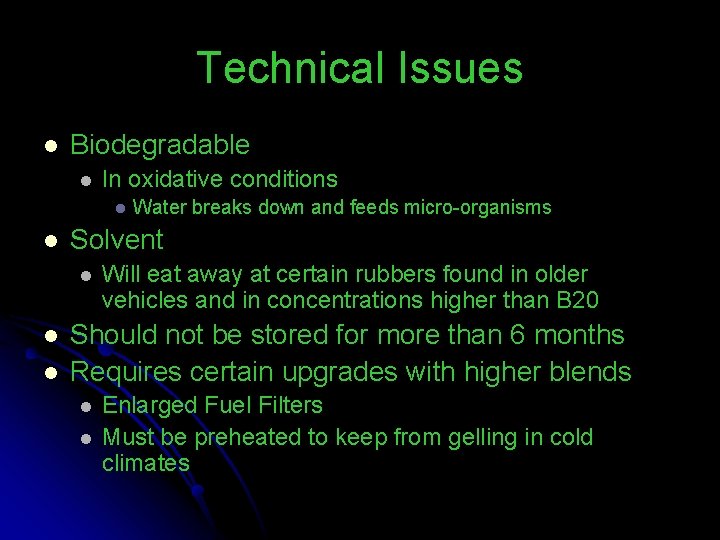
Technical Issues l Biodegradable l In oxidative conditions l l Solvent l l l Water breaks down and feeds micro-organisms Will eat away at certain rubbers found in older vehicles and in concentrations higher than B 20 Should not be stored for more than 6 months Requires certain upgrades with higher blends l l Enlarged Fuel Filters Must be preheated to keep from gelling in cold climates
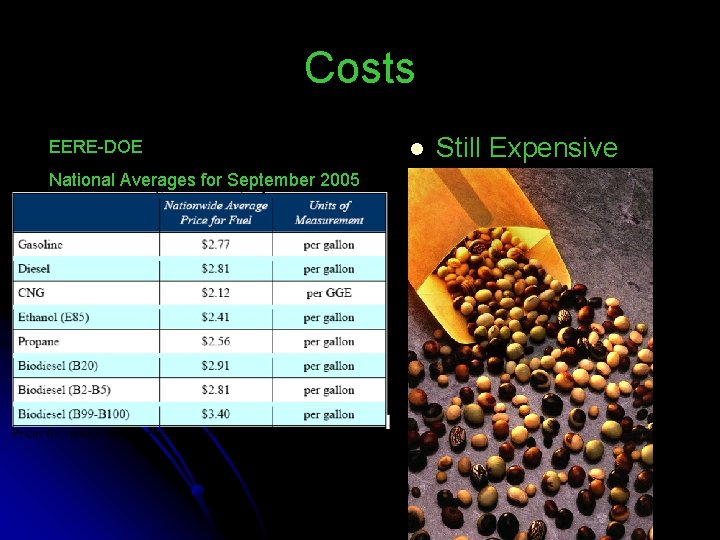
Costs EERE-DOE National Averages for September 2005 l Still Expensive
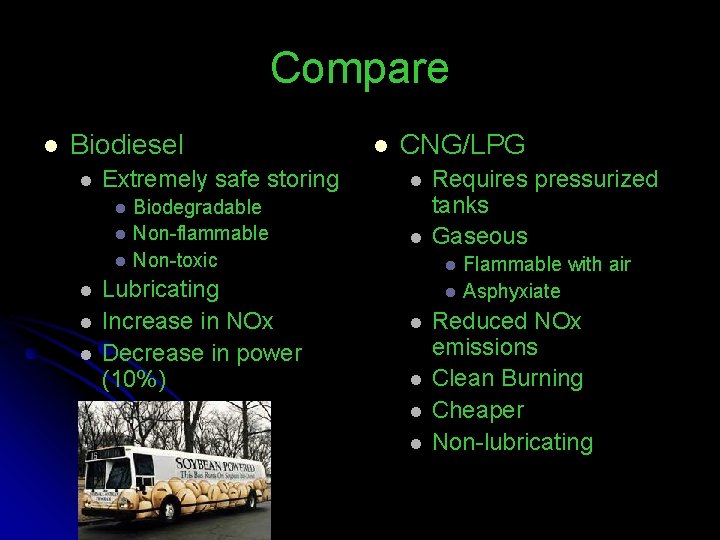
Compare l Biodiesel l Extremely safe storing l l l Biodegradable Non-flammable Non-toxic Lubricating Increase in NOx Decrease in power (10%) l CNG/LPG l l Requires pressurized tanks Gaseous l l l Flammable with air Asphyxiate Reduced NOx emissions Clean Burning Cheaper Non-lubricating

Questions?
- Slides: 12