
BIODEGRADATION AND BIOTRANSFORMATION OF HAZARDOUS CHEMICALS BIODEGRADATION A
BIODEGRADATION AND BIOTRANSFORMATION OF HAZARDOUS CHEMICALS
BIODEGRADATION �A phenomenon of biological transformation of organic compounds by living organisms particularly microbes. �It brings about changes yielding simpler and harmless products like CO 2, H 2 O, NH 3, CH 4, PO 3. �When the compound is not fully broken (BIOTRANSFORMATION)
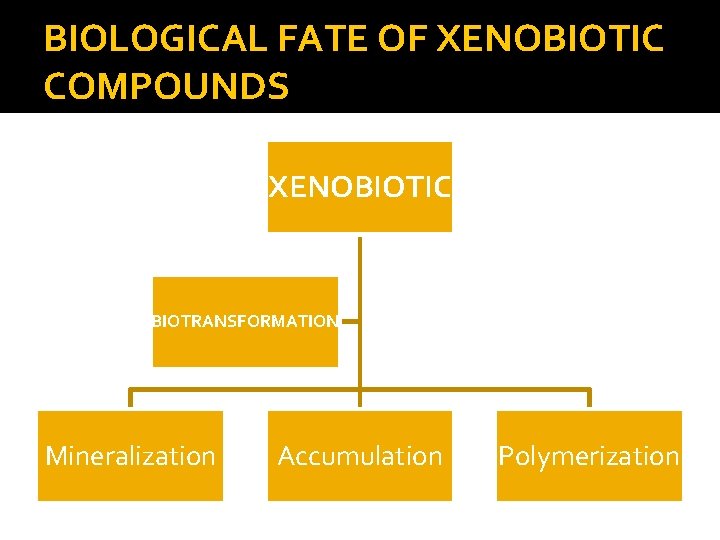
BIOLOGICAL FATE OF XENOBIOTIC COMPOUNDS XENOBIOTIC BIOTRANSFORMATION Mineralization Accumulation Polymerization
�In situ factors i. e. temperature, p. H, redox potential, availability of nutrients, O 2 supply, biomass of the degrader, microbial community the nature and concentration of the substrate affects biodegradation.
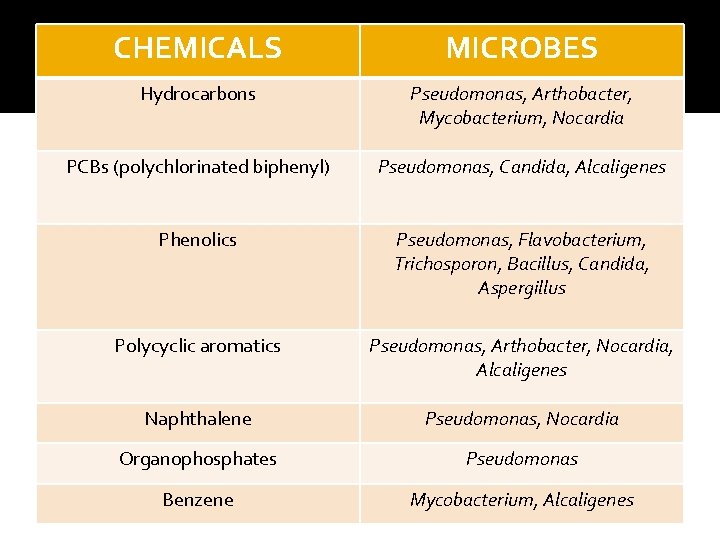
CHEMICALS MICROBES Hydrocarbons Pseudomonas, Arthobacter, Mycobacterium, Nocardia PCBs (polychlorinated biphenyl) Pseudomonas, Candida, Alcaligenes Phenolics Pseudomonas, Flavobacterium, Trichosporon, Bacillus, Candida, Aspergillus Polycyclic aromatics Pseudomonas, Arthobacter, Nocardia, Alcaligenes Naphthalene Pseudomonas, Nocardia Organophosphates Pseudomonas Benzene Mycobacterium, Alcaligenes
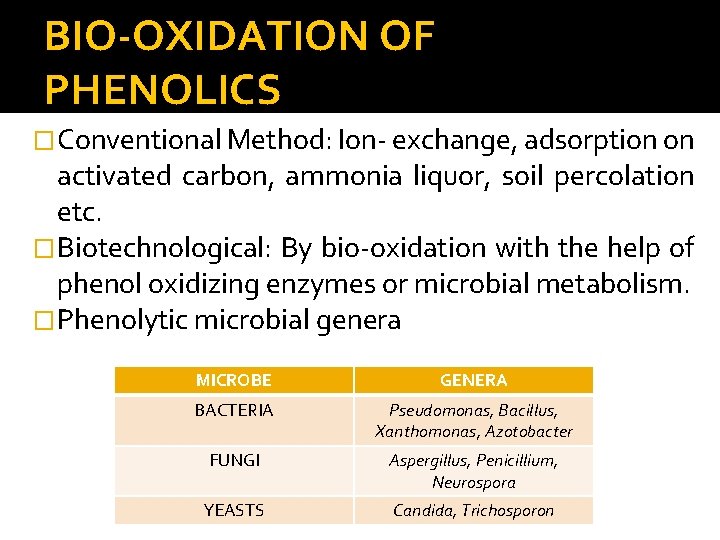
BIO-OXIDATION OF PHENOLICS �Conventional Method: Ion- exchange, adsorption on activated carbon, ammonia liquor, soil percolation etc. �Biotechnological: By bio-oxidation with the help of phenol oxidizing enzymes or microbial metabolism. �Phenolytic microbial genera MICROBE GENERA BACTERIA Pseudomonas, Bacillus, Xanthomonas, Azotobacter FUNGI Aspergillus, Penicillium, Neurospora YEASTS Candida, Trichosporon
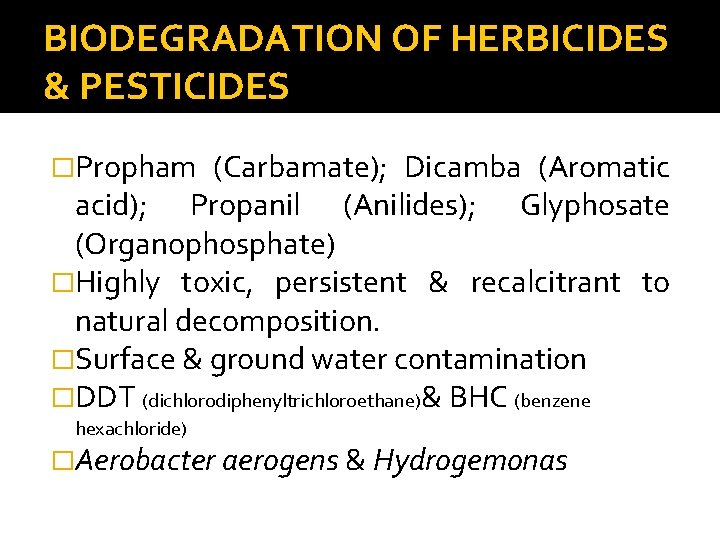
BIODEGRADATION OF HERBICIDES & PESTICIDES �Propham (Carbamate); Dicamba (Aromatic acid); Propanil (Anilides); Glyphosate (Organophosphate) �Highly toxic, persistent & recalcitrant to natural decomposition. �Surface & ground water contamination �DDT (dichlorodiphenyltrichloroethane)& BHC (benzene hexachloride) �Aerobacter aerogens & Hydrogemonas
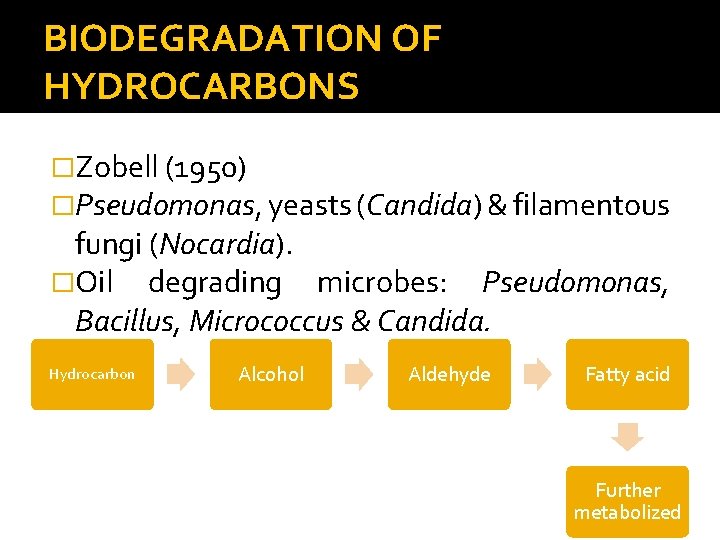
BIODEGRADATION OF HYDROCARBONS �Zobell (1950) �Pseudomonas, yeasts (Candida) & filamentous fungi (Nocardia). �Oil degrading microbes: Pseudomonas, Bacillus, Micrococcus & Candida. Hydrocarbon Alcohol Aldehyde Fatty acid Further metabolized
BIODEGRADATION OF SPECIFIC WASTES 1. POLYCYCLIC AROMATIC HYDROCARBONS: Naphthalene, Phenanthrene, Anthracene. Oil, Tar, Wood & Fossil fuel combustion. Pseudomonas spp used to degrade. 2. Biosurfactants: Used in the making of detergent. Produced by the microbes. Two ways used Biotransformation & Enzymatic synthesis (synthesis of monoglycerides, sugar, fatty acid esters).
3. ORGANO-NITRO COMPOUNDS: TNT (trinitrotoluene): Transformed by bacterial & fungal species (Klebsiella, E. coli, Pseudomonas, Clostridium) NITRO-CELLULOSE: Pre-treatment by alkali (Hydrolysis) followed by anaerobic denitrification. 4. VEGETABLE TANNINS: Originate from tannery effluents and are toxic. Biodegraded by fungi (Aspergillus, Penicillium & Fusarium) and also by edible fungi puff ball.
BIODEGRADATION IN MARINE ENV. �Bioremediation of petroleum oil spills �Marine microbes posses novel pathways for breaking down organic pollutants. �Pseudomonas and crude oil degrading marine cyanobacteria.
MILITARY APPLICATION OF BIODEGRADATION �Used in the bioremediation of military toxic waste sites as well as decontamination of battle fields. �Hydrocarbons �Pseudomonas, Arthrobacter & Nocardia �Denitrifying fungus Aspergillus fumigatus (minimizing ballistic performance) �Some plants used for biotransformation of hazardous chemicals.
- Slides: 12