
Biochemistry T Y B Sc Semester V Clinical
Biochemistry T. Y. B. Sc. (Semester- V) Clinical Biochemistry (BSCOC 507 D) Unit-1 Prepared by: Dipesh Parikh Assistant Professor Neotech College of Applied Science & Research, Neotech Technical Campus, Vadodara
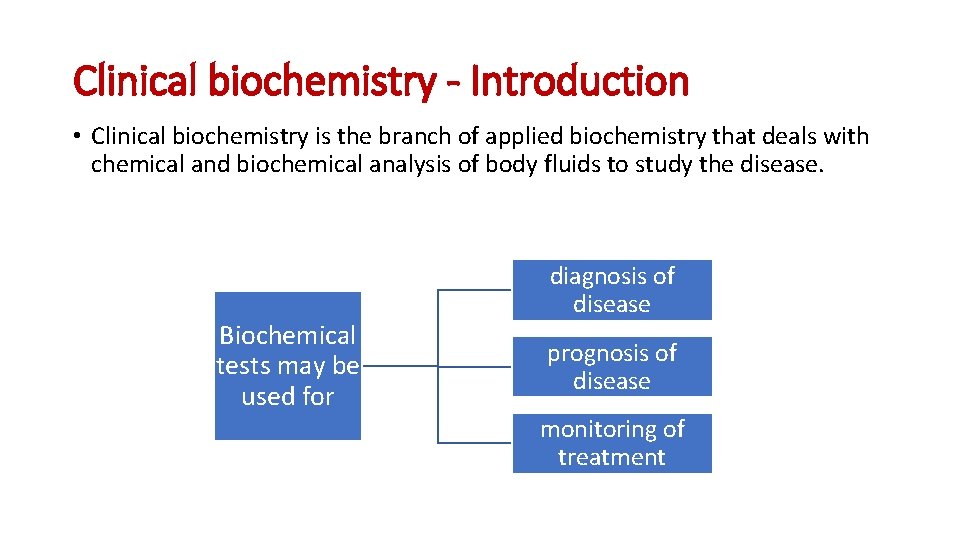
Clinical biochemistry - Introduction • Clinical biochemistry is the branch of applied biochemistry that deals with chemical and biochemical analysis of body fluids to study the disease. Biochemical tests may be used for diagnosis of disease prognosis of disease monitoring of treatment
Major causes of disease • Infectious disease caused by • Bacteria • Virus • parasite • Fungi • Chromosomal abnormality • Metabolic disease • Autoimmune disorder • Nutrition imbalance • Hormone imbalance • Toxins/ poisons • Environmental factors
Correlation of biochemical pathways with disease development • Life depends on the biochemical reactions occur in living organism • Health depends on the integration, accuracy and harmony of all the biochemical reactions occurring in a living organism. • Most of the diseases occur due to abnormalities in the biochemical processes.
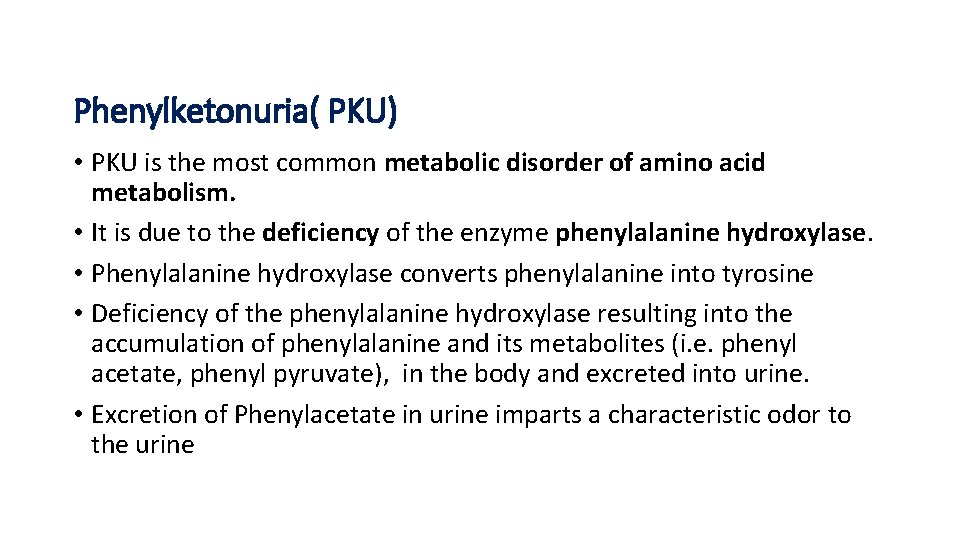
Phenylketonuria( PKU) • PKU is the most common metabolic disorder of amino acid metabolism. • It is due to the deficiency of the enzyme phenylalanine hydroxylase. • Phenylalanine hydroxylase converts phenylalanine into tyrosine • Deficiency of the phenylalanine hydroxylase resulting into the accumulation of phenylalanine and its metabolites (i. e. phenyl acetate, phenyl pyruvate), in the body and excreted into urine. • Excretion of Phenylacetate in urine imparts a characteristic odor to the urine
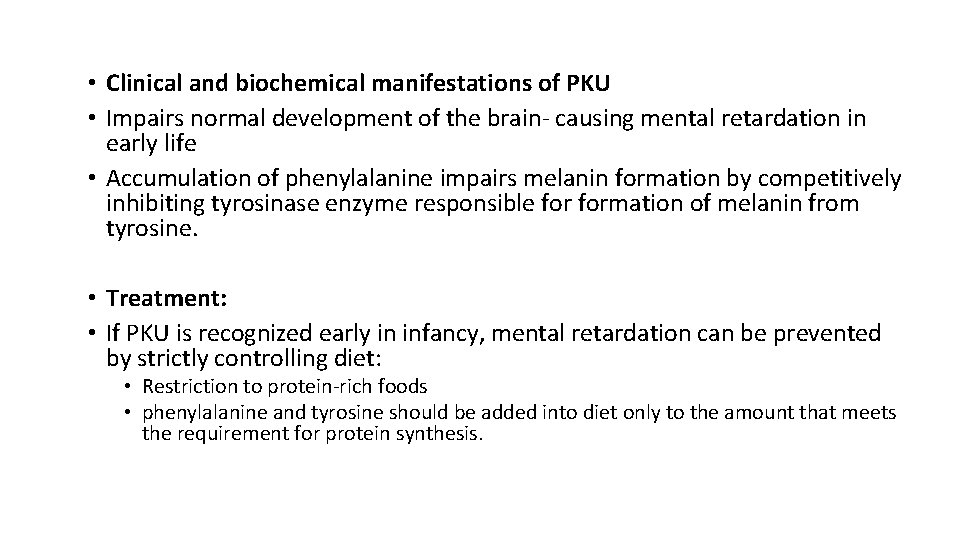
• Clinical and biochemical manifestations of PKU • Impairs normal development of the brain- causing mental retardation in early life • Accumulation of phenylalanine impairs melanin formation by competitively inhibiting tyrosinase enzyme responsible formation of melanin from tyrosine. • Treatment: • If PKU is recognized early in infancy, mental retardation can be prevented by strictly controlling diet: • Restriction to protein-rich foods • phenylalanine and tyrosine should be added into diet only to the amount that meets the requirement for protein synthesis.
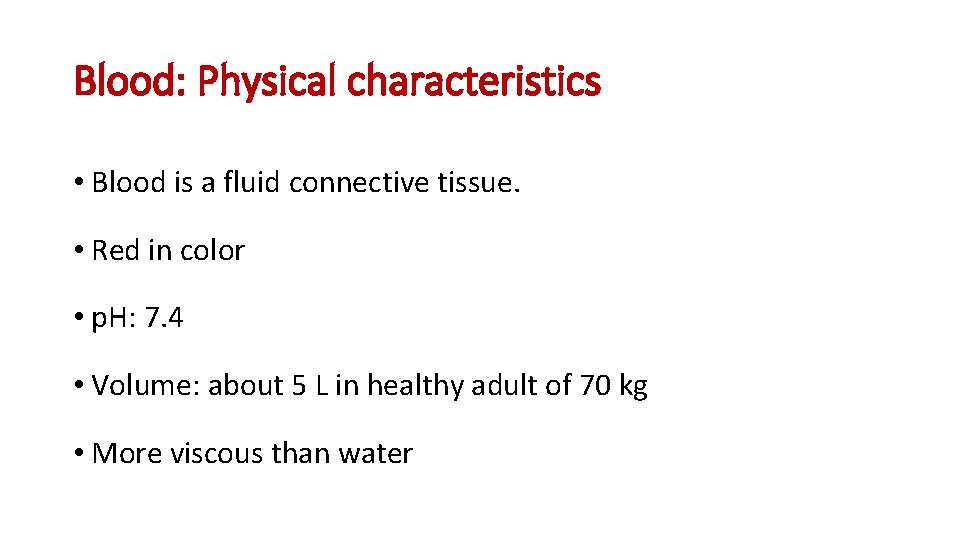
Blood: Physical characteristics • Blood is a fluid connective tissue. • Red in color • p. H: 7. 4 • Volume: about 5 L in healthy adult of 70 kg • More viscous than water
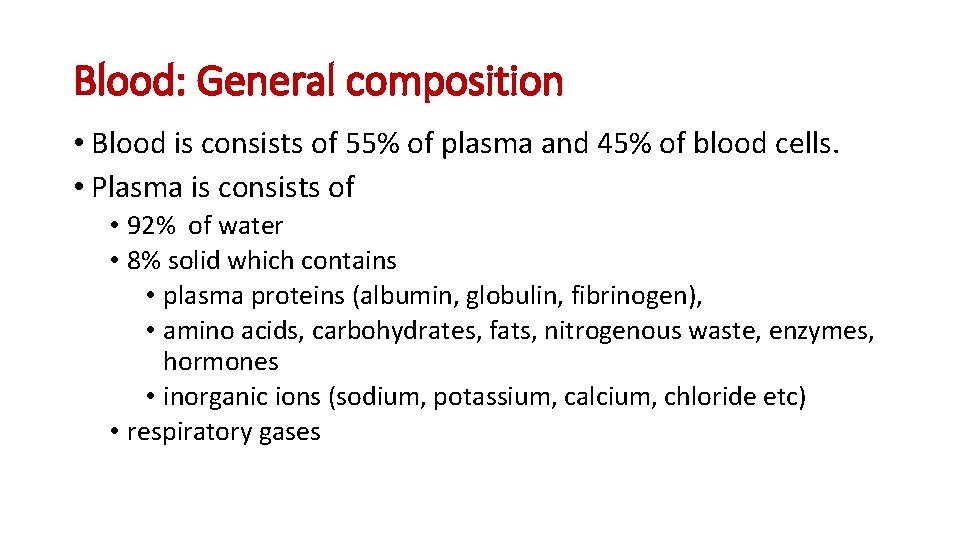
Blood: General composition • Blood is consists of 55% of plasma and 45% of blood cells. • Plasma is consists of • 92% of water • 8% solid which contains • plasma proteins (albumin, globulin, fibrinogen), • amino acids, carbohydrates, fats, nitrogenous waste, enzymes, hormones • inorganic ions (sodium, potassium, calcium, chloride etc) • respiratory gases
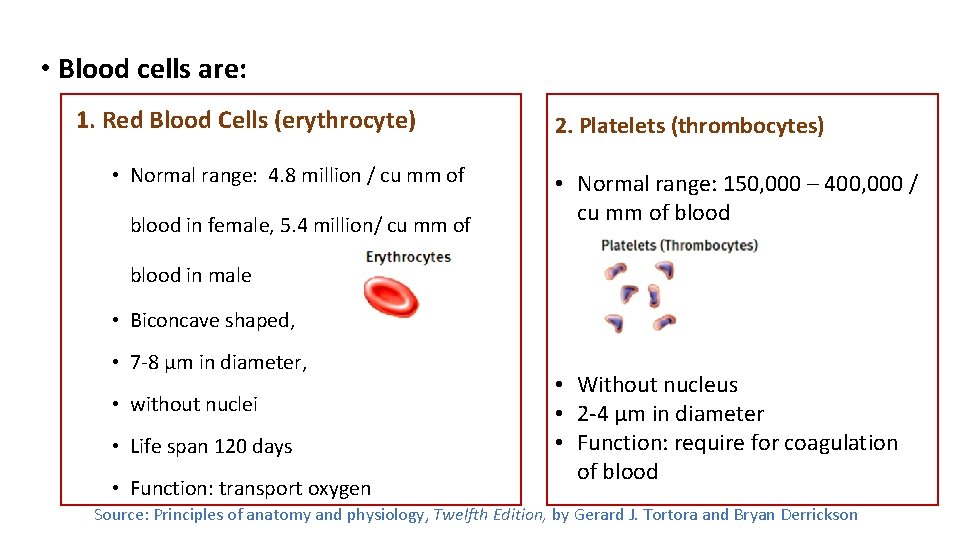
• Blood cells are: 1. Red Blood Cells (erythrocyte) • Normal range: 4. 8 million / cu mm of blood in female, 5. 4 million/ cu mm of 2. Platelets (thrombocytes) • Normal range: 150, 000 – 400, 000 / cu mm of blood in male • Biconcave shaped, • 7 -8 μm in diameter, • without nuclei • Life span 120 days • Function: transport oxygen • Without nucleus • 2 -4 μm in diameter • Function: require for coagulation of blood Source: Principles of anatomy and physiology, Twelfth Edition, by Gerard J. Tortora and Bryan Derrickson
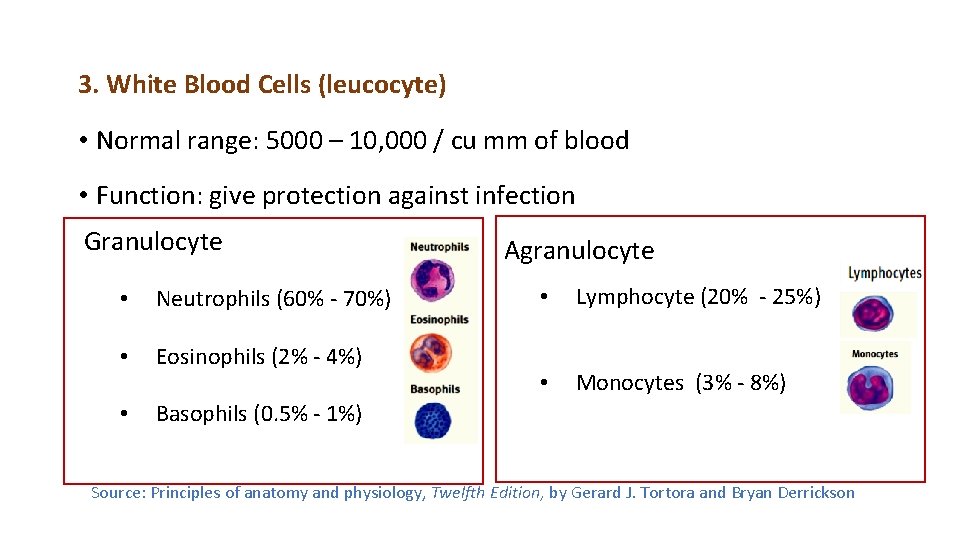
3. White Blood Cells (leucocyte) • Normal range: 5000 – 10, 000 / cu mm of blood • Function: give protection against infection Granulocyte • Neutrophils (60% - 70%) • Eosinophils (2% - 4%) • Basophils (0. 5% - 1%) Agranulocyte • Lymphocyte (20% - 25%) • Monocytes (3% - 8%) Source: Principles of anatomy and physiology, Twelfth Edition, by Gerard J. Tortora and Bryan Derrickson
Functions of blood • Transportation of O 2 from the lungs to the tissues and of CO 2 from the tissues to the lungs during respiration • Transportation of absorbed food materials to different tissues • Transportation of metabolic waste to the lungs, intestine, kidneys, skin for their elimination from the body in the process of excretion • Transportation of hormones for metabolic regulation
Functions of blood cont… • Maintenance of water balance in the body • Regulation of acid-base balance • Regulation of body temperature by the distribution of heat • WBCs provide protection against infection • Platelets – for coagulation of blood
C. S. F • CSF - Cerebrospinal fluid • CSF is a clear, colorless fluid that circulates through cavities in the brain and spinal cord and subarachnoid space. • CSF is the part of extracellular fluid.
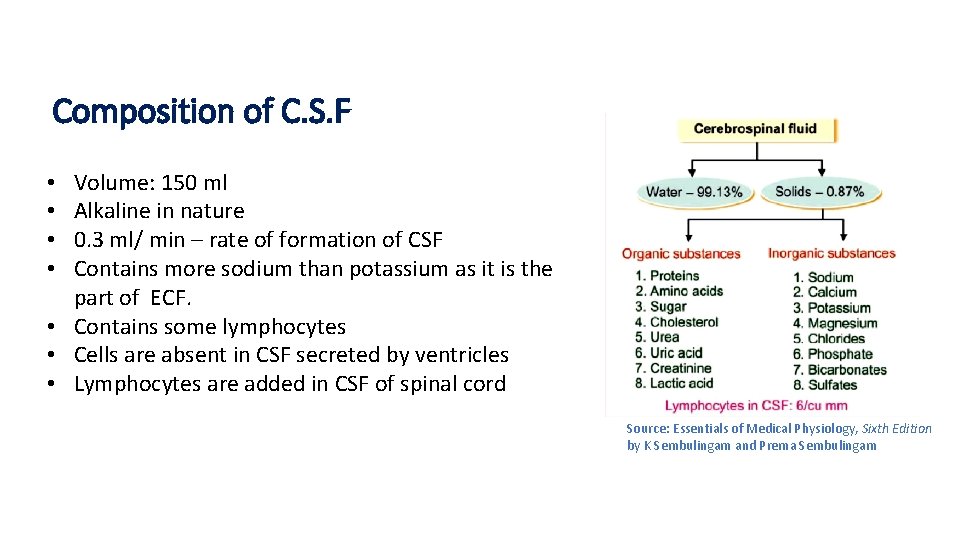
Composition of C. S. F Volume: 150 ml Alkaline in nature 0. 3 ml/ min – rate of formation of CSF Contains more sodium than potassium as it is the part of ECF. • Contains some lymphocytes • Cells are absent in CSF secreted by ventricles • Lymphocytes are added in CSF of spinal cord • • Source: Essentials of Medical Physiology, Sixth Edition by K Sembulingam and Prema Sembulingam
Functions of CSF • acts as fluid buffer and protects brain from shock • acts as cushion to protect brain from mechanical damage • Medium for the exchange of nutritive substances (like glucose and amino acids) as well as waste products between blood and brain • Regulates the cranial content volume
Lymph • When blood is passing from blood capillaries, blood plasma is filtered out into the interstitial fluid and reabsorbed. Excess amount of fluid passes into the lymph capillaries and becomes lymph. • Lymph is clear, colorless fluid. • It consists of 96% of water and 4% of solid.
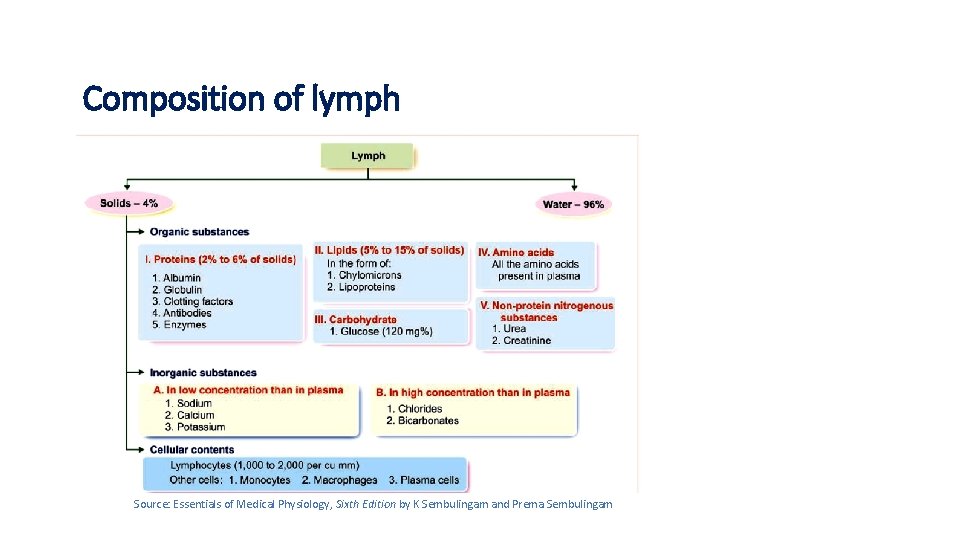
Composition of lymph Source: Essentials of Medical Physiology, Sixth Edition by K Sembulingam and Prema Sembulingam
Functions of Lymph • Returns fluid from tissue space into the blood circulation. • Absorption of fat from small intestine • Lymphocytes provide immunity • Bacteria, toxins and other foreign molecules are filtered from tissue spaces via lymph • Lymph flow maintains structural and functional integrity of tissue
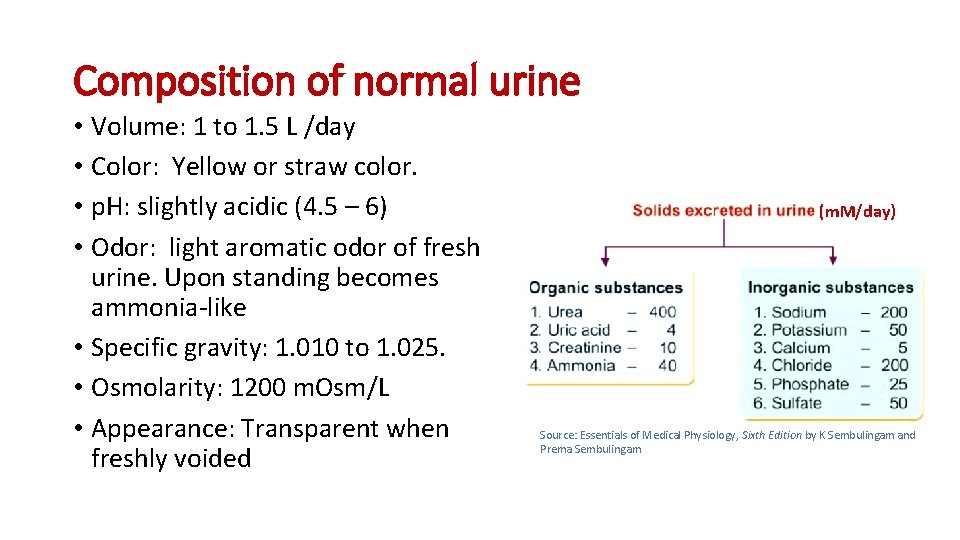
Composition of normal urine • Volume: 1 to 1. 5 L /day • Color: Yellow or straw color. • p. H: slightly acidic (4. 5 – 6) • Odor: light aromatic odor of fresh urine. Upon standing becomes ammonia-like • Specific gravity: 1. 010 to 1. 025. • Osmolarity: 1200 m. Osm/L • Appearance: Transparent when freshly voided (m. M/day) Source: Essentials of Medical Physiology, Sixth Edition by K Sembulingam and Prema Sembulingam
Abnormal Constituents in Urine • Glucosuria- presence of glucose in the urine, indicates diabetes mellitus • Albuminuria - presence of excessive albumin in the urine. • Hematuria - presence of erythrocyte (red blood cells) in the urine • Ketonuria – presence of high amount of ketone bodies in the urine
Abnormal Constituents in Urine cont… • Bilirubinuria - presence of high level of bilirubin in urine • Microbes found in urinary tract infections • The most common fungus Candida albicans found in urine in vaginitis • The protozoan- Trichomonas vaginalis is the causative agent of urethritis in males & vaginitis in females
References • Harper’s illustrated Biochemistry - Robrert. K. Murray. • Human Biochemistry -James. M. Orten&Otto. W. Neuhaus. • Biochemistry by clinical correlation by Devlin. • Principles of anatomy and physiology, Twelfth Edition by Gerard J. Tortora and Bryan Derrickson • Essentials of Medical Physiology, Sixth Edition by K Sembulingam and Prema Sembulingam
- Slides: 22