
Biochemistry Sixth Edition Berg Tymoczko Stryer Chapter 7
Biochemistry Sixth Edition Berg • Tymoczko • Stryer Chapter 7: Hemoglobin: Portrait of a Protein in Action Copyright © 2007 by W. H. Freeman and Company
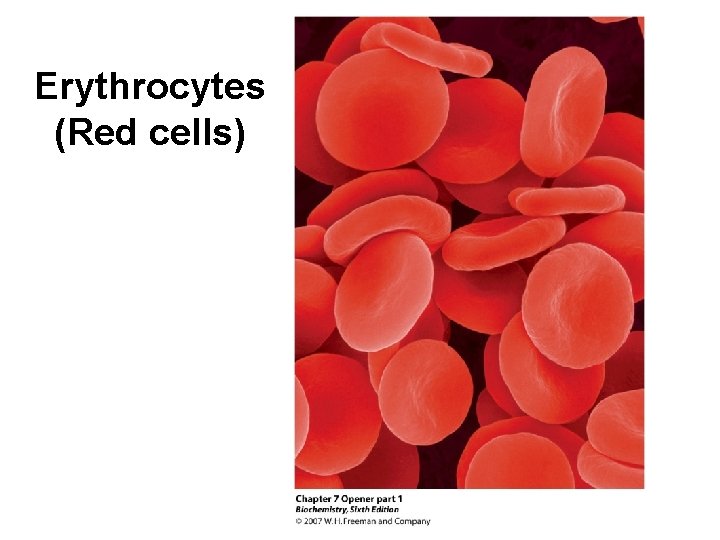
Erythrocytes (Red cells)
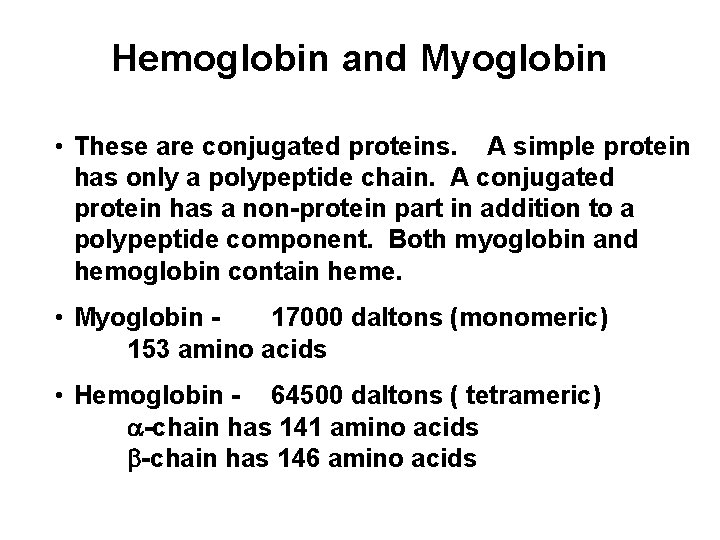
Hemoglobin and Myoglobin • These are conjugated proteins. A simple protein has only a polypeptide chain. A conjugated protein has a non-protein part in addition to a polypeptide component. Both myoglobin and hemoglobin contain heme. • Myoglobin 17000 daltons (monomeric) 153 amino acids • Hemoglobin - 64500 daltons ( tetrameric) a-chain has 141 amino acids b-chain has 146 amino acids
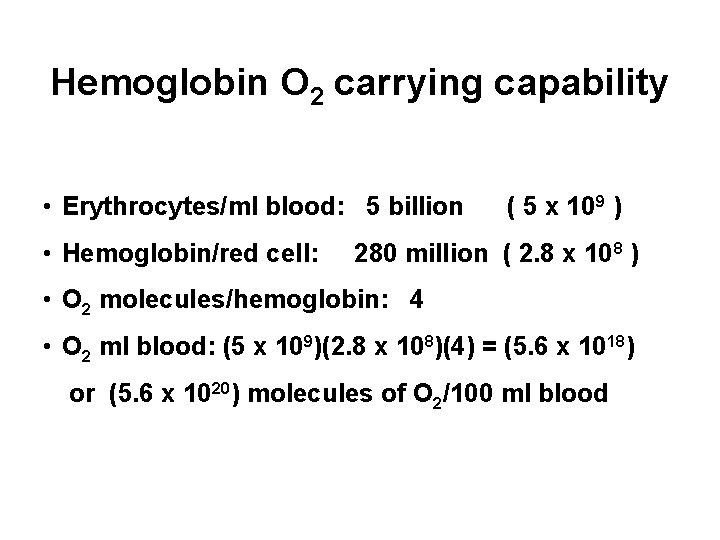
Hemoglobin O 2 carrying capability • Erythrocytes/ml blood: 5 billion • Hemoglobin/red cell: ( 5 x 10⁹ ) 280 million ( 2. 8 x 10⁸ ) • O 2 molecules/hemoglobin: 4 • O 2 ml blood: (5 x 10⁹)(2. 8 x 10⁸)(4) = (5. 6 x 10¹⁸) or (5. 6 x 10²⁰) molecules of O 2/100 ml blood
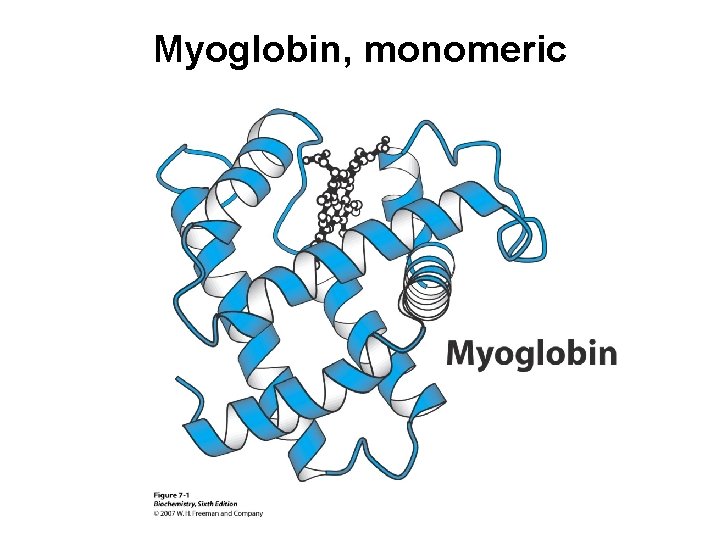
Myoglobin, monomeric
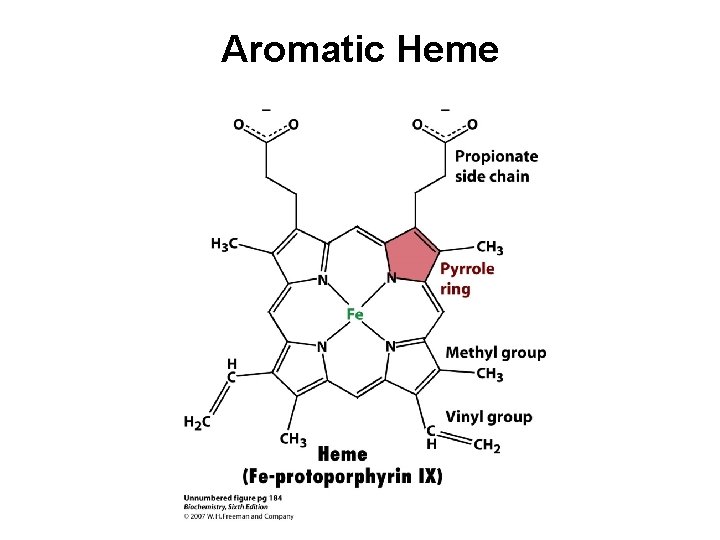
Aromatic Heme
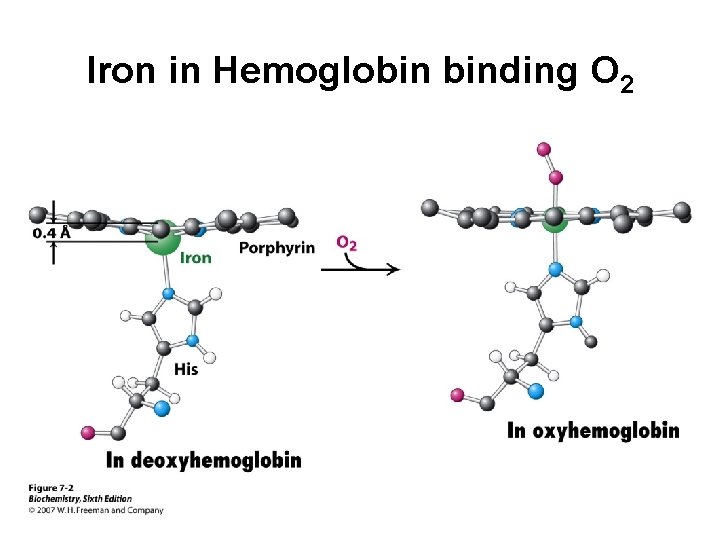
Iron in Hemoglobin binding O 2
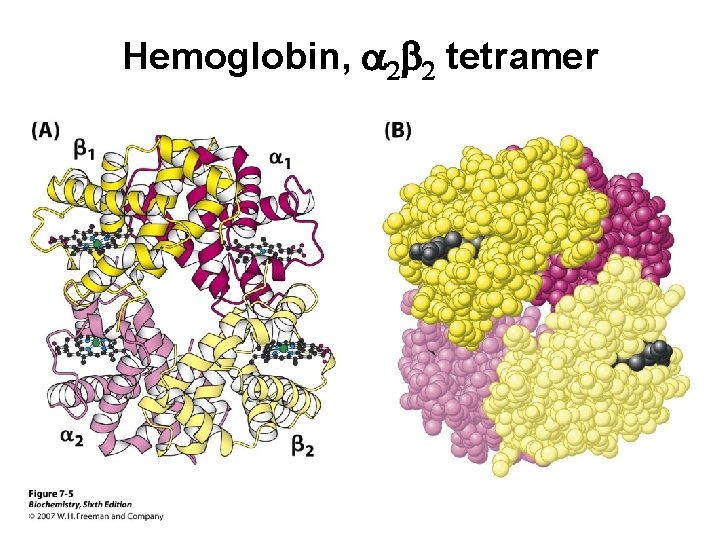
Hemoglobin, a 2 b 2 tetramer
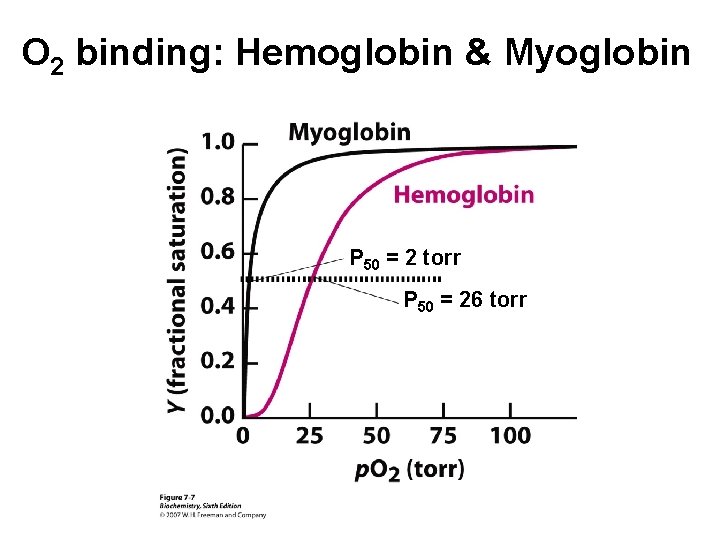
O 2 binding: Hemoglobin & Myoglobin P 50 = 2 torr P 50 = 26 torr
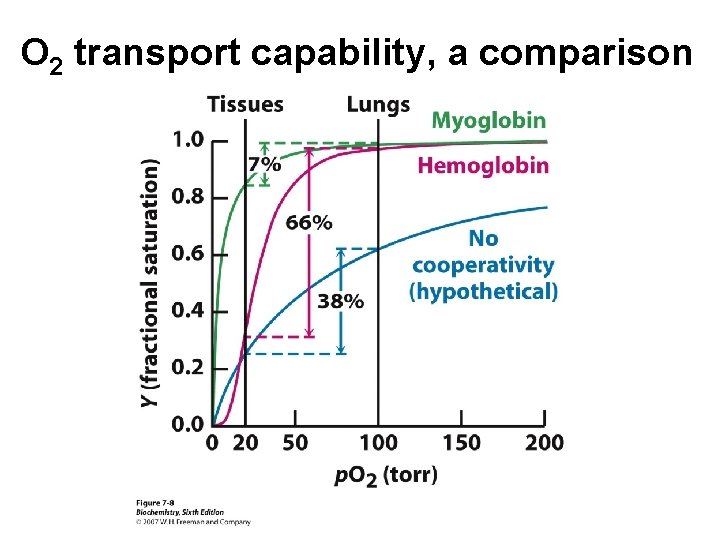
O 2 transport capability, a comparison
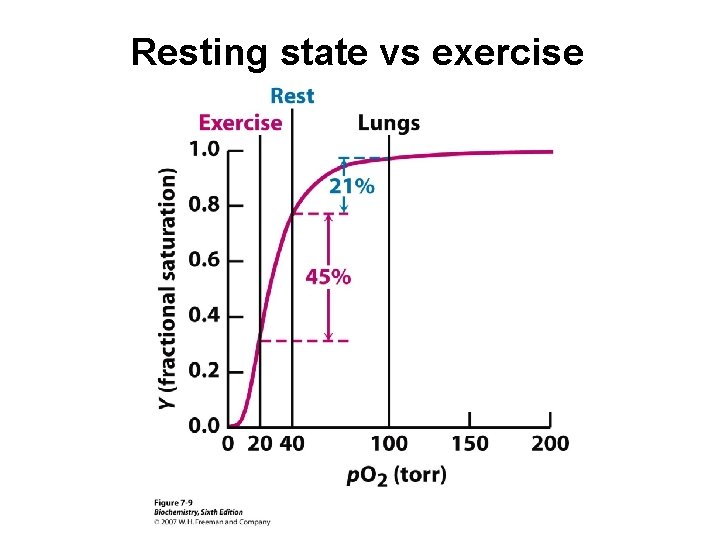
Resting state vs exercise
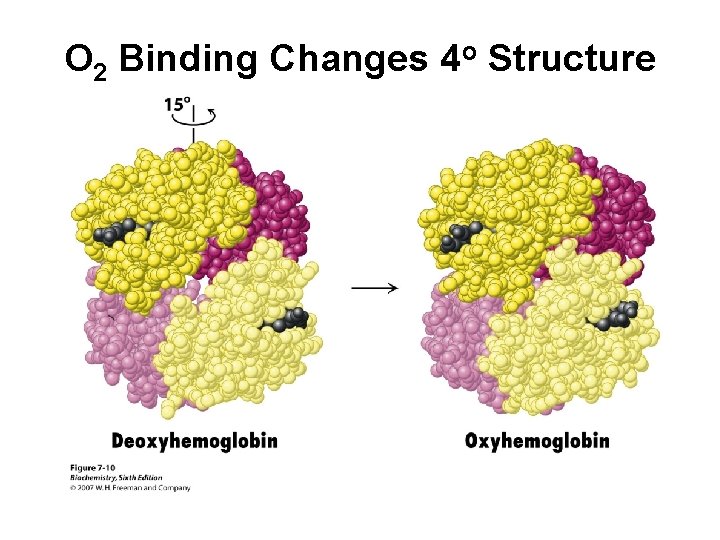
O 2 Binding Changes 4 o Structure
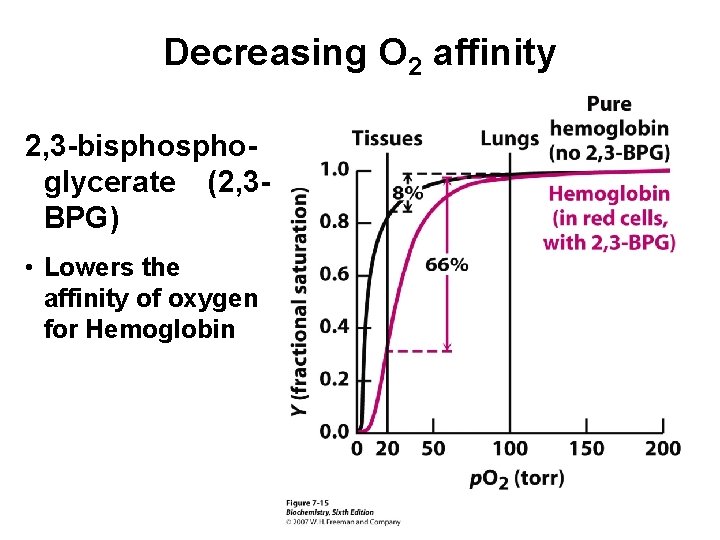
Decreasing O 2 affinity 2, 3 -bisphoglycerate (2, 3 BPG) • Lowers the affinity of oxygen for Hemoglobin
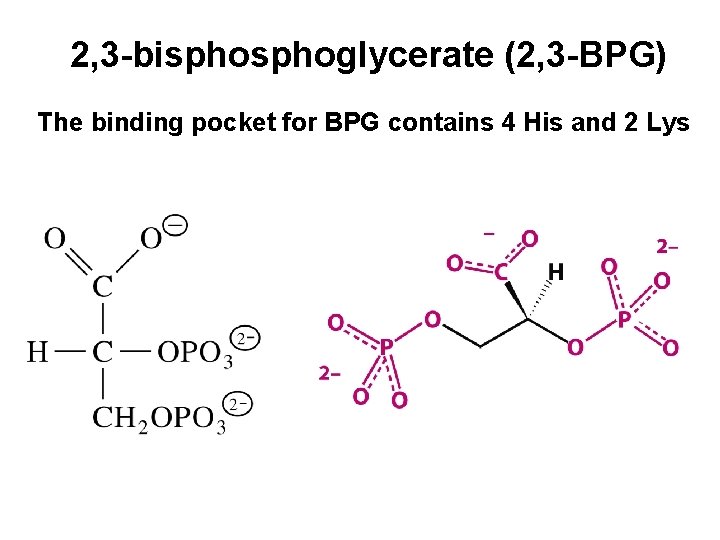
2, 3 -bisphoglycerate (2, 3 -BPG) The binding pocket for BPG contains 4 His and 2 Lys
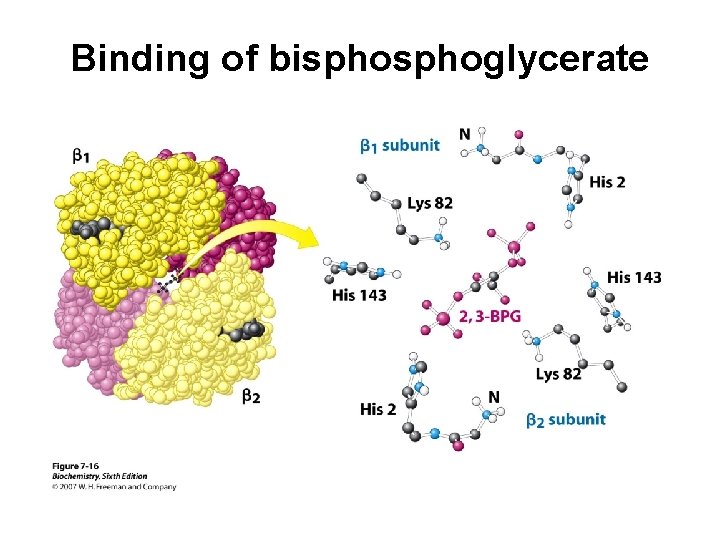
Binding of bisphoglycerate
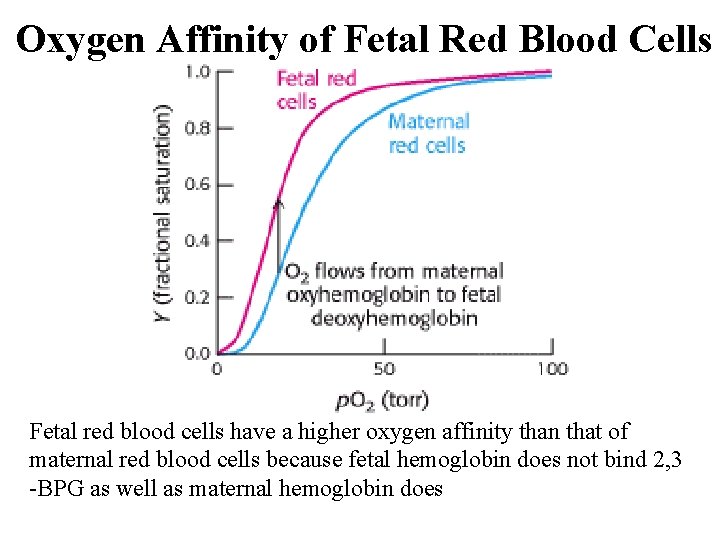
Oxygen Affinity of Fetal Red Blood Cells Fetal red blood cells have a higher oxygen affinity than that of maternal red blood cells because fetal hemoglobin does not bind 2, 3 -BPG as well as maternal hemoglobin does
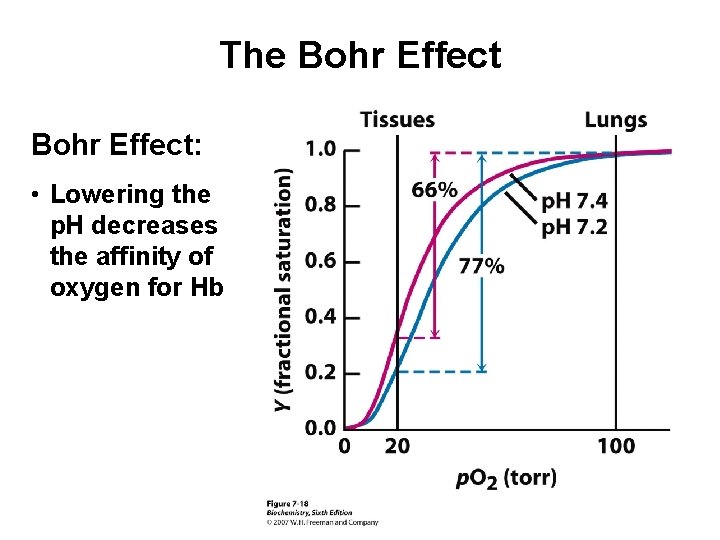
The Bohr Effect: • Lowering the p. H decreases the affinity of oxygen for Hb
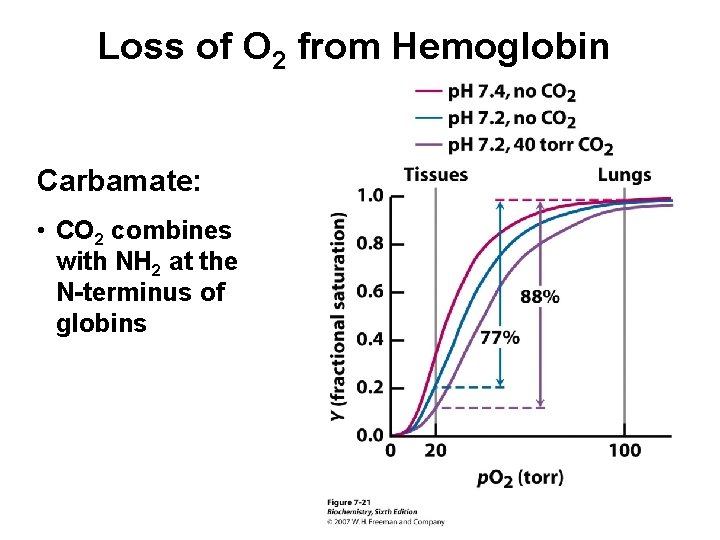
Loss of O 2 from Hemoglobin Carbamate: • CO 2 combines with NH 2 at the N-terminus of globins
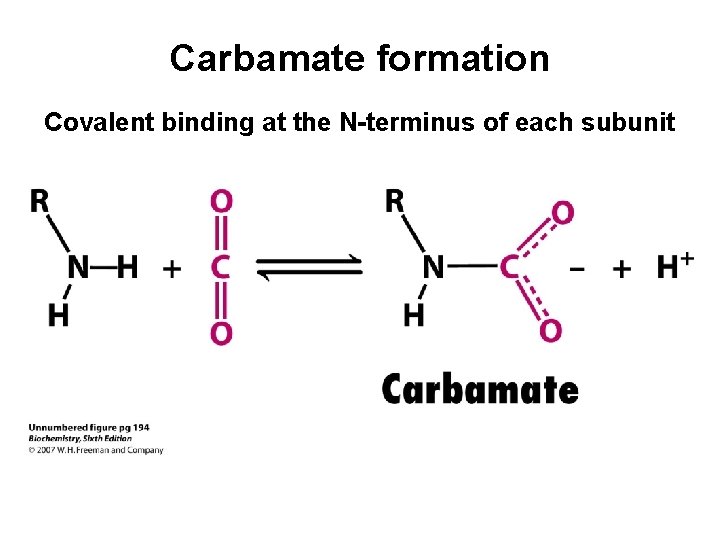
Carbamate formation Covalent binding at the N-terminus of each subunit
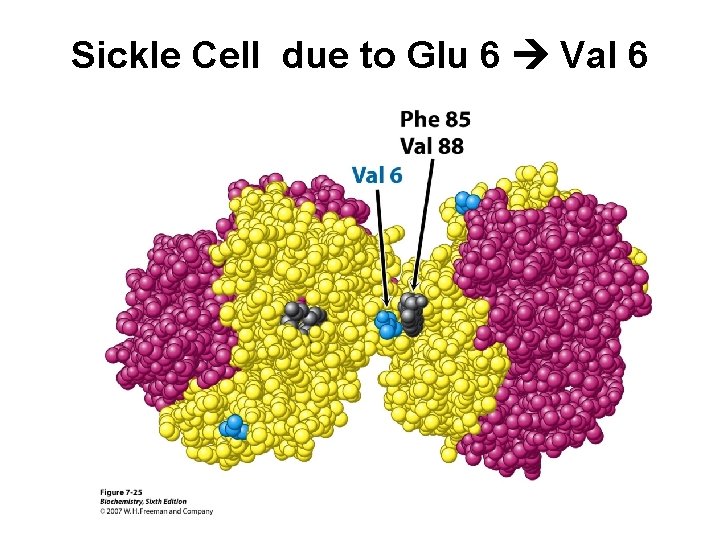
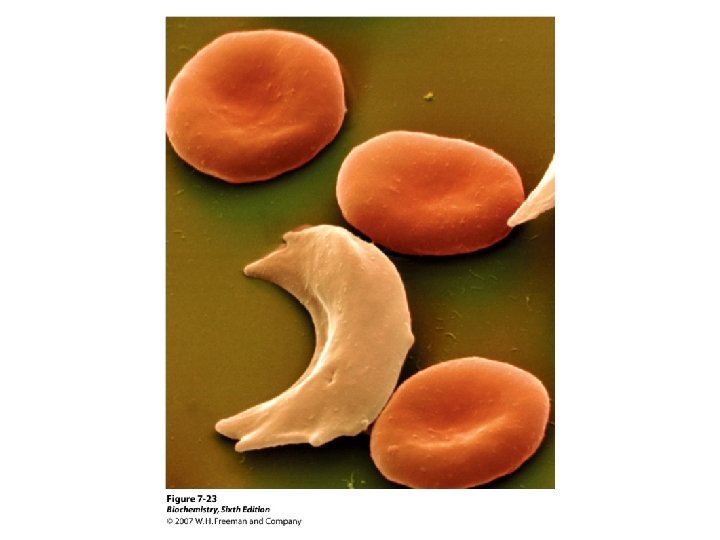
Sickle Cell due to Glu 6 Val 6
- Slides: 21