
Biochemistry Outline Organic Compounds Cell Parts Review Biochemical
Biochemistry

Outline • • • Organic Compounds Cell Parts Review Biochemical Reactions Photosynthesis Cellular Respiration Fermentation Cellular Transport Diffusion Osmosis
Organic Compounds • All cells are made up of the same basic elements – Carbon (C) – Hydrogen (H) – Nitrogen (N) – Oxygen (O) – Phosphorus (P) – Sulfur (S) • Those elements combine together to form different molecules – Example: Hydrogen + Oxygen = Water

Organic Compounds Element Name Oxygen Carbon Hydrogen Nitrogen Phosphorus Sulfur Percentage in living things 65. 0 % 18. 5 % 9. 6 % 3. 3 % 1. 0 %
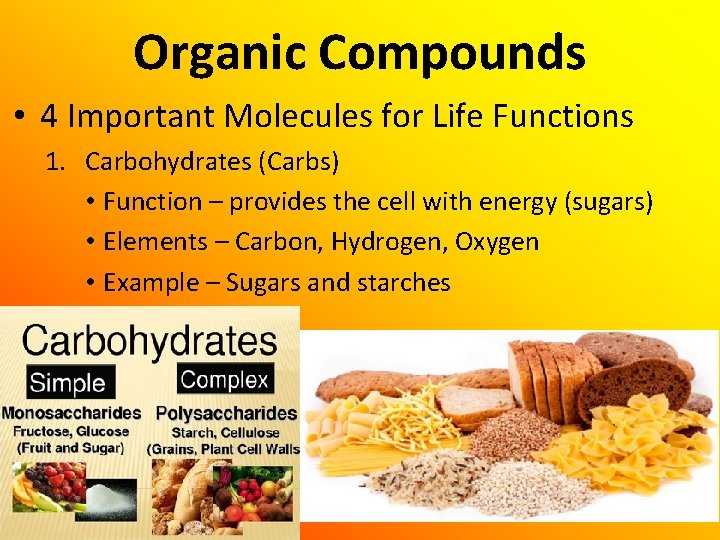
Organic Compounds • 4 Important Molecules for Life Functions 1. Carbohydrates (Carbs) • Function – provides the cell with energy (sugars) • Elements – Carbon, Hydrogen, Oxygen • Example – Sugars and starches

Organic Compounds • 4 Important Molecules for Life Functions 2. Lipids (Fats) • Function – storage of large amounts of energy for long term use (insulation) • Elements – Carbon, Hydrogen, Oxygen, Phosphorus • Example – Fats and Oils
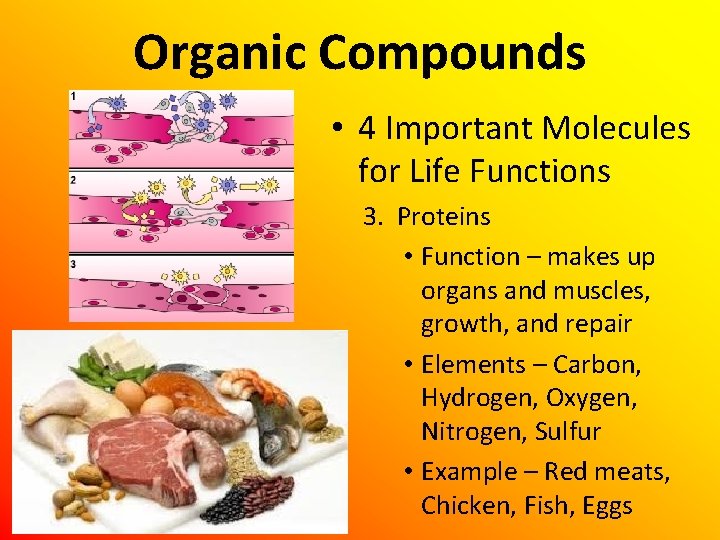
Organic Compounds • 4 Important Molecules for Life Functions 3. Proteins • Function – makes up organs and muscles, growth, and repair • Elements – Carbon, Hydrogen, Oxygen, Nitrogen, Sulfur • Example – Red meats, Chicken, Fish, Eggs

Organic Compounds • 4 Important Molecules for Life Functions 4. Nucleic Acids • Function – instructions for maintenance, growth, and reproduction of cell • Elements – Carbon, Hydrogen, Oxygen, Nitrogen, Phosphorus • Example – DNA
Cell Parts Review • Nucleus – control center • Cell membrane – protective outer layer (plant cells and animal cells) • Cell wall – protective outer layer (plant cells only) • Mitochondria – produces energy from food • Chloroplast – produces energy for plants from sunlight
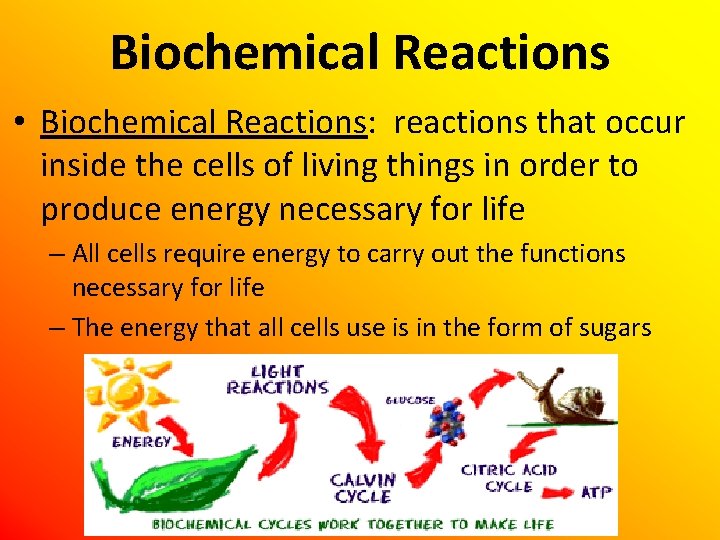
Biochemical Reactions • Biochemical Reactions: reactions that occur inside the cells of living things in order to produce energy necessary for life – All cells require energy to carry out the functions necessary for life – The energy that all cells use is in the form of sugars
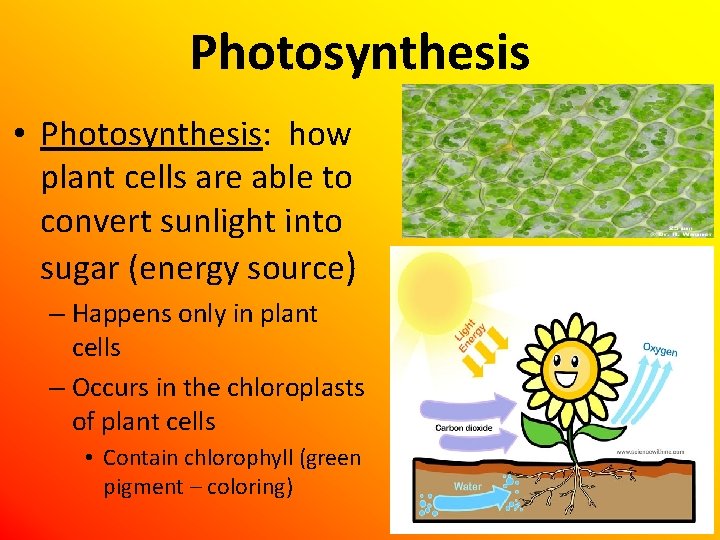
Photosynthesis • Photosynthesis: how plant cells are able to convert sunlight into sugar (energy source) – Happens only in plant cells – Occurs in the chloroplasts of plant cells • Contain chlorophyll (green pigment – coloring)
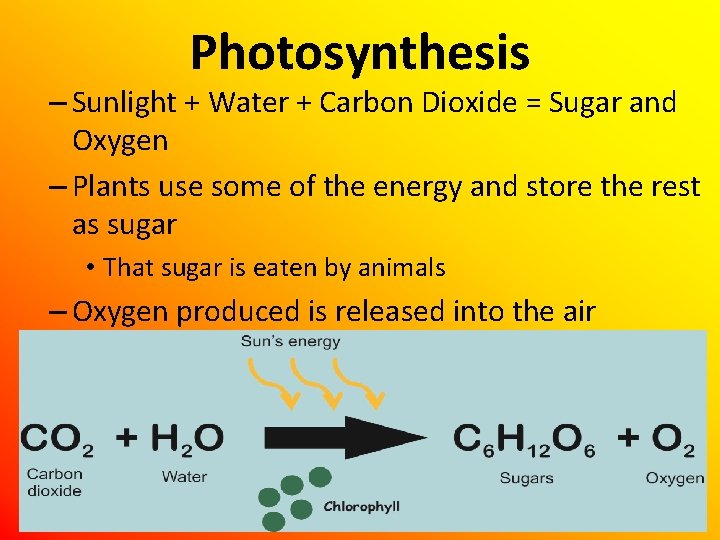
Photosynthesis – Sunlight + Water + Carbon Dioxide = Sugar and Oxygen – Plants use some of the energy and store the rest as sugar • That sugar is eaten by animals – Oxygen produced is released into the air
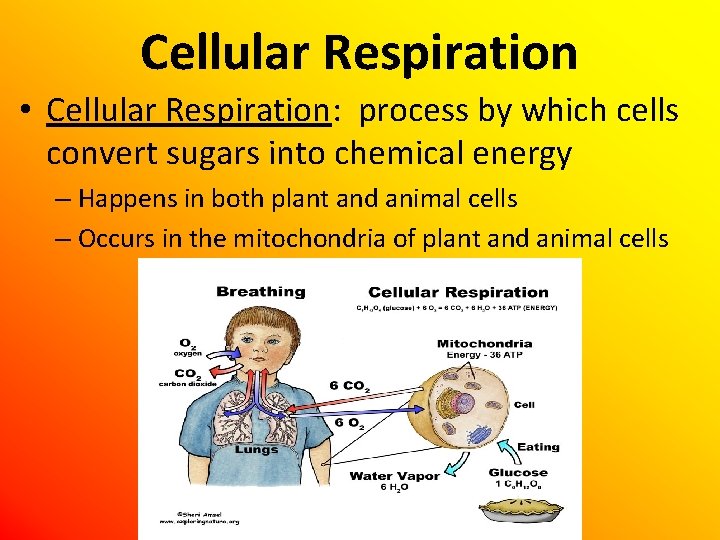
Cellular Respiration • Cellular Respiration: process by which cells convert sugars into chemical energy – Happens in both plant and animal cells – Occurs in the mitochondria of plant and animal cells
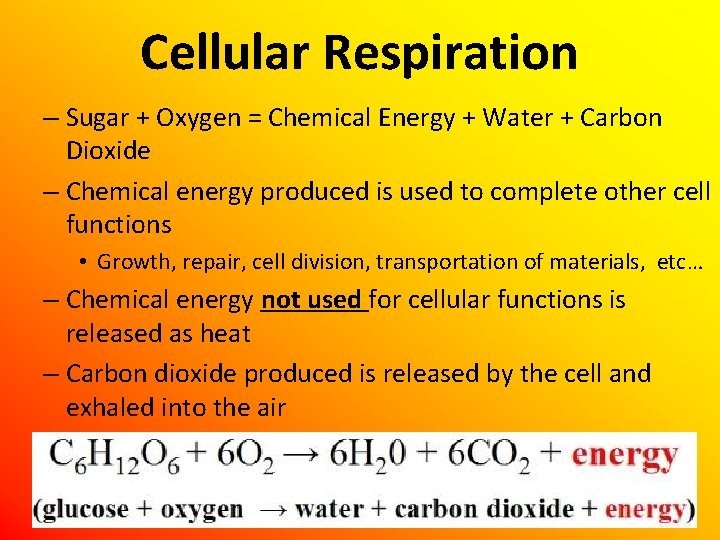
Cellular Respiration – Sugar + Oxygen = Chemical Energy + Water + Carbon Dioxide – Chemical energy produced is used to complete other cell functions • Growth, repair, cell division, transportation of materials, etc… – Chemical energy not used for cellular functions is released as heat – Carbon dioxide produced is released by the cell and exhaled into the air
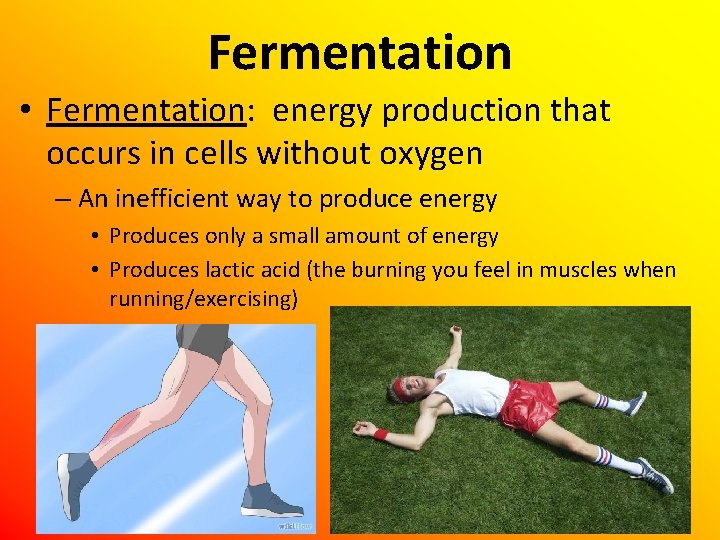
Fermentation • Fermentation: energy production that occurs in cells without oxygen – An inefficient way to produce energy • Produces only a small amount of energy • Produces lactic acid (the burning you feel in muscles when running/exercising)
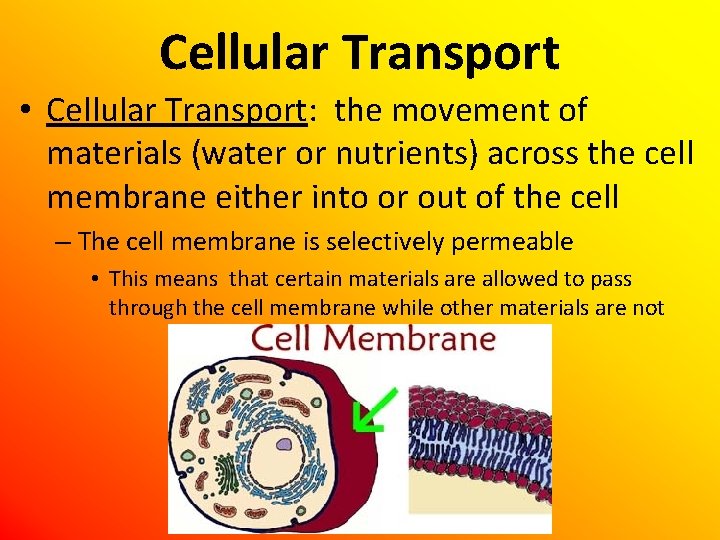
Cellular Transport • Cellular Transport: the movement of materials (water or nutrients) across the cell membrane either into or out of the cell – The cell membrane is selectively permeable • This means that certain materials are allowed to pass through the cell membrane while other materials are not
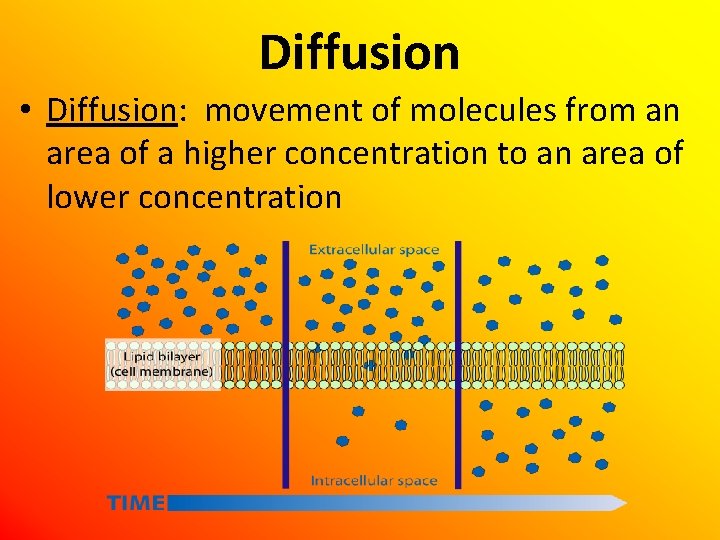
Diffusion • Diffusion: movement of molecules from an area of a higher concentration to an area of lower concentration
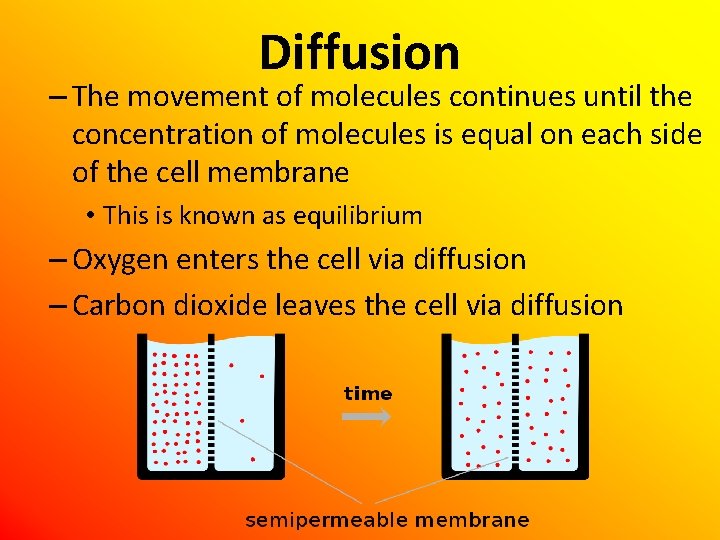
Diffusion – The movement of molecules continues until the concentration of molecules is equal on each side of the cell membrane • This is known as equilibrium – Oxygen enters the cell via diffusion – Carbon dioxide leaves the cell via diffusion
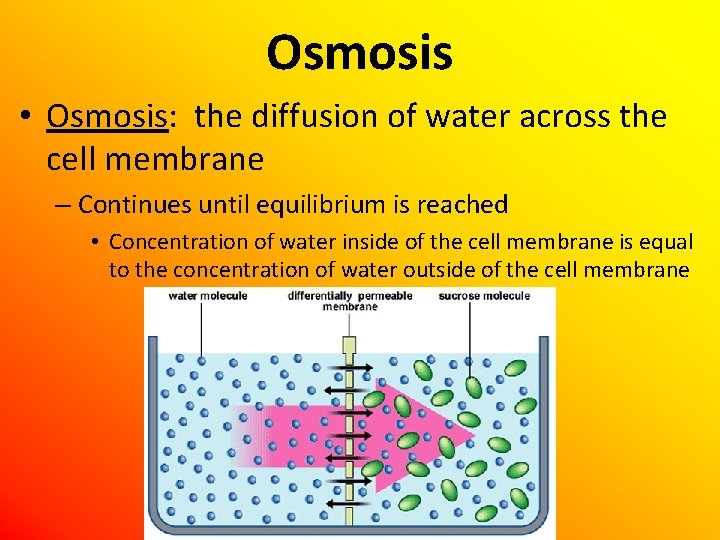
Osmosis • Osmosis: the diffusion of water across the cell membrane – Continues until equilibrium is reached • Concentration of water inside of the cell membrane is equal to the concentration of water outside of the cell membrane
- Slides: 19