
Biochemistry of skin Jana Novotn Department of Med
Biochemistry of skin Jana Novotná Department of Med. Biochemistry 2 nd Faculty of Medicine Charles University

Skin • it provides barrier against a range of noxious stress (UV irradiation, mechanical, chemical and biological insults); • acts as the periphery „sensing“ system; • system which maintaining body homeostasis. • 2 m 2 in area • ~ 2. 5 mm thick on average • constitutes 6% of our total body weight (5 – 6 kg) • barrier to prevent a desiccation and temperature balance • protection to the UV radiation – absorbing pigmentation system • complex immuno-regulatory network protection • normal skin p. H is somewhat acidic - the range of 4. 2. to 5. 6.

Human skin layers • Mammalian skin is composed of two primary layers: – the epidermis, which provides waterproofing and serves as a barrier to infection; – the dermis is responsible for the tensile strength of skin. Its main functions are to regulate temperature and to supply the epidermis with nutrient-saturated blood. Much of the body's water supply is stored within the dermis.
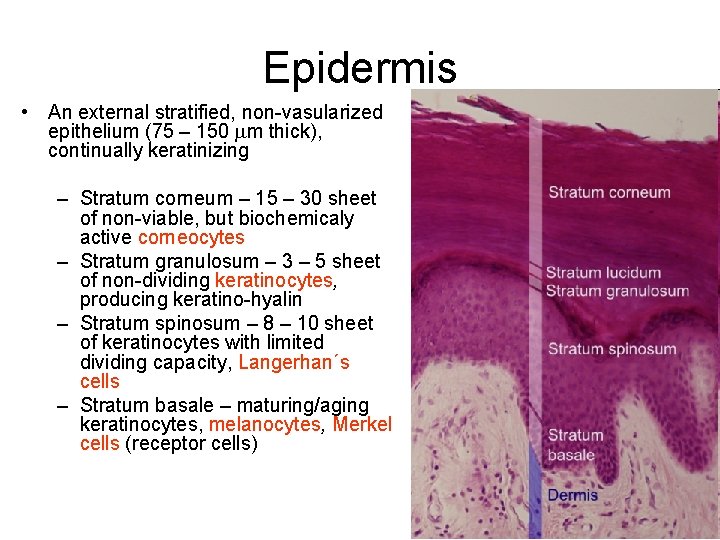
Epidermis • An external stratified, non-vasularized epithelium (75 – 150 mm thick), continually keratinizing – Stratum corneum – 15 – 30 sheet of non-viable, but biochemicaly active corneocytes – Stratum granulosum – 3 – 5 sheet of non-dividing keratinocytes, producing keratino-hyalin – Stratum spinosum – 8 – 10 sheet of keratinocytes with limited dividing capacity, Langerhan´s cells – Stratum basale – maturing/aging keratinocytes, melanocytes, Merkel cells (receptor cells)
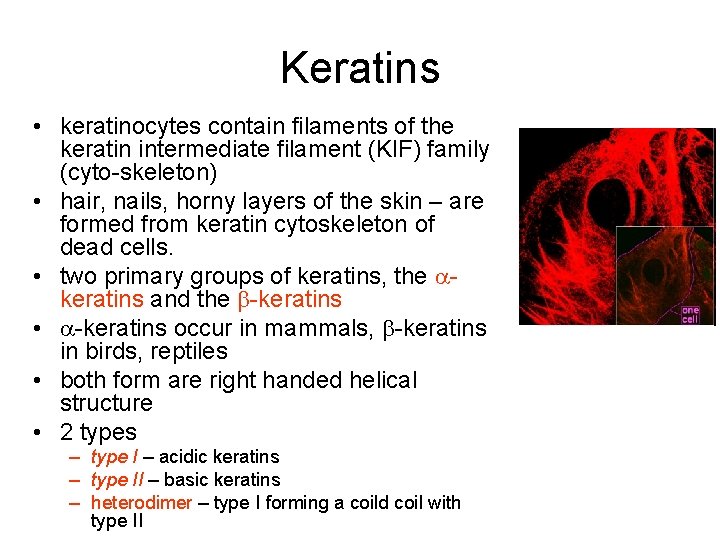
Keratins • keratinocytes contain filaments of the keratin intermediate filament (KIF) family (cyto-skeleton) • hair, nails, horny layers of the skin – are formed from keratin cytoskeleton of dead cells. • two primary groups of keratins, the keratins and the b-keratins • -keratins occur in mammals, b-keratins in birds, reptiles • both form are right handed helical structure • 2 types – type I – acidic keratins – type II – basic keratins – heterodimer – type I forming a coild coil with type II
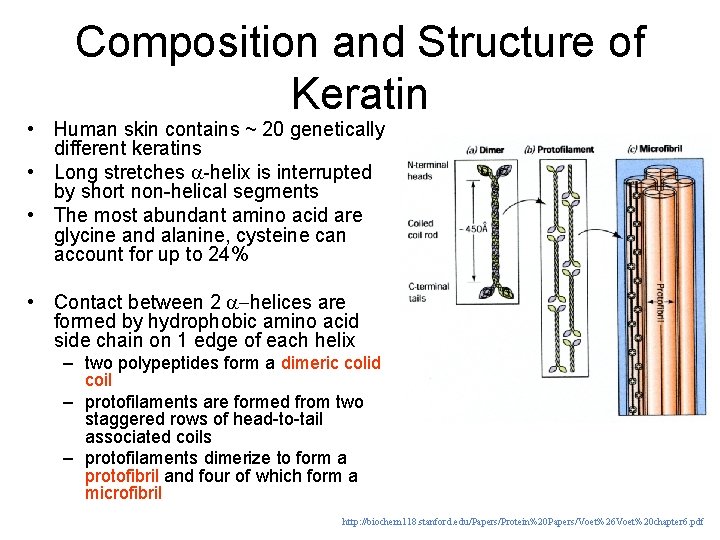
Composition and Structure of Keratin • Human skin contains ~ 20 genetically different keratins • Long stretches -helix is interrupted by short non-helical segments • The most abundant amino acid are glycine and alanine, cysteine can account for up to 24% • Contact between 2 -helices are formed by hydrophobic amino acid side chain on 1 edge of each helix – two polypeptides form a dimeric colid coil – protofilaments are formed from two staggered rows of head-to-tail associated coils – protofilaments dimerize to form a protofibril and four of which form a microfibril http: //biochem 118. stanford. edu/Papers/Protein%20 Papers/Voet%26 Voet%20 chapter 6. pdf
Composition and Structure of Keratin • Intra- and intermolecular hydrogen bonds, disufid bridges occure at all keratins. • In cells, keratin type I forms pair with keratine type II • Different keratin types are expressed in different cell types and different layers of epidermis: – cytoskeleton of epithelial cells - K 14 (type I) & K 5 (type II), K 18 (type I) & K 8 (type II) – Basal layer – K 13 (type I) & K 4 (type II) – Spinus and granular layer – K 10 (type I) & K 1 (type II) – Stratum corneum – K 3 (type I) & K 12 (type II) – Hairs and nails – various other keratin pairs
The Epidermal Permeability Barrier • Barrier function in human epidermis depends on transglutaminase-mediated cross-linking of structural proteins and lipids („biological glues“) – post-translation modification of proteins – formation of covalent bond between a e-amino group of lysine and the free amine group of glutamine. • Bonds formed by transglutaminase exhibit high resistance to proteolytic degradation. • Proteins are than highly resistent to mechanical perturbation and proteolysis. • The quality of the S. corneum barrier depends on the presence of equimolar concentration of ceramides, cholesterol and fatty acids. • Changes in the concentration of any of these can affect barrier quality.
Fatty Acids in Epidermis • Arachidonic acid and 20 -carbon PUFA can be metabolized by either cyclooxygenase or lipoxygenase pathways → prostaglandins, hydroxyeicosatetraenoic acids. – phospholipids are starting point for the arachidonic acid pathway during inflammation (allergic reaction) • Some of these metabolites can interact with signaling system in proliferating and differentiating epidermal cells → modulation of protein kinase C, nuclear MAP-kinase
Epidermal Cell Differentiation and Turnover • Basal keratinocytes → transformation ~ 30 days to corneocytes. • Damage cells are removed by normal squamation. • Genetic damage - (UV-R) → trigger apoptosis (within hours) – „sunburn“ cells. • Skin protection against UV-R – concentrating transferred melanin over vulnerable keratocyte nucleus. • Other insults can induce keratnocyte apoptosis – chemical, mechanical, immunological. • The principal marker for keratinocyte/epidermal differentiation is expression of particular keratin pairs.
Epidermal Cell Differentiation and Turnover • Majority of over 30 keratins currently known. • Proliferative basal keratinocytes express K 5 and K 14; • keratinocytes in the early stages of maturation/differentiation switch to K 1 and K 10. • The „pluri-potent“ stem cells for keratinocytes sebaceous gland epidermis rised from hair folicules. • Ca 2+ plays pivotal role in epidermal differentiation - 4 -fold increase of extracellular Ca 2+ in S. corneum. • Keratinocyte differentiation is regulated by hormones and vitamins - D 3 and retinol from diet, thyroid hormones and steroid hormones. • The skin has nucleas receptors for glucocorticoids, estrogen, androgen and progesterone.
Epidermal Cell Differentiation and Turnover • Importan factors for keratocyte differentiation are Ca 2+-dependent integrins – the receptors for the extracellular matrix fibronectin binding. • Laminin and collagen IV and VII (basemen membrane components) – regulation of keratinocytes migration on basement membrane (very important during wound healing). • Migrating keratinocytes produce many matrix metalloproteinases. • Mature keratinocytes (in S. graulosum) contain protein-rich, keratohyalin granules and lipid-rich, lamellar granules. • Lipids from lamelar granules form the sheets of the lipid permeability barrier of the epidermis.
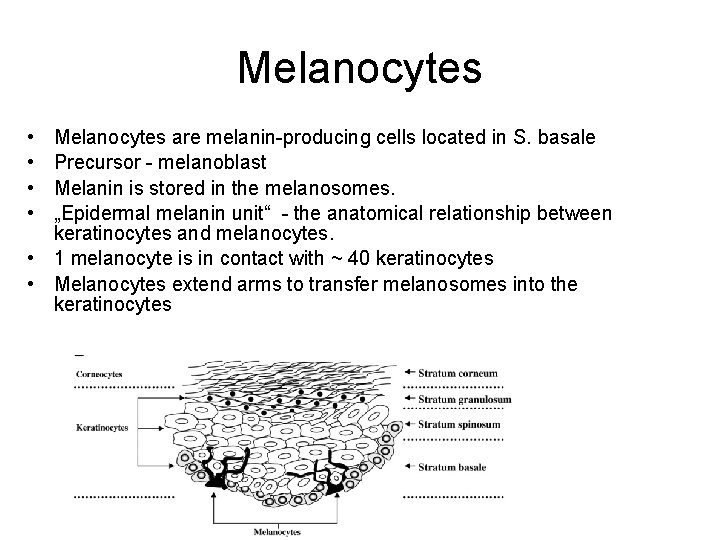
Melanocytes • • Melanocytes are melanin-producing cells located in S. basale Precursor - melanoblast Melanin is stored in the melanosomes. „Epidermal melanin unit“ - the anatomical relationship between keratinocytes and melanocytes. • 1 melanocyte is in contact with ~ 40 keratinocytes • Melanocytes extend arms to transfer melanosomes into the keratinocytes
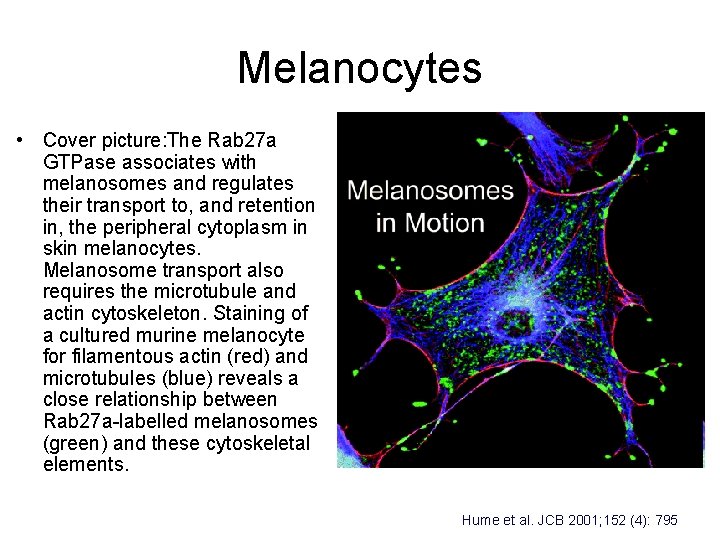
Melanocytes • Cover picture: The Rab 27 a GTPase associates with melanosomes and regulates their transport to, and retention in, the peripheral cytoplasm in skin melanocytes. Melanosome transport also requires the microtubule and actin cytoskeleton. Staining of a cultured murine melanocyte for filamentous actin (red) and microtubules (blue) reveals a close relationship between Rab 27 a-labelled melanosomes (green) and these cytoskeletal elements. Hume et al. JCB 2001; 152 (4): 795
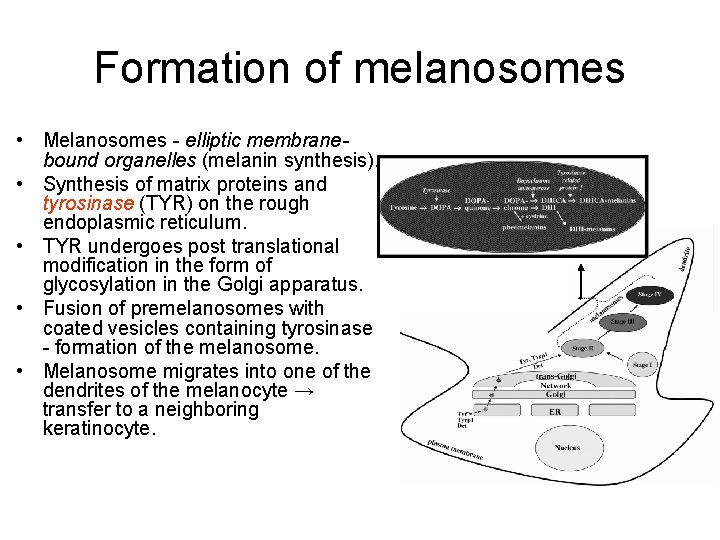
Formation of melanosomes • Melanosomes - elliptic membranebound organelles (melanin synthesis). • Synthesis of matrix proteins and tyrosinase (TYR) on the rough endoplasmic reticulum. • TYR undergoes post translational modification in the form of glycosylation in the Golgi apparatus. • Fusion of premelanosomes with coated vesicles containing tyrosinase - formation of the melanosome. • Melanosome migrates into one of the dendrites of the melanocyte → transfer to a neighboring keratinocyte.
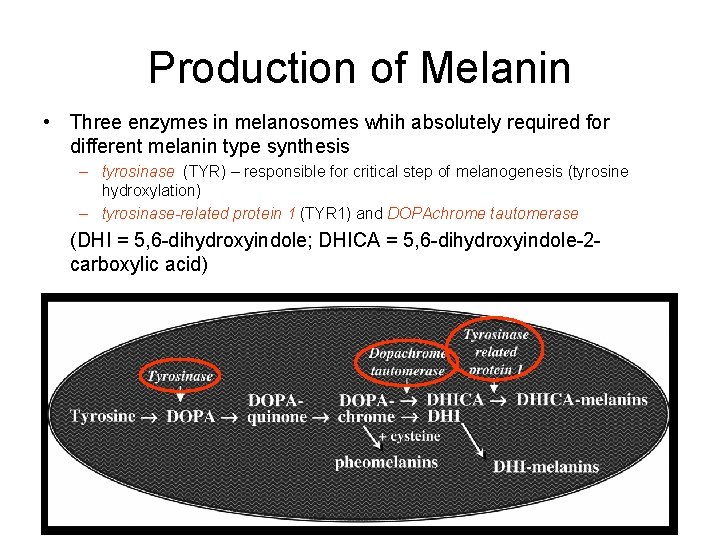
Production of Melanin • Three enzymes in melanosomes whih absolutely required for different melanin type synthesis – tyrosinase (TYR) – responsible for critical step of melanogenesis (tyrosine hydroxylation) – tyrosinase-related protein 1 (TYR 1) and DOPAchrome tautomerase (DHI = 5, 6 -dihydroxyindole; DHICA = 5, 6 -dihydroxyindole-2 carboxylic acid)
Melanins • Melanins are polymorphous and multifunctional polymers of eumelanin, pheomelanin, mixed melanins (a combination of the two); and neuromelanin • Mammalian cells produce black-brown eumelanin and yellow-redish pheomelanin • Eumelanin - highly heterogenous polymer consisting of DHI and DHICA units in reduced or oxidized states. • Pheomelanin - mainly sulfur-containing benzothiazine derivatives. • Neuromelanin is produces in dopaminergic neurons of substantia nigra. • Melanin absorbs UV light at a wavelength of 280 - 320 nm • Both eumelanin and pheomelanin play important protective role in binding to cations, anions, drugs, chemicals, etc.
Factors Involve in Melanin Production • The melanin granules accumulate above the nuclei of keratinocytes and absorb harmful UV-R before it can reach the nucleus and damage the DNA. • Quick responds of the melanocyte-keratinocyte complex to a wide range of environmental stimuli (paracrine and/or autocrine) - to UVR, melanocyte-stimulating hormone (MSH), endothelins, growth factors, cytokines, etc. • UV-R exposure → melanocytes increase their expression of proopiomelanocortin (POMC, the precursor of MSH) and its receptor melanocortin 1 receptor (MC 1 -R), TYR and TYRP 1, protein kinase C (PKC), and other signaling factors.
Factors Involve in Melanin Production • Fibroblasts (possibly other cells in skin) - produce cytokines, growth factors, and inflammatory mediators that can increase melanin production and/or stimulate melanin transfer to keratinocytes by melanocytes. • Other factors derived from keratinocytes which can regulate proliferation and/or differentiation of melanocytes: – α-MSH, ACTH, basic fibroblast growth factor (b-FGF), nerve growth factor (NGF), endothelins, granulocytemacrophage colony-stimulating factor (GM-CSF), leukemia inhibitory factor (LIF), and hepatocyte growth factor (HGF).
Other Epidermal Cells • Langerhans cells - dendritic cells - arise from bone marrow early in embryonic development, occupie 2 - 8% of epidermis • important element of the immune system, interacting with T-cells • resided in suprabasal layer - attracted to keranocytes by Ecadherin receptor • their motion is regulated by specific integrin receptor and by α – TNF • in the stratum germinativum interacts with the allergen and migrates to the lymphoid gland - then “teache” the T cells about the allergen • interact specifically with T-lymphocytes and keratinocytes to initiate host response to antigens (allergens) • UV B stimulates synthesis and release of TNF- by keratinocytes which in turn modifies the behavior and morphology of Langerhans cells, decreases their total number.
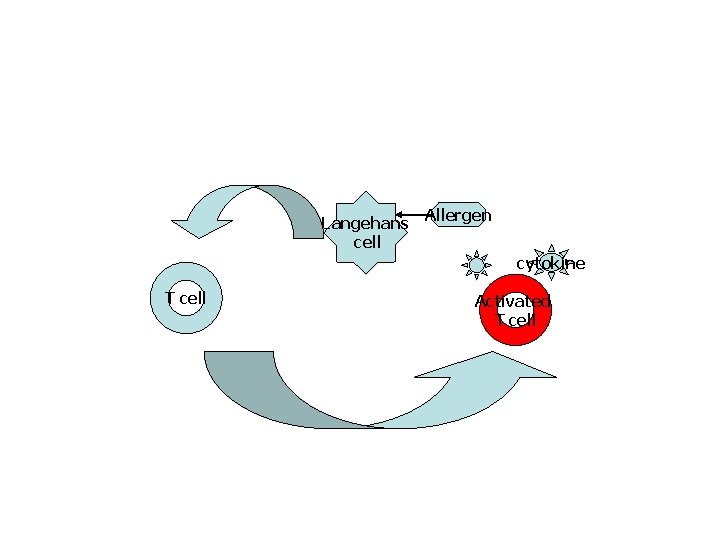
Langehans cell Allergen cytokine T cell Activated T cell

Other Epidermal Cells • Merkel cells – location in S. germinativum • have synaptic contacts with sensory nerve endings • associated with the sense of „light touch“ discrimination of shapes and textures.
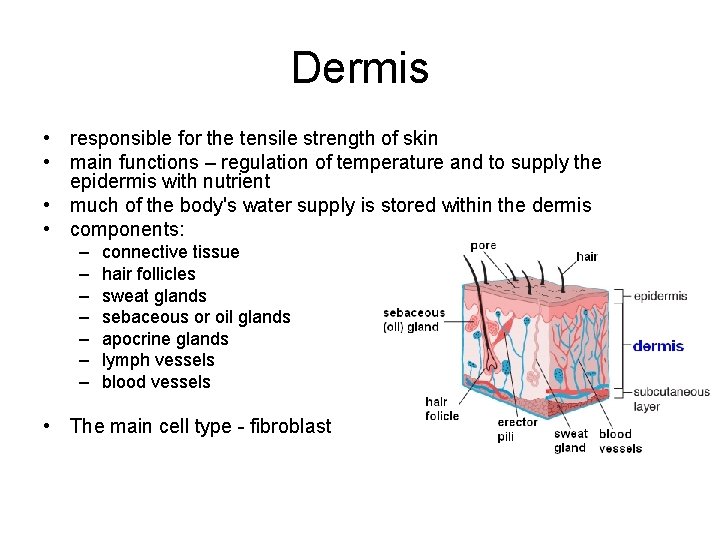
Dermis • responsible for the tensile strength of skin • main functions – regulation of temperature and to supply the epidermis with nutrient • much of the body's water supply is stored within the dermis • components: – – – – connective tissue hair follicles sweat glands sebaceous or oil glands apocrine glands lymph vessels blood vessels • The main cell type - fibroblast
Dermal Proteins and Extracellular Matrix • Collagen – about 90% of total dermal proteins – predominatly type I (85 – 90%), – type III (8 -11%), – minor type V (2 – 4%), (papillary dermis, matrix around vessels, nerves), – type VI – associated with fibrils and interfibrillar spaces (responsible for fine structure in early prenatal development of skin). • Elastin, proteoglycans, glycoproteins, water and hyaluronic acid Collagen structure - refer to lecture on Collagens Elastin, proteoglycans, glycoproteins – refer to lecture on Extracellular matrix
Skin Appendages • Skin plays in the body homeostasis, therefore is well-equiped with secretory (release of chemicals from cells for physiological function) and excretory (elimination of weste products of metabolism) capacity. – sweat glands [can be sweat secreted with strong odour (apocrine) or with a faint odour (eccrine)]. – sebaceous glands (secrete sebum onto hair follicle to oil the hair). – hair follicle
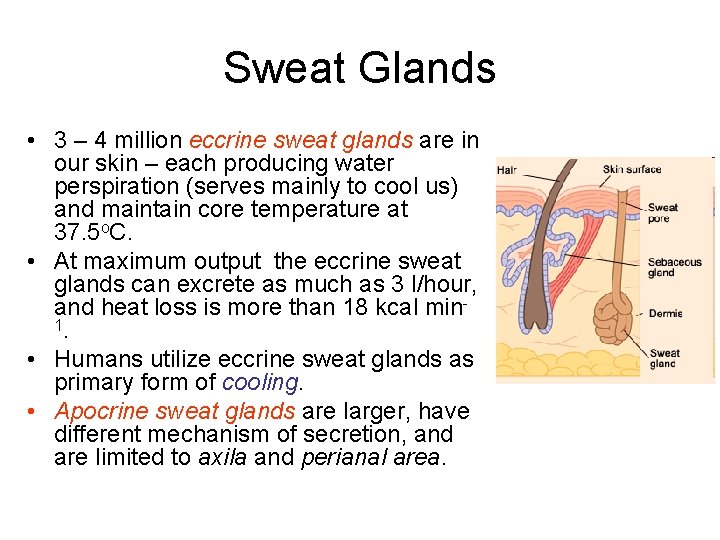
Sweat Glands • 3 – 4 million eccrine sweat glands are in our skin – each producing water perspiration (serves mainly to cool us) and maintain core temperature at 37. 5 o. C. • At maximum output the eccrine sweat glands can excrete as much as 3 l/hour, and heat loss is more than 18 kcal min 1. • Humans utilize eccrine sweat glands as primary form of cooling. • Apocrine sweat glands are larger, have different mechanism of secretion, and are limited to axila and perianal area.
Sweat Secretion • Eccrine gland activity is regulated via neural stimulation using sympathetic nerve fibers distributed around the gland. • Neurotransmitter is acelylcholine • Sweating is controlled from hypothalamus (a center in the preoptic and anterior regions), where thermosensitive neurons are located. • The stimulus for perspiration: – direct heating alone (39 to 46 o. C) – physiological sweating due to nerve reflex arise from sweat centers in brain cortex (emotional), hypothalamus (thermoregulation)
Eccrine Sweat • contains mainly water (99. 0 – 99. 5%). It also contains electrolytes Na. Cl, K+ and HCO 3 -, and other simpl molecules - lactate, urea, ammonia, amino acids (serin ornithin, citrulin, aspartic acid) and minerals. • Mineral composition varies with the individual: – – their acclimatisation to heat, exercise and sweating, the particular stress source (exercise, sauna, etc. ), the duration of sweating, and the composition of minerals in the body
Apocrine Sweat • In lower mammals – secretion of pheromones (trigger sexual and territorial response) • In humans – the significance of apocrine secretion of pheromones is not completely understood. • Apocrine gland begin secreting at puberty • Apocrine duct exit to the surface via he hair follicle. • Apocrine sweat – more viscous, with milky consistency due to high content of fatty acids, cholesterol, squalene, triglycerides, androgens, ammonia, sugars.
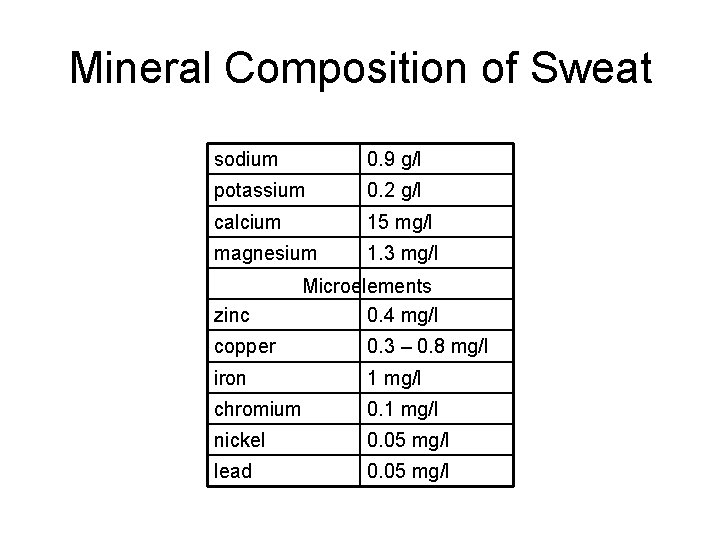
Mineral Composition of Sweat sodium 0. 9 g/l potassium 0. 2 g/l calcium 15 mg/l magnesium 1. 3 mg/l zinc Microelements 0. 4 mg/l copper 0. 3 – 0. 8 mg/l iron 1 mg/l chromium 0. 1 mg/l nickel 0. 05 mg/l lead 0. 05 mg/l
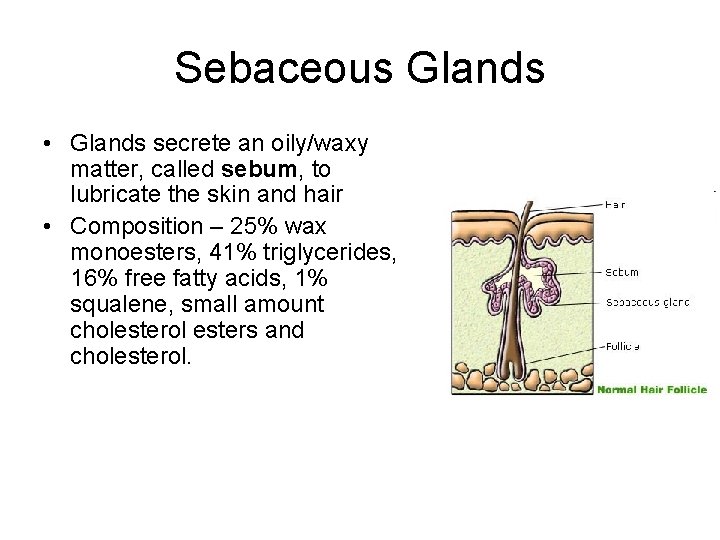
Sebaceous Glands • Glands secrete an oily/waxy matter, called sebum, to lubricate the skin and hair • Composition – 25% wax monoesters, 41% triglycerides, 16% free fatty acids, 1% squalene, small amount cholesterol esters and cholesterol.
Skin Metabolism • Primary source for energy production in epidermis is glucose from circulation – diffuses into keratinocytes without effect of insulin. Large proportion of glucose is catabolized up lactate (even in presence of oxygen) • citric acid cycle does operate in epidermis – explanation why this cycle is inefficient is due to wide fluctuation of temperature and blood flow in skin. • 20% of glucose is metabolized by pentose-phosphate pathway (PPP) – production of NADPH and pentose for both FA synthesis and nucleic acids. • Secondary source of energy - fatty acids derived from both epidermal stores and exogenous sources (when glucose flow is limited, then FA are metabolized).
Skin Metabolism • Glycogen – small amount under physiological conditions, however, elevation in all manner of injury of epidermis or during hair growth in follicle – explanation – energy when skin needs to be repaired or to use glucose immediately, most probably – disequilibrilium in metabolic processes. • Furthermore, glucose is substrate also for synthesis of lipids, polysaccharides, glycoproteins and nucleic acids. • GAG and proteoglycans – highly charged and attract water – forming gels (see also lecture about ECM).
Skin Metabolism Lipid metabolism - components: a) membranes, b) major constituents of permeability barrier, c) energy supply • Synthesis from both glucose catabolism, from AA and circulating FA - lipogenesis is going on in all layers of epidermis - sebum synthesis → in sebaceous glands (higher synthesis of sebum is after sexual maturation). • Degradation - generally with lipases (yields in FA for neutral lipids – TG, sterol esters) – in outermost layers of epidermis (e. g. formation of prostaglandins)

Skin Immune System • Skin not only provides immune protection for itself, but also for the whole body. • Cell types containing battery of mediators of immune response – Langerhanse cells, monocytes, macrophages, mast cells (cooperation with T-cells) • Cell types producing free radicals, anti-bacterial peptides, cytokines chemokines, pro- and antiinflammatory mediators – Neutrophils, eosinophils, basophils. • B-cells secrete immunoglobulins (antibodies)
- Slides: 35