
Biochemistry of muscle 40 45 of body mass
Biochemistry of muscle
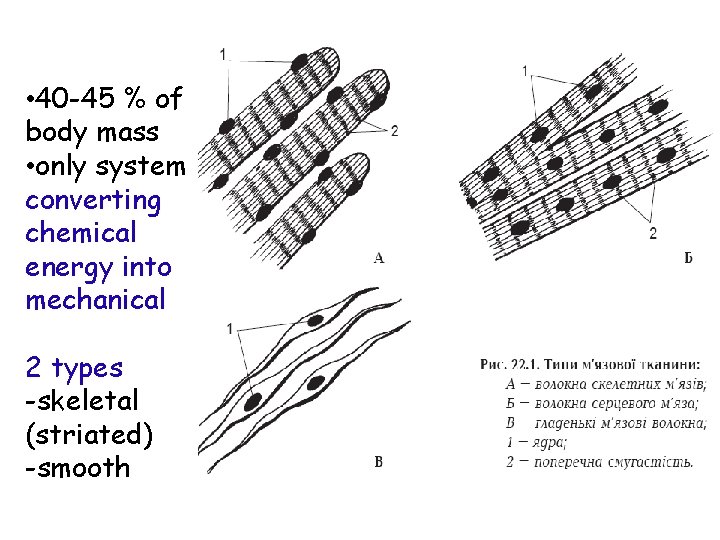
• 40 -45 % of body mass • only system converting chemical energy into mechanical 2 types -skeletal (striated) -smooth

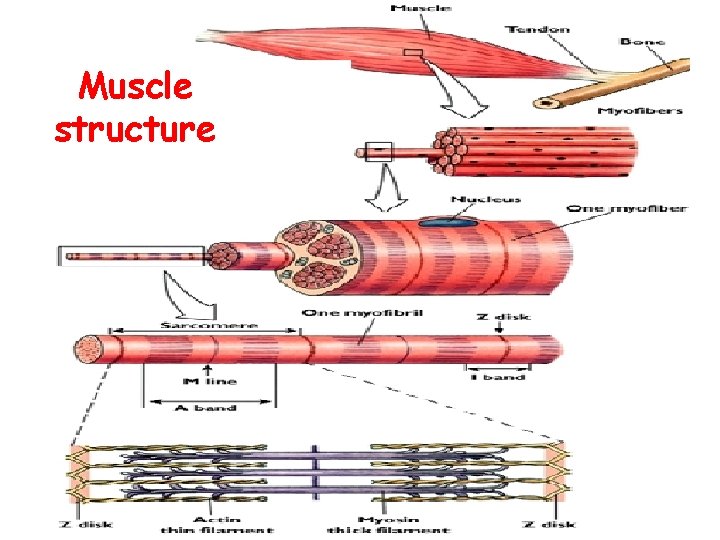
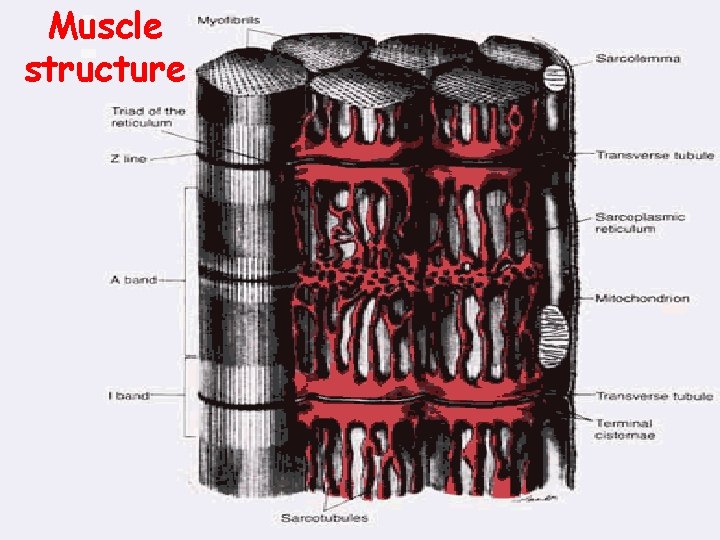
Structural unit muscle fiber (myocyte) Contains many nuclei located along the cell
Muscle structure
Muscle structure

Chemical composition of skeletal muscles
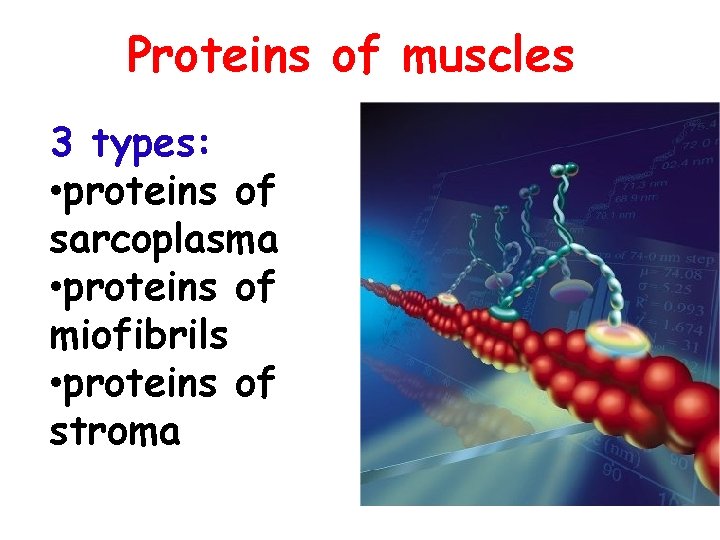
Proteins of muscles 3 types: • proteins of sarcoplasma • proteins of miofibrils • proteins of stroma

Proteins of Sarcoplasma • Miogen fraction (enzymes of glycolysis etc. ) • Albumins • Globulins • Myoglobin (chromoprotein, provides the red color to muscles, responsible for oxygen storage)
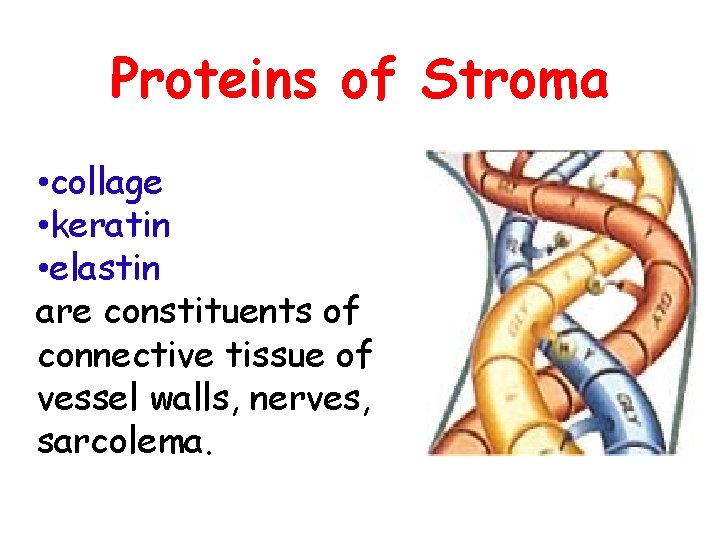
Proteins of Stroma • collage • keratin • elastin are constituents of connective tissue of vessel walls, nerves, sarcolema.
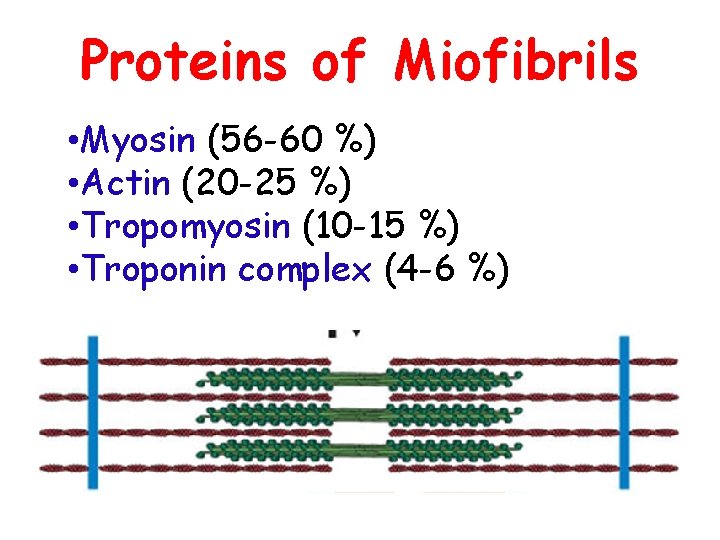
Proteins of Miofibrils • Myosin (56 -60 %) • Actin (20 -25 %) • Tropomyosin (10 -15 %) • Troponin complex (4 -6 %)
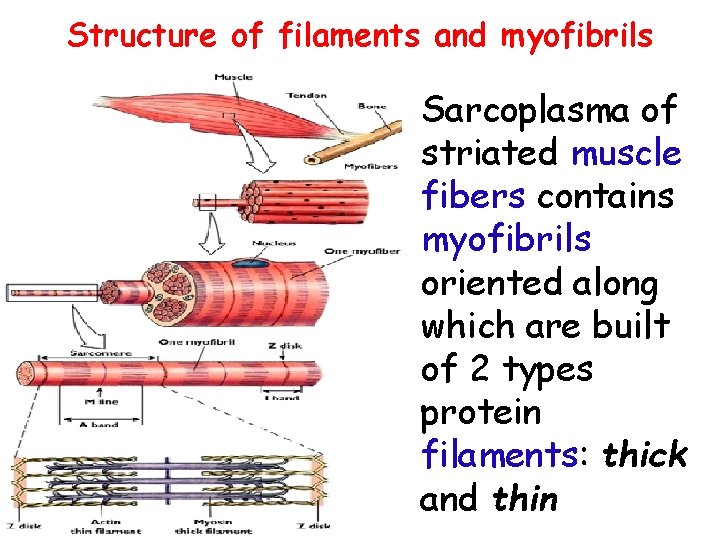
Structure of filaments and myofibrils Sarcoplasma of striated muscle fibers contains myofibrils oriented along which are built of 2 types protein filaments: thick and thin
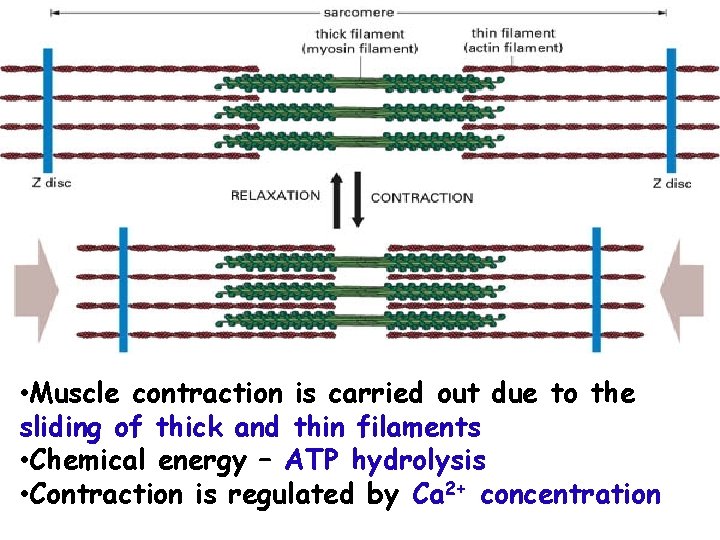
• Muscle contraction is carried out due to the sliding of thick and thin filaments • Chemical energy – ATP hydrolysis • Contraction is regulated by Ca 2+ concentration
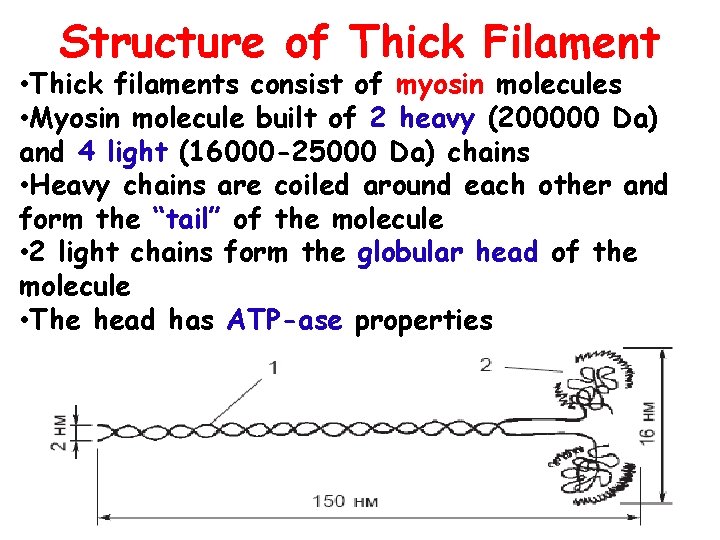
Structure of Thick Filament • Thick filaments consist of myosin molecules • Myosin molecule built of 2 heavy (200000 Da) and 4 light (16000 -25000 Da) chains • Heavy chains are coiled around each other and form the “tail” of the molecule • 2 light chains form the globular head of the molecule • The head has ATP-ase properties
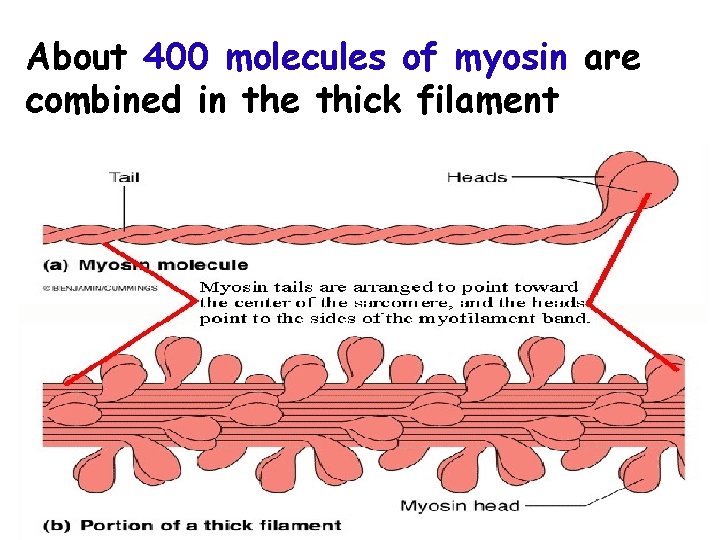
About 400 molecules of myosin are combined in the thick filament
- Slides: 14