
Biochemistry of Cushing Syndrome Endocrine Block Objectives To
Biochemistry of Cushing Syndrome Endocrine Block
Objectives • To identify different causes of Cushing’s syndrome • To understand the diagnostic algorithm for Cushing’s syndrome • To understand the interpretation of laboratory and radiological tests of Cushing’s syndrome • To identify the importance of radiological investigations for diagnosis of Cushing’s syndrome.
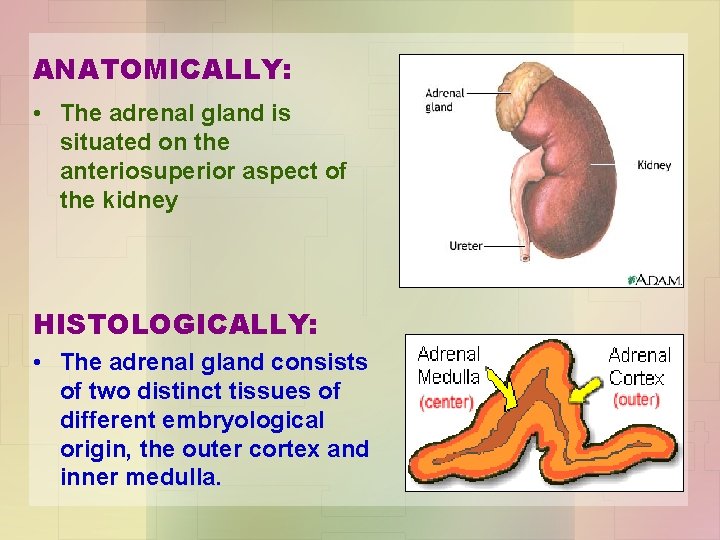
ANATOMICALLY: • The adrenal gland is situated on the anteriosuperior aspect of the kidney HISTOLOGICALLY: • The adrenal gland consists of two distinct tissues of different embryological origin, the outer cortex and inner medulla.
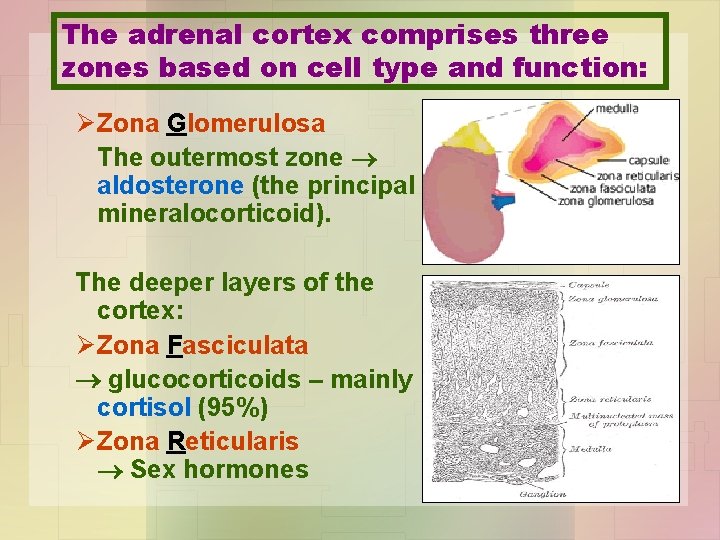
The adrenal cortex comprises three zones based on cell type and function: Ø Zona Glomerulosa The outermost zone aldosterone (the principal mineralocorticoid). The deeper layers of the cortex: Ø Zona Fasciculata glucocorticoids – mainly cortisol (95%) Ø Zona Reticularis Sex hormones
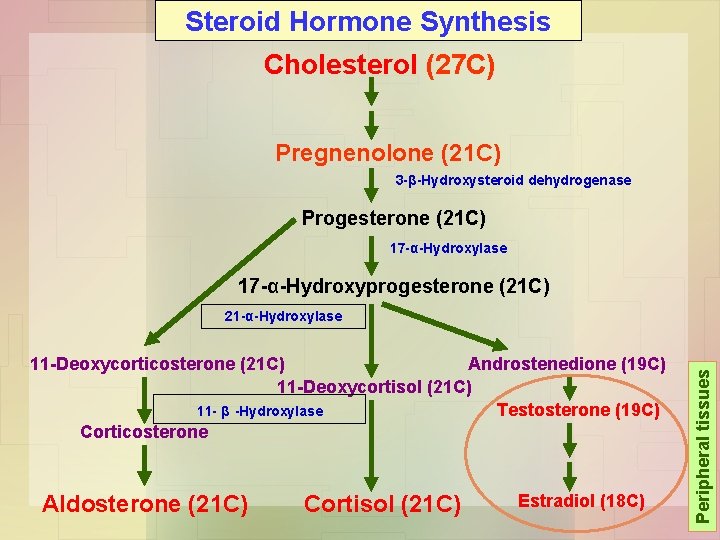
Steroid Hormone Synthesis Cholesterol (27 C) Pregnenolone (21 C) 3 -β-Hydroxysteroid dehydrogenase Progesterone (21 C) 17 -α-Hydroxylase 17 -α-Hydroxyprogesterone (21 C) 11 -Deoxycorticosterone (21 C) Androstenedione (19 C) 11 -Deoxycortisol (21 C) 11 - β -Hydroxylase Testosterone (19 C) Corticosterone Aldosterone (21 C) Cortisol (21 C) Estradiol (18 C) Peripheral tissues 21 -α-Hydroxylase
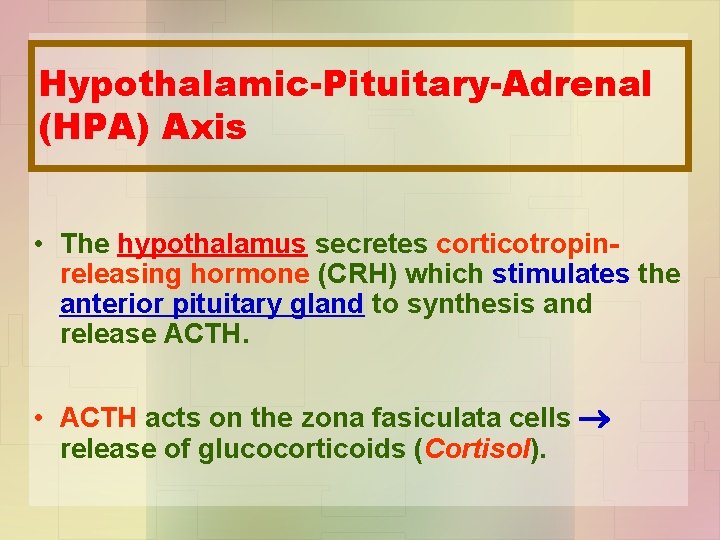
Hypothalamic-Pituitary-Adrenal (HPA) Axis • The hypothalamus secretes corticotropinreleasing hormone (CRH) which stimulates the anterior pituitary gland to synthesis and release ACTH. • ACTH acts on the zona fasiculata cells release of glucocorticoids (Cortisol).
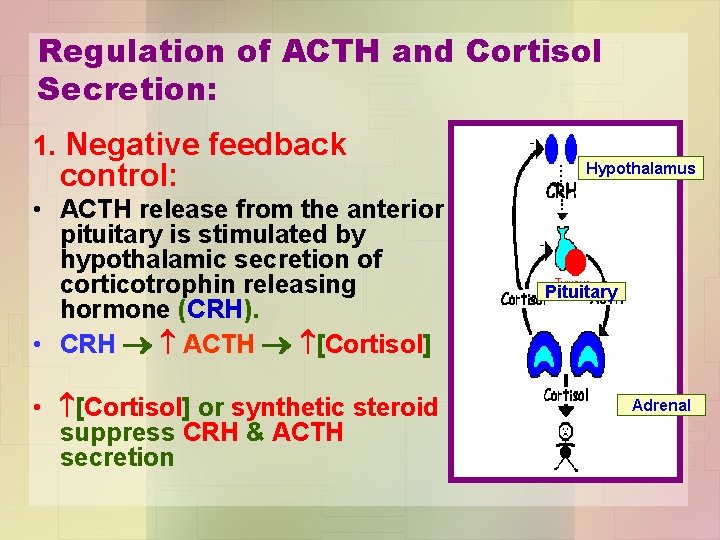
Regulation of ACTH and Cortisol Secretion: 1. Negative feedback control: • ACTH release from the anterior pituitary is stimulated by hypothalamic secretion of corticotrophin releasing hormone (CRH). • CRH ACTH [Cortisol] • [Cortisol] or synthetic steroid suppress CRH & ACTH secretion Hypothalamus Pituitary Adrenal
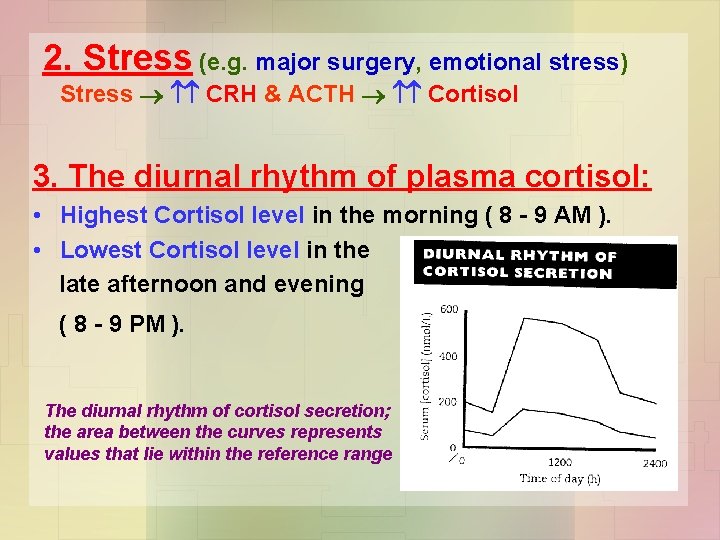
2. Stress (e. g. major surgery, emotional stress) Stress CRH & ACTH Cortisol 3. The diurnal rhythm of plasma cortisol: • Highest Cortisol level in the morning ( 8 - 9 AM ). • Lowest Cortisol level in the late afternoon and evening ( 8 - 9 PM ). The diurnal rhythm of cortisol secretion; the area between the curves represents values that lie within the reference range
![Plasma [CBG] : • In the circulation, glucocorticoids are mainly protein-bound (about 90%), chiefly](http://slidetodoc.com/presentation_image_h2/59f1e1c1f013fd846cde56caaeba6f3d/image-9.jpg "Plasma [CBG] : • In the circulation, glucocorticoids are mainly protein-bound (about 90%), chiefly")
Plasma [CBG] : • In the circulation, glucocorticoids are mainly protein-bound (about 90%), chiefly to cortisol-binding globulin (CBG or transcortin). – in pregnancy and with estrogen treatment (e. g. oral contraceptives). – in hypoproteinemic states (e. g. nephrotic syndrome). • The biologically active fraction of cortisol in plasma is the free (unbound) component.
![Cortisol and ACTH measurements Serum [cortisol] and plasma [ACTH]: • Serum measurement is preferred](http://slidetodoc.com/presentation_image_h2/59f1e1c1f013fd846cde56caaeba6f3d/image-10.jpg "Cortisol and ACTH measurements Serum [cortisol] and plasma [ACTH]: • Serum measurement is preferred")
Cortisol and ACTH measurements Serum [cortisol] and plasma [ACTH]: • Serum measurement is preferred for cortisol and Plasma for ACTH. • Samples must be collected (without venous stasis) between 8 a. m. and 9 a. m. and between 10 p. m. and 12 p. m. because of the diurnal rhythm. • Temporary in these hormones may be observed as a response to emotional stress.
Urinary cortisol excretion : • Cortisol is removed from plasma by the liver metabolically inactive compounds excreted in urine mainly as conjugated metabolites (e. g. glucuronides). • A small amount of cortisol is excreted unchanged in the urine (UFC). • In normal individuals: – Urinary free cortisol (UFC) is < 250 nmol/24 h. – Cortisol / Creatinine ratio in an early morning specimen of urine is < 25 μmol cortisol / mol creatinine.
CAUSES OF ADRENOCORTICAL HYPERFUNCTION: CUSHING’S SYNDROME • ACTH - dependent : 1. Pituitary ACTH 70% (Cushing's disease). 2. Ectopic ACTH by neoplasms 10%. • ACTH - independent : 1. Adrenal tumor 20% (adenoma or carcinoma) 2. Glucocorticoid therapy.
Causes of elevated serum cortisol concentrations: 1. Increased cortisol secretion: • Cushing's syndrome • Exercise • Stress, Anxiety, Depression • Obesity • Alcohol abuse • Chronic renal failure 2. Increased cortisol binding globulin (CBG): • Congenital • Estrogen therapy • Pregnancy
Glucocorticoid functions • Glucocorticoids have widespread metabolic effects on carbohydrate, fat and protein metabolism. • Upon binding to its target, CORTISOL enhances metabolism in several ways: – In the liver, Cortisol is an insulin antagonist and has a weak mineralocorticoid action • Gluconeogenesis production of glucose from newly-released amino acids and lipids • Amino acid uptake and degradation • Ketogenesis.
– In the adipose tissue: Cortisol Lipolysis through breakdown of fat. – In the muscles: Cortisol proteolysis and amino acid release. – Conserving glucose: by inhibiting uptake into muscle and fat cells.
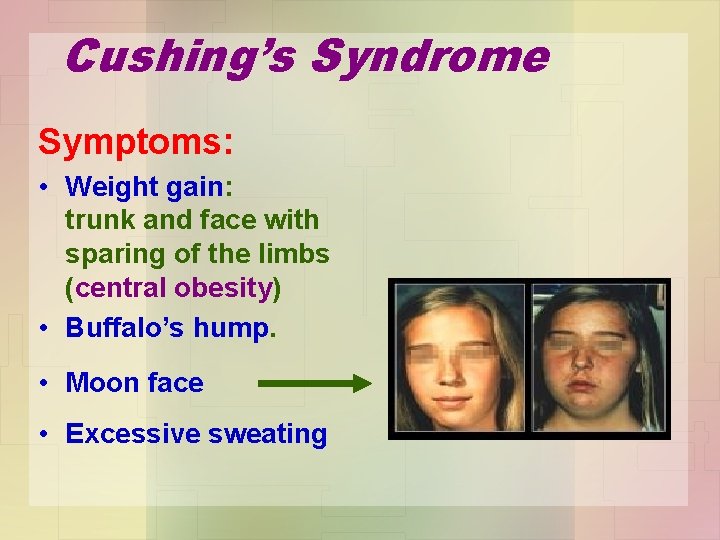
Cushing’s Syndrome Symptoms: • Weight gain: trunk and face with sparing of the limbs (central obesity) • Buffalo’s hump. • Moon face • Excessive sweating
Symptoms • • • …. (contd) Atrophy of the skin and mucous membranes Purple striae on the trunk and legs Proximal muscle weakness (hips, shoulders) Hirsuitism The excess cortisol may also affect other endocrine systems libido, amenorrhoea and infertility • Patients frequently suffer various psychological disturbances ranging from euphoria to frank psychosis.
Signs: • Loss of diurnal rhythm of cortisol and ACTH. • Hypertension (due to the aldosterone like effects) • Hyperglycemia or diabetes due to insulin resistance. • Hypokalemic alkalosis • protein metabolism. • Impaired immunity.
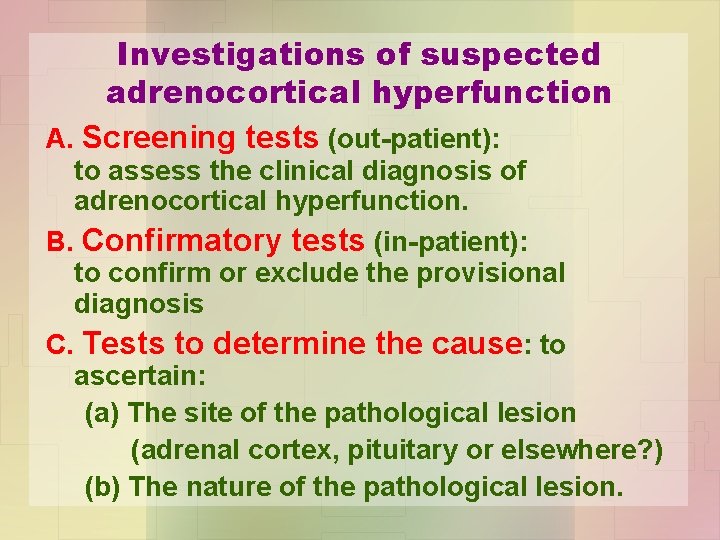
Investigations of suspected adrenocortical hyperfunction A. Screening tests (out-patient): to assess the clinical diagnosis of adrenocortical hyperfunction. B. Confirmatory tests (in-patient): to confirm or exclude the provisional diagnosis C. Tests to determine the cause: to ascertain: (a) The site of the pathological lesion (adrenal cortex, pituitary or elsewhere? ) (b) The nature of the pathological lesion.

? Cushing Screening Low DST/UFC Pesudo-Cushing Confirmatory True Cushing Insulin hypoglycemia Normal response No response ACTH/High DST Cause Alcoholism Depression Severe illness ACTH-dependent Adrenal CRH Test Pituitary MRI pituitary Ectopic CT chest ULS/CT adrenals
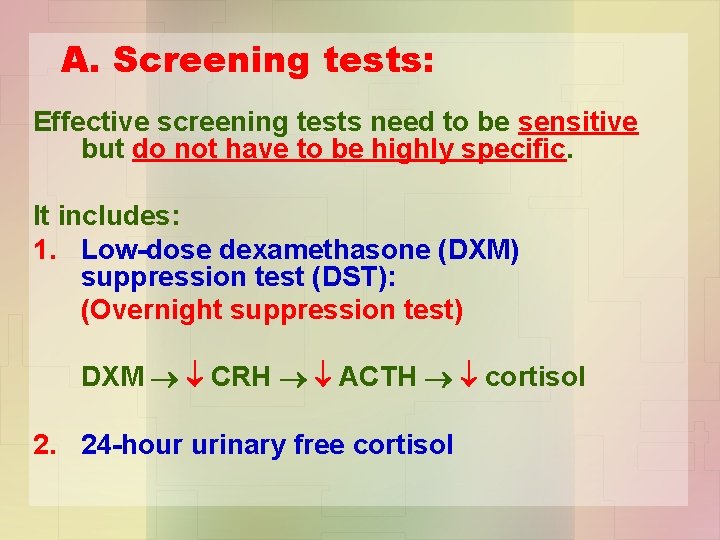
A. Screening tests: Effective screening tests need to be sensitive but do not have to be highly specific. It includes: 1. Low-dose dexamethasone (DXM) suppression test (DST): (Overnight suppression test) DXM CRH ACTH cortisol 2. 24 -hour urinary free cortisol
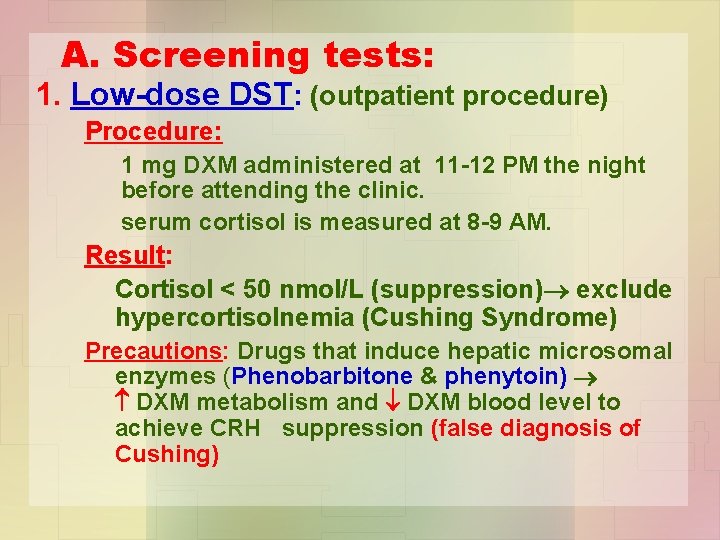
A. Screening tests: 1. Low-dose DST: (outpatient procedure) Procedure: 1 mg DXM administered at 11 -12 PM the night before attending the clinic. serum cortisol is measured at 8 -9 AM. Result: Cortisol < 50 nmol/L (suppression) exclude hypercortisolnemia (Cushing Syndrome) Precautions: Drugs that induce hepatic microsomal enzymes (Phenobarbitone & phenytoin) DXM metabolism and DXM blood level to achieve CRH suppression (false diagnosis of Cushing)
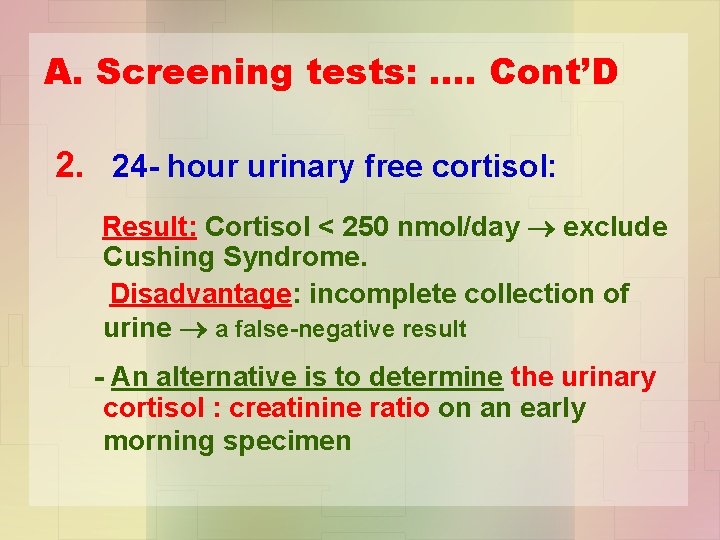
A. Screening tests: …. Cont’D 2. 24 - hour urinary free cortisol: Result: Cortisol < 250 nmol/day exclude Cushing Syndrome. Disadvantage: incomplete collection of urine a false-negative result - An alternative is to determine the urinary cortisol : creatinine ratio on an early morning specimen
Interpretation of screening tests: The screening tests serve to: – distinguish simple non-endocrine obesity from obesity due to Cushing's syndrome. – Confirmatory tests (in-patient basis) are required to rule out pseudo-Cushing's syndrome – Pseudo-Cushing's syndrome: • Depressed or extremely anxious patients • Severe intercurrent illness • Alcoholism
B. Confirmatory tests: (Inpatient) Insulin-induced hypoglycemia Pseudo-Cushing patients show abnormal diurnal rhythm of S. cortisol, but, with Insulin-induced hypoglycemia CRH, ACTH and cortisol blood levels True Cushing patients: No response to hypoglycemia
B. Confirmatory tests: … Cont’d Insulin-induced hypoglycemia: • Hypoglycemia CRH ACTH cortisol • To test the integrity of the hypothalamicpituitary-adrenal (HPA) axis. • To distinguish true Cushing's syndrome from pseudo-Cushing’s syndrome • Contraindicated in: epilepsy or heart disease.
Insulin hypoglycemia test …. Cont’d • Procedure: • Insulin I. V. (0. 15 U/kg) to lower blood glucose to 2. 2 mmol/L or less. • Samples for simultaneous measurement of serum glucose and cortisol levels are taken basally (before insulin injection) and at 30, 45, 60 and 90 min after I. V. insulin injection. • Failure to achieve a glucose level of 2. 2 mmol/L invalidates the test and should be repeated with increment in step of 0. 05 U/kg.
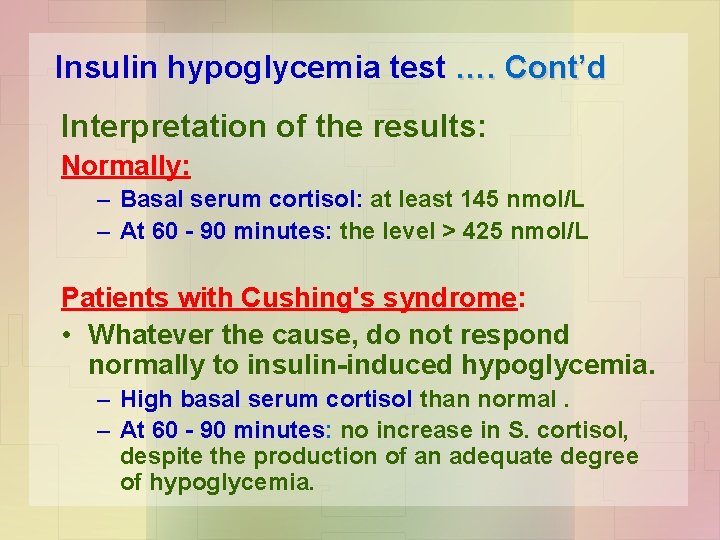
Insulin hypoglycemia test …. Cont’d Interpretation of the results: Normally: – Basal serum cortisol: at least 145 nmol/L – At 60 - 90 minutes: the level > 425 nmol/L Patients with Cushing's syndrome: • Whatever the cause, do not respond normally to insulin-induced hypoglycemia. – High basal serum cortisol than normal. – At 60 - 90 minutes: no increase in S. cortisol, despite the production of an adequate degree of hypoglycemia.

C. Tests used to determine the cause of Cushing's syndrome: 1. To differentiate ACTH-dependant from ACTH -independent: Plasma ACTH (Diurnal rhythm) 2. To distinguish between ACTH-dependent causes (Pitutary Vs Lung): a) High-dose DST. b) CRH stimulation test 3. Radiological tests: MRI of pituitary and ultrasound or CT of adrenals
![1. Plasma [ACTH]: Plasma [ACTH] should be measured on blood specimens collected at 8](http://slidetodoc.com/presentation_image_h2/59f1e1c1f013fd846cde56caaeba6f3d/image-30.jpg "1. Plasma [ACTH]: Plasma [ACTH] should be measured on blood specimens collected at 8")
1. Plasma [ACTH]: Plasma [ACTH] should be measured on blood specimens collected at 8 -9 a. m. and 8 -9 p. m. Plasma ACTH Undetectable ACTH Functional adrenal tumor confirmed by an abdominal CT scan to detect an adrenal mass Cushing's disease (pituitarydependent) Ectopic (nonendocrine) origin of ACTH

2 (a). High-dose DST: It is used to distinguish Cushing's disease from ectopic ACTH secretion. • 2 mg dexamethasone six-hourly for 48 hours to suppress cortisol secretion. • Basal (pre-dexamethasone) serum cortisol or 24 -hour urine free cortisol is compared with the results at the end of the 48 -hour period.
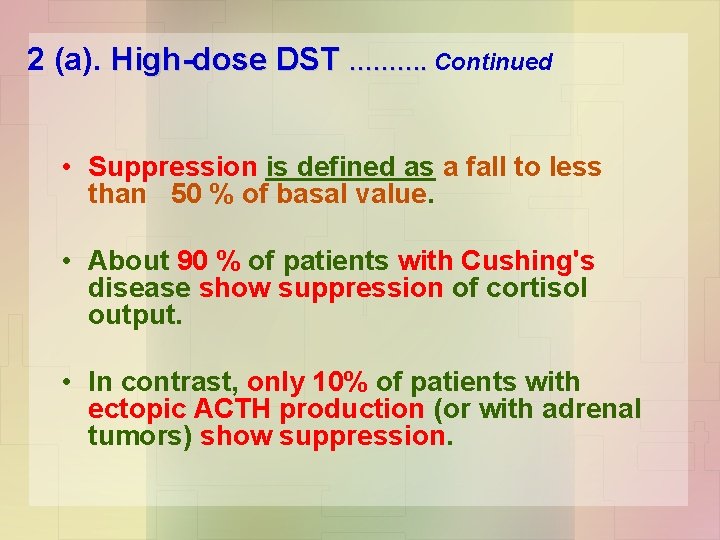
2 (a). High-dose DST ………. Continued • Suppression is defined as a fall to less than 50 % of basal value. • About 90 % of patients with Cushing's disease show suppression of cortisol output. • In contrast, only 10% of patients with ectopic ACTH production (or with adrenal tumors) show suppression.
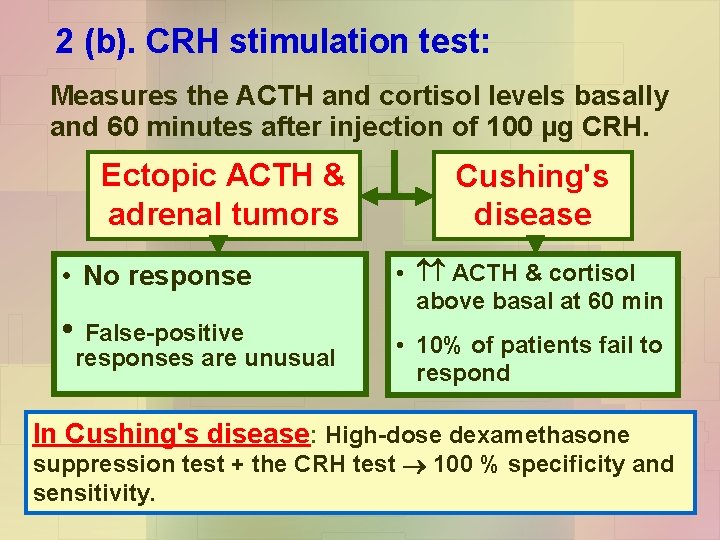
2 (b). CRH stimulation test: Measures the ACTH and cortisol levels basally and 60 minutes after injection of 100 µg CRH. Ectopic ACTH & adrenal tumors • No response • False-positive responses are unusual Cushing's disease • ACTH & cortisol above basal at 60 min • 10% of patients fail to respond In Cushing's disease: High-dose dexamethasone suppression test + the CRH test 100 % specificity and sensitivity.
3. Radiological Investigations: • CT scanning of the adrenal glands/ Lungs • MRI of the pituitary gland
Other blood tests commonly performed for patients suspected to have Cushing’s syndrome are: • Full blood count • Blood glucose • Blood electrolytes and p. H • Renal function tests • Liver function tests
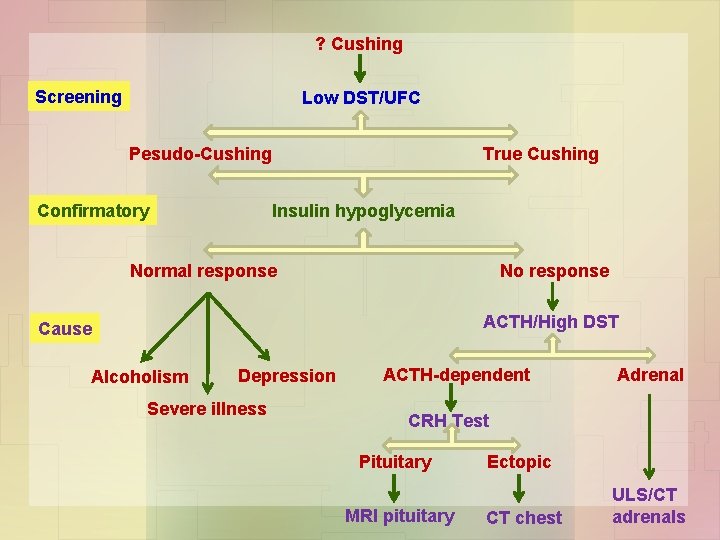
? Cushing Screening Low DST/UFC Pesudo-Cushing Confirmatory True Cushing Insulin hypoglycemia Normal response No response ACTH/High DST Cause Alcoholism Depression Severe illness ACTH-dependent Adrenal CRH Test Pituitary MRI pituitary Ectopic CT chest ULS/CT adrenals
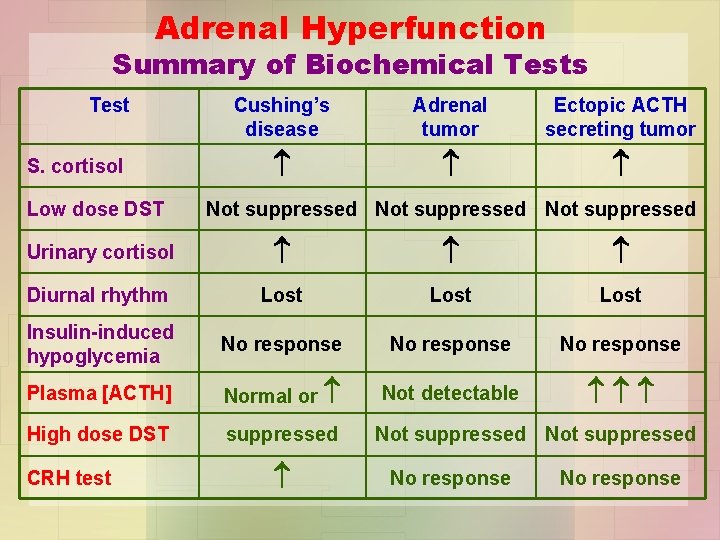
Adrenal Hyperfunction Summary of Biochemical Tests Test S. cortisol Low dose DST Cushing’s disease Adrenal tumor Ectopic ACTH secreting tumor Not suppressed Urinary cortisol Diurnal rhythm Lost Insulin-induced hypoglycemia No response Plasma [ACTH] Normal or Not detectable High dose DST suppressed CRH test Not suppressed No response
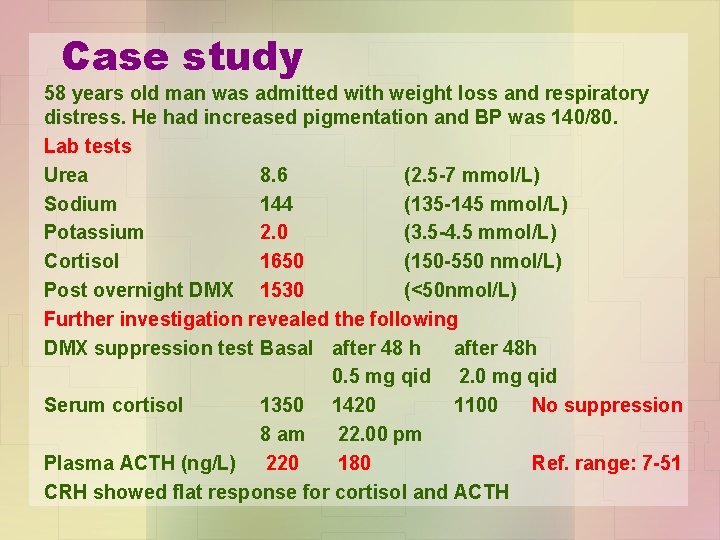
Case study 58 years old man was admitted with weight loss and respiratory distress. He had increased pigmentation and BP was 140/80. Lab tests Urea 8. 6 (2. 5 -7 mmol/L) Sodium 144 (135 -145 mmol/L) Potassium 2. 0 (3. 5 -4. 5 mmol/L) Cortisol 1650 (150 -550 nmol/L) Post overnight DMX 1530 (<50 nmol/L) Further investigation revealed the following DMX suppression test Basal after 48 h after 48 h 0. 5 mg qid 2. 0 mg qid Serum cortisol 1350 1420 1100 No suppression 8 am 22. 00 pm Plasma ACTH (ng/L) 220 180 Ref. range: 7 -51 CRH showed flat response for cortisol and ACTH
Take Home Message • ACTH-dependent Cushing: due to pituitary causes (Cushing’s disease) and due to ectopic production of ACTH. • ACTH-independent Cushing: due to adrenal adenoma or carcinoma and due to steroid therapy (iatrogenic). • Initial screening for Cushing by 24 h urine free cortisol or low-dose dexamethasone suppression test • Confirmatory tests for Cushing by diurnal rhythm of plasma cortisol and insulin-induced hypoglycemia • Tests to determine the cause of Cushing: Plasma ACTH, high-dose dexamethasone suppression test, CRH stimulation test and radiological investigations
References • Lecture notes, Clinical Biochemistry, Wiley Black. Well, 9 th edition, 2013, chapter 9, page 116 -133. • Clinical Chemistry, Principles, Procedures, Correlations, Lippincott Williams & Wilkins, 7 th edition, 2013, chapter 21, page 453 -471. • Lippincott’s Illustrated Reviews: Biochemistry 6 th edition, Unit III, Chapter 18, Pages 219 -244.
- Slides: 40