
Biochemistry of Cardiac Muscle Specifity of cardiac metabolism
Biochemistry of Cardiac Muscle

Specifity of cardiac metabolism -The heart is one of the most active and highly oxidative organ in the body. - Myocardial function depends on a fine equilibrium between the work the heart has to perform to meet the requirements of the body which conjugates a series of electrophysiological, biochemical and mechanic events, resulting in the pumping of blood to all bodily tissues and the energy to be synthesized and transferred as ATP molecules to sustain excitationcontraction coupling. -To support high rates of cardiac power, metabolism is designed to generate large amount of ATP by oxidative phosphorylation to meet energetic demand for generating the needed mechanical force, and for maintaining cellular homeostasis.

The three components of energetic metabolism of the cardiomyocyte: 1 - Capture and utilization of primary substrates, with the incorporation of their metabolites into TCA cycle; 2 - Oxidative phosphorylation which occurs in ETC 3 - The phosphocreatine-creatine kinase energy transference system, a network for phosphate transference from ATP to creatine (an “energy-storing” molecule), through mitochondrial CK and yielding PC (an important source of energy under high-demand conditions). N. B. Mitochondria occupies ~30% of cardiomyocyte space.
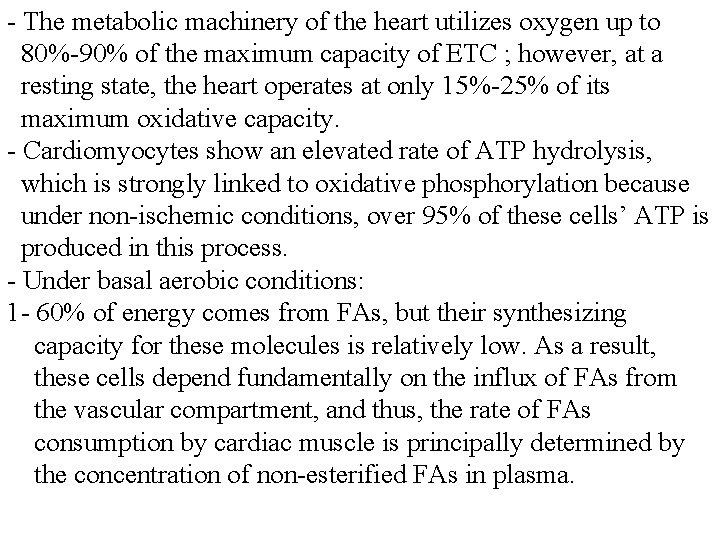
- The metabolic machinery of the heart utilizes oxygen up to 80%-90% of the maximum capacity of ETC ; however, at a resting state, the heart operates at only 15%-25% of its maximum oxidative capacity. - Cardiomyocytes show an elevated rate of ATP hydrolysis, which is strongly linked to oxidative phosphorylation because under non-ischemic conditions, over 95% of these cells’ ATP is produced in this process. - Under basal aerobic conditions: 1 - 60% of energy comes from FAs, but their synthesizing capacity for these molecules is relatively low. As a result, these cells depend fundamentally on the influx of FAs from the vascular compartment, and thus, the rate of FAs consumption by cardiac muscle is principally determined by the concentration of non-esterified FAs in plasma.

2 - 35% from carbohydrates 3 - 5% from amino acids an ketone bodies. - ~ 60 -70% of ATP hydrolysis is used for muscle contraction, ~30 - 40% for the sarcoplasmic reticulum (SR) Ca 2+-ATPase and other ion pumps.

Regulation of metabolic pathways in the heart - CAC is fueled by acetyl-Co. A formed by oxidative decarboxylation of pyruvate (glycolysis) (10 -40%) + from βoxidation of FA (60 -90%). -The reducing equivalents: NADH and FADH 2 (generated by glycolysis, oxidation of lactate, pyruvate and βoxidation of Fas ) deliver electrons to ETC → ATP (oxidative phosphorylation).
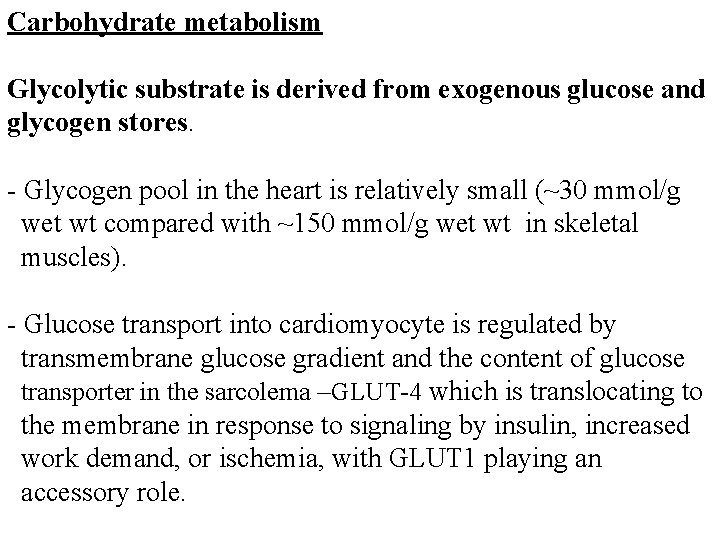
Carbohydrate metabolism Glycolytic substrate is derived from exogenous glucose and glycogen stores. - Glycogen pool in the heart is relatively small (~30 mmol/g wet wt compared with ~150 mmol/g wet wt in skeletal muscles). - Glucose transport into cardiomyocyte is regulated by transmembrane glucose gradient and the content of glucose transporter in the sarcolema –GLUT-4 which is translocating to the membrane in response to signaling by insulin, increased work demand, or ischemia, with GLUT 1 playing an accessory role.
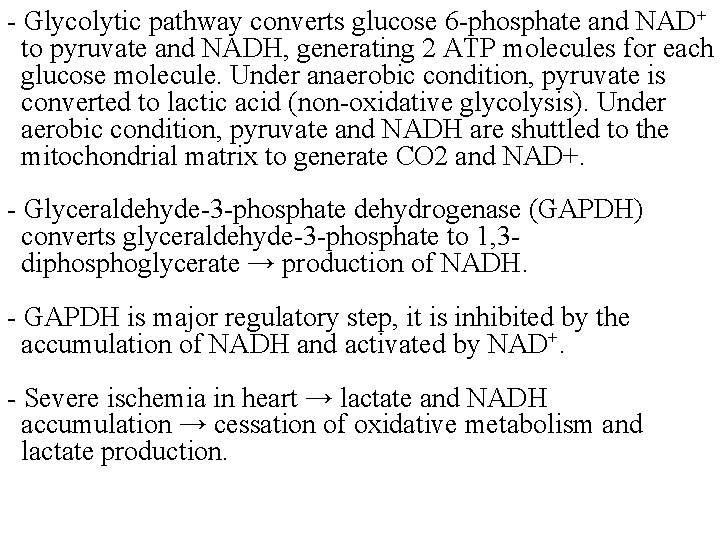
- Glycolytic pathway converts glucose 6 -phosphate and NAD+ to pyruvate and NADH, generating 2 ATP molecules for each glucose molecule. Under anaerobic condition, pyruvate is converted to lactic acid (non-oxidative glycolysis). Under aerobic condition, pyruvate and NADH are shuttled to the mitochondrial matrix to generate CO 2 and NAD+. - Glyceraldehyde-3 -phosphate dehydrogenase (GAPDH) converts glyceraldehyde-3 -phosphate to 1, 3 diphosphoglycerate → production of NADH. - GAPDH is major regulatory step, it is inhibited by the accumulation of NADH and activated by NAD+. - Severe ischemia in heart → lactate and NADH accumulation → cessation of oxidative metabolism and lactate production.
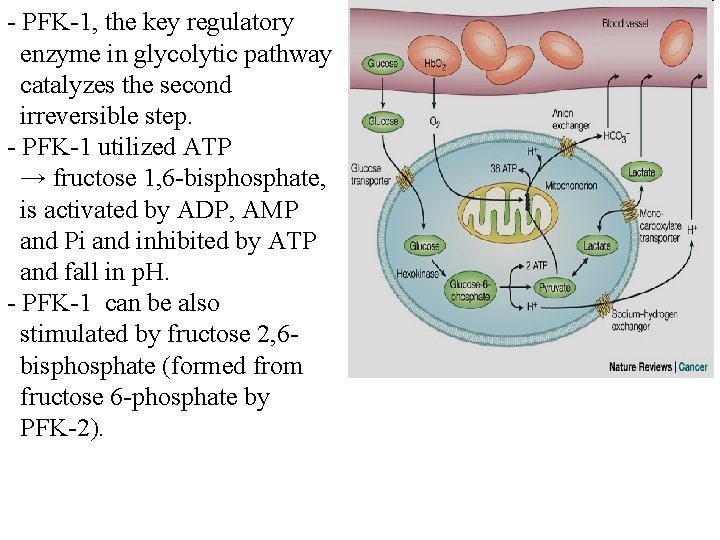
- PFK-1, the key regulatory enzyme in glycolytic pathway catalyzes the second irreversible step. - PFK-1 utilized ATP → fructose 1, 6 -bisphosphate, is activated by ADP, AMP and Pi and inhibited by ATP and fall in p. H. - PFK-1 can be also stimulated by fructose 2, 6 bisphosphate (formed from fructose 6 -phosphate by PFK-2).

- In the mitochondria pyruvate is: 1 - Oxiditively decarboxylated into acetyl Co. A by pyruvate dehydrogenase (PDH) or 2 - Carboxylated into oxaloacetate by pyruvate carboxylase or - Reduced in cytosol to lactate by lactate dehydrogenase.
- The control of PDH activity is an essential part of overall control of glucose metabolism. - PDH – mitochondrial multicomplex, activity is controlled by work, substrate and hormones. - Lactate is released in the blood stream through specific transporter, which has critical role in maintaining the intracellular p. H (removes also the protons produced by glycolysis). Lactate metabolism - During starvation, lactate can be recycled to pyruvate. NAD+ is reduced to NADH [2. 5 ATP - lactate oxidation to pyruvate]. - Pyruvate is then burned aerobically in the CAC, liberating (12. 5) ATP per cycle.
- Although only 2% the heart’s ATP is produced in glycolysis, but it becomes very important under anaerobic or ischemic status. - Indeed, in heart failure and hypertrophy, there is a metabolic switch towards favoring carbohydrate over FAs metabolism in the heart. - Glycolytic intermediates can participate in several additional pathways that do not lend to ATP generation. - These pathways are of biological significance in the heart despite the small fluxes. - Glucose 6 -phosphate produced by the hexokinase reaction enters PPP, yielding NADPH during the oxidative phase and 5 carbon sugars in the non-oxidative phase. - The supply of NADPH from the PPP is important for antioxidant defense as NADPH is required for maintaining the level of reduced glutathione.
- End products of the non-oxidative phase of the PPP are also of significance as ribose 5 -phosphate becomes a substrate for nucleotide or nucleic acid synthesis while xylulose 5 -phosphate has been suggested as a transcriptional signaling molecule. - An alternative fate of G 6 P is the production of sorbitol, via the enzyme aldose reductase , in the polyol pathway. - The role of polyol pathway in normal cardiac metabolism is unknown but increased flux has been noted in diabetic patients and has been associated with abnormal glucose metabolism and cardiac dysfunction. Also, increased aldose reductase flux has been implicated in the myocardial response to ischemiareperfusion injury.
- The glycolytic intermediate fructose 6 -phosphate can diverge into the hexosamine biosynthetic pathway, yielding uridine diphosphate -N- acetylglucosamine , via the enzyme glutamine fructose 6 -phosphate amidotransferase - Uridine diphosphate –N -acetylglucosamine is participating in O-linked glycosylation reactions of proteins, it is observed in diabetes and proposed to be responsible for alteration of insulin sensitivity and fatty acids oxidation.
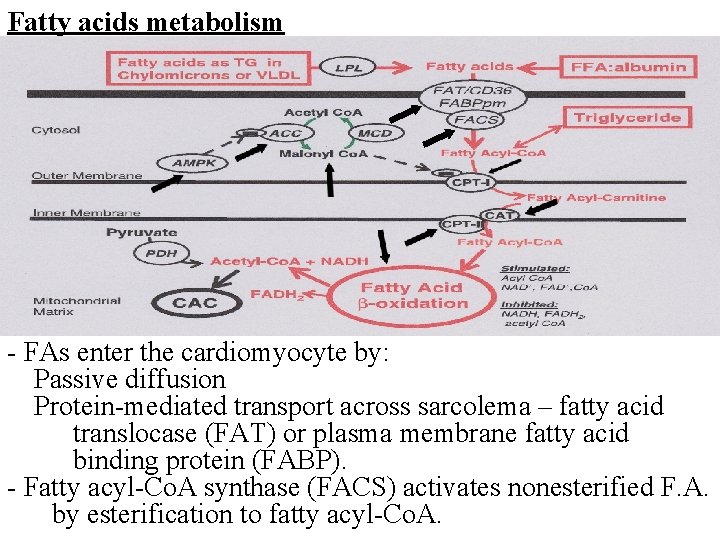
Fatty acids metabolism - FAs enter the cardiomyocyte by: Passive diffusion Protein-mediated transport across sarcolema – fatty acid translocase (FAT) or plasma membrane fatty acid binding protein (FABP). - Fatty acyl-Co. A synthase (FACS) activates nonesterified F. A. by esterification to fatty acyl-Co. A.

- FAT/CD 36 is one of the main translocases, most abundantly expressed in cardiomyocytes, an 80 k. Da integral membrane glycoprotein which is stored in intracellular compartments and transported towards the cell membrane in response to increased energy demands. It is also the most important FAs translocase in the heart and has a key role in the entry of long-chain FAs into cardiomyocytes. - Excessive expression of FAT/CD 36 has been associated with impaired cardiac insulin sensitivity, reduced uptake of glucose, and excessive uptake of FAs, subsequently causing cardiomyocyte lipotoxicity and retention of GLUT 4 in their cytoplasm. - In addition to plasma concentration of FAs, an important longterm regulator of β-oxidation of Fas is the modulation by peroxisome proliferator-activated receptor (PPAR). - Numerous coactivator proteins, such as PPAR-γ co-activator 1 -α can powerfully induce the transcription of PPAR target genes.
- The targeted genes are including those involved in FAs storage (such as diacylglycerol acyltransferase, promoted by PPARα), FA oxidation (such as medium-chain acyl-Co. A dehydrogenase, promoted by PPARα/ β/δ/γ), and glucose metabolism (such as pyruvate dehydrogenase kinase 4, promoted by PPARα). - PPAR and PPARγ also play an important role in the regulation of oxidative stress in the cardiovascular system, with several isoforms implicated in various transcriptional mechanisms for antioxidant genes. Such as promoting the transcription and activation of Cu/Zn-SOD, Cu/Mn-SOD and catalase in cardiac tissues. Furthermore, PPARα augments IGF-1 transcription, subsequently activating the IGF-1/PI 3 K pathway, inhibiting apoptosis and protecting cardiomyocytes under ischemic stress.
- Long chain fatty acyl-Co. A can be: 1 - Esterified to triacylglycerols (glycerolphosphate acyltransferase) →→intracardiac triacylglycerols pool (1030% of FA) 2 - Or converted to long chain fatty acylcarnitine by carnitine palmitoyltransferase -I (CPT-I) between inner and outer mitochondria membranes. - Carnitine acyltranslocase (CAT) transports long-chain acylcarnitine across the inner membrane in exchange for free carnitine. - Carnitine palmitoyltransferase II (CPT-II) regenerates long chain acyl-Co. A to free fatty acyl-Co. A - CPT-I can be strongly inhibited by malonyl Co. A (on the cytosolic side of the enzyme). - Two isoforms of CPT-I: liver CPT-Iα and heart CPT-Iβ is 30 -fold more sensitive to malonyl -Co. A inhibition.
- Malonyl -Co. A - key physiological regulator of FA oxidation in heart ( in malonyl -Co. A → FAs uptake and oxidation). - Formed from the carboxylation of acetyl-Co. A (acetyl. Co. A carboxylase – ACC) from extramitochondrial acetyl. Co. A (derived from citrate via ATP- citrate lyase reaction) - Rapid rate of turnover in the heart. - ACC activity is inhibited by phosphorylation of AMPK (AMP-activated protein kinase) → acceleration of FA oxidation. - FAs undergo β-oxidation generating NADH and FADH 2. Acetyl-Co. A formed in b-oxidation generate more NADH in TCA cycle.
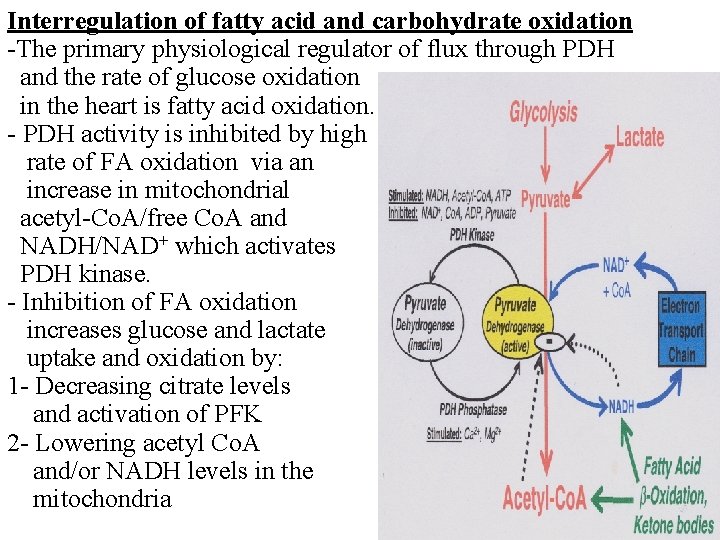
Interregulation of fatty acid and carbohydrate oxidation -The primary physiological regulator of flux through PDH and the rate of glucose oxidation in the heart is fatty acid oxidation. - PDH activity is inhibited by high rate of FA oxidation via an increase in mitochondrial acetyl-Co. A/free Co. A and NADH/NAD+ which activates PDH kinase. - Inhibition of FA oxidation increases glucose and lactate uptake and oxidation by: 1 - Decreasing citrate levels and activation of PFK 2 - Lowering acetyl Co. A and/or NADH levels in the mitochondria

Fatty acids vs. glucose as energetic substrates - The selection of energetic substrates in cardiomyocytes is a fundamental step for the constant generation of ATP which depends on the dynamic metabolic requirements in each body at a given time. - This flexibility is present during fetal development; however, after birth, FAs become the preferential substrates, due to the increased availability of oxygen and dietary fats. - Infants with mutations in genes involved in FA metabolism have been documented to develop cardiomyopathy when under stress. - Likewise, in heart failure and left ventricular hypertrophy (when the oxidative capacity of mitochondria in cardiomyocytes is diminished), there is a shift towards a predominance for glucose metabolism
- Several reports have shown that cardiac efficiency, in terms of oxygen consumption, is greater when oxidizing glucose and lactate rather than FAs. - The increase in oxygen consumption during utilization of FAs is accompanied with no changes in mechanical capacity of the left ventricle, which suggests a greater functional capacity for this chamber when utilizing glucose. - This may be due to the higher level of oxidative stress caused by the oxidation of FA in comparison with carbohydrates, due to the increased oxygen consumption rate in the former. - The ATP synthesis/oxygen consumption rates for glucose and lactic acid are 3. 17 and 3. 00, respectively; whereas they are 2. 80 and 2. 86 for palmitate and oleate, respectively
- When comparing palmitate with glucose, the complete oxidation of 1 molecule of palmitate yields 92 ATP molecules and requires 46 oxygen atoms, while 1 molecule of glucose generates 30 ATP molecules and uses 12 oxygen atoms. - Thus, despite FAs clearly yielding greater amount of ATP, this occurs at the expense of larger oxygen requirements. - Furthermore, β-oxidation of FA generates more lipid peroxidation due to ↑ delivery of NADH and FADH 2 to ETC and production of superoxide anion. - In addition, elevated free FAs are harmful in the ischemic myocardium, augmenting cell damage in the first hours of AMI. - Various systemic conditions such as obesity cause elevated serum free FAs which can potentiate β-oxidation, and thus increase lipid traffic in cardiomyocytes, prompting lipotoxicity. - This process can lead to contractile dysfunction, insulin resistance and apoptosis in association with accumulation of ceramides.
- Partial inhibition of free FAs oxidation in the myocardium can prevent or diminish tissue damage and dysfunction under conditions of ischemia or reperfusion, diabetic cardiomyopathy, and AMI. - This occurs because the heart shifts towards glucose as the main source for ATP synthesis, which reduces the oxygen demand by 11%-13% and therefore improves cardiac efficiency and protects mitochondrial function.
- Slides: 24