
Biochemistry of Blood Bruno Sopko Content Introduction Blood
Biochemistry of Blood Bruno Sopko
Content � Introduction � Blood Plasma � Metabolism of Erythrocytes � Metabolism of White Cells � Biochemistry of Blood Coagulation � Literature
Introduction � Functions � Blood Composition
Introduction – Functions I. � Respiratory ◦ CO 2 transport from tissues to lungs ◦ CO 2 transport from lungs to tissues � Nutrition ◦ Transports nutrients from digestion system to tissues � Extretory ◦ Transports waste from tissues to kidneys (urea, uric acid, water, salts etc. )
Introduction – Functions II. � Regulatory ◦ Water content in the tissues ◦ Distribution of the regulatory compounds (hormons etc. ) � Body Temperature ◦ Water has high heat capacity (heat accumulation) ◦ Heat spreading from one source (cooling, warming) � Protective ◦ Antibodies, antitoxins, white blood cells
Introduction – Blood Composition � 8% of the body weight (5– 6 L) � Suspension of cells in carrier fluid ◦ 45% cells 55% plasma � Plasma � Red Cells � White cells � Platelets
Plasma I. - Composition � Water (90%) � Proteins (7%) ◦ Most of them synthesized in liver ◦ Mostly polymorfus glycoproteins ◦ Each has specific half-time in circulation (albumin 20 days, haptoglobin 5 days ◦ Concentration of some of them changes during inflammation (acute-phase proteins) � Inorganic (1%, Na+, K+, Mg 2+, Ca 2+, PO 43 -, Cl-. . . ) � Organic (2%, urea, fats, cholesterol, glukose, aminoacids …)
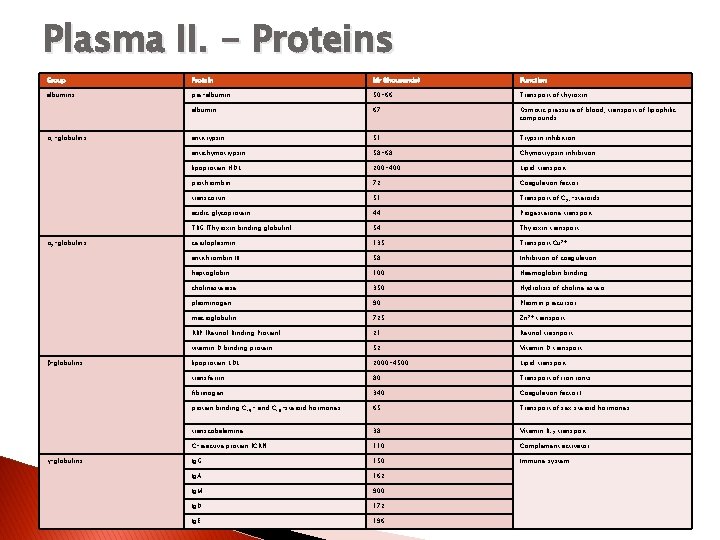
Plasma II. - Proteins Group Protein Mr (thousands) Function albumins pre-albumin 50 -66 Transport of thyroxin albumin 67 Osmotic pressure of blood, transport of lipophilic compounds antitrypsin 51 Trypsin inhibition antichymotrypsin 58 -68 Chymotrypsin inhibition lipoprotein HDL 200 -400 Lipid transport prothrombin 72 Coagulation factor transcortin 51 Transport of C 21 -steroids acidic glycoprotein 44 Progesterone transport TBG (Thyroxin binding globulin) 54 Thyroxin transport ceruloplasmin 135 Transport Cu 2+ antithrombin III 58 Inhibition of coagulation haptoglobin 100 Haemoglobin binding cholinesterase 350 Hydrolisis of choline esters plasminogen 90 Plasmin precursor macroglobulin 725 Zn 2+ transport RBP (Retinol Binding Protein) 21 Retinol trasnport vitamin D binding protein 52 Vitamin D transport lipoprotein LDL 2000 -4500 Lipid transport transferrin 80 Transport of iron ionts fibrinogen 340 Coagulation factor I. protein binding C 19 - and C 18 -steroid hormones 65 Transport of sex steroid hormones. transcobalamine 38 Vitamin B 12 transport C-reactive protein (CRP) 110 Complement activator. Ig. G 150 Immune system Ig. A 162 Ig. M 900 Ig. D 172 Ig. E 196 α 1 -globulins α 2 -globulins β-globulins γ-globulins
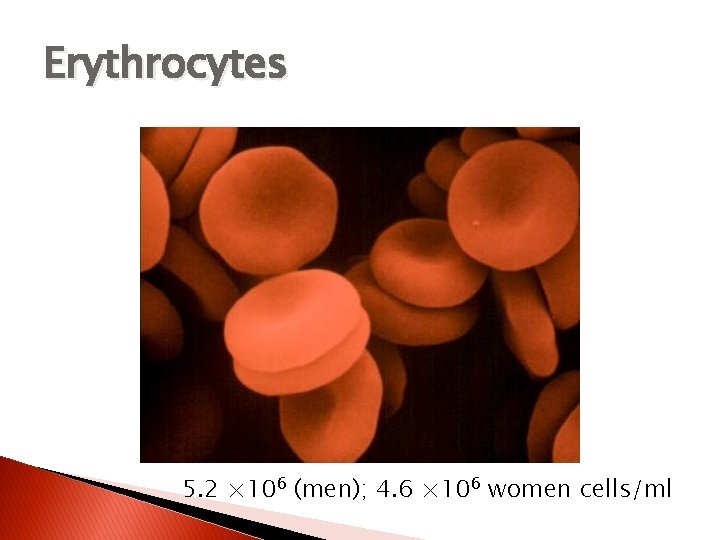
Erythrocytes 5. 2 × 10⁶ (men); 4. 6 × 10⁶ women cells/ml
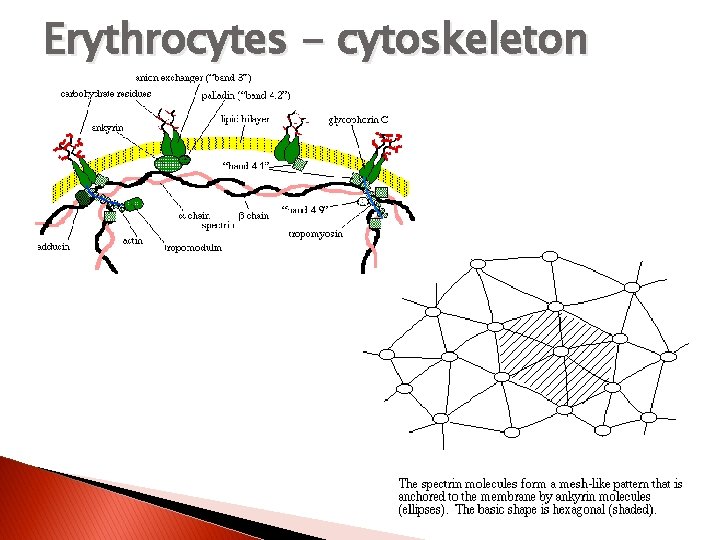
Erythrocytes - cytoskeleton
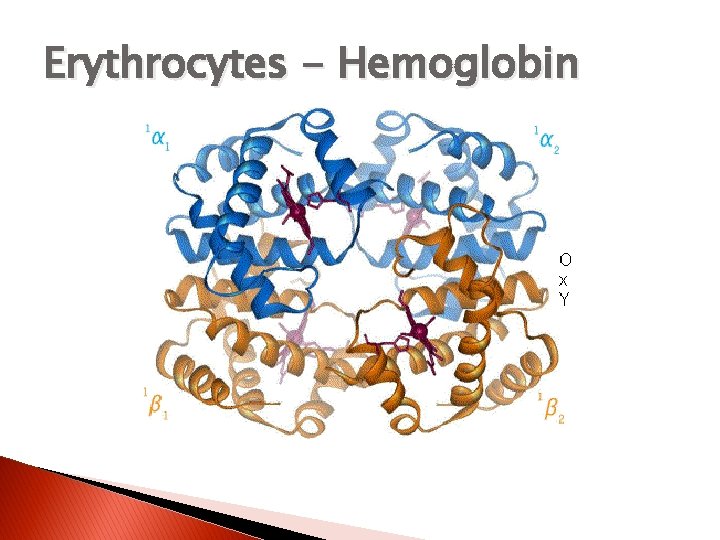
Erythrocytes - Hemoglobin
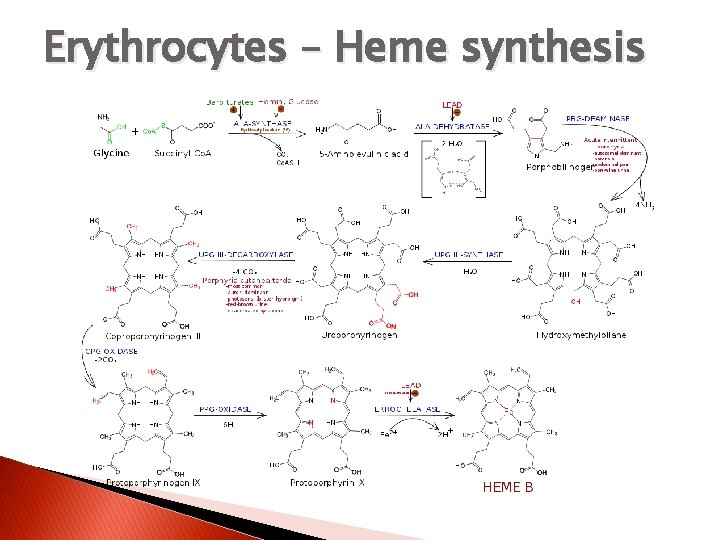
Erythrocytes – Heme synthesis
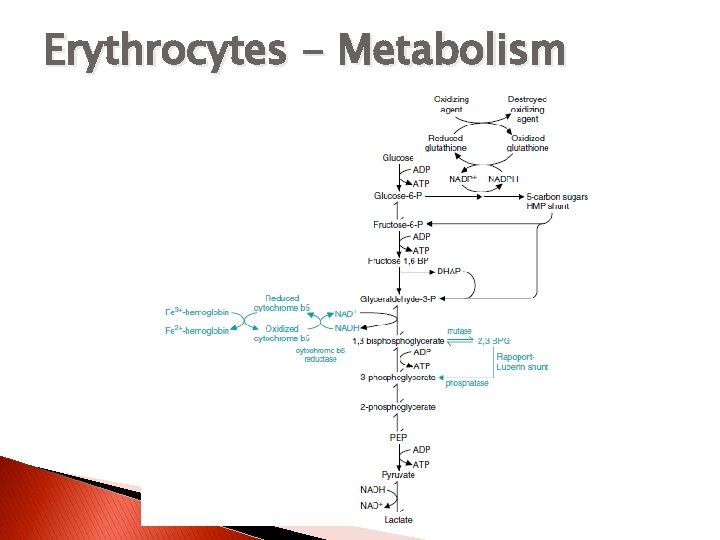
Erythrocytes - Metabolism
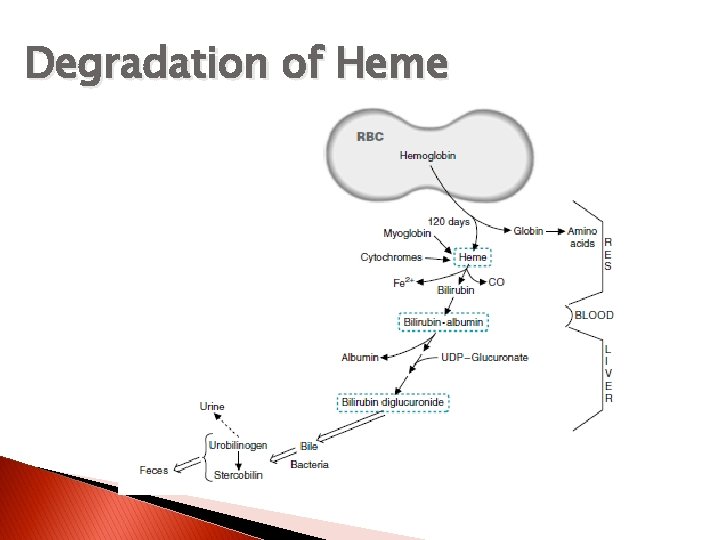
Degradation of Heme
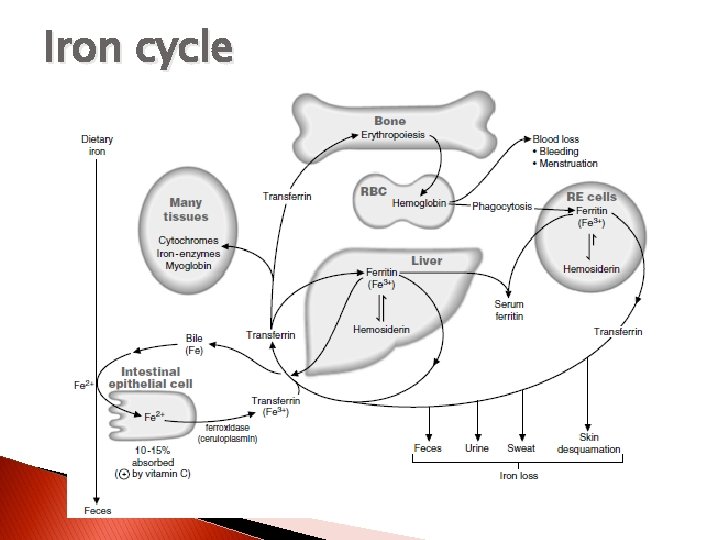
Iron cycle
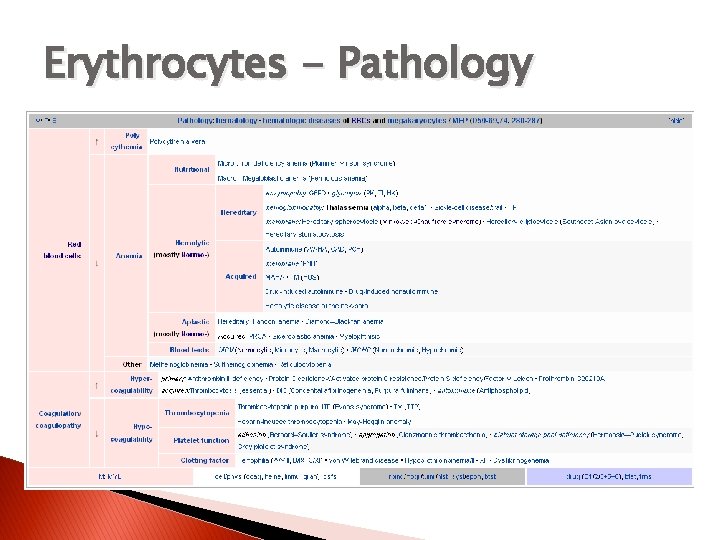
Erythrocytes - Pathology
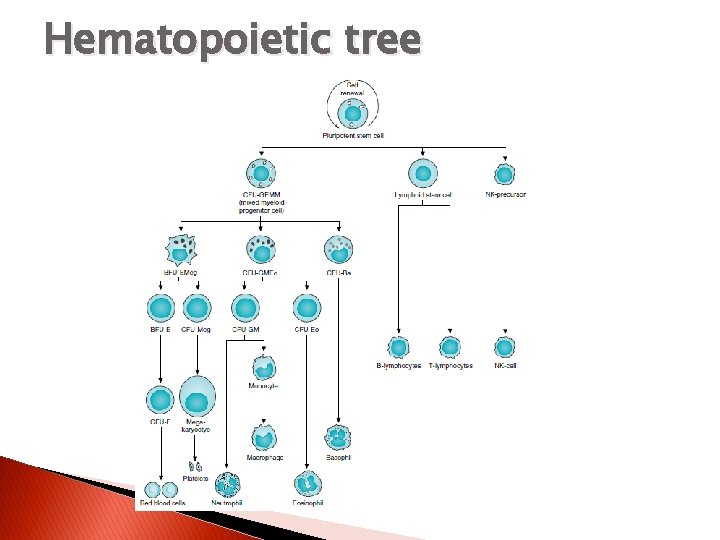
Hematopoietic tree
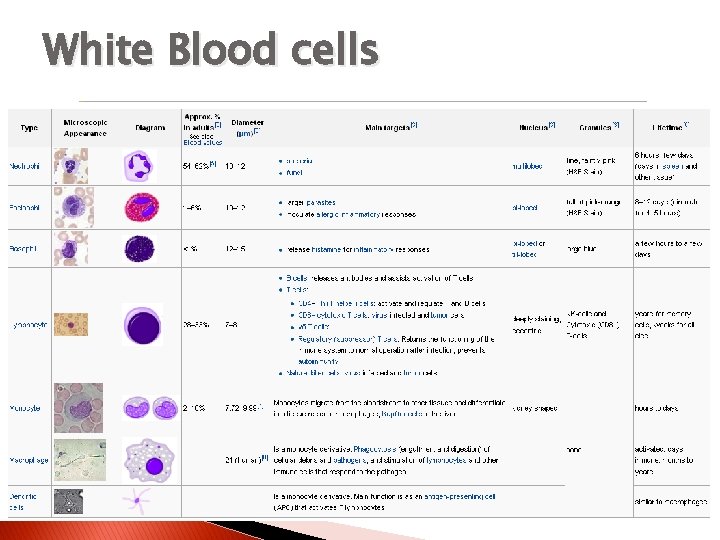
White Blood cells
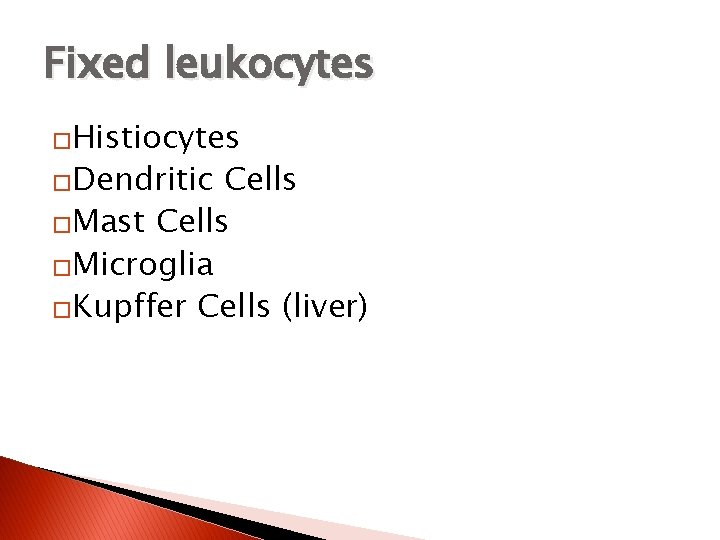
Fixed leukocytes �Histiocytes �Dendritic Cells �Mast Cells �Microglia �Kupffer Cells (liver)
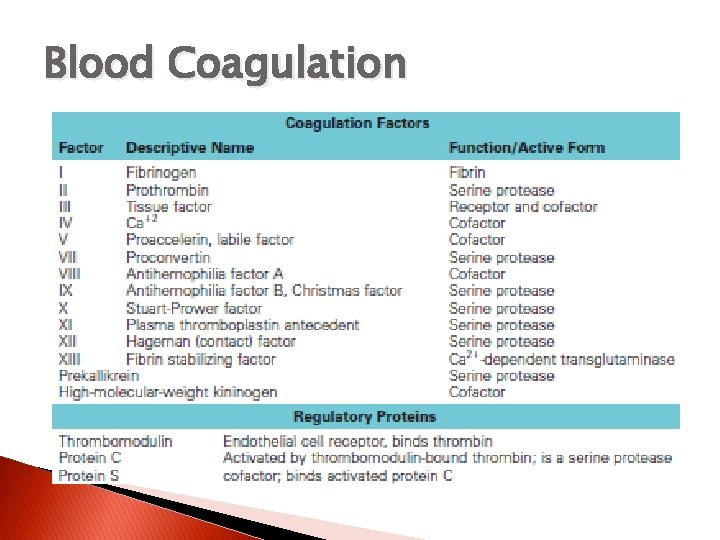
Blood Coagulation
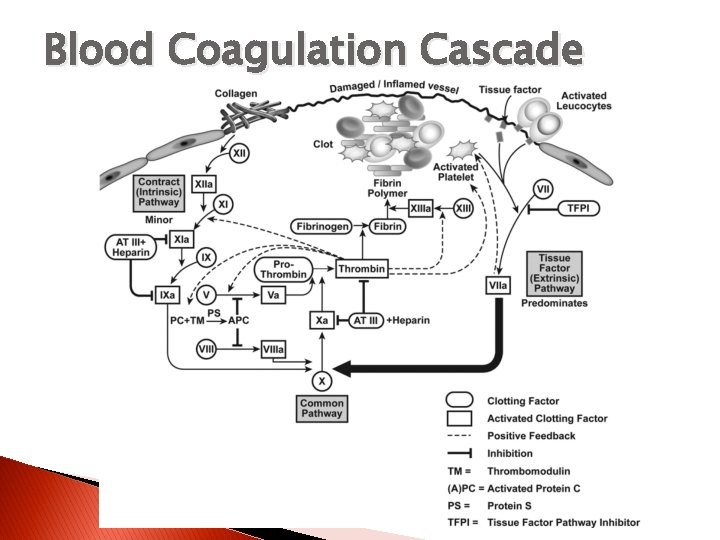
Blood Coagulation Cascade
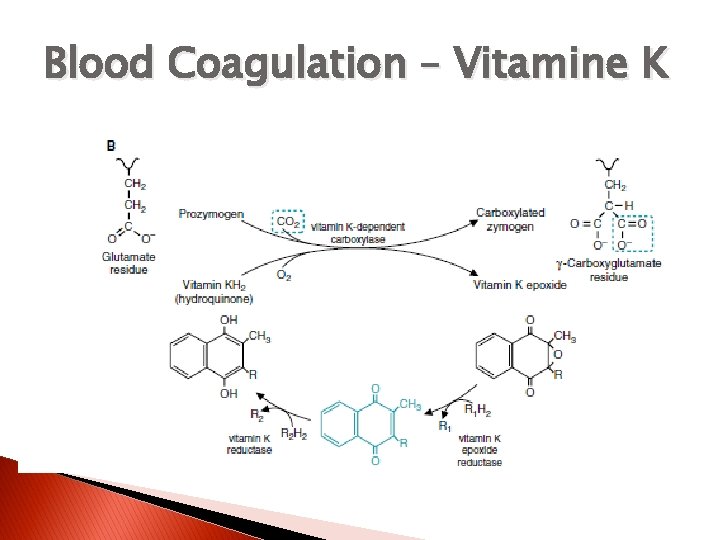
Blood Coagulation – Vitamine K
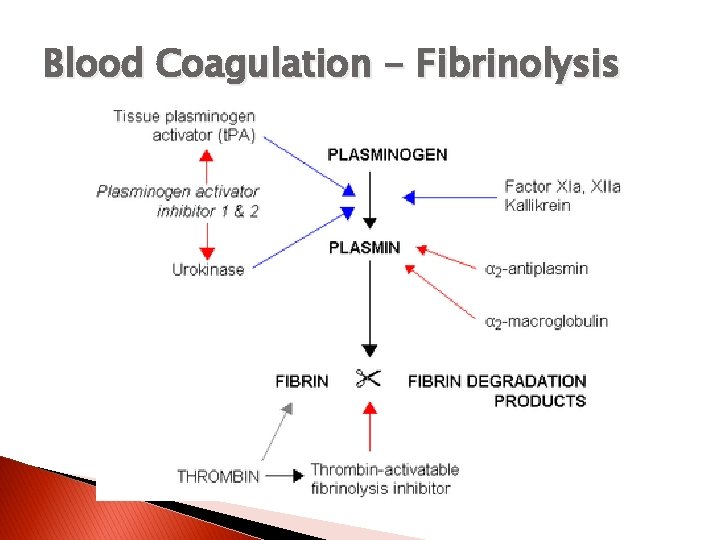
Blood Coagulation - Fibrinolysis
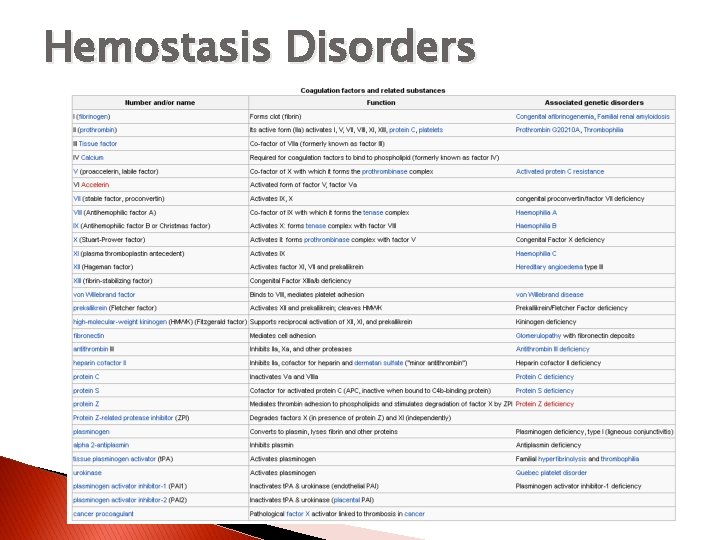
Hemostasis Disorders
Literature � R. K. Murray et al. : Harper's Illustrated Biochemistry, twenty-sixth edition, Mc. Graw. Hill Companies, 2003 � Allan D. Marks, MD: Basic Medical Biochemistry a Clinical Approach, Lippincott Williams & Wilkins, 2009
- Slides: 25