
BIOCHEMISTRY NOTES Pt 1 ELEMENTS All matter is
BIOCHEMISTRY NOTES Pt. 1
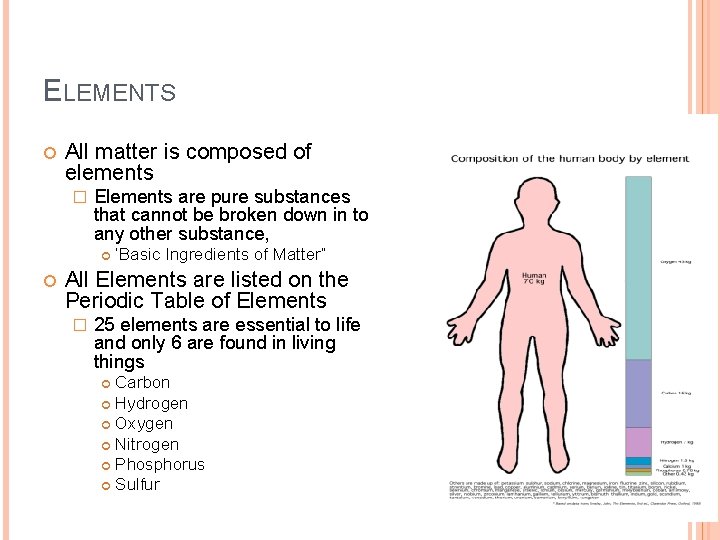
ELEMENTS All matter is composed of elements � Elements are pure substances that cannot be broken down in to any other substance, ‘Basic Ingredients of Matter” All Elements are listed on the Periodic Table of Elements � 25 elements are essential to life and only 6 are found in living things Carbon Hydrogen Oxygen Nitrogen Phosphorus Sulfur
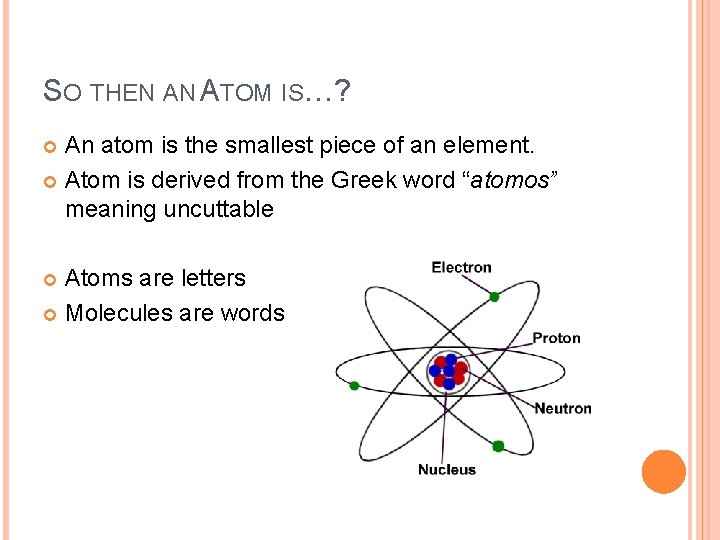
SO THEN AN ATOM IS…? An atom is the smallest piece of an element. Atom is derived from the Greek word “atomos” meaning uncuttable Atoms are letters Molecules are words
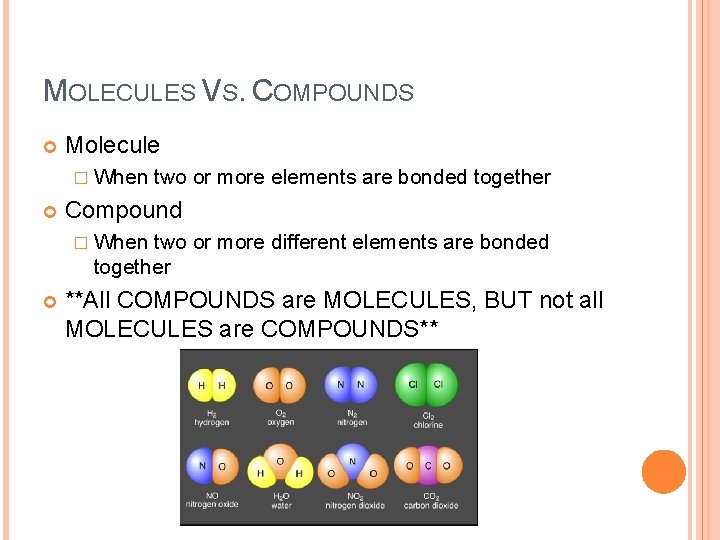
MOLECULES VS. COMPOUNDS Molecule � When two or more elements are bonded together Compound � When two or more different elements are bonded together **All COMPOUNDS are MOLECULES, BUT not all MOLECULES are COMPOUNDS**
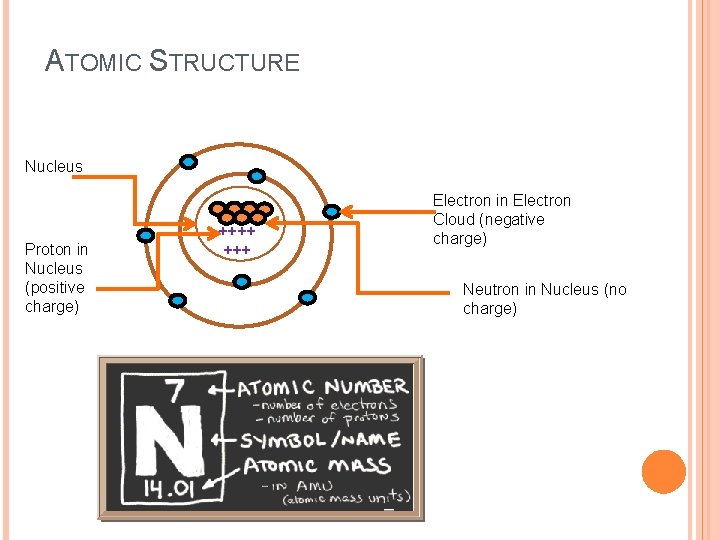
ATOMIC STRUCTURE Nucleus Proton in Nucleus (positive charge) ++++ Electron in Electron Cloud (negative charge) Neutron in Nucleus (no charge)
ATOMIC STRUCTURE What parts make up an Atom? Proton � Neutron � Electron � Which of these parts belong in the nucleus? Proton � Neutron � What belongs in the electron cloud of an atom? � Electron
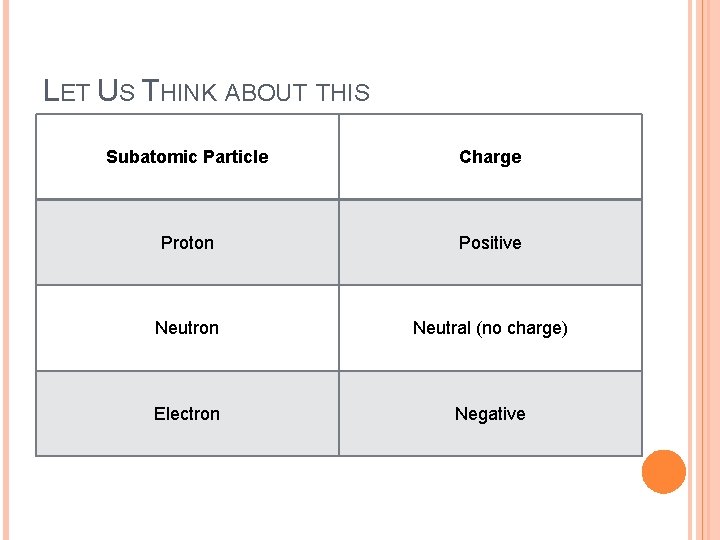
LET US THINK ABOUT THIS Subatomic Particle Charge Proton Positive Neutron Neutral (no charge) Electron Negative
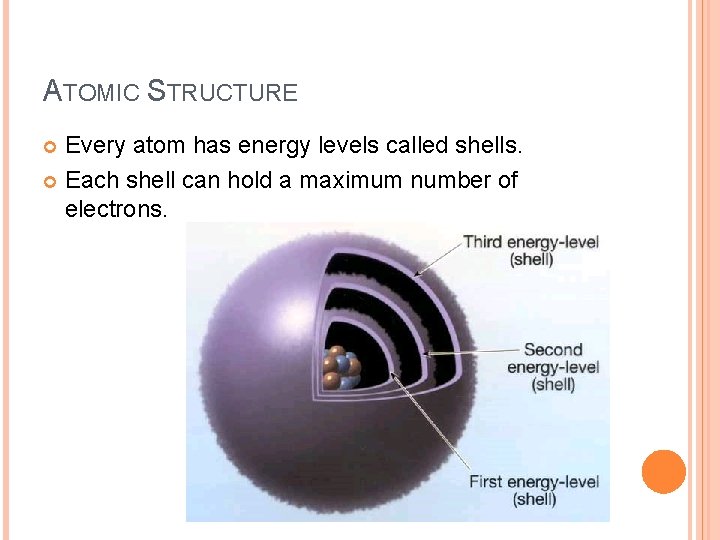
ATOMIC STRUCTURE Every atom has energy levels called shells. Each shell can hold a maximum number of electrons.
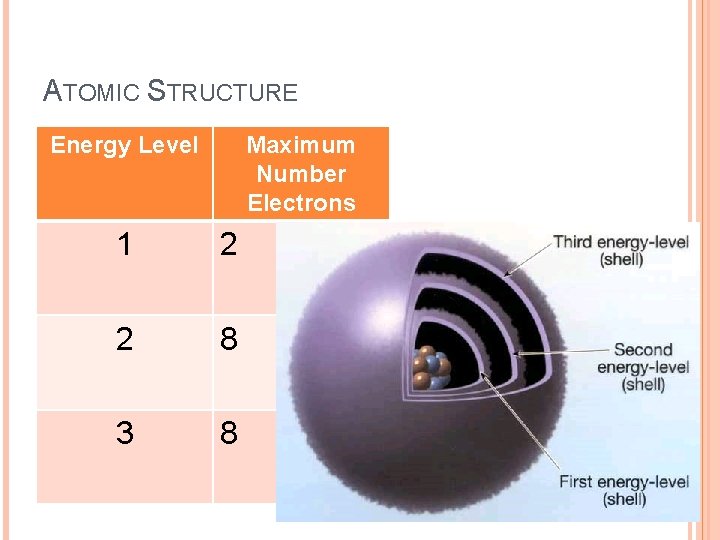
ATOMIC STRUCTURE Energy Level Maximum Number Electrons 1 2 2 8 3 8
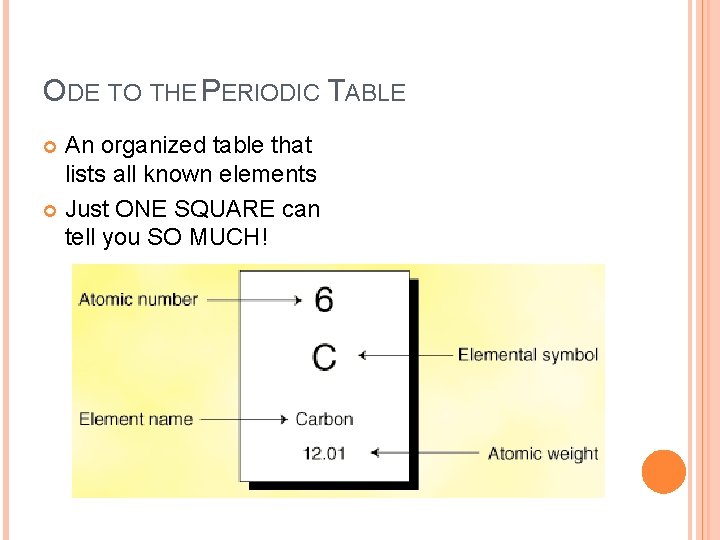
ODE TO THE PERIODIC TABLE An organized table that lists all known elements Just ONE SQUARE can tell you SO MUCH!
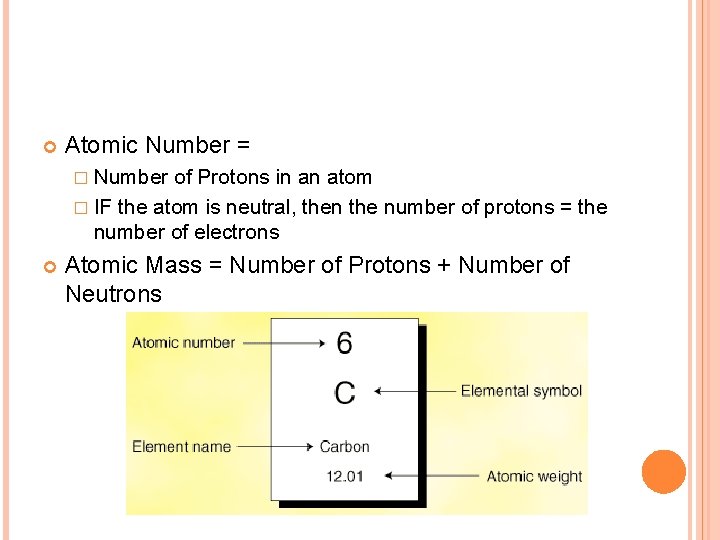
Atomic Number = � Number of Protons in an atom � IF the atom is neutral, then the number of protons = the number of electrons Atomic Mass = Number of Protons + Number of Neutrons
ONE STEP FURTHER… What determines the… � Mass number? Neutrons + Protons � Charge? Electrons + Protons � Atomic Number? Protons Million Dollar Question: What subatomic particle will determine a new element? � PROTONS!!
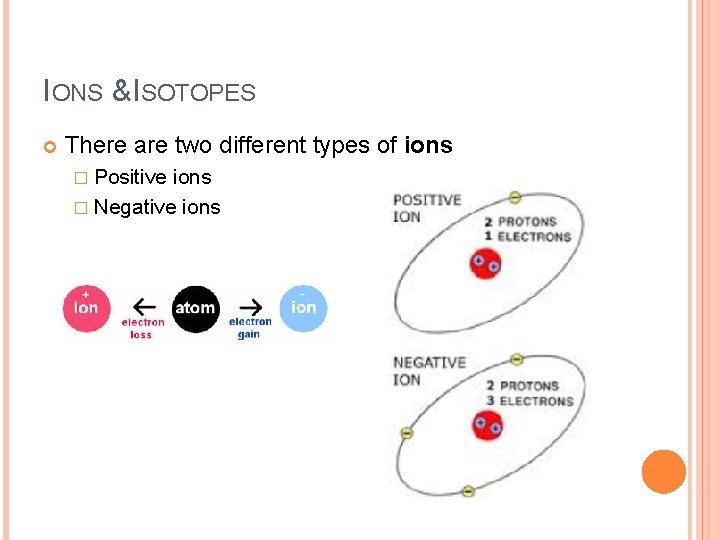
IONS & ISOTOPES There are two different types of ions � Positive ions � Negative ions
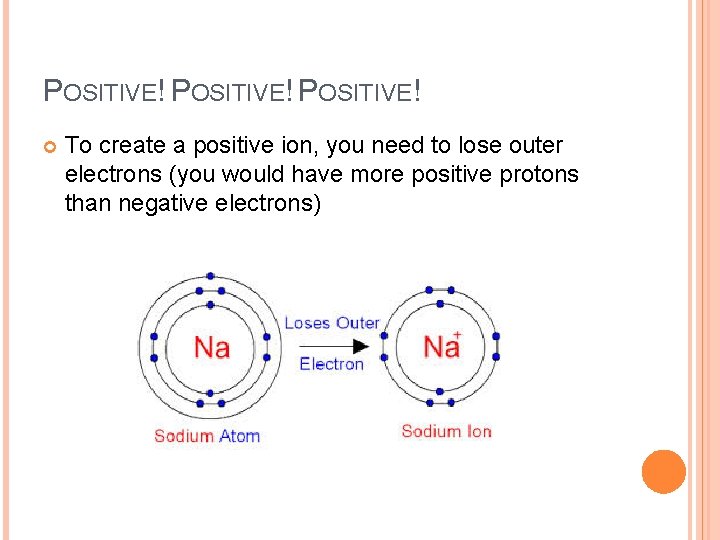
POSITIVE! To create a positive ion, you need to lose outer electrons (you would have more positive protons than negative electrons)
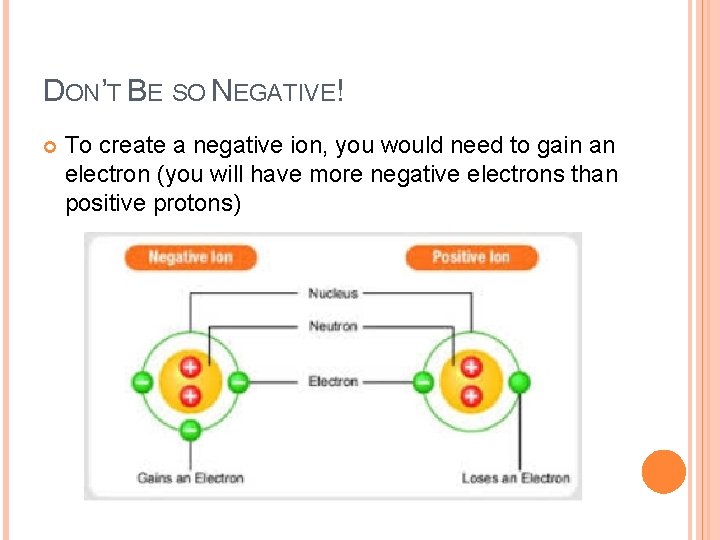
DON’T BE SO NEGATIVE! To create a negative ion, you would need to gain an electron (you will have more negative electrons than positive protons)
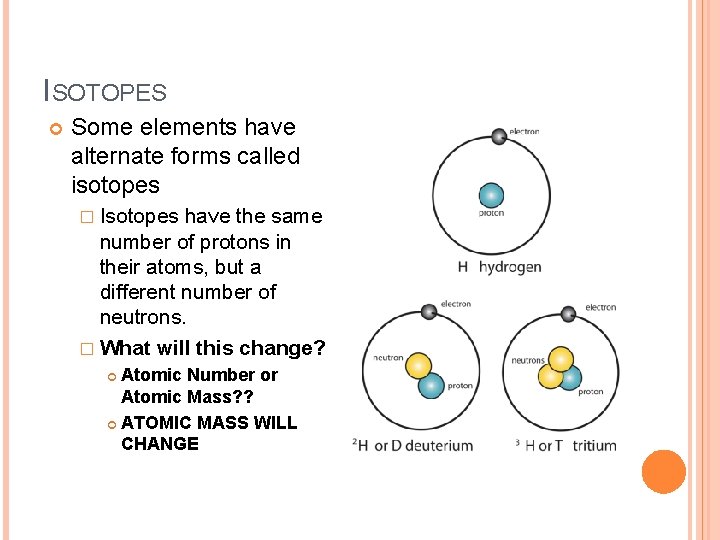
ISOTOPES Some elements have alternate forms called isotopes � Isotopes have the same number of protons in their atoms, but a different number of neutrons. � What will this change? Atomic Number or Atomic Mass? ? ATOMIC MASS WILL CHANGE
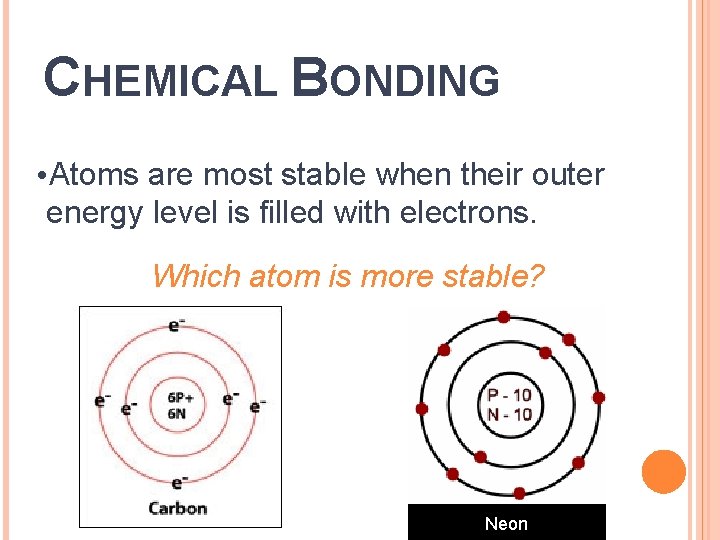
CHEMICAL BONDING • Atoms are most stable when their outer energy level is filled with electrons. Which atom is more stable? Neon
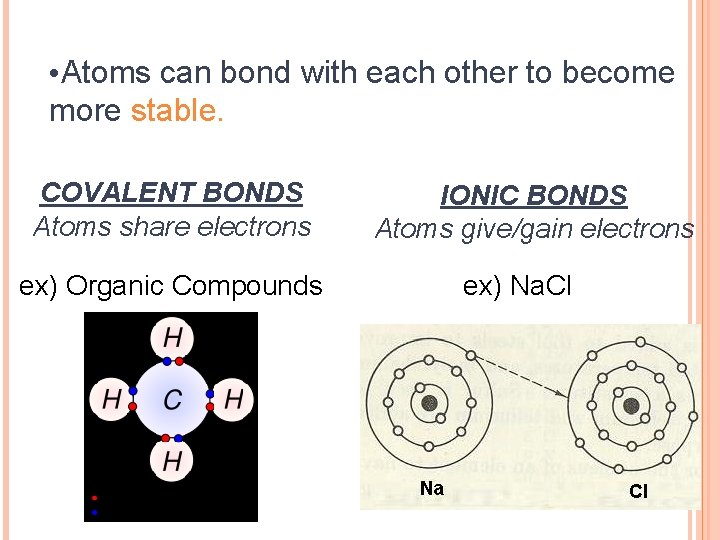
• Atoms can bond with each other to become more stable. COVALENT BONDS Atoms share electrons ex) Organic Compounds IONIC BONDS Atoms give/gain electrons ex) Na. Cl
- Slides: 18