
Biochemistry Lipids 1 I Lipids Foods butter oil
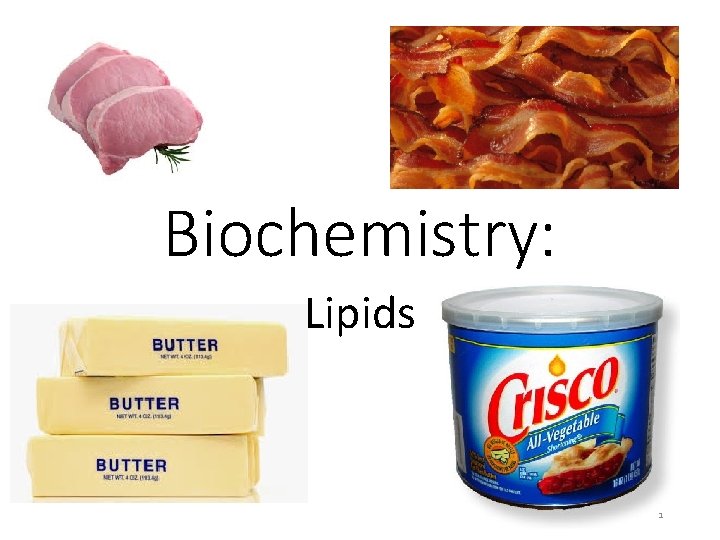
Biochemistry: Lipids 1
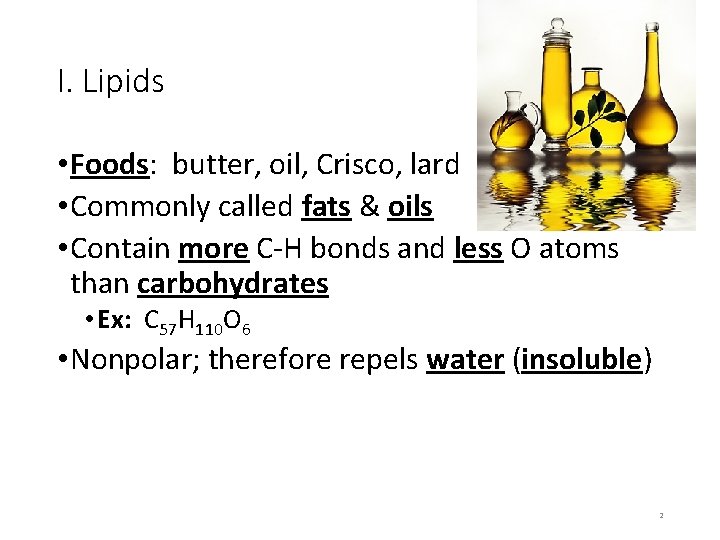
I. Lipids • Foods: butter, oil, Crisco, lard • Commonly called fats & oils • Contain more C-H bonds and less O atoms than carbohydrates • Ex: C 57 H 110 O 6 • Nonpolar; therefore repels water (insoluble) 2
Functions of lipids in our body 1. Long term energy storage (used when carbohydrates are NOT available. ) 2. Insulation 3. Protect body tissue (cushioning) 3
Which has more energy-Lipids or Carbs? • One gram of fat contains TWICE as much energy as one gram of carbohydrates. Therefore, fats are better storage compounds! 4
Fats vs. Carbs & Energy Storage • 1 gram of carbs (glycogen) = about 4 Kcal of energy • A short term rapid energy source (sprint events) • 1 gram of fat = about 9 Kcal of energy • A long term energy source (endurance events – marathons) 5
Fats vs. Carbs & Energy Storage • Average human contains about 0. 5 kg of stored glycogen = 2, 000 Kcal of energy • About 16 kg of body fat = 144, 000 Kcal of energy 6
Fats vs. Carbs & Energy Storage • To carry the same amount of energy (144, 000 Kcal) as carbs, we would have to store 36 kg (79. 4 pounds) more glycogen to lose 1 kg of body fat which means, you need to burn lots of calories! 7
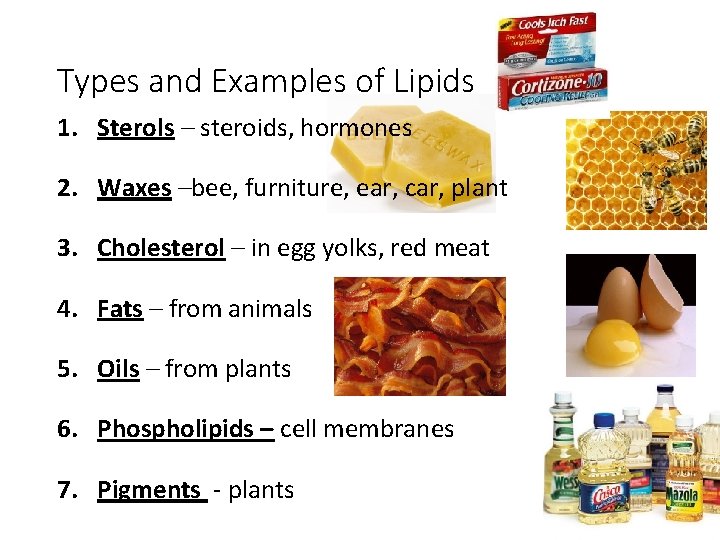
Types and Examples of Lipids 1. Sterols – steroids, hormones 2. Waxes –bee, furniture, ear, car, plant 3. Cholesterol – in egg yolks, red meat 4. Fats – from animals 5. Oils – from plants 6. Phospholipids – cell membranes 7. Pigments - plants 8
Structure of Lipids • Basic building blocks: 3 fatty acids + 1 glycerol • Fatty acids • Long chains of carbon with a carboxyl group at one end 9
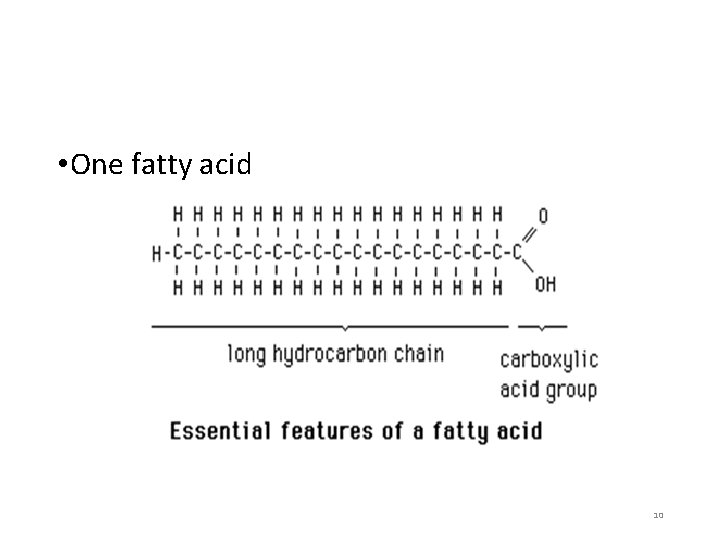
• One fatty acid 10
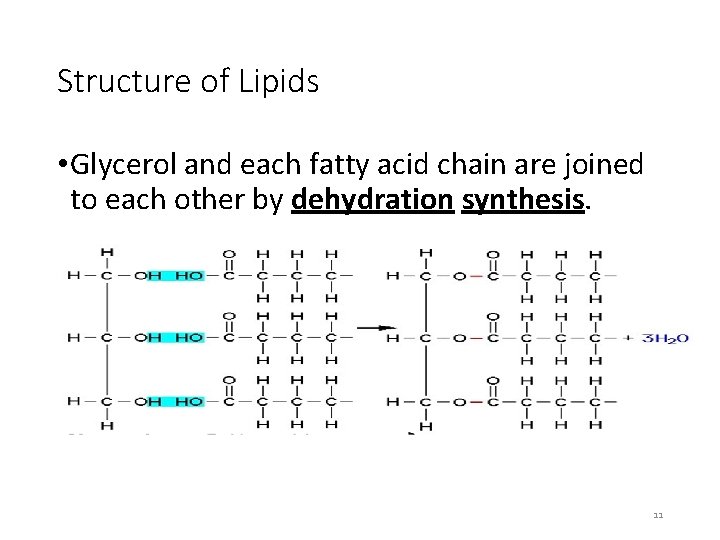
Structure of Lipids • Glycerol and each fatty acid chain are joined to each other by dehydration synthesis. 11
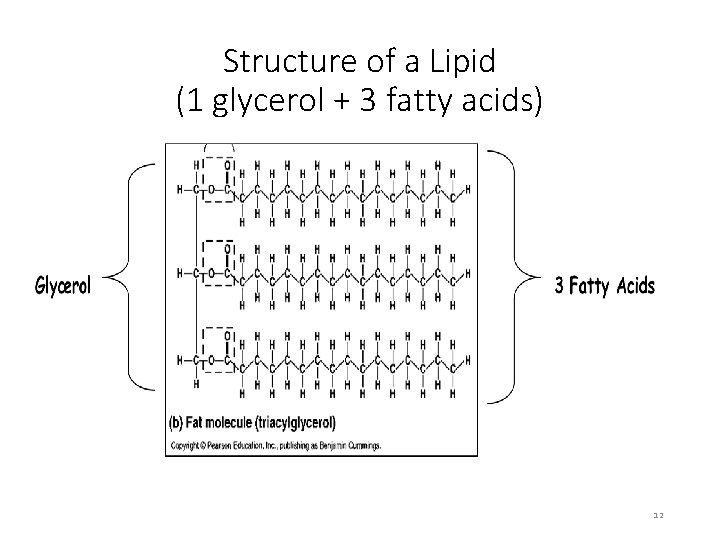
Structure of a Lipid (1 glycerol + 3 fatty acids) 12
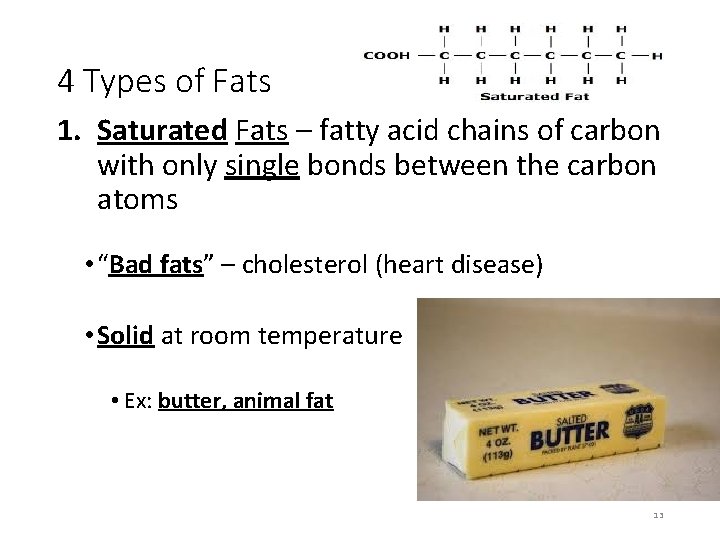
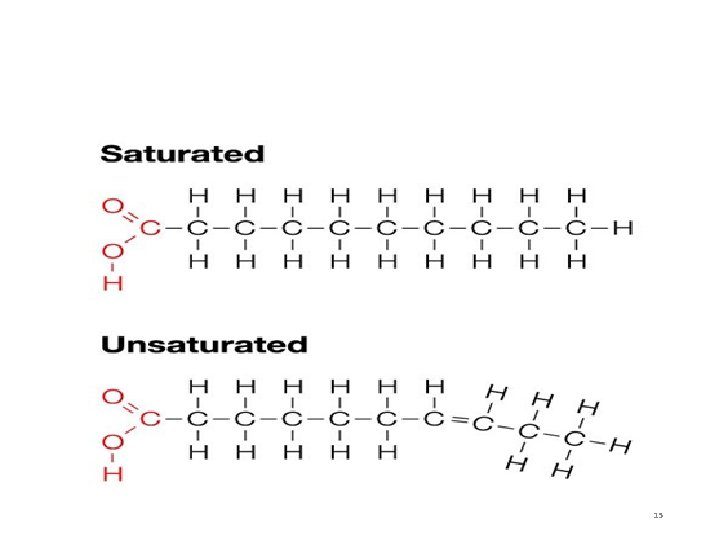
4 Types of Fats 1. Saturated Fats – fatty acid chains of carbon with only single bonds between the carbon atoms • “Bad fats” – cholesterol (heart disease) • Solid at room temperature • Ex: butter, animal fat 13
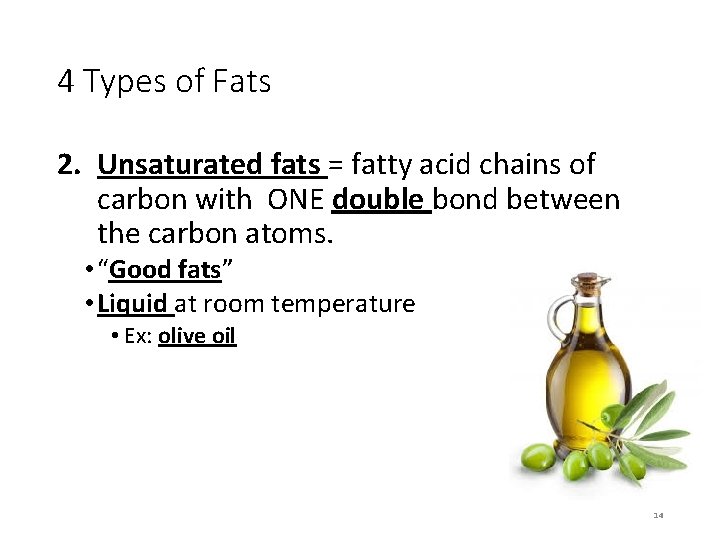
4 Types of Fats 2. Unsaturated fats = fatty acid chains of carbon with ONE double bond between the carbon atoms. • “Good fats” • Liquid at room temperature • Ex: olive oil 14
15
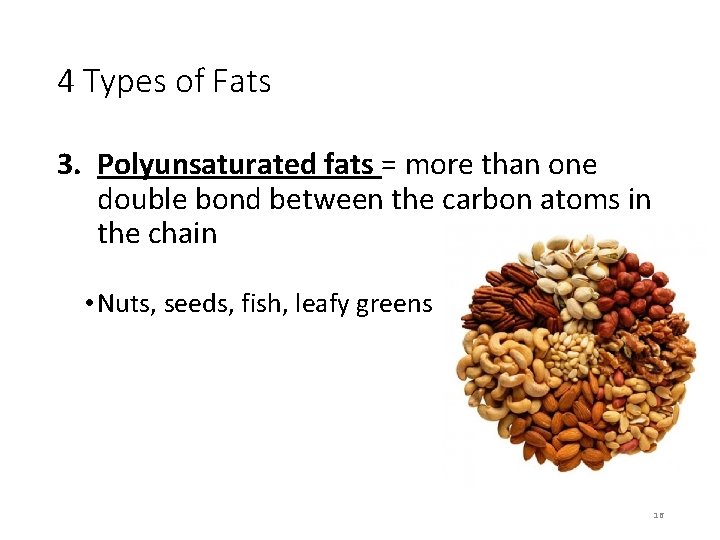
4 Types of Fats 3. Polyunsaturated fats = more than one double bond between the carbon atoms in the chain • Nuts, seeds, fish, leafy greens 16
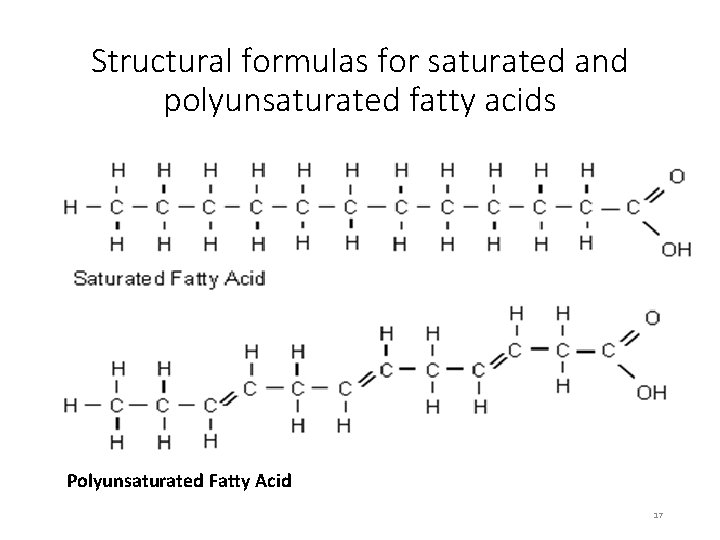
Structural formulas for saturated and polyunsaturated fatty acids Polyunsaturated Fatty Acid 17
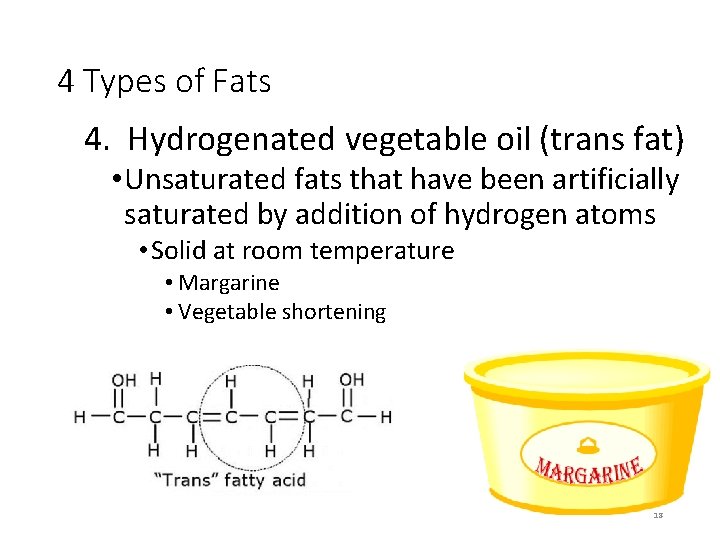
4 Types of Fats 4. Hydrogenated vegetable oil (trans fat) • Unsaturated fats that have been artificially saturated by addition of hydrogen atoms • Solid at room temperature • Margarine • Vegetable shortening 18
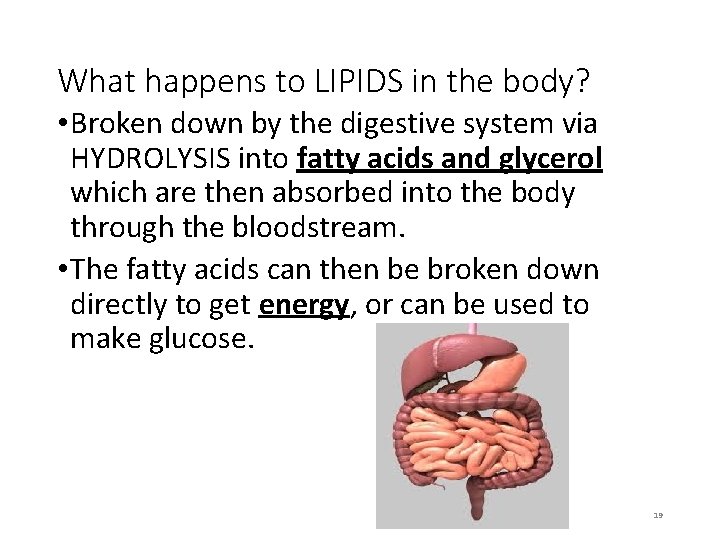
What happens to LIPIDS in the body? • Broken down by the digestive system via HYDROLYSIS into fatty acids and glycerol which are then absorbed into the body through the bloodstream. • The fatty acids can then be broken down directly to get energy, or can be used to make glucose. 19
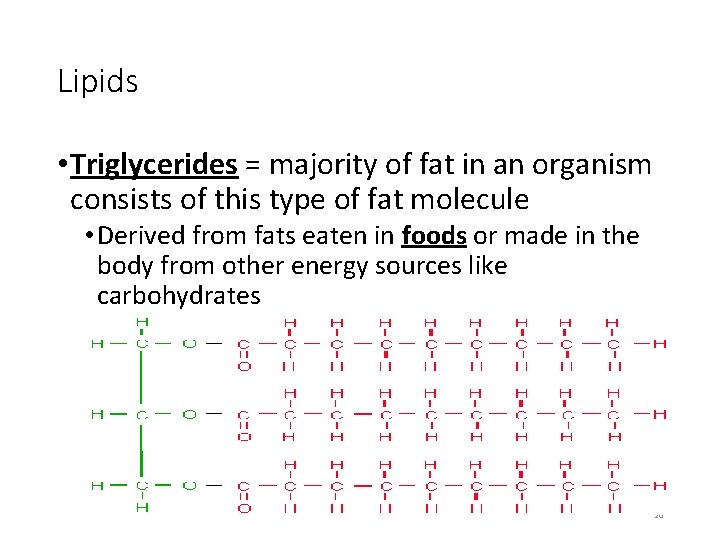
Lipids • Triglycerides = majority of fat in an organism consists of this type of fat molecule • Derived from fats eaten in foods or made in the body from other energy sources like carbohydrates 20
Lipids • Calories ingested in a meal and not used immediately by tissues are converted to triglycerides and transported to fat cells to be stored. • Storage – 3 month supply of energy vs. glycogen’s 24 hour supply 21
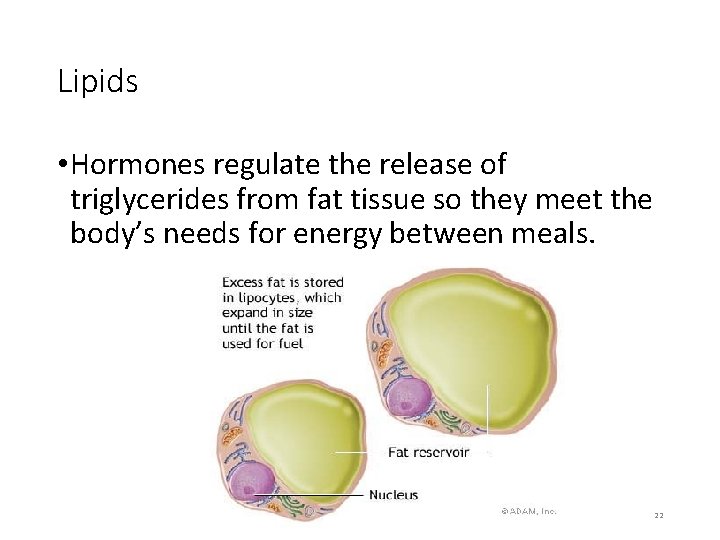
Lipids • Hormones regulate the release of triglycerides from fat tissue so they meet the body’s needs for energy between meals. 22
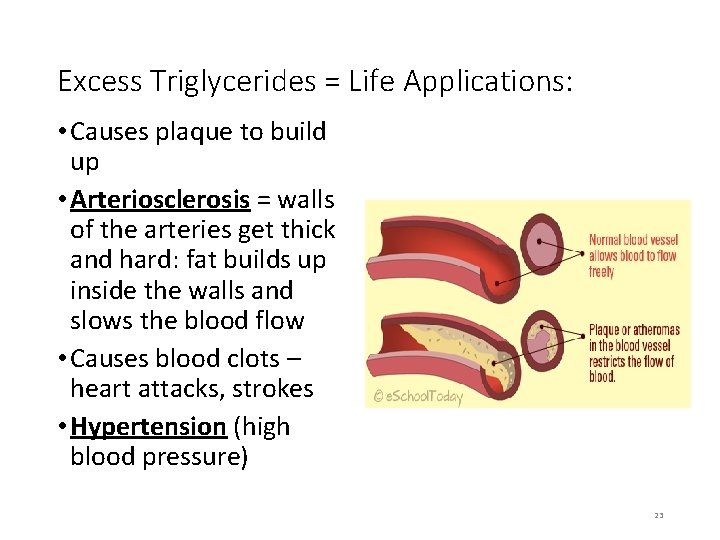
Excess Triglycerides = Life Applications: • Causes plaque to build up • Arteriosclerosis = walls of the arteries get thick and hard: fat builds up inside the walls and slows the blood flow • Causes blood clots – heart attacks, strokes • Hypertension (high blood pressure) 23
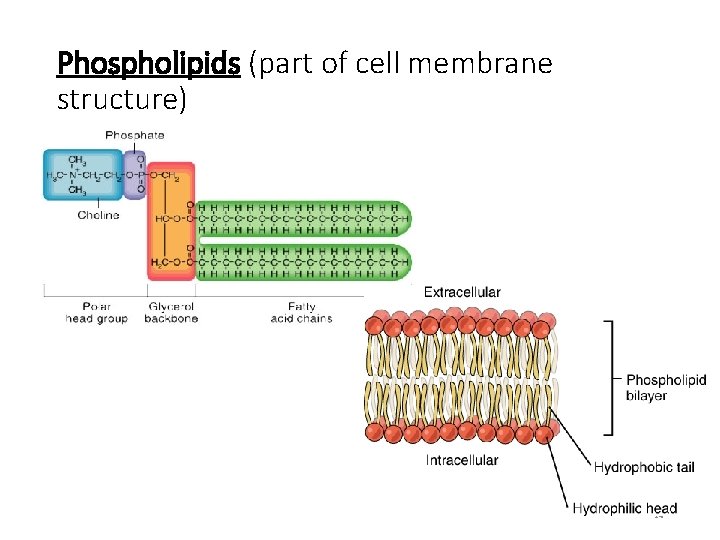
Phospholipids (part of cell membrane structure) 24
- Slides: 24